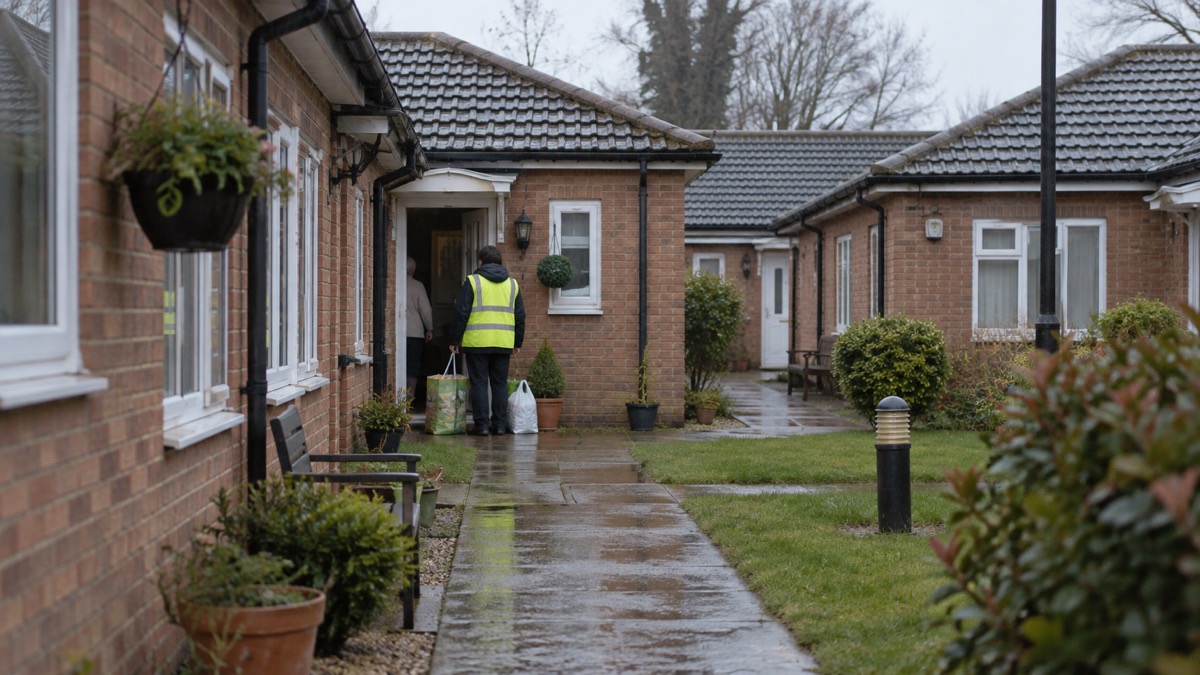
If you are thinking about collecting a prescription or doing a shop for a neighbour, the first step is not the pharmacy or the supermarket. Before you set out, make sure you, your family and your neighbours are safe and well, and only then consider helping your community1.
The practical side is straightforward. If someone struggles to pick up their medications, they can ask someone they trust to collect them, and some pharmacies will deliver free of charge2. Some pharmacies also offer free delivery services, so it is worth checking with the local pharmacy before anyone makes a journey3. For shopping, local volunteer groups collect shopping and deliver it to the door, and will not normally enter the home4.
What matters most is knowing where the volunteer role ends. Volunteers provide company, errands and practical help; clinical care, emergency response and decisions about medication belong to the NHS and the emergency services. This page sets out how to do the practical tasks safely, and when to hand over.
Before you deliver anything, talk to your council or a community group
The single most useful thing a new volunteer can do is join an existing structure rather than start a parallel one. Official advice is to join or support a local volunteering or community group before an emergency happens, such as a local charity, a flood action group or a Neighbourhood Watch7. That way the group already knows who needs help, who is trained, and who is insured to do what.
If you are already part of a community group that is experiencing or responding to an emergency, contact your local council, which may be able to provide advice and assistance1. Councils and community groups are expected to work together: community and voluntary organisations may, for example, provide hot food or shelter, and health and social care staff and volunteers consider the needs of the most vulnerable people within a community8.
It also helps to know what already exists locally. Community first responder schemes, snow warden schemes and flood action groups all have their own coordinators and their own rules. Rather than inventing a delivery round, ask the coordinator what is needed and what is already covered. Our guide to voluntary organisations that help in UK emergencies sets out the main types of group you are likely to meet.
Collecting a prescription for someone else
Collecting a prescription is one of the simplest and most valuable errands a volunteer can run, but it has rules. The person you are helping should first ask their GP practice or pharmacy for the prescription in good time: official guidance is to request it at least 1 week before Christmas so there is enough time to process the request5. The same principle applies before any public holiday. Know your GP practice and pharmacy opening times during public holidays so repeat prescriptions can be ordered and collected in plenty of time9.
If the person cannot get to the pharmacy, they can see if someone they trust can collect the medication, and some pharmacies will deliver free of charge2. Some pharmacies offer free delivery services, so check with the local pharmacy first3.
If the medicine has run out and there is no prescription, there are two main routes: contact NHS 111 by telephone or online, or contact a community pharmacy directly to request an emergency supply of medicines6. A volunteer can help make that call, but the request should come from, or be authorised by, the person who needs the medicine.
During a national medicines shortage, the pharmacy or GP may ask the person to go to another pharmacy to collect the medicine, receive a different formulation such as a tablet instead of a capsule, receive a smaller quantity so they need to collect more often, or go back to the GP for a new prescription for an available medicine10. A volunteer collecting on someone's behalf should expect the arrangement to change and should not promise that a particular medicine will be available.
Doing a neighbour's shopping safely
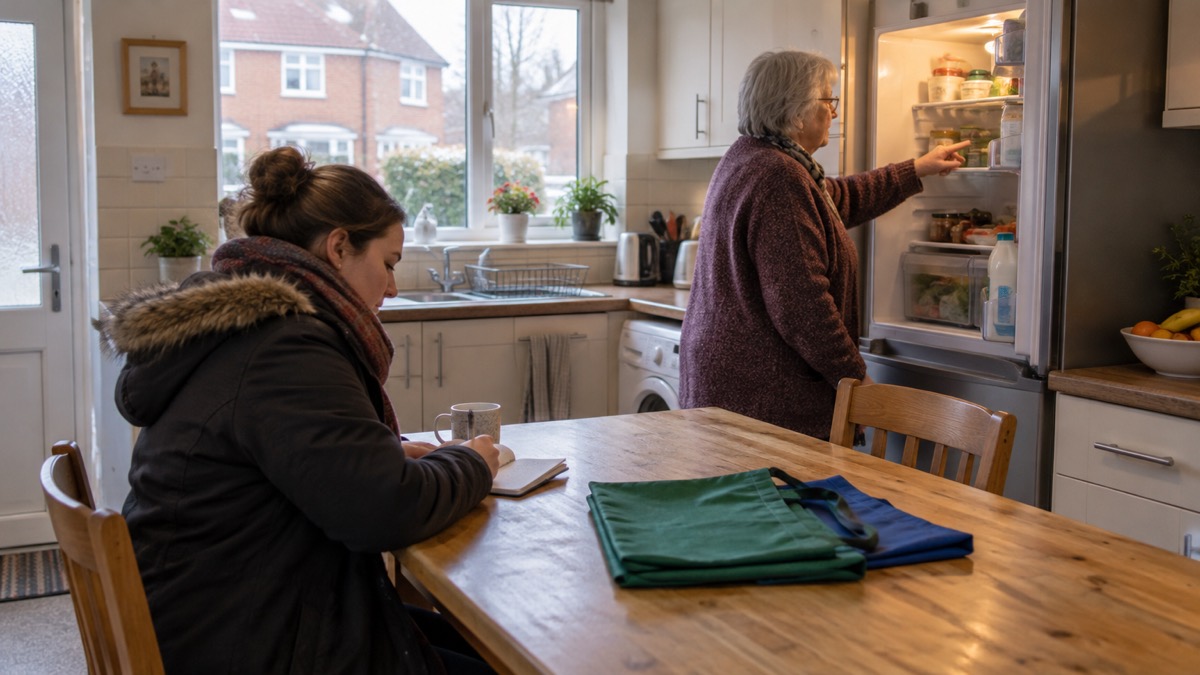
Shopping for a neighbour is mostly about asking the right questions before you go. Ask neighbours whether they might have additional support needs during an emergency: they may have additional medical needs, be new to the area, not be able to use the internet or technology well, or not speak or read English well11. Those answers decide what you buy, how you communicate, and whether someone else needs to be involved.
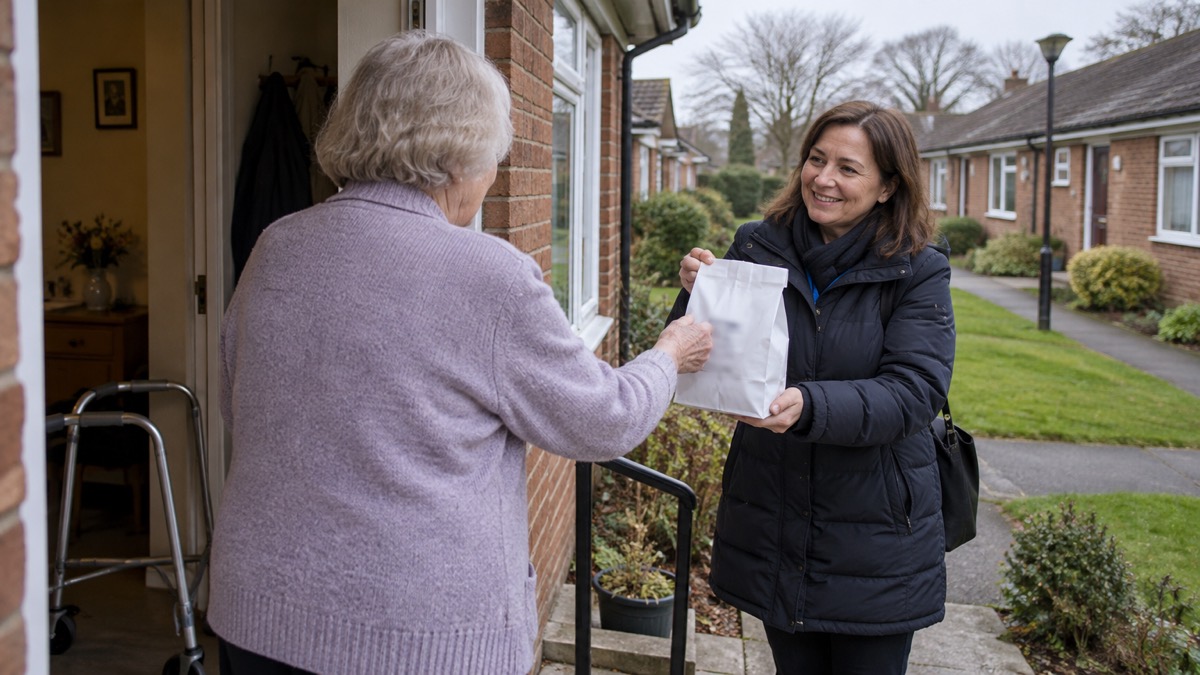
Official advice for helping neighbours in an emergency is to prepare their home before an emergency, pick up extra food, water, toiletries or medications, make sure they have important numbers written down, and keep in contact by phone or by visiting if it is safe to do so12. In Scotland the same message applies: pick up extra food, water, toiletries or any medications they need13.
Local volunteer groups collect shopping and deliver it to the door, and will not normally enter the home4. That boundary is worth keeping even when you know the person well. It protects their privacy and your safety, and it keeps the arrangement simple.
For people leaving hospital, support can include access to food delivery from commercial outlets that offer delivery or click and collect, or help from a volunteer with food shopping and food deliveries14. All major supermarkets offer home delivery via online ordering, and many offer priority delivery slots for elderly or vulnerable people4. If the person can order online, that may be easier than a volunteer guessing at brands and quantities.
Where volunteer help must stop and official services take over
Volunteers are at their most useful doing practical, low-risk tasks: shopping, prescriptions, company, door knocking, delivering messages. They are at their least useful, and potentially in the way, when an incident is still developing or when clinical decisions are needed.
At a rest centre, spontaneous volunteers may be asked to come back later or do another task; their details should be taken and contact information noted when they present themselves, and unknown volunteers are always supervised and supported15. That is not a slight. It is how a rest centre keeps track of who is where and keeps everyone safe.
The British Red Cross can provide emotional support and care for those affected while the emergency services manage the incident16. That division of labour is the model to follow: volunteers support people, the emergency services manage the incident. In Argyll and Bute, the local voluntary action organisation has staff and volunteers in each of the main centres of population and can offer support, with availability depending on capacity in any specific location and on the nature of the emergency8.
Some volunteer roles are formally trained and dispatched. Community first responders are members of the public trained to provide life-saving treatment to people in their local community while waiting for an ambulance or rapid response vehicle, particularly in rural areas17. In Northern Ireland, community first responders provide critical, life-saving support in the vital minutes before an emergency ambulance arrives, reaching emergencies faster than an ambulance, particularly in rural areas18. In Wales, volunteer community welfare responders provide welfare and clinical observations on lower acuity patients within the community and provide more information to clinicians in clinical control centres19. These are not shopping roles, and they require training and dispatch through the ambulance service.
Delivering in snow, storms and other severe weather
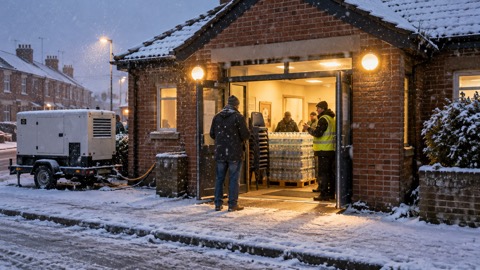
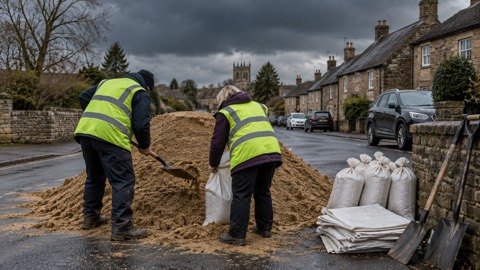
Severe weather changes the risk of a simple errand. Some community resilience groups organise delivering supplies during severe weather for people with a suitable vehicle21. Snow warden schemes may include ordering grit and salt supplies, keeping a register of trained volunteers, receiving and responding to local weather alerts, organising volunteers to clear snow, organising volunteers to spread grit when icy weather is forecast, and encouraging responsible and appropriate use of salt22.
If you are not equipped for the conditions, do not go. Check whether a local 4x4 response group is active: these groups provide logistical support to areas during severe weather or other disasters, using volunteers' own 4x4 vehicles11. If no such group is available, ask the coordinator whether the delivery can wait. A day's delay in a shopping delivery is rarely a crisis; a volunteer stuck in snow is.
Cold weather brings its own pressures. Make sure older neighbours refill prescriptions before pharmacies close for holidays23. Keep an eye on heating and food supplies, and follow the national guidance on keeping warm and well in cold weather20. Our guide to storms, snow and ice covers household preparation in more detail.
Signing up as a community reserve volunteer
If you want to be useful without committing to a regular rota, the British Red Cross community reserve volunteer scheme is designed for exactly that. No specialist skills are required, and when an emergency strikes in your area you can choose whether to volunteer; the role suits people who want to do their bit but do not wish to commit to regular volunteering24.
Other routes suit different people. You can join or support a local charity, flood action group or Neighbourhood Watch before an emergency happens7. You can train as a community first responder if you want to provide life-saving treatment before an ambulance arrives19. You can join a snow warden scheme if winter access is your concern22. Our guide to volunteering in emergencies compares the main roles and what training each requires.
Whichever route you choose, the same principles hold: check with the council or an established group first, keep the task practical, keep the person's dignity and privacy intact, and hand over to the professionals when the situation calls for it. Our guide to what volunteers can safely do, and where to stop goes through the boundaries in more detail.
Sources (24)
- Information for communities and community groups, Prepare campaign (UK Government), 2026-10-16
- Keep Winter Well, Birmingham Community Healthcare NHS Trust, 2026-10-28
- Winter Wellness 2025-26 leaflet, Barking and Dagenham, North East London Integrated Care Board, 2025-11
- COVID-19 community support, Suffolk County Council, 2026-10-29
- Prepare for Winter, King Street Surgery (NHS Scotland), 2026-01-20
- Emergency supply of medication, NHS Nottingham and Nottinghamshire Integrated Care Board, 2026-10-29
- Prepare your community, Greater Manchester Combined Authority, 2026-10-29
- Roles and responsibilities of emergency responders, Argyll and Bute Council, 2026
- Health advice for public holidays, NHS Inform Scotland, 2026-09-15
- Advice for patients during a medicines shortage, NHS Specialist Pharmacy Service, 2025-11
- Volunteering and helping others, Prepare campaign (UK Government), 2026-10-19
- Get prepared for emergencies, Prepare campaign (UK Government), 2026-10-21
- Emergency plan, Ready Scotland, 2026-03-24
- Hospital discharge, Nottinghamshire County Council, 2026-10-29
- Northumbria Local Resilience Forum, Northumberland County Council, 2026-10-28
- Steps after a fire, North Yorkshire Fire and Rescue Service, 2026-06-17
- Community first responders, Scottish Ambulance Service, 2026-10-29
- Community first responders, Northern Ireland Ambulance Service, 2026-10-29
- How we respond to 999, Welsh Ambulance Service NHS Trust, 2026-10-29
- Top tips for keeping warm and well this winter, UK Government, 2026-10-29
- Resilient communities, Scottish Borders Council, 2026-10-29
- Snow warden scheme, Devon County Council, 2026-03-13
- Neighbour and vulnerable people support, South Western Ambulance Service NHS Foundation Trust, 2026-10-29
- Community involvement, Dorset Prepared, 2026-10-19
 Emergency Hub Kit Checklist
 Severe Weather Tasks for Groups
 Flood Warden Checklist
 Testing an Emergency Plan
 Activating an Emergency Plan
 Emergency Volunteer Insurance
 How Long to Wait for Help
 RAYNET Emergency Radio
 Local Group Constitution
 GoodSAM Responder Alert App