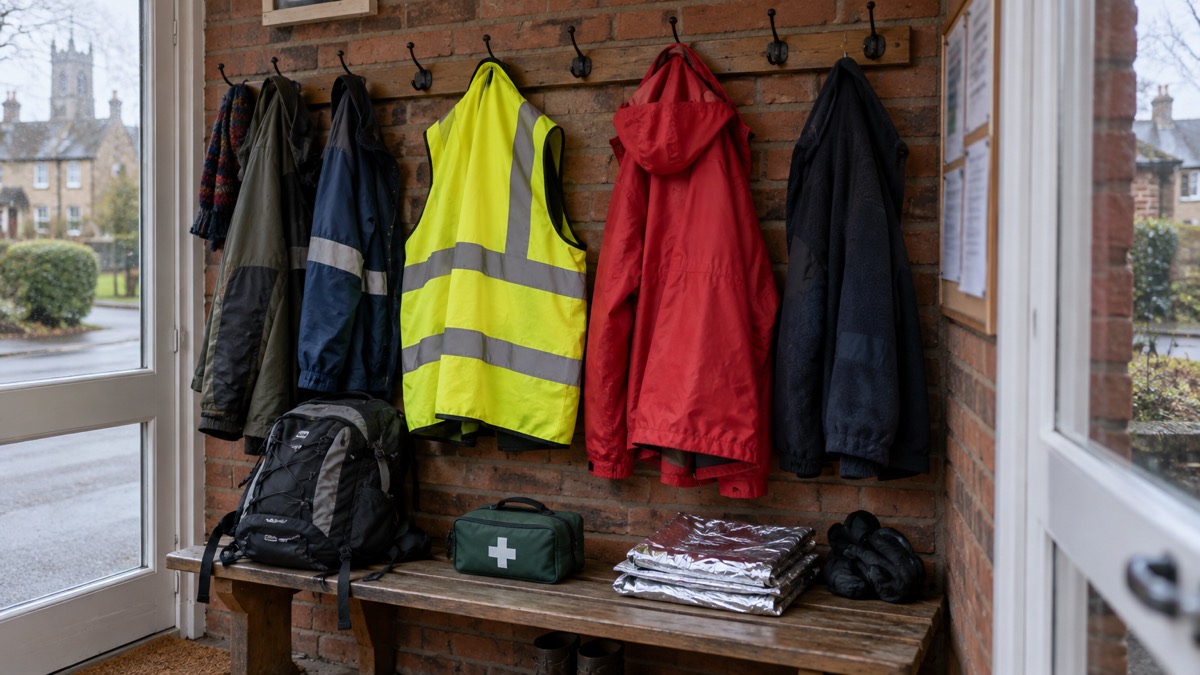
When something goes badly wrong in the UK, a house fire, a flood, a long power cut or an evacuation, the help that arrives is not only from the emergency services. Most emergencies in the UK are handled at the local level by the emergency services, local authorities and other relevant organisations such as utility companies and transport operators1, and working alongside them is a layer of voluntary organisations: the British Red Cross, search and rescue charities, 4x4 response groups, faith groups and neighbourhood volunteers. Community responders and the voluntary sector play a crucial role in the resilience of the UK2.
For an ordinary household, this matters in two ways. First, it tells you who may turn up at your door or at a rest centre, and what they can do for you: the British Red Cross responds to an emergency in the UK approximately every four hours3. Second, it tells you how you can be part of it, because almost all of this help is given by trained volunteers, and joining a recognised organisation before an emergency happens is far more useful than turning up unannounced during one4.
What voluntary organisations do in a UK emergency
Voluntary organisations do not work separately from the emergency services; they work inside the same local arrangements. Across England, those arrangements are led by Local Resilience Forums, partnerships made up of representatives from local public services, including the emergency services, local authorities, the NHS, the Environment Agency and other organisations involved in emergency preparedness, such as utilities providers8. Wales has four Local Resilience Forums, and the equivalent in Northern Ireland are Emergency Preparedness Groups8. In Scotland, councils' civil contingencies teams co-ordinate the response, including the alerting and call out of voluntary agencies such as the British Red Cross and the Royal Voluntary Service, and liaise with the emergency services or utility providers9.
What this means in practice is that when a council opens a rest centre or evacuates a street, the voluntary agencies are called out through the same plan. Somerset, for example, has a Somerset Emergency Voluntary Agencies Group: these agencies help the emergency services and local authorities during emergencies, and the council provides training for the voluntary agencies that work with it10. In West Yorkshire, the emergency services, health services, local authorities, government agencies, utility companies and voluntary organisations work together through West Yorkshire Prepared to make sure plans are in place for dealing with, and recovering from, emergencies11.
The voluntary bodies themselves range from national charities to small neighbourhood groups:
| Organisation | What it does in an emergency |
|---|---|
| British Red Cross | Emergency response, rest centres, support after fires and floods3 |
| REACT | Response Volunteers trained to react to emergencies such as floods and power outages12 |
| 4X4 Response UK | Local groups provide logistical support during severe weather using volunteers' own 4x4 vehicles12 |
| RAYNET-UK | Amateur radio volunteers providing communications (see What Is RAYNET and How Does It Help in an Emergency?)13 |
| Communities Prepared | Community volunteer training13 |
| The Salvation Army | On-site refreshments, emotional support, support at rest centres and humanitarian assistance centres3 |
| Coastguard Rescue Service | Volunteer coastguard rescue officers rescue trapped people, search for missing people and support emergency services during floods12 |
Specialist national organisations that work with volunteers to respond to local and national emergencies include Communities Prepared, British Red Cross, REACT, 4X4 Response UK and RAYNET-UK13. Alongside them sit faith groups, community councils and residents' groups, who may for example provide hot food or shelter14. If you want to build this kind of help into your own street's plans, our guide to setting up a local emergency group covers the first steps.
The British Red Cross: an emergency response every four hours
The British Red Cross is the voluntary organisation a household is most likely to meet, because of how often it is called out. The British Red Cross responds to an emergency in the UK approximately every four hours, and helps around half a million people in the UK every year to prepare for, respond to and recover from a crisis such as house fires, floods and evacuations3. It supports rest centres and provides safe spaces offering emotional and practical support3.
The Red Cross's emergency response support service is designed to meet the needs of people who have suffered damage to their home following a fire, flood or similar incident15. Its volunteers can provide emotional support and care for those affected while the emergency services manage the incident15. That division of work is the point: the firefighters, paramedics or police are dealing with the incident itself, and the Red Cross volunteers are dealing with the people standing outside it, often in shock, often in nightclothes, often with children or pets and nowhere to go.
Beyond the immediate incident, the Red Cross offers emergency help with things like accommodation, clothing and food, as well as help dealing with insurance companies7. You do not have to wait to be offered this: contact the Red Cross for emergency help through its get-help pages at redcross.org.uk/get-help7.
Help after a house fire or flood: the Fire and Emergency Support Service
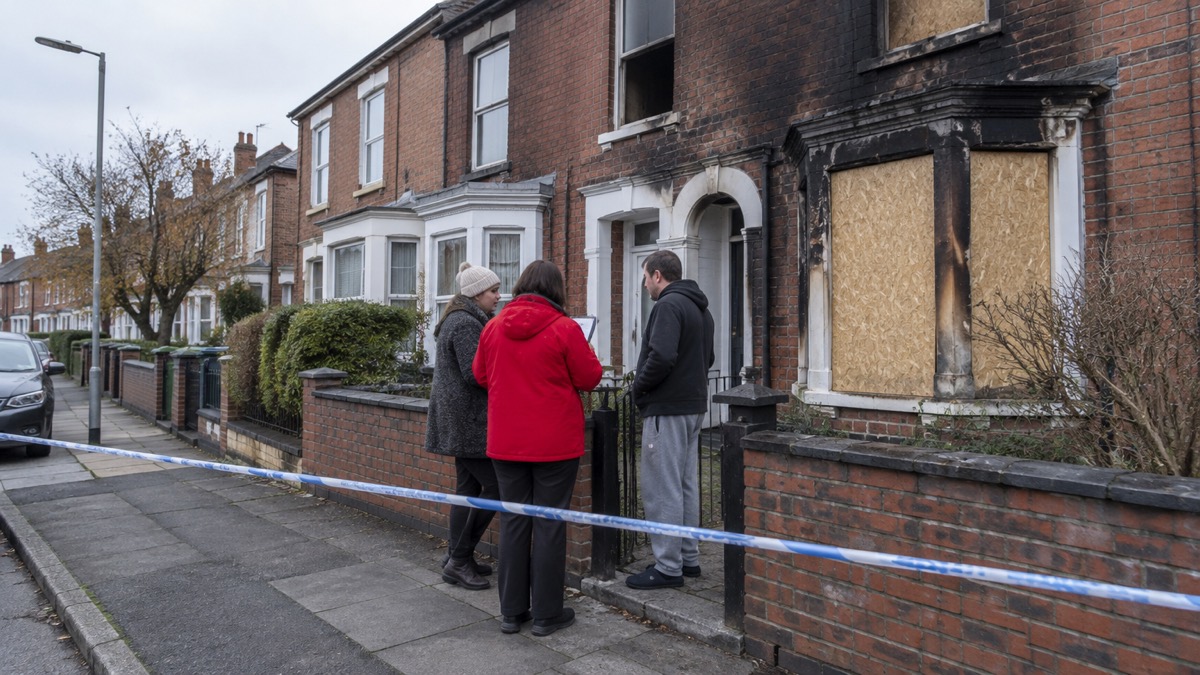
The most likely way a household meets the Red Cross is through the Fire and Emergency Support Service, usually shortened to FESS. The fire and emergency support service aims to support people who have suffered damage to their homes following a fire, flood or similar incident16. It is run in partnership between fire and rescue services and the British Red Cross, by trained volunteers who offer practical and emotional support16. Voluntary donations to the British Red Cross cover the cost16.
FESS has existed since 1999, and since the formation of the service it has assisted in excess of 10,000 people5. The help it gives is deliberately broad, because the aftermath of a fire or flood creates many small needs at once. In Northern Ireland, where the scheme is run by the Northern Ireland Fire and Rescue Service, the documented list of help includes:
- Immediate emotional and practical support
- Provision of hygiene packs and clothing
- Temporary shelter within the vehicle
- Support in seeking alternative accommodation
- Support with the care of children, and provision of toys and books
- Support with the care of pets
- Signposting to other organisations for further assistance and recovery
- Refreshments, and use of a telephone
- Retrieval of personal items, data collection, and photographic evidence for occupants
- Use of shower and toilet facilities
- Transportation to alternative accommodation
- Basic first aid and AED5
The service also supports the responders themselves: it provides food, toilet facilities and comfort facilities for firefighters at larger or prolonged incidents, supports family members and emergency services at road traffic collisions, and staffs rest centres for people who have had to leave their homes as a result of a gas leak or security alert5. If you have had to leave your home, our page on how councils and emergency services work with local groups explains the wider machinery behind that.
What the support vehicle carries
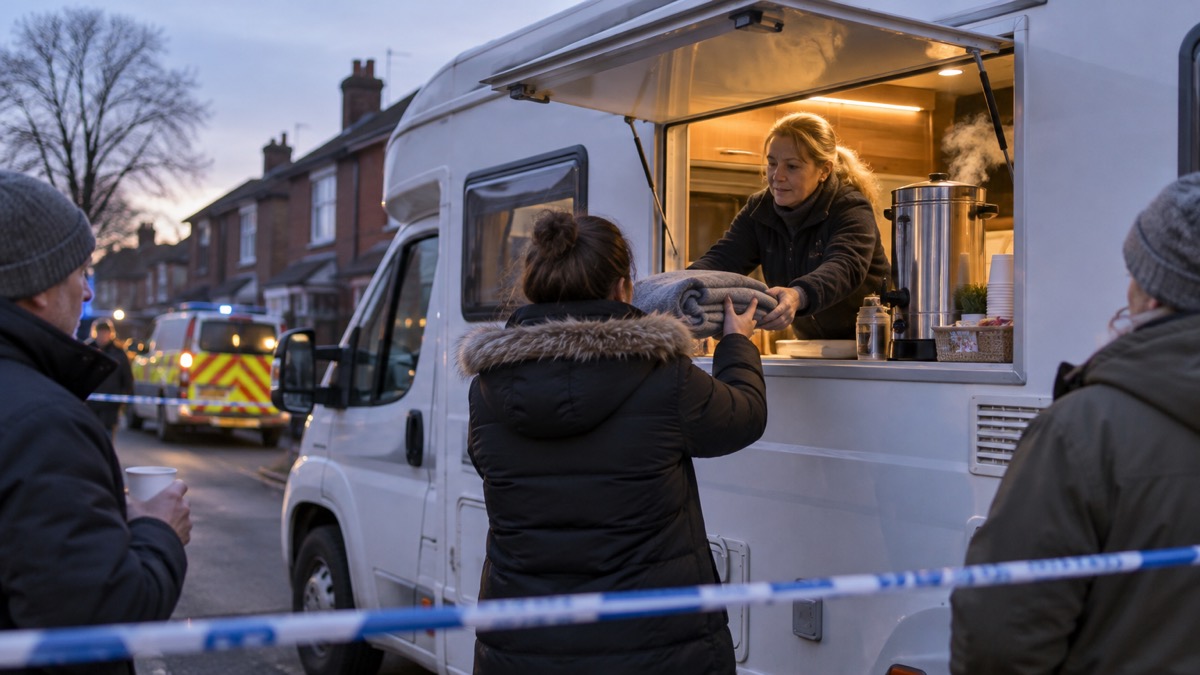
FESS help is delivered from a specially adapted vehicle. In Warwickshire, trained British Red Cross volunteers use a specially adapted vehicle equipped with a hot shower, clothing, a mobile telephone, baby food, a camera for clients to take photographs for insurance purposes and a small kitchen16. In Northern Ireland, the FESS team use a specially adapted motor home, equipped with hygiene, feeding, and rest facilities5.
The contents are worth knowing about because they answer the questions people actually have in the hour after a fire: where can I wash, what will I wear, how do I feed my baby, how do I call anyone, and how do I prove what I have lost. The camera on board exists so occupants can take photographs for insurance purposes16, and volunteers help with retrieval of personal items and data collection5. You should also take pictures of any damage which has occurred and keep records of repairs and cleaning costs, as this may help your insurance claim17.
When FESS attends: called by fire officers, or automatically at large incidents
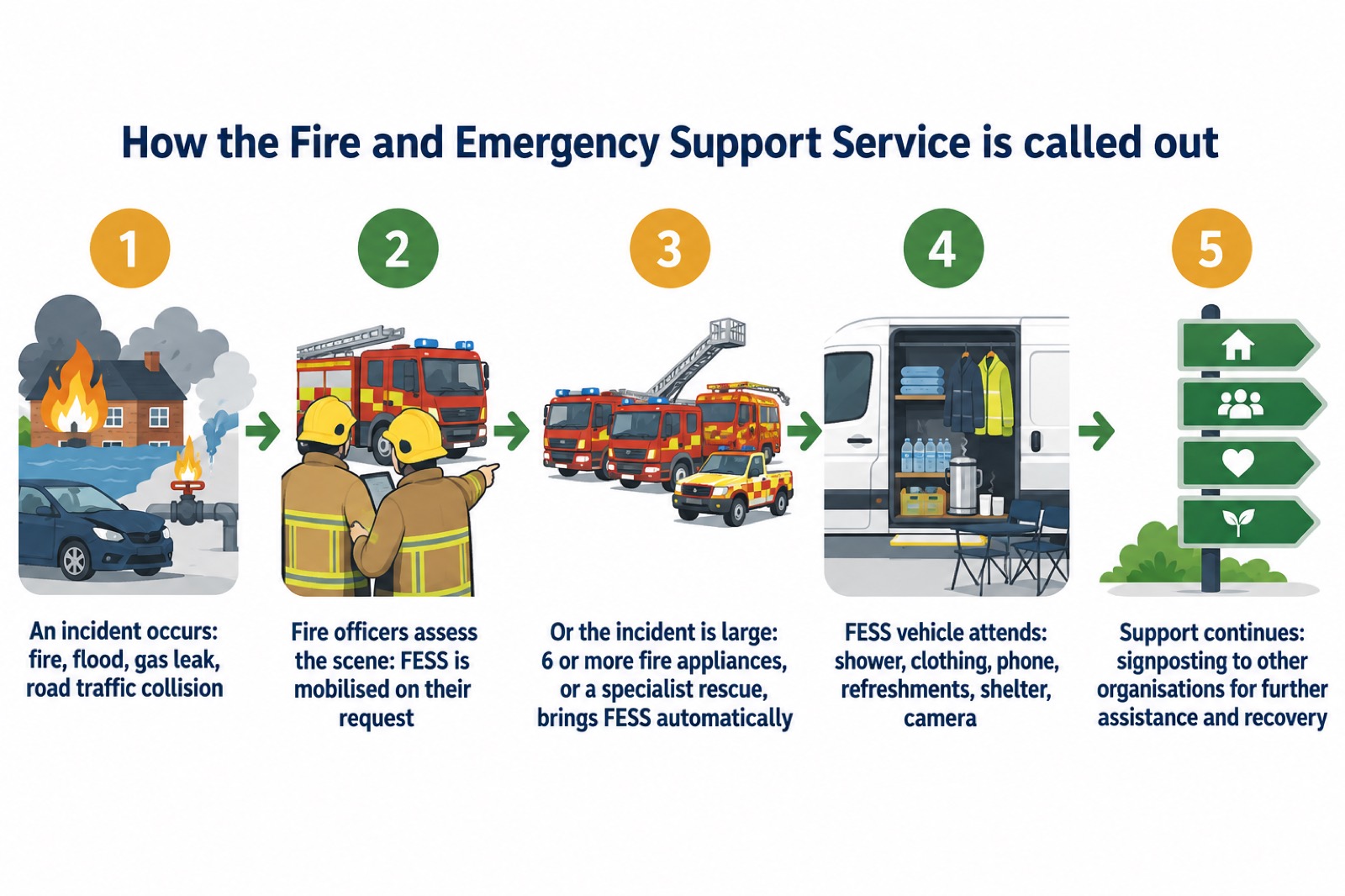
You cannot call FESS out yourself. The vehicle is mobilised on the request of fire officers at the scene of an incident16. In Warwickshire, the vehicle is based at Kenilworth fire station16; in Northern Ireland, teams are located strategically at Cadogan, Crescent Link and Enniskillen Fire Stations, providing a 50 mile radius cover or 70 minute travel time to any incident, 24/7/3655.
There is also an automatic trigger. FESS teams automatically attend large scale incidents where 6 or more fire appliances are required, and specialist rescue incidents including water rescue, rope rescue, body recovery, farming accidents and flooding5. To put that threshold in context, some fire and rescue services now send, as a minimum, six fire engines and an aerial ladder platform to all confirmed fires in high rise buildings18, which means a confirmed fire in a tower block will bring FESS with it. The teams are volunteers from the British Red Cross who give their time freely, responding to incidents 24/7/3655.
Help during a long power cut
Voluntary organisations come into their own when an emergency stretches over hours or days. A long power cut is the classic case. Councils' civil contingencies arrangements treat the voluntary sector as a principal concern in an emergency situation, covering support for the emergency services, support and care for the local and wider community, and co-ordination of the response by organisations other than the emergency services9. Voluntary groups often hold the local knowledge: Argyll Voluntary Action, for example, is in contact with large numbers of older people through its work with "Reshaping Care for Older People", and some of these may become at risk if, for example, power is out for lengthy periods9.
For your own household, the first call in a power cut is not a charity but your electricity network operator: dial 1056. Around you, neighbourhood groups are advised to make a plan to check in on people who might need help if an emergency happens, particularly if the power goes out12. If you want to be one of the people doing the checking, our guide to checking on vulnerable neighbours in an emergency and our page on power cuts set out what to do safely.
Rest centres, transport and food parcels
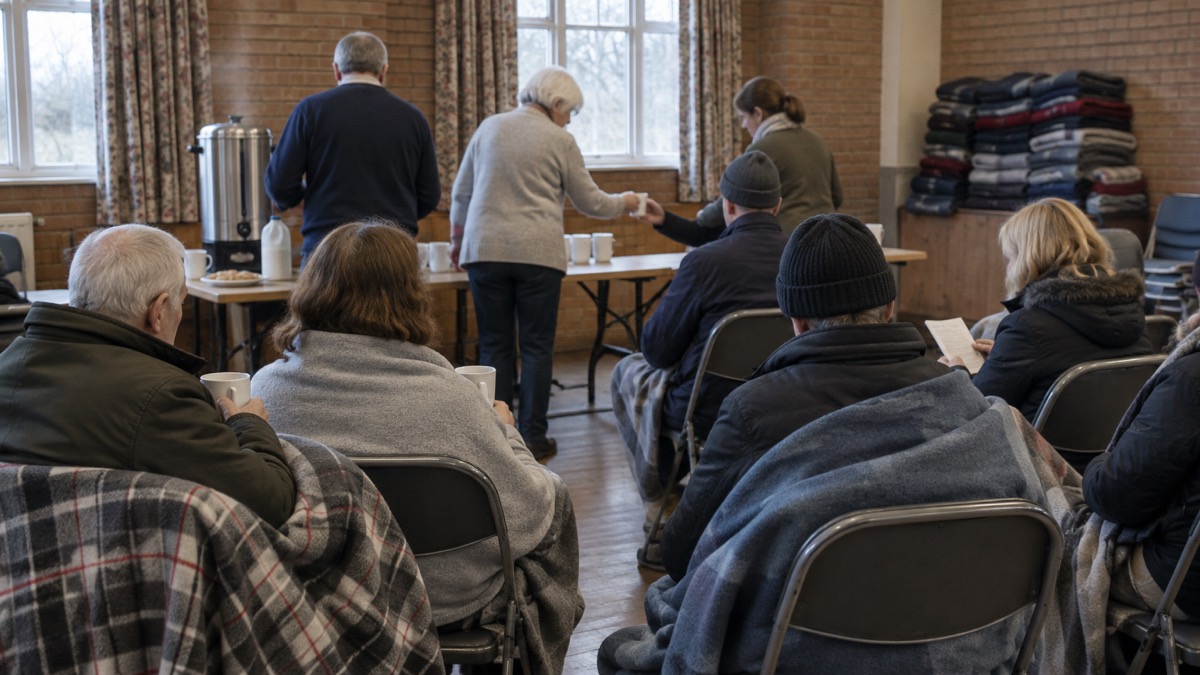
When homes have to be evacuated, the council opens a rest centre. Nottinghamshire's emergency accommodation plan details how the council provides emergency accommodation, including setting up and running a rest centre when homes and communities need to be evacuated, and how it will work with other agencies including police, fire, ambulance, district and borough councils and voluntary agencies19. Rest centres provide short-term shelter, warmth, food and refreshment, and are usually in local venues such as a leisure or community building20.
Voluntary organisations staff and supply these centres. The Salvation Army can respond to emergencies by providing on-site refreshments and emotional support to responders and those affected, support at rest centres or humanitarian assistance centres, support to family and friends at an emergency mortuary viewing area, acting as a conduit for relevant faith support, and providing personnel to assist at any support helpline set up following an emergency3. Community plans name the same roles at village level: Aberaeron's community emergency plan in Wales designates its leisure centre as a local authority rest centre and safe place, and its memorial hall as a primary volunteer reception centre, with volunteers to provide refreshments at non-local-authority rest centres such as the church hall21.
If you are evacuated with a pet, rest centres and their voluntary helpers are part of the arrangement for animals too; see our pets and animals guide. If you turn up at a rest centre to volunteer during an emergency, be patient: you may be asked to come back later or do another task, your details and contact information will be taken, and unknown volunteers are always supervised and supported4.
Short-term help with essentials when money runs out
The aftermath of an emergency often creates costs a household cannot immediately meet: clothing, food, a night's accommodation, travel. The Red Cross offers emergency help with things like accommodation, clothing and food, as well as help dealing with insurance companies7. Contact it through redcross.org.uk/get-help7.
Voluntary organisations also plug gaps for the responders. Dorset Search and Rescue, known as DorSAR, has a particular shortage of support volunteers for non-operational tasks such as administrative processes, writing grant applications, fundraising and raising the profile of the organisation3. That is worth remembering if you want to help but cannot commit to operational training: the behind-the-scenes work is what keeps the front-line help funded and organised. Our page on funding for local resilience groups covers where community groups can apply for grants.
Free emergency workshops for households and communities
You do not have to wait for an emergency to meet these organisations. Somerset Council will, on request, give talks on emergency planning and what can be achieved to provide community self-help during emergencies22. Councils and resilience forums elsewhere run similar sessions, and joining one before anything happens is the single most useful step a household or street can take.
For organisations, government publishes structured guidance for the voluntary and community sector. A flood-health action card, published in March 2025, summarises suggested health-related actions for voluntary and community sector organisations, including broad-based providers, emergency response organisations, campaigning organisations, representative groups, community centres, parish councils and neighbourhood forums, before, during and after flooding23. During flooding, such organisations are advised to mobilise volunteers to assist vulnerable individuals with evacuation or staying safe in place, and to provide shelter and essential supplies23. A heat-health alert action card similarly advises the sector to complete an audit of organisational community emergency plans and hot weather plans to ensure these are up to date before summer, and on an amber alert to support organisations to reduce unnecessary travel, review the safety of public events and mobilise community and voluntary support24.
If you would like to help during an emergency, look out for calls for support from local community groups and your local council; in some emergencies calls for support may come from national government or national voluntary organisations25. Joining or supporting a local volunteering or community group before an emergency happens, such as a local charity, a flood action group or a Neighbourhood Watch, puts you in a position to answer those calls13. Our community resilience guide gathers the options, from flood action groups to good neighbour schemes.
How to volunteer in emergencies
The clearest finding from official guidance is this: volunteers from recognised organisations are more likely to be used than "ad hoc" volunteers, as their background will be known to their organisation managers and their skills recognised4. Spontaneous goodwill is real and common, but in a live incident the responders need people whose training and vetting they can trust. The route that works is to join and train beforehand.
The options span a wide range of commitment and physical demand:
| Route | What it involves |
|---|---|
| FESS with the British Red Cross | Trained volunteers supporting households after fire, flood and similar incidents16 |
| REACT | Response Volunteers trained to react to emergencies such as floods and power outages12 |
| 4X4 Response UK | Logistical support during severe weather using your own 4x4 vehicle12 |
| Coastguard Rescue Service | Volunteer coastguard rescue officers rescue trapped people, search for missing people and support emergency services during floods12 |
| Fire service volunteering | For example, Greater Manchester Fire and Rescue Service volunteers deliver informative, educational and practical support in communities13 |
| Search and rescue support roles | Non-operational tasks such as administration, grant applications and fundraising3 |
FESS volunteering is a good illustration of what is asked. To volunteer you should be caring and keen to help others in need, enjoy meeting people from different backgrounds, understand the needs of people who are distressed, and be reasonably fit and healthy16. As a volunteer you will receive all the necessary training to perform the required tasks, including working with the fire service at the scene of an incident, first aid and assisting people with disabilities16. Our page on volunteering in emergencies sets out the roles you can train for, and what volunteers can safely do, and where to stop covers the limits.
Mountain, lowland and water rescue
Search and rescue work is largely done by volunteer charities. Dorset Search and Rescue is one example, and its stated need for non-operational support volunteers shows that these charities run on administrators and fundraisers as much as on searchers3. On the water side, the boats mostly belong to the emergency services: London Fire Brigade's fire rescue units provide urban search and rescue, rope rescue and water rescue capabilities, and are equipped with a boat, while its hazmat units provide a specialist response to hazardous materials incidents, water rescue and animal rescue26. The Brigade operates 155 fire engines from 102 fire stations providing an emergency response 24 hours a day, all year round26, and during floods it typically also assists other services, including police, ambulance and environmental health, to help people to safety27. Its flood response uses 3.8m Emergency Rescue Boats with 15hp outboard motors and trained swift water rescue technicians27.
If you live or holiday on a boat, the same network applies: nidirect advice for boat fires is to raise the alarm with the emergency services and neighbouring craft, and to use an emergency grab bag28. For the community side of flood response, see community flood plans and flood wardens.
Where to get help: a quick reference
- After a fire or flood damaging your home: the FESS vehicle may attend automatically at large incidents, or be requested by fire officers5
- Red Cross emergency help: redcross.org.uk/get-help, for accommodation, clothing, food and help with insurers7
- Power cut: dial 1056
- Evacuation: go to the rest centre named by the council, usually a leisure or community building20
- Wanting to help during an emergency: watch for calls from local community groups, your council, or national government and voluntary organisations25
- Wanting to help before one: join a recognised organisation, from a flood action group to FESS itself13
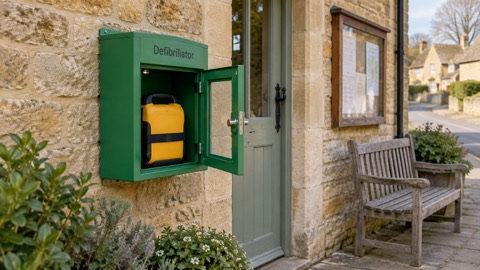
One further route worth knowing: you can register as ResusReady through the Resuscitation Council UK website and add yourself to the growing network of people prepared to help in a cardiac arrest29. The Royal Voluntary Service, one of the voluntary agencies councils call out in an emergency9, can be reached on 0845 601 467030. Neither replaces the emergency services: always call 999 when life is at risk.
Sources (30)
- What is a Local Resilience Forum?, Essex Prepared
- Community resilience, Met Office
- Community involvement, Dorset Prepared, 2026-03-25
- Northumbria Local Resilience Forum, Northumberland County Council, 2026-10-28
- Fire and Emergency Support Services volunteering, Northern Ireland Fire and Rescue Service, 2026-04-03
- Emergency information, Basingstoke and Deane Borough Council, 2026-10-29
- Financial help after fire, GOV.UK, 2026-10-29
- Check the risks where you are, Be Ready campaign, 2026-10-20
- Roles and responsibilities of emergency responders, Argyll and Bute Council, 2026
- Preparing for emergencies, Somerset Council, 2026-09-17
- Be prepared, West Yorkshire Prepared, 2026-10-29
- Volunteering and helping others, Prepare campaign, 2026-10-19
- Prepare your community, Greater Manchester Combined Authority, 2026-10-29
- Partnership working in emergency management, Ready Scotland, 2026-03
- Steps after a fire, North Yorkshire Fire and Rescue Service, 2026-06-17
- Fire and Emergency Support Service, Warwickshire County Council, 2026-10-29
- Emergency help and advice, London Councils / GLA, 2026-10-26
- FAQs about safety in high rise premises, Dorset and Wiltshire Fire and Rescue Service, 2024-09-03
- Council emergency plans, Nottinghamshire County Council, 2026-10-29
- Pets in emergencies, West Yorkshire Prepared, 2026-10-29
- Aberaeron Community Emergency Plan, Aberaeron Town Council, 2024-05-08
- Preparing for emergencies: community self-help, Somerset Council, 2026-09-17
- Flood-health action card for the voluntary and community sector, GOV.UK, 2025-03-27
- Heat-health alert action card for the voluntary and community sector, GOV.UK, 2024-12-19
- Be informed about hazards, Prepare campaign, 2026-10-22
- Respond to emergencies, London Fire Brigade, 2026-10-25
- Flood response, London Fire Brigade, 2026-10-29
- Fire and summer safety advice, nidirect, 2026-07-03
- Cardiac arrest, East of England Ambulance Service, 2026-10-29
- Community emergency plan toolkit, GOV.UK, 2016-09
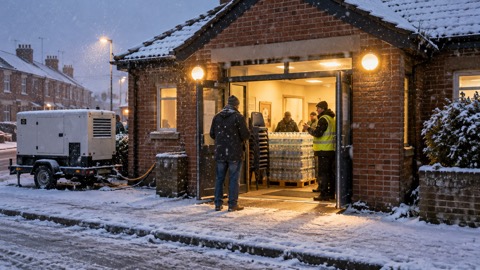 Emergency Hub Kit Checklist
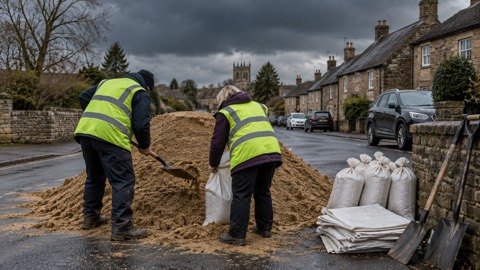 Severe Weather Tasks for Groups
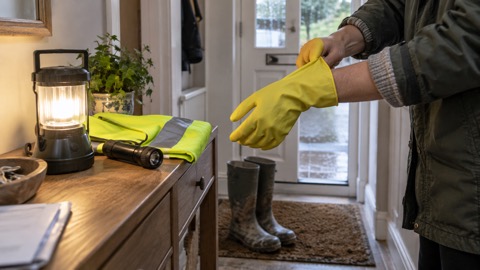 Flood Warden Checklist
 Setting Up an Emergency Group
 Volunteering in Emergencies
 What Volunteers Can Safely Do
 Community Flood Plans
 Flood Wardens
 Starting a Flood Action Group
 Clearing Snow and Ice
 Community Emergency Hubs
 Checking Vulnerable Neighbours
 Neighbourhood Phone Trees
 Registering and Looking After a Village Defibrillator on The Circuit
 Funding Resilience Groups