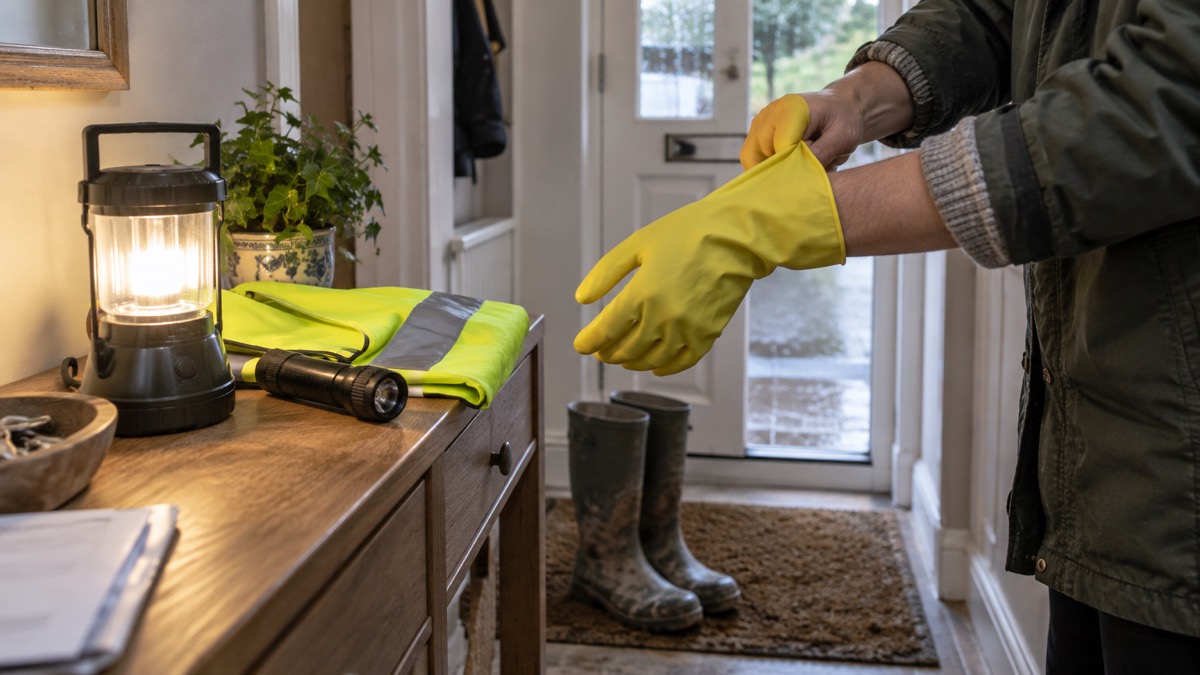
A flood warden is a local volunteer who helps a community prepare for, respond to and recover from flooding1. The role is not a rescue service. Wardens are not first responders, personal safety comes first, and anything that puts life at risk is escalated to the authorities1. What a warden can do is hold the community flood plan, keep the contacts current, pass on warnings, advise residents and record what happened.
The checklist below runs in the order a warden needs it: what to have ready before any warning, what to do when one arrives, what to do while water is about, and what to do afterwards. It is built for the person who has just taken on the role, or for a flood group checking that its arrangements are still sound.
The flood warden checklist: before, during and after a flood
Work through this list in order. Each item says why it matters, and the sections that follow explain how to keep each one ready.
Keeping the community flood plan ready: risks, contacts and actions in advance
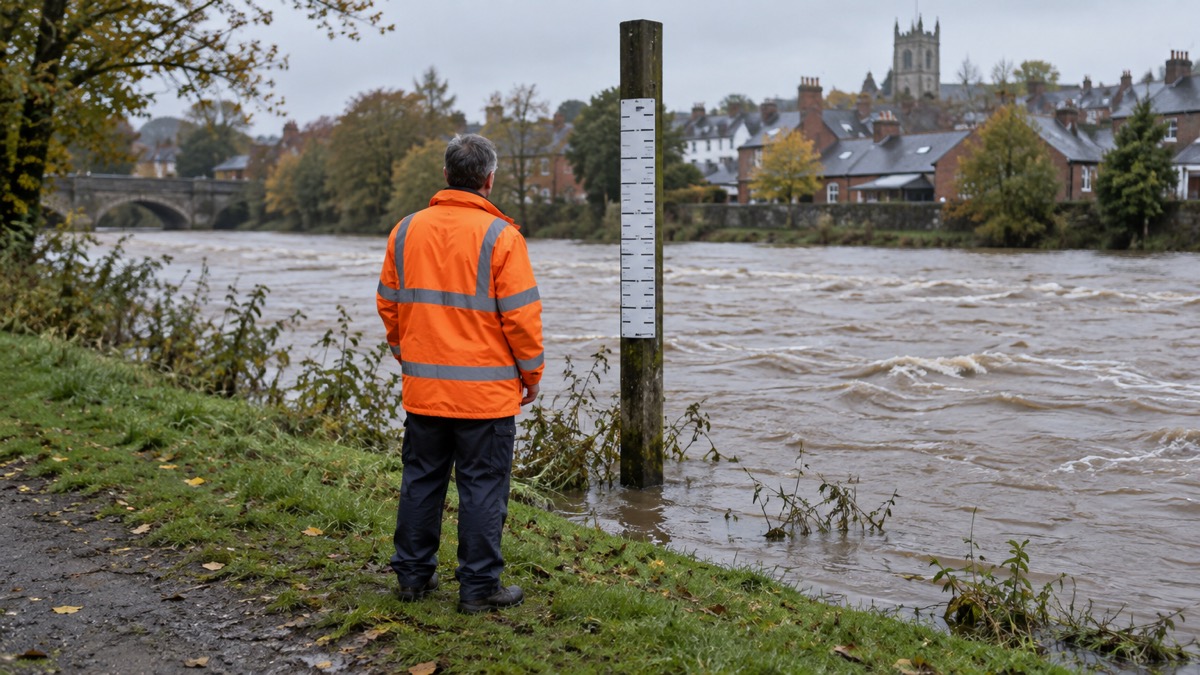
The plan is the warden's core document. Natural Resources Wales sets out what a community flood plan should include: details of the flood risk in the area, a list of contacts including the community flood lead and flood volunteers, how to report an incident, the actions to take before, during and after a flood, when to take action, how information is shared within the community, and how often the plan will be tested and reviewed4. Thurrock Council puts it plainly: formalise what you intend to do by developing a community flood plan covering the information needed before, during and after a flood12.
The government publishes a community flood plan template that applies to England13. It is written for people active in the local community, leaders of community groups, local responders, people working in the voluntary sector and any other interested members of the community14. Cambridgeshire County Council has published a webinar on what to include in a community flood plan, covering GDPR implications, warning triggers, equipment and insurance, and reviewing, updating and testing the plan15.
| Part of the plan | What it holds | Why it matters |
|---|---|---|
| Risk | The flood risk in your area | Tells wardens where to watch and who to warn4 |
| Contacts | Community flood lead, volunteers, council, emergency services, insurers | The list you reach for first4 |
| Reporting | How to report an incident | Gets the right body responding4 |
| Actions | Before, during and after a flood | Removes decisions from the moment itself4 |
| Triggers | When to take action | Ties action to warnings, not guesswork4 |
| Sharing | How information moves round the community | Keeps messages consistent4 |
| Review | How often the plan is tested and updated | Stops the plan going stale4 |
Keep the plan tested and reviewed on the schedule it sets. A plan nobody has read since it was written will not survive contact with a real warning.
What a flood warden must never do: flood water, rescues and heavy lifting
The limits are the most important part of the checklist, because they are what keeps wardens safe and useful.
The list of things wardens cannot do is short and firm. Flood wardens cannot stop flooding, cannot rescue you if you are in danger (you should call 999), cannot clear gulleys and streams while they are in full flow because that is dangerous, and must not go into flood water2. The same safety warning is direct: do not enter flood water, because of its depth, contamination and hidden hazards, and do not lift heavy objects alone, but escalate to the appropriate authority16. Never walk in floodwater, and never drive through flood water17.
"Do not walk, drive or swim through flood water"
There is a second limit that is less obvious. A flood warden is there to provide advice and co-ordinate the response effort, not to get physically involved, and should refuse to lift anything too large, awkward or heavy5. Cheltenham Borough Council tells its wardens not to undertake any activity they are not comfortable with10. Being part of a community flood group is not an emergency service role, and nobody should undertake activities that could put their life or others in danger4.
Electrical hazards belong here too. Do not touch an electrical switch if you are standing in water20, and do not touch electrical sources while standing in flood water21. If a property is at risk, the householder should turn off gas, electricity and water before flood water enters, and never touch electrical sources while standing in water21.
Personal details in the plan must be stored securely and shared only with permission
A community flood plan only works if it names the people who need help, and that means holding personal information. The rules are clear. You must have people's permission to store their details securely, and the information should only be shared with the emergency services during a flood, not passed to any other people or organisations4. The government template says the same: make sure you comply with GDPR regulations when gathering personal information from people13.
In practice, that means a few habits:
- Ask before you record. When someone gives you their details, tell them what the plan is for and who may see it4.
- Keep the list secure. Store it where only those who need it can reach it, not on an open noticeboard or a shared drive anyone can browse4.
- Share only in a flood, only with the emergency services. Not with other organisations, not with other residents4.
- Record vulnerable residents carefully. Identify properties with disabled, elderly or infirm residents and store that information in the plan in line with data protection guidance5.
- Ask permission to pass details on. Natural Resources Wales asks for your name, postcode and whether it has permission to pass your details on4.
Becoming a flood warden, and who leads the response
Schemes are run locally, so the route in depends on where you live. In Wiltshire, contact the Environment Agency's Flood Resilience Team for information, training, guides, templates and a quarterly flood warden newsletter, or the county's prepared team for the Swindon area22. Wiltshire has approximately 500 flood wardens throughout Wessex22. Cheltenham Borough Council asks for a reasonable level of fitness so you can monitor the watercourse or area at risk, and provides a full training session, flood warden handbook, high-vis jacket, volunteer lanyard and ID card10. Nottinghamshire's Flood Signage Warden role needs no previous experience or a huge amount of commitment, and you register by emailing to express interest23. In Harborough, email the volunteer address or visit the Leicester, Leicestershire and Rutland volunteering page1.
Training varies. The Devon Pathfinder programme ran six modules covering an introduction to flood risk issues, the role of the emergency services, the use of sandbags, the role of a flood group, health and safety risks and personal protective equipment24.
Who leads what is worth being clear about before an incident:
| Body | Role |
|---|---|
| Emergency services | Responsible for public safety and co-ordinating the incident response13 |
| Environment Agency | Strategic overview of flooding, manages main rivers and coastal flooding, issues flood warnings1 |
| Local authorities | Co-ordinators of the warden scheme, advising and supplying wardens with information22 |
| Flood wardens | Lead the community response, with a single overall lead co-ordinating wardens for specific neighbourhoods3 |
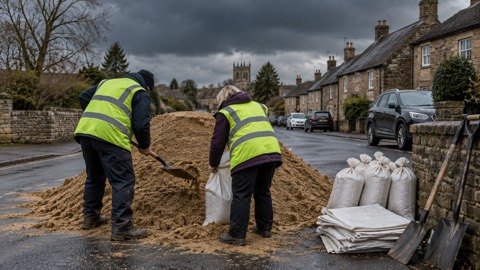
Wardens are a first point of contact for residents during a flood event and give advice and information during dry periods22. They can help keep streams and culverts near homes clear if residents cannot, provided the water is not running fast or deep, contact residents when there is a flood risk, keep in touch during a flood, advise where sandbags can be had, deliver sandbags if not busy elsewhere, and support the local authority if roads close or a rest centre opens2.
Before a flood: warnings, kits and the household side
A warden who is not personally prepared is a warden who cannot help. The Derby and Derbyshire handbook recommends ensuring you are personally well prepared so you can quickly implement your own flood plan before helping others, and points to the Environment Agency's personal flood plan template5. The Met Office's three-point plan is to check whether your property is at risk, and if it is, prepare a flood plan and an emergency flood kit25. Being part of a community flood group is not an Emergency Service role, and you should not undertake any activities which could put your life or others in danger26.
Warnings come in levels. A flood alert means be prepared: prepare a bag that includes medicines and insurance documents, and check flood warnings8. In Wales, a flood alert means be prepared, and the advice is to prepare a flood kit of essential items, monitor local river levels, check the five day flood risk, and for farmers to consider moving livestock and equipment away from areas likely to flood16. When a local flood warning is in place, ensure you have a sufficient stock of food, water and medication26.
A household flood kit should include a torch, blankets, waterproof clothing, wellingtons, a portable battery-powered radio, a first-aid kit, rubber gloves and key personal documents, kept upstairs if possible11. The Scottish Environment Protection Agency publishes a cut-out checklist to prepare your kit and a label to stick on the box so you can find it when you need it27.
When flooding is forecast, the checklist for residents is to keep your mobile phone fully charged, protect belongings, property and pets, move your vehicle out of the flood risk area, move important documents and valuables to a safe place, ensure flood protection products are in place and working, move pets and animals to a safe place with enough food and water, and check in on people9. If you have to leave, turn off the gas, electricity and water before flood water enters your home, lock gates, sheds and garages, close and lock doors and windows, set the burglar alarm, take house keys and put spare keys out of the reach of letterboxes21.
During a flood: what wardens do, and when to call 999
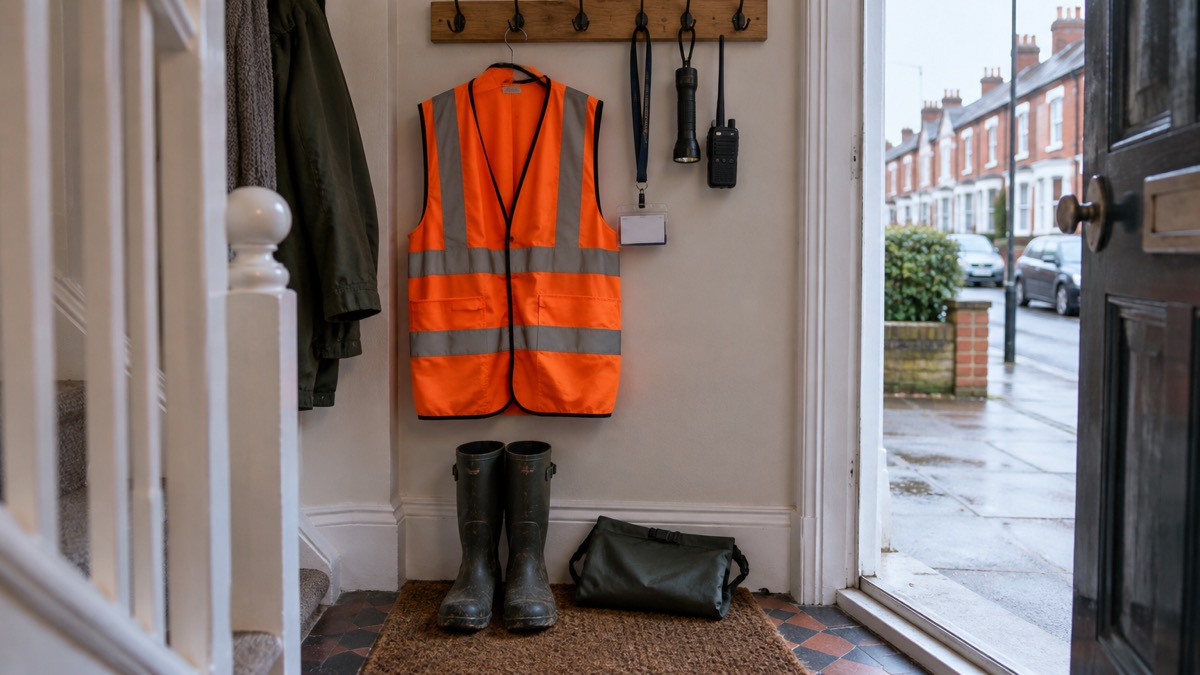
During an incident the warden's job is communication and co-ordination. Keep in touch with residents, pass on warnings, say where sandbags can be had and support the local authority if roads close or a rest centre opens2. Do not enter water, do not attempt a rescue, and do not clear a watercourse in full flow1.
Call 999 when there is danger to life2. For flood warnings and information rather than an emergency, the Environment Agency Floodline runs 24 hours on 0345 988 1188, with a textphone on 0345 602 63403. The Derby and Derbyshire handbook calls the Floodline number and local quick dial code possibly the most important piece of information a flood warden can pass on to local residents5. Many but not all parts of the country are covered by the Flood Warning Service, so check by calling Floodline or at the government's flood risk checker5.
In Wales, Natural Resources Wales runs the warning service, and you can sign up for more than one location, such as your home address, a business, other property you own or a relative's house28. If you are outside a warning area, you can sign up for the nearest relevant area by searching by town or city and selecting from the list28.
After a flood: recording, recovery and referring residents on
The recovery phase is where wardens earn their keep. Cheltenham Borough Council's wardens help collect flooding information, including where and when water levels rose and which properties were affected10. That record is what a community needs for its next plan review and for conversations with the council.
Residents need clear, safe advice. Natural Resources Wales says never walk in floodwater30. The fire and rescue service says to have electricity and gas checked by your supplier or a qualified technician before switching them on11. Nottinghamshire County Council advises ensuring important documents are safe, including home insurance details31.
Wardens should also be honest about what they cannot do. They cannot make a flooded home safe, repair electrics or assess structural damage. Refer residents to their supplier, their insurer and their council, and keep the community plan's contact list to hand.
Where to get help and how to join in
- England: the government's community flood plan template and its help page for people affected by flooding13. Floodline on 0345 988 1188, 24 hours3.
- Wales: Natural Resources Wales's community flood planning pages, and befloodready@cyfoethnaturiolcymru.gov.uk to find out whether there is a community flood group in your area and to ask about a simulated flooding event4. Sign up for warnings at more than one location28.
- Scotland: the Scottish Environment Protection Agency's guidance on preparing for, and dealing with, flooding before, during and after19.
- Northern Ireland: nidirect's advice on preparing for a flood, including keeping a list of useful contact numbers such as your local council, the emergency services and your insurance company6.
If you want to take the role on, start with your local council or existing flood group. If you want to build the group around you, see Setting Up a Local Emergency Group and Community Flood Plans: What to Include and How to Use One. For the role itself in more detail, read Flood Wardens: What They Do and How to Become One. Households preparing for the water itself will find Flooding: A Household Guide and the Emergency Kit section useful.
Sources (32)
- Be Flood Ready: Guidance for Flood Wardens, Harborough District Council, 2026
- Crickhowell and Surrounding Villages Flood Warden Scheme, Llangattock Community Council, 2026
- Community Flood Plan Template, London Borough of Merton, 2026
- Community Flood Plan, Natural Resources Wales, 2026
- Derby and Derbyshire Flood Warden Handbook, Parwich Parish Council, 2019
- Preparing for a Flood, nidirect, 2025
- How to Prepare for Flash Flooding, London Assembly, 2026
- Northumbria Local Resilience Forum, Northumberland County Council, 2026
- Flooding Checklist for Residents, Perth and Kinross Council, 2024
- Flood Wardens, Cheltenham Borough Council, 2026
- Flooding Advice, Mid and West Wales Fire and Rescue Service, 2026
- Community Flood Planning, Thurrock Council, 2026
- Community Flood Plan, GOV.UK, 2023
- Community Flood Plan Template, GOV.UK, 2012
- Community Flood Group Resources, Cambridgeshire County Council, 2026
- What to Do in a Flood, Natural Resources Wales, 2026
- How to Prepare for Flash Flooding, London Assembly, 2026
- Staying Safe in Flooding, West Midlands Ambulance Service, 2026
- Before, During and After a Flood, Scottish Environment Protection Agency, 2026
- Help During a Flood, GOV.UK, 2026
- Flood Evacuation Checklist, London Borough of Croydon, 2025
- Flood Wardens, Wiltshire and Swindon Prepared, 2026
- Schemes to Help Reduce Flooding, Nottinghamshire County Council, 2026
- Devon Pathfinder Community Resilience Flood Report, Devon County Council, 2020
- Stay Safe in Heavy Rain, Met Office, 2026
- West Yorkshire Prepared Flooding Checklist, West Yorkshire Prepared, 2026
- SEPA Flooding Leaflet and Checklist, Scottish Environment Protection Agency, 2024
- Sign Up to Receive Flood Warnings, Natural Resources Wales, 2026
- Flood Action Week 2026, Wiltshire and Swindon Prepared, 2026
- What to Do After a Flood, Natural Resources Wales, 2026
- During a Flood, Nottinghamshire County Council, 2026
- Thunderstorms Weather Warning: Advice and Information, nidirect, 2026
 Emergency Hub Kit Checklist
 Severe Weather Tasks for Groups
 Carer's Emergency Plan