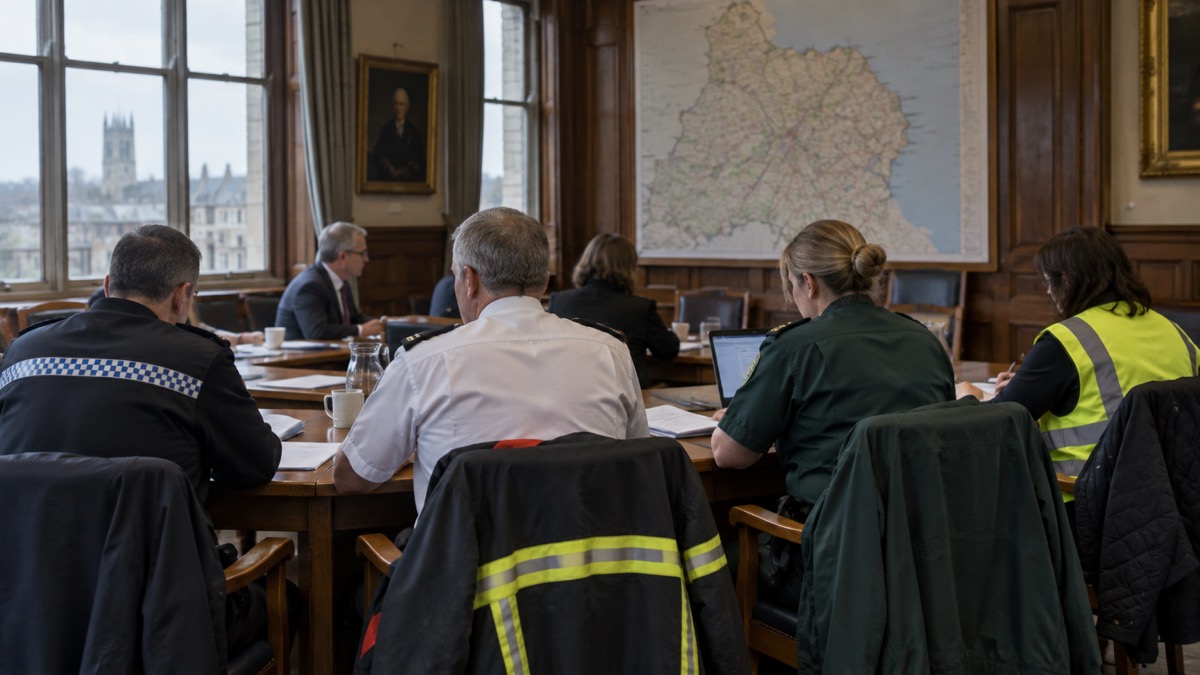
Somewhere near where you live, a standing partnership of the police, the fire and rescue service, your council, the NHS and the utility companies meets regularly to work out what could go wrong in your area and what would be done about it. That partnership is your Local Resilience Forum, and almost every part of the UK has one. Its job, in the government's own words, is to "identify potential risks and produce emergency plans to either prevent or lessen the impact of" an incident on local communities1.
For an ordinary household, the forum matters for three practical reasons. First, it publishes a Community Risk Register listing the risks most likely to cause disruption in your region, so you can see what your area actually plans for2. Second, its website carries local emergency advice and alerts, which is where you would turn for information during an incident. Third, its plans cover things that directly affect you if the worst happens: evacuation, rest centres, support for people who need extra help, and coordination with utilities when the power or water fails.
This page explains what a Local Resilience Forum is, who sits on it, how the arrangements differ across England, Wales, Scotland and Northern Ireland, and how to find and use your own forum's published information. It sits alongside our wider guide to how the UK prepares for emergencies.
What a Local Resilience Forum actually does
A Local Resilience Forum (LRF) is a multi-agency partnership that brings together the organisations with a legal duty to plan for emergencies in a specific geographical area3. It is not a separate authority with its own powers. The Northumbria forum puts this plainly: it is "not a statutory body, but each of its members have statutory duties under the Civil Contingencies Act, 2004"5. The forum is the table at which those members sit together, so that when an incident happens, the police, the council, the NHS and the water company are not meeting each other for the first time.
The day-to-day work falls into a few broad streams. The forum assesses local risks and maintains the Community Risk Register3. It writes and maintains multi-agency plans: Greater Manchester's Resilience Forum, for example, has plans in place for "flooding, major fires and power cuts, as well as generic plans such as the Generic Response Plan and Shelter and Evacuation Guidance"6. It tests those plans through exercises and workshops, so agencies can practise their roles and identify improvements before a real incident6. And it has a duty to warn, inform and advise the public, both before an emergency, through published risk information, and during one, through alerts and public information2.
The scale of this work is larger than most people expect. Lancashire Resilience Forum, which covers 1.53 million residents across 3079 km², works with more than 70 partners, maintains 41 multi-agency plans and tracks 92 risks on its register7. Surrey's forum runs sub-groups on welfare, command and coordination, risk assessment, adverse weather, training and communications, and publishes the Surrey Community Risk Register every year4. Derbyshire's forum is responsible for the overall direction and policies of emergency planning in the county8.
If you want the deeper legal background, see our pages on the Civil Contingencies Act 2004 and what counts as an emergency in UK law.
Who sits on the forum
The core membership is drawn from what the Civil Contingencies Act calls Category 1 responders: the organisations at the heart of any emergency response. In England these are the police, fire and rescue services, ambulance services, NHS bodies, local authorities and the Environment Agency3. Cheshire's forum describes them as "core emergency services such as the fire and rescue service, police, local authorities and NHS organisations"9. Around them sit Category 2 responders, organisations whose services matter in an emergency but who play a supporting role: utility companies, transport providers and the Health and Safety Executive9. Category 2 responders must cooperate with Category 1 responders and share relevant information with the forum10.
| Who | Category | Examples |
|---|---|---|
| Emergency services | 1 | Police, fire and rescue, ambulance |
| Local authorities | 1 | County, district and borough councils |
| NHS bodies | 1 | Ambulance service, NHS England, health boards |
| Environment agencies | 1 | Environment Agency (England), SEPA (Scotland) |
| Utilities | 2 | Electricity, gas, water and telephone companies |
| Transport | 2 | Transport providers, National Highways |
| Regulators | 2 | Health and Safety Executive |
The emergency services respond to the incident itself3. Beyond that, the forums are partnerships rather than fixed hierarchies: in West Yorkshire, the emergency services, health services, Local Authorities, Government agencies, utility companies and voluntary organisations work together to make sure plans are in place for dealing with, and recovering from, emergencies11. In Surrey, NHS England South (South East) is a Category 1 health partner, alongside GP practices, dentists, pharmacists and opticians4.
The health side is broader than hospitals. Surrey's forum includes NHS England South (South East) as its Category 1 health partner, plus GP practices, dentists, pharmacists and opticians as other health partners4. The voluntary sector is increasingly part of the picture too: Greater Manchester's plans go through review with input from Category 1 and Category 2 responders and from Voluntary, Community, Faith and Social Enterprise partners6, and West Yorkshire's forum lists organisations including the British Red Cross, Mountain Rescue teams, 4x4 Response and REACT Disaster Response among those that may be called on to assist11.
Leadership varies by area rather than by rule. Greater Manchester Resilience Forum is chaired by Greater Manchester Police12. For a fuller picture of the responder categories, see Category 1 and Category 2 responders: who they are.
One forum per police area: 38 in England and 4 in Wales
The geographical area each forum covers is based on police areas13. That is why a forum's boundary does not always match county lines: Northumbria's forum covers Northumberland and Tyne and Wear5, Greater Manchester's covers the city region's 10 districts of Bolton, Bury, Manchester, Oldham, Rochdale, Salford, Stockport, Tameside, Trafford and Wigan6, and Lancashire's covers a much larger and more rural patch7.
The national picture, as set out in the 2023 National Risk Register and repeated in the government's Resilience Action Plan, is 38 Local Resilience Forums in England and four in Wales14. The Welsh Government confirms it works with its 4 regional Local Resilience Forums15. Each of these forums brings together all the responder organisations that have a duty to assess risks and plan for emergencies under the Civil Contingencies Act15.
Finding yours is straightforward. Search for your county or city name together with "resilience forum" or "prepared", and you will usually land on the forum's public-facing site. Some forums use a local campaign name: West Yorkshire Prepared is the Local Resilience Forum for West Yorkshire11. Your county or city council's emergency planning pages will also name the local forum, as Derbyshire's and Surrey's do8.
A programme to strengthen forums is under way in England: the Stronger LRF Trailblazer Programme was launched in April 2025 in Northumbria, Cumbria, Greater Manchester, Suffolk and London, and you can read more about it on our page about the England pilots.
Scotland and Northern Ireland: different names, same job
If you live in Scotland or Northern Ireland, the partnership exists but under a different name. The equivalent of Local Resilience Forums in Scotland are Regional Resilience Partnerships, and there are three of them2. The equivalent in Northern Ireland are Emergency Preparedness Groups2. Together with the 38 English forums and the four Welsh forums, these partnerships "play a critical role in bringing local responders, such as the emergency services, local authorities and health bodies, together to plan for emergencies"14.
Scotland's responder landscape has its own shape. Category 1 responders there include Local Authorities, Police Scotland, British Transport Police, Scottish Fire and Rescue Service, Scottish Ambulance Service, Health Boards, the Scottish Environment Protection Agency (SEPA), the Maritime and Coastguard Agency and Integration Joint Boards16. The Regional Resilience Partnerships support local resilience planning, response and recovery arrangements16. Details for the partnerships can be found on the Scottish Government's Ready Scotland website2.
So wherever you are in the UK, there is a partnership covering your area, publishing risk information, and reachable through your council or the national campaign sites.
The Community Risk Register: the risks most likely to affect your area
Every forum's single most useful publication for households is its Community Risk Register. Each Local Resilience Forum publishes one, setting out "the different risks most likely to cause disruption in your region"2. The register is built from Community Risk Assessments that identify potential risks and hazards, such as floods, industrial accidents and pandemics, that could impact the local area3. Lancashire's forum describes its register as one that describes risks for the community and assesses how likely they are to lead to an emergency and the potential impact they would have17.
The registers do not start from a blank sheet. Local risk registers focus on the highest priority risks in each local area, and the National Risk Register should be read in conjunction with the Community Risk Register for your area14. Lancashire's forum, for example, refers to the National Risk Register in order to consider national issues alongside the local risk context and identify the risks within the county17. For how the likelihood and impact ratings in these documents work, see our page on how emergency risks are scored and our guide to the National Risk Register.
What appears on a register depends entirely on where you live. Essex's forums coordinate risk assessments and response plans for industrial accidents and pollution events, reflecting the industry and coastline of the county18. West Yorkshire Prepared regularly carries out risk assessments to review the types of risks facing the region, and points residents to its Community Risk Register for more information11. The West Midlands register, produced by the West Midlands Local Resilience Forum, states its own purpose plainly: it is "designed and produced by West Midlands Local Resilience Forum to inform people and better prepare them for risks where they live or work"19. Surrey's forum publishes the Surrey Community Risk Register every year4.
Using your local risk register to plan your household
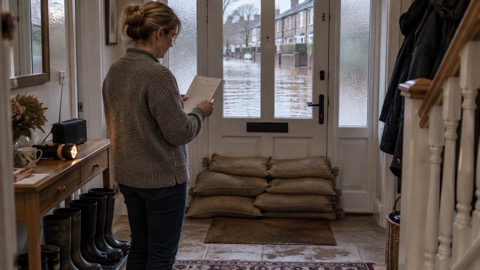
The register is written for planners, but it is published to inform you and help you prepare for the risks where you live or work. Read it and ask a simple question of each entry: if this happened tomorrow, what would my household need for the first few hours and the first few days? A flood entry points you towards our flooding guide and checking your property's flood risk. A power cut entry points towards our power cuts guide and what you would need for lighting and heating and cooking without mains power. A pandemic entry points towards planning for medicine supplies and health emergencies.
The forums themselves encourage this household-level planning. Essex Prepared's community resilience advice includes a direct instruction: "Develop your household emergency plan"20. Our getting started guide walks you through what that plan should contain, and the emergency kit guide covers what to keep ready.
Forums also plan for the risks that need a coordinated response rather than just household preparation. On pandemic and infectious disease risks, West Yorkshire Prepared states that all its partners "have tried and tested plans in place to respond collectively to health pandemics", working closely with the UK Health Security Agency and the NHS, including plans to manage demand for NHS and social care services21. Greater Manchester's NHS organisations and Resilience Forum ensure plans are in place to manage significant increases in demand on health and social care services in a pandemic or outbreak6. Knowing this is planned locally tells you that official information and support arrangements would exist, and where to look for them.
Where a risk has a high impact rating and a high likelihood of occurring, such as flooding, agencies will ensure a plan is in place and regularly reviewed to reduce, control or mitigate the effects of such an emergency6. That is the logic of the whole register: the highest-priority risks get the most planning attention, and they are the ones your household should think hardest about too.
Signing up for local alerts and emergency information
Forums were set up to warn, inform and advise the public in the event of an emergency, and they work with partners in a local area to alert people22. In practice, that means your forum's website and social media channels are the local source of information during an incident, alongside national channels. Denbighshire Council's emergency alerts page describes how each region has a Local Resilience Forum made up of local authorities, the emergency services, the NHS and health bodies and environment-related government agencies, set up to warn, inform and advise the public22. Scottish Borders Council asks local resilience groups to provide information to it in an emergency, part of the two-way flow between responders and communities23.
Before anything happens, do three things:
- Find your forum's website now and bookmark it: your Local Resilience Forum publishes information online about the risks in your local area1
- Check whether your forum offers a sign-up option for alerts: some Local Resilience Forums offer one, to receive news and information about emergencies in your local area13
- Keep a battery or wind-up radio as a fallback, since alerts and official information may need to reach you when the internet does not24
Some Local Resilience Forums offer a sign-up option for alerts, so you receive news and information about emergencies in your local area13. Our staying informed guide covers the full set of channels, and our page on warning and informing explains the legal duty behind it.
Help for people who need extra support
Forums have specific duties towards people who would struggle in an emergency. Official guidance for forums in England, updated on 28 April 2025, defines vulnerable people as "people who are less able to help themselves in the circumstances of an emergency, who must be given special consideration in plans"25. It replaced earlier guidance from 200825.
The guidance is realistic about how such people can be identified. It states that "it would be impossible to maintain a central, up-to-date, list of vulnerable people", and instead recommends the list of lists approach: lists of relevant organisations and establishments, such as care providers, rather than one central register of individuals25. Each forum should agree an overall lead agency for the management of vulnerable persons in emergencies, generally the local authority, and processes for identifying vulnerable persons should be reviewed at least yearly and after significant learning from a response or exercise25.
If you or someone you care for may need extra help, do not wait for an emergency to be counted. Register with your utility suppliers' Priority Services Register, tell your council, and check our guide to extra help in emergencies. Community groups have a role here too: Herefordshire's community resilience advice asks groups to be aware of local risks, keep an emergency contacts list, identify vulnerable members and develop an emergency plan26, and Ceredigion's describes a resilient community as one that is aware of risks and aware of vulnerable people27.
When people are displaced from their homes, the plans include places to go. Our page on humanitarian assistance centres explains what these are, and our guide to who houses you if an emergency leaves you homeless covers the arrangements. The British Red Cross has urged forums and local authority hubs to take advantage of the unique insights of voluntary and community sector organisations to help tackle food insecurity in their local areas and ensure a coordinated approach28. If you are evacuated overnight and choose not to stay at the rest centre, tell the emergency services where you have gone and how you can be contacted, so everyone is accounted for and unnecessary searches are avoided.
Community groups and how forums work with them
Forums do not only plan for communities; official frameworks ask them to plan with them. The Community Resilience Development Framework sets out 6 steps for Local Resilience Forums and emergency responders to develop community resilience29. In Wales, Ceredigion's guidance notes that communities are self-selecting: it is for neighbours and local groups to decide to organise27. Scottish Borders Council keeps a Resilient Communities map so you can check whether there is an active community resilience group in your area23.
Some forums offer practical help to groups that want to test themselves. West Yorkshire Prepared has a ready-made tabletop exercise that a group can use to test its response to various scenarios30, and its community resilience guide is published on its website30. If you run or want to start a local group, our community resilience guide and the forum's own materials are the place to begin. Exercises like these are the same method responders use themselves, as our page on emergency exercises explains.
Military and other specialist help
Forums may coordinate with the military in certain circumstances where specialised capabilities are needed, and military representatives can be involved where required3. West Yorkshire's forum lists the Ministry of Defence among the additional organisations that may be called on to assist it, alongside Mountain Rescue teams, 4x4 Response, the Canal & River Trust, Raynet, REACT Disaster Response, the British Red Cross, the Rapid Relief Team and local voluntary, community and social enterprises11. This help is requested through the established response arrangements. Our page on when the armed forces help in a civil emergency explains how it works.
Forum inboxes are not for emergencies: call 999
Every forum publishes a contact route for general enquiries, and every one of them says the same thing about emergencies. Surrey's forum gives its Secretariat email and notes that the inbox is not monitored out of hours4. Lancashire Prepared states it directly: "The mailbox isn't monitored 24/7, so please do not use this for emergencies"7. Greater Manchester directs general enquiries to its Resilience Forum or Resilience Unit email12.
In an emergency, use the emergency services. London Fire Brigade's guidance is unambiguous:
"Don't try to contact your local fire station or fire safety team in an emergency."
London Fire Brigade31
Call 999 and choose Fire, Ambulance or Police if you or anyone else is in imminent danger of harm or to life. Some services run non-emergency numbers, for example flooding incident lines; if you are in danger, call the emergency services on 99920. Forum websites and social media channels are for information before and during an incident, not for reporting one.
Where to go next
Your forum's website is the local anchor for all of this: the risk register, the local advice, the alert channels and the contact routes. Find it, read the register, and build your household plan around the risks your own area has identified. Then work outwards through the national picture with our guides to the National Risk Register, what your council does in an emergency, and how central government responds.
Sources (31)
- Check the risks where you are, Prepare campaign (UK government)
- Check the risks where you are, Be Ready campaign (UK government)
- What is a Local Resilience Forum, Essex Prepared
- Surrey's Local Resilience Forum, Surrey County Council
- Northumbria Local Resilience Forum, Northumberland County Council
- Our risks and plans, Greater Manchester Combined Authority
- Lancashire Resilience Forum, Lancashire Prepared
- Emergency planning, Derbyshire County Council
- Be ready for emergencies, Cheshire Fire and Rescue Service
- The Civil Contingencies Act, House of Commons Library
- West Yorkshire Prepared Community Risk Register 2025, West Yorkshire Prepared, 2025
- Greater Manchester Resilience, Greater Manchester Combined Authority
- Early warning and weather forecasts, GOV.UK
- 2023 National Risk Register, Cabinet Office, 2023
- Resilience and risks in Wales, Welsh Government
- Who responds in Scotland, Ready Scotland, March 2026
- Our risks, Lancashire Prepared
- Industrial Accidents & Environmental Pollution, Essex Prepared (www.essexprepared.co.uk)
- West Midlands Community Risk Register, West Midlands Local Resilience Forum, December 2023
- Developing community resilience, Essex Prepared
- Infectious disease and pandemics, West Yorkshire Prepared
- Emergency alerts, Denbighshire County Council
- Resilient communities, Scottish Borders Council
- National Resilience Household Emergency Plan English, beready.campaign.gov.uk (National Resilience / Be Ready campaign)
- Identifying and supporting persons who are vulnerable in an emergency, GOV.UK, updated 28 April 2025
- Community resilience in Herefordshire, Herefordshire Council
- Community resilience, Ceredigion County Council
- Access to food in emergencies, British Red Cross
- Community Resilience Development Framework, Cabinet Office, June 2019
- Community resilience guide, West Yorkshire Prepared, 2026
- Calling 999, London Fire Brigade
 30-Day Household Checklist
 Emergency Plan Template
 Supply Interruption Checklist
 National Risk Register
 How Emergency Risks Are Scored
 Civil Contingencies Act 2004
 What Counts as an Emergency
 Category 1 and 2 Responders
 Strengthening Local Resilience
 What Your Council Does
 Central Government Response
 Gold, Silver and Bronze Command
 Major Incident Declared
 Emergency Powers
 Warning and Informing the Public