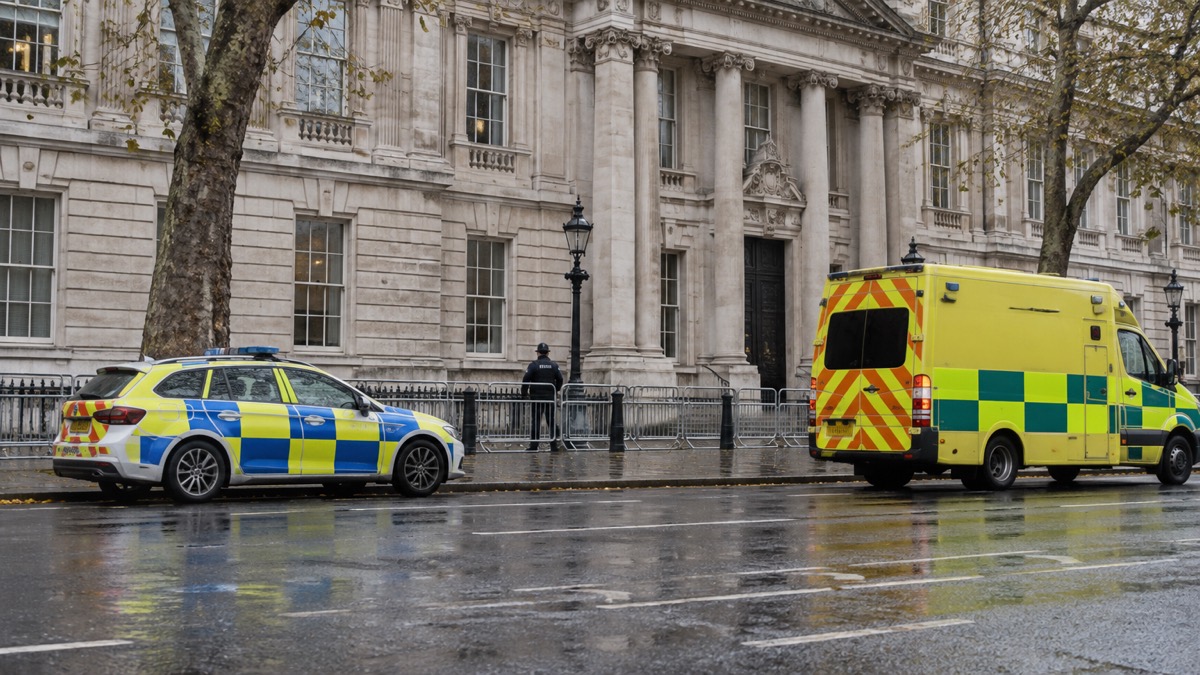
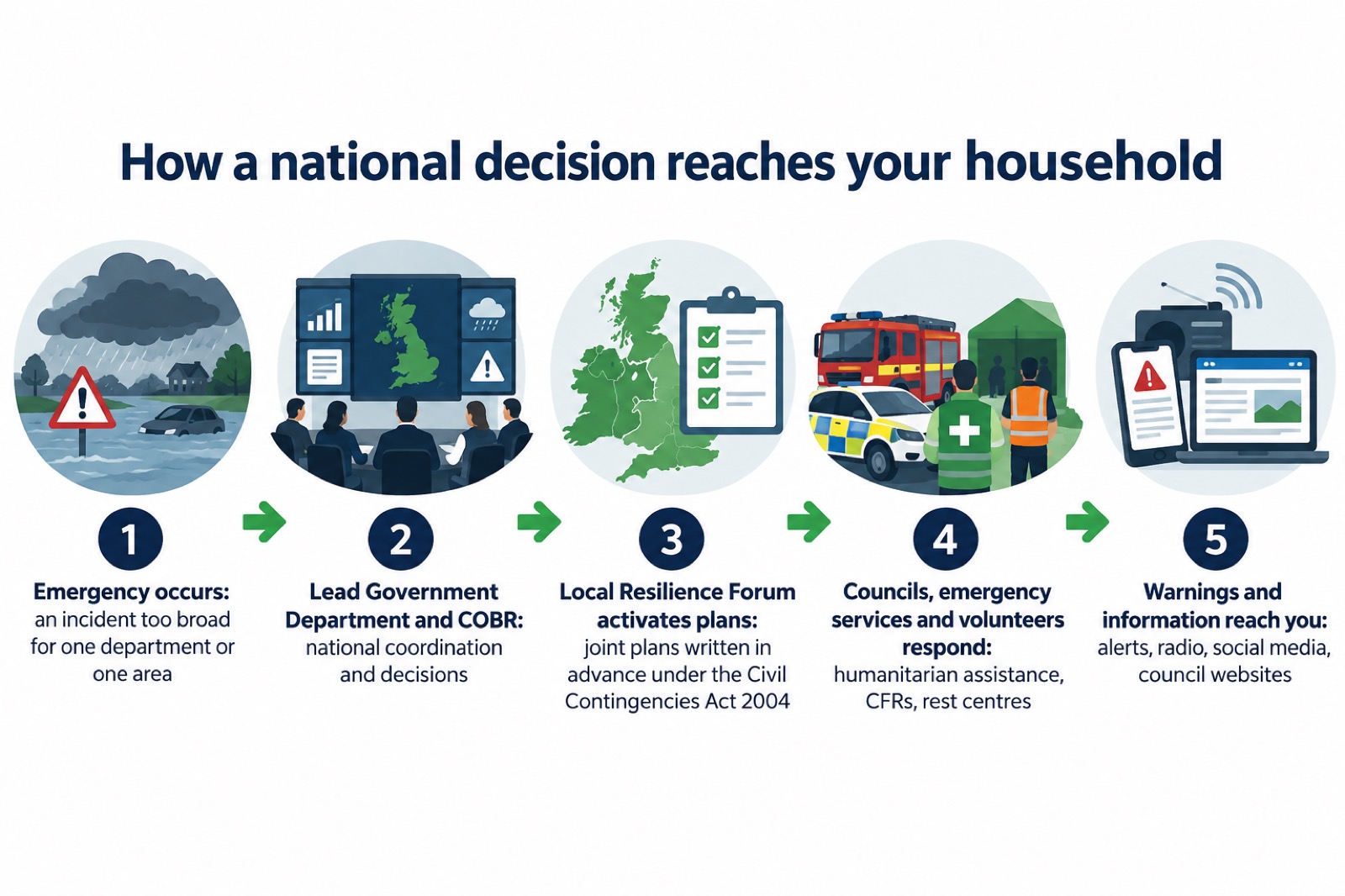
When something goes seriously wrong at national scale, a storm that flattes power networks across several counties, a water supply failure, a terrorist attack, the response is run from two directions at once. At the top, central government coordinates through COBR, the Cabinet Office Briefing Room, supported by a Lead Government Department chosen for the type of emergency. On the ground, your council, the emergency services and other local responders, working together through a Local Resilience Forum under the Civil Contingencies Act 2004, do the actual responding1.
The UK Government uses a Lead Government Department model to cover all phases of emergency planning, response, recovery and risk assessment1. Since September 2022 the Cabinet Office has split its resilience work into two units: the Resilience Directorate, responsible for preparedness and risk reduction, and the COBR Unit, responsible for crisis response1. The framework for how central government collectively responds to crises is set out in the Cabinet Office's Amber Book, which was updated to codify the Cabinet Office leadership role for whole-of-system emergencies2.
For your household, this matters in one practical way: when a national emergency is under way, official advice is the single most important thing to follow, and it reaches you through weather warnings, Emergency Alerts on your phone, local radio, council websites and rest centres. This page explains how the national machinery works, who is in charge of what, and what it can and cannot do for you in the first hours of a crisis.
What a COBR meeting is, and when one is called
COBR takes its name from the Cabinet Office Briefing Room, the Whitehall room where ministers, senior officials, the security services and advisers gather when a crisis needs coordinated national decisions. You will often see it written as COBRA in the press, but COBR is the form used in the government's own descriptions of the system. It is not a standing body that meets every week: it is a mechanism that is convened when an emergency is serious enough that decisions need to be made at the centre rather than left to a single department or a single local area.
The machinery was reorganised in September 2022, when the Cabinet Office split its resilience functions into two units. The Resilience Directorate is responsible for preparedness and risk reduction: the work done before anything goes wrong. The COBR Unit is responsible for crisis response: the work done once something has1. This separation matters because it reflects how the government divides its own effort between peacetime planning and live incidents, and it is the same division you will see repeated at local level, where Local Resilience Forums plan jointly in advance and then activate those plans when needed.
How central government behaves in a crisis is set out in the Amber Book, which provides a framework for how UK central government collectively responds to crises. It has been updated to codify the Cabinet Office leadership role for whole-of-system emergencies, meaning emergencies that cut across many departments and many parts of the country at once2. That is the situation in which a COBR meeting is most likely: an incident too broad for any single department to handle alone.
A COBR meeting typically brings together the Prime Minister or another senior chair, the ministers of the lead department, officials from across Whitehall, the devolved administrations where the incident affects them, and representatives of the responders. Its output is not usually direct action on your street: it is national decisions, coordination and public messaging, which then flow down to local responders through the structures described later on this page. For a fuller picture of the legal powers that can be activated in the most serious cases, see emergency powers, and for how the response is commanded on the ground, see Gold, Silver and Bronze command.
What a COBR meeting means for your household
The honest answer is: less than you might expect, and more than you might fear. A COBR meeting does not change what you should do in the first hour of an emergency. What you should do is set by the official advice already published for that type of emergency, and by the live warnings issued while it unfolds.
Take severe weather as the example most households will actually experience. When the Met Office issues an amber warning, it means there is the possibility of travel delays, road and rail closures, power cuts and the potential risk to life and property5. That warning, and the actions it implies, staying off the roads, checking on neighbours, having lighting and backup power ready, exist whether or not anyone has convened in a briefing room. Our guides to storms and snow, flooding and power cuts set out those actions in detail.
What a COBR meeting does change is the scale and speed of what happens next: whether the armed forces are called in, whether money and resources are moved to the affected area, and what the government tells the whole country to do. When that national advice comes, follow it. The UK government's Emergency Alerts system allows people to be contacted on their mobile phone when lives are in danger, and alerts are sent to all compatible mobile phones within an area of risk3. If you receive one, read it and act on it. The system is described in more detail later on this page.
The practical takeaway for a household is preparation before the crisis, official information during it. If you have not already, start with getting started and an emergency kit, so that following official advice, which may include staying put for hours or leaving quickly, is something you are equipped to do.
Lead government departments: who is in charge of which emergency
Central government does not respond to emergencies through a single ministry. Instead, the UK Government uses a Lead Government Department model to cover all phases of emergency planning, response, recovery and risk assessment1. For each type of emergency, one department takes the lead: it chairs the relevant coordination, speaks publicly for the government on the incident, and carries responsibility for the national response. Other departments support it, and the Cabinet Office coordinates the whole system when an incident spans several leads.
The model extends into the responder system itself. Under the Civil Contingencies Act 2004, responders are divided into Category 1 responders, the emergency services, local authorities, the NHS and others with core duties, and Category 2 responders, described as co-operating bodies, which can be either public or private sector bodies regulated by additional legislation related to preparing for an emergency6. The government added to the Category 2 list by Statutory Instrument in February 2023, making the Meteorological Office and the Coal Authority Category 2 responders under the Civil Contingencies Act7. That is why the Met Office sits inside the responder framework rather than outside it: its warnings are part of the formal machinery, not just a public weather service.
| Emergency type | Who leads and responds |
|---|---|
| Severe weather and flooding | Met Office warnings feed the responder system as a Category 2 responder; councils and the multi-agency Local Resilience Forum respond locally7 |
| Terrorism and CBR incidents | Police-led response under the multi-agency arrangements; ProtectUK publishes public guidance8 |
| Gas supply emergencies | The relevant Gas Distribution Network takes decisions at Board level under HSE arrangements9 |
| Vulnerable people in any emergency | The LRF agrees an overall lead agency, generally the local authority10 |
Two points from this table matter for households. First, for gas supply emergencies the decision to implement self-isolation and restoration processes can only be taken at Board level by the relevant Gas Distribution Network, and no reference to the Health and Safety Executive or Ministers is necessary before those arrangements begin9. In other words, some national-scale infrastructure decisions are taken by the network operator itself, not by ministers in a briefing room. Our gas and heating failures guide covers what this means at home.
Second, for people who need extra help, the Local Resilience Forum should agree an overall lead agency for the management of vulnerable persons in emergencies, and this is generally the local authority, because much of the day-to-day work sits with councils10. If someone in your household depends on electricity for medical equipment or needs priority attention, register with your supplier's Priority Services Register, which provides priority help in an emergency and use of emergency SMS for mobile-only users11. See extra help in an emergency for the full picture.
On terrorism specifically, the practical guidance published for the public is clear and worth knowing in advance. ProtectUK, the official counter-terrorism security advice service, states that CBR attacks can involve corrosive or flammable chemicals, toxic industrial, biological or radioactive materials, and that damage may not be immediately obvious8. It also warns that no prior warning of a CBR incident may occur12. If you suspect someone has been exposed to a hazardous substance, follow the REMOVE, REMOVE, REMOVE protocol, which ProtectUK describes as the most effective method of limiting the health effects of a CBR incident13. Our major incidents guide covers this in full.
How central government works with local responders
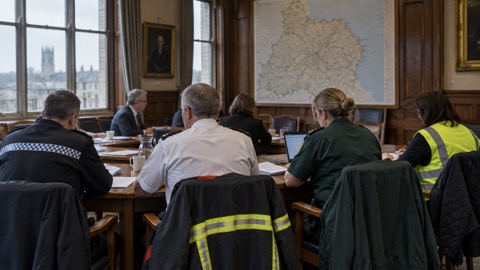
National decisions only reach your street through local responders, and the bridge between the two is the Local Resilience Forum. An LRF is a multi-agency partnership that brings together Category 1 and Category 2 responders under the Civil Contingencies Act 2004 to coordinate planning, preparation and response for emergencies and major incidents within a specific geographical area1. Each LRF brings together all responder organisations who have a duty to assess risks and plan for emergencies under the Act14.
The LRF's core work happens before any emergency. It maintains a community risk register, assessing the risks its area actually faces, and the LRF monitors the risks at each of its meetings to check the register is still relevant and there are no newly emerging issues to consider15. Based on these assessments, the LRF helps develop joint emergency plans and contingency plans that outline how different agencies will respond to specific types of incidents1. That risk register information is then used as the basis to warn and inform the public about the risks the community faces, which is a requirement under the Civil Contingencies Act15. To find yours, see Local Resilience Forums.
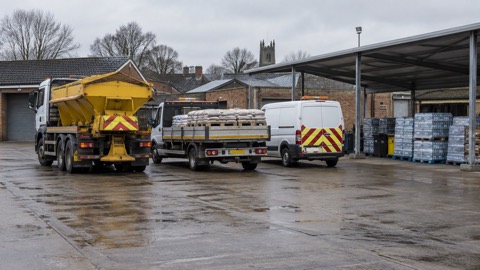
Within councils, this work is run by dedicated teams. In Northumberland, for example, the work is coordinated by the civil contingencies team based at fire and rescue service headquarters, and the council provides humanitarian assistance during and after emergencies, including a virtual one-stop shop for information in the aftermath of an emergency4. This is the pattern across England: a small professional team, plans written in advance, and activation when an incident occurs. See what your council does for more.
Alongside the statutory responders sit volunteers. In Northern Ireland, Community First Responders are trained to provide basic life support, use an automated external defibrillator, place unconscious casualties into the recovery position, provide life-saving interventions to a choking casualty, and update the Emergency Operations Centre as required16. CFR schemes themselves are usually set up as independent community groups or charities, each with a Co-ordinator who acts as a point of contact for volunteers and with the Ambulance Service16. Similar arrangements exist across the UK, and they are one reason the first trained help to reach you in a medical emergency may be a volunteer rather than an ambulance crew.
Devolved governments in Scotland, Wales and Northern Ireland
Emergency planning is not identical across the four nations, because parts of it are devolved. In Scotland, the responder landscape includes what are described as other resilience partners: these include but are not confined to the voluntary sector and community groups, the military, the Crown Office and Procurator Fiscal Service, Transport Scotland, commercial organisations and the Scottish Government6. Scotland publishes its own foundations of emergency management guidance for responders and the public, which sets out who responds in a Scottish emergency6.
In Wales, each LRF brings together all responder organisations who have a duty to assess risks and plan for emergencies under the Civil Contingencies Act, and the Welsh Government publishes its own assessment of resilience and risks in Wales14. Community-level planning is also active there: the Aberaeron Community Emergency Plan in Wales names a Community Emergency Co-ordinator, Rhodri Jones, as the local contact, and sets out how the community organises itself through response and recovery phases18. Northern Ireland's arrangements include its own ambulance service community schemes, such as the Community First Responders described above16.
One point of caution for readers comparing advice across the UK: the official guidance on identifying and supporting people who are vulnerable in an emergency was written with English Local Resilience Forums in mind, and there may be elements relevant to emergency responders in Scotland, Wales and Northern Ireland, subject to devolution variations10. So if you are reading official guidance and it describes English structures, the equivalent body in your nation may have a different name or composition, but the underlying duties under the Civil Contingencies Act apply across Great Britain. Our Civil Contingencies Act and responders pages set out the framework in more detail.
How warnings and public information reach you
When central government or local responders need to tell the public something urgently, they use several channels at once, and it is worth knowing all of them before you need any of them.
The newest and most direct is the Emergency Alerts system. Emergency Alerts are sent to compatible 4G and 5G mobile phones within an area of risk, if they have the latest software update; mobile phones released before 2015 are likely to require some changes to the settings19. The alerts do not need your location or phone number, and only the government and emergency services can send them19. All mobile phones and tablets that use 4G and 5G will receive a test alert when one is run, and the government has said a test message will be sent to every compatible phone nationwide20. The system may be used to warn the public via their mobile phones if there is a life-threatening emergency nearby14, and in the future the government might use alerts to tell you about flooding, fires and bad weather20.
Beyond alerts, the established channels still carry most emergency information. Moray Council's guidance is typical of the pattern: information will be available on local radio stations, on social media, at Rest Centres or other facilities, and on emergency services and council websites17. For households near certain industrial sites, there are additional arrangements. Businesses which store or process hazardous substances are required by law to inform people who live nearby of the risks, and residents who have not received the information card should contact the company4. Near Portsmouth, residents' information for radiation emergencies is available on request in large print, Braille, audio or another language by calling 023 9284 1357, and in an emergency you should check local news and social media for emergency helpline numbers, with a telephone helpline number released in the event of an emergency21.
The duty to warn and inform is not optional. It is a requirement under the Civil Contingencies Act, using the risk register information as the basis to warn and inform the public about the risks the community faces15. Our warning and informing and staying informed pages go deeper, including what to do if phone networks themselves fail.
Recent emergencies: floods, storms and water supply disruption
The emergencies most likely to touch an ordinary household are weather-related, and the recent record shows both what government does and where households were left struggling.
Cumberland Council's emergency pages show the range a council covers in practice: what to do if there is flooding or a power cut, who to contact in a power cut, how to check for weather warnings, advice on what to do if you have no water, preparing property for flooding, and information for organisations and the public in the event of a nuclear or chemical emergency22. That last item reflects the REPPIR duty to prepare information for people living near major hazard sites. Water supply disruption appears there because it happens: councils plan for it, and our water in an emergency guide covers the household side.
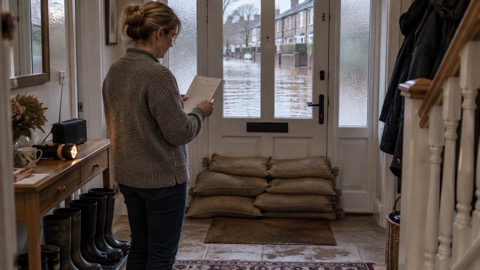
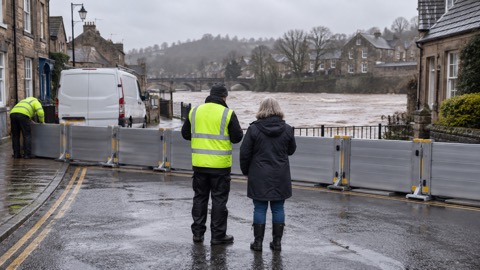
Storm response is largely local too. Cornwall Council's storm damage support, current as of October 2026, tells residents to report flooding or drainage issues on public roads by phoning 0300 1234 222, and advises owners of listed buildings to contact the Conservation team for advice before carrying out emergency works, with emergency works without prior consent allowed only in specific circumstances23. Moray Council states that it may, where resources and priorities allow, react to anticipated or reported incidents and provide assistance including sandbagging operations17. Note the wording: where resources and priorities allow. Sandbags are not a guarantee, which is why preparing your own property in advance matters; see flooding.
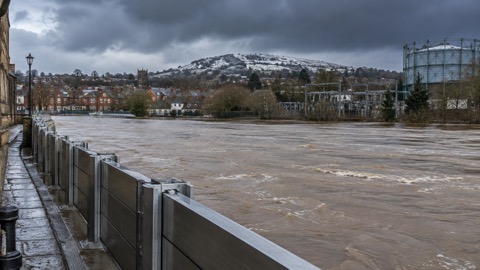
At national level, the government's planning for these events is anchored in the National Risk Register, whose last update was published in January 2025 and which contains over 60 risks that directly relate to critical national infrastructure, including CNI cyber and supply chain risks2. The Resilience Framework and its implementation updates track how the system is being strengthened, including the addition of the Met Office and Coal Authority as Category 2 responders in February 20237. For what the risk register means for your household, see the National Risk Register and how risks are scored.
What central government cannot do for you in the first hours
This is the section to read closely, because it is where expectations most often outrun reality. In the first hours of any emergency, the response you experience is local, and it has limits.
Volunteer responders are not sent to everything. In Northern Ireland, Community First Responders are not knowingly alerted to patients under 12 years old, trauma incidents, situations involving possible hazards such as alcohol, drugs or potential violence, or mental health crises16. So a CFR will not be dispatched to every 999 call, and the ambulance service's own response times apply regardless.
Some help must be arranged in advance, by specific people, not requested on the day. Cornwall Fire and Rescue Service does not create or assess Residential Personal Emergency Evacuation Plans for residents, does not hold personal evacuation plans directly from residents, and states that RPEEPs must be created and managed by the Responsible Person for your building. If you believe you need help to evacuate safely, your first point of contact should always be the Responsible Person for your building, not the fire service24. If you live in a flat or supported housing and would struggle to evacuate, sort this out now, not during an alarm.
Infrastructure decisions have their own chains of command. As noted above, in a gas supply emergency the decision to implement self-isolation and restoration processes can only be taken at Board level by the relevant Gas Distribution Network9. Households cannot speed that up, which is why having alternative heating and cooking arrangements matters.
And communities themselves set boundaries on spontaneous help. The Aberaeron Community Emergency Plan states that in a missing person search, the public will be advised not to turn up at the police station or in the area asking to get involved in the search18. The impulse to help is right, but uncoordinated volunteers can hinder a search. If you want to be useful, join or form a community emergency plan in advance; see community resilience.
Where to get official information during a national emergency
When an emergency is live, go to official sources first, and know in advance which ones serve your area. The reliable pattern, set out in Moray Council's guidance, is local radio stations, social media, Rest Centres or other facilities, and emergency services and council websites17. Bookmark your council's emergencies page now: Cumberland's, for example, covers flooding, power cuts, loss of water supply and nuclear or chemical emergencies in one place22.
For specific incidents, use the specific channels. For storm and flood damage in Cornwall, the council's storm damage support page sets out what to report and to whom, including the 0300 1234 222 number for flooding or drainage issues on public roads23. Near major hazard sites, check whether you have received the statutory information card from the business storing or processing hazardous substances, and contact the company if you have not4. In a radiation emergency near Portsmouth, check local news and social media for emergency helpline numbers, since a helpline number will be released in the event of an emergency, and the published number is for non-emergency queries only21.
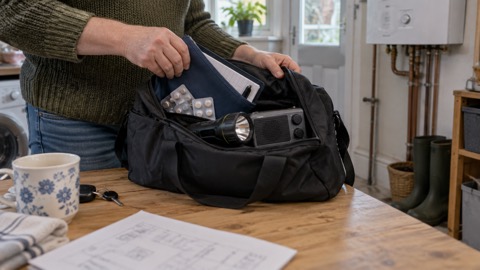
If you or someone in your household needs extra help, check what support is available in your area before anything goes wrong, as official information during an emergency will be issued through local radio stations, social media, emergency services and council websites11. And keep a battery or wind-up radio in your emergency kit so that local radio remains available to you during a power cut, alongside the staying informed arrangements described on our dedicated page.
Recovery: the support that follows an emergency
Recovery is the phase that usually follows the response, concerned with the post-incident clean-up operation where community help may be required18. It is often longer than the emergency itself, and the support available is mostly local and voluntary-sector led.
Councils provide humanitarian assistance during and after emergencies; Northumberland County Council, for example, runs a virtual one-stop shop for information in the aftermath of an emergency4. The British Red Cross offers a support service designed to meet the needs of people who have suffered damage to their home following a fire, flood or similar incident, and its volunteers can provide emotional support and care for those affected while the emergency services manage the incident25. If you are left without somewhere to live, see who houses you if an emergency leaves you homeless and humanitarian assistance centres.
For property damage, follow the proper sequence. North Yorkshire Fire and Rescue Service's guidance for the steps after a fire is a useful model for any incident that damages your home25, and if your home is listed, contact the Conservation team for advice before carrying out emergency works, as emergency works without prior consent are permitted only in specific circumstances23. Community emergency plans, like Aberaeron's, also cover the recovery phase, coordinating local volunteers for the clean-up where help may be required18.
The consistent lesson across all of this is that central government sets the framework, chooses the lead department, coordinates at COBR when the scale demands it, and speaks to the nation. Your household's experience of an emergency, though, is shaped by your council, your Local Resilience Forum, your suppliers' priority registers and your own preparation. Do your part of that now: get started, build your emergency kit, and know which official channels serve your area before the day you need them.
Sources (25)
- What is a Local Resilience Forum, Essex Prepared, 2026-10-29
- The UK Government Resilience Action Plan, UK Parliament deposited papers, 2025-07
- Emergency Alerts, Isle of Anglesey County Council, 2026-10-29
- Emergency planning and business resilience, Northumberland County Council, 2026-07-10
- Accessible UK weather warnings, Met Office, 2026-10-24
- Foundations of Emergency Management Scotland: who responds, Ready Scotland, 2026-03
- The UK Government Resilience Framework 2023 implementation update, GOV.UK, 2023-12
- Chemical, Biological and Radiological (CBR) incidents, ProtectUK, 2024-03-26
- Gas supply emergencies, Health and Safety Executive, 2026
- Identifying and supporting persons who are vulnerable in an emergency, GOV.UK, 2025-04-28
- Priority Services Register, Surrey County Council, 2026-10-28
- Chemical, Biological and Radiological (CBR) risk guidance, ProtectUK, 2022-03-01
- CBR attacks and the REMOVE, REMOVE, REMOVE protocol, ProtectUK, 2022-03-01
- Resilience and risks in Wales, Welsh Government, 2026-09-07
- Risks in Lancashire, Lancashire County Council, 2026-10-29
- Community First Responders, Northern Ireland Ambulance Service, 2026-10-29
- Emergency preparations you can do, Moray Council, 2026-10-29
- Aberaeron Community Emergency Plan, Aberaeron Town Council, 2024-05-08
- National emergency alerts, Warwick District Council, 2026-10-29
- Emergency Alerts easy read guide, UK Government, 2025-09
- REPPIR residents booklet, Portsmouth City Council, 2024-08
- Emergencies and community safety, Cumberland Council, 2026
- Find support with storm damage, Cornwall Council, 2026-10-22
- Residential Personal Emergency Evacuation Plans (RPEEPs), Cornwall Fire and Rescue Service, 2026-03-23
- Steps after a fire, North Yorkshire Fire and Rescue Service, 2026-06-17
 30-Day Household Checklist
 Emergency Plan Template
 Supply Interruption Checklist
 National Risk Register
 How Emergency Risks Are Scored
 Civil Contingencies Act 2004
 What Counts as an Emergency
 Category 1 and 2 Responders
 Local Resilience Forums
 Strengthening Local Resilience
 What Your Council Does
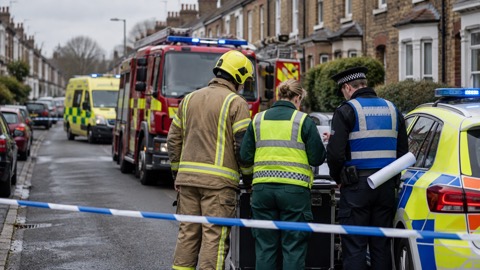 Gold, Silver and Bronze Command
 Major Incident Declared
 Emergency Powers
 Warning and Informing the Public