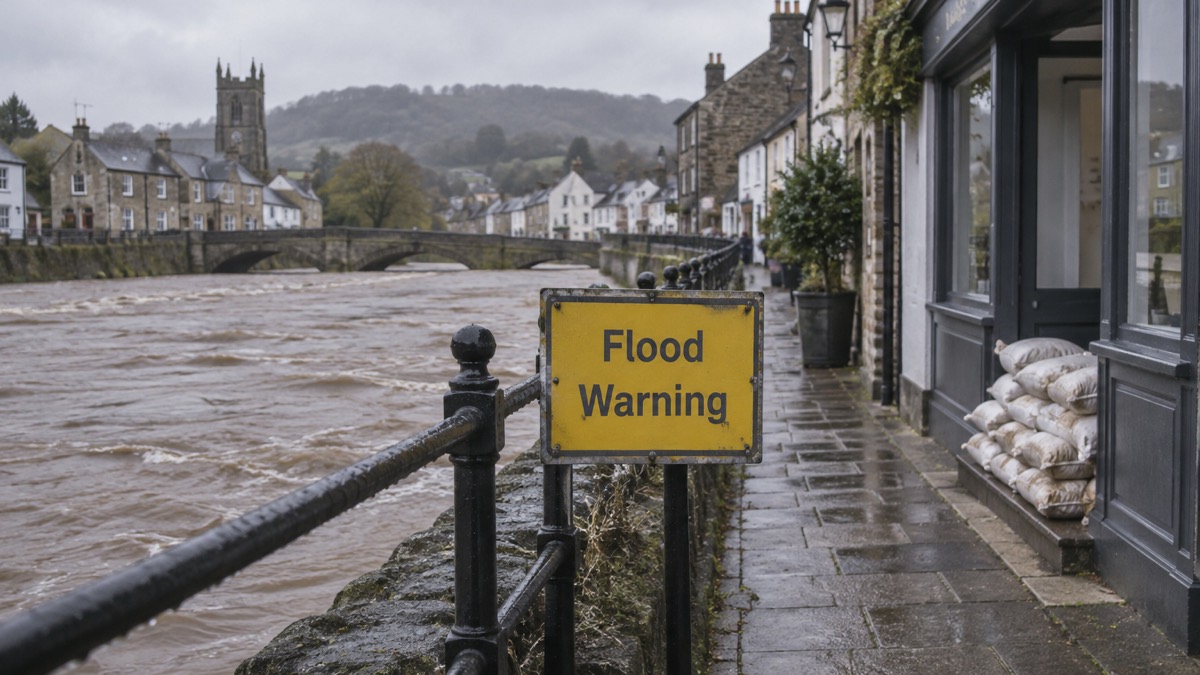
Every part of the UK has a published list of the emergencies local responders think could happen where you live. It is called a community risk register, and it describes the risks present in your community, assesses how likely each one is to lead to an emergency, and sets out the potential impact it would have1. Lancashire's version, for example, does exactly this for its county, and every other area has an equivalent1.
Finding yours is straightforward. The government's Be Ready campaign advises that each Local Resilience Forum publishes a Community Risk Register setting out the different risks most likely to cause disruption in your region, and that your forum will publish this information online2. West Yorkshire's register, published in October 2025, gives an overview of the main risk areas for the region and aims to help communities be better informed, prepared and able to respond3. The North Wales Community Risk Register provides information on the biggest emergencies that could happen in that region4.
Reading it is worth the effort, because it tells you what to prepare for. Rather than guessing, or preparing for events that are unlikely in your area, you can match your household plan and your emergency kit to the hazards your own local responders have judged most serious. This page explains what the register contains, how the judgements inside it are made, who writes it, and how to use it.
What the register tells you about where you live
A community risk register is a public document that answers a simple question: what could go badly wrong here? Lancashire's describes the risks present in the community, assesses how likely they are to lead to an emergency and the potential impact they would have1. West Yorkshire Prepared, the partnership behind that county's register, regularly carries out risk assessments to review the types of risks facing the region3. The North Wales register covers the biggest emergencies that could happen in the region, including their impact on people, communities, the environment and local businesses4.
Most registers follow a similar shape. They group risks into categories, rate each one for likelihood and impact, and often highlight a shortlist of the most serious. Surrey's Local Resilience Forum identified nine key local risks from its overall register for particular attention6. York and North Yorkshire's community emergency plan template lists the risks identified as most likely to affect its communities as severe weather, infectious diseases and pandemics, utilities disruption and cyber attack7.
The register also tells you what is being done. Surrey's register provides information about hazards that exist within the county and details the measures in place to mitigate their impact8. That matters for a household reader: knowing the responders have plans, and what kind of plans, helps you judge where your own preparation should fill the gap. For West Yorkshire, all the partners have tried and tested plans in place to respond collectively to health pandemics, working closely with the UK Health Security Agency and the NHS9.
One limit to bear in mind: the register talks about relatively high-level threats and how emergency responders can address them. Argyll and Bute Council's planning advice notes that you should use local knowledge to identify other local risks not included, such as a road that floods or a lane that becomes impassable in snow10. The register is a starting point for your own judgement, not a substitute for it.
Hazards, not threats: what the register covers
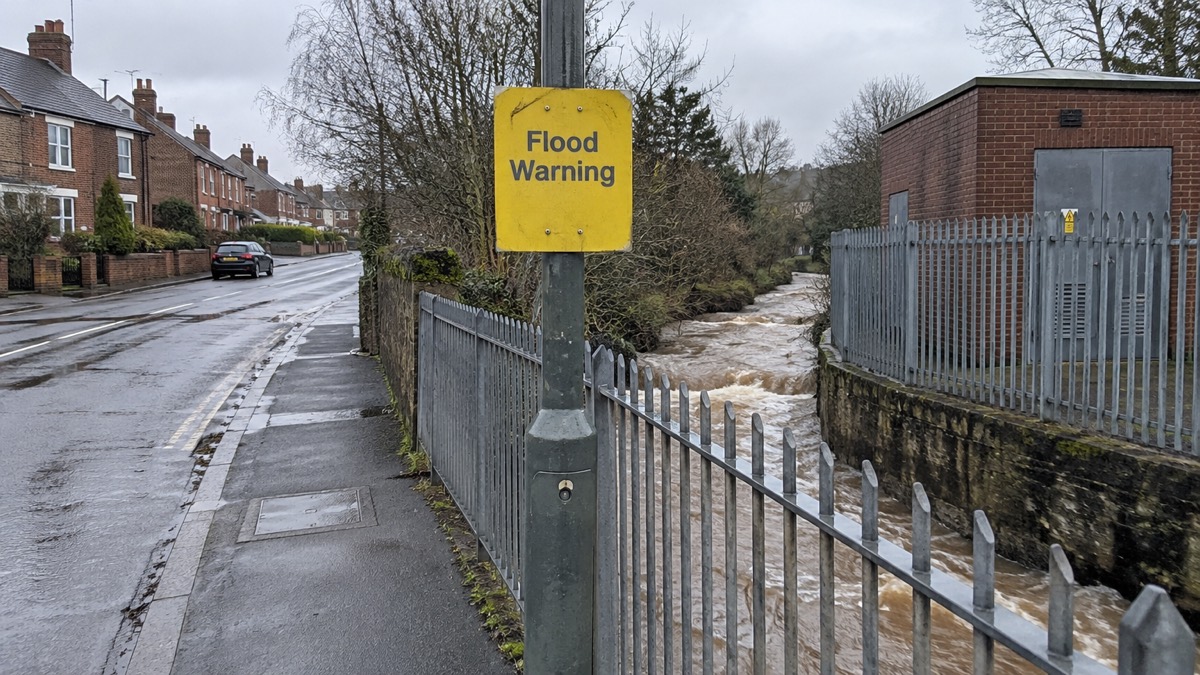
Community risk registers cover accidents and natural events, not deliberate attacks. Carmarthenshire's emergency planning guidance states it plainly: the risk assessments included in the register will only cover non-malicious events, that is hazards, rather than threats such as terrorist incidents5. Surrey's register likewise displays the risk assessments for non-malicious events rather than for those caused deliberately, such as the threat of terrorism6.
The typical hazard scenarios being considered include, for example, transport accidents, severe weather, flooding, industrial accidents and environmental pollution, human health, animal health, and industrial technical failure5. Different areas weight these differently according to what is actually there: a coastal area will assess different risks from one with a major chemical plant, which is the whole point of a local register.
| Hazard category | Typical examples |
|---|---|
| Severe weather | Storms, snow and ice, heatwaves |
| Flooding | River, coastal and surface water flooding |
| Transport accidents | Road, rail and air incidents |
| Industrial accidents and environmental pollution | Chemical releases, site incidents |
| Human health | Infectious diseases and pandemics |
| Animal health | Animal disease outbreaks |
| Industrial technical failure | Loss of utilities and infrastructure |
The national picture is broader. The National Risk Register, maintained by the Civil Contingencies Secretariat in the Cabinet Office, summarises its risks into categories including environmental hazards, human and animal health, major accidents, societal risks, malicious attacks and risks occurring overseas11. Societal risks include examples such as industrial action and widespread public disorder11. The local register is where the hazards, rather than the malicious attacks, are worked out for your own area.
A register is also selective. Essex's register states that it does not include every risk, only the ones that have a high possibility of happening12. So an absence from the list does not mean a risk is impossible, only that responders judged it less likely or less serious than the ones they chose to plan around.
A listed risk is not a prediction
This is the point most worth understanding before you read your register. Carmarthenshire's guidance is explicit:
"The inclusion of hazards or scenarios does not mean that the Local Resilience Forum believes the risk will materialise, or that if it were to do so, it would be at that scale. The risk scenarios are rather reasonable worse case assumptions upon which the risk assessment is based."5
In other words, the register describes reasonable worst case assumptions used for planning, not forecasts. Surrey's register defines its lowest rating this way: "Low - These risks are both unlikely to occur and not significant in their impact"6. Ratings are relative judgements within the register, not probabilities you can rely on in any given year.
The same caution applies to how you read your own situation. Dorset and Wiltshire Fire and Rescue Service, in its wildfire guidance, makes a point that generalises well: when it comes to wildfire risk, it is not geographical location but a set of conditions that determine your home's ignition potential in a community13. Living near a listed hazard does not guarantee you will be affected, and living away from one does not guarantee you will not. Your own circumstances, such as your building, your street and who is in your household, shape your actual risk.
The National Risk Register carries a similar health warning for households. Both the 2023 edition and the 2025 edition state that they are not targeted at the general public, but at risk and resilience practitioners, and that government will continue to provide tailored guidance and communications to help people understand the risks most likely to affect them14. The local register is the more useful document for a household, because it is about your area, but it too is written for planning purposes rather than as a consumer forecast.
How each risk is judged for likelihood and impact
Every risk in the register has been scored on two axes: how likely it is to occur, and how bad the consequences would be if it did. Scotland's national register guidance describes the Community Risk Register as the result of risk assessments carried out by the multi-agency resilience partnership to identify the likely risks in the area and rate them in terms of their potential impact and likelihood of occurring16.
The judgements are not guesswork, but they are judgements. Essex's register states that it is the result of professional judgement from a range of contributors, historical evidence, scientific input and expert analysis in evaluating the key risks facing the county12. FireScotland's register pages use the same formulation for the different regions of Scotland16. Warwickshire's forum notes that the generation of its register followed a six-stage process as recommended in the government document Emergency preparedness17.
Some entries are grouped rather than individual. The National Risk Register explains that a number of the most sensitive risks have been thematically grouped, and that the position of each grouped risk on the matrix is an average of the impact and likelihood scores of all the risks in that category18. So where you see a single rating covering a whole category, it represents an average across several underlying scenarios, some worse and some milder.
For a household reader, the practical use of the ratings is prioritisation, not precision. A risk rated high for both likelihood and impact deserves a place in your plan and perhaps specific kit. A risk rated low, in Surrey's definition both unlikely to occur and not significant in its impact6, may need nothing more than awareness. The common emergencies page explains how to turn each broad hazard into concrete household steps.
Who plans for emergencies near you: Local Resilience Forums
The register is written by your Local Resilience Forum, usually abbreviated to LRF. The government's preparedness campaign describes LRFs as partnerships made up of representatives from local public services, including the emergency services, local authorities, the NHS, the Environment Agency and other organisations involved in emergency preparedness, such as utilities providers19. Their purpose is to identify potential risks and produce emergency plans to either prevent or lessen the impact of any incident on their local communities19.
The forums are built on a statutory footing. A Local Resilience Forum is a multi-agency partnership that brings together Category 1 and Category 2 responders under the Civil Contingencies Act 2004 to coordinate planning, preparation and response for emergencies and major incidents within a specific geographical area20. Category 2 responders, such as the Highways Agency and public utility companies, have a responsibility to co-operate with Category 1 organisations and share relevant information with the forum21. The geographical area each forum covers is based on police areas21.
The numbers differ across the four nations. There are 38 Local Resilience Forums in England, four in Wales, three Regional Resilience Partnerships in Scotland, and Emergency Preparedness Groups in Northern Ireland14. Welsh Government works with its four regional Local Resilience Forums, each bringing together all responder organisations who have a duty to assess risks and plan for emergencies under the Civil Contingencies Act22.
| Nation | Planning bodies | Number |
|---|---|---|
| England | Local Resilience Forums | 3814 |
| Wales | Local Resilience Forums | 414 |
| Scotland | Regional Resilience Partnerships | 314 |
| Northern Ireland | Emergency Preparedness Groups | 14 |
Beyond the core members, additional organisations may be called on to assist. West Yorkshire's register lists the Ministry of Defence, Mountain Rescue teams, 4x4 Response, the Canal and River Trust, Raynet, REACT Disaster Response, the British Red Cross, the Rapid Relief Team and local voluntary, community and social enterprises23. LRFs may also coordinate with the military in certain circumstances where specialised capabilities are needed20. For households, this means the forum is the local hub of a much wider network, and its published contact details are often the best route to local preparedness information. West Yorkshire Prepared, for example, takes general enquiries by email at wyrf@westyorkshire.police.uk23.
The wider system behind all this, including how the UK government plans nationally, is covered on the UK preparedness page.
The Civil Contingencies Act and the duty to publish
The reason a register exists at all is law. The Civil Contingencies Act 2004 places a statutory obligation on all Category 1 responders to carry out risk assessments and maintain a Community Risk Register17. Essex Resilience Forum states that it has a duty under the Civil Contingencies Act 2004 to produce a Community Risk Register12, and Surrey's register has been published in response to the Act6. In Scotland, resilience partnerships likewise have a duty to publish a Community Risk Register showing what risks have been identified in your area and their potential impact24.
The Act established 42 LRFs covering all policing areas in England and Wales25. A parliamentary committee describes what the forums are expected to deliver: a systematic, planned and co-ordinated approach across risk, planning for emergencies, business continuity management, publishing information about risk assessments and plans, and arrangements to warn and inform the public25. The government's community emergency plan toolkit puts the local picture simply: the forum co-ordinates the planning for emergencies affecting your local area and has a duty to publish a Community Risk Register showing what local hazards and threats have been identified for your area, and their potential impact26.
Publication is not a one-off. Lancashire's LRF monitors the risks at each of its meetings to check that the register is still relevant and that there are no newly emerging issues to consider1. Surrey's forum publishes its register every year8. Warwickshire's forum intends to undertake its own formal review of its risk assessment work every four years17. Nationally, the Government publishes the National Risk Register every two years27, with the last update published in January 202528.
The duty to publish is tied to a duty to warn and inform. Lancashire explains that the risk register information is then used as the basis to warn and inform the public about the risks the community faces, which is a requirement under the Civil Contingencies Act1. The forums were set up to warn, inform and advise the public in the event of an emergency, and they work with partners in a local area to alert people29. That is why the register you download is a genuine public information document, not an internal working paper.
Turning the register into your household plan
Once you have found and read your register, the next step is to act on it. West Yorkshire Prepared advises households to consider the kinds of risks that might affect where they live, with more information in the Community Risk Register30. The National Risk Register makes the same connection from the other direction: local resilience partners produce Community Risk Registers which focus on the highest priority risks in each local area, and the National Risk Register should be read in conjunction with the CRR for the relevant local area15.
A practical way through it:
- Find your register. Search for your county or city name together with "community risk register", or start from the Be Ready campaign's risks page2.
- Read the shortlist. Look for the highest-rated risks, such as Surrey's nine key local risks6 or York and North Yorkshire's four most likely risks7.
- Check each against your household. Ask who in your home would be most affected, and what you would need for the first few hours. Argyll and Bute's advice to use local knowledge applies here: add the risks only you know about, such as your own flood-prone street10.
- Match kit to the risks. Flooding points you to the flooding guide; utilities disruption to power cuts and backup power; severe weather to storms and snow; infectious disease to health emergencies.
- Write the plan. Record what you would do, where you would go and who you would contact, using the household emergency plan guidance and the plan template.
- Note the help you may need. If anyone in your household could need extra assistance, sign up to your local authority or local utilities provider's vulnerable customer schemes and priority services, if eligible, as the National Risk Register advises14. The extra help page sets out what is available.
If you are part of a community group, the register can also anchor a shared plan. West Yorkshire Prepared publishes a community resilience guide and a ready-made tabletop exercise you can use to test your group's response to various scenarios31. North Yorkshire's community emergency plan template recommends an annual exercise, as a tabletop discussion or live run through, to test assumptions, keep people familiar with their roles and see if updates are needed7. The community resilience page covers this in depth.
Alerts, advice and who to contact
The register tells you what could happen; alerts tell you when something is happening. Local Resilience Forums were set up to warn, inform and advise the public in the event of an emergency, and they work with partners in a local area to alert people29. Weather warnings and early warning arrangements are covered by the government's guidance on early warning and weather forecasts21, and the staying informed page explains the practical options for your household.
Some areas publish local contact routes. Thames Valley's preparedness booklet directs anyone needing urgent advice to the Thames Valley Police non-emergency number, 101, and points to further information on its website32. West Yorkshire Prepared's community resilience guide directs readers to its website to stay up to date on local risks31.
For the numbers every household should have written down:
- 999 for the emergency services, when life or safety is in immediate danger. The National Risk Register notes the public can play a vital role by alerting the emergency services, dialling 99914.
- 111 for the NHS non-emergency number33.
- 101 for police non-urgent matters33.
Keep these in your household plan on paper, not only in your phone, so they are available if a device runs flat. The what to do in an emergency page covers the immediate steps once something has actually happened, and sheltering in place and evacuation cover the two main responses you may be asked to make.
Sources (33)
- Risks in Lancashire, Lancashire County Council
- Check the risks where you are, Be Ready campaign
- Know your risks, West Yorkshire Prepared
- Civil emergencies and emergency plan, Isle of Anglesey County Council
- Get prepared, Carmarthenshire County Council
- Surrey Community Risk Register 2026, Surrey Local Resilience Forum, 2026
- North Yorkshire community emergency plan template, North Yorkshire Local Resilience Forum, 2025-02
- Surrey's Local Resilience Forum, Surrey County Council
- Infectious disease and pandemics, West Yorkshire Prepared
- Making your plan, Argyll and Bute Council
- National Risk Register: preparing for national emergencies, House of Lords Library, 2022-12-15
- The Essex Community Risk Register, Essex Prepared
- Firewise FAQs, Dorset and Wiltshire Fire and Rescue Service, 2019-03-08
- National Risk Register 2025, UK Government, 2025
- National Risk Register 2023, UK Government, 2023
- Community risk register, Scottish Fire and Rescue Service, 2024-02-29
- Warwickshire Resilience Forum, Warwickshire County Council
- National Risk Register annex, UK Government, 2023
- Check the risks where you are, Prepare campaign
- What is a Local Resilience Forum, Essex Prepared
- Early warning and weather forecasts, GOV.UK, 2024-12-19
- Resilience: risks in Wales, Welsh Government, 2026-09-07
- West Yorkshire Community Risk Register, West Yorkshire Prepared, 2025
- Community emergency planning guide: risks, Ready Scotland, 2026-03
- Written evidence on Local Resilience Forums, UK Parliament, 2022-01-13
- Community emergency plan toolkit, UK Government, 2016-09
- Our risks and plans, Greater Manchester Combined Authority
- UK Government Resilience Action Plan, UK Government, 2025-07
- Emergency alerts factsheet, Saltford Parish Council, 2023-04
- Advice for households, West Yorkshire Prepared
- Community resilience guide, West Yorkshire Prepared, 2026
- Are You Ready booklet, Thames Valley Local Resilience Forum, 2025-09
- Be Ready household emergency plan, Be Ready campaign, 2026
 30-Day Household Checklist
 Emergency Plan Template
 Supply Interruption Checklist
 Household Emergency Plan
 Emergencies to Prepare For
 What to Do in an Emergency
 Sheltering in Place
 Staying Put or Leaving
 If You Are Asked to Evacuate
 Planning Your Evacuation
 Rest Centres
 Stopcock, Gas Valve and Fuse Box
 Returning Home
 Recovering After an Emergency
 Scotland Emergency Planning