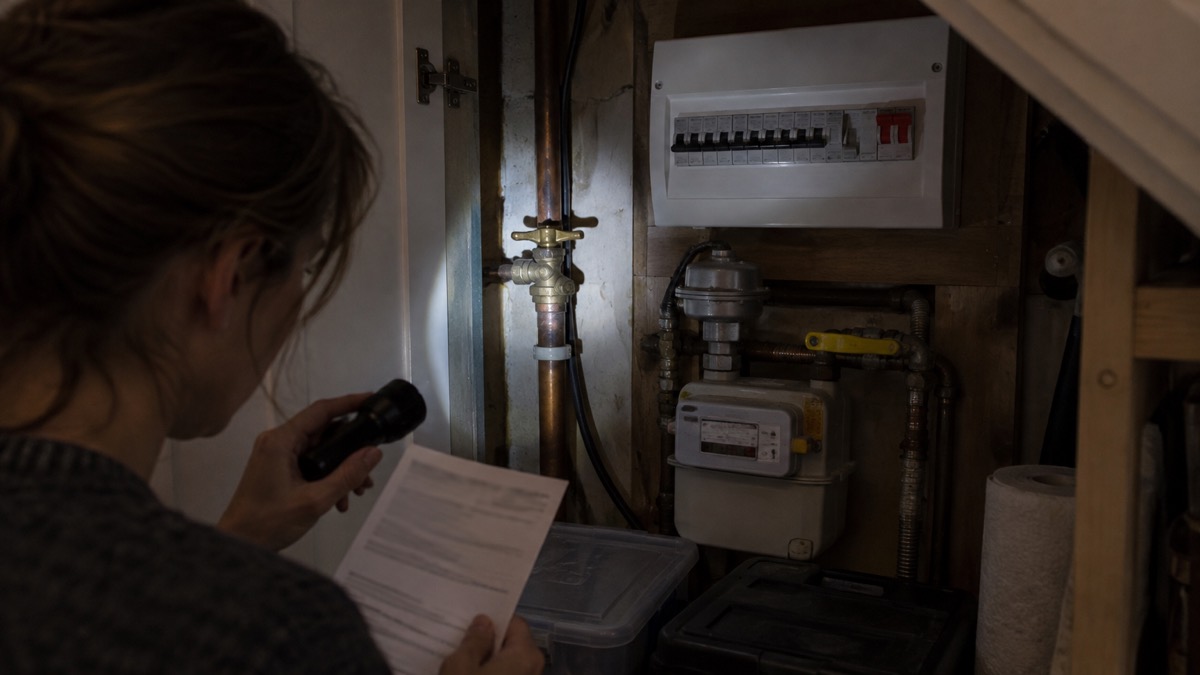
Every UK household has three shut-off points: the stopcock that closes off the water, the valve next to the gas meter, and the main switch on the fuse box. The National Risk Register lists knowing how to turn off gas, water and electricity in the home among the simple steps that make households resilient1.
The reason is timing. A burst pipe floods fastest in the first minutes. A gas leak is most dangerous before anyone has switched off the supply. In a flood, you may have only a short window to isolate all three before water reaches the wiring. None of these are moments to start hunting under sinks. Wiltshire and Swindon Prepared puts it plainly: check where your gas and water shut-offs are and show your family, just in case you need to turn them off quickly in an emergency2.
This page covers where each shut-off usually sits, how to operate it, when to turn supplies off and when to leave them alone, and what to do about the awkward cases: flats, shared meters, stiff stopcocks and rented homes. If you are building a wider household plan, this sits alongside How to Make a Household Emergency Plan and the Getting Started guide.
Why this matters before anything else goes wrong
Emergency planners across the UK put "know your shut-offs" at the top of household preparation, above stocking food or buying torches. Essex Prepared lists finding out how to turn off home gas, electricity and water supplies as a core preparation step6. The government's easy-read guidance for disabled people and carers includes the same instruction in a personal plan [12 is the easy-read figure; see S12 in the list below].
The point is not that you will use these valves every year. Most households never touch the gas valve at all. The point is that the emergencies where shut-offs matter, floods, burst pipes, gas leaks and fires, are the ones that develop in minutes and where the emergency services would tell you to isolate supplies if they could reach you in time. That is why every official source gives the same instruction: find out now where the mains shut-offs are, before you need them.
There is a second reason: other people in your household. If you are away, asleep or the one injured, a partner, teenager or neighbour needs to be able to act. Lincolnshire's emergency advice goes as far as recommending you teach family members how to turn off utilities10, and Wiltshire and Swindon Prepared says the same2. A shut-off only one person can find is half a shut-off.
Where to find each one: the three shut-offs side by side
The government's flood preparation guidance summarises where each shut-off usually sits, and it is worth learning all three together because in a flood you may need them in quick succession3. Natural Resources Wales gives the same locations for Welsh households4.
| Supply | What you are looking for | Where it usually is |
|---|---|---|
| Water | Stopcock (also called stoptap or stop valve) | Under the kitchen sink, or where the water pipe enters your home; sometimes outside near your property boundary under a cover3 |
| Gas | Emergency control valve, a tap on the pipe | Next to the gas meter3 |
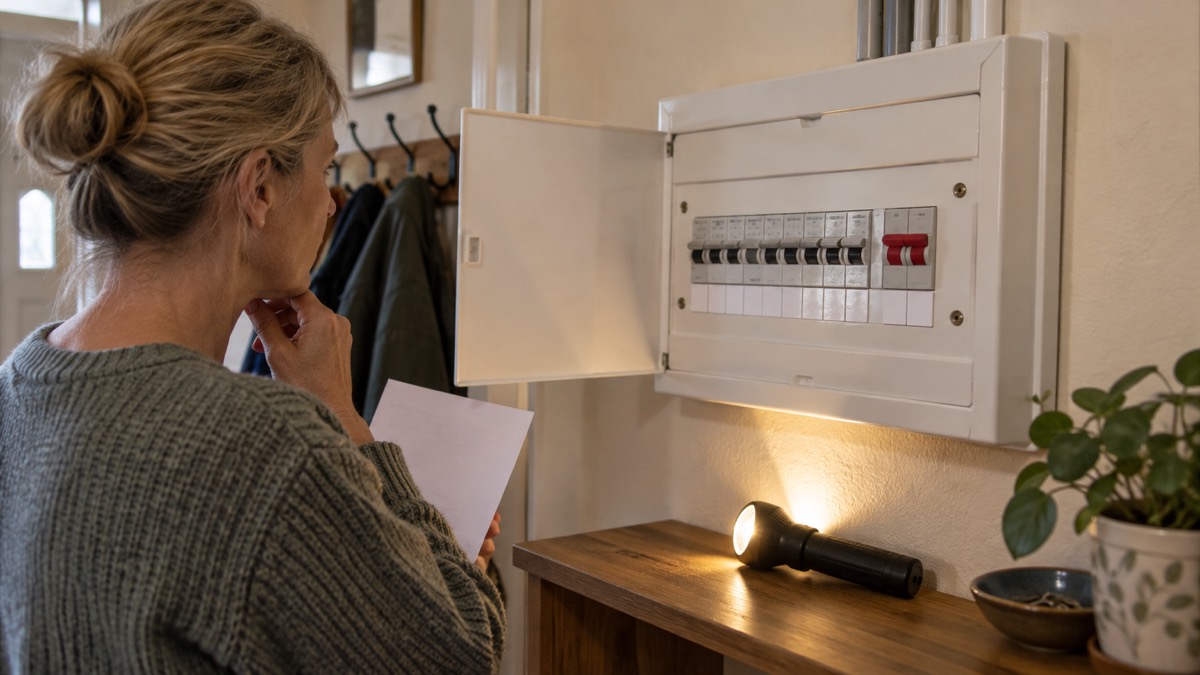
| Electricity | Main switch on the fuse board or consumer unit | The big on and off switch on the fuse board, usually near the front door or in a hallway cupboard3 |
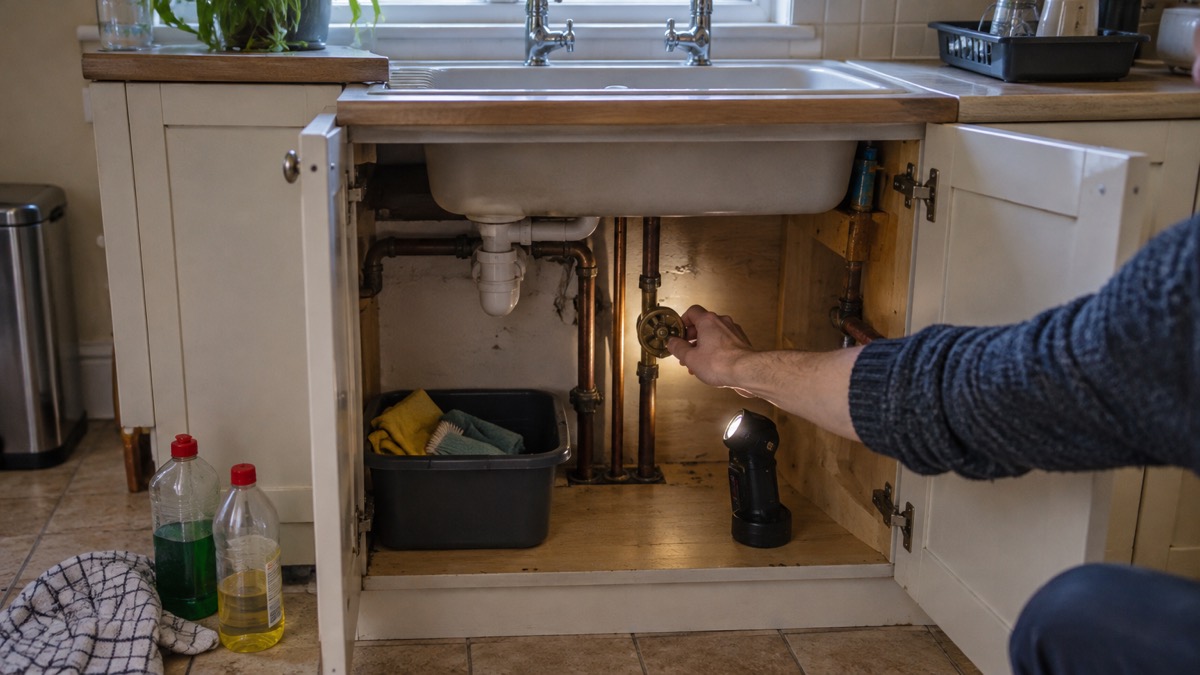
Every home is different. Cornwall Council notes that the stop-cock inside your home is usually under the kitchen sink, but in some properties it is elsewhere along the route the supply takes12. The Met Office, in its winter preparation advice, stresses knowing where your stoptap is, which it also calls a stopcock or stop valve, so you are not searching for it in a crisis11.
If you cannot find one of them, do not guess. Natural Resources Wales advises contacting your supplier if you don't know how to turn off gas, electricity and water, and points to the Energy Networks Association's find-my-network-operator tool for identifying who that is4. Your water company can tell you where your outside stop tap is, and your gas supplier can confirm where your meter and its valve are.
Turning off the water at the stopcock
The stopcock is a quarter-turn or half-turn valve on the rising main, the pipe that brings mains water into your home. Turning it clockwise closes it and stops the flow of water to every tap, toilet and appliance fed from the mains. If a pipe bursts, the advice is to turn off the water at the stopcock, then turn on a cold tap and leave it running until the water stops12.
Do these things now, not during an emergency:
- Check it regularly: the Met Office advises checking your stoptap works so you can shut off the water quickly should there be a problem11
- Show everyone in the household where it is2
- Find your outside stop tap as well, usually under a cover near your property boundary, as a backup if the indoor one seizes3
A stopcock that has not been touched for years can seize. If yours will not turn, do not force it hard enough to break the pipework. Ask a plumber to free it or replace it, and until it works, make sure you know where the outside stop tap is, since that controls the supply before it enters your home.
Cold weather is the classic reason you would use the stopcock. Cornwall Council recommends that in freezing conditions you turn off your water supply to prevent internal pipes from bursting, and locate the stop-cock inside your home, usually under the kitchen sink, before the cold arrives12. If a pipe does freeze and then splits, the stopcock is what stands between you and a flooded kitchen: shut it first, then deal with the pipe.
Turning off the gas at the meter valve
The gas shut-off is a tap on the pipe at the meter, called the emergency control valve. Lancaster City Council's flood guidance describes exactly how it works: turn off the main gas tap at the meter and all gas appliances, including pilot lights, and the off position will normally be with the tap handle at right angles to the supply pipe5. A handle in line with the pipe means the gas is flowing; a handle across the pipe means it is off.
The steps, in order:
- Turn off all gas appliances at their own controls, including pilot lights13
- Turn the valve at the meter so the handle sits at right angles to the pipe5
- Do not operate electrical switches or create sparks while you do it
Wiltshire and Swindon Prepared's gas outage guidance gives the same sequence: turn off all your gas appliances and, if possible, switch off the gas at the meter13. The Health and Safety Executive adds a specific case: if you think an appliance is spilling carbon monoxide, switch off the appliance and shut off the gas supply at the meter control valve14. NI Direct guidance for Northern Ireland likewise tells householders smelling gas to turn off the gas supply at the meter9.
One limit on the meter valve: Devon and Somerset Fire and Rescue Service advises tenants to turn off the gas at the meter unless the meter is in a cellar or basement15. If your meter is below ground, leave the valve alone, get out and let the gas emergency service deal with it.
Switching off electricity at the fuse box
The electricity mains cut-off is the main switch on your fuse board, the panel that also holds the trip switches for individual circuits. Natural Resources Wales describes it as usually a red switch on the fuse box4, and the government's flood guidance calls it the big on and off switch on the fuse board3. Flipping it to off disconnects the whole house from the supply at once.
You would use the main switch when:
- You are leaving your home in an emergency and have time to isolate supplies16
- Work needs doing on the wiring, though that is a job for an electrician
The fire and rescue service guidance for people living with dementia suggests going further than finding it: write down where to find the gas and electricity meters, the fuse box and the stop cock, and the point to turn off the mains gas and water supply17. That habit helps every household. Suffolk's flood booklet recommends marking taps or switches with stickers to help you remember, and suggests asking the next time you have a meter checked if you are unsure18. A labelled fuse board, with each circuit switch marked for the room it serves, lets anyone isolate the right circuit in seconds.
Find all three before an emergency, not during one
The consistent message from every official source is that this is preparation, not response. Essex Prepared's household preparation step is to find out how to turn off home gas, electricity and water supplies19. Dover's guidance compresses it into one line: find out now if you don't know where they are20.
A practical way to do it this week:
- Walk the house and locate the stopcock, the gas meter valve and the fuse board main switch3
- Keep any tools you need, such as a meter box key or a spanner for a stiff valve, near the shut-off itself: Lincolnshire's guidance says to keep necessary tools near gas and water shut-off valves10
Surrey's household preparedness guidance adds the evacuation angle: if you have to leave, turn off or isolate electricity, gas and water supplies, unplug appliances and lock all doors and windows, but only if you have time and it is safe to do so16. Practising the sequence once, calmly, is what makes that possible under pressure. The Before You Leave Home in an Emergency: Checklist builds this into a fuller leaving routine.
When to turn supplies off, and when to leave them alone
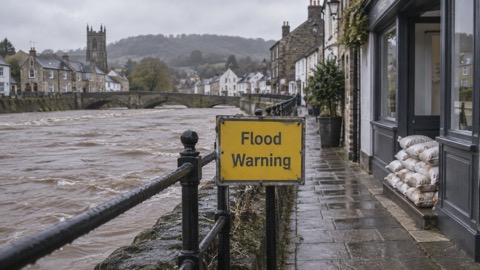
The clearest trigger is flooding. Mid and West Wales Fire and Rescue Service tells households to make sure they know how to turn off gas, electricity and water before a flood, and to turn off gas, electricity and water at the mains during one21. Somerset Council's during-flooding advice is to turn off your gas, electricity and water supplies if it is safe to do so8. The Greater London Authority's guidance adds the leaving-home case: if you leave your home during a flood you will need to turn off your mains water, gas and electricity if it is safe to do so, and you should find out in advance how7.
The sequence in a flood matters. Natural Resources Wales groups all three together: during a flood, turn off gas, electricity and water4.
Other triggers:
- Leaving home in any emergency: Surrey's guidance says turn off and isolate all three, unplug appliances and lock up, only if you have time and it is safe16. Surrey's in-case-of-emergency card says the same: turn off your gas, electricity and water if it is safe to do so22
- A thunderstorm: the Met Office's thunderstorm advice includes turning off gas, water and electricity supplies23
- Freezing weather: turn off the water supply to protect internal pipes from bursting12
- A suspected carbon monoxide problem: switch off the appliance and shut off the gas at the meter control valve14
The standing condition in all of it is "if it is safe to do so". If water is already lapping at the fuse board, or the smell of gas is strong, do not stand in it to reach switches. Get out and call for help. Deciding whether to stay or go is covered in Staying Put or Leaving: How to Decide.
Burst pipes and gas leaks: what to do first
For a burst pipe, Cornwall Council's sequence is direct: turn off water at the stop-cock12. Do that before anything else, including mopping. Every minute the stopcock stays open, more water enters the house. Once the supply is off, open the lowest tap in the house to drain what is left in the pipes, and deal with the burst section afterwards.
For a gas leak, the order is different because the danger is different:
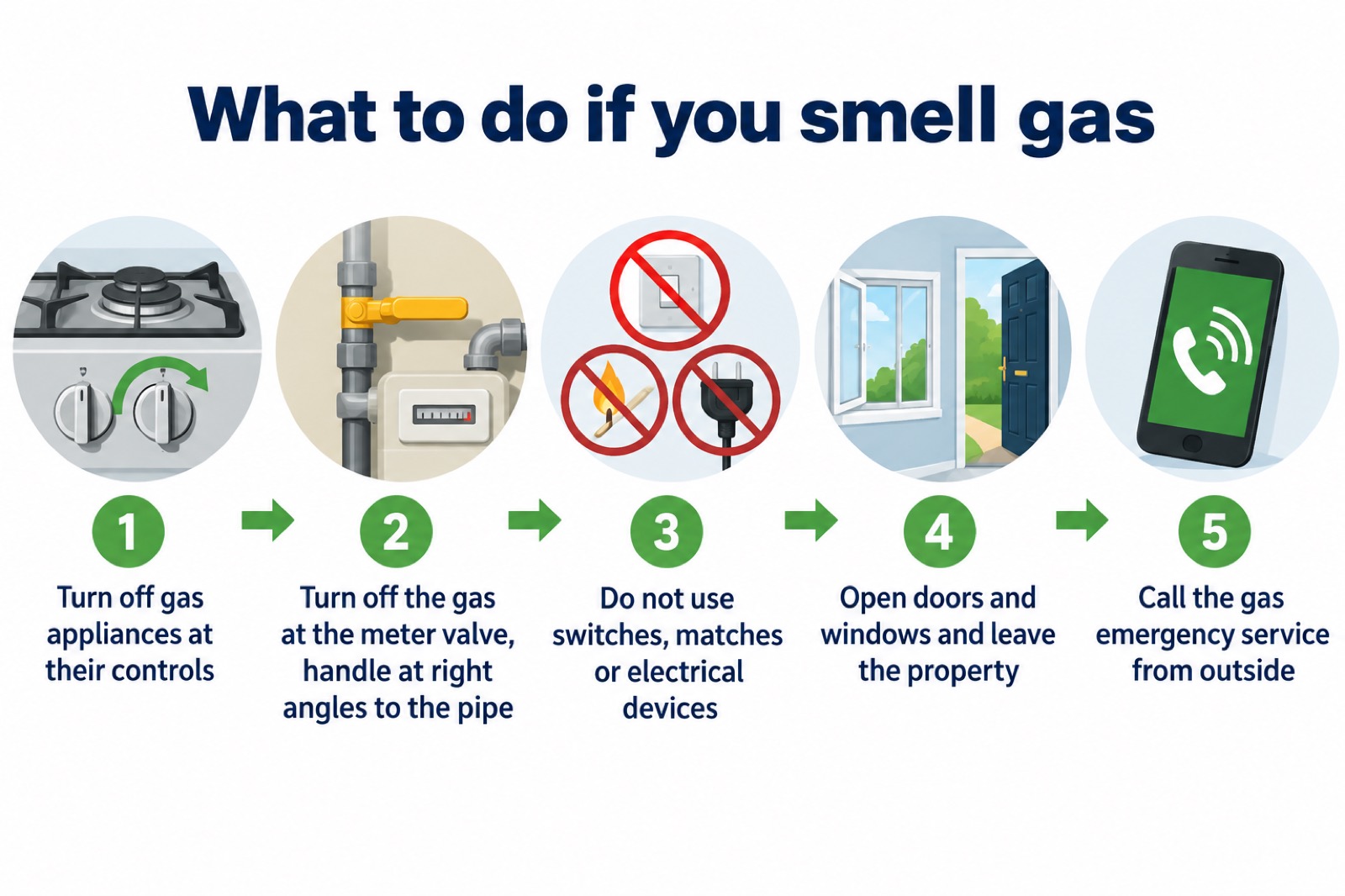
NI Direct's guidance for Northern Ireland is to turn off the gas supply at the meter when you smell gas9. The Health and Safety Executive's advice for a suspected carbon monoxide spill is to switch off the appliance and shut off the gas supply at the meter control valve14. Devon and Somerset Fire and Rescue Service repeats the meter valve for tenants, with the single exception of a meter in a cellar or basement, where you should not go down to it15.
Both situations are covered in full, including who to call and what to do about damage, in Home Emergencies: Fire, Carbon Monoxide, Gas Leaks and Burst Pipes. The short version for this page: the shut-offs are the first thing you reach for, and knowing where they are is what makes the rest possible.
Turning the gas back on afterwards
Turning gas back on is not simply the reverse of turning it off, and official guidance is cautious about it. Before you turn the gas supply back on, check that all the gas appliances in the property, including the boiler, cooker and gas fires, are turned off. Pilot lights in particular need to be relit deliberately, appliance by appliance, and not all appliances have pilots that a householder should relight themselves.
If the gas supply was interrupted by flooding, treat the appliances with more suspicion still: water and gas appliances do not mix, and a flooded boiler or fire needs checking before it is used again. Natural Resources Wales points householders who do not know how to handle their supplies to their supplier, via the Energy Networks Association's network operator finder4. That is the right route for restoration questions too.
The wider subject, including what to do in a gas outage and how to cope without heating, is covered in Gas and Heating Failures: A Household Guide, with Heating and Cooking Without Mains Power or Gas for the practical side of living through one.
Flats, shared meters and rented homes
Flats and rented homes throw up the awkward cases, and the answers are mostly about knowing who to ask.
Flats. NI Direct's flood preparation guidance for Northern Ireland tells householders to know where to turn off your electricity or gas supply24. In a flat, your fuse board is usually inside your own flat, and if you have your own gas meter its valve is next to it. The water supply can be the complication: some flats are fed from a communal riser with a stop tap that serves several homes, or an outside stop tap that is not yours alone. Find out which before you need it, from the landlord, managing agent or water company.
Shared or hidden meters. Meters in communal cupboards, basements or external cabinets are common in flats and converted buildings. The gas valve is still at your meter, wherever that is, and the fire and rescue service's exception is worth repeating: do not go into a cellar or basement to reach a gas meter in a leak15. Keep the meter box key or tool you need next to your own front door or in a drawer you can reach in the dark, following Lincolnshire's advice to keep necessary tools near the shut-off valves10.
Renting. Tenants should know and use the shut-offs exactly as owners do; the fire and rescue service's gas advice is addressed to tenants in rented homes15. The split comes with repairs. Devon and Somerset Fire and Rescue Service's after-a-fire guidance states that it is the landlord's or building owner's responsibility to repair any damage to gas, electricity or water supplies25. So: turn things off when you need to, but report damage and arrange repair through your landlord, and in an emergency follow the same steps any household would.
Stiff or hidden stopcocks. If the indoor stopcock will not turn, the outside stop tap near your boundary, under a cover, is your fallback3, and a plumber can free or replace the seized one. Check the indoor valve regularly so you find out it is stiff on a quiet Saturday, not during a leak11.
Sources (25)
- 2023_NATIONAL_RISK_REGISTER_NRR.pdf, Cabinet Office, UK Government
- Prepare yourself, Wiltshire and Swindon Prepared
- Flooding: be informed about hazards, Prepare (UK government campaign)
- Preparing for a flood, Natural Resources Wales
- Be Prepared flood guidance, Lancaster City Council
- Step 1: Preparation, Essex Prepared
- Flooding information, Greater London Authority
- During flooding, Somerset Council
- Energy, power supply and utilities, NI Direct
- Get help and advice in an emergency, Lincolnshire County Council
- 10 things you should do now to prepare for winter, Met Office
- Snow and ice in Cornwall, Cornwall Council Fire and Rescue Service, 2025-10-01
- What you might need in a gas outage, Wiltshire and Swindon Prepared
- Gas safety FAQs: domestic, Health and Safety Executive
- Safety at home: tenants, Devon and Somerset Fire and Rescue Service
- Homes prepared, Surrey County Council
- Dementia fire safety, North Wales Fire and Rescue Service
- Before, during and after a flood booklet, Suffolk County Council, 2021-05
- Preparing your family, Essex Prepared
- Damage limitation guide, Dover District Council, 2001-09
- Flooding advice, Mid and West Wales Fire and Rescue Service
- ICE card template, Surrey County Council
- Stay safe in a thunderstorm, Met Office
- Preparing for a flood, NI Direct, 2025-09-11
- After an incident: fire, Devon and Somerset Fire and Rescue Service
 30-Day Household Checklist
 Emergency Plan Template
 Supply Interruption Checklist
 Household Emergency Plan
 Emergencies to Prepare For
 Community Risk Registers
 What to Do in an Emergency
 Sheltering in Place
 Staying Put or Leaving
 If You Are Asked to Evacuate
 Planning Your Evacuation
 Rest Centres
 Returning Home
 Recovering After an Emergency
 Scotland Emergency Planning