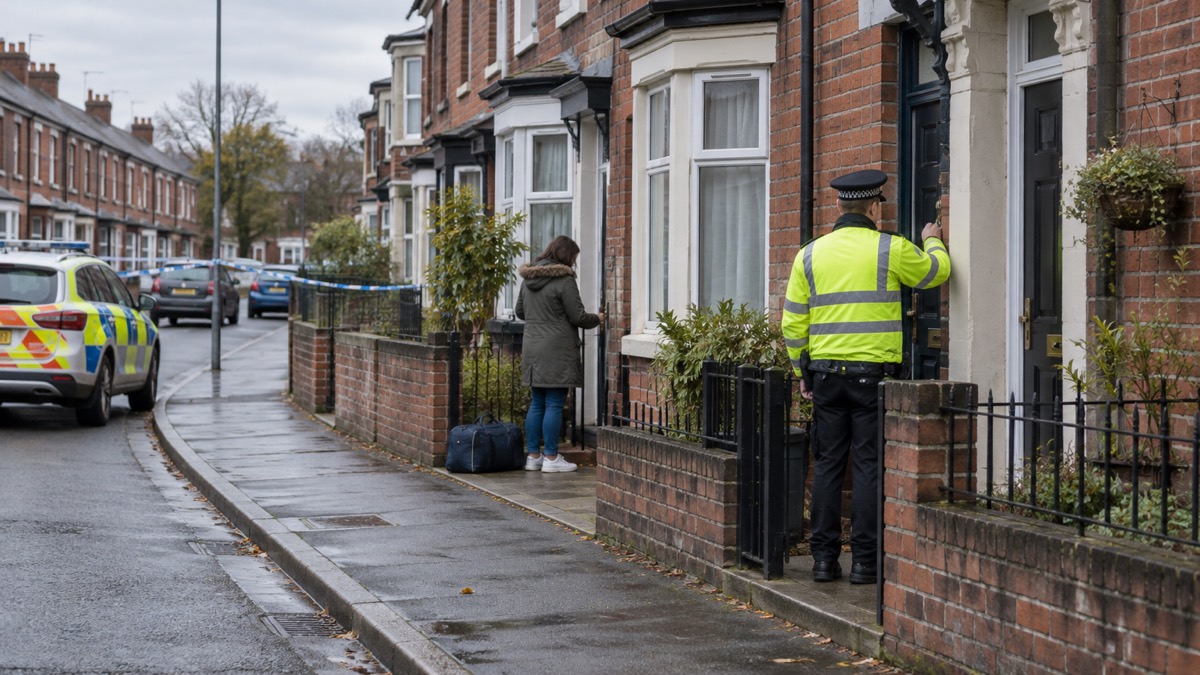
If the police or emergency services tell you to leave your home, go. Refusing to leave on their advice will put you, your family and those trying to help you at risk1. Locking up, switching off utilities and collecting belongings come second, and only if you have time: official evacuation guidance is that if you have time before leaving, you should make sure fires are out, your water, gas and electricity are switched off, and your property is locked up2.
The order of priorities is fixed. People first, pets with you, medication and keys in your pocket, then the house. This page sets out what to do in the minutes before you leave, what to switch off and where the valves are, what to take in a grab bag, and who to tell once you are out. It also covers what to do about spare keys, pets and insurance, and when you can come home.
Lock up only if you have time: your safety comes first
Everything on this page is conditional on one thing: having time. The evacuation of houses will only happen in extreme circumstances, and when it does, the police lead with assistance from other agencies, door knocking at each property7. Decisions are based on public safety and expected conditions, and may be made before water or any other hazard reaches your property, so the knock can come while your home is still dry and intact7. That is deliberate: it gives you the minutes you need to do the useful things, and it is why councils publish the same short list of tasks for those minutes.
If the emergency is a fire in your own home, none of this applies. The fire and rescue service advice is to get out, stay out and call 999 as soon as it is safe to do so8. Move as quickly but as safely as you can, and do not stop to investigate or pick up valuables4. Once you are out, stay out9. No lock, utility or document is worth a life, and the fire and rescue service is explicit about that order of priorities.
There is a second reason not to delay. If you decide to stay in an area that has been evacuated, for example due to flooding, it may not be possible for assistance such as food, drinking water or medical supplies to reach you, and there may be no way to flush toilets or get rid of waste7. Changing your mind later, when conditions have worsened, may put yourself, your family and rescuers at risk and increase the costs of the rescue7. Leave early, while the tasks below are still quick and safe to do.
Before you leave: the five checks
If you have time before leaving, make sure fires are out, switch off water and electricity, and then lock up10. Scottish Borders Council gives the fuller version: make sure that fires are out, your water, gas and electricity are switched off, and your property is locked up2. These are the same checks in the same order used by councils across the UK, and they take a few minutes if you know where everything is.
- Put out all fires and naked flames. This includes candles, open fires, gas hobs and pilot lights. If the incident is a release of gas, toxic chemicals or radiation, Edinburgh Council advises putting out all naked flames such as pilot lights and switching off gas supplies11. An empty house with a lit flame or a hot appliance is a second emergency waiting to happen.
- Switch off water, gas and electricity if it is safe to do so12. See the section below for where the valves are.
- Close internal doors. Fire safety guidance asks you to close all internal doors before bed, with the cooker and unnecessary appliances switched off and cigarettes and candles properly extinguished13. Closed doors slow the spread of fire and smoke, which matters both while the house is empty and while you are still on your way out.
- Collect your grab bag, keys, wallet and phone, and some warm clothing14.
- Lock every door and window, and lock the door behind you3.
If you live in a flat, the same checks apply to your own home, with one addition: keep all exits clear in communal corridors and in your home, keep door and window keys near the exit, know how to isolate your gas, electric and water supply, and get to know your neighbours who may need assistance in an emergency15. If your block operates an evacuation strategy and you have to leave your flat in an emergency, never re-enter your home until the Fire and Rescue Service has made it safe16.
Switching off water, gas and electricity
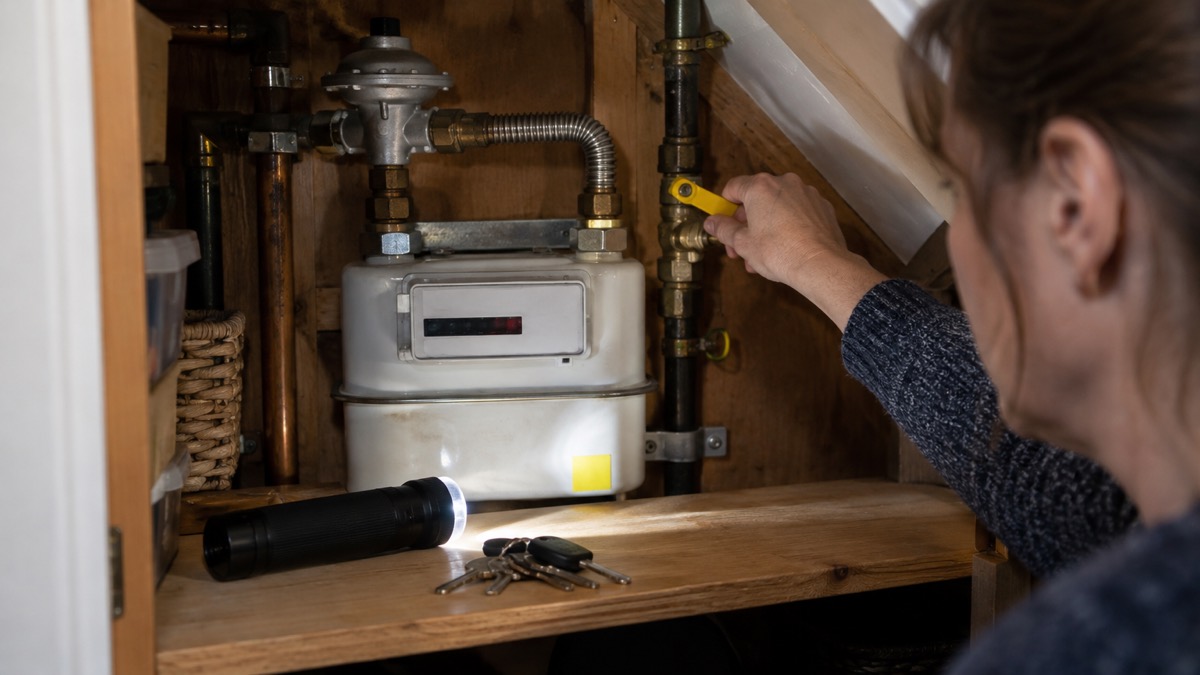
You may be asked to turn off your gas, electricity and water if you are asked to evacuate your property, or if there is structural damage to your home14. The reason is simple: an empty, damaged house with live utilities can flood, leak gas or catch fire with nobody there to notice. Turning them off removes three of the most likely ways an empty home destroys itself.
Know where to find the electricity mains, the main gas valve and the water supply14. This is a job for a quiet afternoon now, not for the moment a police officer is knocking:
- Water: the stopcock. Find it, check it turns, and make sure everyone in the household knows where it is.
- Gas: the gas safety shut-off valve is located at your gas meter12, and the gas shut-off valve is usually beside the meter17. Know where your meter is and which way the valve turns.
- Electricity: the main switch on your consumer unit (fuse box).
If you live in a high-rise or purpose-built block, the advice is the same but the isolation points may be shared or outside your flat: know how to isolate your gas, electric and water supply15. If you are not sure which controls are yours, ask your housing provider or managing agent before an emergency, not during one.
Lock every door and window, then the door behind you
Once the utilities are off, lock up. Lock the door behind you when you leave3. If you are leaving a flat or maisonette, leave it and close the doors behind you4. Closing and locking as you go does two jobs at once: it slows any fire, and it removes the easiest ways into an empty home.
Work from the inside out so you are not locked out of a room you still need to check:
- Close and lock all windows, including small ones and any on upper floors. Ground-floor and accessible windows are the classic entry route; our page on window security explains what makes a window hard to force.
- Lock internal doors where you can, then external doors, outbuildings and any side gate into the garden or rear alley.
- Double-lock uPVC doors by lifting the handle and turning the key, so the multi-point locking bolts are engaged, not just the centre latch. Our guide to double locking a uPVC door shows how.
- Lock the final door behind you3.
Keep door keys where everyone you live with can find them easily18. In the stress of an evacuation, the person leaving the house may not be the person who usually locks it, and keys buried in a drawer cost minutes you may not have. If you use a smart lock, be aware it depends on power and batteries; our page on smart locks in a power cut covers what to check.
Do not hide a spare key outside your home as you leave, even temporarily. Burglars know where to look19. If you want someone to be able to get in, hand them a key or use a properly fitted key safe; see our pages on keys and spares and key safes.
When and how you will be told to evacuate
Emergency services may advise you to evacuate your home or place of work for your own safety using door-to-door knocking or a loud hailer system5. The police normally coordinate the evacuation of people from their homes to a safe place20. In a flooding evacuation, the police lead with assistance from other agencies, door knocking at each property, and the decision may be made before water reaches your property7.
When the instruction comes:
- Follow the advice of the emergency services before leaving your home, and cooperate with them if you are told to evacuate your property17.
- Collect your emergency grab bag and check you have your keys, wallet and phone; grab some warm clothing; secure your home properly14.
- Walk, don't run. If you need assistance, look for someone in uniform wearing a high-visibility jacket21.
- Go where you are directed. You will be advised of where to go, to a designated rest centre21.
- If you do not have a car, plan how you will leave if you have to3. Work this out in advance, not on the doorstep.
Not every emergency means leaving. If there is a release of gas, toxic chemicals or radiation, you may be told the opposite: go indoors unless you are asked to leave by the emergency services, close all doors, windows and vents, put out all naked flames such as pilot lights, switch off gas supplies, put away or cover all fresh food, use the phone only if you need to, and stay indoors until you know more, tuning in to local radio or TV11. The same principle applies in a severe flood warning short of evacuation: stay in a safe place with a means of escape, be ready to evacuate, co-operate with the emergency services, and call 999 if you are in immediate danger22. If you live in a flat where the fire policy is to stay put when there is a fire elsewhere in the building, keep your front door and windows closed, don't investigate, and if you are with people make sure you stay together23. The instruction you are given on the day overrides any general rule.
If you need support to evacuate, contact your housing provider or managing agent and tell them you need support evacuating24. Do this in advance if you can, so you are on their list before an incident rather than after it. Our page on extra help in an emergency covers the wider support available to older, disabled and medically dependent households.
What to put in a grab bag: medication and medical equipment first
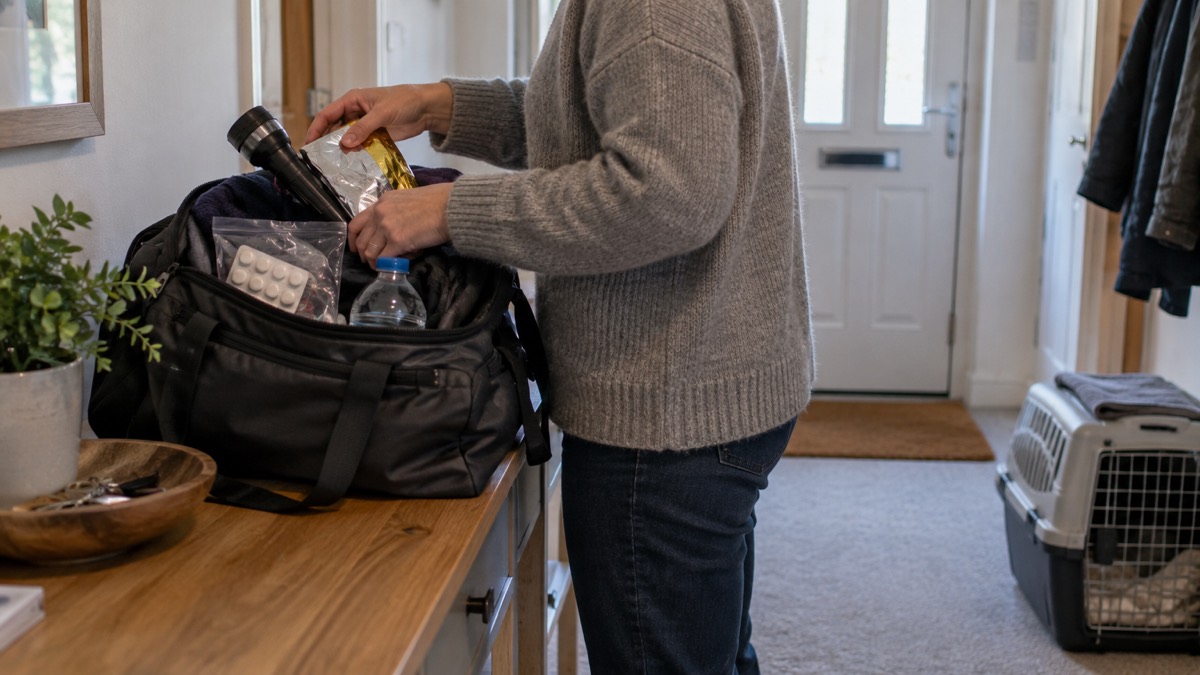
The single most important category is medication and medical equipment. Grab bag guidance from several councils puts it first: essential or prescribed medication, plus asthma and respiratory aids, hearing aids, and spectacles or contact lenses25. A community preparedness booklet extends the list to medical aids such as walking sticks and dietary foods, oxygen, insulin and inhalers26. If anyone in your household depends on any of these, they go in the bag before anything else, and the bag lives somewhere everyone can reach it in the dark.
| Category | What to pack | Why it comes first |
|---|---|---|
| Medical | Prescribed medication, asthma and respiratory aids, inhalers, insulin, oxygen, hearing aids, spectacles or contact lenses, walking sticks and other medical aids, dietary foods26 | Cannot be replaced quickly away from home |
| Documents | ID or passport, driving licence, copies of important documents in a waterproof wallet5 | Proves who you are and what you own |
| Money and phone | Cash, credit and debit cards, mobile phone and charger5 | Card machines and cashpoints may be out |
| Keys | House and car keys, spare keys25 | You need them to leave and to come back |
| Warmth and light | Warm waterproof clothing, blankets, torch with spare batteries, battery or wind-up radio26 | Rest centres are functional, not comfortable |
| Food and water | Bottled water, ready-to-eat food, bottle or tin opener, baby food and care items26 | For you and for anyone with special needs |
| Pets | Pet in a carrier, their food, leads26 | See the pets section below |
Keep the bag packed and check it regularly. A grab bag you have to assemble on the night is not a grab bag; it is a shopping list under pressure. Our emergency kit guide covers the fuller household store, and the getting started page shows how a grab bag fits into a whole household plan.
*A grab bag kept packed by the door: medication, documents, torch, phone charger and keys ready to pick up
Take your pets with you
If you must evacuate, the most important thing you can do to protect your pets is to evacuate them too6. Leaving pets behind, even if you try to create a safe place for them, is likely to result in their being injured, lost, or worse6. Plan so your pets have a safe place to stay28, and agree on a plan with a trusted neighbour, making sure they know your pet and where to find a lead or carrier28.
In practice:
- Put cats and small animals in a pet carrier or secure box, and take their food27.
- If you have pets which cannot be left alone for a sustained period, take some food, a basket or bed, and leads2.
- Have an evacuation plan for your pet, because many public shelters and hotels do not allow pets inside; know a safe place you can take them before emergencies happen25.
Councils differ on what happens at rest centres, so plan for both possibilities. One flood booklet says evacuation centres will allow pets under control27; another says most evacuation centres will let you bring your pets, so take their food and put cats and small animals in a carrier or secure box1; a third advises you not to bring them with you to an evacuation centre and to have a plan for where they can stay instead16. Our pets and animals guide covers the fuller plan, including livestock.
Where to go and who to tell once you have left
If the police ask you to leave your home, do so. They will ask you to go to a place of safety. If you decide to go somewhere else, let them know so you can be accounted for2. This matters more than it sounds: an unaccounted-for household triggers searches that take rescuers away from people who need them.
- Rest centre: you will be advised of where to go, to a designated rest centre. Follow police advice, be patient and stay calm21.
- Family or friends: in the first instance, try to find temporary accommodation with family or friends, and keep an eye on your council's website to know when the area is cleared and when it is safe to return home19.
- If you go elsewhere overnight: if the evacuation is overnight and you choose not to stay at the rest centre, inform the emergency services of where you have gone and how you can be contacted by calling 1015.
- If there is a fire: call 999 as soon as you are safe to do so, and do not assume someone else has made the call4.
Tell someone outside the affected area where you have gone, and keep your phone charged and with you. Swap house keys with a trusted neighbour as part of your emergency plan: you never know when you might lock yourself out or need someone to access your home if you cannot get there16. A neighbour who knows you have left, and holds a key, is also the simplest form of watch on an empty house. Our page on leaving your home empty covers longer absences.
Coming home: when it is safe and what to watch for
The emergency services or local authorities will let you know when it is safe to go home, and will provide information about specific actions you should take when returning after an emergency29. If you have been evacuated after a flood, do not return until you are told by the police or emergency services that it is safe to do so, and take care when you do, because there may be hidden dangers such as sharp objects, raised manhole covers and pollutive substances27. If you left because of a fire, never re-enter your home until the Fire and Rescue Service has made it safe16.
Once home, keep the property secure. If you cannot stay in your property after a fire, remove all valuables and secure all doors, windows and access to your garden30, and maintain your home's security during the drying-out stage30. An empty or part-empty house being dried out after a fire or flood is at its most exposed: doors and windows may have been forced by rescuers, and the house may stand empty for weeks. Our page on making a damaged home safe from intruders covers the practical steps.
Two cautions for the return:
- Be wary of anyone who knocks on your door offering to carry out building or repair work, and check their credentials first26. After a flood or fire, doorstep criminals follow the news. Our page on avoiding rogue traders after a flood lists the warning signs.
- Seek support if you need it once home29. Coming back to a damaged house is a practical project and a difficult one; you do not have to manage it alone.
For what to do about the valuables themselves, including keeping a record that helps after a loss, see our page on protecting your valuables and on property marking.
Sources (30)
- Preparing your home for flooding, Cotswold District Council, Cotswold District Council, 2020
- Emergency planning advice, Scottish Borders Council, Scottish Borders Council
- Get help and advice in an emergency, Lincolnshire County Council, Lincolnshire County Council, 2026-10-29
- Escape plan for blocks of flats, London Fire Brigade, London Fire Brigade, 2026-10-25
- Prepare for emergencies at home, Surrey County Council, Surrey County Council, 2026-10-28
- Preparing your family for emergencies, Slough Borough Council, Slough Borough Council, 2026-10-29
- Flood support and evacuation, Ashford Borough Council, Ashford Borough Council, 2026-10-29
- Escape plan for houses and converted flats, London Fire Brigade, London Fire Brigade, 2026-10-25
- Escape plan at home, Scottish Fire and Rescue Service, Scottish Fire and Rescue Service, 2026-10-26
- Emergency evacuation guidance, Clackmannanshire Council, Clackmannanshire Council, 2026-11-03
- Release of gas, toxic chemical or radiation, City of Edinburgh Council, City of Edinburgh Council, 2026-10-29
- In case of emergency template, Surrey Prepared, Surrey County Council, 2026-10-29
- Home safety advice, Belfast City Council, Belfast City Council, 2026-10-29
- Evacuation guidance, London Borough of Barking and Dagenham, London Borough of Barking and Dagenham, 2026
- High-rise fire safety information, Warwickshire County Council, Warwickshire County Council, 2026-10-29
- Prepare your household for emergencies, Westminster City Council, Westminster City Council, 2014-04
- Preparing yourself for flooding incidents, London Resilience Partnership, Greater London Authority, 2026-10-25
- Fire safety in flats and high-rise buildings, Devon and Somerset Fire and Rescue Service, Devon and Somerset Fire and Rescue Service, 2026
- Flood evacuation checklist, Croydon Council, Croydon Council, 2025
- Responding and recovering from emergencies, Argyll and Bute Council, Argyll and Bute Council, 2026
- Evacuation advice for residents, City of Edinburgh Council, City of Edinburgh Council, 2019
- What to do in a flood, Nottinghamshire County Council, Nottinghamshire County Council, 2010-11
- Stay safe policy information for flat residents, Manchester Fire and Rescue Service, Manchester Fire and Rescue Service, 2026-10-29
- Fire safety information for residents in flats, Manchester Fire and Rescue Service, Manchester Fire and Rescue Service, 2026-10-29
- Emergency grab bag, Buckinghamshire Council, Buckinghamshire Council, 2023-08-25
- Are You Ready booklet, Culham Parish Council, Culham Parish Council, 2025-09
- Before, during and after a flood, Suffolk County Council, Suffolk County Council, 2021-05
- Are you ready, Birmingham City Council, Birmingham City Council, 2026-06-05
- Recovering from an emergency, Essex Prepared, Essex Prepared, 2026-10-29
- Steps after a fire, North Yorkshire Fire and Rescue Service, North Yorkshire Fire and Rescue Service, 2026-06-17
 Moving Home Locks Checklist
 After a Break-In Checklist
 Holiday Security Checklist
 Flats and Shared Entrances
 Key Safes for Carers
 Keys and Spare Sets
 Terraced Houses and Rear Alleys
 Smart Locks
 Windows and Ground-Floor Risks