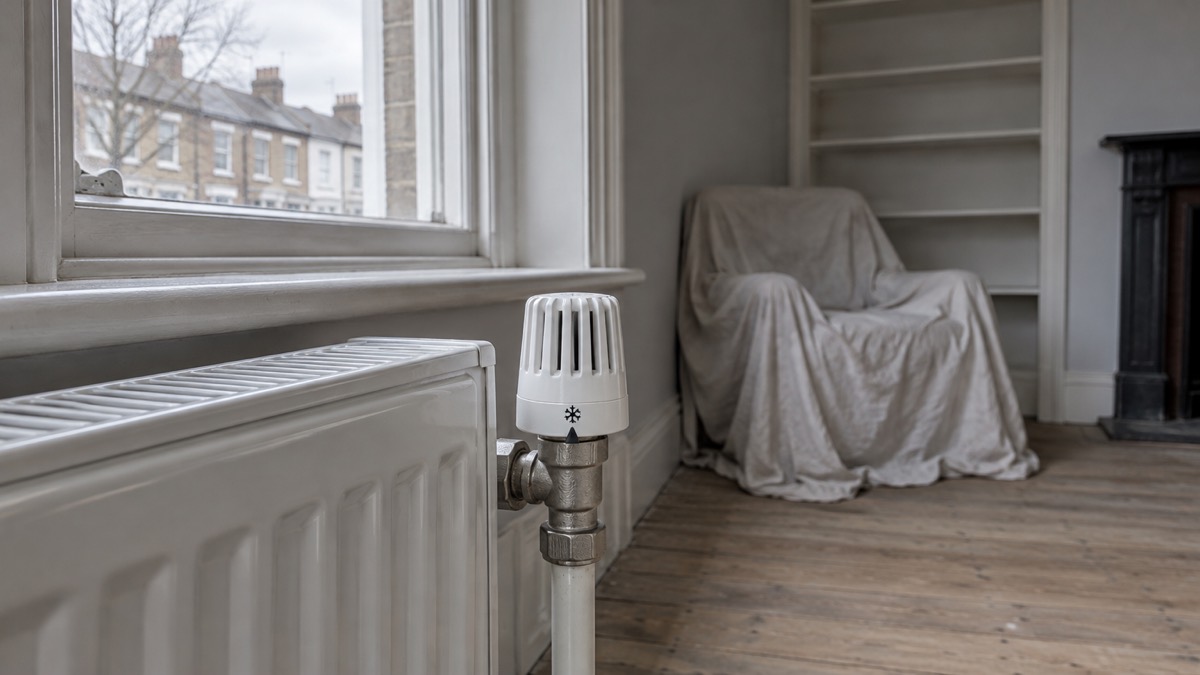
A home left empty behaves differently from one that is lived in. Water sits still in the pipes and can freeze, insurers treat the property differently the moment nobody is sleeping there, and a house that looks unoccupied is a more likely target for housebreaking, which Police Scotland says is "more likely when a house looks empty"1. Whether you are leaving for a long trip, moving out before a sale completes, or handling the home of someone who has died, the same few jobs protect the building and your cover.
The core routine is short. Before you go, either drain the water system down completely or leave the heating on a low setting so pipes do not freeze2. Arrange for someone to look inside the house regularly, because a burst pipe found in a day is a nuisance and one found in a month is a rebuild.
This page walks through each of those steps in order, then covers the special case of a property empty during probate, what to do when you come back and find a leak, and where to get help.
Before you leave: a walk-through in order
Work through the house in one deliberate pass rather than remembering things piecemeal. Emergency planning guidance from Scottish Borders Council is blunt about the order of business: "If you have time, you should make sure that fires are out, your water, gas and electricity are switched off, and your property is locked up"3. West Northamptonshire Council's evacuation advice adds the same steps with more detail: turn off electricity, gas and water supplies, unplug appliances, lock all doors and windows, and take pets, medication and health aids such as glasses and hearing aids with you8.
Do the fires first. Greater Manchester Fire and Rescue Service says of open fires and log burners: "Make sure fires are out before going to bed or leaving the property"9. That means properly out, not dying down: embers in a grate in an empty house have hours to work with. Then move to the utilities, then to the fabric of the building.
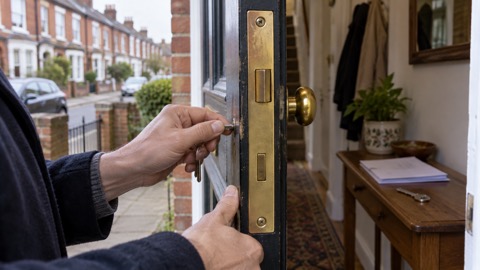
On the way out, go into each room and check that every window is tightly shut and locked, and that every door leading into the home is secure and locked, as the PSNI's house security guidance advises10. Lock the door behind you when you finally leave3.
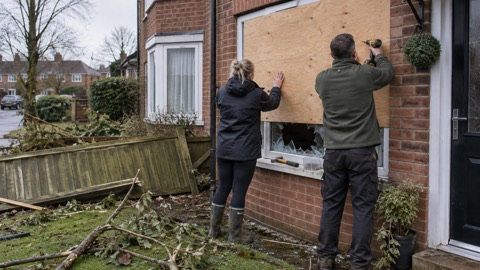
If the house is empty because of a fire, flood or other damage, the same pass has extra steps. North Yorkshire Fire and Rescue Service says that if you cannot stay in your property you should remove all valuables and secure all doors, windows and access to your garden11. Warwickshire Council advises securing the property to prevent further damage or unauthorised entry, for example by boarding up broken windows or securing damaged doors12. Surrey County Council adds a warning about people: be careful of doorstep callers who may trick or steal from you by asking to turn off water or check the electricity13. Devon and Somerset Fire and Rescue Service says to contact your local police to make them aware the property will be empty14.
Telling your insurer, and the police
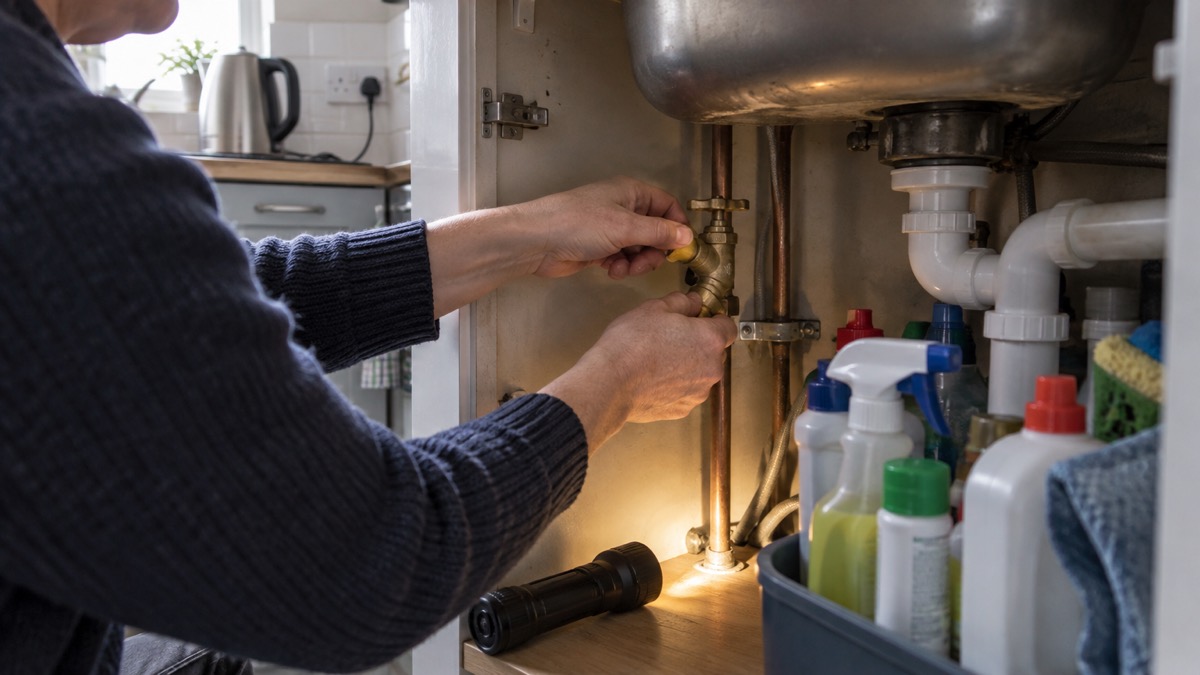
Do this before you leave, not after something goes wrong. Mid and West Wales Fire and Rescue Service gives the reason in plain terms: "Check your home insurance policy, as some policies limit the number of days you can leave your home empty and still claim"4. Those limits vary between policies, so read your own documents and call your insurer if the wording is unclear. Tell them the dates the property will be empty and anything you have arranged, such as checks by a neighbour, because that is the evidence you will rely on if you ever claim.
Avon and Somerset Police add a second, less obvious condition: "most policies only cover burglary claims on an unoccupied home if there are signs of forced entry"5. In other words, if someone gains entry without breaking anything, perhaps through a door left unlocked or a window left ajar, your insurer may not pay out. That is a strong reason for the locked-window walk-through in the previous section, and for not leaving spare keys in obvious places.
Tell the police as well as the insurer. Lancaster City Council's preparedness guidance states: "If your house is unoccupied you are advised to inform the police"7. North Yorkshire Fire and Rescue Service makes the same point for homes emptied by fire: inform your local police station and ask neighbours to keep an eye on your property11. Telling the police means that if a neighbour reports a light on or a door open, officers know the house is meant to be empty and can act, and it strengthens your position with the insurer because you can show you took reasonable care.
Finally, keep the absence off public view. nidirect warns that with a public profile, "you could be telling an opportunistic burglar that your home will be empty for a couple of" weeks by talking about your holiday on social media15. Our page on home insurance conditions covers unoccupancy clauses in more detail, and should you tell the police your home will be empty looks at what forces actually do with that information.
The water system: turn it off and drain it down
Water is the thing most likely to destroy an empty house, because nobody is there to catch it. The Met Office's advice for frozen or burst pipes is to "Turn off the water supply coming into your property at the stop tap and switch off your boiler"6. Highland Council tells its tenants to know where the stopcock is in case you need to turn off the water16, and that advice holds for every household: find it before you leave, not when water is coming through the ceiling.
Turning off the stopcock stops the mains refilling the system, but the pipes and tanks still hold what is already in them. Cornwall Council's snow and ice advice goes further: "If you are away from your house overnight or for any long period, leave the heating system on a low setting to prevent pipes freezing. If practical, switch off water and drain pipes"2. Draining down means opening the lowest taps after the stopcock is closed and letting the system empty, so that a freeze has nothing to expand and split.
Draining down suits a property that will be empty for a long time, or one where the heating cannot safely be left running. It has a trade-off: when you return you will need to refill the system, and you should watch the joints and taps as the pressure comes back up, because washers that dried out can weep. If you are not confident doing this yourself, a plumber can drain the system down before you leave, and that cost is small against a burst pipe in an empty house.
North Wales Fire and Rescue Service frames the whole arrangement around the person doing the checking: "If you're planning to be away for a while, ask a friend or relative to check on your home and make sure pipes haven't bu[rst] or frozen"17. A drained system makes those checks simpler, because there is very little water left to escape.
Or leave the heating on a low setting
The alternative to draining down is to keep the heating running. Cornwall Council's advice, quoted above, is to leave the heating system on a low setting to prevent pipes freezing when you are away overnight or for any long period2. This is the usual choice for shorter absences, for homes where draining down is impractical, and for any property where a frost thermostat or similar control is already fitted.
A low setting means exactly that: low, not comfortable. The point is to keep the water in the pipes above freezing, not to keep the house warm. That means the heating, and the gas or electricity that feeds it, stay on even though you have switched everything else off at the point of leaving. This is the one deliberate exception to the "switch off the utilities" rule, and it is worth saying so plainly to anyone checking the house, so they do not helpfully turn the boiler off.
The trade-off is risk on the other side. A boiler running for weeks in an empty house is unattended equipment, and if it fails in cold weather the pipes freeze anyway. That is the argument for pairing this option with regular inside checks, covered later on this page, so a failure is noticed within days rather than weeks. It is also the argument for draining down if the house will be empty for months rather than weeks.
Whichever option you choose, do it deliberately rather than drifting into one. A house with the water off but the pipes full, or the heating set to come on at a warm temperature all winter, is the worst of both arrangements.
Keeping an empty home secure
Police Scotland's guidance on housebreaking states that it is "more likely when a house looks empty"1. Everything in this section follows from that single sentence: your job is to keep the house looking and sounding occupied, and to make entry hard if someone tries anyway.
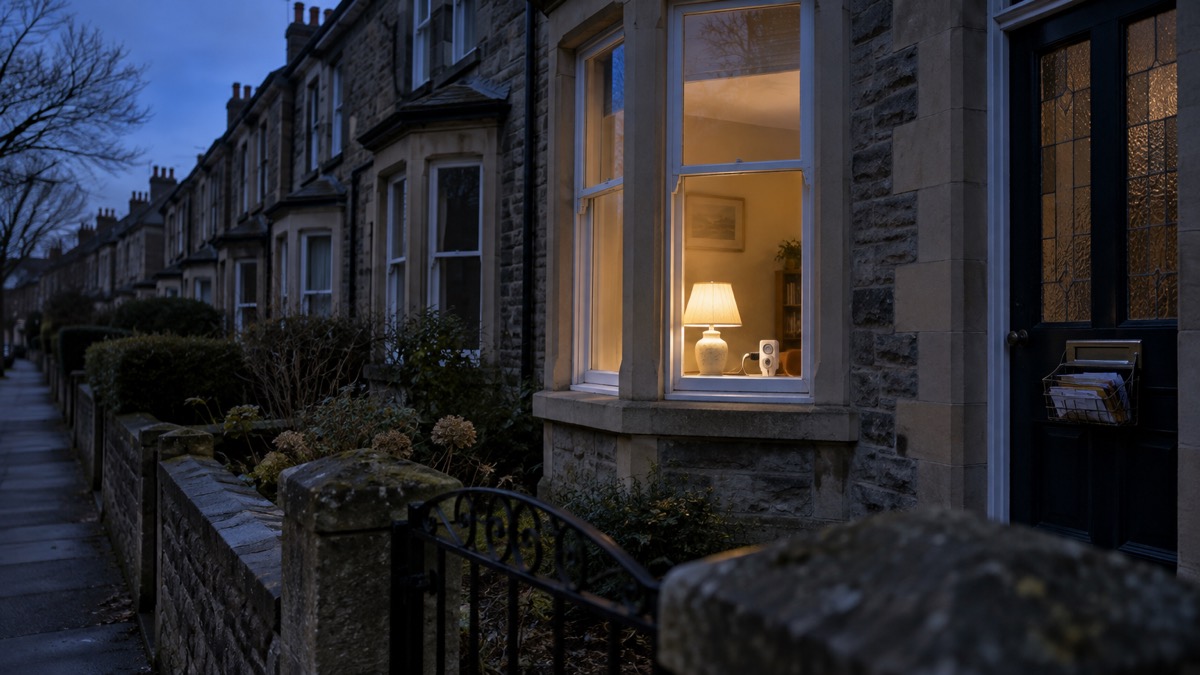
Mid and West Wales Fire and Rescue Service gives the two simplest measures: use lights on timers and keep curtains in a normal position, because opportunistic burglars look for signs that a house is unoccupied18. nidirect adds the signs that give an empty house away: "Leaving your bins out for days or letting mail pile up is a sure sign there's no one home"15. So cancel or redirect deliveries, and arrange for someone to move bins out and back on the right day. Our page on how to make your house look occupied when you're away works through these measures in detail.
Beyond appearances, make the building itself resistant. London Fire Brigade's arson reduction advice is to keep entry points to buildings secure, including sheds or garages, perimeter walls, fencing and gates19, and to board up and secure unused or derelict buildings19. For a property that will be empty for a long spell, that outbuilding discipline matters as much as the house itself, because an open garage or a broken gate signals that nobody is coming back.
Two warnings belong here. First, Birmingham City Council's guidance on loss of utilities says never leave lit candles in unoccupied rooms20. Candles are sometimes suggested as a cheap "lived-in" effect; they are a fire risk in a house nobody is watching, and they are not worth it. Second, if you fit a key safe outside the property so that a checker or carer can get in, Devon and Somerset Fire and Rescue Service advises that you tell the emergency services about the key safe or access code when calling them in an emergency21. Our pages on key safes and burglar alarms cover those choices in full.
If the worst happens, remember Police Scotland's point that a break-in "is still a crime even if nothing is stolen"1. Report it, and see our page on coming home to a break-in for what to do first.
Metal theft: lead, copper and pipework
An empty property is attractive to metal thieves because there is nobody to hear or interrupt them, and because the theft may not be noticed for weeks. The metals at risk in a domestic property are the lead on roofs, flashings and chimneys, and copper pipework and cylinders inside.
The Drinking Water Inspectorate explains why older homes carry lead in the first place: "Before 1970, lead pipework was commonly used to connect properties to the mains water network", and although "the use of lead pipes has since been banned", many older properties that have not been modernised are likely to have them22. If the house you are leaving empty predates 1970 and has not been rewired and replumbed, assume there is lead on the property worth protecting, and copper besides.
Practical protection is the same as in the previous section, applied to the parts of the building a thief reaches first. London Fire Brigade's advice to keep entry points secure, including sheds, garages, perimeter walls, fencing and gates19, applies directly: a thief who cannot get into the garden and onto a ladder or scaffold stored there has a much harder time reaching a roof. Boarding up, which the same guidance recommends for unused or derelict buildings19, protects the interior pipework and any copper cylinders in a property that will stand empty for a long time.
If metal is stolen, act on two fronts. Report it to the police, remembering that entry with intent is a crime even if nothing is taken1. Tell your insurer, bearing in mind that most policies only cover burglary claims on an unoccupied home where there are signs of forced entry5. And treat the water system as unsafe until a plumber has checked what remains, because a half-removed pipe can flood the house the moment the mains are restored.
Regular checks: who looks, and how often
The purpose of checks is to catch the two things that ruin empty houses quickly: water and intruders. The Met Office's advice is to "Get a neighbour to check inside your home occasionally if you go away"6, and North Wales Fire and Rescue Service says to ask a friend or relative to check on your home and make sure pipes have not burst or frozen17. The word inside is the important one. A house can look perfect from the pavement with water coming through the ground-floor ceiling.
Whoever checks needs to know what they are looking for and what to do. Make sure they know to call you, and 999 or 101 as appropriate, rather than confronting anyone in the house: Sussex Police's personal safety advice is that if you are threatened with violence, "don't risk your personal safety. Property can be replaced, you can't"23.
A neighbour can do this, but does not have to be the only pair of eyes. Avon and Somerset Police note that local Neighbourhood Watch schemes help when you are away "by increasing the surveillance of your property and encouraging neighbours to report suspicious activity"5. Our page on joining or starting a Neighbourhood Watch explains how that works. North Yorkshire Fire and Rescue Service also advises informing your local police station when a home will be unoccupied11, which we covered earlier.
How often is often enough? The guidance quoted here says occasionally, without fixing a number, and the right answer depends on what you left running: a house with the heating on needs eyes on it more often than a drained, shut-down one, because a boiler failure in a cold spell turns into frozen pipes within days. Whatever interval you settle on, agree it with the person doing the checking before you leave.
A property empty during probate
A home whose owner has died is often the emptiest kind of empty: nobody is living there, nobody feels authorised to make decisions, and the estate can take months to settle. The responsibilities are real all the same. Highland Council's guidance to its tenants, that "you are responsible for keeping your home safe, secure and in good condition"16, describes the standard an executor or administrator is effectively holding the property to while the estate is administered.
Start with the same walk-through as any other empty home. Secure the property to prevent further damage or unauthorised entry, boarding up broken windows or securing damaged doors if the house has been damaged12. Remove valuables from the property11, which in a probate home means items of sentimental as well as monetary value, and record what was removed and where it is now, because you are accounting for the estate. Inform the local police that the property will be empty14, and tell the insurer, watching the unoccupancy limits that some policies place on claims4.
Then arrange the regular checks described in the previous section, and keep a note of them. A dated record of visits is useful both for the insurer and for the estate's accounts.
If the property was rented, gas safety duties continue between tenancies. The Health and Safety Executive's guidance for landlords says that before re-letting you must ensure all appliances and flues are safe with an up-to-date gas safety check record, a copy given to tenants before they move in; if tampering or vandalism is suspected, arrange another gas safety check before giving access to new tenants; and inspect and test installation pipework for soundness before re-letting24. An empty house is exactly the situation where tampering goes unnoticed, so if there is any sign of interference with the gas installation, that further check is the prudent course. The Greater London Authority notes that landlords must make sure gas appliances and flues in rented homes are safety checked every 12 months25, so check the date of the last record before the property is let again.
One probate-specific caution: the house may hold post, documents and deliveries that matter to the estate. Redirect the deceased's mail rather than letting it pile up on the doormat, both because piled-up mail advertises that the house is empty15 and because the estate will need that correspondence.
Coming back: finding a burst pipe or a leak
The dangerous moment for an empty house is often the return, because that is when the water is turned back on and the damage is discovered. Before you switch anything on, walk the house the way your checker should have: every room, every ceiling, under every sink.
If you find a burst pipe or an active leak, turn off the water at the inside stop tap, usually under the kitchen sink or where the pipework enters your property, and make sure you can do so before you need to6. Do that before anything else, including before you start clearing up, because the mains will keep feeding the leak until the stopcock is closed. If you drained the system down before leaving, refill it slowly and watch the joints, as described earlier.
If the house was flooded while empty, an empty, damaged property attracts doorstep callers, and our page on bogus callers explains how to check that someone at the door is genuine. Somerset Council's advice for flooded households is to contact your insurer if you have contents insurance, as they may cover damaged items or temporary accommodation26.
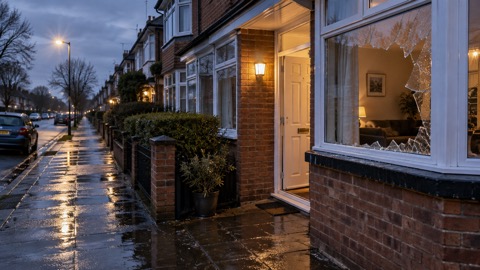
For the security side of a return, if the house has been broken into, do not clear up before the police have been, and remember again that it is a crime even if nothing was stolen1. Our after a break-in checklist sets out the steps in order.
Where to get help with an empty home
You do not have to manage an empty property alone, and several kinds of help exist.
For the practical jobs, there is a route that works year-round: if you own your home, you may be able to get help and support from an accredited home improvement agency or handyperson service27. Those services can arrange the drain-down, the boarding up and the small repairs that keep an empty house weathertight, which matters if you are handling a probate property from a distance.
For fire risk, South Wales Fire and Rescue Service offers a home safety visit, and notes that you may not need a visit at all: the service can instead give up-to-date guidance on reducing fire risk and free smoke alarms where required28. That is worth arranging for a property that will be empty for a long time, because a working alarm is one of the few things that protects a building nobody is watching. Dorset and Wiltshire Fire and Rescue Service also lists temporary safety measures used while work waits, including additional fire alarm systems and on-site support during emergencies29, which is the kind of arrangement worth asking about for a large or higher-risk empty property.
For crime, your local police station is the point of contact when a home becomes unoccupied7, and Neighbourhood Watch schemes increase surveillance of your property while you are away5. For the money side, your insurer is the first call after any loss, and your council is the body to ask about an empty home in your area.
Related pages on this site: home insurance conditions, leaving your home while you are on holiday, making a damaged home safe from intruders after a storm, fire or flood, and home emergencies: fire, carbon monoxide, gas leaks and burst pipes.
Sources (29)
- Break-in and housebreaking advice, Police Scotland, 2026-11-02
- Snow and ice in Cornwall, Cornwall Council, 2025-10-01
- Emergency planning advice, Scottish Borders Council
- Mynd ar wyliau (Going on holiday?), Mid and West Wales Fire and Rescue Service, 2026-10-29
- Pre-holiday routine, Avon and Somerset Police, 2026-11-02
- Frozen or burst pipes, Met Office, 2026-10-26
- Be prepared guidance, Lancaster City Council
- Protecting yourself in an emergency, West Northamptonshire Council, 2024-05-31
- Chimney and open fire safety, Greater Manchester Fire and Rescue Service
- House security advice, Police Service of Northern Ireland
- Steps after a fire, North Yorkshire Fire and Rescue Service
- Dealing with the aftermath of a fire, Warwickshire County Council
- Staying healthy and safe after flooding, Surrey County Council, 2026-09-23
- After an incident: fire, Devon and Somerset Fire and Rescue Service
- Securing your home, nidirect, 2024-01-23
- Keeping your home safe and secure, The Highland Council, 2026-09-09
- Ice and burst pipes, North Wales Fire and Rescue Service, 2026-10-29
- While you are away, Mid and West Wales Fire and Rescue Service, 2026-10-29
- Reducing arson risk, London Fire Brigade, 2026-10-25
- Loss of utilities, Birmingham City Council, 2026-10-29
- Fire safety for people with sight difficulties, Devon and Somerset Fire and Rescue Service
- Lead in drinking water, Drinking Water Inspectorate, 2026-05-01
- Protect yourself from street robbery, Sussex Police, 2026-11-02
- Landlords: gas safety FAQs, Health and Safety Executive, 2026
- Gas safety for tenants, Greater London Authority, 2026-10-25
- Housing help if your home is flooded, Somerset Council, 2026-06-04
- Beat the heat: keep cool at home checklist - GOV.UK, UK Health Security Agency (GOV.UK)
- Request a home safety visit, South Wales Fire and Rescue Service, 2026-08-20
- External wall fire review process, Dorset and Wiltshire Fire and Rescue Service, 2026-01-28
 After a Break-In Checklist
 Holiday Security Checklist
 Moving Home Locks Checklist
 After a Burglary
 Bogus Callers
 Coming Home to a Break-In
 Catalytic Converter Theft
 Riots and Disorder Near Home
 Securing a Damaged Home
 Dogs as a Burglar Deterrent
 Doorstep Selling and Your Rights
 Leaving Home on Holiday
 How Burglars Choose a Home
 Home Insurance Conditions
 Keyless Car Theft