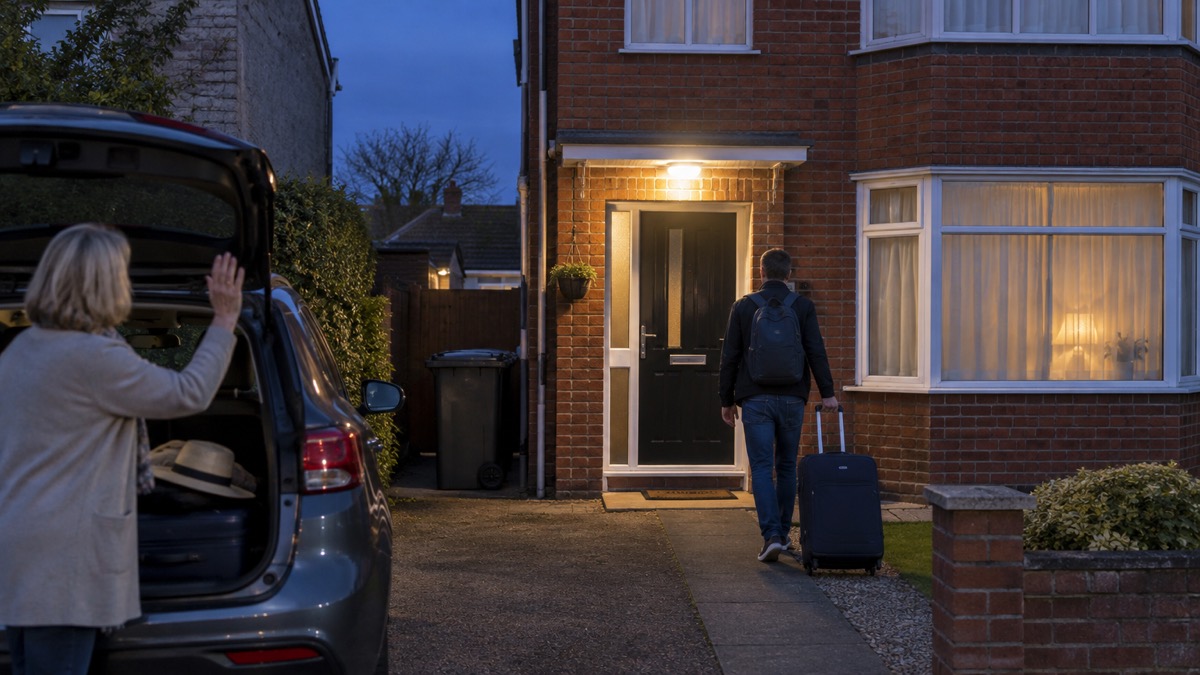
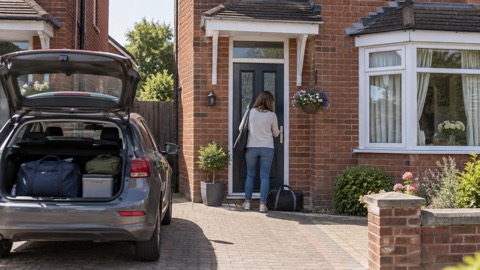
Going away should not mean lying awake wondering whether the house is safe. The core of holiday home security is short: lock everything properly, make the house look lived in, stop the tell-tale signs of an empty home building up, and ask someone you trust to keep an eye on it. Every one of those steps comes from official police or fire and rescue advice in the UK, and none of them takes long.
The reason to bother is plain. Mid and West Wales Fire and Rescue Service warns that leaving your home empty while away carries a higher risk of burglars targeting it1, and Police Scotland says housebreaking is more likely during holidays because thieves know it is more likely that valuables will be inside2. nidirect, the Northern Ireland government advice service, adds a modern twist: with a public profile, talking about your holiday on social media could tell an opportunistic burglar that your home will be empty for a couple of weeks3.
The fix is a routine you run the day you leave. Avon and Somerset Police publish a pre-holiday routine that starts with the alarm: if you have a burglar alarm, ensure it is set before you leave4. This page walks through that routine step by step, what to take with you, how to stay safe where you are staying, and what to do about the weather you leave behind.
What to do before you leave
Work through this list on the day you travel, and you will have covered everything the official advice asks for.
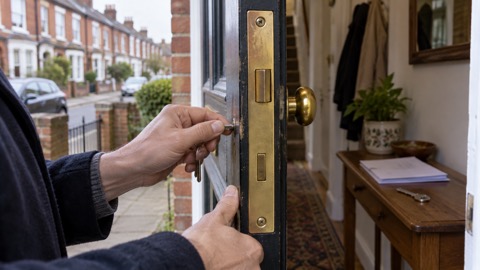
- Check and lock doors, windows, sheds and garages. nidirect's securing your home checklist puts this first: check and lock your doors, windows, sheds and garages before you leave3. North Yorkshire Fire and Rescue Service adds a seasonal note that is worth keeping all year: make sure front and rear doors are shut and locked both when you leave the house and also on your return7.
- Set the burglar alarm. Avon and Somerset Police's pre-holiday routine is explicit: if you have a burglar alarm, ensure it is set before you leave4. If you are choosing or checking an alarm, our pages on burglar alarms and monitored alarms explain the types and who responds when one goes off.
- Put valuables out of sight and mark them. The PSNI advises keeping gifts and expensive items out of view, and marking valuables with your postcode and house number5. Police Scotland's advice is the same: remove or store all items of value out of sight before leaving home to go on holiday8. Our page on property marking covers how to do it and keep a record.
- Tell a trusted neighbour, and give them a key. Let a neighbour know you are going away and give them a key for emergencies6. nidirect goes further: ask someone trusted to check the house regularly and bring in bins and post3.
- Set up timer switches on lights. The PSNI says to give your property an occupied look by using timer switches for lights when your home is empty5.
- Keep curtains in their normal position. Mid and West Wales Fire and Rescue Service says opportunistic burglars will look for signs that a house is unoccupied, so having lights on timers and keeping curtains in a normal position stops the house looking empty9.
- Say nothing publicly about being away. Do not advertise being on holiday on social media, and ask people to check on your property if you can8. Our page on holiday social media goes into the detail.
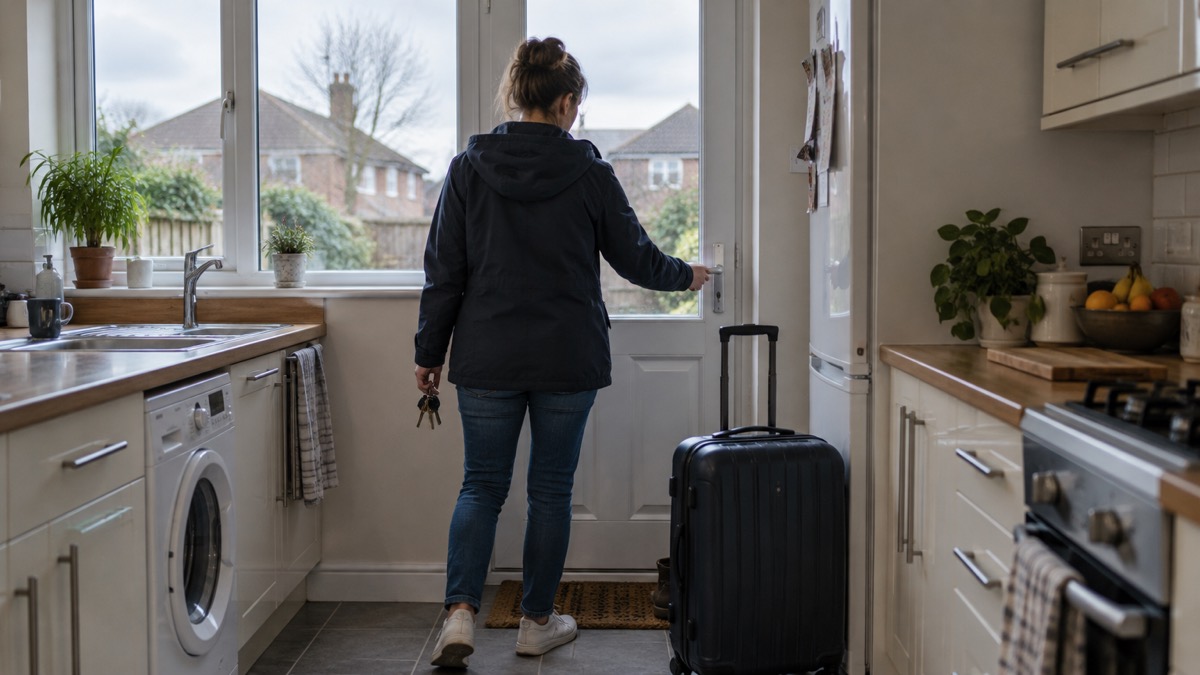
If you want a printable version of this routine, our holiday checklist sets out every step in order. If you are away for a long stretch, or leaving a property empty for another reason such as probate, the risks and the insurance position change, and our page on empty homes covers that separately.
Making the house look occupied
An empty house announces itself. The signals burglars read are simple: no lights in the evening, curtains closed all day, a driveway with nothing in it, and nothing moving through the letterbox for a fortnight. Official advice tackles each one.
Timer switches are the single most recommended step. The PSNI says to give your property an occupied look by using timer switches for lights when your home is empty5, and Mid and West Wales Fire and Rescue Service pairs lights on timers with keeping curtains in a normal position so the house does not look unoccupied9. Put the timer in a room visible from the street, not a back room nobody can see. Our page on making your house look occupied goes into placement and patterns.
A neighbour's car helps too. Mid and West Wales Fire and Rescue Service suggests asking a trusted neighbour to keep an eye on your property, and even to park in front of your house occasionally to give the impression someone is home1. A car coming and going over several days reads as life in the house in a way a static timer cannot.
A local Neighbourhood Watch scheme adds a layer beyond your own arrangements. Avon and Somerset Police say their local Neighbourhood Watch schemes can help when you are on holiday by increasing the surveillance of your property and encouraging neighbours to report suspicious activity4. If there is a scheme on your street, tell the coordinator your dates. If there is not, our page on joining or starting a Neighbourhood Watch explains how one gets going.
What you must not do is announce the absence yourself. nidirect's warning is worth reading in its own words:
"if you have a public profile you could be telling an opportunistic burglar that your home will be empty for a couple of weeks"
Police Scotland's advice to people going on holiday is the same: do not advertise this on social media and ask people to check on your property if you can8. Photos of the airport, countdown posts and check-ins all do the advertising for you. Post them when you are home.
Post, parcels, bins and the doorstep
The things that pile up outside an empty house are the things that give it away. nidirect is blunt about the two worst offenders:
"Leaving your bins out for days or letting your mail pile up is a sure sign there's no one home."
So the routine is: ask someone trusted to check the house regularly and bring in bins and post3. A neighbour with a key can do this in a minute a day. If no one nearby can help, Royal Mail's keepsafe-type services exist, but the pack's official advice stops at asking a trusted person, so treat that as the primary route and arrange whatever redirection or hold you can with your own providers.
Parcels matter as much as letters. A parcel left on a doorstep for days says the house is empty just as loudly as a bin left at the kerb, and it invites the parcel itself to be taken. If you are expecting deliveries before you travel, either bring them in before you go or have them sent where someone will be.
The doorstep itself deserves a thought before you leave. An empty house that still gets callers, leaflets and flyers can accumulate evidence of absence on the mat. A neighbour collecting post deals with most of it. If you are worried about who might call while you are away, our pages on bogus callers and doorstep selling explain how doorstep crime works and how it is reported.
Your car, garage and outbuildings
The perimeter of your property counts as much as the house. nidirect's checklist includes sheds and garages alongside doors and windows: check and lock them all before you leave3. Tools taken from an unlocked shed are a burglary kit for the house, and a garage with an internal door to the home is only as secure as its weakest lock, which our page on the door between your garage and house covers.
The PSNI's summer safety advice extends this to anyone taking a day trip or staying in a holiday home or caravan: ensure the safekeeping of houses, sheds and any other outbuildings10. That applies in both directions. If you are away for the day, the outbuildings you leave behind are the ones a thief has hours to work on. If you are staying in a caravan or holiday home, its sheds and outbuildings need the same lock check you would give your own.
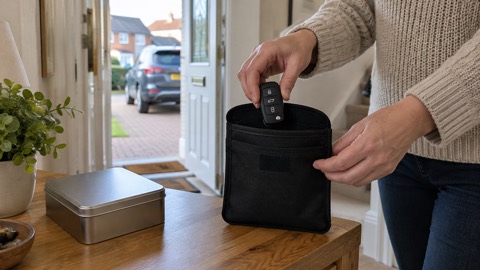
Cars need their own routine. If the car stays home while you fly, do not leave valuables in it, and consider where it sits: a car on the drive that never moves for two weeks is itself a signal, which is why the neighbour parking outside occasionally matters1. If the car travels with you in winter, pack for the road: North Wales Fire and Rescue Service advises a snow or ice scraper, de-icer, snow shovel, hat, gloves, boots, a torch, bottle of water and a first aid kit, and for longer journeys blankets, a snack and a flask of warm drink11. If your car is keyless, our page on keyless car theft explains relay attacks and how to store keys at home and away.
What you need before you go
Holiday packing is usually clothes and chargers. Official advice adds a few items that turn a mishap into a manageable problem.
Health essentials. NHS guidance on staying safe over the summer says to find your nearest pharmacy, urgent treatment centre or minor injuries unit in advance, take plenty of regular prescribed medication, and if you are abroad learn the local emergency services numbers12. Somerset NHS adds the practical detail: when away from home take plasters, paracetamol and antiseptic, and order enough regular medication from your own GP ahead of your stay. If you run out, pharmacists can arrange an emergency supply of medications, and visitors should call their own GP, not the closest one to where they are staying13.
A small emergency kit for the journey and the stay. Ready Scotland's home emergency kit advice includes copies of important documents such as insurance policies, birth certificates and photo ID, blankets, a whistle, and spare keys to your home and car14. Birmingham City Council's household emergency supplies list adds long-life food, a manual can opener, a torch with spare batteries or a wind-up torch, medication and a first aid kit, toiletries, rubbish sacks and toilet rolls15. You do not need all of it for a hotel week, but for a cottage, caravan or camping trip it is the difference between coping and cutting the holiday short. Dumfries and Galloway Council's household emergency pack also lists candles and matches16, and our lighting page covers safer options such as wind-up torches in detail.
For a caravan or camping holiday specifically. The Northern Ireland Fire and Rescue Service says to make sure you have both a working smoke alarm and carbon monoxide alarm, especially if you are planning to cook whilst on holiday17. Public Health Wales advises taking a CO alarm with you and using it on holiday18. Carbon monoxide has no smell and no taste, and a portable alarm is small, cheap insurance against a faulty heater in unfamiliar accommodation.
Documents and keys. Spare keys to your home and car3 belong with you, not hidden outside the house, a habit our page on keys explains.
Staying safe where you are staying
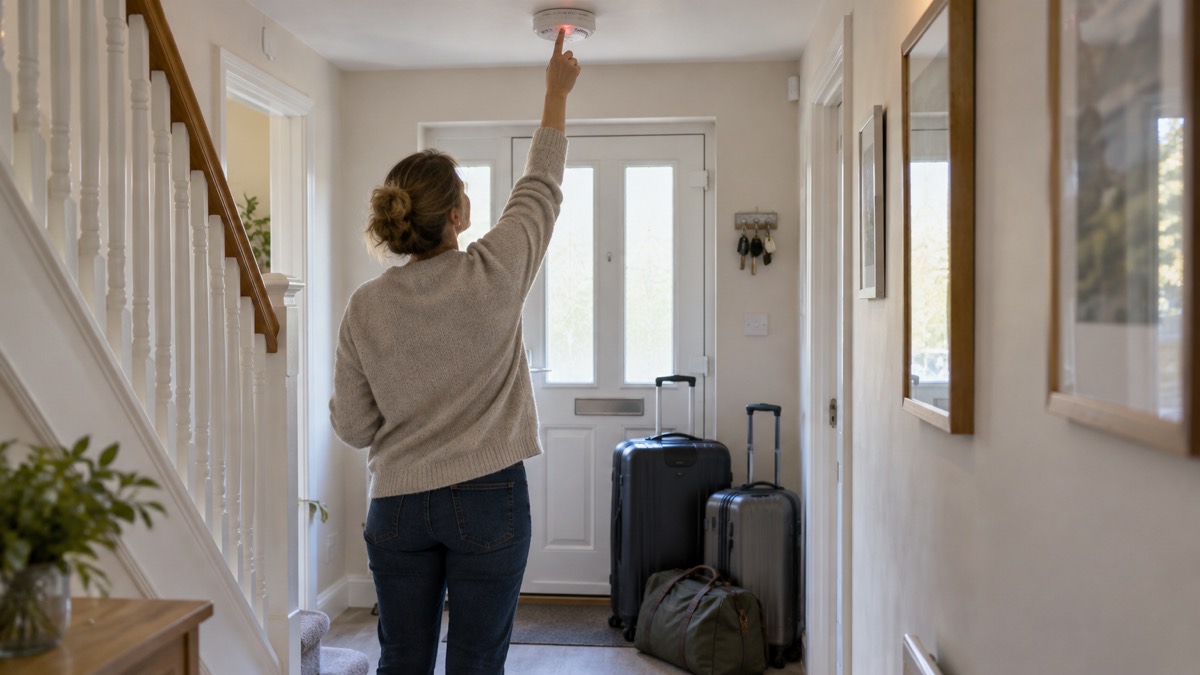
The security routine does not end when you arrive somewhere else. Unfamiliar accommodation has its own risks, and fire is the one the official advice stresses hardest.
Check the escape route when you arrive. North Yorkshire Fire and Rescue Service says that if staying at different accommodation over the festive period, plan and check your escape routes and look for any potential fire risks, reporting them when necessary19. This is not a festive-only habit. In any hotel, cottage or caravan, the first thing to do is work out how you would get out at night in the dark.
Make sure everyone with you knows the plan. Devon and Somerset Fire and Rescue Service says to double check that your tree and other decorations do not block escape routes, and that you and your guests know where exits and escape routes are20. In holiday accommodation, that means checking that the window keys are where they say they are and that nothing is stacked in front of a door.
Alarms in holiday accommodation. The Northern Ireland Fire and Rescue Service's advice for camping and caravan holidays is to make sure you have both a working smoke alarm and carbon monoxide alarm, especially if you are planning to cook whilst on holiday17. Public Health Wales says the same for any holiday stay: take a CO alarm with you and use it18. Test the alarms that are already fitted when you arrive, and carry a portable CO alarm for anything with a heater, stove or flue.
Children staying safe independently. Dorset and Wiltshire Fire and Rescue Service asks parents to talk to their children about how they can keep themselves safe over the holidays, especially older children and teenagers who may be out independently with friends rather than family21. North Yorkshire Fire and Rescue Service's Halloween advice makes the parental duty plain: parents should ensure they know where their child is and what they are doing22. On holiday, with new places and looser routines, that check matters more, not less.
Medical equipment. If someone in the household uses a ventilator, the NHS manual for it states that the security of your ventilator is your responsibility, that you should take all reasonable steps to ensure it is not damaged or stolen, and that abroad you should make sure your holiday insurance will cover any loss or damage23.
Storms, heat and the weather you leave behind
The weather on both ends of a holiday affects what you do before you go and what you come home to.
Before you leave in winter. A house left empty through a freeze can suffer burst pipes and storm damage while nobody is there to notice. The general principle from the official advice is to have someone check the house regularly3, and in winter that check is what catches a problem early. NHS winter advice also suggests checking on vulnerable neighbours and relatives: keep in touch, ask if they need practical help, make sure they are stocked up with enough food supplies for a few days in case they cannot go out, and make sure they get prescription medicines before the holiday period starts and if bad weather is forecast24. If you are the neighbour doing the checking for someone else's holiday, that is the standard.
Before you leave in summer. Hot weather changes what a shut-up house needs while you are away, and the security side of leaving windows open is a trade-off worth settling before you travel rather than on the day. Our page on leaving windows open in hot weather covers the security side of that trade-off.
Ice underfoot on the way. Ice on pavements, station steps and car parks is a real falls risk on a travel day, and an icy pavement with a suitcase is the moment that care earns its keep: allow extra time, keep a hand free for railings, and take particular care if you are travelling with someone older or less steady on their feet.
What you come home to. North Yorkshire Fire and Rescue Service's Christmas advice is worth remembering on return as well as departure: lock doors when you leave and when you return25. If the worst has happened and you come back to a break-in, our pages on coming home to a break-in and after a burglary set out the first steps, the crime number and the insurer. If weather has damaged the home while you were away, making a damaged home safe covers securing it against intruders.
Where Scotland, Wales and Northern Ireland differ
The advice in this page comes from police forces and fire and rescue services across all four nations, and the substance is the same everywhere: lock up, use timers, stop the signs of absence, ask a neighbour. What differs is who gives the advice and a few local emphases.
Scotland. Reporting crime and getting support in Scotland has its own routes, which our page on Scotland and Northern Ireland explains.
Wales. Mid and West Wales Fire and Rescue Service publishes its going-on-holiday advice in Welsh and English, and it is the source for the higher-risk warning1, the neighbour parking tip1 and the lights-on-timers and normal-curtains advice9. Public Health Wales supplies the carbon monoxide advice for holiday stays18. North Wales Fire and Rescue Service's winter packing list for the car journey applies to Welsh households heading away in cold weather11.
Northern Ireland. nidirect's securing your home page is the Northern Ireland government's advice and is the fullest pre-holiday checklist of any nation: check and lock doors, windows, sheds and garages, put the burglar alarm on, ask someone trusted to check the house regularly and bring in bins and post, and use timers on lights3. It also carries the social media warning3. The PSNI adds the advice on marking valuables with postcode and house number5, keeping gifts and expensive items out of view5, and ensuring the safekeeping of houses, sheds and outbuildings when away on day trips or staying in holiday homes or caravans10. The Northern Ireland Fire and Rescue Service supplies the smoke and carbon monoxide alarm advice for camping and caravan holidays17.
England. The steps on this page apply across England, and our page on extra help in an emergency sets out the help households there can request alongside the equivalent schemes elsewhere.
Wherever you live, the routine is the same one this page has walked through. Lock everything, set the alarm, put lights on timers, keep the curtains normal, stop the post and bins piling up, keep the holiday off public social media, and hand a key to someone who will notice if something is wrong.
Sources (25)
- Mynd ar wyliau? (Going on holiday?), Mid and West Wales Fire and Rescue Service, 2026-10-29
- Break-in and housebreaking advice, Police Scotland, 2026-11-02
- Securing your home, nidirect, 2024-01-23
- Pre-holiday routine, Avon and Somerset Police, 2026-11-02
- Christmas safety advice, Police Service of Northern Ireland, 2026-11-02
- Stay safe this summer booklet, Mid and West Wales Fire and Rescue Service, 2013-03
- Stay safe this Christmas, North Yorkshire Fire and Rescue Service, 2024-12-03
- Police offer home security advice to people in West Lothian, Police Scotland, 2023-03
- While you are away, Mid and West Wales Fire and Rescue Service, 2026-10-29
- Summer safety advice, Police Service of Northern Ireland, 2026-11-02
- Stay safe this winter, North Wales Fire and Rescue Service, 2016
- Staying safe over the summer, Healthier Together NHS, 2026-10-29
- Which NHS service, NHS Somerset, 2026-01-13
- Emergency kit, Ready Scotland, 2026-10-29
- Are you ready, Birmingham City Council, 2026-05-06
- Create a household emergency lifesaving plan, Dumfries and Galloway Council, 2026
- NIFRS simple steps to stay safe this summer, Northern Ireland Fire and Rescue Service, 2025-06-23
- Carbon monoxide (CO), Public Health Wales, 2025-12-08
- Christmas fire safety, North Yorkshire Fire and Rescue Service, 2023-12-11
- Staying safe this season, Devon and Somerset Fire and Rescue Service, 2025-12-01
- Summer safety, Dorset and Wiltshire Fire and Rescue Service, 2022-10-17
- Stay safe this Halloween, North Yorkshire Fire and Rescue Service, 2021-10-25
- Home ventilator manual, NHS, 2024-10
- Keep warm, keep well, NHS, 2022-11-16
- Christmas safety advice, North Yorkshire Fire and Rescue Service, 2025-12-15
 After a Break-In Checklist
 Holiday Security Checklist
 Moving Home Locks Checklist
 After a Burglary
 Bogus Callers
 Coming Home to a Break-In
 Catalytic Converter Theft
 Riots and Disorder Near Home
 Securing a Damaged Home
 Dogs as a Burglar Deterrent
 Doorstep Selling and Your Rights
 Empty Homes and Long Absences
 How Burglars Choose a Home
 Home Insurance Conditions
 Keyless Car Theft