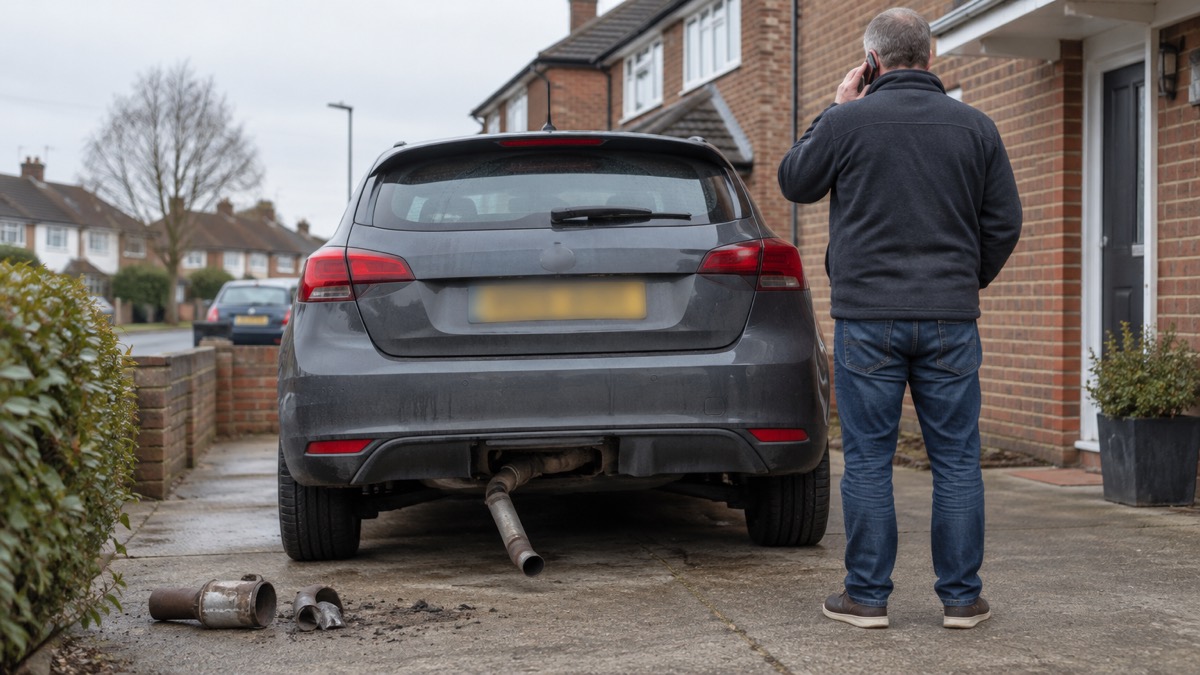
Catalytic converters are devices fitted to vehicle exhausts to reduce the amount of dangerous gases emitted, and they are stolen because they contain valuable metals and can be removed in less than a minute1. The Metropolitan Police reports that catalytic converter thefts are increasing, that they most frequently occur in car parks, but that they can happen anywhere, and that any vehicle can be at risk1. The theft itself is quick and quiet enough that many owners discover it only when they start the engine.
If your converter has been taken, the first steps are simple: do not drive the car, report the theft to the police online or at your local police station, and call 999 only if the crime is happening now1. If you see it happening, the police are explicit that you must not approach the suspects, as they have been known to use violence1. This page sets out what to do in that first hour, how to make your car a harder target at home, and how to avoid the scams that follow a theft.
If a part has been cut from your car: the first hour
The discovery usually comes as a roar from underneath the car when you start the engine, or as a warning light on the dashboard. Treat both as a sign that the converter may be gone. Do not drive the car. Have the car recovered to a garage rather than driven there.
In the first hour, do these things in order:
- Stop and switch off. Do not drive the car or run the engine, even to move it a short distance1.
- Report the theft. The crime has already happened, so report it online or at your local police station, and ask for the crime reference number: your insurer will need it1.
- Photograph what you can see. The underside of the car, the cut in the exhaust and any debris on the ground all help the police and your insurer.
- Call your insurer. Give them the crime reference number and follow their instructions for recovery and repair.
- Ask your dealer about protection for the replacement. The police advise asking your car dealer for advice on locks or guards that are approved by the vehicle manufacturer and tested to Sold Secure Gold1.
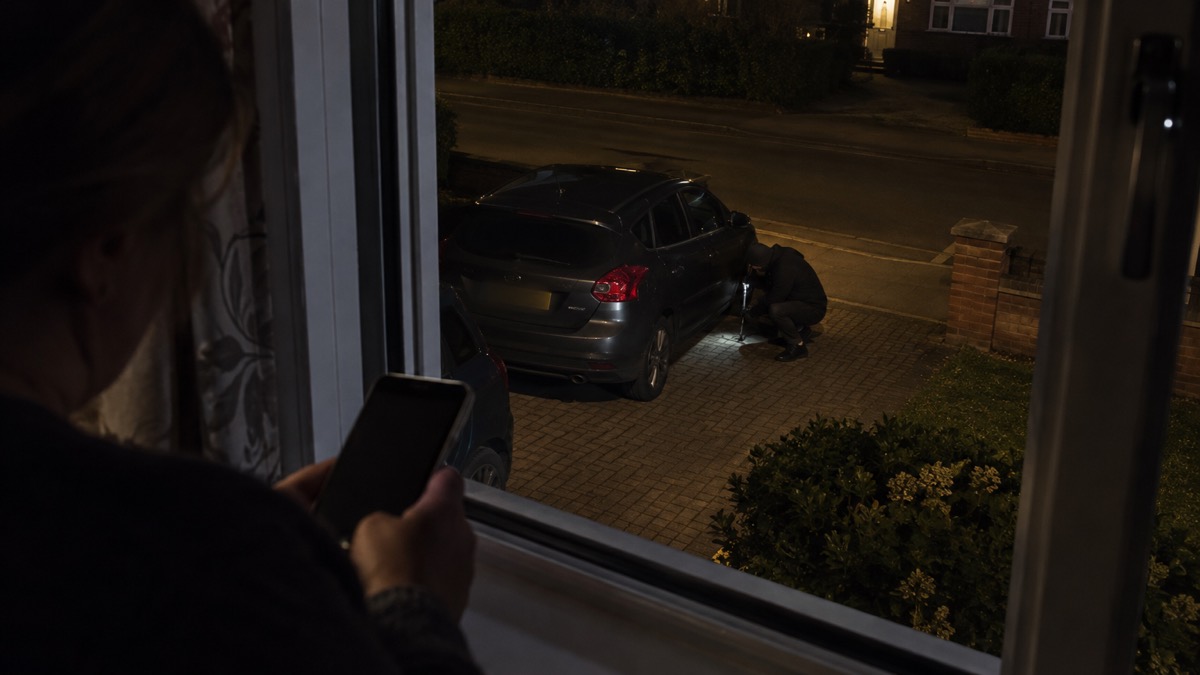
If instead you come out to find the theft in progress, the position is different: call 999, because the crime is happening now, and stay indoors1. The police warning on this point is unambiguous:
"do not approach suspects, as they have been known to use violence"
One sign worth knowing, for your own car and your neighbours', is a vehicle being raised using a car jack in a car park or residential area1. That is what converter theft looks like from the outside, and it is the moment to call 999 rather than to intervene.
Where to park at home: garage, driveway or street
Where the car sits overnight changes how easy a target it is. The police advice on street parking is to leave your vehicle in a well-lit and busier street, even if that means an extra five or ten-minute walk2. A converter thief works under the car with a jack or an angle grinder, so being visible from lit windows and passing foot traffic matters more than being close to your door.
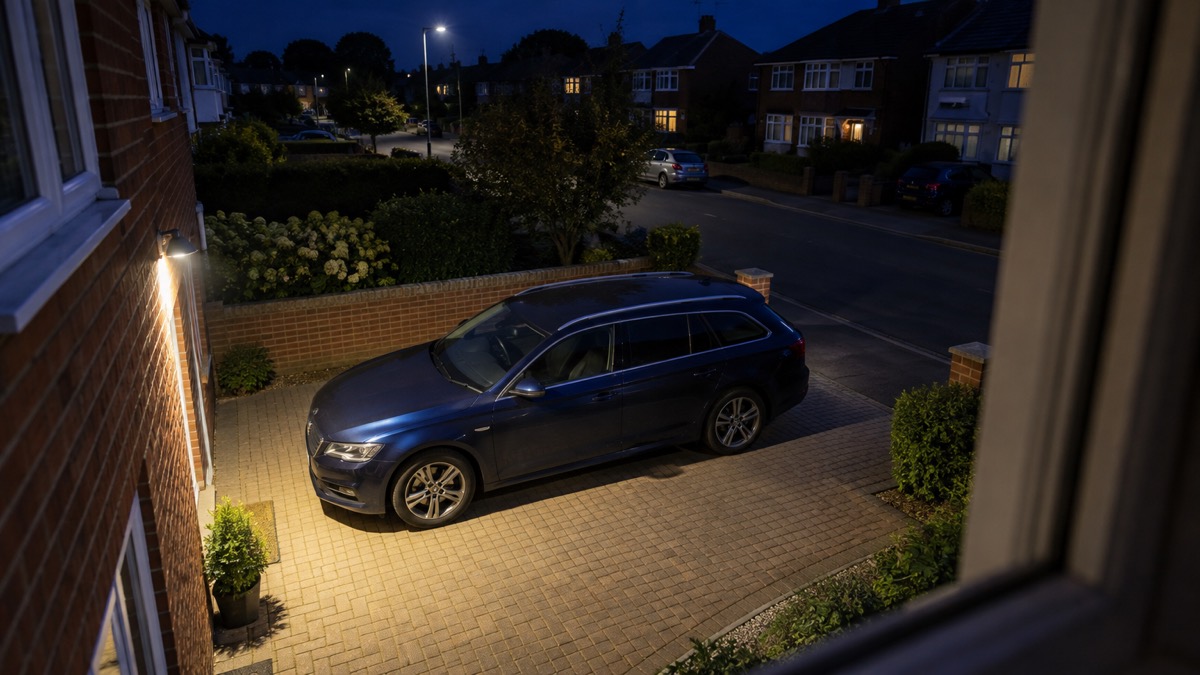
If you have a driveway, the same police guidance recommends security cameras, CCTV, motion-activated lighting or doorbells, or a dashcam with parking mode, to record suspicious activity2. A camera that captures the car's underside or the approach to it does two jobs: it makes the attempt less attractive, and it produces evidence that can be circulated among officers and the public3. Our pages on home cameras and CCTV, video doorbells and outdoor lights go into how to choose each.
A garage is the strongest option of the three, because the car cannot be seen or jacked up at all. If you use one, lock the vehicle even inside it, and check the windows and sunroof are closed: the police advise locking your vehicle even when filling up or parked on your drive, because it greatly reduces the possibility of it being targeted4. Keep the garage door itself in good repair and locked, and lock any garden or drive gates: the Police Service of Northern Ireland advises that keeping garden or drive gates closed and securely locked can prevent a theft, and that gates and fences should be in good repair5.
Whatever surface you park on, the rule is the same: lock the car, close the windows and sunroof, and make sure the spot is lit and observable2.
Keep the keys where a thief cannot find them
Converter thieves rarely need your keys, but the same criminals who target cars target the keys too, and the police advice on keys belongs in any plan for protecting a car at home. Keep your keys safe, out of view when at home, and away from your front door: it is not uncommon for car keys to be stolen by fishing for them through the letterbox4. The Police Service of Northern Ireland makes the same point from the other direction, advising that you keep car keys where they will not be easily found, because recent improvements in car security mean the easiest way for a thief to steal a car is to break into your house and steal the keys6.
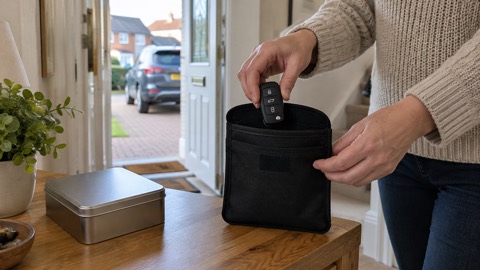
If your car has keyless entry, there is an extra risk. Thieves only need to be within a few metres of your car key to capture the signal, even if it is inside your home4, and the same point is made by Avon and Somerset Police: thieves only need to be a few metres away from your keys to capture the signal, even if you think your keys are secure inside your home2. Keeping keys well away from the front door and from external walls reduces that window. Our page on keyless car theft covers relay attacks in full, and keys: spares, hiding places and lost sets covers where to keep them.
One balance to strike: the fire and rescue service advises keeping door and window keys where everyone in the household can find them, as part of a home escape plan7. Car keys should be hidden from thieves; the keys needed to get out of the house in a fire should not be. Those are different keys, and they can be treated differently.
Protecting the exhaust and converter from damage as well as theft
The converter is not only a theft target: it is also the part of the exhaust most easily damaged by water. Cheshire Fire and Rescue Service advises that as you drive slowly through standing water, you should use a low gear so the engine revs are higher, because water in the exhaust could otherwise damage the catalytic convertor8. After storms and flooding, that is a practical reason to avoid deep water on your regular routes, and to keep the revs up if you must cross a shallow stretch.
Theft protection for the converter itself comes down to two things the police name directly. The first is a physical barrier: ask your car dealer for advice on locks or guards that are approved by the vehicle manufacturer and tested to Sold Secure Gold1. A guard or cage makes the removal that takes less than a minute take far longer, and longer means noisier and more visible. The second is identification: mark the converter so that if it is stolen and recovered, it can be traced back to your car.
For marking, the police advice on valuables is to register them on an accredited property database9, and the PSNI's home safety advice gives the marking method used for bikes: indelibly mark your property with your postcode and house number, so police can identify the owner if it is stolen and recovered10. A converter marked with your postcode and house number, and its details recorded on an accredited database, is harder for a thief to sell and easier to return. Our page on property marking and keeping a record of valuables explains the options.
Never run the engine in a closed garage
This section is about a danger that follows directly from the converter's job. The converter reduces dangerous gases, including carbon monoxide, from your exhaust. Run a car engine in a closed garage, with or without a converter, and carbon monoxide builds up in an enclosed space with no smell and no warning. The Health and Safety Executive lists the warning signs of carbon monoxide in the home, including pilot lights that frequently blow out11. Never leave an engine running in a garage with the door shut, and if you suspect carbon monoxide is present, get out into fresh air and seek medical help.
The same caution applies to any appliance in the home after repair work. If a gas appliance needs attention, ensure it is fixed or repaired by a Gas Safe registered repairer12. That matters after a converter theft too: a botched exhaust repair can let exhaust gases into the cabin, so use a competent repairer and check the work before a long drive.
If the car fails or breaks down on the road
A car that has lost its converter, or had a botched repair, may fail on the road. Milton Keynes Council's breakdown advice covers the situations that follow. If you break down and have to wait for help, do not accept a lift from a stranger13. If you have to leave the vehicle and wait a safe distance away, leave the passenger door unlocked, so that if you feel it is necessary you can get back into the vehicle quickly13.
Two further rules from the same body of official advice apply in severe weather, which is when a damaged exhaust is most likely to catch you out. If a power cable lands on your vehicle, call the police, and if you must exit a vehicle with a power cable on it, be aware of the vehicles around you14. And when driving through standing water, use a low gear so the engine revs are higher, because water in the exhaust could otherwise damage the catalytic convertor8.
If the car is undriveable after the theft, recovery to a garage is the right call rather than a roadside repair of a cut exhaust. Tell the recovery firm what has happened, so they load the car without further damaging the exhaust.
Avoiding scam repairers after a theft
A theft that leaves your car off the road creates exactly the opening that doorstep criminals look for: an urgent repair, an insurance payout, and a householder who wants the car back quickly. Suffolk's warning about scammers, issued in the context of the landline digital switchover, describes the pattern that repeats across every kind of emergency: beware of scammers impersonating well-known providers, urging people to pay for upgrades or provide personal information15. The consequence it names is the reason for the caution: personal information obtained by fraudsters can be used to steal money or commit identity theft15. If you have been scammed, contact your bank immediately to report the incident, secure your accounts and explore potential refunds15.
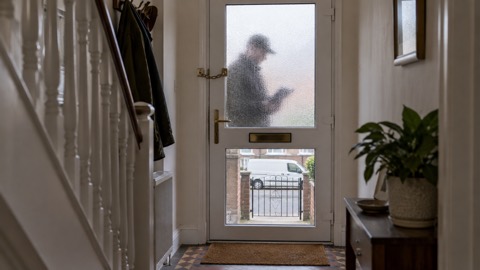
Applied to a converter theft, that means treating any caller who arrives uninvited offering exhaust repairs, replacement parts or "insurance-approved" recovery with suspicion. Police Scotland's advice on rogue traders and doorstep crime gives the neighbourhood-level signs to watch for: be alert for strange vans in your neighbourhood, and help make vulnerable neighbours harder targets, including making it less obvious if they live alone16. A van with a jack and an angle grinder that has been in your street before, at the time of a theft, is also information worth passing to the police.
The safe route to a repair is the one your insurer and your car dealer set out: a repairer you or they have chosen, contacted by you, paid through the claim. Our page on rogue traders and doorstep selling covers your rights and who to tell, and how to check a doorstep caller is genuine covers the checks to make before opening the door.
Reporting suspicious activity: what you and your neighbours can do
The police divide reporting into two channels, and the dividing line is time. If the crime is happening now, call 9991. If it has already happened, report it online or at your local police station1. A vehicle being raised using a car jack in a car park or residential area is the specific sign to act on, and it belongs on the 999 side of the line1. Our page on when to call 999 or 101 covers the distinction in more detail.
For everything that is not in progress, the police still want to hear. Gloucestershire Constabulary advises installing external CCTV or digital doorbells, because burglars do not want to be seen and these devices can capture evidence that can be circulated among officers and the public3. That is the practical link between your own cameras and the reports you make: footage of a van, a face or a registration at 2am turns a vague report into a usable one. If you film beyond your own boundary, our page on filming rules and data protection explains what is allowed.
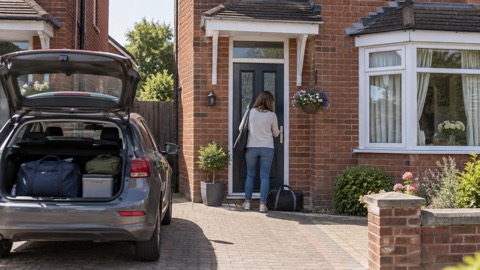
Neighbours multiply the effect. Sharing descriptions of strange vans, agreeing to watch each other's driveways, and passing anything odd to the police all help build a picture of who is working in your area. If you see anything suspicious, do not approach suspects, as they have been known to use violence1. Before you travel, it is worth arranging cover for your home and car, as our holiday security checklist sets out.
The wider home security picture
A catalytic converter theft is a vehicle crime, but it happens at the home, and the measures that protect one protect the other. The PSNI's home security advice makes the connection plainly: recent improvements in car security mean the easiest way for a thief to steal a car is to break into your house and steal the keys6. So the doors, windows and locks that keep burglars out also keep your car safe.
The core measures, each from official police or fire advice:
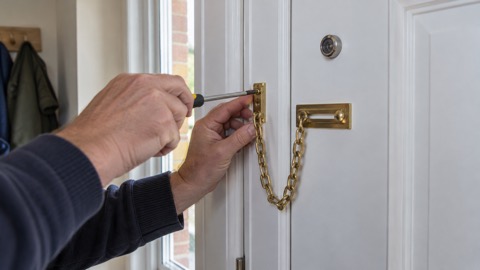
- Doors: fit a 3-star TS007 euro cylinder lock, which protects against lock snapping, drilling and bumping17. Our page on doors and locks explains the standards.
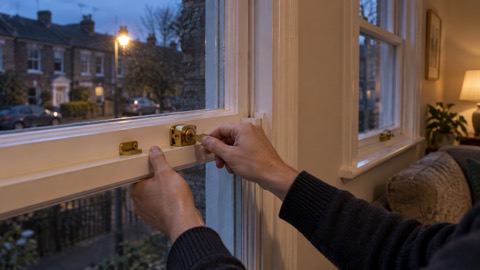
- Windows: fitting window locks to accessible windows reduces the chances of being burgled, slows the intruder down and makes entry much more difficult18. See windows: locks, glazing and ground-floor risks.
- Gates and boundaries: keep garden and drive gates closed and securely locked, and keep gates and fences in good repair5.
- Keys: out of view, away from the front door and not findable by a stranger, but with door and window keys still findable by the household in an emergency4.
- Cameras and lighting: CCTV, doorbells and motion-activated lighting on the driveway, chosen and placed to record the car2.
- Marking and records: mark property indelibly with your postcode and house number, and register valuables on an accredited property database10.
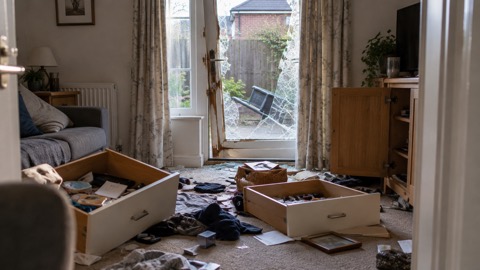
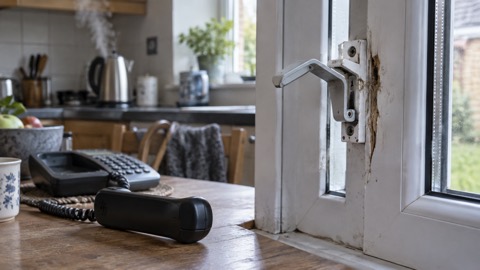
If the worst happens and the theft comes with a break-in, our pages on coming home to a break-in and after a burglary: crime numbers, insurers, repairs and support take you through the same first-hour steps for the house. The starting point for all of it is the home security household guide, which sets out the whole picture in order.
Sources (18)
- Catalytic converter theft advice, Metropolitan Police, 2026-11-02
- Prevent vehicle theft advice, Avon and Somerset Police, 2026-11-02
- Burglary prevention campaign advice, Gloucestershire Constabulary, 2026-11-02
- Preventing car and vehicle theft, Sussex Police, 2026-11-02
- Protecting heating oil, Police Service of Northern Ireland, 2026-11-02
- House security advice, Police Service of Northern Ireland, 2026-11-02
- Bedtime route and escape plan, North Yorkshire Fire and Rescue Service, 2026-03-27
- Driving in adverse weather, Cheshire Fire and Rescue Service, 2026-03-11
- Phone snatch theft advice, Metropolitan Police, 2026-11-02
- Home safety advice leaflet, Police Service of Northern Ireland, 2022
- Carbon monoxide: domestic gas safety, Health and Safety Executive, 2026
- Carbon monoxide leak: what to do, Ask the Police, 2026-10-29
- Vehicle breakdown advice, Milton Keynes Council, 2026
- High winds safety advice, Scottish Borders Council, 2026-10-29
- Digital switchover scam warning, Snape Parish Council, 2025-04-25
- Rogue traders and doorstep crime advice, Police Scotland, 2026-11-02
- Door and window lock advice, Sussex Police, 2026-11-02
- Window security advice, Avon and Somerset Police, 2026-11-02
 After a Break-In Checklist
 Holiday Security Checklist
 Moving Home Locks Checklist
 After a Burglary
 Bogus Callers
 Coming Home to a Break-In
 Riots and Disorder Near Home
 Securing a Damaged Home
 Dogs as a Burglar Deterrent
 Doorstep Selling and Your Rights
 Empty Homes and Long Absences
 Leaving Home on Holiday
 How Burglars Choose a Home
 Home Insurance Conditions
 Keyless Car Theft