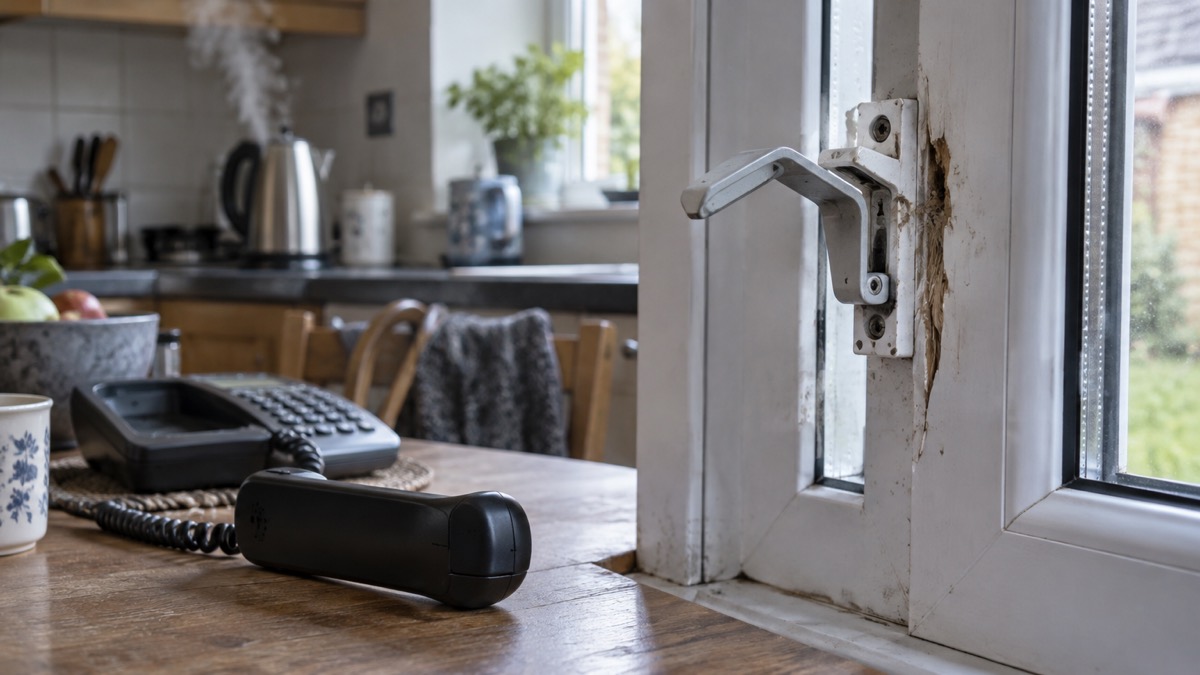
A burglary is a shock even when everyone is physically unharmed, and the first hours and days are a mix of practical jobs and emotional recovery. The immediate rule is simple: if you think the intruder is still in the house, call 999; if the intruder has gone, call 101 or use your police force's online form1. The Police Service of Northern Ireland is equally direct: if you have been burgled, call the police immediately on 9992. Once the police have logged the crime you will be given a crime reference number, which you will need for your insurance claim3.
Beyond reporting the crime itself, many households find they hold information that could help: a description of a car seen outside, a name heard locally, footage from a doorbell camera. Crimestoppers takes that kind of information anonymously on 0800 555 111, free of charge, and it is a national organisation independent of the police4. Support is also there for you: in Scotland, Victim Support Scotland offers free, confidential help to victims and witnesses on 0800 160 19851, and equivalent routes exist across the UK.
First call: 999, 101 or the online form
Which number you use depends on one thing: whether anyone is still in or near your home. Police Scotland's housebreaking guidance says to call 999 if you think the intruder is still there, and to call 101 or fill in the online form if the intruder has gone1. The Police Service of Northern Ireland's house security guidance tells anyone who has been burgled to call the police immediately on 9992. The 101 service, as Argyll and Bute Council's emergency contacts explain, is for less urgent crime, general enquiries and speaking to a local officer, covering things like damaged property or information about a crime in your area5. In an emergency the advice is always to phone 999, for example when an immediate response is needed because a crime is happening, someone suspected of a crime is nearby, or someone is injured, threatened or in danger5.
If you come home and discover the break-in rather than witnessing it, the same split applies. The Metropolitan Police's advice on stolen property is to call 999 if you see the theft happening and to report it online if you discover it has gone, and never to put yourself at risk6. Avon and Somerset Police's doorstep crime guidance adds that if an unexpected caller makes you feel alarmed or intimidated, you should call 999 immediately3.
There is also a way to contact the emergency services when you cannot speak. On a mobile, if you do not speak or answer questions, press 55 or tap when prompted and your call will be transferred to the police; on a landline, if the operator can only hear background noise, they will transfer your call to the police7. This matters after a burglary if you are hiding or cannot safely make a noise.
Two points from Police Scotland's guidance are worth holding on to in the first hours. First, it is still a crime even if nothing is stolen1: a break-in with an empty drawer disturbed is still a break-in, and you should still report it. Second, before the police arrive, try to touch as little as possible in order to prevent disturbing any forensic evidence, as the PSNI's house security guidance puts it2. That means not tidying, not wiping surfaces, and not handling the door or window the intruder used any more than you must.
When you report the crime, ask for the crime reference number. Avon and Somerset Police's guidance on parcel theft describes the same step: contact the police to get a crime reference number, and check with neighbours or for CCTV footage3. Your insurer will ask for that number when you claim, and it is the reference you quote in every later conversation with the police and the insurance company.
Reporting what you know to Crimestoppers: 0800 555 111
Crimestoppers is the route when you have information about crime but do not want to give your name. The number is 0800 555 111, and it appears consistently in official guidance across the UK. Gloucestershire Constabulary's burglary campaign says to give information anonymously to the independent charity Crimestoppers on 0800 555 111 or through the Crimestoppers website4. Cheshire Fire and Rescue Service's safe and well booklet lists Crimestoppers UK on 0800 555 111 as a 24/7 service8.
Fire and rescue services use the same line for information about deliberate fire setting, which is worth knowing because a small number of burglaries and property crimes involve arson. Devon and Somerset Fire and Rescue Service says that if you know of someone who sets fires deliberately, you can call Crimestoppers anonymously on 0800 555 1119. London Fire Brigade's arson reduction advice says to report suspicious behaviour to Crimestoppers on 0800 555 111 or contact police on 101, and always to call 999 in an emergency10. The Mid and West Wales Fire and Rescue Service asks people enjoying the countryside who come across suspicious activity to call Crimestoppers anonymously on 0800 555 111, or ring 10111.
The pattern across all of this official guidance is the same: 999 for an emergency in progress, 101 to speak to the police directly, and Crimestoppers when you want to pass something on without your name attached. Suffolk's fire and rescue guidance on arson puts it plainly: if you have information on fires that have been started deliberately, call Crimestoppers on 0800 555 111 or the police on 10112.
What anonymous actually means when you call
Anonymous has a specific meaning at Crimestoppers, and it is stronger than "we will not tell anyone who you are". Mid and West Wales Fire and Rescue Service states it directly: anonymous means that no mobile number, address, or location of calls are tracked11. Gloucestershire Constabulary spells out the consequences: no personal details are taken, information cannot be traced or recorded, and you will not go to court4.
That last point matters if you are weighing up whether to call. A report to the police makes you a named reporter, and you may be asked for a statement. A report to Crimestoppers does not, because the charity simply does not hold the information that would identify you. The trade-off is equally clear: because the police cannot trace the report back to you, they also cannot come back to you with questions, and an anonymous report is not the way to summon help in an emergency.
If you are worried about the call itself being traced or recorded, the position is as stated above: no mobile number, address or location of calls are tracked11. If your worry is instead about being overheard making the call, that is a different problem, and one that domestic abuse guidance addresses: the Welsh Government's advice on hidden safety phones warns that if such a device sounds unexpectedly, it could reveal its presence13. Choose a moment and a place where the call itself is safe to make.
Can you report anonymously after a burglary?
Yes. If you witnessed the burglary, saw something in the days around it, or have since heard who was responsible, you can pass that to Crimestoppers on 0800 555 111 without giving your name4. This is separate from reporting the burglary itself, which you should do to the police: Police Scotland's guidance is that you can report housebreaking online, by phone, or in person, calling 999 if you think the intruder is still there and 101 or the online form if they have gone1.
The two routes do different jobs. The police report creates the crime record, brings an officer to your door, generates the crime reference number for your insurer, and starts any investigation. The Crimestoppers report adds information, possibly yours, possibly a neighbour's, without putting a name to it.
There are limits to what an anonymous report can do, and it is worth being clear about them. It cannot make you the complainant in the case, so it does not replace your own report to the police. Give as much concrete detail as you can in the call itself: times, places, descriptions, registration numbers.
Information you can pass on in confidence
What kind of information is worth passing on? The official guidance gives plenty of examples. The PSNI's advice on protecting yourself outdoors deals with the aftermath of being followed by an unknown vehicle: write down details as soon as possible afterwards and phone to report the incident, focusing on the car's registration number and the driver's description14. The same discipline applies after a burglary. A registration number, a time, a direction of travel, a description of clothing or build: these are the details that turn a vague tip into a useful one.
If your information comes from camera footage rather than from something you saw, that is worth passing on too. Gloucestershire Constabulary advises households to install external CCTV or digital doorbells, because burglars do not want to be seen and these devices can capture evidence that can be circulated among officers and the public4. If your doorbell caught the intruder, tell the police when you report the crime, and tell neighbours so they can check their own cameras for the same moments. Avon and Somerset Police's guidance on parcel theft makes the same point: check with neighbours or for CCTV footage3.
Information about patterns also counts. Police Scotland's doorstep crime guidance asks people to be alert for strange vans in the neighbourhood, to make sure vulnerable people do not withdraw large amounts of cash, to help keep their house well maintained, and to make it less obvious if they live alone15. If a burglary is followed by unusual callers, vans or approaches to neighbours, that sequence of events is exactly what an anonymous call can describe.
One caution from the PSNI's house security guidance applies before anything else: try to touch as little as possible in order to prevent disturbing any forensic evidence2. Do not handle items the intruder touched more than you must, and leave the scene as undisturbed as you can until the police have been. Your own observations, made without moving things, are the safest things to record.
Reporting scammers in Scotland
A burglary often leaves a household exposed to follow-on crime, and in Scotland the reporting routes have their own shape. Police Scotland's Shut Out Scammers campaign tells people to report scammers and fraudsters anonymously at Crimestoppers16. The same campaign points to Neighbourhood Watch Scotland for free message alerts from key information providers about incidents and crime prevention in your area16.
If a scam has cost you money, the route is different and faster. The National Cyber Security Centre's phishing guidance says to tell your bank and report it as a crime to Report Fraud for England, Wales and Northern Ireland, or to Police Scotland for Scotland17. Its guidance on recovering hacked accounts says the same: if you have lost money, tell your bank and report it as a crime to Report Fraud, the UK's reporting centre for cyber crime; in Scotland, contact the police by dialling 10118. Report Fraud is the UK's reporting centre for cyber crime, and reporting helps the NCSC and law enforcement reduce criminal activity18.
The distinction to hold on to is money lost versus information only. Information about a scammer you want to pass on without your name means Crimestoppers on 0800 555 11119. And for general, less urgent matters, Police Scotland's 101 service covers reporting less urgent crime, general enquiries and speaking to a local officer5. Scotland's Home Emergency Plan guidance lists 101 as the police number for non-emergencies20.
Support for victims and witnesses in Scotland: 0800 160 1985
Police Scotland's housebreaking guidance names the support service directly: Victim Support Scotland gives support and information to anyone affected by crime or who has to go to court, on 0800 160 19851. The number is free to call and the support is confidential.
The phrase "anyone affected by crime" is broader than many people assume, and the guidance confirms it: witnesses are included alongside victims16. If you saw the break-in, found the damage, or are supporting a family member who was targeted, the line is open to you. Support of this kind also extends to court: Victim Support Scotland's role covers people who have to go to court as well as people coping with the crime itself1.
North Yorkshire Fire and Rescue Service, writing about its Major Incident Response Team, makes the principle explicit in a way that applies well beyond fire: you do not need to have been directly involved in an incident to ask for help, and support is available for witnesses, relatives and anyone struggling with the emotional impact of what has happened21. After a burglary, the people often overlooked are precisely those on the edges: the child who saw the broken window, the neighbour who found the door open, the relative now afraid in their own home.
Other Scottish helplines can matter in the aftermath. NHS inform's guidance on falls gives the general health rule: if you are injured, phone 999 and ask for an ambulance; if you are not sure, phone 11122. The Winter health guide for the Highlands lists Carers Scotland on 0141 378 1065 and Scottish Families Affected by Alcohol and Drugs on 08080 10101123. And if fire safety has become a worry, the Scottish Fire and Rescue Service's home fire safety visit can be arranged by phoning 0800 0731 999, texting FIRE to 80800, or filling in an online form24.
Where to get help across the UK
Outside Scotland, the same needs exist and the routes differ slightly. The reporting numbers are UK-wide: 999 in an emergency, 101 for less urgent matters5. For fraud and scams, the split is geographic: Report Fraud covers England, Wales and Northern Ireland, and Police Scotland covers Scotland17. The National Cyber Security Centre's guidance on recovering hacked accounts repeats the split, with 101 as the Scottish route18.
Crimestoppers is available across the whole of the UK on the same number. Official guidance from England4, Wales11, Scotland16 and Northern Ireland25 all points to 0800 555 111 for anonymous information about crime. Neighbourhood Watch, described in nidirect guidance as a scheme where neighbours look out for one another, operates across the UK, and one point in that guidance is reassuring for anyone who feels responsible after a crime: you are not responsible if a crime or criminal is not noticed26. A burglary is not your fault, and not your neighbours' fault, for failing to spot it.
For practical help in the days after, your local council and fire and rescue service are worth contacting. North Yorkshire Fire and Rescue Service's steps after a fire include advice that translates directly to a burglary: if you are leaving your home unoccupied, inform your local police station and ask neighbours to keep an eye on your property21. Its Major Incident Response Team is open to witnesses and relatives as well as those directly involved21.
If the burglary has left you dealing with other emergencies at the same time, Scotland's Home Emergency Plan guidance lists the standing numbers, including Floodline Scotland on 0345 988 118820. Argyll and Bute Council's emergency contact numbers page is an example of the local pages every council publishes with the numbers for your own area5.
Insurers, emergency repairs and securing the property
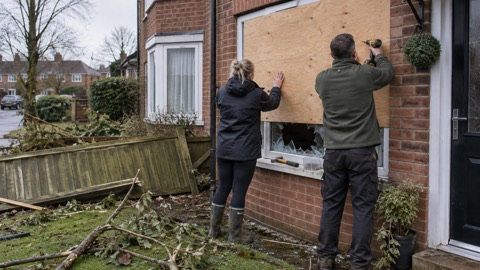
Once the police have been and the scene has been recorded, the practical work begins: securing the property and starting the claim. Your crime reference number is the key that unlocks the insurance process, so report the crime and ask for it before anything else3. Insurers will want it, and the police will use it to track everything you tell them afterwards.
On repairs, Lancaster City Council's preparedness guidance contains a warning that deserves attention after any event that damages your home: make sure that you supervise your own repair and building work whenever possible, and do not rely on loss adjusters or insurance companies27. The point is not that insurers are careless, but that nobody else will watch the work with your interests first in the same way you will. Be there when the boarding-up is done, check the lock replacement yourself, and keep your own record of what was agreed.
Securing the property comes first, and the choices are covered in depth elsewhere on this site: doors and locks, windows, and what to do if you are locked out or need a locksmith. If the break-in has left the house looking empty, act on that quickly, because Police Scotland's guidance notes that housebreaking is more likely when a house looks empty1. The same logic sits behind the PSNI's advice to make it less obvious when a vulnerable person lives alone15.
If the burglary involved fire or you are leaving the home unoccupied for a period, two pieces of official advice apply directly. North Yorkshire Fire and Rescue Service says to inform your local police station and ask neighbours to keep an eye on your property21. And if you are worried about fire risk afterwards, a home fire safety visit can be booked with the Scottish Fire and Rescue Service on 0800 0731 999 or by texting FIRE to 8080024.
Stolen property sometimes turns up in further crime, which is one more reason to report thoroughly. The Metropolitan Police notes that stolen scooters are increasingly being used to commit further crimes, such as phone snatches, so protecting your scooter could help reduce those other crimes6. The same logic runs through vehicle and phone advice: Sussex Police advises that if you are unsure whether your car locked, lock it manually, then scan the immediate area for anyone hanging around, since a thief who feels spotted will probably move off28. The Metropolitan Police advises that if you must use your phone in the street, stand away from the roadside, close to a building or wall, so no one can come up behind you, and that going hands-free can prevent a thief snatching your phone29. After a burglary, replacing stolen items is part of recovery; keeping the replacements is the other part.
If you confronted the intruder
If you came face to face with the person who broke in, your safety came first and the reporting rules are the same, but the aftermath can be harder. Call 999 if you think the intruder is still there or nearby1. If you could not speak safely, the silent 999 solution exists: on a mobile, press 55 or tap when prompted and your call will be transferred to the police; on a landline, if the operator can only hear background noise, they will transfer your call to the police7.
Write down what happened as soon as you can, while it is fresh. The PSNI's advice after being followed by an unknown vehicle is to write down details as soon as possible afterwards and phone to report the incident, focusing on the registration number and the description14. The same applies to a confrontation: what was said, what the person looked like, which way they went, what time it was.
The PSNI's personal safety advice includes habits that reduce what a confrontation can cost you: spread your valuables around, for example house keys in your pocket, phone in your bag and money in your jacket14. After a burglary, this is worth adopting as a routine, so that a single snatch cannot take everything at once. On the law itself, what you may and may not do when someone breaks into your home is covered in your rights if someone breaks into your home.
The emotional aftermath of a confrontation is real, and support is not conditional on physical injury. Victim Support Scotland's line on 0800 160 1985 is open to anyone affected by crime1, and North Yorkshire Fire and Rescue Service's support principle covers witnesses, relatives and anyone struggling with the emotional impact of what has happened21. If you were injured, phone 999 and ask for an ambulance; if you are not sure how serious it is, phone 11122.
Finally, do not carry the worry that you should have prevented it. Neighbourhood Watch guidance is explicit that you are not responsible if a crime or criminal is not noticed26, and Police Scotland's guidance that housebreaking is more likely when a house looks empty1 is a description of what thieves look for, not a judgement on the household they chose. The steps now are the ones in this page: report it, get the crime reference number, secure the property, claim what you are owed, and take the support that is there.
Sources (29)
- Break-in and housebreaking advice, Police Scotland, 2026-11-02
- House security guidance, Police Service of Northern Ireland, 2026-11-02
- Doorstep crime and parcel theft advice, Avon and Somerset Police, 2026-11-02
- Burglary campaign: give information anonymously, Gloucestershire Constabulary, 2026-11-02
- Emergency contact numbers, Argyll and Bute Council, 2026
- Scooter security advice, Metropolitan Police, 2026-11-02
- How to make a silent 999 call, police.uk, 2026-11-02
- Safe and well booklet, Cheshire Fire and Rescue Service, 2026-04
- Arson prevention, Devon and Somerset Fire and Rescue Service, 2026-01-30
- Reducing arson risk, London Fire Brigade, 2026-10-25
- WildfireWise campaign, Mid and West Wales Fire and Rescue Service, 2026-10-29
- Putting a stop to arson, Suffolk Fire and Rescue Service, 2026-10-29
- How to protect hidden safety phones during an emergency alert test, Welsh Government, 2025-09-02
- Protect yourself outdoors, Police Service of Northern Ireland, 2026-11-02
- Rogue traders and doorstep crime, Police Scotland, 2026-11-02
- Shut Out Scammers campaign, Police Scotland, 2026-11-02
- Phishing: respond and recover, National Cyber Security Centre, 2026
- Recovering hacked accounts, National Cyber Security Centre, 2026
- Reducing arson risk | Devon and Somerset Fire and Rescue Service, Devon and Somerset Fire and Rescue Service
- Home emergency plan, Ready Scotland, 2026
- Steps after a fire, North Yorkshire Fire and Rescue Service, 2026-06-17
- What to do if you fall, NHS inform, 2026-04-30
- Your Health Guide, Winter 2025, NHS Western Isles, 2025-12
- Home fire safety visit leaflet, Scottish Fire and Rescue Service, 2024-01
- Emergency advice, Belfast City Council, 2026-10-29
- Neighbourhood Watch, nidirect, 2025-09-09
- Be Prepared guidance, Lancaster City Council, 2026-10-26
- Preventing car and vehicle theft, Sussex Police, 2026-11-02
- Phone snatching advice, Metropolitan Police, 2026-11-02
 After a Break-In Checklist
 Holiday Security Checklist
 Moving Home Locks Checklist
 Bogus Callers
 Coming Home to a Break-In
 Catalytic Converter Theft
 Riots and Disorder Near Home
 Securing a Damaged Home
 Dogs as a Burglar Deterrent
 Doorstep Selling and Your Rights
 Empty Homes and Long Absences
 Leaving Home on Holiday
 How Burglars Choose a Home
 Home Insurance Conditions
 Keyless Car Theft