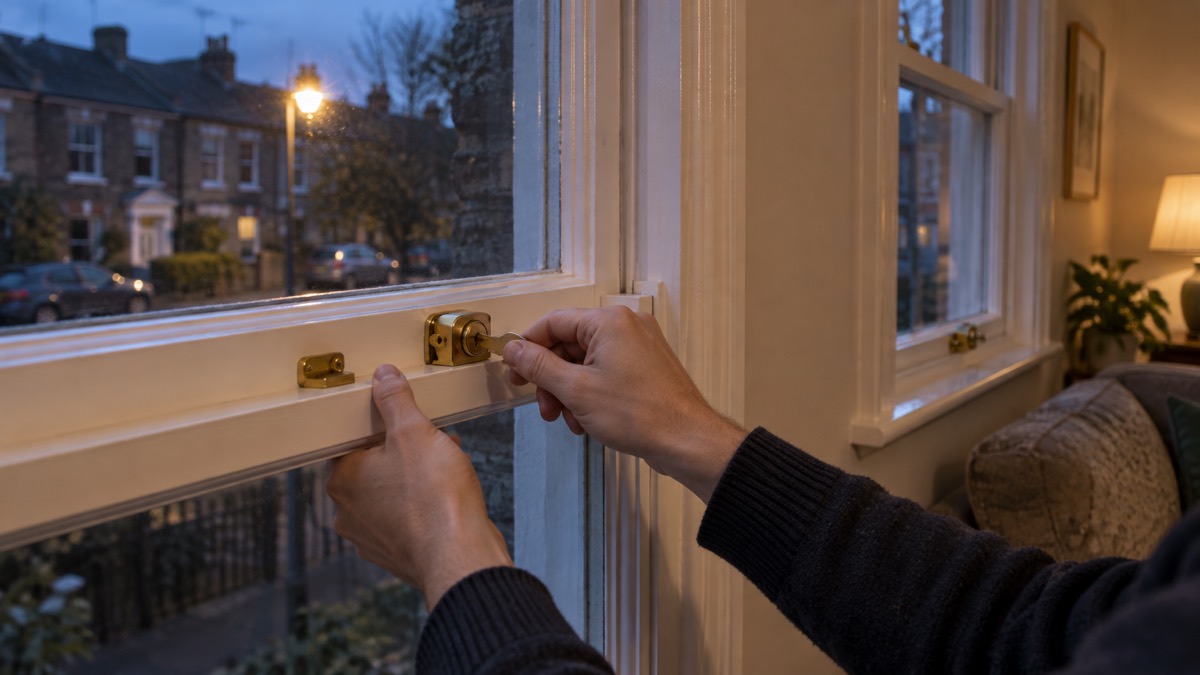
Most burglaries are not carefully planned. Police-linked security guidance states plainly that most break-ins are committed by opportunists, and that burglars want easy pickings and will avoid properties that have effective security1. What that means for an ordinary household is encouraging: the things that decide whether your home is chosen are largely things you control, and most of them cost little or nothing.
The single biggest factor is whether the house looks empty. Police Scotland's housebreaking guidance says a break-in is more likely when a house looks empty2, and security guidance notes that the majority of burglaries happen when there is nobody at home1. Alongside that sits a second factor: whether the house is actually locked. The Police Service of Northern Ireland says a good many burglaries are committed by opportunistic criminals using open or unlocked doors and windows3, and North Yorkshire Fire and Rescue Service reports that one in three festive burglaries happen because homes are left insecure4.
Why burglars pick the house that looks empty
A burglar looking at a row of houses is, in most cases, not working from a detailed plan. Secured by Design, the police-linked security initiative, states that most burglaries are not planned but committed by opportunists, and that burglars will avoid properties that have effective security because they want easy pickings1. That combination shapes everything about how a home gets chosen: the opportunist walks or drives past, reads the signals a house gives off, and picks the one that offers the least resistance and the lowest chance of being disturbed.
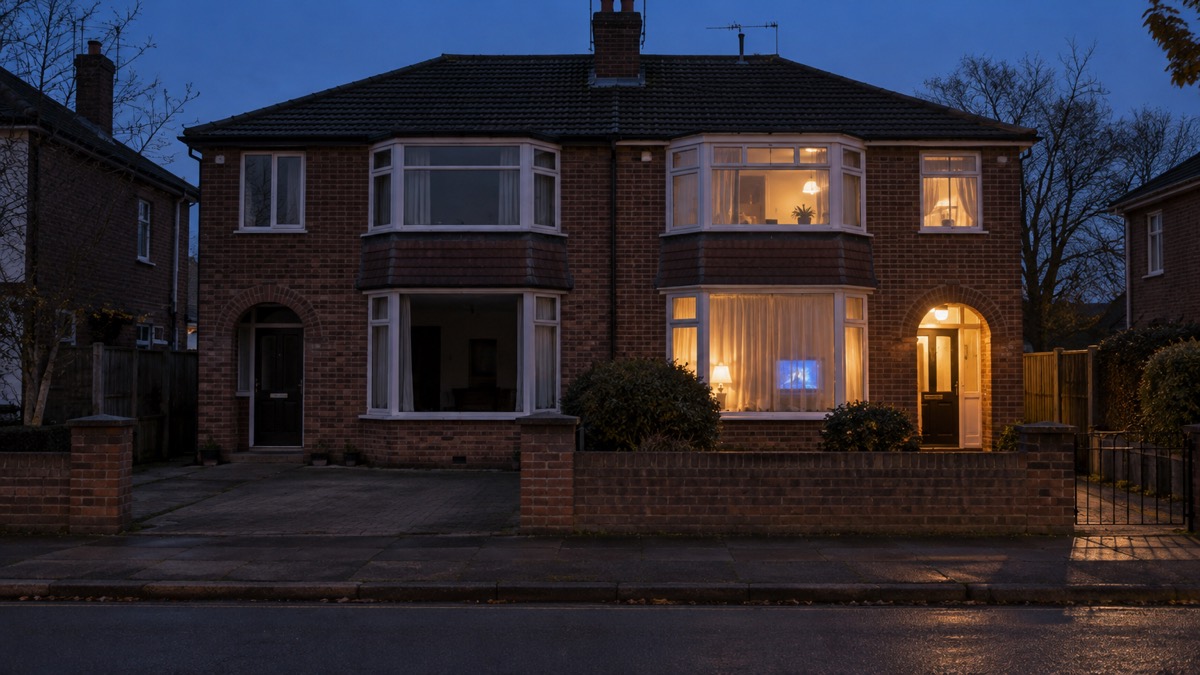
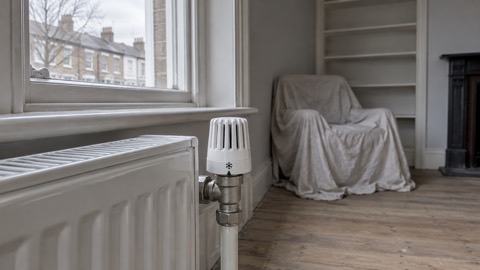
The clearest signal is emptiness. Police Scotland says housebreaking is more likely when a house looks empty2, and Secured by Design notes that the majority of burglaries occur when there is nobody at home1. An empty house means time to work on a door or window without interruption, and nothing to stop a trip from room to room. Signs of life, by contrast, mean risk: lights coming on and off, curtains opening and closing, a car moving, someone answering the door.
The second clearest signal is whether the house is open. The Police Service of Northern Ireland says a good many burglaries are committed by opportunistic criminals using open or unlocked doors and windows to gain quick entry3. North Yorkshire Fire and Rescue Service found that one in three burglaries during the festive period happen because homes are left insecure4. An unlocked back door turns a burglary from a noisy, risky break-in into a walk-in.
Security measures change the calculation even when they do not physically stop anyone. Properties without security measures in place are ten times more likely to be burgled than those with simple measures such as quality door locks, according to PSNI house security guidance3. Opportunist burglars tend to avoid houses where they can see a burglar alarm, notes nidirect, and the cost of home insurance may also be reduced5. Even a window lock plays a part: PSNI's home safety advice says a burglar may be less likely to enter if a window needs to be smashed, because smashing makes noise and takes time6.
If you want to go further on the measures that make entry harder, see doors and locks, window locks, burglar alarms and outdoor lights that deter burglars.
Making your home look lived in when you are away
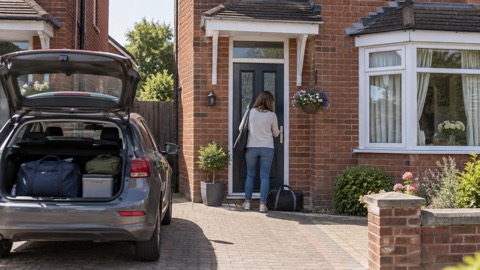
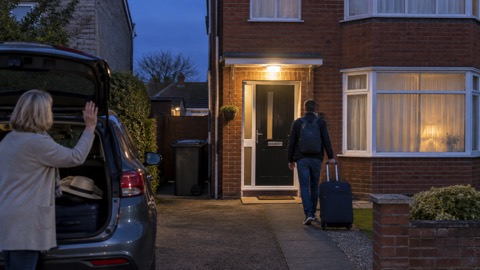
The aim when you go away is simple: give the house the same rhythm it has when you are in it. Mid and West Wales Fire and Rescue Service advises that opportunistic burglars will look for signs that a house is unoccupied, so use lights on timers and keep curtains in a normal position rather than closed for the whole trip7. A timer on a lamp in a front room, set to come on in the evening and go off at bedtime, does more than a week of dark windows.
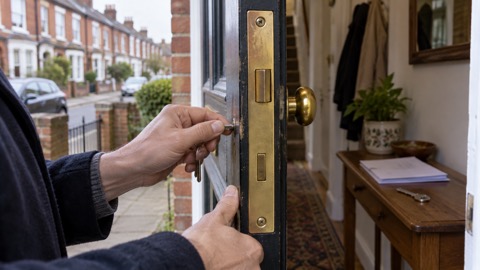
Lock everything properly before you leave. The Welsh-language version of the same fire service guidance warns that open windows make it very easy for intruders to gain entry, so make sure every window is closed and locked7. Gloucestershire Constabulary adds a habit worth keeping up all year, not just on holiday: when you are not using a room, close and lock its external windows and doors, and remove from view anything that might look tempting to a burglar8. Valuables left where they can be seen through a ground-floor window answer the opportunist's first question, which is whether the risk is worth taking.
A second pair of eyes helps. North Wales Police warn that leaving your home empty while you are away carries a higher risk of burglars targeting it9. A neighbour who opens and closes curtains, collects post and varies the pattern of light in the house removes most of the signals of emptiness at once.
Two further points from official guidance are easy to miss. First, nidirect warns that if you have a public social media profile, posting about your holiday could be telling an opportunistic burglar that your home will be empty for a couple of weeks5. Second, Avon and Somerset Police's pre-holiday routine advice notes that most insurance policies only cover burglary claims on an unoccupied home if there are signs of forced entry10. If someone walks in through an unlocked door while you are away, you may find the insurer will not pay, so locking up is a financial matter as well as a security one. PSNI's home safety leaflet also suggests informing your local police of the relevant dates your property will be vacant6, and PSNI's summer advice reminds people to ensure the safekeeping of houses, sheds and other outbuildings, especially when away on day trips or staying in holiday homes or caravans11.
For a fuller rundown, see leaving your home while you are on holiday, the pre-holiday checklist, how to make your house look occupied when you're away and should you post about your holiday on social media?.
Gardens, sheds and outbuildings
A break-in does not have to start at your front door, and it does not have to end inside the house. Police Scotland's definition of housebreaking covers someone breaking into your house or garden2, so a forced shed door or a damaged garden gate is a break-in in its own right and should be reported like any other.
Gardens matter for two reasons. The first is what they contain: bikes, tools, mowers and power equipment are all stealable, and tools taken from an unlocked shed can be used to force a door or window on the house itself. The second is what they allow: an outbuilding attached to or close to the home can give a burglar somewhere quiet to work. Nidirect's securing your home guidance is blunt on this point: never leave garages, outbuildings or sheds unlocked, especially if they are connected to your property5.
On the boundary itself, Police Scotland advises making sure gates are not broken and can be locked in two different places2. A gate that can be secured at two points is slower to force and harder to open quietly, and a gate in good repair signals a household that looks after its security. For terraced houses with rear access, the side gate is often the only barrier between the street and the back of the house, so it deserves the same attention as a door: see terraced houses and rear alleys.
If you keep valuables in a shed or garage, home safes and property marking explain the options for making items harder to sell on and easier to return if recovered.
Breaking in is a crime even if nothing is taken
Many people who come home to a damaged door, an open window or a disturbed room wonder whether it is worth contacting the police at all if nothing appears to be missing. Police Scotland's guidance answers that directly: it is still a crime even if nothing is stolen2. The offence is the break-in itself, the violation of your home, not the value of what was carried off.
That matters for three reasons. First, a report where nothing was taken still tells the police where someone is operating, which helps them link incidents and build a picture of local activity. Second, an attempted break-in is often a rehearsal: the same person may come back, or may have moved on to a neighbour. Third, your insurer will usually want a crime reference number for any claim connected with the incident, including damage to a door or window, and you cannot get one without reporting it.
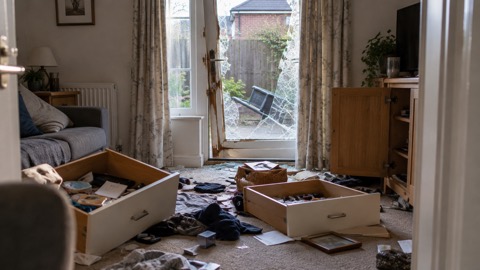
So treat every break-in, complete or attempted, as reportable. If you arrive home and it is clear someone has been in, or has tried to get in, do not tidy up or repair anything before the police have advised you: disturbed items, footprints and tool marks can all matter to the investigation. Our step-by-step guide, after a break-in: what to do, step by step, and coming home to a break-in cover the first hour in detail.
Three ways to report a break-in: online, by phone or in person
Police forces in the UK accept crime reports in three ways, and Police Scotland's housebreaking guidance sets them out: you can report a break-in online, by phone, or in person2. The same three routes apply to doorstep crime, which Police Scotland also lists as reportable online, by phone, or in person12. Which route you choose depends on one thing above all: whether the intruder might still be there.
If you think the intruder is still in the house or nearby, call 999. Police Scotland's instruction is to call 999 if you think the intruder is still there2. PSNI house security guidance likewise says that if you have been burgled you should call the police immediately on 9993. Nidirect's guidance on emergency situations is specific about what counts as a 999 matter: only use 999 in a real emergency, including when a crime is being committed, such as a house burglary13. GOV.UK's urgent help guidance gives the same number: 999 is the number to call in an emergency, for example if you are the victim of a crime14. Do not go inside and search the house yourself. If you can see or hear someone, stay somewhere safe, keep the line open, and say where you are.
If the intruder has gone, call 101 or report online. Police Scotland says to call 101 or fill in the online form if the intruder has gone2. Nidirect explains what 101 is for: report online or call 101 for a minor crime or incident, such as a stolen item or property damage, to share information about possible criminal activity in your area, or for non-urgent enquiries13. GOV.UK gives the same split: 999 for emergencies, 101 for non-urgent situations such as damaged or stolen property14.
In person suits anyone who would rather sit down with an officer, hand over photographs or physical evidence, or needs help filling in a report, and it is the route Police Scotland lists alongside phone and online reporting2.
One situation sits between the two numbers: a neighbour's alarm sounding repeatedly. Cheshire Fire and Rescue Service advises trying to contact the neighbour first, and if you cannot, calling 999 rather than entering the property yourself15. An alarm that will not stop may mean someone inside needs help, and going in is a risk you should not take.
A note of caution applies whichever route you use. Ready Scotland's household emergency plan guidance warns that criminals may take advantage of emergencies by sharing scams or false information, so keep your devices and your personal information secure16. Report through the police's own website or phone lines, not through links sent to you by message or email.
For more detail, see when to call 999 or 101 about a crime at home, how to report a burglary anonymously and Scotland and Northern Ireland: reporting crime and getting support.
Your rights if you confront an intruder
The law on confronting an intruder is a subject people worry about, and the official guidance is calmer and clearer than most of what circulates about it. The Crown Prosecution Service's guidance to householders on the use of force against intruders states that if you have acted in reasonable self-defence and the intruder dies, you will still have acted lawfully, and there are several such cases where the householder has not been prosecuted17.
The legal framework was strengthened by section 43 of the Crime and Courts Act 2013. The government's self-defence circular explains that if householders act honestly and instinctively to protect themselves or their loved ones from intruders, using force that was reasonable in the circumstances as they saw them, they will not be guilty of an offence even if the level of force turns out to have been disproportionate in those circumstances18. In other words, the law allows for fear and split-second judgement: you are judged on what you honestly believed at the time, not with hindsight.
The CPS guidance gives practical examples of where the line sits. When chasing an intruder, a rugby tackle or a single blow would probably be reasonable; acting out of malice and revenge, with intent to punish through injury or death, would not17. Further hurting or killing an intruder who has been knocked unconscious in order to punish them, or setting a trap for a known intended intruder instead of involving the police, could lead to prosecution for very excessive and gratuitous force17. The CPS also reassures householders about the aftermath: where the facts are very clear or less serious injuries are involved, the investigation will be concluded very quickly, without any need for arrest17.
The practical reading of all this is the same as the police's own advice: your safety comes first, and the phone is a better weapon than anything in the kitchen. If someone is in your house, get out if you can, call 999, and use force only to protect yourself or others on the way. Our page your rights if someone breaks into your home covers the law in full.
Homes that need extra thought
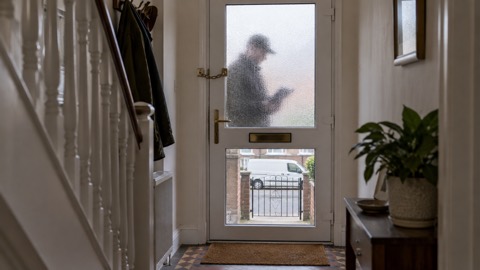
Some households face risks that do not arrive through a broken window at all. Avon and Somerset Police note that distraction burglars and fraudsters will not go to the trouble of breaking in if they can just knock and be invited in, and that doorstep crime targets vulnerable, often elderly people in their homes19. Police Scotland defines doorstep crime as someone pretending to be a different person to try to get into your house, get your personal information, or get you to pay for work you do not need12. The simple rule from nidirect's doorstep fraud guidance: do not allow strangers into your house if you are not expecting them20.
If a caller is suspicious and will not leave, Police Scotland's advice is to call 99912. Our pages on bogus callers, checking a caller is genuine and what to do if a doorstep caller will not leave cover the practical steps.
Vulnerable households face two further risks worth naming. Cuckooing, as defined by Avon and Somerset Police, is when criminals target a vulnerable person's home to store drugs, weapons or drug money, or to use it as a base for drug dealing or sex work21. Mate crime sits at the other end of the same spectrum: the same force advises that if someone you do not fully trust asks to come to your home, you should ensure they do not eat all your food or leave your home messy, a plain-language test for a relationship that has stopped being friendship21. Neighbours and family can help: Police Scotland's doorstep crime advice includes being alert for strange vans in the neighbourhood, helping vulnerable people avoid withdrawing large amounts of cash, keeping their house well maintained, and making it less obvious if they live alone12.
Homes affected by an emergency need the same thinking applied quickly. Surrey County Council's guidance on staying safe after flooding advises that if you need to leave your property, make sure it is left secure to reduce the risk of burglars breaking in, and be careful of doorstep callers who may trick or steal from you by asking to turn off water or check the electricity22. See making a damaged home safe from intruders after a storm, fire or flood and leaving your home locked when you have to evacuate.
Where to get help and more reading
If a break-in has happened, the routes are the ones set out above: 999 if the intruder may still be there, 101 or the online form if they have gone, and in person at a police station if you prefer2. After the immediate report, after a burglary: crime numbers, insurers, repairs and support walks through the crime reference number, the insurer, repairs and the support available.
If you want to reduce the chance of it happening at all, start with the measures the evidence points to. Most burglaries in the UK occur through front or back doors, and burglars tend to use brute force to gain entry, often choosing to snap the lock3, so doors and locks and what British standard should your door lock meet? are good first stops. Alarms are covered in burglar alarms and monitored alarms. Cameras and doorbells are covered in home cameras and CCTV and video doorbells. For the whole picture in one place, see home security: a household guide.
Neighbours remain the best early warning system most households have. North Wales Police warn that leaving your home empty while you are away carries a higher risk of burglars targeting it9, and a neighbour who knows your normal pattern of lights and curtains, and who you can call when a stranger is at your door, gives you cover that no product matches. Joining or starting a neighbourhood watch explains how to build that cover deliberately.
Sources (22)
- Alarms advice for domestic properties leaflet, Secured by Design, 2023
- Break-in and housebreaking advice, Police Scotland, 2026
- House security guidance, Police Service of Northern Ireland, 2026
- Christmas safety advice, North Yorkshire Fire and Rescue Service, 2025
- Securing your home, nidirect, 2024
- Advice on home safety leaflet, Police Service of Northern Ireland, 2022
- While you are away, Mid and West Wales Fire and Rescue Service, 2026
- Burglary campaign advice, Gloucestershire Constabulary, 2026
- Frozen or burst pipes seasonal advice, Met Office, 2026
- Pre-holiday routine, Avon and Somerset Police, 2026
- Summer safety advice, Police Service of Northern Ireland, 2026
- Rogue traders and doorstep crime advice, Police Scotland, 2026
- Emergency situations and keeping safe, nidirect, 2025
- Get urgent help and report a crime, GOV.UK, 2023
- Smoke alarms advice, Cheshire Fire and Rescue Service, 2026
- Household emergency plan, Ready Scotland, 2026
- Householders and the use of force against intruders, Crown Prosecution Service, 2018
- Self-defence circular, Crown Prosecution Service, 2013
- Doorstep crime advice, Avon and Somerset Police, 2026
- Doorstep fraud, nidirect, 2021
- Protecting vulnerable adults, Avon and Somerset Police, 2026
- Staying healthy and safe after flooding, Surrey County Council, 2026
 After a Break-In Checklist
 Holiday Security Checklist
 Moving Home Locks Checklist
 After a Burglary
 Bogus Callers
 Coming Home to a Break-In
 Catalytic Converter Theft
 Riots and Disorder Near Home
 Securing a Damaged Home
 Dogs as a Burglar Deterrent
 Doorstep Selling and Your Rights
 Empty Homes and Long Absences
 Leaving Home on Holiday
 Home Insurance Conditions
 Keyless Car Theft