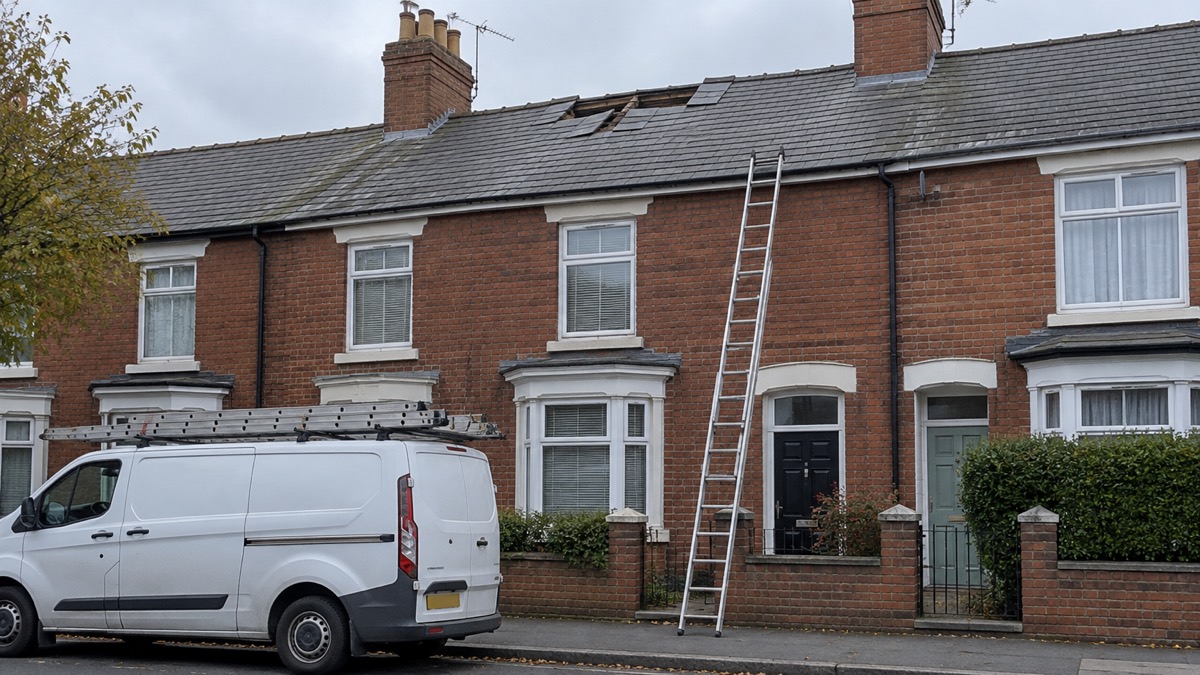
If a stranger knocks and says your roof needs urgent work, the safest answer is no. Do not agree to anything at the door, do not let them start, and close the door. Police advice is blunt: never let a stranger who knocks at your door uninvited work on your house or garden1. Rogue traders come to your door or phone you and try to convince you to pay for services you do not need, such as work on your roof, driveway or garden2.
This is one of the oldest doorstep tricks there is. A cold-caller claims to have noticed a problem with your property and offers to fix it for cash or at an inflated price3. Sometimes the "problem" does not exist at all. Sometimes it does, and the price or the workmanship is the trap. Either way, the answer at the door is the same: you choose who works on your home, not the person standing on your step.
What follows sets out how to turn a caller away, how to recognise the pattern, how to get a roof repair done properly, what to do if you have already agreed or paid, and where to report a rogue trader. It applies across the UK, with a note where the arrangements differ in Scotland and Northern Ireland.
Say no at the door and close it
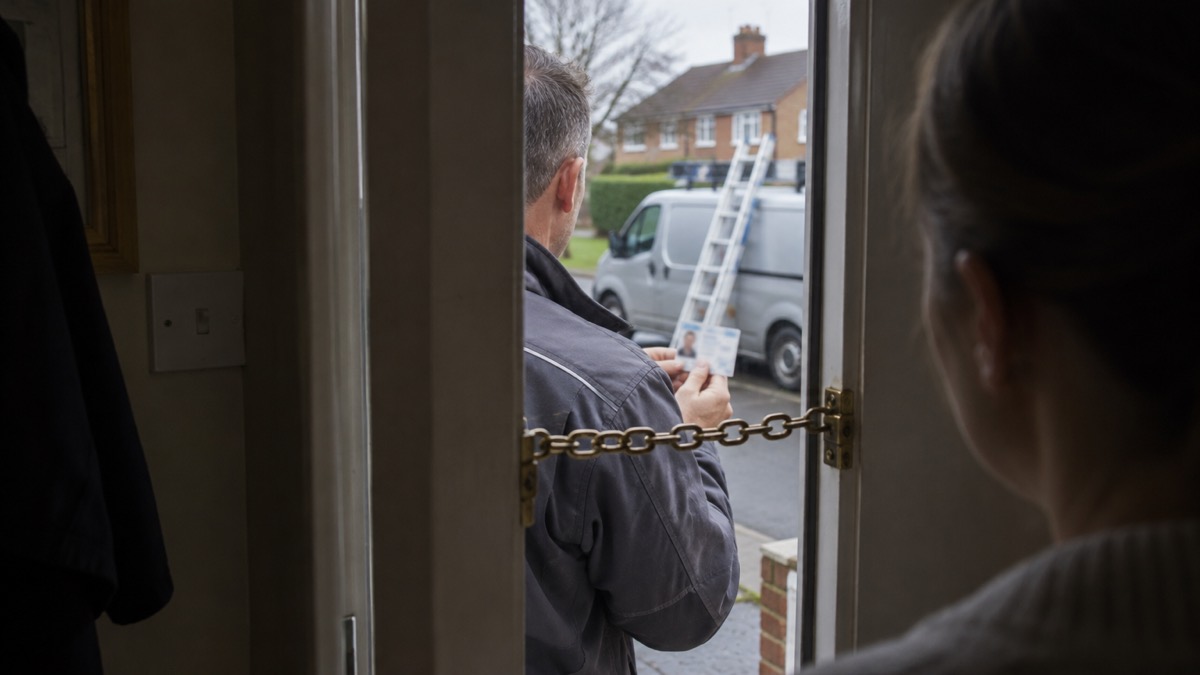
You do not have to be polite to someone who has turned up uninvited trying to sell you work. You do not have to explain, argue or justify yourself. The simplest and safest response is to say you are not interested, close the door and go back inside.
Police in Scotland set out a three-step routine worth remembering: LOCK, STOP and CHECK. Keep front and back doors locked, check through a viewer or window before opening, and only let callers in who have an appointment and confirmed ID4. The same principles are repeated in doorstep crime guidance across the UK: ignore the door if you are not sure who it is, keep your doors locked, and use a door viewer, window or camera to check who is there8.
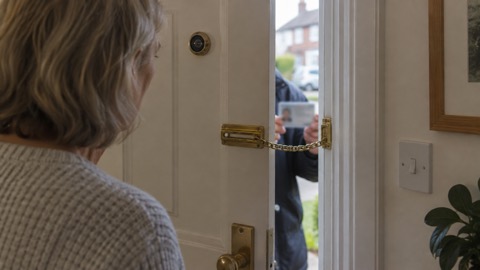
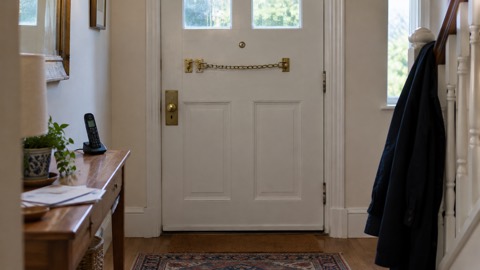
If you do open the door, use a door chain or bar and keep it on. Only let in visitors with an appointment. Check ID badges and call the company to confirm they are legitimate, using a number you have looked up yourself rather than one the caller gives you8. If you feel uncomfortable, ask them to come back later when someone else is at home.
It also helps to remove the reason for the knock. A visible "no cold callers" sign, a locked gate and a well-lit front path all make a doorstep seller's job harder. If you have a video doorbell or a camera, you can check who is there without opening the door at all. Our guide to video doorbells explains what they do and how to choose one, and checking a doorstep caller is genuine covers the ID checks in more detail.
Signs of a doorstep roofing scam
The classic doorstep roofing scam follows a script. An unexpected caller warns of a problem with your roof or driveway that needs urgent fixing3. They may say they were "working nearby" and noticed a loose tile, or that storm damage has left your roof unsafe. They offer to fix it there and then, often for cash.
The tell is the combination: you did not ask them to come, they have spotted a problem you cannot easily check yourself, and they want to deal with it immediately. Police describe doorstep crime as someone pretending to be a different person to get into your house, your personal information, or to get you to pay for work you do not need8. Rogue traders may also phone rather than knock, trying to convince you to pay for repairs they say they have noticed you need8.
The sums involved can be large. Police in Scotland describe an 80-year-old man called Rod who was charged £4,800 by a cold-calling roofer for dislodged roof tiles, and was told to tell bank staff the money was for his son. Bank staff used the Banking Protocol, police spoke to him and his money was saved3. That case shows both how the pressure works and how a bank cashier can be the last line of defence.
| Warning sign | What it looks like |
|---|---|
| Unexpected caller | Someone knocks who you were not expecting3 |
| Urgent problem | A roof or driveway fault that "needs fixing now"3 |
| You cannot check it | Work high up or out of sight that you cannot easily inspect |
| Cash or instant payment | Pressure to pay on the spot or in cash3 |
| No paperwork | No written quote, address or cancellation notice |
Doorstep criminals often target vulnerable, often elderly people in their homes5. If you have an older neighbour or relative, it is worth agreeing a simple rule: they never agree to work at the door, and they always call you first. Our guide to bogus callers covers the wider pattern of doorstep crime, and rogue traders and doorstep selling sets out your rights.
Getting a roof repair done safely
The right way to get a roof repaired is the same as any other trade: you choose the trader, you get the work specified and priced in writing, and you check them out before anything starts. Police advice is to be wary of anyone who knocks on your door offering to carry out building or repair work, and to check their credentials first9.
Start with your own inspection, from the ground. Carry out regular inspections of your roof for any loose slates or tiles or unstable chimneys10. Binoculars or a phone camera zoom can help you see the state of the roof without climbing. If you spot a problem, that is your cue to find a trader, not to wait for one to find you.
When you do choose a trader, ask for their details in writing and check them independently. Only let in visitors with an appointment, check ID badges and call the company to confirm they are legitimate8. Never let a stranger who knocks uninvited work on your house or garden4. If you are unsure, ask them to come back later when someone else is there8.
"Be wary of anyone who knocks on your door offering to carry-out building or repair work, check their credentials first."
Some councils and charities help older residents get repairs done safely. Belfast City Council, for example, runs a home safety check and repair scheme for seniors offering help with repairs by a vetted handyperson at a reduced rate, plus a selection of free helping-hand aids and equipment if required and subject to stock availability11. Arrangements vary by area, so it is worth asking your own council what is available.
If you have already agreed or paid
If you have already agreed to work or handed over money, do not panic, but act quickly. Put your cancellation in writing, keep a copy, and note the dates. Do not let further work start while you sort it out. If a trader refuses to cancel or pressures you, contact the Citizens Advice Consumer Service to log a complaint on 08454 04 05 066.
If you have paid by card or bank transfer and believe you were defrauded, call the fraud line on 0300 123 20407. Tell your bank straight away. The case of Rod shows that bank staff can intervene and that police can become involved when a suspicious withdrawal is spotted3.
If work has already been done badly and left your home damaged or unsafe, treat the property as you would after any incident. If windows or doors need boarding up, a contractor can do this and your building insurance will normally pay for this work12. Your insurance company, via loss adjusters, will arrange professional cleaning or appoint a strip-out contractor if damage is severe6. Keep receipts and photographs.
Where to report a rogue trader
To report a rogue trader, find your local Trading Standards office4. They are the body that enforces consumer protection law and can act on patterns of complaints about the same trader. Keep any paperwork, receipts, quotes or business cards, as these help them trace the trader.
For advice on your rights and to log a complaint, contact the Citizens Advice Consumer Service on 08454 04 05 066. They can explain where you stand and pass details on to Trading Standards. If you have lost money to fraud, call 0300 123 20407.
In Scotland and Northern Ireland the reporting routes differ. Our guide to Scotland and Northern Ireland: reporting crime and getting support explains the differences in more detail.
It is also worth telling your neighbours. A trader working one street will often try the next. Community groups can play a part too: official guidance suggests door knocking as an option to communicate with local people and get emergency responders' messages across, and community emergency groups can check people are OK and identify those who may need extra help13. The same neighbourly network is your best early warning about a rogue trader in the area. Our guide to community resilience explains how local groups work.
Sources (13)
- Protect against scams and fraud, Avon and Somerset Police, 2026
- Rogue traders and doorstep crime, Police Scotland, 2026
- Take Five: doorstep scam, Police Scotland, 2026
- Shut Out Scammers: more information, Police Scotland, 2026
- Doorstep crime, Avon and Somerset Police, 2026
- Getting back into your home following flooding, Surrey County Council, 2026
- Report fraud, GOV.UK, 2026
- Doorstep crime and bogus callers, Police Scotland, 2026
- Are You Ready booklet, Culham Parish Council, 2025
- Prepared personal resilience, Scottish Borders Council, 2026
- Home safety, Belfast City Council, 2026
- After an incident: fire, Devon and Somerset Fire and Rescue Service, 2026
- Community emergency planning guide: respond and recover, Ready Scotland, 2026
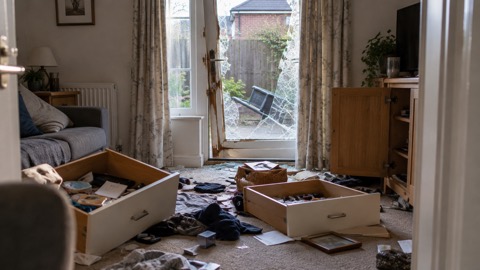 After a Break-In Checklist
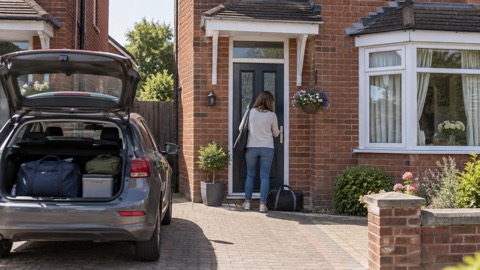 Holiday Security Checklist
 Moving Home Locks Checklist
 When to Call 999 or 101
 Reporting a Burglary Anonymously
 Doorstep Caller Will Not Leave
 Car Running While De-Icing
 Checking a Doorstep Caller
 Burglary at Christmas
 Cash in a Fire Safe
 Heating Oil Tank Theft
 Making a House Look Occupied
 Police Approved Products