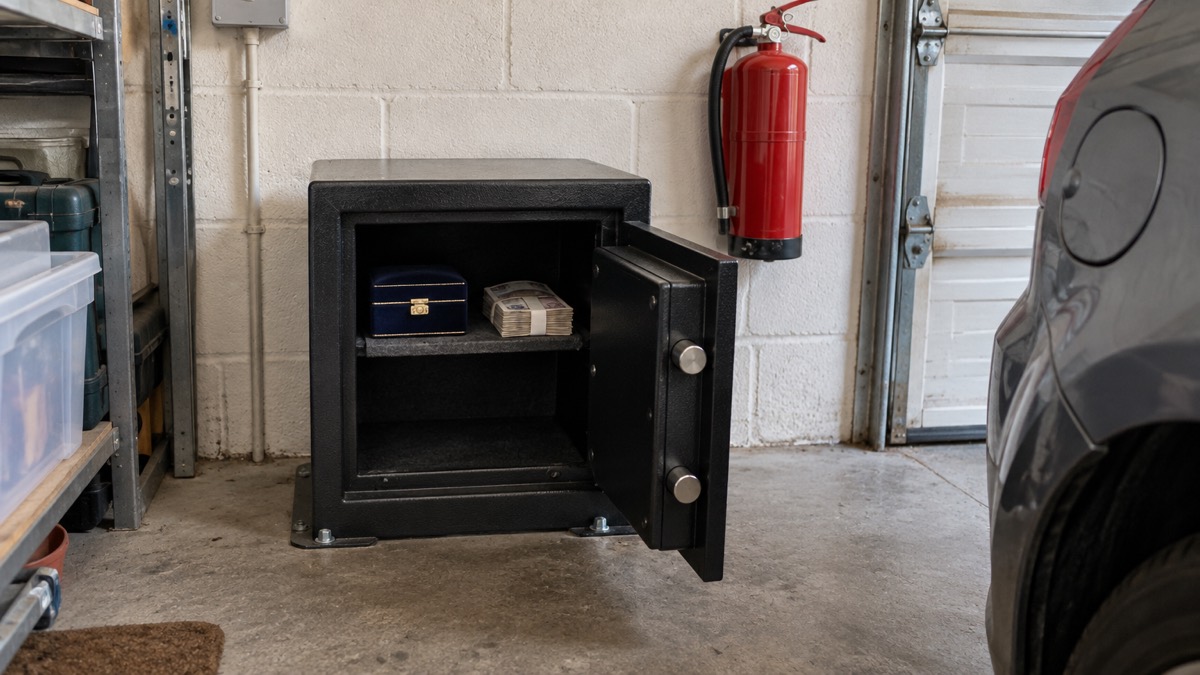
A fire safe is a sensible home for the things you could not replace: passports, insurance papers, a few sentimental pieces, and perhaps some cash and jewellery. But it only does the job it was built for. A fire rating tells you the contents will survive heat and flame for a stated period. It says nothing about whether the box can be picked up and carried out of the house, or levered open in a minute with a screwdriver.
So the short answer is yes, you can keep cash and jewellery in a fire safe, provided you understand two things. First, for valuables the burglary resistance matters at least as much as the fire rating, and a safe that combines both is the one that covers you properly1. Second, a safe does not change what your insurer will pay out for cash kept at home; that limit sits in your policy, not in the box.
This page sets out what a fire safe protects, how to think about cash and jewellery separately, how to anchor a safe so it stays put, and where to go for help choosing and fitting one. If you are still deciding whether you need a safe at all, our guide to home safes and their fire, burglary and cash ratings covers the wider picture.
What a fire safe is built to protect, and what it is not
A fire safe is designed to keep its contents below a damaging temperature while a fire burns around it. That is what the rating means: a period of protection for paper, and for some models digital media. It is a container for things that heat, smoke and water would destroy, not a security device in its own right.
The distinction matters because the two jobs are tested differently. Fire resistance is about insulation and seals. Burglary resistance is about steel, locking bolts and how the box is fixed down. The maker's own guidance draws the line clearly: for jewellery and cash, choose a certified burglary resistant safe; for documents, a fire resistant safe; and for complete protection, select a safe that combines both burglary and fire resistance1. A cheap fire box with a plastic latch may keep papers safe from flames and still be walked out of the house under one arm.
It is also worth being realistic about what any safe can do in a serious fire. Fire doors exist to create a barrier from fire and toxic smoke, to stop them travelling around a building, to keep damage to a small area and to allow evacuation and safe access for the emergency services4. A safe is a much smaller version of the same idea: it buys time for the contents, not for the building. If the room around it is destroyed, the safe may survive while everything else does not, and you will still be dealing with the aftermath.
Keeping cash in a fire safe
Cash is the item people most often get wrong, because it is the one where the safe and the insurance policy pull in different directions. A fire safe will protect banknotes from flames. It will not necessarily protect you from a shortfall at claim time, because home contents policies commonly cap how much cash they will cover in the home, and the cap is set by the policy, not by whether the money was locked away.
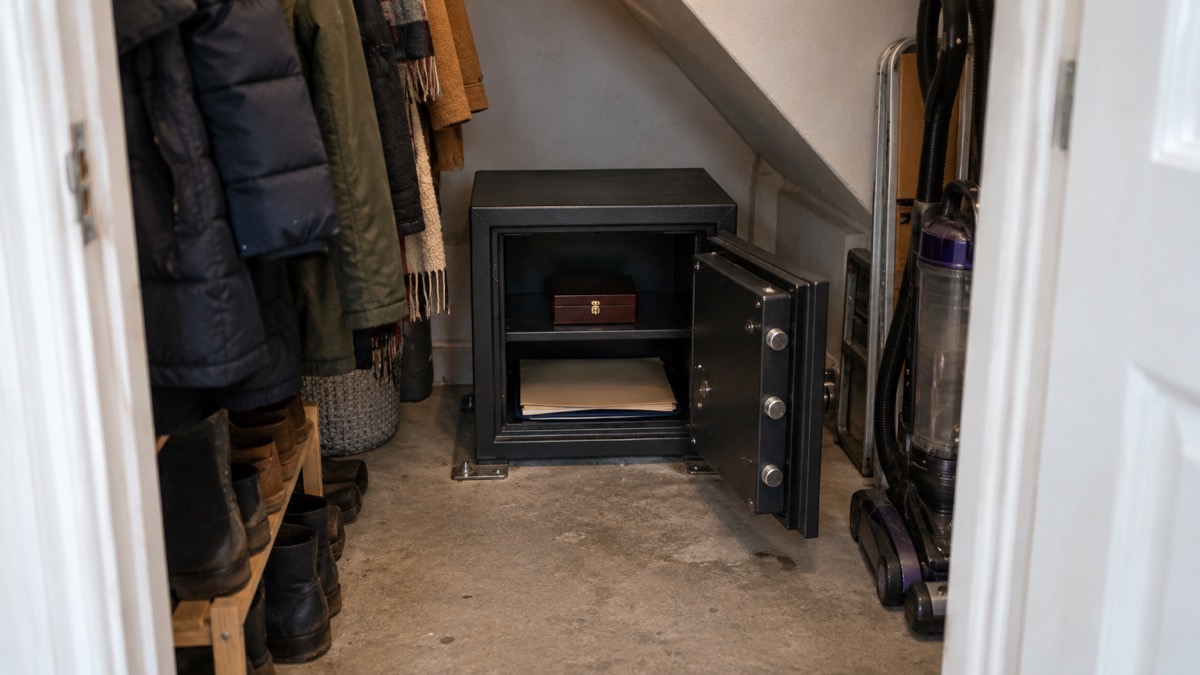
The practical approach is to keep only what you would need for a few days of disruption in the house. Official advice for a power cut is to keep a small amount of cash for essential purchases if electronic payments or cash machines are disrupted5. That is the right scale for a home safe: enough to buy food, fuel or a prescription if the card network is down, not a savings pot.
For larger sums, police in Scotland advise keeping items such as jewellery, gold and cash in a safety deposit vault registered with the Safe Deposit Federation6. That is a bank or vault arrangement rather than a box in a wardrobe, and it is the option to consider if you hold significant valuables at home.
There is a second, quieter risk with cash in a safe: it is easy to forget. Keep a note of what is inside, and check it periodically. If you are building a household emergency fund, our guide to keeping your valuables safe from thieves looks at the wider question of what to hold at home and how to record it.
Keeping jewellery in a fire safe
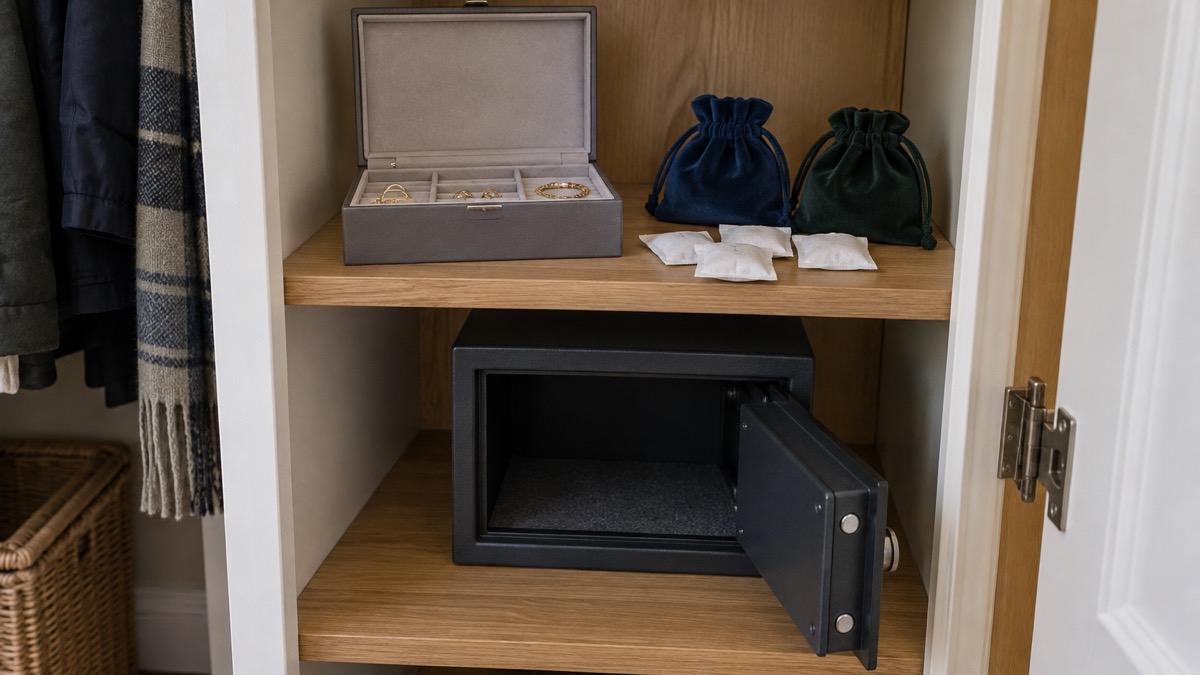
Jewellery is where the burglary rating earns its keep. A fire safe that is not certified for burglary resistance may protect a necklace from flames and still be the easiest thing in the house to carry away. The maker's advice is direct: for jewellery and cash, choose a certified burglary resistant safe1.
Police advice adds two habits that matter as much as the box. If you have large amounts of jewellery in your home, consider fitting a domestic safe, using deposit boxes where available, and marking items with a DNA solution; and keep a written and photographic record of items of financial or sentimental value3. The record is what lets you identify pieces after a theft and support an insurance claim, and it costs nothing to make.
Inside the safe, presentation matters for a different reason. A closed box traps damp air, and silver and some gold alloys darken over time when moisture and sulphur compounds in the air react with the metal. Silica gel sachets, renewed every few months, absorb the moisture. Keep pieces in soft pouches rather than loose, so they do not scratch each other, and never put anything away damp.
If you are working out how much jewellery is sensible to keep at home at all, the same police guidance on deposit boxes and records applies, and our page on property marking and keeping a record of valuables explains how to build that record properly.
Anchor the safe firmly to the floor or wall
The single most useful thing you can do after buying a safe is to fix it down. The maker's guidance is that home safes should be installed in a discreet, secure location and anchored to the floor or wall to prevent removal, and it names bedrooms, closets and utility rooms as common areas1. An unanchored safe is a portable box with a handle on it.
Where you put it matters as much as how you fix it. Avoid the places a burglar checks first, such as beside the front door or in an obvious home office. A cupboard in a bedroom or utility room, out of sight and awkward to reach, is the kind of discreet position the maker describes1. Think, too, about what is above and around it: a safe under a window or beside a radiator is more exposed to both fire and prying eyes.
Fixing method depends on the surface and the weight of the safe:
- Light safes can often be bolted through the back or base into a timber joist or a solid wall, following the maker's instructions exactly.
- Heavy safes going into a solid wall or a concrete floor slab are usually a job for a locksmith or safe installer, who will have the right drill and anchors.
- Rented homes need the landlord's agreement before you drill, and the tenancy terms decide what you may fix and what you must make good.
While you are thinking about the room, it is worth checking the fire basics around it. Fit a smoke alarm and test it, keep escape routes clear, and if you use candles, place them securely in a correct holder where they are not likely to be knocked over, away from curtains, cushions and draughts7. A safe protects a few possessions; a working alarm protects the household.
Where to get help choosing and fitting a safe
You do not have to work this out alone. The first stop is your local fire and rescue service, which offers a free home fire safety visit to anyone who needs help, and firefighters are available to conduct one to prevent accidental dwelling fires and to protect the public from being injured in such events8. They will look at the whole home, including where a safe and other valuables sit in relation to escape routes and fire risks.
For the safe itself, a locksmith or specialist safe installer can advise on fixing method and on what rating suits your contents. Ask them to confirm the certification of any safe they supply, and to fit it in line with the maker's instructions. If you rent, speak to your landlord first: landlords of privately rented homes have a duty to make sure the furniture and furnishings they supply are fire safe9, and your tenancy agreement will set out what you may fix to the walls and floors.
For the wider security picture, police crime prevention advice is free and local. Our guide to doors and locks explains how the safe fits into the rest of your home security, and how burglars choose a home shows why a hidden, anchored safe is a better bet than an obvious one.
If a fire does happen, official advice is that, if it is safe to do so, you should remove essential documents, valuables and sentimental items from the fire-damaged property10. That is the moment your record of what was in the safe, and your photographs of it, become genuinely useful. Keep a copy of that record somewhere other than the safe itself.
Sources (10)
- Home safes, Chubb Safes, 2026-07-02
- Get help and advice in an emergency, Lincolnshire County Council, 2026-10-29
- Home security advice, West Yorkshire Police, 2026-11-02
- Fire doors, London Fire Brigade, 2026-10-25
- Power cuts, UK Government Prepare campaign, 2026-10-21
- Break-in and housebreaking, Police Scotland, 2026-11-02
- Stay safe this Halloween, Wiltshire and Swindon Prepared, 2026-10-25
- Alarms, London Fire Brigade, 2026-10-25
- Private renting: your landlord's safety responsibilities, GOV.UK, 2026-11-03
- Dealing with the aftermath of a fire, Warwickshire County Council, 2026-10-29
 After a Break-In Checklist
 Holiday Security Checklist
 Moving Home Locks Checklist
 When to Call 999 or 101
 Reporting a Burglary Anonymously
 Doorstep Caller Will Not Leave
 Car Running While De-Icing
 Checking a Doorstep Caller
 Burglary at Christmas
 Heating Oil Tank Theft
 Making a House Look Occupied
 Police Approved Products
 Reporting a Bogus Caller