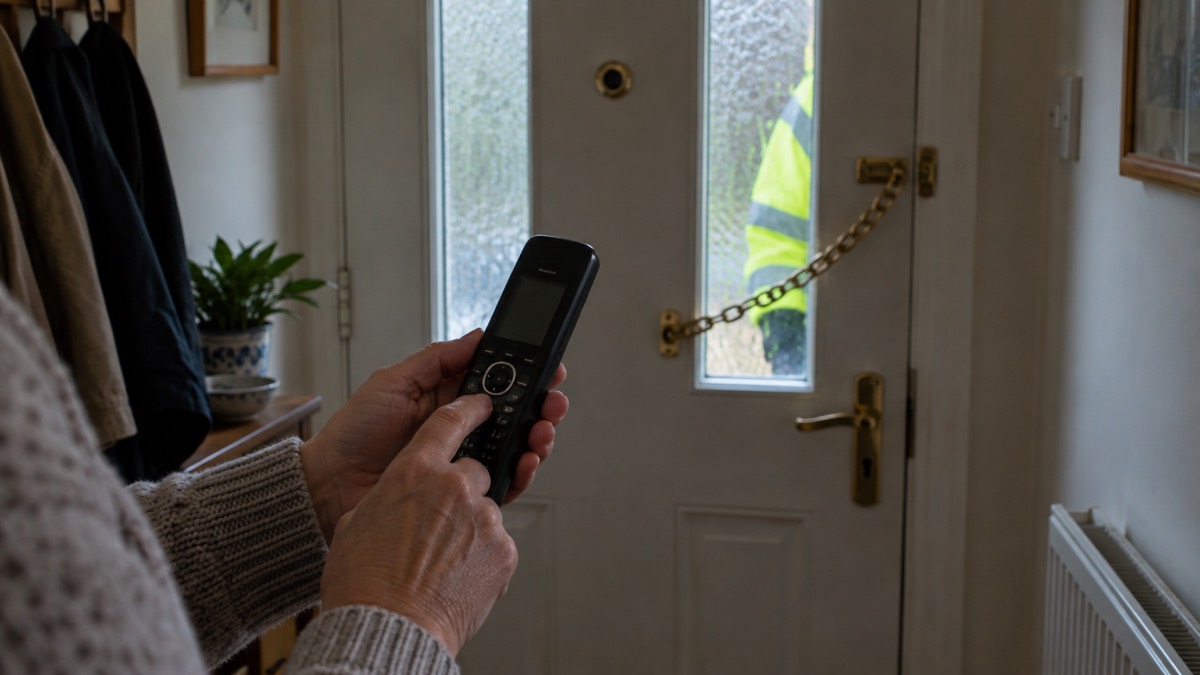
A bogus caller is someone who visits or calls at your home under false pretences, typically for the purpose of theft or fraud1. They may claim to be from a utility supplier or another reputable organisation to get inside, then steal money and valuables1. If it happens to you, the first question is simply which number to ring.
Call 999 if you feel scared or threatened, and ask for the police2. If you are not in immediate danger, call 101 to report any suspicious activity2. Both numbers reach the police; 999 is for emergencies, 101 for everything else. You do not have to be certain a caller was bogus to report it: the police would rather hear about a suspicious visit than not.
What you do at the door matters as much as the call afterwards. Keep the door locked, check who is there through a viewer or window, and only let someone in if they have an appointment and you have confirmed their identity2. Genuine callers will be only too happy to show proof of identity1. This page sets out how reporting works, what to say, and how the arrangements differ across the UK.
Call 999 if you feel scared or threatened
The test for 999 is how you feel and what is happening, not whether a crime has yet been committed. Police Scotland's doorstep scam guidance is blunt: call 999 if you feel threatened or in danger5. The same principle runs through police and fire guidance across the UK: dial 999 in any life-threatening situation6, and call 999 if you or someone else is in immediate danger7.
If a caller is refusing to leave, becoming aggressive, or trying your door or windows, that is an emergency. Call 999 and say what is happening. If you cannot speak safely, the operator can still help: if you do not speak or answer questions and the operator can only hear background noise, they will transfer your call to the police8.
If you have been burgled, call the police immediately on 99911. If you think an intruder is still in your home, call 99912. A bogus caller who has talked their way in and is still there falls into the same category: get out if you can, or get to a room you can lock, and ring 999.
Report a bogus caller to the police on 101
When the caller has gone, or when nothing has happened that puts anyone in danger, 101 is the number. Police Scotland's guidance is to call 101 to report any suspicious activity2. The PSNI asks anyone who receives a visit from someone they believe is a bogus caller to call 101, or 999 if it is an emergency, describe the caller as best they can, and tell neighbours, community groups and their local Neighbourhood Watch scheme13.
You have a second route if you would rather not give your name. You can call Crimestoppers on 0800 555 111 if you prefer to speak to someone anonymously1. Fire and police guidance across the UK repeats the same pair of options for suspicious activity: Crimestoppers on 0800 555 111 or the police on 10114.
| Route | Number | When to use it | Who answers |
|---|---|---|---|
| Emergency | 999 | You feel scared or threatened, or someone is in immediate danger2 | Police, and other emergency services |
| Non-emergency | 101 | Suspicious activity, a caller who has left, information after the event2 | The police |
| Anonymous | 0800 555 111 | You want to report without giving your name3 | Crimestoppers |
| Fraud you have paid into | Report Fraud, plus your bank or card provider4 | A caller persuaded you to pay them money4 | Report Fraud and your bank |
If a caller has persuaded you to pay them money, report the call to Report Fraud and your bank or credit card provider4. Report Fraud deals with all fraud, unless the suspect is known to the victim or is vulnerable, in which case call 10115.
When a call counts as an emergency
The line between 999 and 101 is not about how upsetting the visit was. It is about whether anyone is in danger now. A caller at your door who will not leave, who is trying the handle, or who has got in, is an emergency. A caller who came yesterday, took nothing, and left when you asked, is a 101 matter.
The emergency services ask the public to keep 999 for genuine emergencies because false or unnecessary calls divert them. The fire service makes the same point about bonfires: do not call the fire service to report someone having a bonfire unless it is an emergency16. The principle carries across: use the number that matches the risk.
There is one more distinction worth knowing. A bogus caller is not the same as a rogue trader. Rogue traders try to talk householders into paying for services, are often unqualified, and will do a poor job or take payment and not do the job at all1. Both are reported to the police in the same way, but what you tell them differs: for a rogue trader, the work offered and the price quoted matter; for a bogus caller, the identity claimed and what they took matter.
What to tell the police when you report
The more you can describe, the more useful the report. The PSNI's advice is to describe the caller as best you can17. Work through the list below while it is fresh, and write it down before you ring if you can.
- What they claimed: which company, council or utility they said they were from, and whether they had an appointment2.
- What they looked like: clothing, build, accent, any uniform or badge, and whether they were alone.
- What they arrived in: vehicle type, colour and registration if you saw it.
- What they said and did: whether they asked to come in, asked for money, or tried the door.
- What was taken or paid: any money or valuables handed over, and any bank details given4.
- Which way they went: direction of travel and time.
Callers should always be asked for proof of identity, and no access given until it is verified1. If you did let someone in, say so plainly when you report; it helps the police understand what happened and it is not something to be embarrassed about. Bogus callers can be persuasive and will target vulnerable members of society1.
If the caller is still at the door
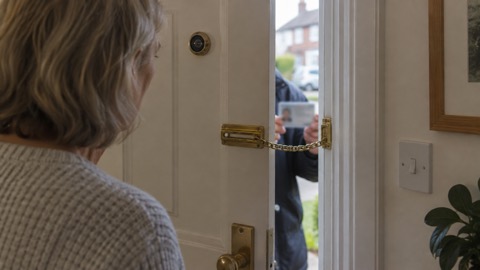
Keep the door locked. Police Scotland's doorstep guidance is built around three words: lock, stop and check. Keep front and back doors locked, check through a viewer or window before opening, and only let callers in if they have an appointment and you have confirmed their identity2. If you have a door chain or limiter, use it.
If you feel threatened or in danger, call 9995. If you are not in danger but the caller will not leave, call 101 and report it while they are still there if you can do so safely. Do not open the door to argue, and do not go outside to confront them.
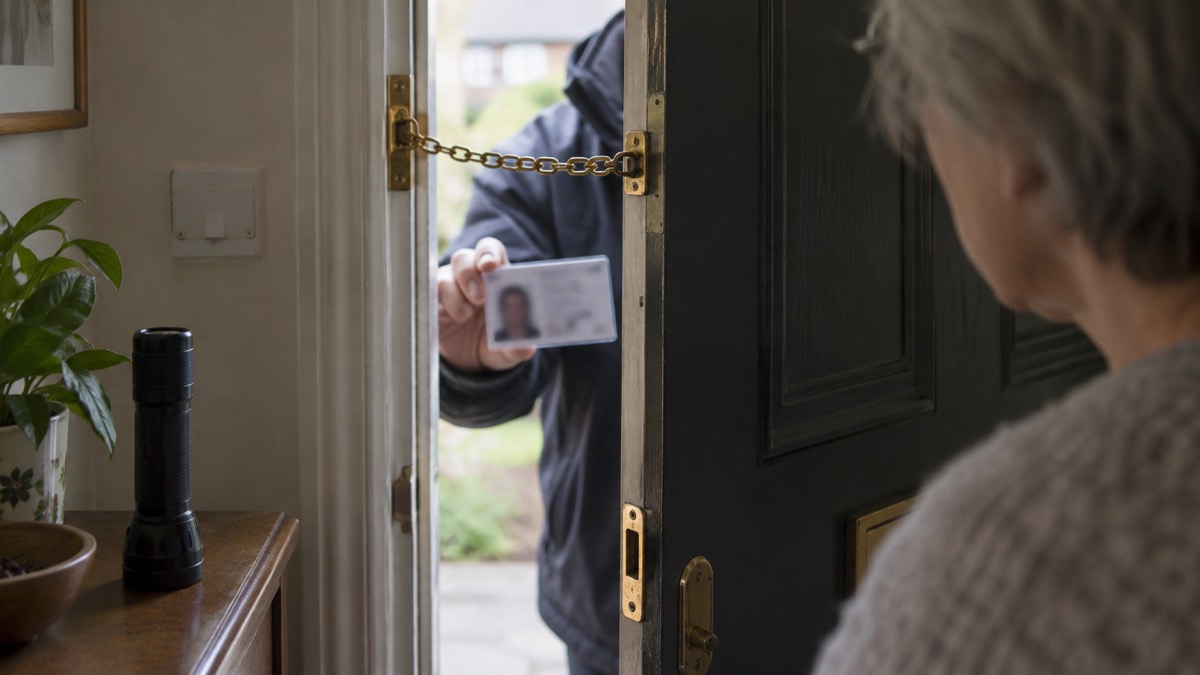
Water companies warn about the same trick. Bogus callers claiming to be from Essex & Suffolk Water or "the water board" operate in the supply area, and householders should not let them in if in doubt19. If someone claims to be from your water or energy supplier, shut the door, ring the company on a number you look up yourself, and check whether they have sent anyone. Our guide to checking a doorstep caller is genuine sets out how to verify identity, and doorstep password schemes explains how water and energy companies let you confirm a genuine employee.
Reporting after the caller has left
A report made an hour or a day later is still worth making. Ring 101 and give the details from the list above. If you have since noticed something missing, say so; if you have found damage to a door or lock, say that too.
If the approach came by phone rather than at the door, the advice is different. If you have received nuisance, suspicious or unwanted calls, hang up and contact your phone provider20. If a caller persuaded you to pay them money, report the call to Report Fraud and your bank or credit card provider4.
Reporting for an elderly neighbour
Bogus callers target vulnerable people, and older neighbours are often the ones who get the visit. If you see a stranger at a neighbour's door, or your neighbour mentions a caller who would not take no for an answer, you can report it yourself. If your neighbour is in immediate danger, call 999 immediately7. Otherwise ring 101 and explain what you saw and where.
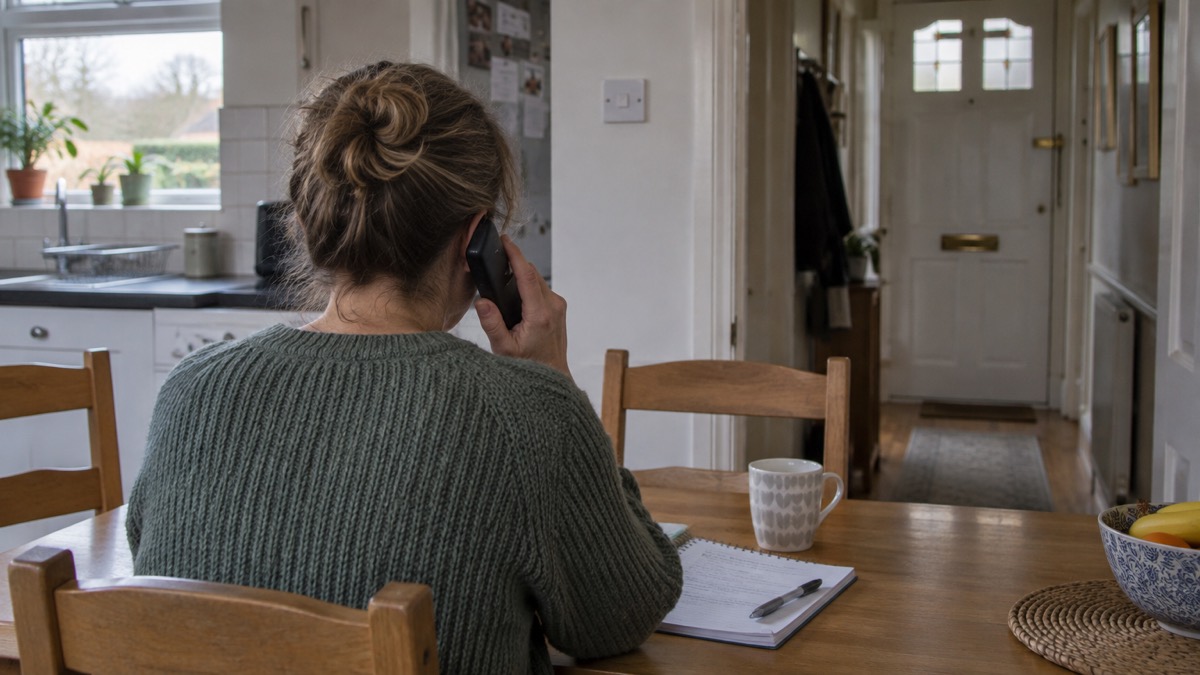
Keep an eye out for bogus officials who may call door-to-door without an appointment claiming to be from a heating supply or other company, and always check the identity of callers; if in doubt, call the police18. Remind your neighbour that genuine callers will be only too happy to provide proof of identity1, and that they never have to let anyone in without an appointment.
For the wider picture on doorstep crime, from the scripts callers use to the door chains and viewers that help, see Bogus Callers: Spotting and Turning Away Doorstep Crime. If work has been offered or agreed, Rogue Traders and Doorstep Selling: Your Rights and Who to Tell covers what to do next, and Avoiding Rogue Traders After a Flood is worth reading if your area has recently flooded.
Where the arrangements differ across the UK
The numbers are the same across England, Scotland, Wales and Northern Ireland: 999 for emergencies, 101 for the police non-emergency line, and 0800 555 111 for Crimestoppers2. What differs is the force you reach and some of the local schemes you can use.
| Nation | Police non-emergency | Anonymous reporting | Local addition |
|---|---|---|---|
| England | 1012 | Crimestoppers 0800 555 1113 | Report Fraud for fraud cases15 |
| Scotland | 1012 | Crimestoppers 0800 555 1113 | Police Scotland doorstep scam guidance2 |
| Wales | 1012 | Crimestoppers 0800 555 1113 | Fire service and police joint reporting advice21 |
| Northern Ireland | 10113 | Crimestoppers 0800 555 1113 | PSNI advice to tell Neighbourhood Watch13 |
In Northern Ireland, the PSNI also asks you to tell neighbours, community groups and your local Neighbourhood Watch scheme after a bogus caller visit13. That is good practice everywhere: a warning to the street is often what stops the next attempt. Our guide to Scotland and Northern Ireland: Reporting Crime and Getting Support covers the local routes in more detail.
Sources (20)
- Bogus callers, Police Service of Northern Ireland, 2026
- Shut Out Scammers: more information, Police Scotland, 2026
- Hacked device: action to take, National Cyber Security Centre, 2021
- Take Five: doorstep scam, Police Scotland, 2026
- Know the right number to call in an emergency, Lancashire Prepared, 2026
- Protecting vulnerable adults, Avon and Somerset Police, 2026
- How to make a silent 999 call, Police.uk, 2026
- Winter top tips and advice, South Western Ambulance Service NHS Foundation Trust, 2026
- First aid education, Scottish Ambulance Service, 2026
- House Security | PSNI, PSNI
- Break-in and housebreaking, Police Scotland, 2026
- Scams and bogus callers | Belfast City Council, Belfast City Council
- Reducing arson risk, London Fire Brigade, 2026
- Others who can help, Devon and Cornwall Police, 2026
- Safety concern about wildfire risk in your area, Devon and Somerset Fire and Rescue Service, 2022
- Scams and bogus callers | Belfast City Council, Belfast City Council
- Keep warm in winter, Derbyshire County Council, 2026
- Extra care, Essex & Suffolk Water, 2024
- Data breaches, National Cyber Security Centre, 2021
- Halloween and bonfire, South Wales Fire and Rescue Service, 2026
 After a Break-In Checklist
 Holiday Security Checklist
 Moving Home Locks Checklist
 When to Call 999 or 101
 Reporting a Burglary Anonymously
 Doorstep Caller Will Not Leave
 Car Running While De-Icing
 Checking a Doorstep Caller
 Burglary at Christmas
 Cash in a Fire Safe
 Heating Oil Tank Theft
 Making a House Look Occupied
 Police Approved Products