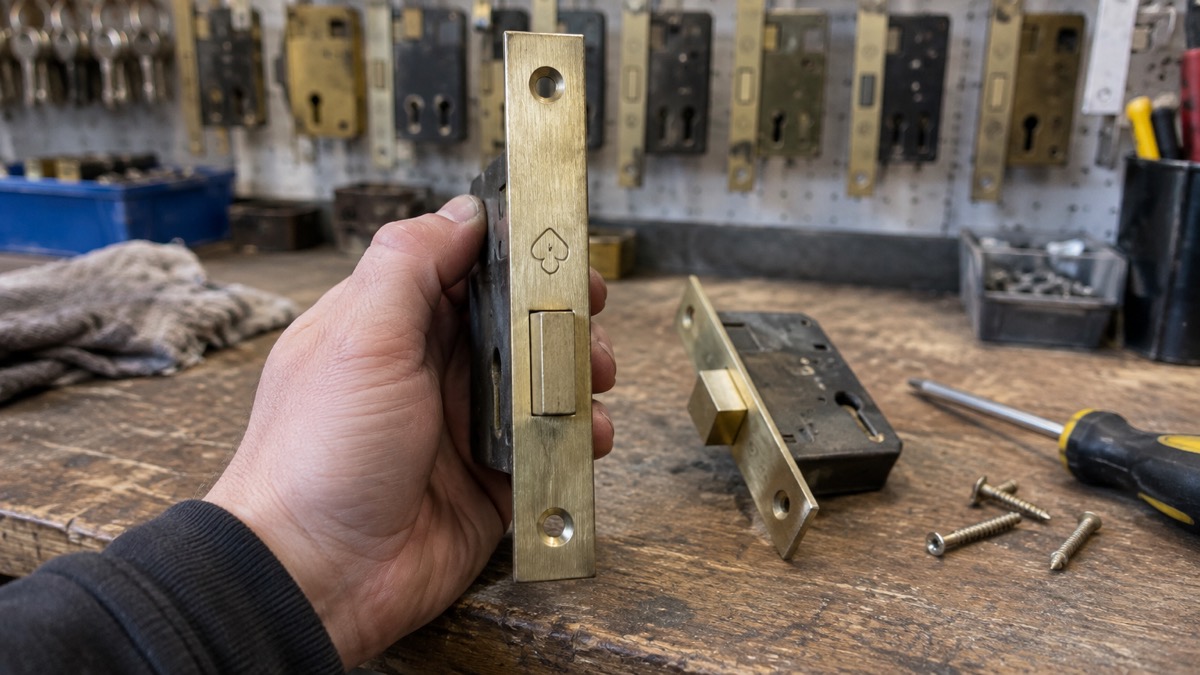
If you are shopping for a lock, an alarm or a camera and you want the police-backed version, there is one mark to look for: Secured by Design. It is the scheme behind the "Police Preferred Specification" label, and its logo on the packaging is how you know a product has been through police standards and tests1. If a product does not carry it, ask the seller directly whether it has been accredited by Secured by Design before you rely on any claim1.
The label is not a legal requirement and it does not cover every kind of product. For doors and windows, police guidance points to a different standard, PAS 24:2022, and describes Secured by Design as the body that accredits door products to it3. For alarms and CCTV, police guidance asks that equipment meets British Standards (PD6662)5. So the honest answer is that "police approved" means different things depending on what you are buying, and the check you make depends on the product.
This page sets out what the mark is, how to verify a claim in a few minutes, where approval stops short, and how to get free crime prevention advice from your local force. It applies across the UK, with the small differences in Scotland and Northern Ireland noted where they matter.
Police Preferred Specification: the mark to look for
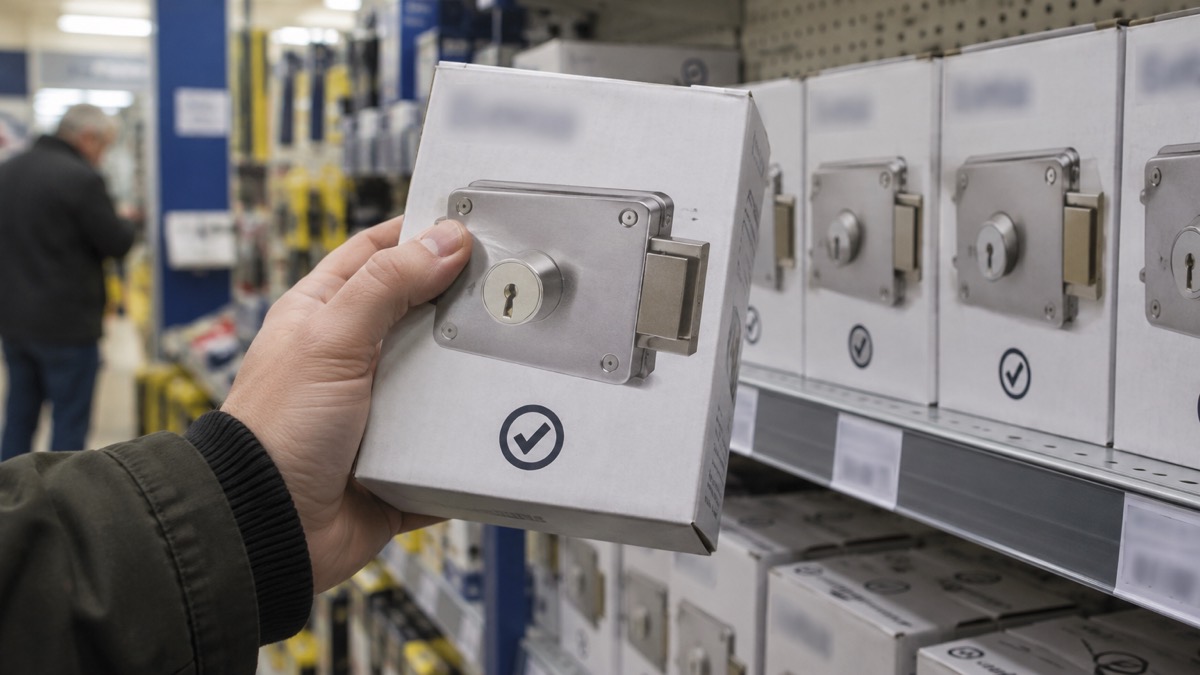
"Police Preferred Specification" is the name Secured by Design gives to the standard its accredited products meet. The scheme states that all the security products recommended in its guides meet the Police Preferred Specification of Secured by Design1. In practice, that means the label is not a vague endorsement: it is tied to a named scheme with published standards, and the scheme tells buyers to look for its logo on the product packaging or to ask, when buying, whether a product has been accredited1.
The value of the mark is that it stands in for testing you cannot do yourself. Age UK describes security products licensed by Secured by Design as having passed police standards and tests2. That is the whole point of an accreditation scheme: an independent body has checked the product against a published standard, so you do not have to take a retailer's word for it.
The mark appears across a wide range of household security kit, not just locks. Police and council guidance recommends Secured by Design key safes, for example, advising households to buy a safe that is Secured by Design and displays the logo8. Door products are accredited by the scheme too3. The breadth matters because it means you can apply one check to most of the physical security you buy for a home.
It is worth being clear about what the mark is not. It is not a government safety mark. Secured by Design speaks to crime resistance, and the electrical safety marks are a separate question: fire services advise checking that e-cigarettes carry a recognised safety mark such as CE3, that appliances carry a recognised British or European safety mark4, and that e-bikes and e-scooters are marked with a CE or UKCA mark to show they comply with UK product safety standards5. A product can carry one and not the other, and for anything you plug in you should check both.
Secured by Design is the police-backed scheme behind the label
Secured by Design is the scheme that runs the accreditation, and understanding its role explains why the label carries weight. It is the body that accredits security-accredited door products to standards such as PAS 24:20223. Police forces across the UK point households to it: guidance on replacing windows and doors tells people to buy products certified by Secured by Design5, and separate door security advice says to use a security-accredited product to a standard such as PAS 24:2022 when replacing a door, with Secured by Design named as the accrediting body3.
The scheme also reaches beyond physical kit into the digital side of home security. It publishes cyber security advice, including a Secured Connected Device Accreditation for connected products, and its guidance is broken into sections covering securing IoT products and further cyber advice1. That is relevant to any household buying a smart lock, camera or doorbell, because those devices are computers as much as they are locks and lenses.
"Security products licensed by Secured by Design have passed police standards and tests."
The practical consequence is simple. When you see the logo, you are looking at a product that a police-backed scheme has assessed. When you do not, you are relying on the maker's own description, which may be accurate but has not been independently checked in the same way.
How to check a product's approval yourself
Checking takes a few minutes and saves you from paying a premium for a badge that means nothing. Work through these steps before you buy.
- Look for the logo on the packaging or listing. Secured by Design tells buyers to look for its logo on the product packaging, or to ask whether a product has been accredited by the scheme1.
- Ask the seller in writing. A short message asking "is this product accredited by Secured by Design?" gives you an answer you can keep.
- Check the scheme's own listings. The scheme publishes product information and cyber advice on its site, so confirm the claim there rather than on a marketplace page1.
- Check for safety recalls separately. Approval for crime resistance says nothing about electrical safety. Check product recall notices issued by the Office for Product Safety and Standards, and contact the retailer where you purchased the product if it is affected9.
- Check independent testing marks where they apply. For flood protection products, independent guidance advises looking for kite marked products, which means they have been independently tested10.
The same discipline applies to connected devices. The National Cyber Security Centre advises using online tools, such as those included in antivirus or password manager tools, to check whether your details have appeared in public data breaches11. That is not about product approval, but it is part of buying and running security kit sensibly.
Approval does not cover every product or every fitting
The biggest misunderstanding about police approval is that it is a general safety or quality guarantee. It is neither. It speaks to crime resistance, and only for products the scheme has assessed. Plenty of household security products fall outside it, and plenty of products that carry approval can still be recalled for safety faults.
Official product safety notices show the range of what can go wrong. A power bank sold by a high street retailer was found not to meet the requirements of the General Product Safety Regulation 200512. An electric blanket did not meet the requirements of the Electrical Equipment (Safety) Regulations 201613. A power cable failed both the Electrical Equipment (Safety) Regulations 2016 and the Plugs and Sockets etc (Safety) Regulations 199414, and so did a caregiver pager sold through a major online retailer15. None of these are crime-resistance questions, but all of them affect kit a household might buy alongside locks and alarms.
Approval can also be withdrawn after you have bought. One environmental alarm was recalled from end users16, and a fire alarm detection system was withdrawn from the market, with the maker beginning a replacement programme for all affected units17. If you own an approved product, it is worth checking recall notices from time to time rather than assuming the badge still stands.
| What you are buying | What police or official guidance points to | Who sets it |
|---|---|---|
| Doors and door products | PAS 24:2022, accredited by Secured by Design3 | Police guidance and the scheme |
| Replacement windows | PAS 24:2022, tested to British standards and insurance approved4 | Police guidance |
| Alarms and CCTV equipment | British Standards (PD6662)5 | Police guidance |
| Key safes | Secured by Design, displaying the logo8 | Police and council guidance |
| Fire doors | Manufacturer certified door fitted by a third party accredited competent installer18 | Official fire safety guidance |
The fitting matters as much as the product. Police guidance on alarms says the person or company setting it up should hold National Security Inspectorate (NSI) or Security System and Alarms Inspection Board (SSAIB) certification5. For fire doors, official guidance describes installation of a manufacturer certified door, using component parts rated to the correct specification and approved for use with the door in accordance with the manufacturer's instructions, completed by a third party accredited competent installer18. A first-rate lock fitted badly is a second-rate lock.
Where to get crime prevention advice from the police
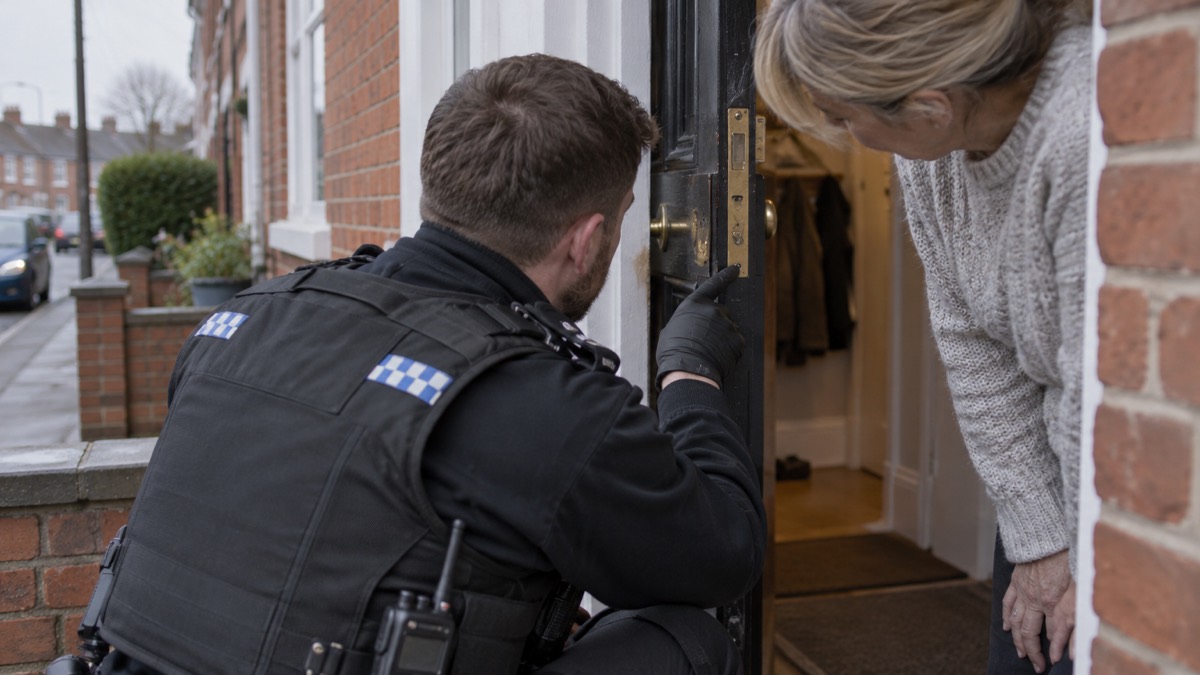
You do not have to work any of this out alone, and the advice is free. Every police force in the UK has Crime Prevention Officers, and forces invite households to contact them. West Yorkshire Police says that many different products are available for property marking and your local Crime Prevention Officer can advise on the best options6. The Police Service of Northern Ireland tells households they can contact their local Crime Prevention Officer for further security advice, and notes that CPOs can advise individuals and address larger audiences7. Fire and rescue services point people the same way: further advice on home security can be obtained from your local Police Crime Prevention Officer19.
For Scotland, Police Scotland publishes advice on break-in and housebreaking5. Ready Scotland covers reporting online crime and abuse to the police20. Local councils add to this: Oxfordshire's home safety service says it can provide advice on health and crime prevention too21.
A few practical points help you get the most from the conversation. Have photographs of your doors, windows and any existing alarm ready. Note the age and standard of what you already have. Ask specifically which products the force would look for, and whether your area has a Burglary Prevention toolkit: West Yorkshire Police says its latest toolkit is available at Crime Reduction events, or by contacting your local Crime Prevention Officer6. If you are comparing kit types before you call, our guides to doors and locks, burglar alarms and home cameras and CCTV set out what each does.
Sources (22)
- Cyber security advice, Secured by Design, 2026
- Staying Safe, Age UK, 2025
- Door security, Avon and Somerset Police, 2026
- Window security, Avon and Somerset Police, 2026
- Break-in and housebreaking, Police Scotland, 2026
- Home security, West Yorkshire Police, 2026
- House security, Police Service of Northern Ireland, 2026
- Home safety, Devon County Council, 2025
- Registering your e-bike or e-scooter for safety alerts and product recalls, London Fire Brigade, 2026
- After the flood, Scottish Flood Forum, 2026
- Using passwords to protect your devices and data, National Cyber Security Centre, 2026
- Product recall: XO Poppy Super Power 10,000 mAh Power Bank, Office for Product Safety and Standards, 2026
- Product recall: B&Q GoodHome Saturnia Electric Blanket, Office for Product Safety and Standards, 2025
- Product safety report: counterfeit Xin Yue AC PC Power Cable, Office for Product Safety and Standards, 2026
- Product safety report: ALEENFOON Caregiver Pager, Office for Product Safety and Standards, 2026
- Product recall: Deltronic Security AB Environmental Alarm, Office for Product Safety and Standards, 2025
- Product recall: Bull and Cygnus Fire Alarm Detection System, Office for Product Safety and Standards, 2026
- Fire safety in high rise buildings, Devon and Somerset Fire and Rescue Service, 2026
- Protect your property from arson, Cheshire Fire and Rescue Service, 2024
- Respond: cyber incident, Ready Scotland, 2026
- Keep safe and well, Oxfordshire County Council, 2026
- Electrical safety, Lincolnshire County Council, 2026
 After a Break-In Checklist
 Holiday Security Checklist
 Moving Home Locks Checklist
 When to Call 999 or 101
 Reporting a Burglary Anonymously
 Doorstep Caller Will Not Leave
 Car Running While De-Icing
 Checking a Doorstep Caller
 Burglary at Christmas
 Cash in a Fire Safe
 Heating Oil Tank Theft
 Making a House Look Occupied
 Reporting a Bogus Caller