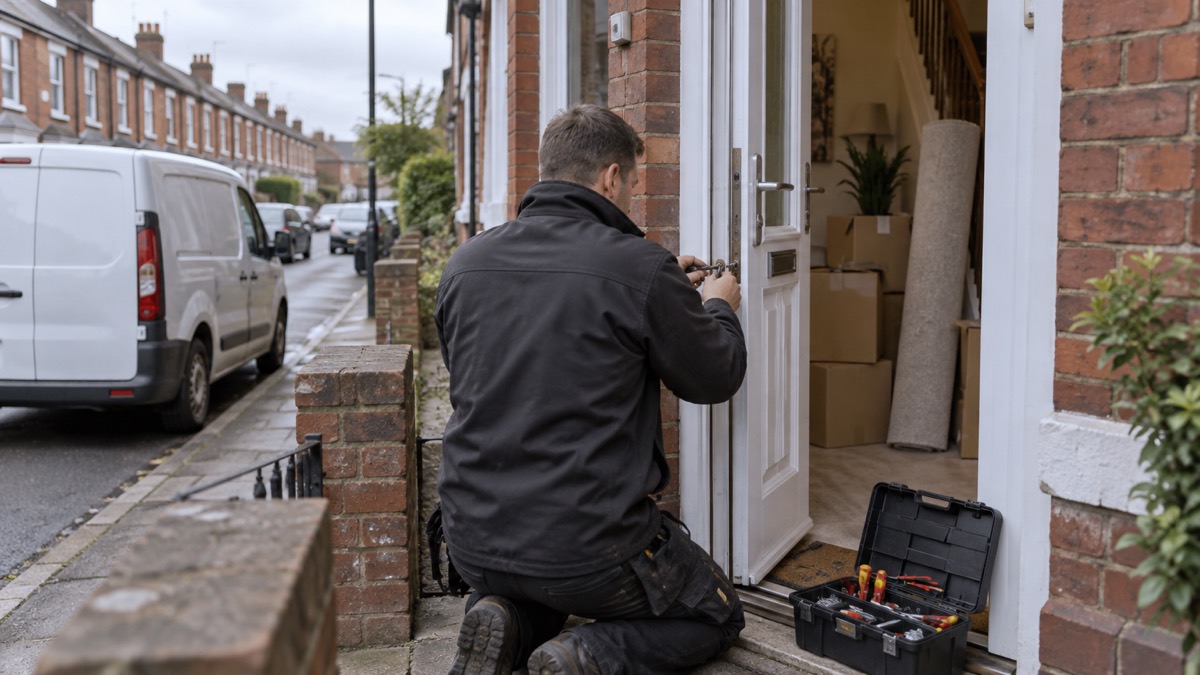
Moving into a new home is one of the moments when a household is most exposed. Police Scotland's guidance is blunt about it: a new build home or moving into a new home can be more at risk of break-in1. The previous occupants have gone, the keys have passed through several hands, and you do not yet know which door sticks or which window does not shut properly.
The first thing to settle is who holds a key. Police Scotland's advice is to change your locks if you want to1. That is a choice, not a legal duty, and if you rent it is a choice you make with your landlord rather than about them.
The second thing is to make sure the keys you do have are where your household can find them in a hurry. Fire services across the UK give the same instruction: keep door and window keys accessible, keep them out of the kitchen because that is where most home fires start, and make sure everyone living there knows where they are2. A new home is exactly when that knowledge has to be rebuilt from scratch.
Locks and keys checklist for your first days
Work through this in the first days, before the boxes are unpacked. Each line says what to do and why.
Changing your locks when you move in is your choice
The police position is permissive rather than prescriptive. Police Scotland's break-in guidance lists "change your locks (if you want to)" among the things you can do1. It does not say a move obliges you to change anything.
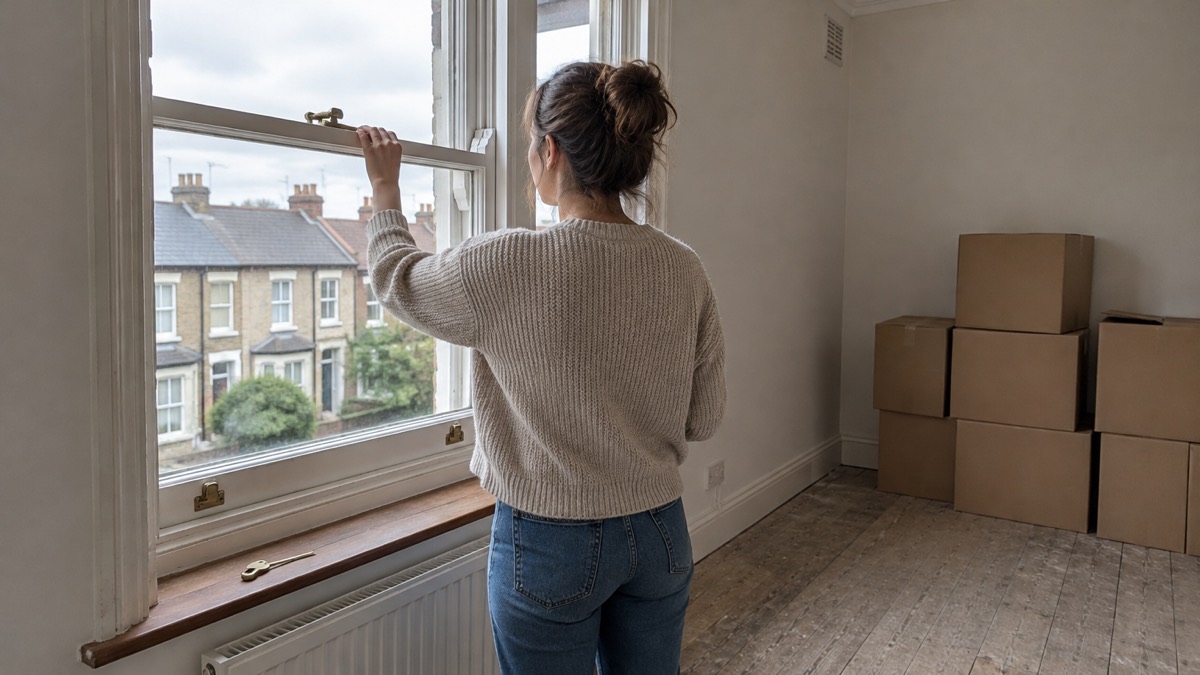
What should push you towards changing them is uncertainty about copies. Keys pass between sellers, agents, cleaners, tradespeople and previous tenants. If you cannot say with confidence how many sets exist, treat every key you did not have cut yourself as one someone else may hold.
There is a second reason to look at the locks even if you keep them: the hardware may be old or badly fitted. Many break-ins are carried out by simply smashing a weak door or forcing a vulnerable lock, so solid doors and secure locks matter more than the question of who has a key10. If the door is flimsy or the lock is loose in the frame, that is the priority.
If you do change them, do it properly. On older aluminium patio, sliding or bi-fold doors, if the cylinder lock protrudes beyond the frame handle, Avon and Somerset Police advise getting a member of the Master Locksmiths Association to change it to a shorter, more snap-resistant one6. A cylinder that sticks out is the part an attacker can attack.
Who may still hold a key to your new home
Make a list before you decide anything. The people and organisations who may hold a key to a home you have just moved into include:
- the seller or the previous tenant
- the letting agent, and any contractor they sent round
- a cleaner, gardener or carer employed by the previous household
- a family member or neighbour the previous occupants trusted
- a key safe on an outside wall, if one was left behind
Ask the seller or agent directly for every set, and count them. If the number does not match the locks, assume a copy exists.
Then decide who should hold a key in your own household. The emergency planning advice for disabled people and carers is to make arrangements with someone you trust to be able to access your home in an emergency, such as giving a family member, carer or trusted neighbour a spare key11. That is a decision about your circumstances, not a rule. If you use a key safe for carers or responders, the page on key safes covers where to fit one and what to check.
Whatever you decide, write it down: every key, who holds it, and where the spare sets are kept. Keep the record with your household papers and update it when a key is cut, lost or returned. If a key is lost in a council tenancy in Scotland, the tenant must arrange and pay for a lock change, so a record also tells you what you are responsible for12.
Renting or buying: what you may change, and who decides
The single biggest difference between renting and buying is permission. If you own your flat, your lease will still usually have a say.
| Situation | What the guidance says | Who to ask |
|---|---|---|
| Renting a flat | Do not change your front door without permission; if you rent, check with your landlord7 | Landlord or letting agent |
| Owning a flat | Your lease will set out what you may change; do not change the layout or structure without the building owner's permission13 | Building owner or managing agent |
| Leasehold, any door | Examine your lease and consult the landlord; you may be responsible for a suitable fire-rated door with compatible components14 | Landlord, and the lease itself |
| Renting business premises | You may need the landlord's permission to make changes such as installing a fire warning system2 | Landlord or building owner |
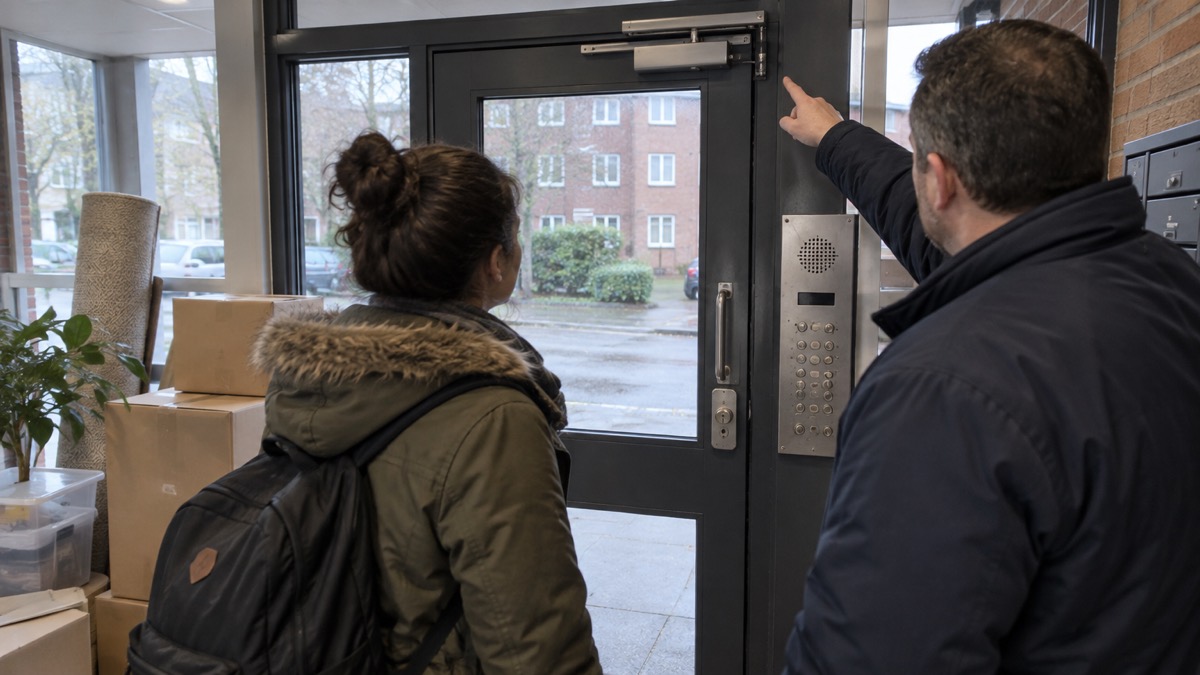
The flat front door is the awkward case. It is the door to your home, but in a block it is also part of the building's fire strategy. Fire and rescue guidance is explicit that you should not make changes to the layout or structure of your flat without permission from the building owner13, and that if you want to change your own flat's door you must make sure it meets the required standard, is installed correctly and is certified14. A door that meets a security standard but not the fire standard is not an improvement.
If you rent, put the request in writing and keep the reply. If the answer is no, ask whether the landlord will change the cylinder or fit a better lock at their cost, and record what was agreed. If you are a leasehold tenant, read the lease before you spend anything: it may already place the door obligation on you14.
Rekeying instead of replacing: what decides it
Rekeying changes the workings of a lock so the old keys no longer fit; replacing swaps the whole lock or door furniture. The guidance here does not compare the two on cost or effort. What it does say is what the door and frame need, and that is what should decide the job.
Start with the frame. If your door or window frames are damaged or coming away from the wall, get them fixed and securely fitted using strong screws or bolts, because good locks are useless otherwise8. A new cylinder in a rotten frame buys you very little.
Then match the hardware to the door:
- uPVC and multi-point locking doors: always double lock them by lifting up the handle and then turning and removing the key6.
- Aluminium patio, sliding or bi-fold doors: if the cylinder protrudes beyond the frame handle, have a shorter, more snap-resistant cylinder fitted by a Master Locksmiths Association member6.
- French doors: they should be fitted with mortise rack bolts or surface-mounted locking bolts, and should be rigid on installation8.
- New doors and windows: look for "PAS24" products, because they are harder to break, and make sure any glass is laminated1. The page on what PAS 24 means explains the standard.
- Door furniture: consider handles and escutcheons meeting the Domestic Buildings Gold standard, which are harder to break1.
If you are choosing between a key and a keyless lock for the new home, the comparison of smart locks and traditional key locks sets out what each does. Whatever you fit, the doors and locks guide covers cylinders and standards in more depth.
Window, patio and garage locks
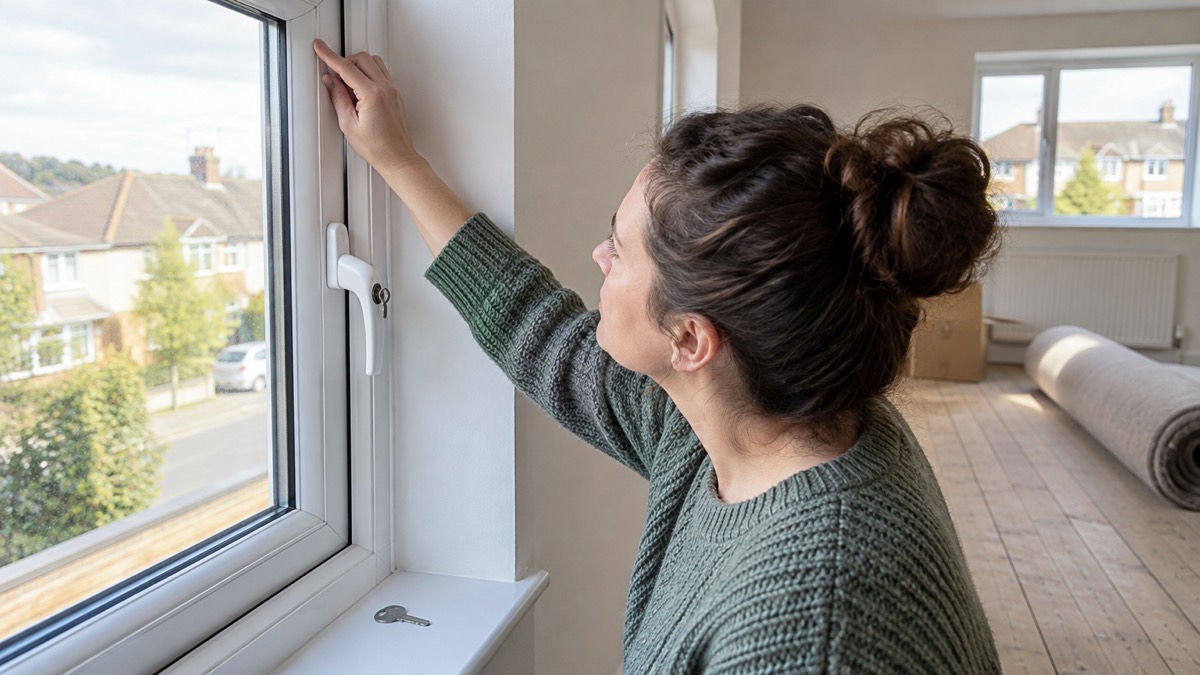
Windows are where a new household most often finds a gap. The test is simple and needs no tools: with the window closed, press each opening corner. If there is any movement, fit a suitable lock such as a push lock at each corner on the opening side; if there is no movement, a lock fitted to the centre of the opening frame will do8.
Two rules sit alongside the locks. First, security must not seal an escape route: consider installing locks or security features on your windows that give you a balance between security and ease of opening15. Second, if you have window locks, always keep a key upstairs, particularly if you are in a bungalow, so the route out is not locked5.
Patio doors need their own thought. Unless the doors have a multi-locking system, it is best to fit extra locks, as some patio doors can be lifted off their track8. The page on stopping a patio door being lifted off its track goes further.
Garden gates and outbuildings matter too: make sure gates are not broken and can be locked in two different places1. For the door between an attached garage and the house, the principle is that it is a door into the home. The page on the door between your garage and house covers how to treat it.
Keeping keys where everyone can find them
A lock change is only half the job. The other half is making sure the right people can find a key when seconds matter, and the wrong people cannot.
Fire and rescue services give a consistent instruction. Keep door and window keys accessible, avoid keeping them in the kitchen because that is where most fires in the home start, and make sure everyone in the flat knows where they are3. Keep them somewhere close to the windows and doors, but with security in mind2. Make sure everyone in the house knows where the window and door keys are kept16. Keep door and window keys where everyone can find them as part of the bedtime routine17.
That last point extends to visitors. Tell guests who are staying overnight where the door keys are kept, in case they need to escape18. If you have a carer or support worker in the home, tell them too19.
"Keep keys where you can find them in case you need them in a hurry."
There is a tension to manage: keys by the door are easy to find in a fire and easy to fish through a letterbox. The letterbox warning is the reason to keep keys out of reach of the door itself, especially if you leave a key in the lock8. A hook high on a wall near the door, out of sight of the glass, is the compromise most households settle on.
Keeping a record of keyholders
A written record does three things: it tells you how many keys exist, it tells you who to contact if one is lost, and it tells a future you what was changed and when.
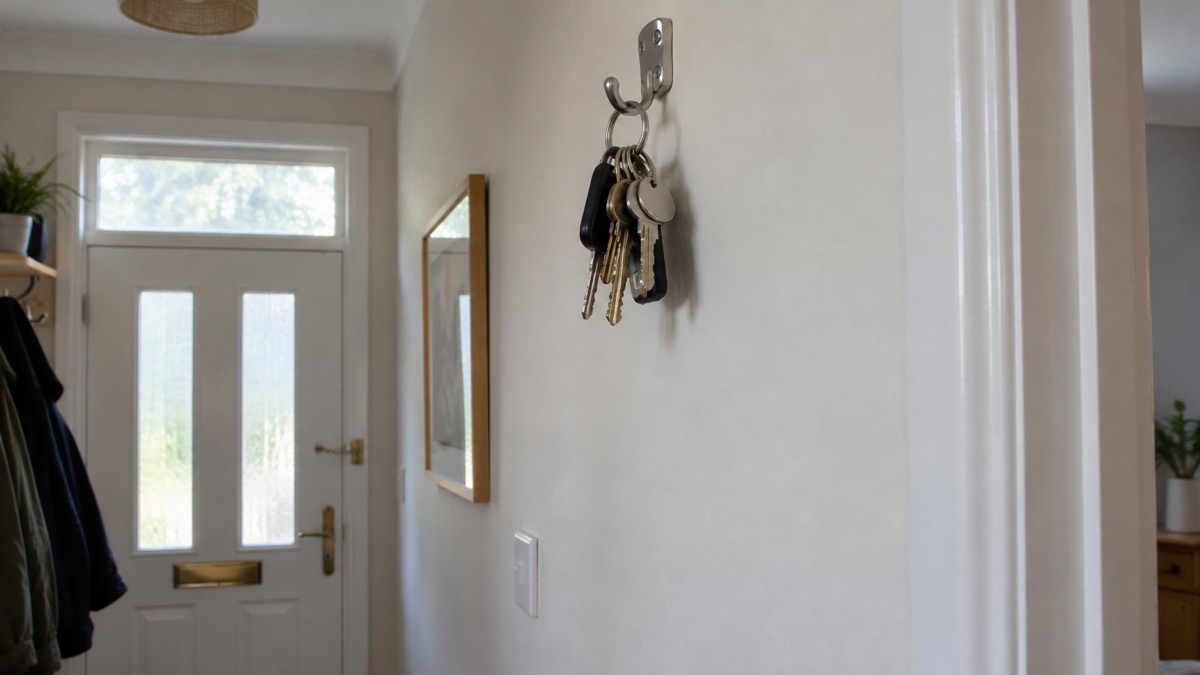
Keep it simple. One page listing each external door and window lock, the number of keys cut for it, who holds each one, and where the spare sets are kept. Add the date of any lock change and who did the work. Store it with your household papers, not on the key ring.
Then keep the record current. If you give a neighbour a spare, write it down. If a key is returned, write that down too. If you move again, the record is the first thing the next household will want from you.
Two related habits are worth building at the same time. Keep spare keys to your home and car at home in case of an emergency, as part of your emergency kit20. And if your circumstances change, tell the people who need to know: contact your landlord, managing agent or building owner if your mobility or health changes, you no longer need help, you move to a different home, or your contact details change22. That last trigger is exactly the situation of a move.
For the wider picture, the home security guide covers the rest of the house, and the keys guide covers spares, hiding places and lost sets in more detail. If you are locked out during the move itself, the page on being locked out explains what to do and how to choose a locksmith.
Sources (22)
- Break-in and housebreaking, Police Scotland, 2026-11-02
- Fire safety for tenants, Devon and Somerset Fire and Rescue Service, 2026
- Fire safety information for residents living in flats, Greater Manchester Fire and Rescue Service, 2026-10-29
- Flats and apartments, Greater Manchester Fire and Rescue Service, 2026-05-20
- Flooding guide for older communities, Scottish Environment Protection Agency, 2026-10-29
- Door security, Avon and Somerset Police, 2026-11-02
- Fire doors and why they are important, Greater Manchester Fire and Rescue Service, 2026-10-25
- Securing doors and windows, nidirect, 2024-08-27
- Emergency kit checklist - NPT Council, NPT Council (Neath Port Talbot County Borough Council)
- While you are away, Mid and West Wales Fire and Rescue Service, 2026-10-29
- Advice for disabled persons and carers, Be Ready, 2026-10-20
- Keeping your home safe and secure, Highland Council, 2025-08-12
- High rise homes, flats and apartments, Cheshire Fire and Rescue Service
- Fire doors | London Fire Brigade, London Fire Brigade
- Fire escape plan, Warwickshire County Council, 2026-10-29
- Student safety, Devon and Somerset Fire and Rescue Service, 2026
- Bedtime routine, Greater Manchester Fire and Rescue Service, 2026-10-29
- Fire safety when celebrating, government guidance, 2021-11
- Fire safety for carers, Devon and Somerset Fire and Rescue Service, 2026
- Emergency pack, Lancashire Prepared, 2026-10-29
- Emergency kit, Ready Scotland, 2026-10-22
- Residential personal emergency evacuation plan: a guide, London Fire Brigade, 2026-10-25
 After a Break-In Checklist
 Holiday Security Checklist
 Accounts to Protect With 2-Step