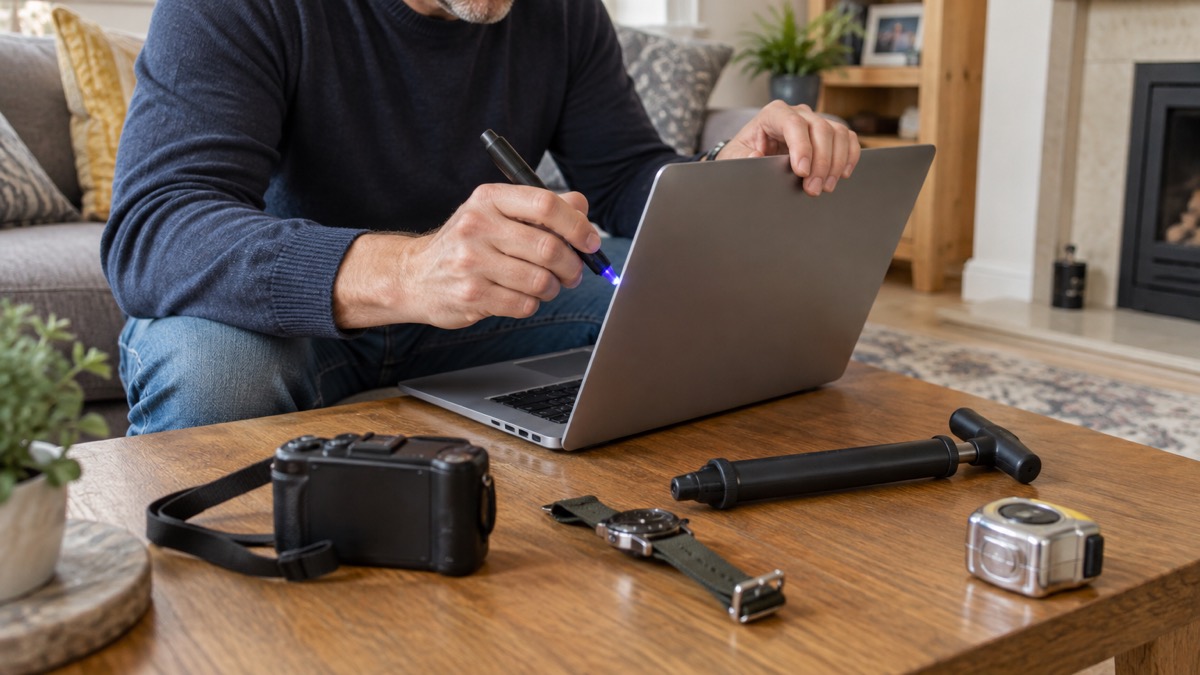
If a burglar takes your bike, your laptop or your grandmother's jewellery, the single thing that most improves your chances of getting it back, and of having your insurance claim accepted, is proof of what you own. Police advice is simple and cheap to follow: use a UV pen to write your house number and postcode on your valuables, unless you have a DNA marking kit1. Alongside that, take photos of your property and make a list of your belongings to help with future insurance claims2. Neither step takes long, and both are best done before anything goes wrong, not after.
Marking works because it links an item to your address. When police recover stolen property, a postcode and house number written on it lets them identify the owner and return it3. A record works because it turns a vague claim, "they took my camera", into a documented one. This page covers what to mark, the different ways to mark it, how to keep a record, how to register appliances for free so you hear about safety recalls, and what to do with all of it if something is lost or stolen.
What property marking does for your household
Property marking gives your belongings two things they otherwise lack: a link back to you, and a way to prove they are yours. When police recover stolen goods, they face the problem of working out who they belong to. An item carrying your postcode and house number answers that question directly. Police advice for bicycles is to indelibly mark your bike with your postcode and house number so police can identify the owner if it is stolen and recovered3. The same logic applies to garden equipment and anything kept in a shed: official home safety advice is that valuables should be marked with your postcode3.
The second benefit is with your insurer. A claim for stolen or damaged property goes far more smoothly when you can show what you owned. Official flood guidance in Wales advises taking photos of your property and making a list of your belongings to help with future insurance claims2, and the same preparation serves a burglary claim just as well. After an incident, official resilience guidance adds, take pictures of any damage which has occurred and keep records of repairs and cleaning costs, as this may help your insurance claim6.
Marking also has a place beyond theft. Emergency preparedness guidance advises marking household utilities clearly so you can find them quickly in an emergency7, and making sure your home's name or number is clearly visible from the road so the emergency services can locate you should a fire occur8. Rural households are given the same advice: make sure your home number or name is clearly visible from the road or main access point so firefighters can easily locate your address in the event of a fire9. If your property is spread over a large area, rural fire guidance suggests using an app such as Ordnance Survey Locate or What3words to give the exact location10.
Ways to mark your valuables
There are two main household methods, and police advice sets them side by side: use a UV pen to write your house number and postcode on your valuables, if you don't have a DNA marking kit1. Both put the same information on the item, your house number and postcode, in a form that links it to your address.
| Method | What it is | What it suits | Who advises it |
|---|---|---|---|
| UV pen | An ultraviolet pen used to write your house number and postcode on your valuables | Valuables, if you don't have a DNA marking kit1 | Police Scotland1 |
| DNA marking kit | A marking kit that removes the need for a UV pen | Households that have one, as the UV pen advice applies only if you don't1 | Police Scotland1 |
| Postcode and house number | Marking your valuables with your postcode and house number | Gifts and expensive items kept at home3 | PSNI3 |
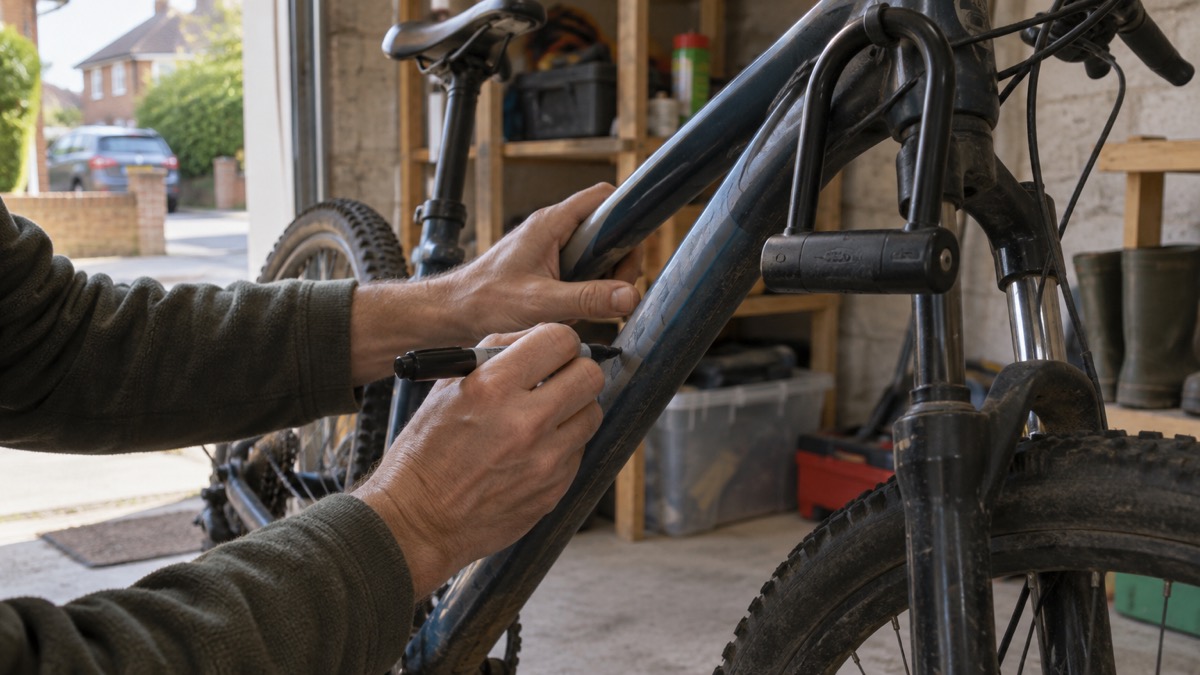
An indelible marker is the everyday version of forensic marking: the PSNI's home safety advice is to indelibly mark your bike with your postcode and house number3, and its garden security advice is to mark valuables with your postcode3. A visible mark on a bike frame or a lawnmower does the same job as an invisible one on a necklace. Note that a standard Public Access Trauma first aid kit, as specified in official counter-terrorism guidance, includes two indelible marker pens among its contents11, which reflects how commonly useful a permanent marker is around the home.
Marking is also seasonal. At Christmas, when homes hold more new and valuable items than usual, PSNI advice is to lock windows and doors, keep gifts and expensive items out of view, mark valuables with postcode and house number, and use timer switches for lights when the home is empty12. New gifts are the ideal moment to mark: the item is with you, you know what you paid, and you can photograph it in new condition before it joins the general clutter of the house.
Keeping a record of what you own
Marking proves an item is yours. A record proves it existed. The two work together, and the record needs three parts: photographs, a written list, and somewhere safe to keep both.
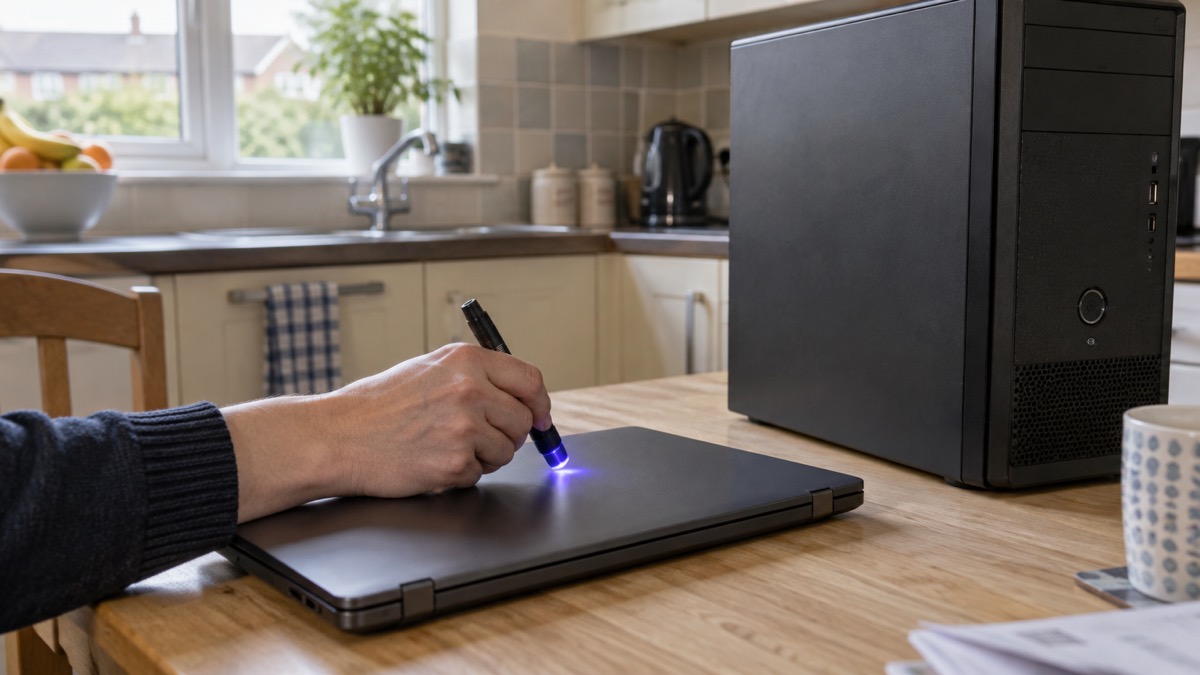
Official flood guidance from Natural Resources Wales advises taking photos of your property and making a list of your belongings to help with future insurance claims2. Photograph each valuable item clearly, from more than one angle where it helps, and include any distinguishing features. Photograph the marks you have added as well, so you can describe to police exactly where on the item your postcode is written. For items you have marked with a UV pen, note in your list where the invisible marking sits, because you will not be able to see it yourself without a UV light.
Keep the record somewhere it cannot be lost in the same event that takes the valuables. A copy stored online, or with a family member, survives a burglary, a fire or a flood that destroys a paper folder in the affected house. The same principle applies to the documents themselves: flood preparation guidance advises storing important documents, for example birth certificates, in resealable water-tight plastic bags to help protect them from water damage13.
Your record should also cover where valuables are kept, because that changes what survives an emergency. Met Office advice for heavy rain is to store valuables up high, including electrical devices, important documents and furniture14, and the same advice is given for thunderstorms15. London resilience guidance adds: think about moving items with sentimental value, as well as items you spent a lot of money on, upstairs or to safety16. Natural Resources Wales advises storing valuable or sentimental items up high all year round, not just when a warning is issued17, and UK government flood guidance suggests keeping them in a high place such as the top shelf or drawer of a cabinet13. A record that notes "laptop kept in the ground-floor study" tells you, next time a flood warning comes, exactly what to move first.
Registering your appliances, free of charge
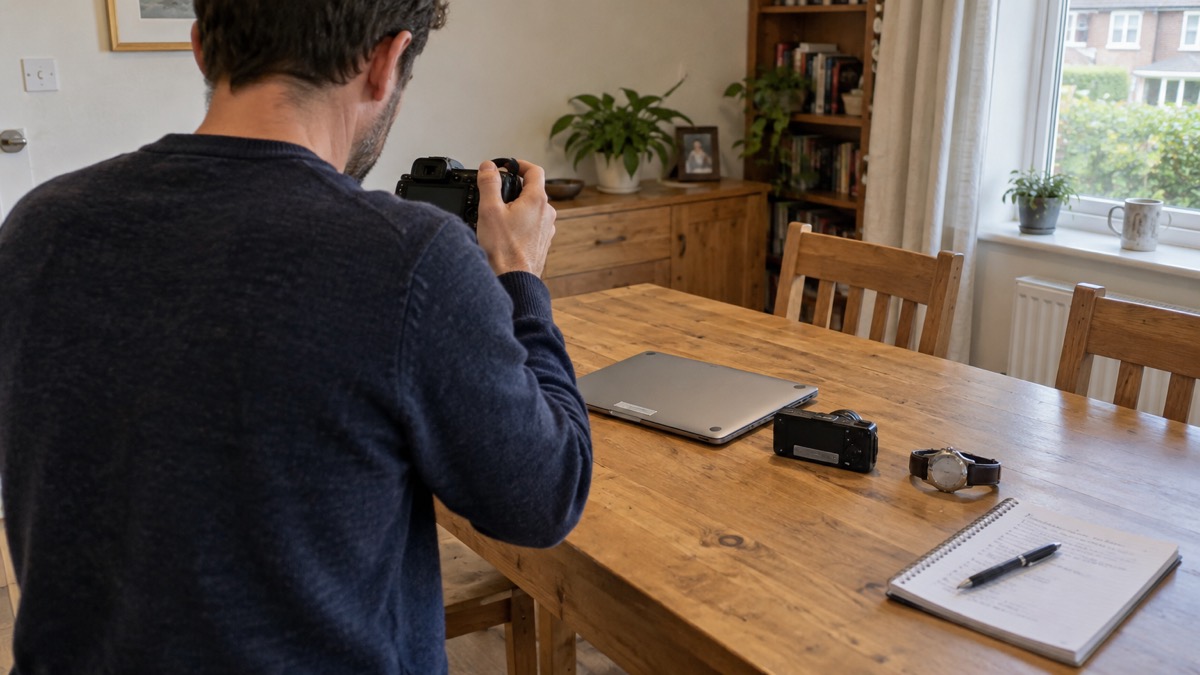
Property marking covers what thieves take. Registration covers what fails. White goods and kitchen appliances can develop faults serious enough to trigger a safety recall, and a manufacturer can only warn you if it knows you own the machine.
Fire and rescue services across the UK give the same instruction. Cheshire Fire and Rescue Service advises: register your appliance so manufacturers can contact you about faults or recalls18. North Yorkshire Fire and Rescue Service advises always registering your white goods appliances to enable the receipt of updates about appliance faults and safety recalls19. The address is registermyappliance.org.uk: Cheshire's Safe and Well booklet advises registering your appliances there to receive free recall alerts if there is a problem with your appliance18, and the Scottish Fire and Rescue Service's fire safety guide advises registering your fridge/freezer and all your white goods at www.registermyappliance.org.uk so you will know if a safety issue is identified20.
Registration is free and can benefit you directly. Greater Manchester Fire and Rescue Service sums up the purpose: register your appliance with the Association of Manufacturers of Domestic Appliances for a safer home5.
Most households have not done it. When North Yorkshire Fire and Rescue Service promoted registration, it noted that less than a third of large white goods were registered when they were purchased, an average of 31%4, and that making sure appliances are registered with the manufacturer ranked at number eight of nine home safety actions in public awareness4. If your washing machine, tumble dryer, fridge or freezer is unregistered, this is the easiest item on the whole page to put right.
Keeping your record up to date
A record that is out of date is nearly as bad as no record. Three things pull it out of date: new purchases, items you sell or give away, and moving house.
Set a habit of adding to the record when something arrives. A new phone, bike or piece of jewellery goes into the photographs and the list the week you get it, and gets marked at the same time. Christmas is the natural moment for a full pass, since that is when most households acquire the most new valuables at once12. If clutter has built up, Warwickshire's hoarding and fire safety guidance offers a method that suits record-keeping too: gradually declutter living spaces, focusing on one room or area at a time, sorting belongings into categories like keep, donate, and discard21. Working through one room at a time lets you photograph and list what you are keeping as you go.
Moving house needs its own checklist. Update your details if you or your appliances move, so manufacturers can still reach you about faults and recalls5. And your markings need attention too: a postcode and house number written on your valuables will point to your old address, so re-mark items with the new details and update your photographs and list to match.
If something is lost or stolen: using your record
The moment something is stolen, your record becomes the working document for two audiences: the police and your insurer.
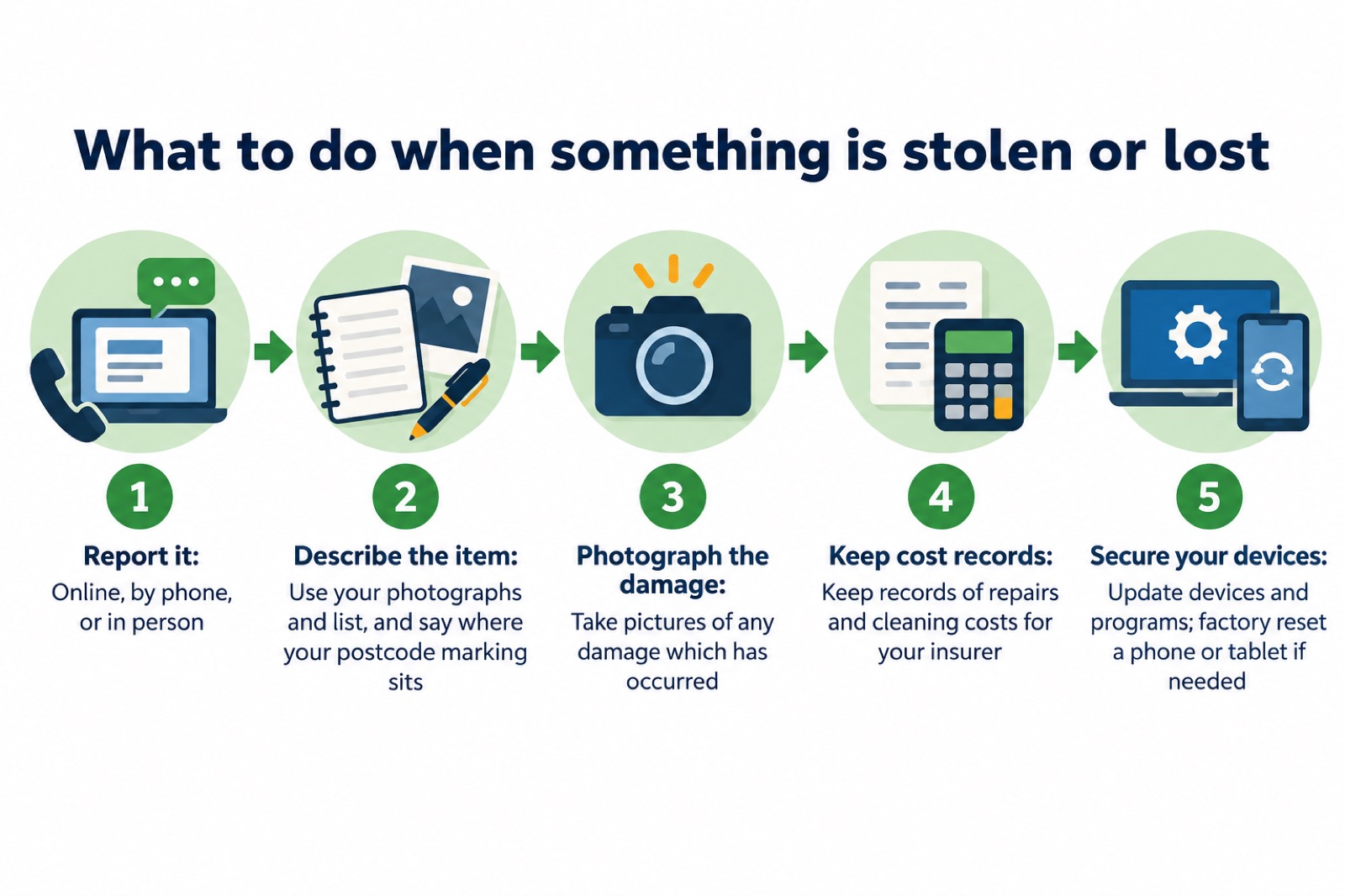
Report it first. Police Scotland advises that you can report a break-in or theft online, by phone, or in person1. Give the police the specifics your record holds: what the item is, its distinguishing features, and where on it your postcode and house number are written. That marking is what lets police identify you as the owner if the property is recovered3. If your home will be left empty for a period after the incident, PSNI home safety advice is to inform local police of the relevant dates your property will be vacant3.
Then turn to the claim. Official resilience guidance is to take pictures of any damage which has occurred and keep records of repairs and cleaning costs, as this may help your insurance claim6. Your photographs and list of belongings, prepared in advance, are what you use to tell the insurer exactly what is missing and what condition it was in. Without them you are estimating; with them you are documenting.
For electronics, there is a further step if a device rather than the whole item goes astray. The National Cyber Security Centre advises updating your device and programs on a PC or laptop22. For a phone or tablet, its guidance is that antivirus products do not work in the same way as they do on PCs and laptops, and the safest solution is to do a factory reset, usually found in settings22. If a device is stolen and you later recover it, or you buy a replacement and want to secure it, that is the sequence to follow.
Where this fits with the rest of home security
Marking and recording are the recovery side of home security: they determine what happens after a loss. The prevention side is covered elsewhere on this site. How burglars choose a home, and what puts them off, is covered in how burglars choose a home. Making the house look occupied, which PSNI advice pairs with marking valuables through the use of timer switches for lights when the home is empty12, is covered in making your house look occupied and in leaving your home while you are on holiday.
For the items themselves, how to keep your valuables safe from thieves covers where to keep them, and home safes covers fire and burglary ratings if you are storing high-value items. If the worst has already happened, coming home to a break-in covers what to do first, and after a burglary covers crime numbers, insurers, repairs and support. Households in Scotland and Northern Ireland will find reporting routes and support set out in Scotland and Northern Ireland: reporting crime and getting support.
Sources (22)
- Break-in and housebreaking advice, Police Scotland, 2026
- Preparing for a flood, Natural Resources Wales, 2026
- Home safety advice leaflet, Police Service of Northern Ireland, 2022
- Register My Appliance, North Yorkshire Fire and Rescue Service, 2018
- Maintain appliances and recalls, Greater Manchester Fire and Rescue Service, 2026
- Prepare yourself, Greater Manchester Combined Authority, 2026
- Prepared personal resilience, Scottish Borders Council, 2026
- Reduce the risk of wildfire damage to your property, Hampshire and Isle of Wight Fire and Rescue Service, 2026
- Wildfires, Devon and Somerset Fire and Rescue Service, 2026
- Rural wildfire safety, Devon and Somerset Fire and Rescue Service, 2026
- Public access trauma first aid kits and equipment, ProtectUK, 2026
- Christmas safety advice, Police Service of Northern Ireland, 2026
- Flooding: be informed about hazards, UK Government Prepare Campaign, 2026
- Stay safe in heavy rain, Met Office, 2026
- Stay safe in a thunderstorm, Met Office, 2026
- Preparing yourself for flooding incidents, Greater London Authority, 2026
- Preparing for a flood, Natural Resources Wales, 2026
- Safe and Well booklet, Cheshire Fire and Rescue Service, 2026
- Kitchen safety, North Yorkshire Fire and Rescue Service, 2026
- Your guide to fire safety, Scottish Fire and Rescue Service, 2023
- Hoarding and fire safety, Warwickshire County Council, 2026
- Infected devices: how to respond and recover, National Cyber Security Centre, 2026
 After a Break-In Checklist
 Holiday Security Checklist
 Moving Home Locks Checklist
 After a Burglary
 Bogus Callers
 Coming Home to a Break-In
 Catalytic Converter Theft
 Riots and Disorder Near Home
 Securing a Damaged Home
 Dogs as a Burglar Deterrent
 Doorstep Selling and Your Rights
 Empty Homes and Long Absences
 Leaving Home on Holiday
 How Burglars Choose a Home
 Home Insurance Conditions