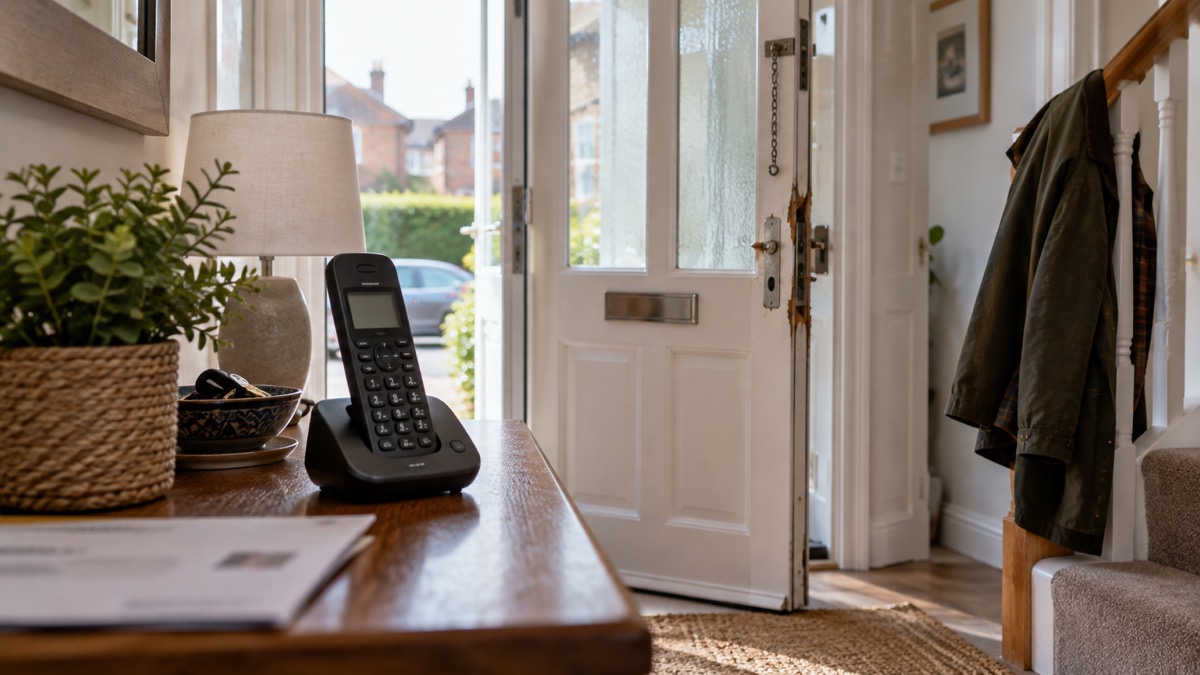
If a crime is happening right now, or someone is injured, being threatened or in danger, phone 999. That is the advice for Scotland from emergency planning guidance, and it applies equally in Northern Ireland: 999 is for an immediate response, for example when a crime is happening, when someone suspected of a crime is nearby, or when someone is hurt or at risk1. If the crime has already happened and no one is in immediate danger, use the non-emergency number instead. In Scotland that is 101, the single number that replaced all other non-emergency police numbers1. In Northern Ireland you can also call 101, or report online through the Police Service of Northern Ireland2.
This page sets out how households in Scotland and Northern Ireland report crime, what to do in the first hours after a break-in, where victims and witnesses get support, and how the two nations' arrangements differ from each other and from England and Wales. The single biggest difference to know straight away: fraud reporting. In England, Wales and Northern Ireland, fraud is reported to the national Report Fraud centre, but in Scotland you report it to Police Scotland yourself, usually on 1013.
Reporting a break-in to Police Scotland: 999 or 101
The choice between the two numbers comes down to one question: is it still happening? Police Scotland guidance is to phone 999 in an emergency, meaning when an immediate response is needed because a crime is happening, someone suspected of a crime is nearby, or someone is injured, being threatened or in danger1. So if you come home and can hear someone inside, or you see an intruder leaving as you arrive, that is a 999 call. The same applies if a neighbour rings you to say someone is in your house now.
If you discover a break-in that has already happened, the house is empty and no one is at risk, use 101. It exists to report less urgent crime, to contact the police with a general enquiry, or to speak to a local officer, and it covers things like a stolen car, damaged property, suspected drug use or dealing, minor traffic collisions, or information about a crime in your area1. A housebreaking you have just discovered, with the intruder gone, fits that category. Police Scotland's own housebreaking guidance says you can report it online, by phone, or in person7.
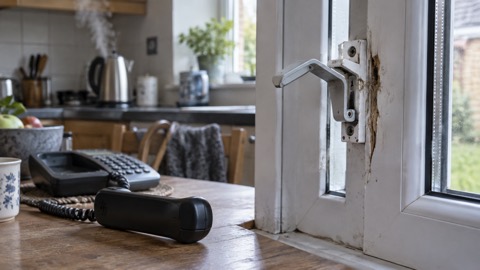
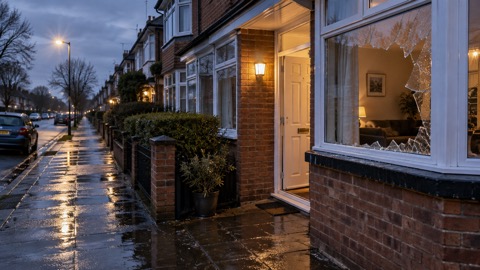
One instruction from Police Scotland matters more than any other in the first minutes: if you come home and think someone has broken in, you should not go inside, in case the intruder is still there7. Stay outside, or back in your car, and phone. If it turns out to be a 101 situation, the operator will take the report and arrange for an officer to attend. Our page on coming home to a break-in goes through the first steps in order, and how police respond to burglaries explains what happens after you report it.
Reporting a crime in Northern Ireland: 999, 101 or online
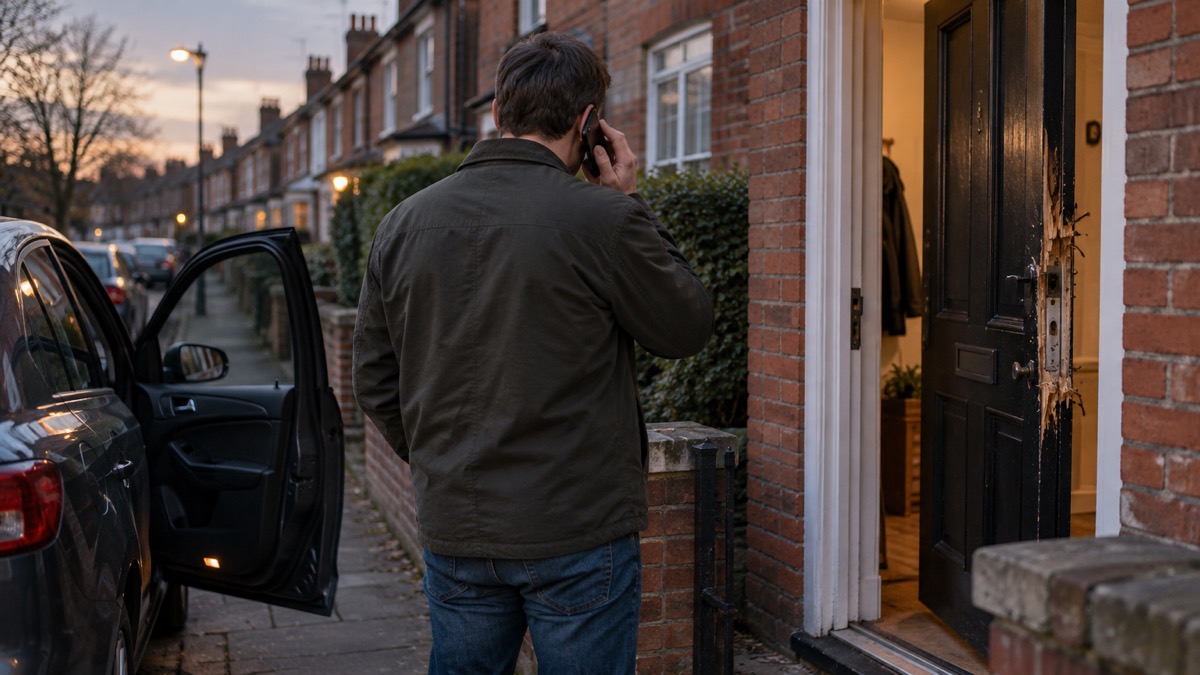
Northern Ireland is policed by a single force, the Police Service of Northern Ireland (PSNI), and the same 999 rule applies: if you can safely do so, telephone the police on 999 when a crime is in progress or someone is at risk2. The PSNI's own protection booklet tells people in Northern Ireland they can also report directly by calling 101 or visiting www.psni.police.uk/makeareport2. The nidirect government service confirms both routes: report online or call 101 if you want to report a minor crime or incident8.
The underlying duty is the same as anywhere in the UK: if you have witnessed a crime, or a crime has been committed against you, tell the police8. That includes crimes against your home, your car and your property. For concerns about the exploitation, trafficking or safeguarding of children, nidirect advises contacting the PSNI by phoning 101 or, in an emergency, 9998.
You do not have to phone if you would rather not. The online reporting route through the PSNI website suits crimes that are not urgent, where you can write down what happened in your own time, and it produces the same record as a phone report. If you prefer to speak to someone face to face, you can also go to any police station or government office, where you will be able to get help and support8. For a fuller picture of how a burglary report is handled, see how police respond to burglaries and intruder alarms.
Report it quickly, even for someone else
Speed matters more than certainty. You do not need to be sure a crime has occurred, or be the victim yourself, before you report it. If you see someone acting suspiciously around a neighbour's property, the PSNI's home safety advice is to note down details such as a description or a car registration and contact the police9. A registration number and a rough description of a person can be enough for officers to connect several reports together.
You can also report on behalf of someone who cannot or will not do it themselves. An elderly relative who has been targeted by a bogus caller, or a neighbour who is frightened of reprisals, can be helped by your call. In Scotland, if you think what happened might have been a hate crime, Police Scotland directs people to a third party reporting centre, which exists precisely so that someone other than the victim can make the report10. Parcel theft is another example where a quick report helps: contact the police to get a crime reference number, and check with neighbours or for CCTV footage11. The crime reference number is what your insurer and any courier will ask for, so it is worth getting even for a low-value parcel.
If you witnessed a burglary but want no part in being identified, you can pass information anonymously to the independent charity Crimestoppers on 0800 555 111 or via Crimestoppers-uk.org6. Crimestoppers also takes anonymous reports about scammers and fraudsters in Scotland5. Our page on reporting a burglary anonymously explains how that works.
Fraud, scams and hacked accounts in Scotland
This is where Scotland genuinely differs from the rest of the UK, and getting it wrong means your report goes to the wrong place. If you are in Scotland and you have lost money because of an online scam or fraud, report the crime to Police Scotland4. The UK government's reporting guidance is explicit on the split: Report Fraud, the national reporting centre, serves England, Wales and Northern Ireland, while Scotland reports to Police Scotland4. The National Cyber Security Centre (NCSC) gives the same instruction: tell your bank and report it as a crime to Report Fraud for England, Wales and Northern Ireland, or to Police Scotland for Scotland12.
In practice, for a Scottish household:
- Tell your bank straight away if money has gone. The guidance for hacked accounts says to tell your bank straight away if you've lost money12.
- Report to Police Scotland, normally by calling 10113. If you're in Scotland and you've lost money because of an online scam or fraud, report the crime to Police Scotland13.
- Report the scam message itself. If you have lost money, tell your bank straight away and report it as a crime4.
- Recover your account safely. If someone has hacked an account, Police Scotland advises following the NCSC steps to recover a hacked account and reading how to protect the account from future hacks14.
If you have not lost money but have received a phishing message, you can still report it, and doing so helps the NCSC and law enforcement reduce criminal activity13. Reporting a scam website through the NCSC's reporting route gets it looked at for takedown. For a wider look at protecting your household's accounts, see our guide to camera and doorbell accounts and the section on cyber attacks.
Support for victims and witnesses of crime
Reporting the crime is one thing; coping with it is another, and support exists in both nations whether or not the police ever charge anyone. Victim Support Scotland gives free, confidential support to victims and witnesses of crime, on 0800 160 19855. Police Scotland's own housebreaking guidance names the same service, describing it as giving support and information to anyone affected by crime or who has to go to court, with the same phone number7. You can call it after a burglary, after a scam, or as a witness to something that happened to someone else.
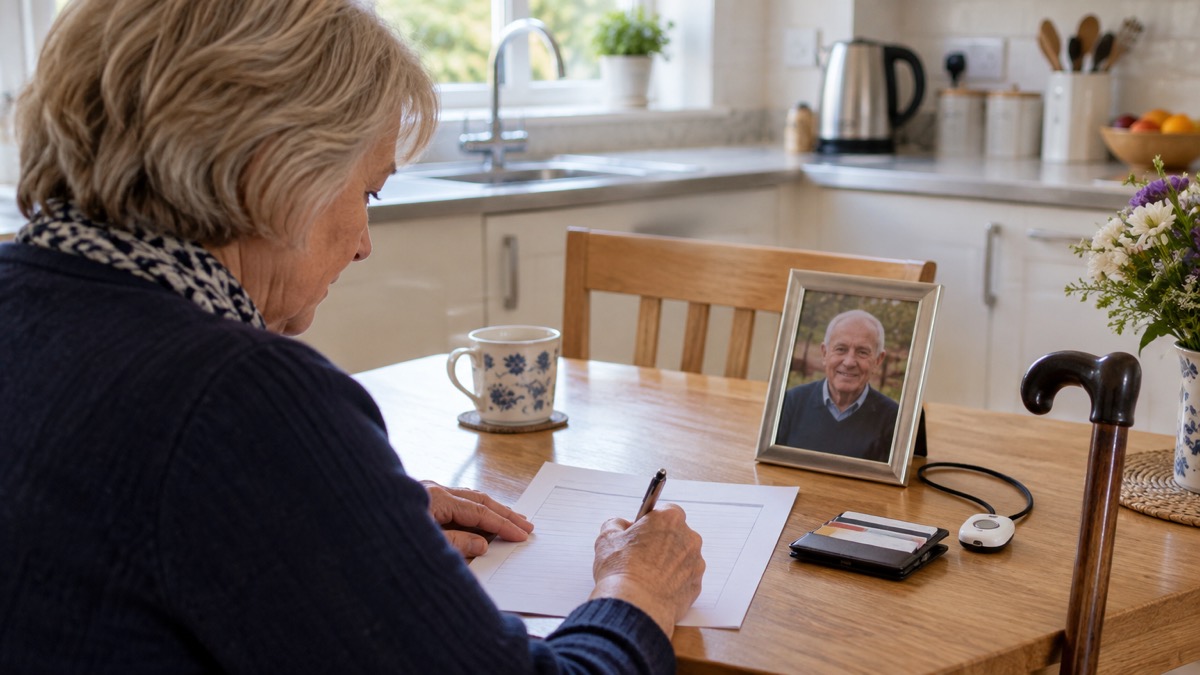
One scheme worth knowing about before it is ever needed is the Herbert Protocol. It is a simple risk reduction tool: a pre-completed form containing vital information about a person with dementia, which can be given to police at the earliest opportunity if that person is reported missing15. The scheme is named after George Herbert, a war veteran of the Normandy landings, who lived with dementia and died whilst missing, trying to find his childhood home16. The form records things like places of importance to the person, often visited places, health issues and places they have been found in the past17.
In Scotland, the Herbert Protocol was introduced in 2017 and has since been used many times to trace missing people with dementia and return them home18. It is being rolled out nationwide, and it is open to anyone living with dementia, or supporting someone with a dementia diagnosis, who is worried about the possible risk of going missing19. Families are asked to download the Herbert Protocol form from the Police Scotland website and complete it in advance18. In Northern Ireland, the scheme was launched by the PSNI in partnership with Dementia NI, local Health and Social Care Boards and Policing and Community Safety Partnerships15. Carers, family members and friends can complete a form in advance recording key information such as medication required, mobile numbers, places previously located and a photograph20.
*A Herbert Protocol form filled in before it is needed: the details that help police find a missing person with dementia quickly.
Other support routes worth knowing:
- Victim Support Scotland: 0800 160 1985, free, confidential, for victims and witnesses5.
- Crimestoppers: 0800 555 111, anonymous information about burglary or other crime6.
- Advice Direct Scotland: 0808 164 6000, consumer rights advice5.
- Care and Repair Scotland: help and advice for older and disabled people to feel safe and secure in their homes5.
Keeping your home secure after a break-in
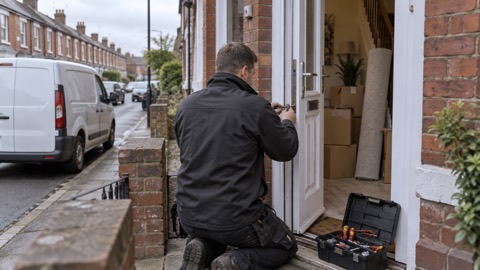
Once the police have been and gone, the job is to close the way in. A break-in usually means a damaged door, window or lock, and until that is repaired your home is weaker than it was before. The PSNI's burglary prevention advice includes informing local police of the relevant dates your property will be vacant9, which matters if you have to move out temporarily for repairs, and our page on making a damaged home safe from intruders covers the immediate steps.
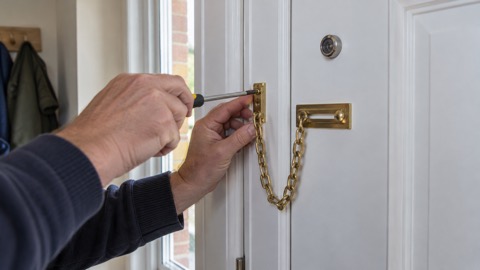
Repair and hardening choices are worth making carefully rather than in a rush. Gloucestershire Constabulary's burglary advice, which reflects standard police guidance, is to use and upgrade locks to protect garages and sheds, consider installing alarms, and put away wheelie bins, tools and heavy objects that could help a burglar get in6. After a break-in, ask whoever repairs the door to fit a lock and cylinder that meets current standards rather than simply replacing like for like; our pages on doors and locks and what British Standard your door lock should meet set out what to look for.
In Scotland there is also a legal duty that touches on home safety after any break-in: every home in Scotland must have interlinked fire alarms21. As of February 2022, all Scottish homes need interlinked alarms, meaning if one goes off they all go off21. The requirement is one smoke alarm in the living room or the room you use most, one smoke alarm in every hallway or landing, and one heat alarm in the kitchen21. A break-in that involved forced entry near wiring, or a repair that opens up walls, is a sensible moment to check the alarms still work and are interlinked.
Before you go away: alarms, accounts and alerts
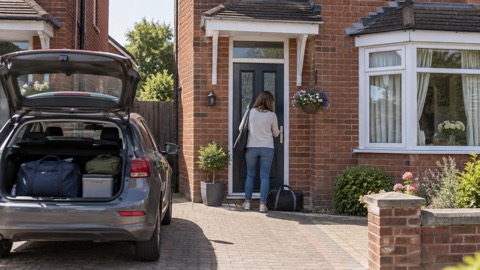
The nidirect securing your home guidance gives a holiday checklist that applies across Northern Ireland and is sound practice anywhere: check and lock your doors, windows, sheds and garages, put the burglar alarm on, ask someone trusted to check the house regularly and bring in bins and post, and use timers on lights22. Police Scotland gave West Lothian residents the same message in 2023: if you are leaving your home, ensure all locks are working and any alarm systems, motion lighting and CCTV are activated23.
Social media is the modern weak point. Nidirect warns that with a public profile, talking about your holiday could tell an opportunistic burglar that your home will be empty for a couple of weeks22. Police Scotland's advice is blunter: do not advertise being on holiday on social media, and ask people to check on your property if you can23. Post the photographs when you are back. Our page on whether you should post about your holiday on social media works through the settings that make a difference.
Before you travel, a short routine:
- Lock doors, windows, sheds and garages, and set the burglar alarm22.
- Ask a trusted person to check the house regularly and bring in bins and post22.
- Put timers on lights so the house looks occupied22.
- Check locks work and activate alarms, motion lighting and CCTV23.
- Say nothing about the trip on public social media23.
- Consider telling local police the dates your property will be vacant9.
For the full version, see our holiday checklist and the guide to leaving your home while you are on holiday.
Help to make an older or disabled person's home safe in Scotland
Scotland has a dedicated body for this. Care and Repair Scotland offers help and advice on assisting the aged and disabled to feel safe and secure in their homes5. For lower income elderly or disabled homeowners, there may be support from Care and Repair Scotland to install alarms, and the guidance says to contact your local Care and Repair service for more information24. That support is aimed at meeting the interlinked fire alarm standard, so it is worth asking about at the same time as any security work.
The Scottish fire and smoke alarm law is the reason many older homeowners seek this help. Since February 2022 every home in Scotland must have interlinked alarms21. For an older person living alone, the cost and the fitting can both be obstacles, which is exactly what the Care and Repair scheme addresses5.
Northern Ireland has its own equivalent for fire safety. The Northern Ireland Fire and Rescue Service (NIFRS) offers a free in person Home Fire Safety Check, which you can request by phone on 028 9266 422125. The phone-requested in person check is intended for people who fit NIFRS Person at Risk criteria, have no access to the internet, or are unable to complete the online self-assessment25. NIFRS has urged people to check on those most at risk following a rise in house fire fatalities25. For security rather than fire safety, the PSNI's home safety leaflet is the starting point9, and our page on key safes for letting carers in covers the access side.
Checking a doorstep caller is genuine in Northern Ireland
Doorstep criminals rely on the householder taking a badge or a phone number at face value. The police advice is to check the identity of the caller by calling the company they claim to be from, using the number provided on an official website, in a phone book or on a utility bill, and never a phone number provided by the caller, because that number may be bogus11. A genuine caller will not mind waiting while you verify them; a bogus one will pressure you to decide quickly.
The routine, whenever an unexpected caller claims to be from a utility, a trades company or a public body:
- Close the door or keep it on the chain.
- Find the company's number yourself, from a bill, a phone book or its official website11.
- Call that number and ask whether the caller and the visit are genuine11.
- If anything does not check out, or the caller will not wait, close the door and report it.
In Scotland, the same problem is addressed by Police Scotland's Shut Out Scammers campaign, which points people to consumer rights advice from Advice Direct Scotland on 0808 164 6000 and to anonymous reporting of scammers through Crimestoppers5. Our pages on bogus callers, doorstep selling and your rights and doorstep password schemes from water and energy companies go into each of these in depth.
Fires, fireworks and anti-social behaviour
Deliberate fire setting is a crime, and in the countryside it can become a wildfire that threatens homes. The Northern Ireland Fire and Rescue Service's instruction is plain: if you see a fire in the countryside, dial 999 and report it to the Fire and Rescue Service, and if you witness deliberate fire setting, report it to the PSNI, as it is a crime26. A joint statement from Northern Ireland's environment, fire and police bodies asks the public to report swiftly to the police anyone they suspect of maliciously starting fires in the countryside27.
Around bonfire night, the burden shifts to anti-social behaviour and fireworks. The Scottish Fire and Rescue Service warns that setting fires and anti-social behaviour drains emergency service resources and takes crews away from more serious calls where lives are at risk28. Its website carries bonfire and firework safety information, including guidance on purchasing fireworks, organising home displays and staying safe around bonfires28. Report firework misuse and anti-social behaviour to the police on 101 in Scotland, or 999 if someone is in danger1.
In Scotland, wildfire risk is published in advance. When Scotland is at high threat of wildfires, the Scottish Fire and Rescue Service alerts the public and partners through social media and its website, detailing the areas across Scotland most likely to be affected29. You can follow and share those channels for alerts29. If you see someone setting fires in Northern Ireland, report it to the PSNI27.
Severe weather, travel and other warnings
Crime is not the only reason a household in Scotland or Northern Ireland needs to know who to call. Flooding in Northern Ireland is reported on a single telephone number: 0300 2000 10030. That is the number to use to report flooding, rather than 999, unless life is immediately at risk. In Scotland, the home emergency planning guidance lists the emergency services on 999 and the police on 101 as the core numbers to keep written down31.
Heat brings its own risks and its own guidance. Public Health Scotland advises keeping cool indoors in hot weather: close blinds or curtains in sunny rooms, and move to cooler parts of the house if you can, especially for sleeping32. Open windows are a burglary risk as well as a cooling measure, so our page on leaving windows open in hot weather balances the two. For spiking incidents at summer events, all suspected incidents should be reported to Police Scotland by calling 10133, and changes are being introduced to the NHS system in Scotland to record those who present to A&E as potential victims of spiking, providing data on previously unrecorded incidents33.
Keeping a written home emergency plan with the key numbers, as the Scottish guidance recommends, means the right number is to hand when you need it in a hurry34. Our getting started page shows how to build one.
Where to get help: the numbers in one place
| What you need | Scotland | Northern Ireland |
|---|---|---|
| Emergency, crime happening now | 9991 | 9992 |
| Police, non-emergency | 1011 | 101, or report online at www.psni.police.uk/makeareport2 |
| Fraud where you have lost money | Police Scotland, 10113 | Report Fraud, the UK reporting centre12 |
| Victim and witness support | Victim Support Scotland, 0800 160 19855 | Victim Support, 0800 160 198510 |
| Anonymous crime information | Crimestoppers, 0800 555 1116 | Crimestoppers, 0800 555 1116 |
| Consumer rights advice | Advice Direct Scotland, 0808 164 60005 | Consumer advice services via nidirect8 |
| Home fire safety check | Scottish Fire and Rescue Service alarms guidance21 | NIFRS, 028 9266 422125 |
| Report flooding | Via local arrangements31 | 0300 2000 10030 |
| Fire in the countryside | 999, Fire and Rescue Service29 | 999, Fire and Rescue Service26 |
Write these down somewhere that does not need power or signal: a card in a wallet or a page in a household emergency plan. The Scottish home emergency plan guidance recommends exactly that, with 999 for the emergency services and 101 for the police as the two numbers every household should have to hand31. If you or someone in your household needs extra help because of age, disability or a medical condition, our guide to extra help in emergencies lists the registers and services that exist, and joining or starting a neighbourhood watch covers the community side of staying informed.
Sources (34)
- Emergency contact numbers, Argyll and Bute Council
- Protect Yourself booklet, Police Service of Northern Ireland, 2024
- Coronavirus scam calls and texts, Ofcom
- Report suspicious emails, websites and phishing, GOV.UK, 2026
- Shut Out Scammers: more information, Police Scotland
- Burglary prevention campaign advice, Gloucestershire Constabulary
- Break-in and housebreaking advice, Police Scotland
- Emergency situations and keeping safe, nidirect, 2025
- Home safety advice leaflet, Police Service of Northern Ireland, 2022
- Major events and advice, Police Scotland
- Doorstep crime prevention advice, Avon and Somerset Police
- Phishing: respond and recover, National Cyber Security Centre, 2026
- Recovering hacked accounts, National Cyber Security Centre, 2026
- Social media safety advice, Police Scotland
- The Herbert Protocol, Police Service of Northern Ireland
- Herbert Protocol notice, Greater Manchester Police
- The Herbert Protocol in Scotland, Police Scotland
- Herbert Protocol page, Police Scotland
- Dementia and emergency care, Scottish Ambulance Service
- Dementia awareness and the Herbert Protocol, West Yorkshire Police, 2024
- Alarms at home, Scottish Fire and Rescue Service
- Securing your home, nidirect, 2024
- Home security advice for West Lothian residents, Police Scotland, 2023
- Who is responsible for meeting the standards and cost - Fire and smoke alarms: the law - gov.scot, Scottish Government (gov.scot)
- NIFRS reveals highest house fire fatalities in 25 years, Northern Ireland Fire and Rescue Service, 2026
- Stay vigilant to help prevent wildfires, Northern Ireland Fire and Rescue Service, 2026
- Protect people, property and nature from wildfires, Northern Ireland Fire and Rescue Service, 2026
- Firefighter reflects on bonfire night experiences, Scottish Fire and Rescue Service, 2025
- Wildfire danger assessments, Scottish Fire and Rescue Service, 2026
- Flooding in Northern Ireland, nidirect, 2026
- Home emergency plan, Ready Scotland
- Keeping well in the hot weather, Public Health Scotland, 2026
- Public urged to be vigilant against spiking, NHS 24, 2025
- Make an emergency plan for your home - Ready Scotland, Ready Scotland
 After a Break-In Checklist
 Holiday Security Checklist
 Moving Home Locks Checklist
 After a Burglary
 Bogus Callers
 Coming Home to a Break-In
 Catalytic Converter Theft
 Riots and Disorder Near Home
 Securing a Damaged Home
 Dogs as a Burglar Deterrent
 Doorstep Selling and Your Rights
 Empty Homes and Long Absences
 Leaving Home on Holiday
 How Burglars Choose a Home
 Home Insurance Conditions