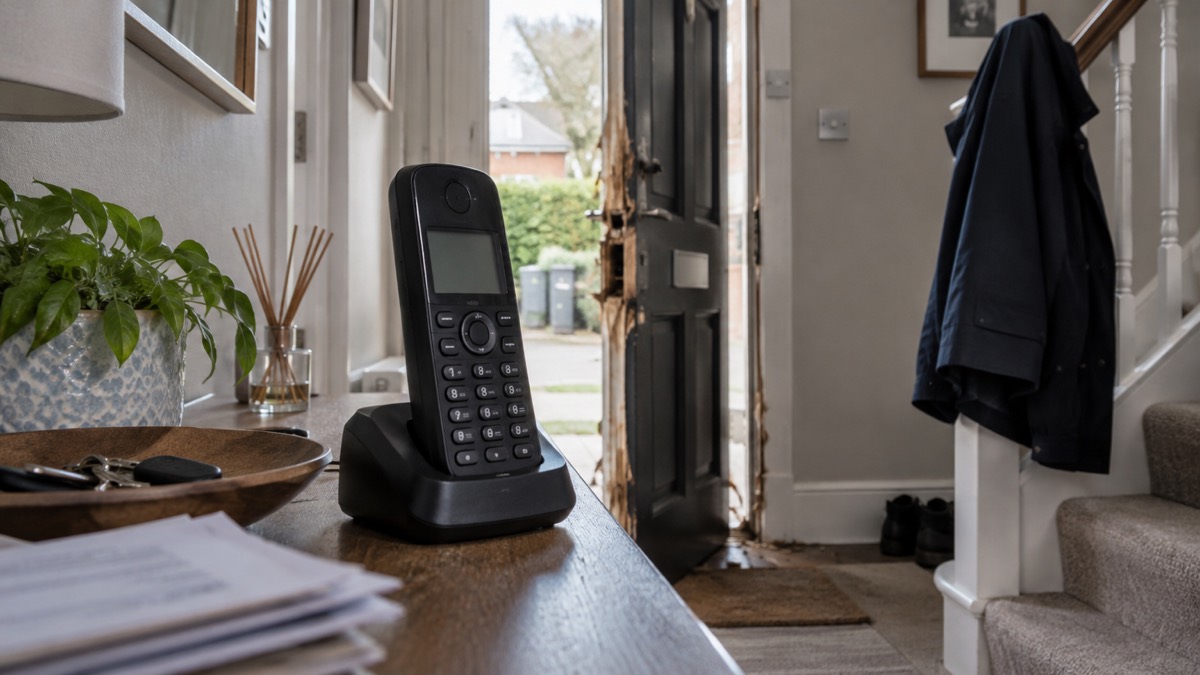
If you think an intruder is still in your home or garden, call 999 straight away. That is the police's own instruction for a break-in in progress, and a house burglary is one of the situations the emergency number exists for1. If the intruder has clearly gone, call 101 or use your local force's online reporting form instead: it is treated as a reported crime either way1.
A burglar alarm on its own does not automatically bring the police to your door. For an ordinary audible alarm, someone at the scene, you or a neighbour, has to call the police and report that a crime is in progress before they will respond2. Monitored alarms work differently: the alarm company tells you the alarm has triggered before calling the police1. This page explains what the police will and will not do, which number to use and when, and how to make sure someone is told when your alarm goes off and you cannot respond.
Call 999 if you think the intruder is still there
The single most important judgement you make after a break-in is whether the person is still on your property. Police Scotland's housebreaking advice is unambiguous: call 999 if you think the intruder is still there1. GOV.UK gives the same rule in general terms: call 999 if you are reporting a crime that is in progress or if someone is in immediate danger4. A burglary being committed at that moment is one of the examples nidirect lists as a real emergency for the 999 line, alongside danger to life and serious injury to people or property5.
Do not go inside to check. If you come home to signs of a break-in, stay out, move somewhere safe and call. The general emergency guidance for households is to dial 999 and alert the police when you are involved in an emergency or witness to it6. Your safety comes before your possessions, and the police would far rather attend a suspected burglary in progress than a confrontation.
If you cannot speak, still dial 999. On a landline, if you do not speak or answer questions and the operator can only hear background noise, the call will be transferred to the police7. The Silent Solution system, described in the Independent Office for Police Conduct's guide, goes further: if no service is requested but anything suspicious is heard, BT operators will connect you to a police call handler, and if you pick up again during the 45 seconds and the BT operator is concerned for your safety, the call will be connected to the police8. So a silent 999 call from a landline is not wasted: make it if speaking would put you at risk.
The same rule applies to people, not just buildings. If an unexpected caller at your door makes you feel alarmed or intimidated, Avon and Somerset Police say to call 999 immediately9, and Police Scotland's doorstep scam advice is to call 999 if you feel threatened or in danger10. If you can, move away from the door, lock it and call from a safe room.
If the intruder has gone: call 101 or report online
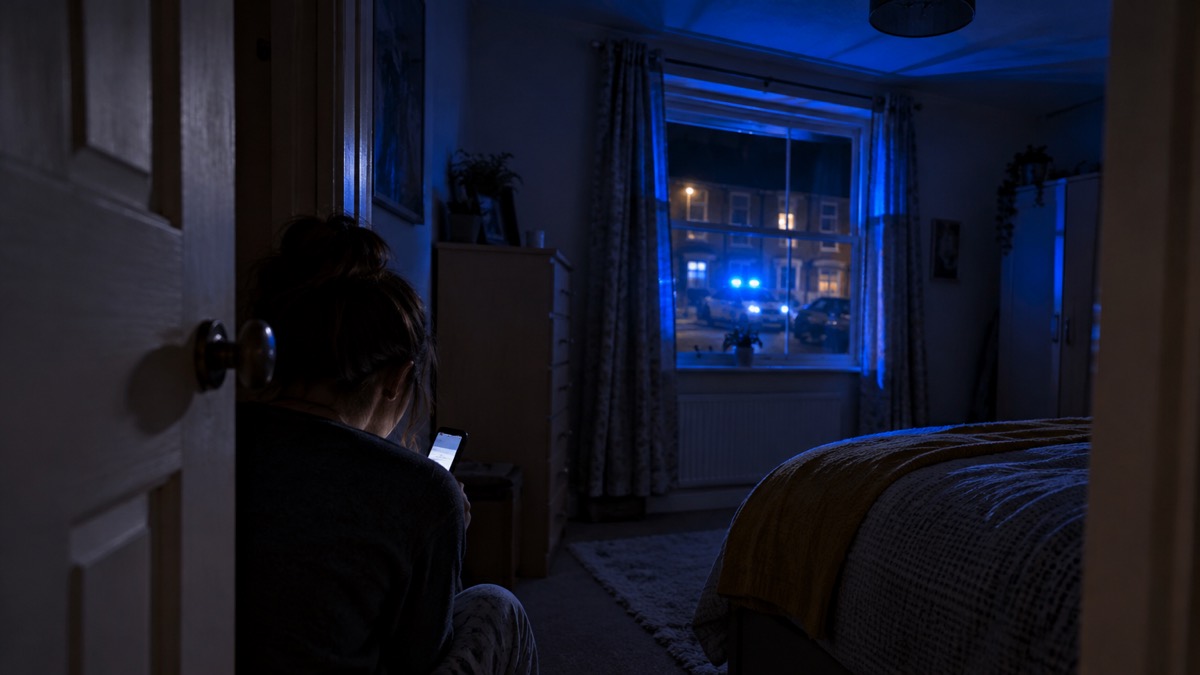
Once you are sure the intruder has left, the emergency is over and the report becomes a non-urgent one. Police Scotland's advice is to call 101 or fill in the online form if the intruder has gone1. The same pattern appears across police advice on other crimes: the Metropolitan Police tells people to call 999 if they see a theft happening, but to report a crime online if they discover it has already happened, and never to put themselves at risk11.
Reporting online is not a lesser route. Police Scotland says a report is dealt with by the control room in exactly the same way whether it is made online or by calling 10112. Choose whichever suits you at the moment: the online form if you are shaken and would rather write, 101 if you want to talk it through with a person.
Before you call, gather what you can without disturbing the scene: which door or window was forced, what is missing or moved, and whether neighbours may have seen or filmed anything. Do not tidy up or repair anything until the police have been, if you can avoid it, because what has been disturbed is part of the evidence. If you later remember something else, you can add to your report using the reference number you are given.
It is still a crime even if nothing is stolen
Many people who find a failed break-in, a forced door or a disturbed lock do not report it because nothing was taken. Police Scotland is clear that this is wrong: it is still a crime even if nothing is stolen1. An attempt to break in is itself an offence, and reporting it gives the police a picture of activity in your area that they cannot get any other way.
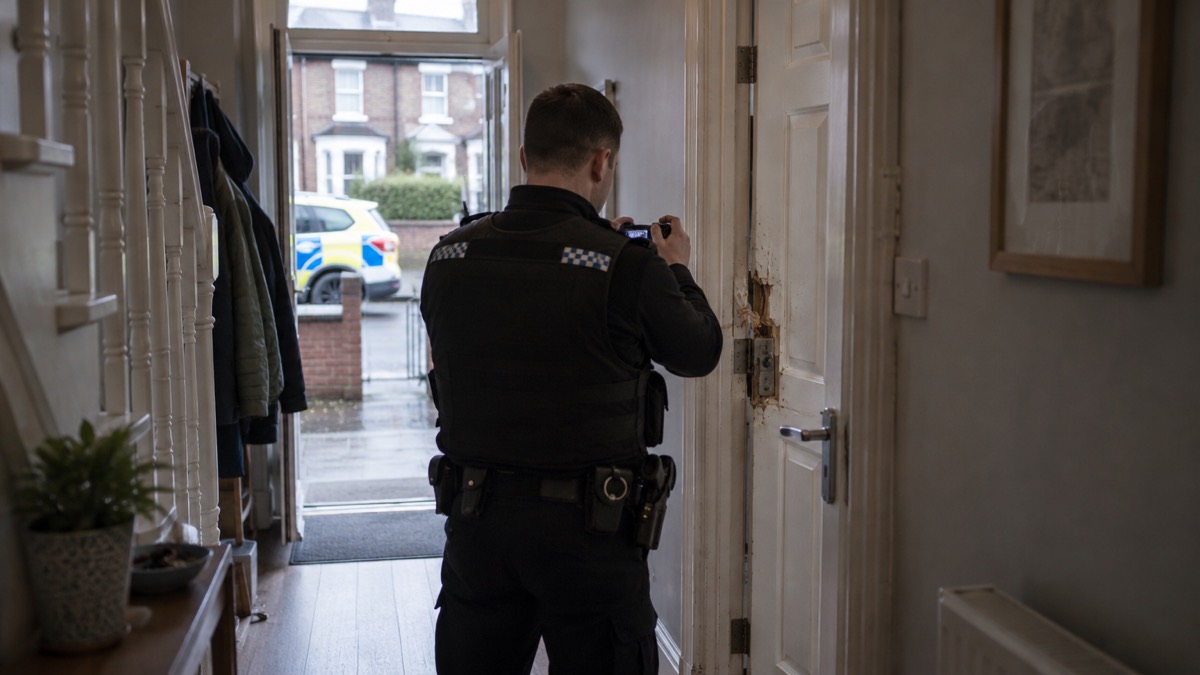
This matters for alarms too. With an unmonitored alarm, the alarm triggers but nobody is automatically told: you or a neighbour will have to see what happened and call the police1. If nobody reports it, the police never hear about it, and a pattern of attempts on your street goes unnoticed.
Do not let fear of being wrong stop you either. Counter terrorism policing guidance on reporting suspicious behaviour makes a point that applies to ordinary crime reporting as well: if a report turns out to be nothing, the person who made it will not be in any trouble, and the police will be pleased they were vigilant13. Neighbourhood Watch schemes give their members the same reassurance: you are not responsible if a crime or criminal is not noticed14. A false alarm or a mistaken suspicion costs a little police time; an unreported break-in costs a great deal more.
Ways to report a break-in: online, by phone or in person
Police Scotland lists three routes for reporting a break-in: online, by phone, or in person1. Police Scotland gives the same three routes for doorstep crime15, so the choice is consistent across crime types. In person means going to a police station front counter; check your force's website first, because counter opening hours vary and some smaller stations are appointment only.
Whichever route you use, you will be given a crime reference number. Avon and Somerset Police advise contacting the police to get a crime reference number after a theft, for example of a parcel, and checking with neighbours or for CCTV footage at the same time9. Keep that number: your insurer will ask for it, and you will need it to add information later.
If you saw something but were not the victim, you can report anonymously. Gloucestershire Constabulary's burglary campaign directs people to give information anonymously to the independent charity Crimestoppers on 0800 555 111 or at Crimestoppers-uk.org16. London Fire Brigade's reporting guidance gives the same pair of options for suspicious activity generally: Crimestoppers on 0800 555 111, or the police on 10117.
One more route is worth knowing before you travel. The PSNI's domestic burglary prevention leaflet advises telling your local police the relevant dates your property will be vacant18. If your home will be empty for a period, you can inform the police in advance, which is a report of circumstances rather than a crime, and is usually done through your force's non-emergency channels.
999 or 101: which number to use
The dividing line is simple: 999 for what is happening now, 101 for what has already happened. GOV.UK says to call 999 if you are reporting a crime that is in progress or if someone is in immediate danger, and to call 101 for non-emergencies4. nidirect spells out what counts as a real emergency for 999: danger to life, someone using or immediately threatening serious violence, serious injury caused to someone or their property, road traffic collisions where life is at risk or the road is blocked, and crimes being committed such as a house burglary or robbery5.
| Situation | Number |
|---|---|
| You think the intruder is still in your home or garden | 9991 |
| A crime is in progress, or someone is in immediate danger | 9994 |
| An unexpected caller alarms or intimidates you | 9999 |
| The intruder has gone; you are reporting afterwards | 101 or online1 |
| Minor crime or incident: stolen item, property damage, antisocial behaviour | 101 or online5 |
| Sharing information about crime in your area | 101, or Crimestoppers on 0800 555 11116 |
The 101 number works across the UK. nidirect confirms 101 covers Northern Ireland and the rest of the UK for non-urgent reports5, and GOV.UK guidance for people arriving under the Ukraine scheme describes 101 as the number for non-urgent police situations such as damaged or stolen property, drugs or related crimes nearby, or sharing information about local crime19. Highland Council's emergency contacts page lists Police Scotland on 10120. The National Cyber Security Centre's guidance also says that if you live in Scotland, you should report to Police Scotland by calling 10121.
Remember that 999 reaches all the emergency services, not just the police: police, fire and rescue, ambulance and coastguard19. If a break-in has left your home unsafe, for example a smashed door in freezing weather or damage to gas or electrics, say so when you call, and see Home Emergencies for dealing with the aftermath.
One situation catches people out: a neighbour's alarm sounding repeatedly when they are not home. Cheshire Fire and Rescue Service advises trying to contact them first, and if you cannot, calling 999. Do not attempt to enter the property yourself22. That is a 999 call, not a 101 call, because you cannot know whether someone is inside and in trouble.
When to approach the police for help
You do not need a crime to talk to the police. GOV.UK guidance says you should not be afraid to approach them if you are the victim of a crime, if you see a crime happening, or for general help19. That includes walking into a station, stopping an officer, or calling 101 to ask about something that worries you.
Neighbourhood Watch guidance frames the relationship the same way: report what you have seen to the police as quickly as possible, and only call 999 in an emergency14. If you notice something that does not feel right, a van watching a neighbour's drive, someone trying door handles on your street, tell the police promptly on 101 rather than sitting on it. Counter terrorism policing's reporting guidance adds that reports can be made anonymously, and to anyone in authority such as a police officer, station employee, security guard or store manager, not only by phone13.
If you have been burgled and need help beyond the investigation itself, say so when you report it. Forces can point victims to local support, and our page on After a Burglary covers crime numbers, insurers, repairs and support in detail.
Homes that look empty are more likely to be targeted
Police Scotland's housebreaking advice notes that a break-in is more likely when a house looks empty1. This is the clearest risk factor a household can act on, and it shapes both how you protect your home and how you help your neighbours.
The PSNI's House Security guidance puts a number on the value of acting: properties without security measures in place are ten times more likely to be burgled than those with simple security measures such as quality door locks3. Simple measures, done consistently, are what count. Police Scotland's advice to West Lothian residents was to ensure all locks are working and any alarm systems, motion lighting and CCTV are activated when leaving home23.
What makes a home look empty is often ordinary life, not long holidays. nidirect's securing your home guidance warns that with a public profile, talking about your holiday on social media could tell an opportunistic burglar that your home will be empty for a couple of weeks24. Police Scotland gave West Lothian residents the same advice: do not advertise being on holiday on social media, and ask people to check on your property if you can23. Even in hot weather the risk remains: the PSNI's summer safety message reminded residents leaving windows and doors open to keep cool to still keep property secure25.
Some households are targeted precisely because someone is home. Avon and Somerset Police note that distraction burglars and fraudsters target vulnerable, often elderly people in their homes, and will not go to the trouble of breaking in if they can just knock and be invited in9. Police Scotland's doorstep crime advice asks neighbours to help: be alert for strange vans, make sure vulnerable people do not withdraw large amounts of cash, help keep their house well maintained, and make it less obvious if they live alone15. For more on making an empty-looking home look occupied, see How to Make Your House Look Occupied and Leaving Your Home While You Are on Holiday.
Alarm calls to your emergency contacts when you cannot respond
If your alarm goes off while you are out, at work or away, who is told depends entirely on what kind of alarm you have. Police Scotland sets out the three types plainly1:
| Alarm type | What happens when it triggers | Who calls the police |
|---|---|---|
| Unmonitored (bell-only) | The alarm sounds, but nobody is automatically told | You or a neighbour must see what happened and call1 |
| Auto-dialler | You get a text or phone call | You, once you receive the message1 |
| Monitored | The alarm company tells you the alarm triggered, before calling the police | The company, under your arrangement1 |
The practical weakness of a bell-only alarm is exactly here: the police respond only if someone at the scene calls and reports that a crime is in progress2. A siren with nobody to act on it is noise, not a police response. Secured by Design, the official police security initiative, also warns that with DIY alarm kits, problems with installation, maintenance and reliability may not become clear until a burglary has occurred2. If you are choosing a system, our pages on Burglar Alarms and Monitored Alarms set out the options, and How Many False Alarms Before Police Stop Responding? explains the false alarm rules that monitored systems must live within.
When you cannot respond yourself, the arrangement has to be made in advance. A monitored alarm's Alarm Receiving Centre will call you first to verify the alarm; if you don't answer, it will call your emergency contacts, and if no one can be reached, it will dispatch the police to your home2. In practice that means naming a neighbour or relative who holds a key, has agreed to attend, and knows to call 999 if they believe a crime is in progress rather than entering the property. For non-emergencies, you can contact the police on 10120.
Feeling threatened at home: what the law says about force
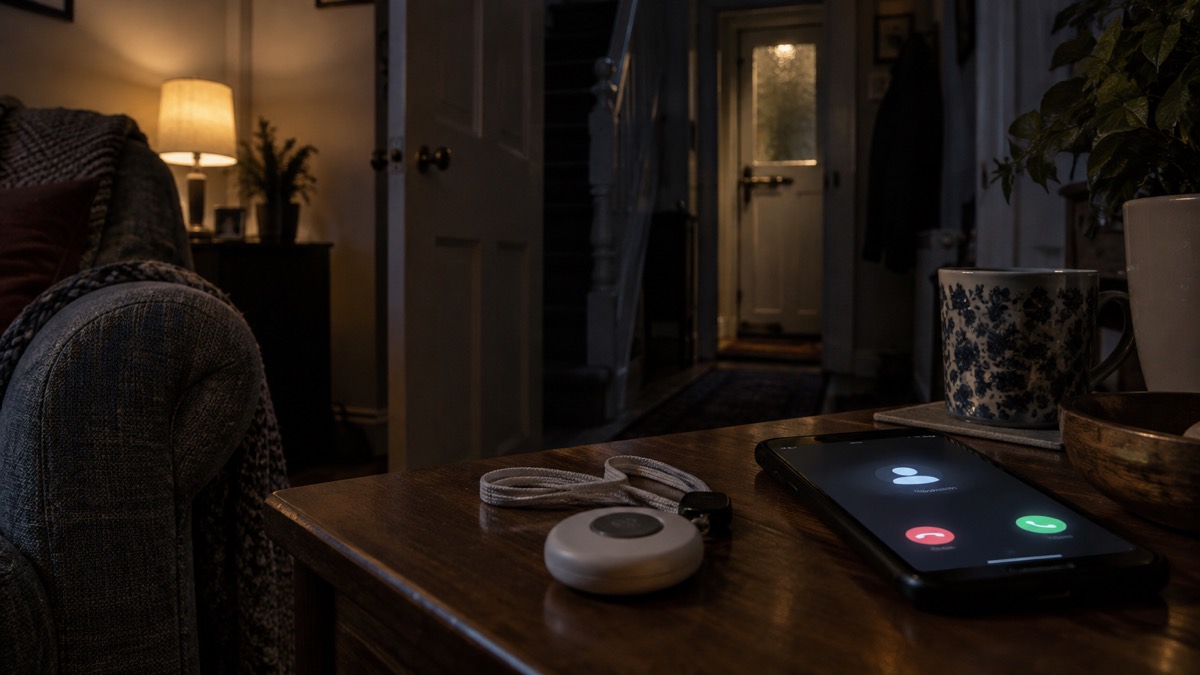
If someone is at your door or inside your home and you feel threatened, the police instruction is the same whatever the circumstances: call 999 if you feel threatened or in danger10. Avon and Somerset Police say the same about an unexpected caller who alarms or intimidates you: call 999 immediately9. Get behind a locked door if you can, stay there, and let the police come to you.
Prevention reduces the chance of ever facing that moment. The PSNI's House Security guidance advises ensuring your burglar alarm is installed properly and works, and considering installing one if you do not have it3. nidirect adds that opportunist burglars tend to avoid houses where they can see a burglar alarm, and that the cost of your home insurance may also be reduced24. The PSNI's burglary prevention leaflet puts it simply: set a burglar alarm if one is fitted to your home18.
On the law itself, what force a householder may lawfully use against an intruder is a subject with its own rules, and this page does not attempt to set them out. Our page Your Rights if Someone Breaks Into Your Home covers reasonable force and the law in full. The police's operational advice to households comes first either way: do not confront, call 999, and let the police respond.
What a burglary investigation involves
How you report a break-in depends on urgency. Call the police on 999 if it is an emergency situation; you can call 101 to report a crime if you do not need an emergency response9.
What the police do next depends on what there is to work with, and you can help with two of the most useful things yourself. If you have cameras yourself, tell the police what you have and preserve the recordings rather than letting them overwrite. Our pages on Home Cameras and CCTV and Filming Beyond Your Boundary cover what you can record and share.
The Metropolitan Police's security advice, written about scooters but true of homes, is worth holding on to as a general expectation: security measures cannot guarantee a theft will not happen, but by using several of them you make your property harder and less attractive to thieves11. A report, neighbours who look out and a home that does not look empty are all parts of the same effort.
Sources (25)
- Break-in and housebreaking advice, Police Scotland, 2026-11-02
- Alarms advice for domestic properties leaflet, Secured by Design, 2023
- House security guidance, Police Service of Northern Ireland, 2026-11-02
- Contact the police, GOV.UK, 2026-10-29
- Emergency situations and keeping safe, nidirect, 2025-01-08
- Protecting your family, Essex Prepared, 2026-10-29
- How to make a silent 999 call, police.uk, 2026-11-02
- Silent Solution guide, Independent Office for Police Conduct, 2023
- Doorstep crime prevention advice, Avon and Somerset Police, 2026-11-02
- Doorstep scam: Take Five personal advice, Police Scotland, 2026-11-02
- Scooter security advice, Metropolitan Police, 2026-11-02
- What to do when someone goes missing, police.uk, 2026-11-02
- RUN HIDE TELL guidance, Counter Terrorism Policing, 2017-11
- Neighbourhood Watch, nidirect, 2025-09-09
- Rogue traders and doorstep crime, Police Scotland, 2026-11-02
- Burglary campaign: information and advice, Gloucestershire Constabulary, 2026-11-02
- Grass and wildfires safety, London Fire Brigade, 2026-10-25
- Advice on home safety leaflet, Police Service of Northern Ireland, 2022
- Get urgent help and report a crime: Homes for Ukraine, GOV.UK, 2023-01-16
- Emergencies, safety and crime: contact details, The Highland Council, 2026-01-30
- Report a scam website, National Cyber Security Centre, 2021-11-26
- Smoke alarms and home safety, Cheshire Fire and Rescue Service, 2026-07-27
- Police offer home security advice to people in West Lothian, Police Scotland, 2023-03
- Securing your home, nidirect, 2024-01-23
- Summer safety advice, Police Service of Northern Ireland, 2026-11-02
 Moving Home Locks Checklist
 After a Break-In Checklist
 Holiday Security Checklist
 Home Assistant for Security
 Monitored Alarms and Response
 Panic Buttons on Home Alarms
 Home Protection in a Power Cut
 Alarms on a Weak Mobile Signal