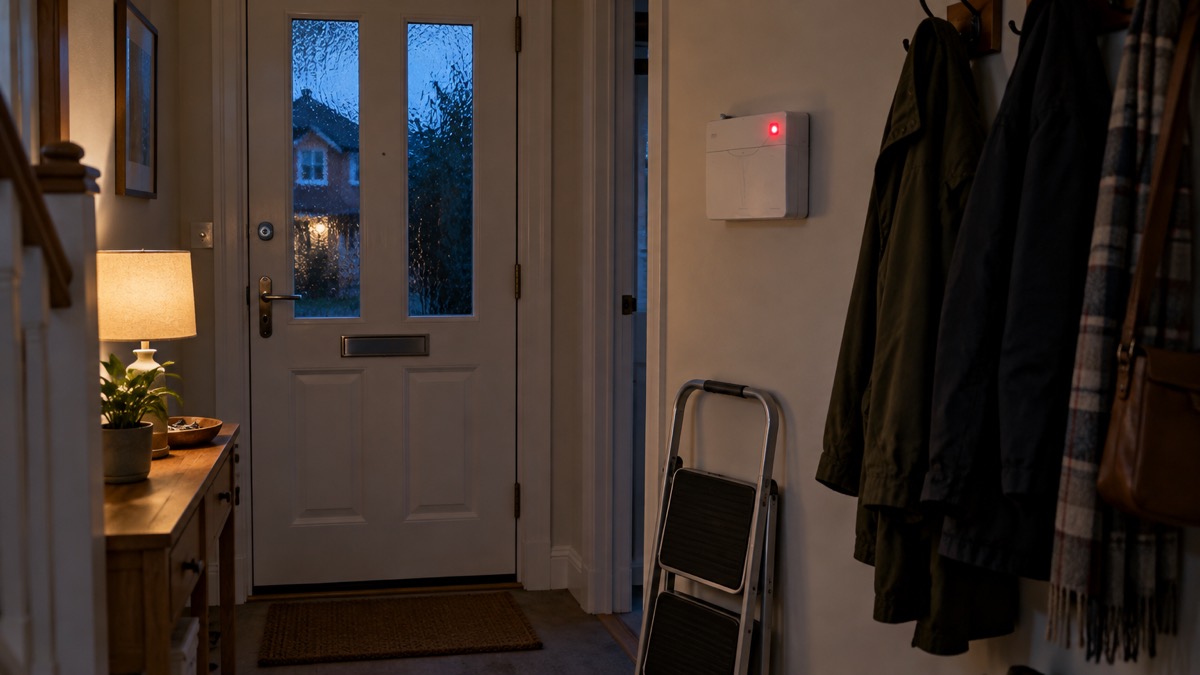
If your burglar alarm keeps going off when nothing is wrong, the first thing to understand is who is actually told when it sounds. It depends on the type of alarm you have. A monitored alarm is one where the alarm company tells you the alarm triggered before calling the police1. An unmonitored alarm triggers but no one is automatically told, so you or a neighbour will have to see what happened and call the police1. An audible-only alarm relies on neighbours or passers-by to react2.
So the answer to "how many false alarms before the police stop coming" is not a single number. What matters is whether your system is monitored, whether a keyholder can get in, and whether the alarm is doing its job or crying wolf. The practical steps are the same either way: know how your alarm works, keep it maintained, investigate every false alarm, and call 999 yourself if you believe a break-in is happening.
What happens when your alarm keeps going off with no one there
A burglar alarm sounding in an empty house is a nuisance at best and a danger at worst. The first thing to do when you get home to a sounding alarm, or when a neighbour tells you about one, is to establish whether there is any sign of fire or intruder before you reset anything. Fire services are clear that when you investigate an alarm you are looking for signs of a fire, not a fire itself; if you suspect or find a fire, get out and call the Fire and Rescue Service on 9994.
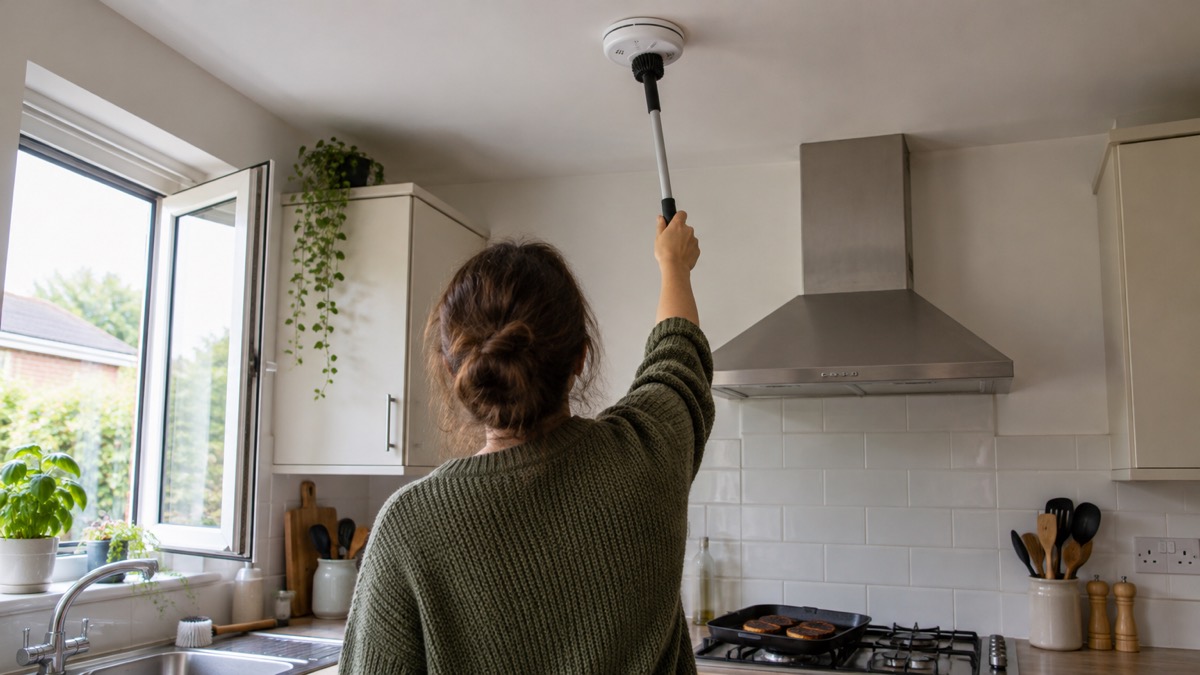
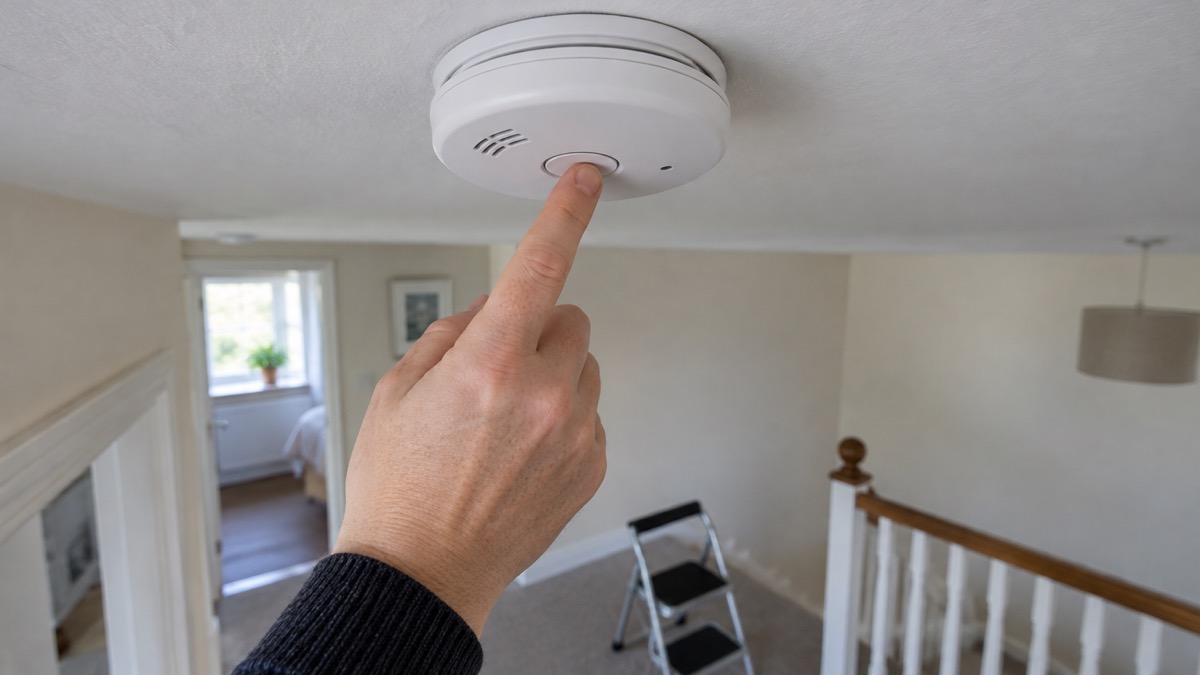
For smoke alarms, the advice is simple and firm. If your smoke alarm goes off by mistake, do not take out the batteries; just wait for it to stop, and many alarms have a hush button that can be pressed to temporarily silence an alarm5. If you experience a false alarm and there is no fire, you can silence the alarm by pressing the same test button, and it will automatically re-set6. If the alarm is beeping or behaving unusually with no sign of fire, press the test button, consider temperature changes such as heating turning off at night, and check for dust and insects7.
For a monitored alarm in an unoccupied building, arrangements to safely investigate the cause of any alarm, normally by a local keyholder, will need to be agreed with the alarm receiving centre4. That is the mechanism that keeps a false alarm from turning into a wasted call-out, and it is the reason your keyholder details matter so much.
How police decide whether to respond to an intruder alarm
Police response to an intruder alarm turns on what the alarm tells them and who is available to act. With a monitored system, the alarm company tells you the alarm triggered before calling the police1. That call is the point at which the police are asked to attend, and it is the alarm company, not the householder, who makes it.
With an unmonitored system, the alarm triggers but no one is automatically told, so you or a neighbour will have to see what happened and call the police1. An audible-only alarm relies on neighbours or passers-by to react2. In both cases the decision to call the police sits with a person, not with the equipment.
Whatever system you have, know how it works, including any passwords or codes8. If you have to speak to the police or an alarm company under pressure, knowing the code and the procedure saves time. If you cannot speak when you call 999, pressing 55 will notify the operator and transfer the call to the police9. On a mobile, if you do not speak or answer questions, press 55 or tap when prompted and your call will be transferred to the police10.
"If you press 55, they will be notified and transfer the call to the police."
The Metropolitan Police advise that a quality Thatcham approved, professionally fitted alarm system will not only put off thieves, but could also reduce your insurance premiums11. That is a reason to fit a good system properly, not a guarantee of attendance. For how the different alarm types compare, see Burglar Alarms: Types and How to Choose One, and for the monitoring side, Monitored Alarms: Receiving Centres and Who Responds.
Losing police response after repeated false alarms
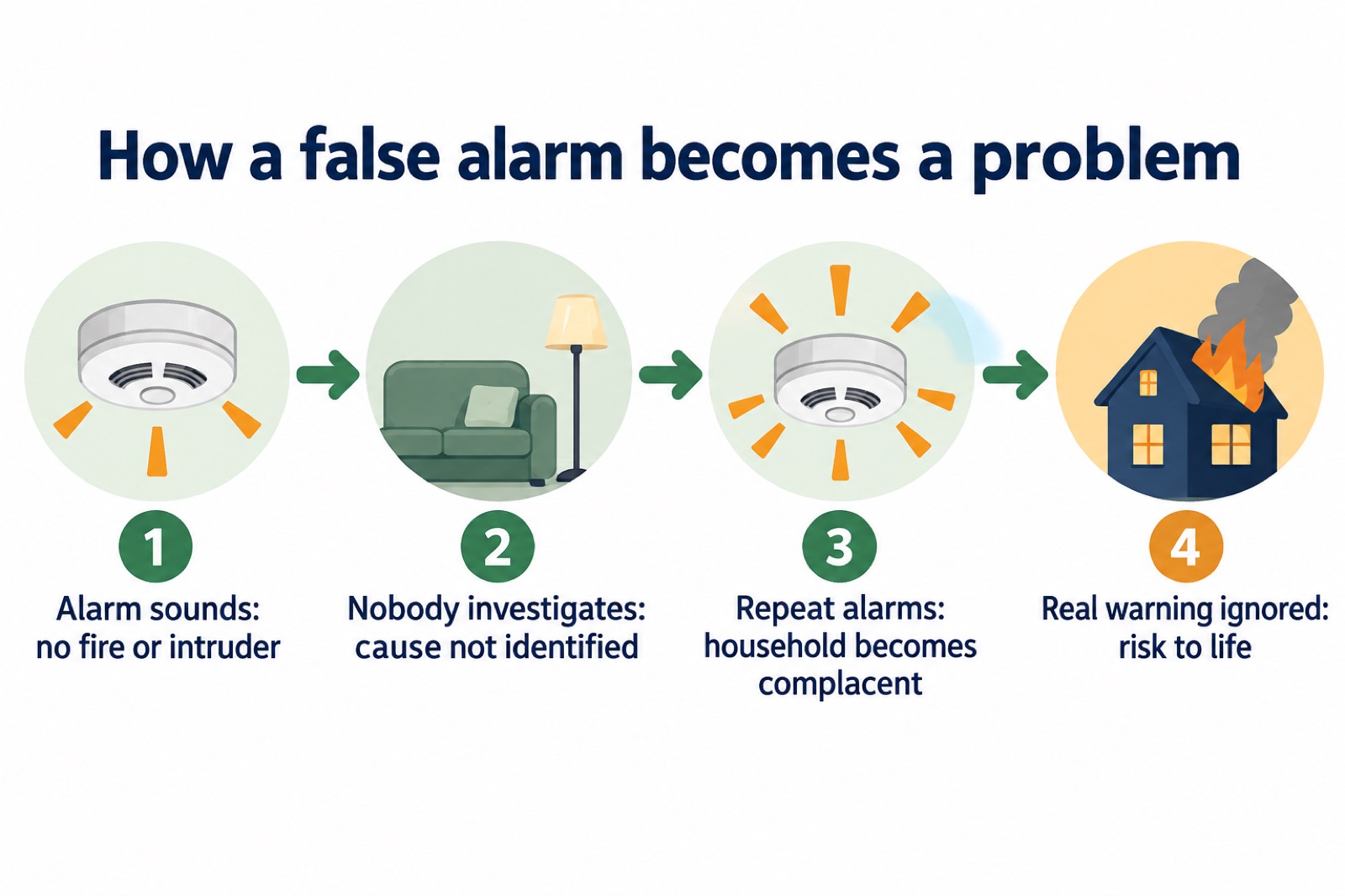
Repeated false alarms erode the value of an alarm in two ways. The first is practical: every false alarm that reaches the police or the fire service is a call-out that could have gone to a real incident. The second is behavioural, and fire services warn about it directly.
That warning is aimed at premises with automatic fire detection, but the principle applies at home. An alarm that goes off for no reason trains everyone in the house to ignore it. Fire services advise that all false alarms should be investigated to identify the cause of the problem and any necessary remedial action taken4. Common causes include steam, cigarette smoke, aerosol sprays or fumes from cooking, and sometimes incorrectly sited detector heads or a system not serviced properly12.
If you are going away, tell your local police your property will be empty13. That is a simple step that helps them understand what is normal for your address. If you have a monitored alarm, make sure the alarm receiving centre has current keyholder details, because when the building is unoccupied, arrangements to safely investigate the cause of any alarm, normally by a local keyholder, will need to be agreed with the centre4.
Getting police response restored
If you are worried that your alarm has lost its usefulness, the fix is to deal with the cause rather than the symptom. Start by investigating every false alarm and identifying why it happened4. For smoke alarms, press the test button to reset and clear the fault, consider temperature changes such as heating turning off at night, and check for dust and insects7. Any alarm failing a routine test should be returned to the installer or supplier, or be replaced14.
For a monitored system, talk to your alarm company about the pattern of alarms and what can be changed. The company is the body that tells you the alarm triggered before calling the police1, so it is the right first call. If the alarm was installed by the Fire and Rescue Service, contact 0800 169 1234 or email saw@mawwfire.gov.uk for a replacement3. For linked alarms, ask a qualified electrician to fit them8.
If you have been the victim of a scam or cybercrime connected to your alarm or monitoring contract, call Action Fraud on 0300 123 2040 (textphone 0300 123 2050) or report online at www.actionfraud.police.uk15. The same number appears in local resilience guidance16.
| Situation | Who to contact |
|---|---|
| Alarm fitted by the Fire and Rescue Service is faulty | 0800 169 1234 or saw@mawwfire.gov.uk3 |
| Linked alarms need fitting | A qualified electrician8 |
| Faulty alarm or detection system in a flat or high-rise | Building management or the local fire service18 |
| Alarm failing a routine test | Return to installer or supplier, or replace14 |
| Suspected scam or cybercrime | Action Fraud on 0300 123 204015 |
Stopping false alarms before they start
Most false alarms are preventable, and the work is done before the alarm ever sounds. Fire services advise investigating every false alarm to find the cause and taking remedial action4. The common culprits are steam, cigarette smoke, aerosol sprays and cooking fumes, along with badly sited detector heads or a system that has not been serviced12.
For smoke alarms, the routine is simple: test regularly19. If the alarm is beeping or behaving unusually with no sign of fire, press the test button, think about temperature changes such as the heating going off at night, and check for dust and insects7. If it goes off by mistake, do not take out the batteries; wait for it to stop or use the hush button5.
If you have a bonfire or a planned burn, tell the fire service in advance. This will help avoid false alarms and crews being sent out unnecessarily, as well as ensuring they are ready to respond in the event of a burn getting out of control20. For nuisance bonfires, check your local council website for their information on how to report them20.
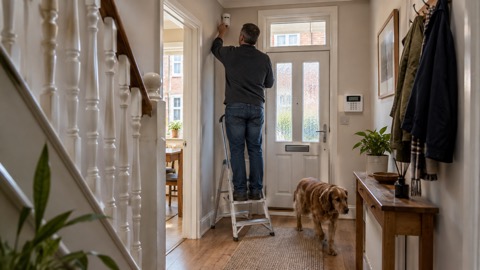
For households with pets, movement sensors are the usual concern. Ask your installer which sensors suit a home with animals, and check the system after any change such as a new pet. For more on this, see Which Alarm Sensors Are Safe to Use with Pets?.
Where to get help with a faulty alarm
A faulty alarm is a safety problem, not just an annoyance, and there is a clear route for each situation. If the alarm was installed by the Fire and Rescue Service, contact 0800 169 1234 or email saw@mawwfire.gov.uk for a replacement3. In a flat or high-rise building, report any faulty alarms or detection systems immediately to building management or the local fire service18.
For linked alarms, ask a qualified electrician to fit them8. Any alarm failing a routine test should be returned to the installer or supplier, or be replaced14. If you rent, you are responsible for checking that alarms are in working order and informing your landlord of any faults, while your landlord is responsible for ensuring there are working smoke alarms fitted on every level of the property7. Landlords must also supply a carbon monoxide detector and alarm in any room used wholly or partly as living accommodation which contains a solid fuel burning combustion appliance21.
If you are a council tenant, your council's housing team can help. Highland Council tenants are advised to test their smoke alarms regularly19. If you are unsure who is responsible in your home, ask your landlord or council.
For help with a break-in rather than a faulty alarm, see Coming Home to a Break-In: What to Do First and After a Burglary: Crime Numbers, Insurers, Repairs and Support. For the wider picture on how police respond, see How Police Respond to Burglaries and Intruder Alarms.
Sources (21)
- Break-in and housebreaking, Police Scotland, 2026-11-02
- Protect Yourself Booklet, Police Service of Northern Ireland, 2024
- Safe and well visit, Mid and West Wales Fire and Rescue Service, 2026-10-29
- Fire alarm systems, Warwickshire County Council, 2026-10-29
- Flat fire safety, Greater Manchester Fire and Rescue Service, 2026
- Smoke and heat alarms, Greater Manchester Fire and Rescue Service, 2026-10-29
- Fire alarms and carbon monoxide detectors, Lincolnshire County Council, 2026-10-29
- Fire safety for people with hearing difficulties, Devon and Somerset Fire and Rescue Service, 2026
- If you can't speak when you call 999, Bath and North East Somerset Council, 2026
- How to make a silent 999 call, Police.uk, 2026-11-02
- Scooter security, Metropolitan Police, 2026-11-02
- Automatic fire alarms, Surrey County Council, 2026-09-07
- After an incident: fire, Devon and Somerset Fire and Rescue Service, 2026
- Carbon monoxide alarms, Health and Safety Executive Northern Ireland, 2026
- Community risk register for Sussex, Sussex Police, 2026
- West Mercia risk register, West Mercia Ambulance Service, 2025-01
- Adverse weather events, Llangattock Community Council, 2026
- Fire safety advice for residents in high rise buildings, Warwickshire County Council, 2026-10-29
- Keeping home safe and secure, Highland Council, 2026-09-09
- Bonfires, Devon and Somerset Fire and Rescue Service, 2026
- Fire safety in rented accommodation, Cornwall Council, 2026-10-29
 Moving Home Locks Checklist
 After a Break-In Checklist
 Holiday Security Checklist
 Alarm Before Going Away
 Checking an Alarm Installer
 Should a Burglar Alarm Bell Box Be Visible?
 Alarms After Digital Switchover
 Outdoor Siren Fitting Height
 Alarm Sensors and Pets