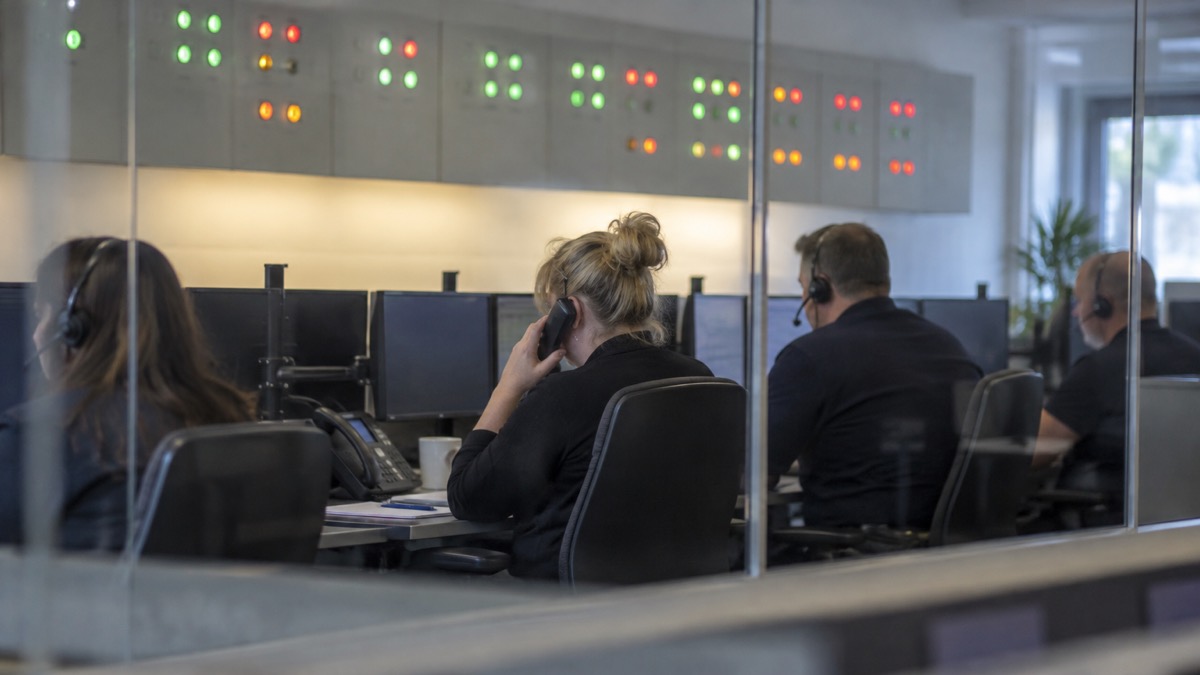
A monitored burglar alarm does not just make a noise. When it triggers, a signal travels to an alarm receiving centre, where a trained operator checks what happened and decides who needs to be told. Police Scotland sums up the difference from an ordinary bell-only alarm: with a monitored system, the alarm company tells you the alarm has triggered before calling the police, whereas an unmonitored alarm simply sounds and no one is automatically told, so you or a neighbour would have to notice and call1.
What the centre does next follows a set pattern. Secured by Design, the police-backed security initiative, describes how the alarm receiving centre immediately checks the signal to verify it is a genuine alarm, alerts a keyholder and, if the system is compliant, the police2. The police will only attend an alarm signal from a monitored alarm as long as the system complies with the NPCC Security Systems Policy, the national policy that governs police response to installed systems2. Verisure, one of the largest monitored alarm providers, states that its Alarm Receiving Centre responds to alarm triggers on average in 45 seconds, a figure covering January to September 20253.
Who responds when a monitored alarm goes off
The short answer is: the receiving centre first, then you or your keyholders, then, if the signal is verified and the system qualifies, the emergency services or a private guard. A report on UK alarm monitoring costs describes how Verisure and ADT monitored alarms work in practice: a UK centre watches around the clock and dispatches a guard on a verified break-in, with no police response unless the system is separately registered for a police Unique Reference Number, known as a URN5. That distinction matters when you compare contracts, because "monitored" does not automatically mean "police will come".
ADT describes its Police Response monitoring system as immediately notifying the police if your burglar alarm detects an intruder6, which is the arrangement a URN-registered system provides. Verisure's own description of its Alarm Receiving Centre is broader: based on verification, operators contact the appropriate emergency service, whether police, ambulance or fire brigade, or dispatch a private responder such as a guard3. So who turns up depends on three things: what your system detected, whether the operator could verify it, and what your particular contract and registration provide.
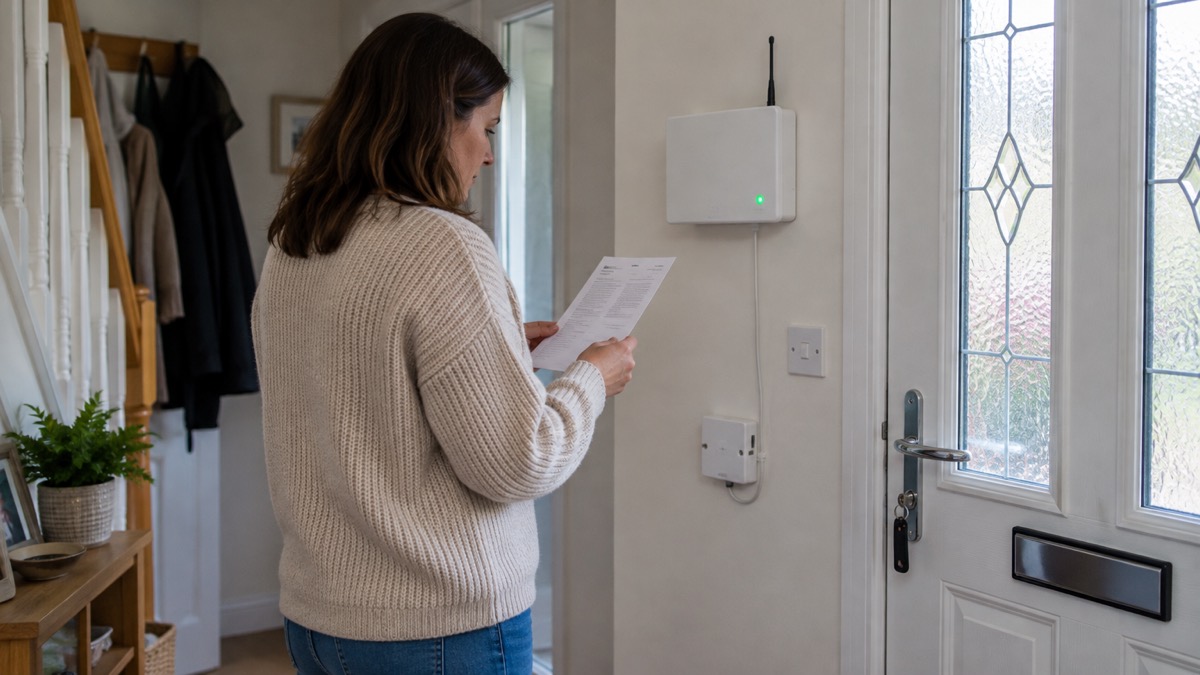
Before any of that can work, the system itself has to be up to standard. Police Scotland advises checking that the person or company installing your alarm holds National Security Inspectorate (NSI) or Security System and Alarms Inspection Board (SSAIB) certification, and that the system meets British Standards, specifically PD66621. These certifications are how the police know an alarm signal deserves a response. Our page on how to check an alarm installer is approved walks through this, and how police respond to intruder alarms covers the attendance rules in more detail.
What the receiving centre does when your alarm triggers
The first minute at the centre is about verification. Verisure states that its Alarm Receiving Centre responds to alarm triggers on average in 45 seconds, and that this figure is an average of both human and automated responses, measured in line with the criteria defined in the industry standard EN505183. For SOS button signals specifically, the maker states these are typically answered in under 20 seconds3. The operators handling these signals are, according to Verisure, SIA-certified security experts, and the centre is UK-based3.
Verification itself can take several forms. Verisure describes how trained operators initiate Silent Listening Mode using devices such as the VoicePad, access camera snapshots if they are available, and may converse with people at the property via two-way voice3. The point is to establish whether the alarm is genuine before committing an emergency response. Abode describes a similar sequence from its own monitoring station: on activation, the station contacts all listed keyholders in the first instance; if no one can be reached, operators view a live link to Abode cameras; and if visual confirmation of an intruder or fire is made, the relevant emergency services are called7. Abode also states plainly that police and fire response is not guaranteed and is down to the individual assessment of the operator7.
Where a building is unoccupied, the checking step often falls to a person rather than a camera. Warwickshire County Council advises that when a building is unoccupied, arrangements to safely investigate the cause of any alarm, normally by a local keyholder, will need to be agreed with the alarm receiving centre8. Surrey Fire and Rescue Service gives keyholders practical guidance for that investigation: look, listen and smell for signs of fire, such as smoke, unusual noises or heat9. If you are named as someone's keyholder, or naming one for your own home, that is the job being signed up for.
Fire alarms passed to the fire brigade even when no one is home
A monitored fire alarm solves a specific problem: an ordinary smoke alarm can only warn the people who are there to hear it. North Yorkshire Fire and Rescue Service makes the point directly for pet owners, advising people to consider installing monitored smart smoke alarms so that somebody will be alerted if a fire breaks out and nobody is at home10. The same logic applies to anyone who leaves a home empty for long stretches.
For people who receive care, the link can be built in. London Fire Brigade describes telecare as an alarm system that helps people continue to live independently by allowing someone else, typically a call centre or a relative who lives elsewhere, to make sure a person is safe, and notes that by linking fire alarms to telecare as standard, delays in calling the fire brigade are limited, reducing the likelihood of injury or death as a result of a fire11. Manchester Fire and Rescue Service gives the same advice for anyone who would be unable to escape without help in a fire: talk to your care provider or the fire service about linking your smoke alarms to a telecare system12. London Fire Brigade also lists monitored alarms connected to telecare among the help a Home Fire Safety Visit can include, depending on needs13.
Does a call from a monitoring organisation get a different fire response than a call from you? Surrey Fire and Rescue Service states that its response will be the same whether the call is made by the occupier or from a fire alarm monitoring organisation9. What monitoring changes is not the speed of the fire engines but the fact that the call gets made at all when the house is empty. Sprinklers offer a complementary protection: Manchester Fire and Rescue Service notes that fire sprinklers operate automatically even if you are not at home, releasing water directly over the source of the fire and sounding the alarm14. If a fire does happen while you are away, North Yorkshire Fire and Rescue Service advises informing your local police station and asking neighbours to keep an eye on your property if the home is left unoccupied afterwards15.
False alarms: how they are handled and why they matter
Every monitored alarm will produce some false activations, and how they are handled is part of what you are paying for. When a trigger arrives, the monitoring centre's specialists verify what is happening using images from your cameras and by listening or speaking into the room through the control panel, and they contact you to confirm whether it is a real incident3.
False alarms are not a harmless nuisance. Warwickshire County Council warns that if there are excessive false alarms at your premises, people may become complacent and not respond correctly to a warning of a real fire8. A household that has heard the alarm go off for nothing a dozen times stops treating the thirteenth activation as urgent, whether that activation reaches them through a siren or through a phone call from a monitoring centre.
There is also a practical consequence for police response. A system that repeatedly generates false activations can lose the police attendance that monitoring is meant to secure, and our page on how many false alarms police will tolerate covers this in detail. The practical steps are straightforward: get faults repaired promptly, make sure everyone in the household knows how to set and unset the system, and choose pet-friendly sensors if animals set the alarm off. When a false activation does happen, answer the monitoring centre's call and tell them it is false; that is what lets them stand down a response quickly.
Calling 999 yourself: when you cannot speak
Monitoring does not replace knowing how to call for help directly. Essex Prepared advises that if you are involved in an emergency or witness one, you dial 999 and alert the police, fire, ambulance or coastguard services16. That single number covers each of the emergency services, whichever one you need.
Knowing what happens on the call helps if you are frightened or unable to speak freely. The North West Ambulance Service explains that when you call 999 you will be asked if you need the ambulance service, police or fire service, then connected to the emergency operations centre and asked questions about the patient and your location17. If you can only manage a few words, the service you need and the address are the two that count.
For people who cannot safely make a sound, there are devices designed for exactly that situation. NHS Inform in Scotland describes a silent alarm: a discreet device hidden in your property that looks like a light switch, which can be pressed if you are vulnerable and at risk from others, including cold callers or scammers18. Pressing it raises help without the noise of a siren or a phone conversation. Our page on panic buttons covers these devices in full.
SOS and alarm buttons: getting help without making a sound
SOS and alarm buttons are the part of a monitored system most households hope never to use, and the part that most needs to work instantly. Verisure's SOS Alarm can be activated by pressing the Wall-Mounted SOS Button, or by using the Smart Remote keyfob and pressing two buttons simultaneously3. The maker states that these signals are typically answered in under 20 seconds by its Alarm Receiving Centre3. Hikvision's AX PRO wireless panic button works as a one-touch alarm19.
Where you put the buttons matters. Carers UK advises that alarm buttons can be placed near the front door or beside the bed, to be used in the event of a break-in or if someone threatening approaches the front door, particularly for people who spend long periods alone in the home or live independently20. Secured by Design calls a hold-up alarm invaluable if there is an intruder in the house2. Think about the moments when you would need one: answering the door at night, waking to a noise downstairs, and place a button within reach of each.
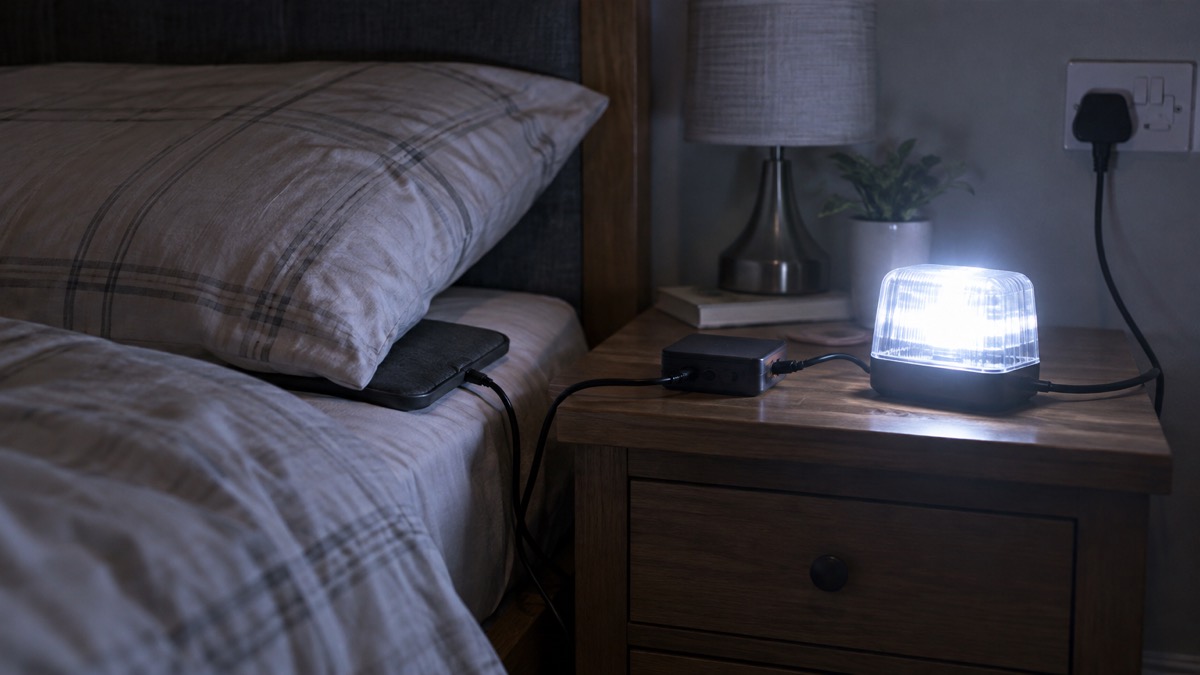
For deaf and hard-of-hearing householders, alerting equipment works on different senses. The Scottish Fire and Rescue Service describes specialist smoke alarms for deaf and hard of hearing people: a vibrating pad is placed under a mattress or pillow at night, and when smoke is detected the pad vibrates and a strobe light flashes to alert the sleeper21. A monitored element can be added so that a centre is also told, which matters if the sleeper would not hear an operator's call back.
Self-monitored systems that call your contacts instead of a centre
Not every household wants or needs a professional centre in the loop. The alternative is a system that alerts you and people you trust, and you choose how far up the ladder of help that goes. Abode presents the choice plainly: you can start with self-monitoring and add a paid plan if you want more features or professional monitoring, with no contract required22. Yale's Sync Hub can be controlled and monitored through the Yale Alarm app, so the household itself sees and acts on alerts23. Our comparison of monitored versus self-monitored alarms sets the two side by side.
Ring offers a middle arrangement. Its Alarm Calls feature automatically calls your three emergency contacts if an alarm event occurs when you are unable to respond4. If no one responds to an alarm event, Ring's Guard Response will be requested automatically, dispatching a licensed security guard4. So a self-monitored system can still end with someone physically checking your home, without a conventional monitoring contract.
The same idea underpins telecare, the personal alarm services used by older and disabled people. The UK government's guidance on telecare explains that telecare alarm systems can alert call centres or carers if individuals experience a problem, such as a fall at home or outside, depending on the device and its connectivity24. Warwickshire County Council describes the response process: pressing the personal alarm, or a sensor detecting a problem, makes the lifeline call the control centre, where a trained member of staff assesses the situation, checks if you are okay and takes appropriate action, which could include calling a family member, a friend or the emergency services25. Lincolnshire County Council puts it more simply: if you sound the alarm, we will contact a family member, carer or the emergency services26.
There is even a version with no centre at all. Anglesey Council describes a telecare pager system that avoids the need for a telephone line or monitoring centre service when full-time care is being provided: when a sensor is activated, a pager vibrates, beeps and lights up its bright screen to alert the carer, showing which sensor activated, which room or resident it is allocated to, and the time and date27. NHS Inform in Scotland describes the community alarm version: you keep a transmitter on you and another person has a receiver, and that person could be a relative, friend, neighbour or monitoring service28. Carers UK notes that if something does go wrong, these systems can send alerts to carers or to 24-hour monitoring and response centres20. Devon County Council describes its personal alarms and alerts service as offering instant access to help from its call-monitoring centre, 24 hours a day, 365 days a year29. Households with members who need extra support can find more in our extra help in an emergency guide.
If you rent: who is responsible for the alarms
Responsibility for alarms in rented homes is split, and it is worth knowing which half is yours. Lincolnshire County Council states that as a tenant you are responsible for checking that alarms are in working order and informing your landlord of any faults30. On the landlord's side, Cherwell District Council explains that under the Smoke and Carbon Monoxide Alarm Regulations as amended in 2022, landlords must repair or replace alarms as soon as reasonably practicable after being notified they are faulty by the tenant or their representative31. The system only works if you do your half: test, report, and follow up.
In Scotland, where interlinked fire and smoke alarms are required by law, the Scottish Government advises council and housing association tenants to speak to their landlord if they are waiting for interlinked fire alarms to be installed32. The Scottish Government also distinguishes between alarm types when it comes to fitting: sealed battery alarms can be fitted by anyone, whereas mains-wired alarms must be fitted by a qualified electrician33. London Fire Brigade adds a general rule for any alarm you buy: make sure it is marked with a current British Standards or European (CE) safety mark, which shows it meets recognised safety standards13.
A monitored burglar alarm in a rented home is a different question, since it is usually something the tenant arranges. Tell your landlord before installing anything fixed, and check your tenancy agreement. Our page on smart locks in rented and shared homes covers the same issues for locks.
Staying informed when you are away from home
The value of monitoring is clearest when you are not there. Verisure describes how you and any pre-registered emergency contacts receive timely updates via the My Verisure app, SMS or phone call, and that if direct contact is not possible, the Alarm Receiving Centre will notify your nominated contacts and stay involved until the situation is resolved3. Ring's Guard Response ends with a report: once the guard response is concluded, you receive a report via email detailing what happened4. Ask any monitoring company how you will be told, on what channels, and who is called if you cannot be reached.
Before you leave, the basics still apply. Avon and Somerset Police advise that if you have a burglar alarm, you ensure it is set before you leave34. Our holiday checklist and the page on whether to set your alarm before going away cover the rest of the routine, and leaving your home while you are on holiday goes deeper.
One thing monitoring cannot do is reach you if your phone is off and you have no other channel. The UK's Emergency Alerts system, which the government tested with a national alert, makes a phone vibrate and sound a siren for about 10 seconds even when set to silent35, so it is worth knowing the difference between a government alert and a call from your monitoring centre. Keep your nominated contacts current, and make sure at least one of them lives close enough to act, since a keyholder may be asked to investigate an alarm at an unoccupied property8.
Choosing well: the questions to ask a monitoring company
A monitoring contract commits you to a monthly payment and to a relationship with a centre you will probably never visit, so ask questions before signing rather than after. The answers below are all things the companies and official bodies in this article publish or advise.
- Is the centre UK-based? Verisure states its Alarm Receiving Centre is UK-based3. Ask each company where its operators sit.
- What is the average answer time, and how is it measured? Verisure publishes 45 seconds for alarm triggers and under 20 seconds for SOS signals, measured against EN505183. Ask for the equivalent figure in writing.
- Are the operators certified? Verisure states its alarm handlers are SIA-certified3. Certification is what separates a trained operator from a call reader.
- Is the system eligible for police response? Police attend only signals from systems complying with the NPCC Security Systems Policy2, and for Verisure and ADT, police response requires separate URN registration5. Ask whether your system will be URN-registered and what that adds.
- Who installs it? Police Scotland advises choosing an installer with NSI or SSAIB certification and a system meeting PD66621.
- What does guard response cover, and does it cost extra? ADT's External Check sends a security guard to conduct a thorough examination outside your premises6. Ring's Guard Response is a 24/7 service provided by third-party local guard services coordinated through RSPNDR4. Check what is included in the headline plan and what is an add-on.
- What will a guard actually do? Ring states that its guard operatives are not authorised to enter any property or business premises, and that patrols are limited to an exterior inspection and perimeter check; operatives will not confront, challenge or detain intruders4. Know this before you imagine a guard walking through your house.
- Is emergency response guaranteed? Abode states that police and fire response is not guaranteed and is down to the individual assessment of the operator7. No provider can promise an emergency service will attend; what they promise is that the call will be made when verification supports it.
- What happens on false alarms? Ask how the centre verifies signals3, and what happens to your police response if false activations repeat2.
- Can you leave? Abode markets its plans with no contract required22. Ask about minimum terms and what happens to your equipment if you cancel.
For households considering care-linked monitoring, the government's guidance on finding a telecare provider is the place to start24, and Devon County Council's list of what some providers monitor beyond falls is worth reading: smoke and carbon monoxide detectors, natural gas detectors, extreme temperature sensors, flood detectors, panic alarms, fall detectors, epilepsy sensors and medication dispensers29. Devon and Somerset Fire and Rescue Service also suggests, for carers, considering a monitored alarm system that notifies a call centre when an alarm is activated36. Whether the risk that worries you is a break-in, a fire in an empty house or a fall, the right question is always the same: when this alarm goes off, who picks it up, and what do they do next.
Sources (36)
- Break-in and housebreaking advice, Police Scotland, 2026
- Alarms advice for domestic properties, Secured by Design, 2023
- SOS Alarm product page, Verisure, 2026
- Ring video recording and alarm features, Ring, 2026
- UK alarm monitoring cost guide, Look Into, 2026
- ADT monitoring plans, ADT, 2026
- Abode monitoring plans, Abode, 2026
- Fire alarm systems at home, Warwickshire County Council, 2026
- Automatic fire alarms guidance, Surrey Fire and Rescue Service, 2026
- Protect your pets, North Yorkshire Fire and Rescue Service, 2025
- Alarms for carers and support workers, London Fire Brigade, 2026
- Emollients and fire safety, Manchester Fire and Rescue Service, 2026
- Smoke alarms and heat alarms in the home, London Fire Brigade, 2026
- What you need to know about sprinklers, Manchester Fire and Rescue Service, 2026
- Steps after a fire, North Yorkshire Fire and Rescue Service, 2026
- Preparing your family for emergencies, Essex Prepared, 2026
- 999 or 111: which should you use?, North West Ambulance Service, 2025
- Telecare help and support, NHS inform Scotland, 2024
- AX PRO product brochure, Hikvision, 2024
- Technologies to make life easier, Carers UK Scotland, 2026
- Deaf awareness, Scottish Fire and Rescue Service, 2024
- Burglar alarm systems UK, Abode, 2026
- Yale Sync Hub, Yale, 2026
- Find a telecare provider, GOV.UK, 2025
- Assistive technology and telecare, Warwickshire County Council, 2026
- Telecare service, Lincolnshire County Council, 2026
- Telecare service: what's available, Isle of Anglesey County Council, 2026
- Creating a falls plan, NHS inform Scotland, 2024
- Home safety and support at home, Devon County Council, 2025
- Fire alarms and carbon monoxide detectors, Lincolnshire County Council, 2026
- Housing standards, Cherwell District Council, 2026
- Fire and smoke alarms in Scottish homes: what the alarms must have, Scottish Government, 2024
- Fire and smoke alarms in Scottish homes: where and what to buy, Scottish Government, 2024
- Pre-holiday routine, Avon and Somerset Police, 2026
- What you need to know about the emergency alerts test, GOV.UK Education Hub, 2025
- Fire safety for carers, Devon and Somerset Fire and Rescue Service, 2026
 Moving Home Locks Checklist
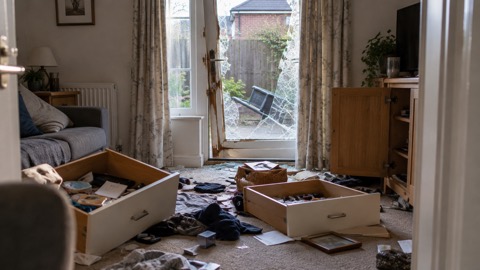 After a Break-In Checklist
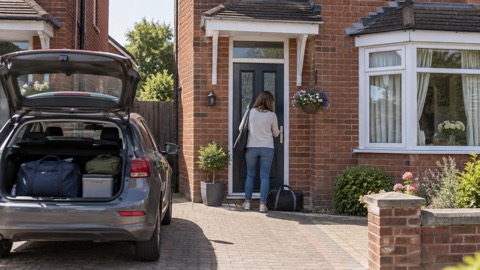 Holiday Security Checklist
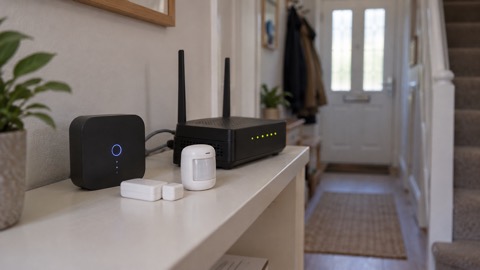 Home Assistant for Security
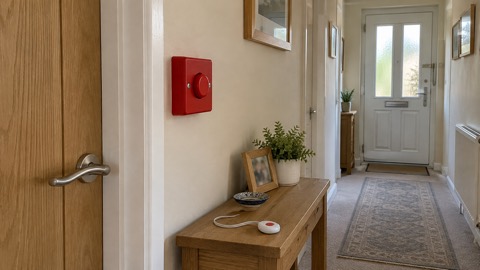 Panic Buttons on Home Alarms
 Police Response to Burglaries
 Home Protection in a Power Cut
 Alarms on a Weak Mobile Signal