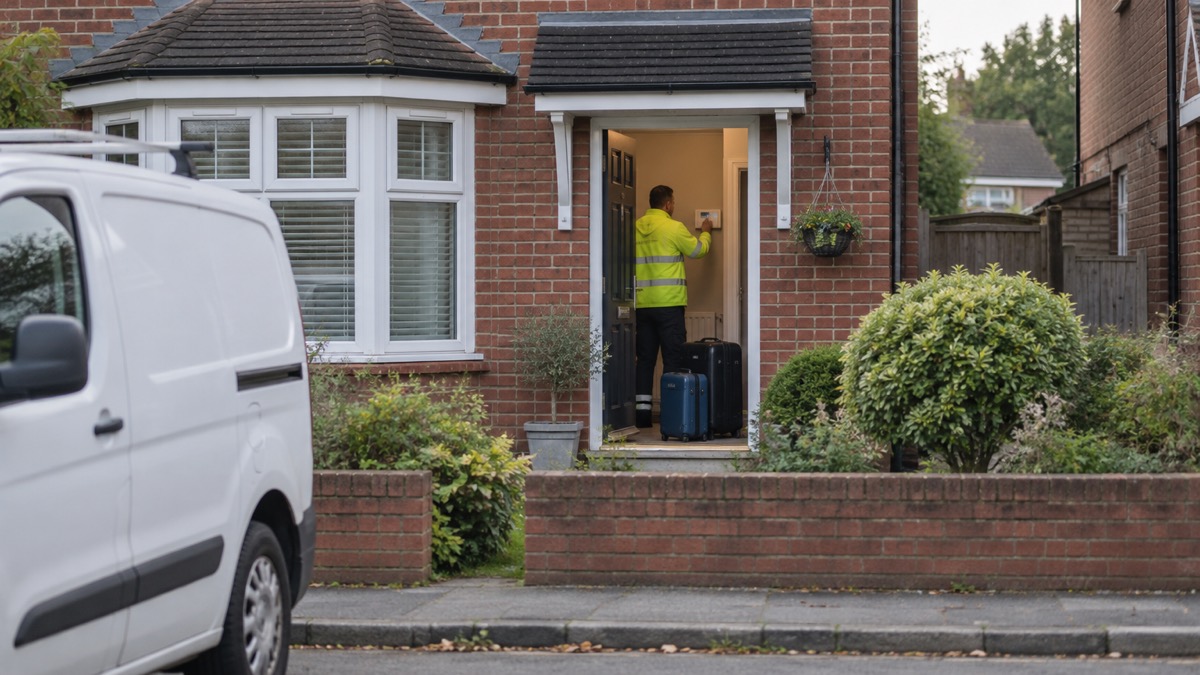
Yes. If you have a burglar alarm, set it before you leave, and treat that as one line of a short routine rather than the whole job. Police forces in England, Wales and Northern Ireland all put the alarm near the top of their pre-holiday advice, alongside locked doors and windows, a trusted neighbour checking the house, and lights on timers1. The alarm is the part that keeps working after you have driven away.
What matters most is that it is properly installed, that it works, and that you understand it. The Police Service of Northern Ireland puts it plainly: ensure your burglar alarm is installed properly and works, and if you do not have one, consider installing one3. Everything else on this page follows from that: what the alarm does while you are gone, what happens to it in a power cut, and what to do if you own a Hive Homeshield system whose support is ending.
Set your alarm before you leave: the official pre-holiday routine
The instruction is consistent across forces. Avon and Somerset Police's pre-holiday routine says: if you have a burglar alarm, ensure it is set before you leave1. Mid and West Wales Fire and Rescue Service, in both its English and Welsh holiday guidance, says to make sure your alarm system is activated or switched on before you leave2. The Police Service of Northern Ireland's house security guidance says the same and adds the installation point3.
The alarm sits inside a wider routine, and the routine is what makes an empty house look less empty. Northern Ireland's nidirect service sets out a holiday checklist: check and lock your doors, windows, sheds and garages; put the burglar alarm on; ask someone trusted to check the house regularly and bring in bins and post; and use timers on lights4. Each item does a different job. Locks make entry harder, the alarm makes it noisier and more likely to be noticed, the neighbour makes the house look watched, and the timers make it look lived in.
The order you do these things in matters less than doing all of them. A common mistake is to set the alarm and then reopen a door to fetch something, disarming it and forgetting to reset. Another is to leave a key within reach of the letterbox so a neighbour can get in. Make sure you know how your house or personal alarm works, including any passwords or codes, as fire service escape-planning advice puts it10.
If you want the full sequence written out, the holiday security checklist takes you through it item by item, and Leaving Your Home While You Are on Holiday covers the wider planning. For the alarm itself, Burglar Alarms: Types and How to Choose One explains what the different systems do.
What an alarm does while you are away: deterring burglars before they try
An alarm does two things, and only one of them is about catching anyone. The first is to make your house a less attractive target before anyone tries the door. The second is to raise the alarm if someone does get in. Neither is a guarantee, and it helps to be clear about which you are relying on.
On the first, the evidence is what police forces act on rather than a statistic they publish. Gloucestershire Constabulary's burglary campaign advises installing external CCTV or digital doorbells, because burglars do not want to be seen and the devices can capture evidence that can be circulated among officers and the public11. The same logic applies to a visible alarm: it is a thing to be seen and avoided. If you want to understand what actually puts a burglar off, How Burglars Choose a Home and What Puts Them Off sets out the factors in order.
On the second, the type of alarm decides who is told. Police guidance distinguishes a monitored alarm, where the alarm company tells you the alarm triggered before calling the police, from an unmonitored one that simply sounds12. That difference matters when you are abroad and cannot hear it. Monitored Alarms: Receiving Centres and Who Responds explains the chain, and How Police Respond to Burglaries and Intruder Alarms covers what happens when a call is made.
A useful comparison is with smoke alarms, where the official language is unusually precise. Smoke alarms do not prevent a fire from occurring, but they provide the earliest possible warning of a fire, to give the best chance of exiting the property safely13. A burglar alarm is the same kind of device: it does not stop entry, it shortens the time an intruder has and increases the chance they are seen or caught. That is worth having, and it is not the same as making your home secure. Locks, doors and windows do that, and the Home Security: A Household Guide section covers them together.
Around 60% of convicted burglars say an alarm makes them look elsewhere
You may have seen this figure quoted. It is widely repeated in security marketing, and it is the kind of number that sounds authoritative because it is specific. It is not in the official and independent material behind this page, and it is not repeated here as fact. What the official sources do support is the direction of travel: police forces treat alarms and visible security as deterrents worth installing and setting1.
That is not a reason to skip the alarm. It is a reason to be sceptical of any single percentage attached to burglar behaviour, including ones that flatter the product being sold. The honest position is that deterrence works in general and is hard to quantify in particular. A visible alarm box, a camera or doorbell, good lighting and a house that looks occupied all push in the same direction, and none of them can be measured for your street.
What you can control is the basics. The Police Service of Northern Ireland's guidance is to ensure your alarm is installed properly and works, and to consider installing one if you do not have one3. Gloucestershire Constabulary's campaign points to external cameras and digital doorbells as evidence-capturing deterrents11. Neither force offers a percentage, and neither needs to: the advice is the same whether the true figure is 40 per cent or 80 per cent.
If you are weighing up what to add, Burglar Alarm or CCTV Camera: Which Suits Your Home? compares the two by what each does, and Home Cameras and CCTV: Types and How to Choose covers the camera side in detail. For the legal side of filming beyond your boundary, Filming Beyond Your Boundary explains the data protection rules that apply to doorbells and cameras.
Power while you are away: mains connection and battery backup
Most burglar alarms run from the mains and carry a back-up battery for exactly the situation you cannot supervise: a power cut while the house is empty. The fire services describe the same arrangement for smoke alarms, and the description is worth knowing because it applies to the alarm on your wall too. Mains-powered alarms are powered by your home power supply and have a back-up battery in case of a power cut; they need to be installed by a qualified electrician and require testing like battery alarms14. Electric alarms normally have a 9v back up battery in them in case you have a power cut6.
The back-up battery is the weak point, because it is invisible until it fails. Official winter safety advice is direct: if you experience a power cut and you have mains powered smoke alarms, check that its battery back-up is working5. The same check applies to your burglar alarm after any outage. If you are away when the cut happens, you cannot make that check yourself, which is why the state of the battery before you leave is what counts.
| What to check | Why it matters while you are away | Source |
|---|---|---|
| Back-up battery condition | Keeps a mains alarm running during a cut | 5 |
| Spare batteries at home | Kept in for an emergency, so a replacement is to hand | 15 |
A power cut does more than drain a battery. If your alarm signals to a monitoring company over a phone line or broadband, the cut can interrupt that path as well, and the alarm may sound locally without anyone being told. Ask your installer or monitoring company what happens when the mains drops, and whether the system has a mobile network path that survives it. Keeping Your Home Protected in a Power Cut covers the household side, and Will a Burglar Alarm Work After the Digital Switchover? explains the phone-line question.
Keep spare batteries at home in the event of an emergency, as emergency kit guidance advises15. A battery-powered radio and spare batteries are also worth having, in case of interruptions to the power supply, so you can hear local information while you are away or when you return16. If you have a smart lock or a camera that depends on mains power, check how it behaves in a cut before you rely on it: Do Smart Locks Work in a Power Cut? and Can Security Cameras Record Without the Internet? answer those directly.
Hive Homeshield owners: support ending and what it means for your system
If you own a Hive Homeshield smart burglar alarm, there is a dated change you need to know about. Hive told Which? it will end software support for the Hive Homeshield smart burglar alarm, the Hive View indoor camera and the Hive View Outdoor camera on 1 August 20257. That date has passed. Software support ending means the maker stops maintaining and updating the system, and you should plan on it no longer being developed.
What that means in practice depends on what your system still does. A smart alarm that loses software support may keep working for a while, but you cannot count on fixes, updates or new features, and the app that runs it may change or stop. The sensible response is neither to ignore it nor to act in haste. Check the system now, before your next trip, and decide whether to keep it, replace it or supplement it.
The basics still apply whatever you decide. The Police Service of Northern Ireland's advice is to ensure your burglar alarm is installed properly and works, and to consider installing one if you do not have one3. If you replace the Hive system, choose on what the replacement does and who it suits, not on brand: Burglar Alarms: Types and How to Choose One sets the types side by side, and Monitored or Self-Monitored Alarm? compares the two ways of getting a response.
If you keep a camera or doorbell running, two practical questions decide how much you can rely on it. The first is updates: How Long Do Cameras and Doorbells Get Software Updates? explains what to ask before you buy. The second is account security: Camera and Doorbell Accounts: Stopping Strangers Getting In covers passwords and two-factor settings. Neither replaces a working alarm, but both stop a supported device becoming a liability.
Telling a neighbour, and who else needs to know
The single most useful thing you can arrange before you go is a trusted person who will look at the house. Nidirect's holiday checklist puts it directly: ask someone trusted to check the house regularly and bring in bins and post4. That person should know the alarm is set, how to reach you, and what to do if it sounds. Do not give the code to someone who does not need it, and change it when they no longer do.
There is official precedent for telling neighbours when something is wrong in the area. Belfast City Council's bogus caller advice says to tell your neighbours, community groups and local Neighbourhood Watch scheme, in case the caller decides to try other homes in your area17. The same principle applies to an alarm: a neighbour who knows your system is set is a neighbour who will act on it rather than assume it is a fault. Joining or Starting a Neighbourhood Watch explains how those groups work.
Fire service escape planning adds a detail worth copying: tell overnight guests where the keys are kept18. The same applies to anyone checking your home while you are away. They need to know how to get in, how to turn the alarm off, and how to turn it back on. Fire service advice for people who rely on a house or personal alarm is to make sure they know how it works, including any passwords or codes10. Write it down for them rather than relying on memory over the phone.
If someone in the household has a hearing impairment, check whether they can hear a sounding alarm from the place where they usually sleep; if not, arrange interlinked smoke and heat alarms and an interlinked strobe light and vibrating pad, providing a vibrating and visual alert if any alarm in the home activates19. That is fire alarm advice, but the principle carries: an alarm nobody can perceive is not protection. For the household side of planning around a disability or illness, Extra Help in an Emergency covers the support available.
Burglary levels in the UK, and what they mean for your trip
It helps to know the trend before you decide how much to worry. Over 250,000 burglaries were recorded in the UK in 2024, down 71 per cent on 2003, according to figures reported by the press8. That is a long, steady improvement, and it is the context in which police advice to set your alarm should be read: as sensible routine, not as a response to a crime wave.
The trend does not make an empty house safe. Mid and West Wales Fire and Rescue Service's holiday guidance is explicit that leaving your home empty while you are away carries a higher risk of burglars targeting it9. The risk is relative: your house is more exposed when it is obviously empty than when it is lived in. That is why the routine exists, and why the alarm is one part of it rather than the whole answer.
The arrangements for reporting and support differ across the UK. Police guidance on house security and holidays includes setting your burglar alarm before you leave1. If you live in Scotland or Northern Ireland and want the reporting and support side, Scotland and Northern Ireland: Reporting Crime and Getting Support sets out the routes.
If you come home to a break-in, do not go in if you think someone may still be inside. Coming Home to a Break-In: What to Do First takes you through the first steps, and After a Burglary: Crime Numbers, Insurers, Repairs and Support covers what follows. For the question of whether to tell the police your home will be empty, Should You Tell the Police Your Home Will Be Empty? answers it directly.
Sources (19)
- Pre-holiday routine, Avon and Somerset Police, 2026-11-02
- While you are away, Mid and West Wales Fire and Rescue Service, 2026-10-29
- House security, Police Service of Northern Ireland, 2026-11-02
- Securing your home, nidirect, 2024-01-23
- Winter safety, North Wales Fire and Rescue Service, 2026-10-29
- Smoke alarms, South Wales Fire and Rescue Service, 2026-08-20
- Best burglar alarms and smart security systems, Which?, 2025-08-01
- Best home security system, The Independent, 2024
- Mynd ar wyliau? (Going on holiday?), Mid and West Wales Fire and Rescue Service, 2026-10-29
- Fire safety for people with hearing difficulties, Devon and Somerset Fire and Rescue Service, 2026
- Burglary campaign, Gloucestershire Constabulary, 2026-11-02
- Break-in and housebreaking, Police Scotland
- Smoke and heat alarms, Greater Manchester Fire and Rescue Service, 2026-10-29
- Fire alarms and carbon monoxide detectors, Lincolnshire County Council, 2026-10-29
- Emergency kit checklist, Neath Port Talbot Council, 2026-10-29
- Fire safety check, Norfolk County Council, 2026-10-29
- Bogus callers, Belfast City Council, 2026-10-29
- Plan your escape, Staffordshire Fire and Rescue Service, 2026-10-29
- Additional advice for carers, Greater Manchester Fire and Rescue Service, 2026-10-29
 Moving Home Locks Checklist
 After a Break-In Checklist
 Holiday Security Checklist
 False Alarms and Police Response
 Checking an Alarm Installer
 Should a Burglar Alarm Bell Box Be Visible?
 Alarms After Digital Switchover
 Outdoor Siren Fitting Height
 Alarm Sensors and Pets