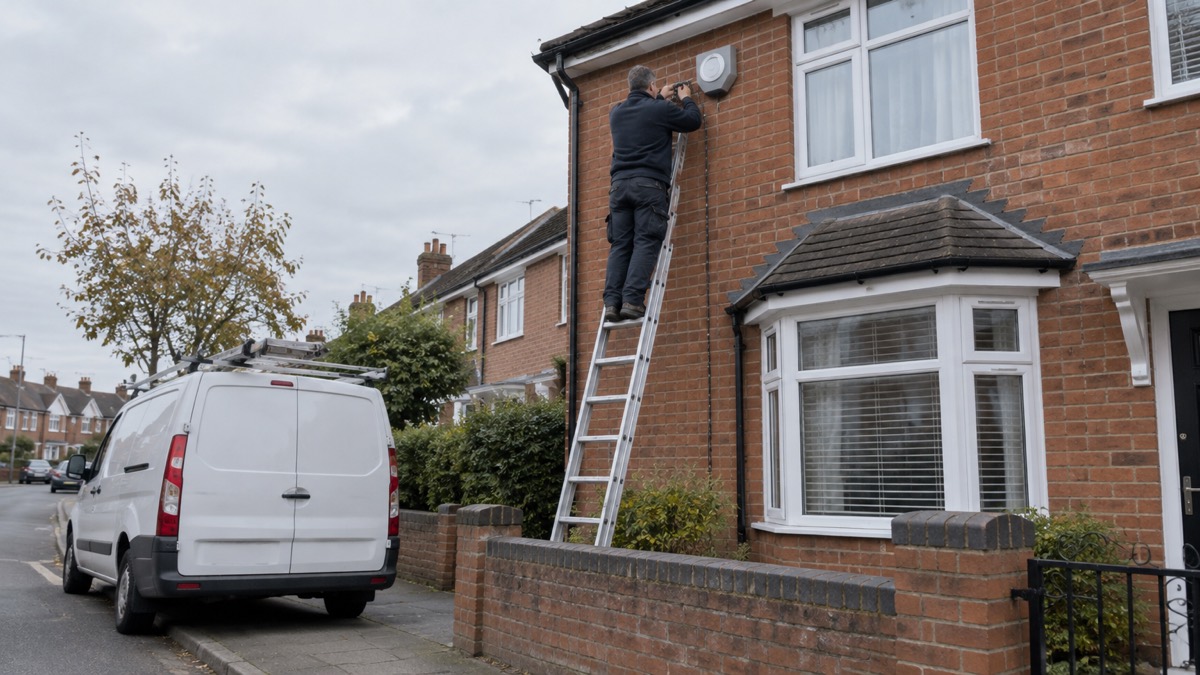
If you are weighing up a burglar alarm against a CCTV camera, the honest answer is that they do different jobs. An alarm makes a noise and tells you, or a monitoring centre, that something is happening. A camera records what happened and gives you a picture to look at. Police guidance supports both: opportunist burglars tend to avoid houses where they can see a burglar alarm, and the cost of home insurance may also be reduced1. Gloucestershire Constabulary goes further and advises external CCTV or digital doorbells, because burglars do not want to be seen and the devices can capture evidence that can be circulated among officers and the public2.
So the choice is rarely either or. The better question is which one to fit first, and what each can realistically do for your household. An audible alarm sounds a loud siren or bell, designed to scare a burglar and alert neighbours and passers-by3. A camera does not make a noise, but it gives you and the police a record. If you have a ground floor flat, Sussex Police suggest you consider an accredited burglar alarm system4. If you have a heating oil tank, the PSNI suggest security lighting and CCTV, which can warn of an intruder and alert neighbours and passing patrols5.
This page sets out how each one works, how long the equipment lasts, the safety points that matter, and which kind of household each one suits.
The short answer
If you can only do one thing, fit an alarm first if your main worry is deterrence and noise, and fit a camera first if your main worry is evidence and seeing what happened. That is the practical split the sources support.
An alarm is the more established deterrent. The Northern Ireland government's home security guidance says opportunist burglars tend to avoid houses where they can see a burglar alarm, and that the cost of home insurance may also be reduced1. The PSNI's home safety leaflet says to set a burglar alarm if one is fitted to your home3. Avon and Somerset Police's pre-holiday routine says that if you have a burglar alarm, ensure it is set before you leave10. The PSNI's house security guidance says to ensure your burglar alarm is installed properly and works, and to consider installing one if you do not have one11.
A camera is the more evidential tool. Gloucestershire Constabulary advises external CCTV or digital doorbells, because burglars do not want to be seen and the devices can capture evidence that can be circulated among officers and the public2. The PSNI, writing about heating oil tanks, suggest security lighting and CCTV, which can warn of an intruder and alert neighbours and passing patrols5. London Fire Brigade's arson guidance says to consider installing security systems such as CCTV, alarms and security lighting12.
If you are in a flat, Sussex Police's guidance on how safe your flat is says to consider an accredited burglar alarm system4. If you are going away, the alarm should be set before you leave10, and you may want to read the site's guidance on leaving your home while you are on holiday.
How each one works
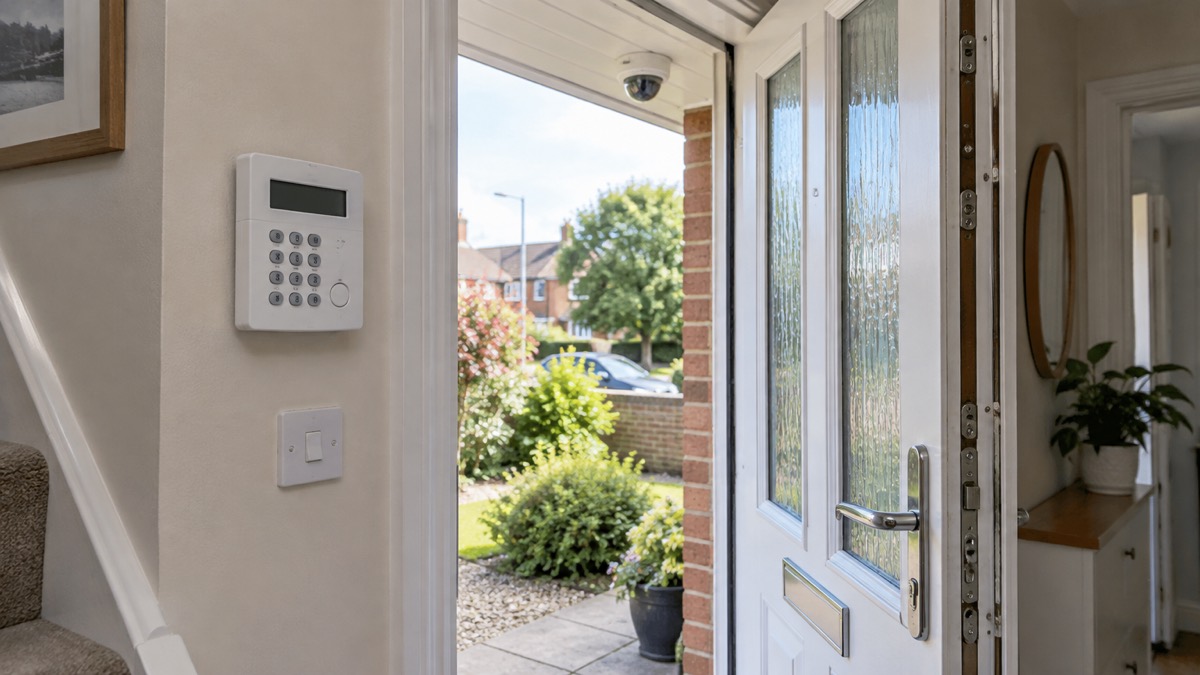
A burglar alarm is a system of sensors and a sounder. The PSNI's home safety leaflet sets out four general types of intruder alarm system: monitored, speech dialler, audible only, and smart home security13. An audible alarm sounds a loud siren or bell, designed to scare a burglar and alert neighbours and passers-by14. A monitored alarm is monitored 24/7 by an approved commercial Alarm Receiving Centre, or ARC14. If you want to understand who responds and when, the site has a page on monitored alarms.
A camera system is a set of cameras, a recorder or hub, and a way of viewing the footage. The sources here do not set out camera specifications in detail, but they do say what cameras are for: capturing evidence2, warning of an intruder5, and acting as a visible deterrent because burglars do not want to be seen2. For the types of camera and how to choose one, see the site's page on home cameras and CCTV.
The two kinds of kit can be combined. A smart alarm system can include contact sensors for doors and vulnerable windows, a motion sensor for hallways or downstairs rooms, and a camera or video doorbell for visual context when an alert comes in15. That is the arrangement many households end up with: sensors that trigger, and a camera that shows you why.
If you are choosing between an alarm and a camera, it helps to know how each is installed and what can go wrong. DIY alarm kits are sold, but police guidance warns that problems with installation, maintenance and reliability may not become clear until a burglary has occurred14. If you want an accredited system, the person or company setting it up should hold National Security Inspectorate (NSI) or Security System and Alarms Inspection Board (SSAIB) certification, and the system should meet British Standards PD66627. The site has a page on how to check an alarm installer is approved.
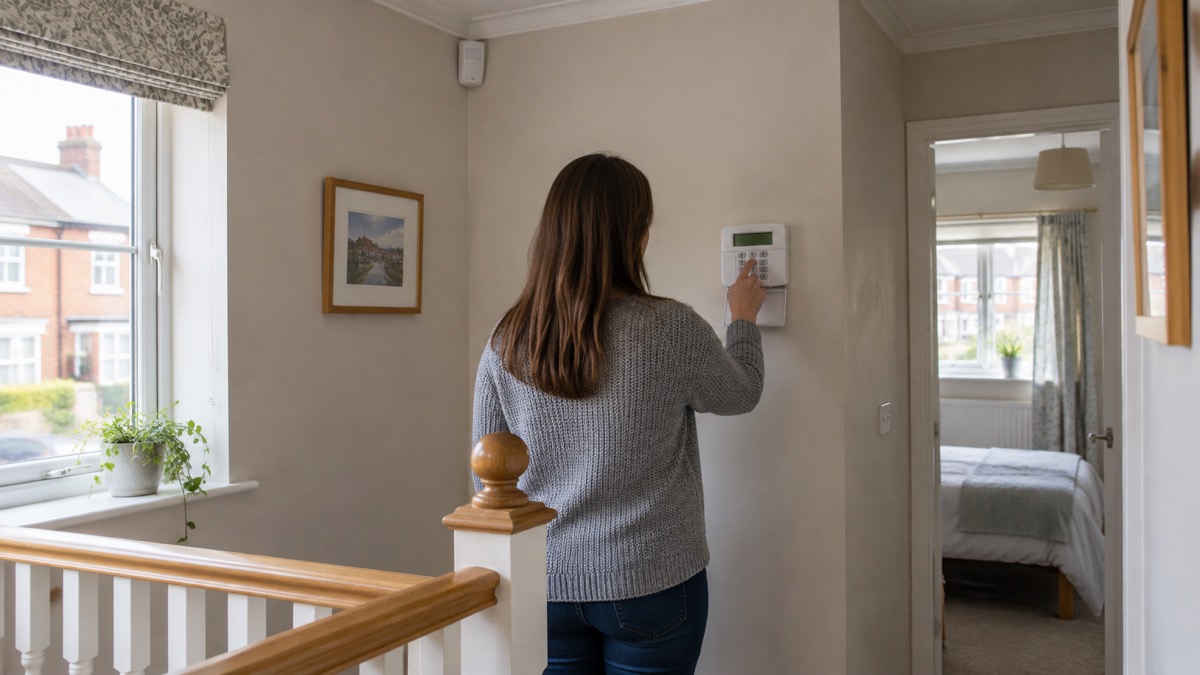
Whatever you fit, make sure you know how your house alarm works, including any passwords or codes16. That advice comes from a government guide aimed at people who might need help in an emergency, but it applies to any household: if you cannot set or silence your own alarm, it is not doing its job.
What each one can run or light, and for how long
This is where the two kinds of kit differ most, and where the sources are thinnest. The facts here cover alarms more than cameras, so treat the camera side as a gap to check with the maker.
For alarms, the lifespan depends on the type. The Scottish Government's guidance on fire and smoke alarms says any alarm you buy will have information on how long it lasts, which can be up to 10 years8. A carbon monoxide alarm typically lasts between five and seven years, with some lasting as long as 10 years17. A mains-powered alarm that plugs into a light socket uses a rechargeable battery which charges up when the light is switched on, lasts for 10 years, and can be silenced or tested by using the light switch18.
| Kit | What it does | Typical life or power note |
|---|---|---|
| Audible burglar alarm | Sounds a loud siren or bell to scare a burglar and alert neighbours and passers-by3 | Check the maker's information; alarms can last up to 10 years8 |
| Monitored burglar alarm | Monitored 24/7 by an approved Alarm Receiving Centre3 | Depends on the line and the panel; see the digital switchover note below9 |
| Smart alarm with sensors | Contact sensors, motion sensors and a camera or doorbell for visual context15 | Check the maker's information for each device |
| Outdoor CCTV or doorbell | Captures evidence and deters because burglars do not want to be seen2 | Check the maker's information; the sources here do not give a camera lifespan |
The digital switchover is the one thing that can stop an alarm working altogether. Government guidance on the analogue to digital switchover says security and burglar alarms may not function as intended on digital lines, and that when existing burglar alarms are triggered there is a possibility they will not function as expected9. If your alarm uses a phone line, ask your alarm company to check it. The site has a page on whether a burglar alarm will work after the digital switchover.
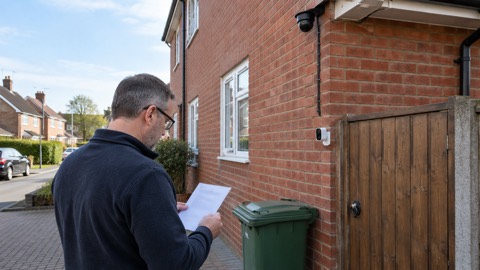
For cameras, the sources here do not give a battery life, a recording time or a storage capacity. What they do say is that a camera's job is to capture evidence2 and to warn of an intruder5. If you are choosing a camera, ask the maker or retailer about power, storage and how long footage is kept. The site's page on wired or battery security cameras covers the trade-offs.
Safety
The safety points for alarms and cameras are mostly about buying approved kit, fitting it properly, and not letting a security device create a fire or carbon monoxide risk.
Buying approved kit matters. London Fire Brigade says to make sure any alarms you buy are marked with a current British Standards or European (CE) safety mark, which shows they have been approved, tested and safe6. Surrey County Council's fire and rescue guidance says the same: make sure any alarms you purchase are marked with a British Standards or European (CE) safety mark which shows that they are approved, tested and safe20. For burglar alarms specifically, Police Scotland's housebreaking guidance refers to British Standards PD66627.
If you have a carbon monoxide alarm, UK Health Security Agency guidance says to install BS EN 50291-1 compliant alarms in every room with a fuel-burning appliance, and in temporary accommodation such as caravans and boats, and to test alarms regularly and replace batteries as needed21. North Wales Fire and Rescue Service says that for domestic dwellings you should only use BS EN 50291-1:2010 compliant alarms22. If you are buying for a houseboat or caravan, the alarm needs to comply with a different British standard, BS EN50291-223.
For fire alarms, the advice is to fit the right type in the right place. Warwickshire Fire and Rescue Service says the most effective type of smoke alarm for your home is a combination or multi-sensor smoke alarm24. Lincolnshire Fire and Rescue says to consider fitting a heat alarm in your kitchen25, and Warwickshire says heat alarms are recommended for the kitchen and garage26. The Met Office says a carbon monoxide alarm should be fitted in any room that contains a gas fuel burning appliance, like a boiler and gas fire, and a solid fuel burning appliance, and tested regularly27.
If you are deaf or hard of hearing, specialist alarms can be fitted, for example strobe light and vibrating pad alarms28. Ask your local fire and rescue service about a home fire safety visit. The site has a page on extra help in an emergency for households that need it.
For cameras, the safety points are about placement and data. The sources here do not set out camera placement rules in detail, but they do say cameras should capture evidence2 and warn of an intruder5. If your camera looks beyond your boundary, the site's page on filming beyond your boundary covers data protection.
Which suits your household
The right choice depends on your circumstances, not on a ranking. Here is how the sources line up the options.
If you are in a ground floor flat, Sussex Police say to consider an accredited burglar alarm system4. The site has a page on flats and shared entrances.
If you have a heating oil tank, the PSNI suggest security lighting and CCTV, which can warn of an intruder and alert neighbours and passing patrols5. They also suggest considering a shed audible alarm3. The site has a page on how to protect a heating oil tank from theft.
If you are going away, set your burglar alarm before you leave10. The site has a checklist for securing your home before going on holiday.
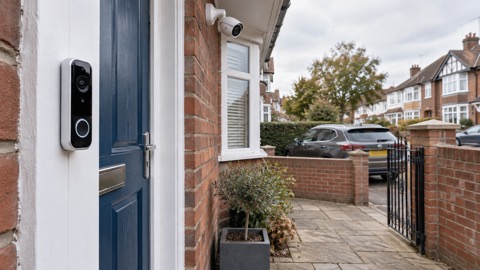
If you want evidence, fit external CCTV or a digital doorbell, as Gloucestershire Constabulary advise2. The site has a page on video doorbells.
If you want a monitored response, a monitored alarm is monitored 24/7 by an approved Alarm Receiving Centre14. The site has a page on monitored or self-monitored alarms.
If you are buying an alarm, Which? has tested 33 burglar alarms and smart security systems in total29. That is an independent testing judgement, not a recommendation from this page.
If you are in rented accommodation, your landlord has duties. The Smoke and Carbon Monoxide Alarm (England) Regulations 2015 require landlords to supply a carbon monoxide detector and alarm in any room of the premises which is used wholly or partly as living accommodation and contains a solid fuel burning combustion appliance30. Landlords should choose the type of smoke alarms based on the needs of their building and their tenants, and those alarms should be compliant with British Standards BS 5839-631. For carbon monoxide alarms in rental properties, Cherwell District Council recommends mains-powered alarms with integral battery back-up, installed by a competent electrician to British Standard BS EN 50292:201331. If something is not working, report faults to the managing agent or landlord so they can be fixed straight away4.
If you are in Scotland, Wales or Northern Ireland, the same principles apply, but the guidance comes from different bodies. Police Scotland's housebreaking advice refers to British Standards PD6662 for alarms7. The PSNI's house security guidance says to ensure your burglar alarm is installed properly and works11. The Scottish Government's guidance on fire and smoke alarms says any alarm you buy will have information on how long it lasts, which can be up to 10 years8. The site has a page on Scotland and Northern Ireland: reporting crime and getting support.
If you are on a weak mobile signal or slow broadband, a smart alarm or camera that relies on an app may not work as intended. The site has a page on alarms and cameras on a weak mobile signal or slow broadband.
If you want to understand how burglars choose a home, the site has a page on how burglars choose a home and what puts them off. For the wider picture, start with the section page on home security.
Sources (31)
- Securing your home, nidirect, 23 January 2024
- Burglary, Gloucestershire Constabulary, 2 November 2026
- Advice on home safety leaflet, Police Service of Northern Ireland, 2022
- How safe is your flat?, Sussex Police, 2 November 2026
- Protecting heating oil, Police Service of Northern Ireland, 2 November 2026
- Smoke alarms and heat alarms, London Fire Brigade, 25 October 2026
- Break-in and housebreaking, Police Scotland, 2 November 2026
- Fire and smoke alarms in Scottish homes: where and what to buy, Scottish Government, 14 August 2024
- Telecare stakeholder action plan: analogue to digital switchover, GOV.UK, 30 August 2023
- Pre-holiday routine, Avon and Somerset Police, 2 November 2026
- House security, Police Service of Northern Ireland, 2 November 2026
- Reducing arson risk, London Fire Brigade, 25 October 2026
- Protect Yourself Booklet English.pdf, Police Service of Northern Ireland
- SBD_ALARMS_ADVICE_FOR_DOMESTIC_PROPERTIES_LEAFLET_web.pdf, Secured by Design
- Burglar alarm systems UK, Abode, 3 November 2026
- Sight, hearing and mobility, GOV.UK, 2021
- Carbon monoxide leaflet, Bedfordshire Fire and Rescue Service, 2026
- Smoke alarms, Cornwall Council, 19 March 2021
- Safe home heating, Warwickshire County Council, 29 October 2026
- Detectors, Surrey County Council, 28 October 2026
- How to protect your home and family from the invisible danger of carbon monoxide, UK Health Security Agency, 18 November 2025
- Alarm advice sheet, North Wales Fire and Rescue Service, 2024
- Fire alarms and carbon monoxide detectors, Lincolnshire County Council, 29 October 2026
- Smoke alarms and CO detectors, Warwickshire County Council, 29 October 2026
- Kitchen safety, Lincolnshire County Council, 29 October 2026
- Alarms and sprinklers, Warwickshire County Council, 29 October 2026
- Keeping your home warm in winter, Met Office, 26 October 2026
- Sprinklers, London Fire Brigade, 25 October 2026
- Best burglar alarms and smart security systems, Which?, 19 May 2026
- Fire safety in rented accommodation, Cornwall Council, 29 October 2026
- Housing standards, Cherwell District Council, 29 October 2026
 Battery vs Wired Doorbell
 Doorbell vs Camera
 Wired or Battery Cameras