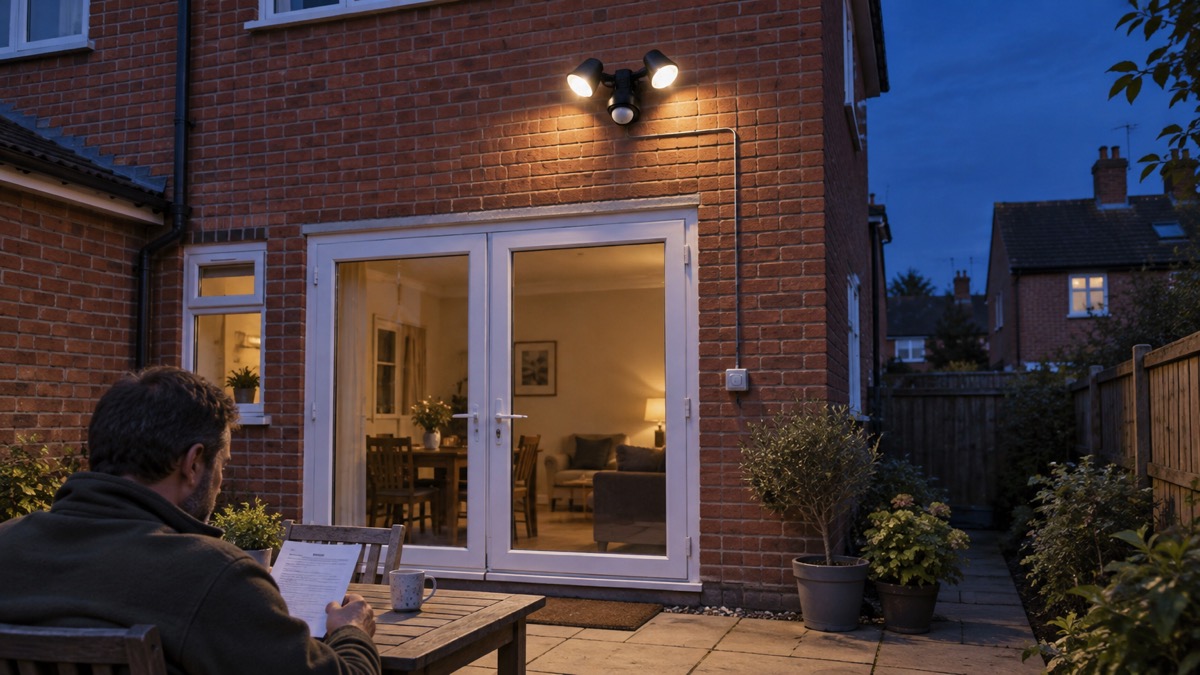
Outdoor lighting is one of the most widely recommended ways to put a burglar off your home. The official advice is simple and consistent: make sure you have lighting at the front and the back of your house, using either manual or automatic lights1. Fire and rescue services across England say the same thing from the arson-prevention angle, advising households to consider installing external lighting to help deter intruders and alert you to activity around your home2, and to consider security systems such as intruder alarms and security lighting as a deterrent3.
Lighting works because it removes what a burglar wants most: an unobserved approach. A light that snaps on when someone crosses your drive, or a soft glow that keeps your porch visible all night, means movement around your home can be seen by you, by neighbours and by anyone passing. Police advice on protecting heating oil tanks makes the point directly: lights can not only warn you of an intruder but also alert neighbours and passing patrols4. Lighting is best used alongside other measures, not instead of them. Suffolk Fire and Rescue Service advises installing or seeking advice on additional security measures such as lighting, fencing or CCTV together5, and the same joined-up approach runs through our wider guide to home security.
Light the front and back of the house
Start with the two faces of your home that matter: the front, where a burglar is most visible to passers-by, and the back, where they are least visible and therefore most likely to try. The nidirect government advice for Northern Ireland is blunt on this: make sure you have lighting at the front and the back of your house, and you can use manual or automatic lighting1. The back of the house deserves the most thought, because a side gate, a rear door or a patio door hidden in shadow gives an intruder time to work unseen. A light over the back door, whether you switch it on yourself or a sensor does it for you, removes that shadow.
Think about the street as well as your own property. Mid and West Wales Fire and Rescue Service advises that if you have problems with the street lighting in your area, make sure the local authorities know about them, because a dark street can make a home look more attractive to burglars8. Reporting a failed street lamp to your council is a two-minute job that improves the security of every house on the road, including yours.
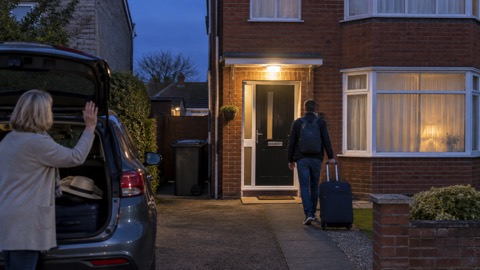
Lighting also plays a part when the house is empty. Police safety advice for Northern Ireland recommends making your house look occupied by putting lights and a radio on timer switches9. Mid and West Wales Fire and Rescue Service makes the same point about sound: even moderate background noise can deter a person who is scouting out a break-in, and leaving a radio on low is a good idea10. Indoor lights on timers and outdoor security lights do different jobs, and a house that looks and sounds lived-in from the outside is a harder target. Our page on making your house look occupied when you are away covers the indoor side of this in more detail.
Manual or automatic: the three kinds of security light
Security lights come in three broad kinds, and most households end up with a mix. Which suits you depends on where the light sits and what you want it to do.
| Type | How it works | What it is good for | Who it suits |
|---|---|---|---|
| Manual | You switch it on and off yourself | Porches and doorways you use every evening | Anyone who wants light on demand and low running cost |
| PIR (motion-sensing) | A sensor spots movement or heat and switches the light on | Drives, side passages, back doors, sheds | Homes where a sudden light is the deterrent |
| Dusk to dawn | A light sensor turns it on at nightfall and off at dawn | Front porches and entrances you want lit all evening | Anyone who wants constant, gentle visibility |
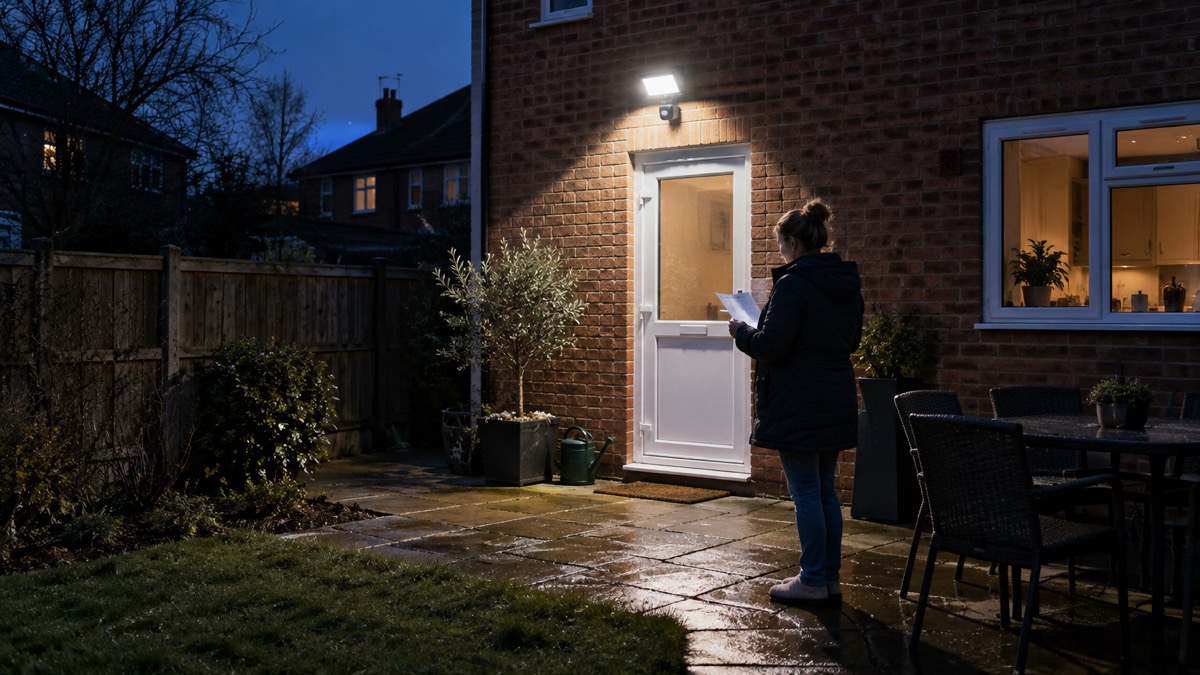
Electrical Safety First notes that passive infrared (PIR) sensors and motion sensors are popular choices for activating security lights on dark paths or entrances7. The same principle appears in indoor lighting: some night lights have a built-in light sensor that turns the light on automatically when it gets dark and off during daylight11, which is exactly how a dusk-to-dawn outdoor light behaves. Police safety advice for homes with heating oil tanks recommends installing an automatic sensor PIR operated security light or, ideally, dusk to dawn lighting9, which tells you the two automatic types are both respected options: the PIR light for sudden, attention-grabbing illumination, and the dusk-to-dawn light for steady visibility.
Whichever type you choose, Police Scotland advises using LED bulbs, because they are brighter and last longer than sodium bulbs6. That matters for security lighting in particular: a PIR light that switches on and off dozens of times a night, or a dusk-to-dawn fitting that runs for hours, puts far less wear on an LED than on an older bulb type, and a brighter light over a wider area does more to expose an intruder.
Some lights now combine with cameras. A camera floodlight such as the Philips Hue Secure Floodlight Camera pairs the sudden light of a PIR fitting with a recording of whatever triggered it, and our pages on home cameras and CCTV and video doorbells cover those choices separately. If you film beyond your own boundary, even accidentally, data protection rules apply, which our page on filming beyond your boundary explains.
PIR sensors: how movement-triggered lights work
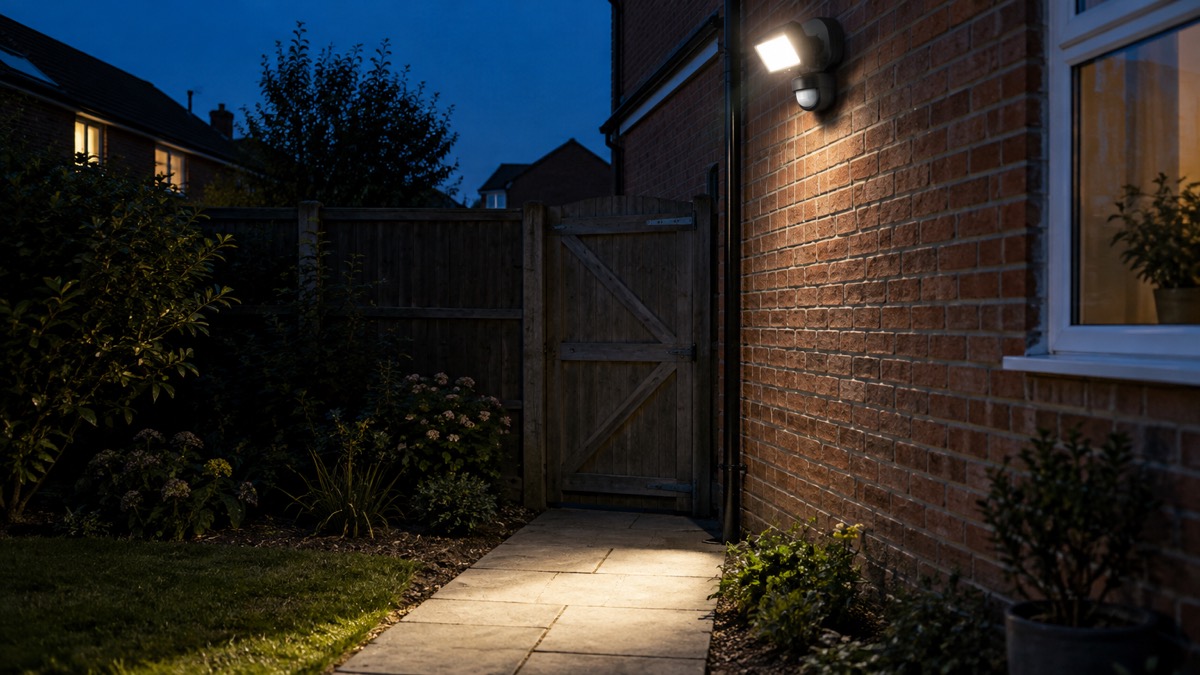
A PIR sensor does not see a picture of a person. It detects change: specifically, the moving patch of warmth that a human body represents against the cooler background of your wall, path or flowerbed. The clue is in the name, passive infrared. The sensor is passive because it emits nothing itself, and infrared because it watches for heat. This is the same family of sensing used elsewhere in home safety: heat detectors activate when there is a change in temperature caused by a fire, unlike a standard smoke alarm which sounds when it detects smoke12, and Staffordshire Fire and Rescue Service explains that heat alarms detect the increase in temperature from a fire and are insensitive to smoke13. A PIR security light is doing a related but different job: noticing a warm body moving across its field of view, and using that to close a switch.
Because a PIR responds to heat and movement rather than to images, three practical things follow. First, anything warm that moves can trigger it: a person, a cat, a fox, or on a cold night, sometimes a gust of warmer air. Second, anything that blocks the sensor's view, such as an overgrown shrub or a build-up of dirt, will stop it working even though the lamp itself is fine. Third, the sensor has a field of view, usually spread in a fan or in several zones in front of the fitting, and where you point that fan matters more than how powerful the lamp is. A modest light aimed across the approach to your back door will catch far more intruders than a powerful light aimed at the fence.
Most PIR fittings let you adjust two things: the sensitivity, which changes how much heat and movement is needed to trigger, and the time the light stays on after triggering. Turning sensitivity down reduces false triggers from small animals and passing headlights, at the cost of needing a larger or warmer intruder to set the light off. If your light keeps triggering on things you would rather it ignored, adjust the sensitivity and the angle before you conclude the fitting is faulty. For households with pets and a full burglar alarm, the alarm's own sensors need different treatment, and our page on pet-friendly alarm sensors covers that.
Mains power, batteries and who should install it
Mains-powered lights with built-in PIR sensors are the most common choice for the main entrances to a home. They need a permanent supply from your household wiring, which usually means either replacing an existing outdoor light fitting where a cable already runs, or having a new circuit installed. Once fitted, they run indefinitely with nothing to recharge or replace, which is why they suit doors and drives you rely on every day.
Battery and wireless options fill the gaps. A wireless PIR detector or battery-powered light can go where a cable cannot sensibly reach: on a shed, on a distant gate post, or on the far corner of a garage. The trade-off is maintenance, because a flat battery turns the light into decoration. Build battery checks into your routine, and expect to clean and test these fittings as often as any others.
If a fitting needs new wiring, treat it as electrical work, not as a DIY lighting job in the same league with a plug-in lamp. Electrical Safety First publishes dedicated safety advice on outdoor lighting, covering the specific risks of electricity outside the house, including water and weather exposure7. In rented homes there is a useful question to ask: Cornwall Council's guidance for tenants suggests asking whether sockets, switches, light fittings and so on are checked every year14. Greater Manchester Fire and Rescue Service's advice on electrical equipment in the home is to make sure you have working smoke alarms on every floor and test them at least monthly15, which is sensible protection whatever work is done on your wiring.
Some combined devices blur the line between light and camera. Which?'s guide to smart video doorbells records how each model is powered, noting for example that the Philips Hue Wired Video Doorbell runs from the mains16. A wired doorbell or camera floodlight needs the same consideration as a wired light: a connection to your home's electrics, done safely. Our comparison of wired or battery security cameras and of battery or wired video doorbells sets out the trade-offs.
Whatever the power source, check the fitting itself regularly. Electrical Safety First's advice on night lights, which applies equally to any light fitting in regular use, is to check regularly for any signs of damage11. Cracked housings, perished cable insulation and water ingress are the three things most likely to appear on an outdoor light, and any of them means the fitting should be isolated and repaired or replaced.
Where to point automatic lights so they do not disturb neighbours
Placement is where good security lighting is won or lost, and official advice is unusually specific. Police Scotland advises putting security lights 3 metres above the ground, to stop thieves from breaking them6. Height does two jobs at once: it keeps the fitting out of easy reach of someone who would rather your light did not work, and it gives the sensor and lamp a wider, more useful field of view over your drive or garden.
The second rule is about your neighbours. The nidirect advice says to make sure automatic lighting does not disturb neighbours1. A floodlight that shines into a bedroom window across the way will be switched off at the wall by an exasperated neighbour's complaint, or worse, will sour a relationship that is itself part of your security. Aim the lamp downwards at your own property, fit a hood if the fitting allows, and choose the lowest brightness that does the job. A light that comes on briefly when someone approaches is far less of a nuisance than one that burns all night, which is one reason PIR lights are popular in built-up areas.
Third, think about the road. Guidance on driving in winter reminds motorists that fog lights are brighter than standard tail lights, so other motorists may not notice your brake light when you brake17. The same logic applies in reverse to your home: a bright light aimed at a road can dazzle or distract drivers, and a PIR sensor aimed at the highway will trigger on every passing car, headlight sweep and bus. Angle the sensor so its detection zone lies across your own drive or path, not along the public road, and the false triggers usually stop.
Finally, remember that lighting is one layer among several. Police advice on garden security notes that defensive planting is not meant to replace, but to complement, other security measures such as lighting, locks and alarms19. A thorny hedge under a window plus a sensor light plus a good lock is a far harder proposition than any one of them alone. Our pages on doors and locks and windows cover the mechanical side.
Side passages, low-level lighting and the approach to your door
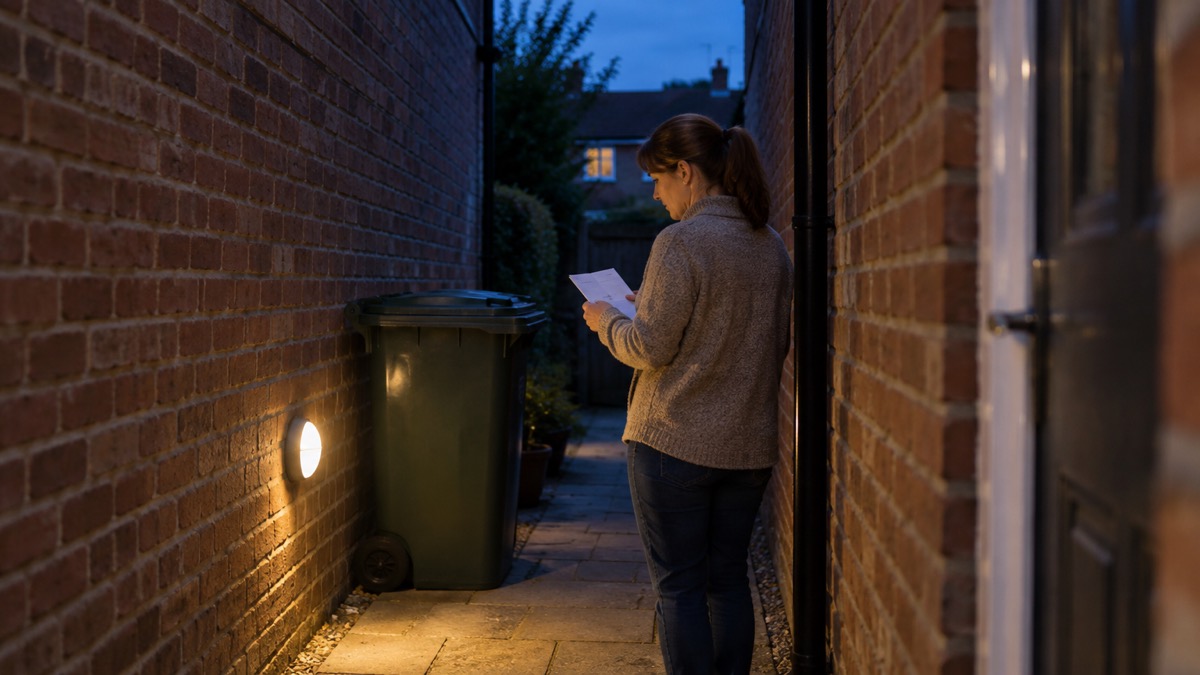
The side passage between two houses is the classic blind spot: narrow, dark, out of sight of the street and often out of sight of the homeowner too. It is also the route a burglar takes to reach the back of the house. A PIR light mounted at the entrance to the passage, or partway along it, means anyone entering it is suddenly lit from behind, which is the single most effective thing you can do with a light in that space. Electrical Safety First notes that PIR and motion sensors are popular choices for security lights on dark paths or entrances7, and a side passage is exactly that.
Low-level and path lighting does two jobs at once. The first is security: a lit path removes the shadows an intruder uses. The second is safety, and it matters for every household with older members, small children or anyone unsteady on their feet. The North West Ambulance Service's guidance on handling falls lists improving lighting among the measures that help prevent them20. A row of low lights along a path, or a dusk-to-dawn fitting by the step, makes the approach to your door safe for the people who live there as well as unwelcoming to the people who should not. One caution from Electrical Safety First: be careful where you place a lamp to avoid creating a trip hazard7, so run path lights along the edge of the paving, not through the middle of the walkway.
Outbuildings and anything reachable from a flat roof deserve their own light. Police advice on garden security is to have a sensor or security light installed to focus on the shed19. The same approach applies to a garage, a rear gate, or the rooflight on a flat-roof extension: put a light on the target itself, so that anyone approaching it is illuminated. For a flat roof, treat the rooflight as a point of entry. Make sure its frame and any opening mechanism are secure, and light the area below or the roof itself so that anyone climbing up is visible from the ground and from neighbouring properties. If you have a heating oil tank, the same police advice applies there too, and our page on protecting a heating oil tank from theft goes into it in detail.
Security lights are not emergency lights
A security light is designed to deter and to reveal. It is not designed to see you through a power cut, and it is worth being clear about the difference. When the mains fails, a mains-powered security light fails with it, and a battery PIR light may trigger briefly before it too has nothing to rely on but its own small cells. If your household's plan for a dark house is "the security light will come on", that plan will fail on the night you need it.
For power cuts, keep proper emergency lighting: torches where you can find them in the dark, and battery lanterns rather than candles. Fire and rescue services are consistent on this. North Wales Fire and Rescue Service advises using battery operated lights within homemade lanterns and pumpkins rather than candles21, and North Yorkshire Fire and Rescue Service gives the same advice for lanterns and pumpkins22. The candle warning applies to power cuts just as much as to Halloween: a flame in an unfamiliar dark room is a fire risk, and a battery lantern is not. Our guides to emergency lighting at home and to power cuts cover what to keep and where.
Keep them working: a simple check routine
A security light that has failed silently is worse than no light at all, because you believe you are protected when you are not. Give your lights a routine check every three months. Three-monthly checks are an established rhythm in home safety: the law says housing providers or managing agents must check fire doors in communal areas every three months23, and adopting the same interval for your own outdoor lights keeps the job on a schedule you will actually keep.
At each check, do four things. Clean the sensor and lamp housing, clearing any leaves and dirt that have gathered on it, and clear any foliage that has grown across the sensor's view during the season. Test the light by walking through its detection zone and confirm it triggers and stays on for its set time. Finally, inspect the fitting and cable for damage, following Electrical Safety First's advice to check regularly for any signs of damage11.
If you rent, ask your landlord or agent how the electrical installation is maintained. Guidance for tenants suggests asking whether sockets, switches, light fittings and so on are checked every year14, and landlords are required to keep appliances and flues in good order and checked for safety at least once every 12 months24. Your own three-monthly wipe and test of the light fittings sits comfortably alongside that annual professional check.
Sources (24)
- Securing your home, nidirect (Northern Ireland government), 2024
- Reducing arson risk, Devon and Somerset Fire and Rescue Service, 2026
- Protect your property from arson, Cheshire Fire and Rescue Service, 2024
- Protecting heating oil, Police Service of Northern Ireland, 2026
- Putting a stop to arson, Suffolk Fire and Rescue Service, 2026
- Break-in and housebreaking advice, Police Scotland, 2026
- Outdoor lighting safety advice, Electrical Safety First, 2026
- Mynd ar wyliau (Going on holiday?), Mid and West Wales Fire and Rescue Service, 2026
- Advice on home safety leaflet, Police Service of Northern Ireland, 2022
- While you are away, Mid and West Wales Fire and Rescue Service, 2026
- Night lights safety advice, Electrical Safety First, 2026
- Carers: equipment, Devon and Somerset Fire and Rescue Service, 2026
- Smoke alarms, Staffordshire Fire and Rescue Service, 2026
- Fire safety in rented accommodation, Cornwall Council, 2026
- Electrical equipment, Greater Manchester Fire and Rescue Service, 2026
- How to buy the best smart video doorbell, Which?, 2026
- Driving in winter, Oxfordshire County Council, 2026
- Laser party light recall, Electrical Safety First, 2026
- Garden security, Police Service of Northern Ireland, 2026
- Handling falls, North West Ambulance Service NHS Trust, 2024
- Halloween safety, North Wales Fire and Rescue Service, 2026
- Stay safe this Halloween, North Yorkshire Fire and Rescue Service, 2023
- Fire doors and why they are important, Greater Manchester Fire and Rescue Service, 2026
- Student and rented accommodation, North Yorkshire Fire and Rescue Service, 2026
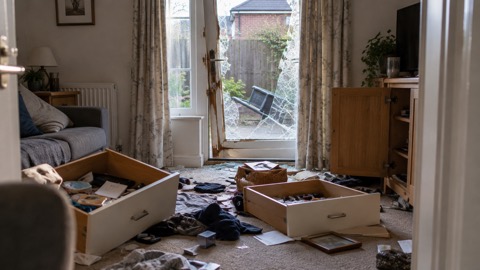 After a Break-In Checklist
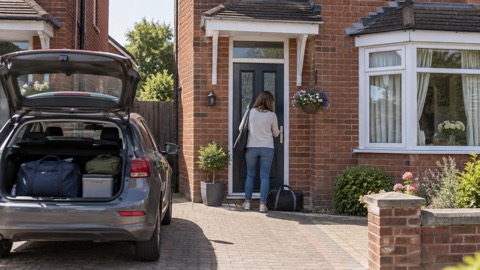 Holiday Security Checklist
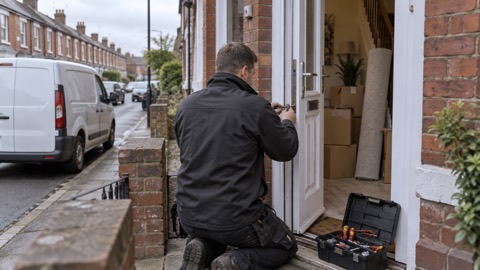 Moving Home Locks Checklist
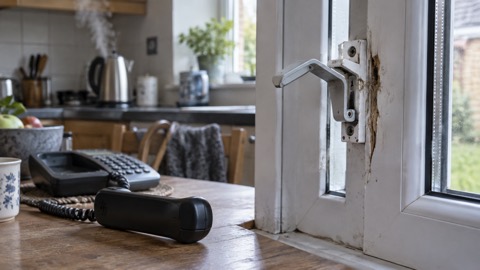 After a Burglary
 Bogus Callers
 Coming Home to a Break-In
 Catalytic Converter Theft
 Riots and Disorder Near Home
 Securing a Damaged Home
 Dogs as a Burglar Deterrent
 Doorstep Selling and Your Rights
 Empty Homes and Long Absences
 Leaving Home on Holiday
 How Burglars Choose a Home
 Home Insurance Conditions