

Philips Hue is best known for smart bulbs you control from a phone, but for a household preparing for emergencies the useful part is narrower: lighting that can be set up to come on automatically, and a small range of wired security cameras. The cameras are the part that matters most here, because they are what the maker sells for watching a home while you are out or asleep.
The single most important thing to understand is that the Philips Hue Secure wired camera is mains powered. It has no battery, so in a power cut it stops working. The maker gives it a defined support period of at least 60 months from the date of purchase from an authorised reseller, and a 2-year warranty1. That support commitment is the reason to buy from a proper shop rather than a marketplace seller.
For lighting, the Met Office says to leave a light on so you know when the power cut has been fixed2, and one local council guide makes the same point: leave at least one light on in the house so that you know when your electricity comes back on3. Keep a torch with spare batteries in an accessible location4. Hue bulbs can play a part in that, but they depend on your home network and hub, so they are a convenience rather than a substitute for a torch.
What Philips Hue makes for UK households
Philips Hue's range for UK homes centres on connected lighting and a small security line. The security products are the ones that bear on emergency planning, and there are two: the Philips Hue Secure Wired Camera and the Philips Hue Secure Floodlight Camera. Both are sold in the UK; the wired camera is listed as in stock on the maker's UK site1.
The wired camera is a fixed, mains-powered unit designed for balconies, garages, hallways, home offices, kitchens, living rooms and outside, with placement given as back garden and front garden1. It is not a portable device and it is not designed to be moved around during an incident. That shapes how a household should think about it: it is part of the fabric of the home, not part of a grab bag.
The lighting side is broader, but for preparedness the relevant point is that Hue lights are network-dependent. They are useful for automating a "lights on" routine and for leaving a lamp on as a signal when power returns, but they are not emergency lighting. The Emergency Lighting at Home guide sets out what actually works when the mains fails, and the Home Security guide covers the wider question of protecting a home during a disruption.
| Product | Type | Power | Best suited to |
|---|---|---|---|
| Philips Hue Secure Wired Camera | Wired security camera | Mains via 12VDC/24DC adaptor | Fixed positions: hallway, garage, front or back garden1 |
| Philips Hue Secure Floodlight Camera | Security camera with floodlight | See product page | Larger outdoor areas needing light and camera together |
| Hue smart bulbs and lamps | Connected lighting | Mains | Routine lighting and "power restored" signals, not emergency light |
If you are building a household plan, treat Hue kit as one layer. The Getting Started guide explains how to sequence your preparations, and the Backup Power at Home guide covers what to do about mains-dependent devices more generally.
Hue lighting and keeping the lights on in a power cut
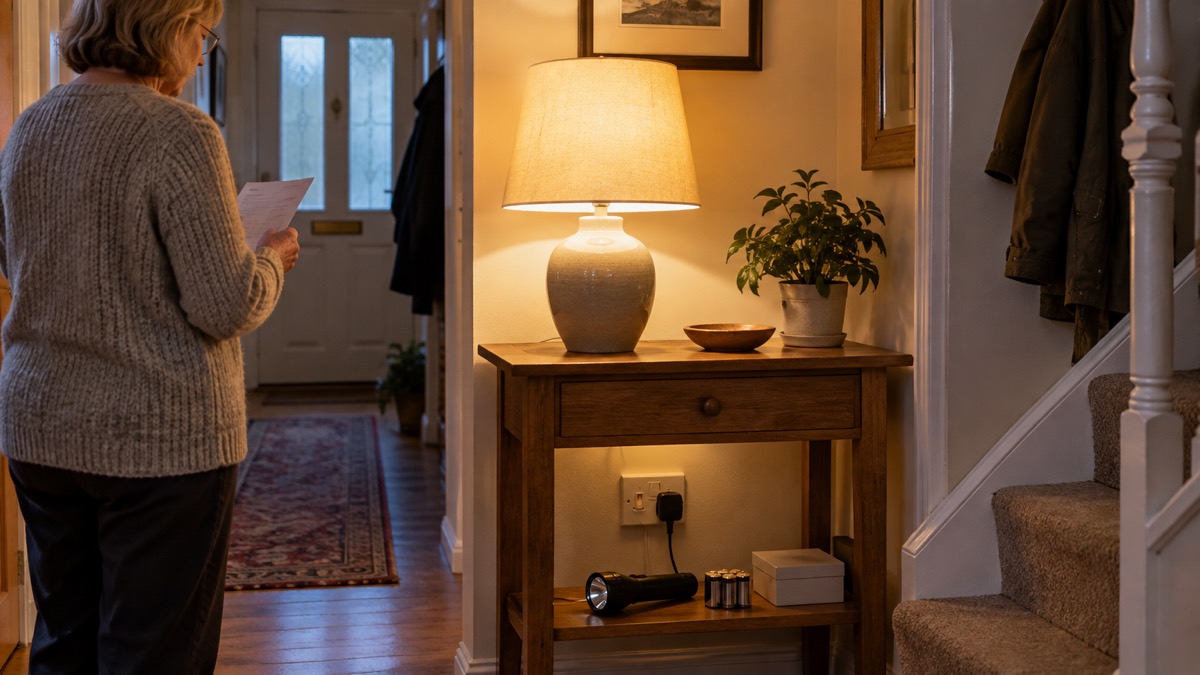
The most repeated piece of official power cut advice is to leave a light on. The Met Office says to leave a light on so you know when the power cut has been fixed2. A local council guide makes the same point: leave at least one light on in the house so that you know when your electricity comes back on3. Some power cut guidance also advises keeping a supply of candles4, and where candles are used, make sure lit candles are kept in candle holders6.
Hue bulbs can serve the "leave a light on" purpose well, because you can set a lamp to come on at a schedule or leave a single bulb switched on at the wall. But there is a catch: if the bulb is controlled through a hub and your router is also off, the bulb may not behave as expected when power returns. A plain lamp on a standard circuit is the more reliable signal. Use Hue for convenience and use a simple light for the power-restored check.
For the full picture on torches, lanterns and candles, see the Emergency Lighting at Home guide. For what to do before, during and after an outage, the Power Cuts guide covers reporting on 105, protecting food and checking on neighbours5.
Hue Secure wired camera: 1080p HD video
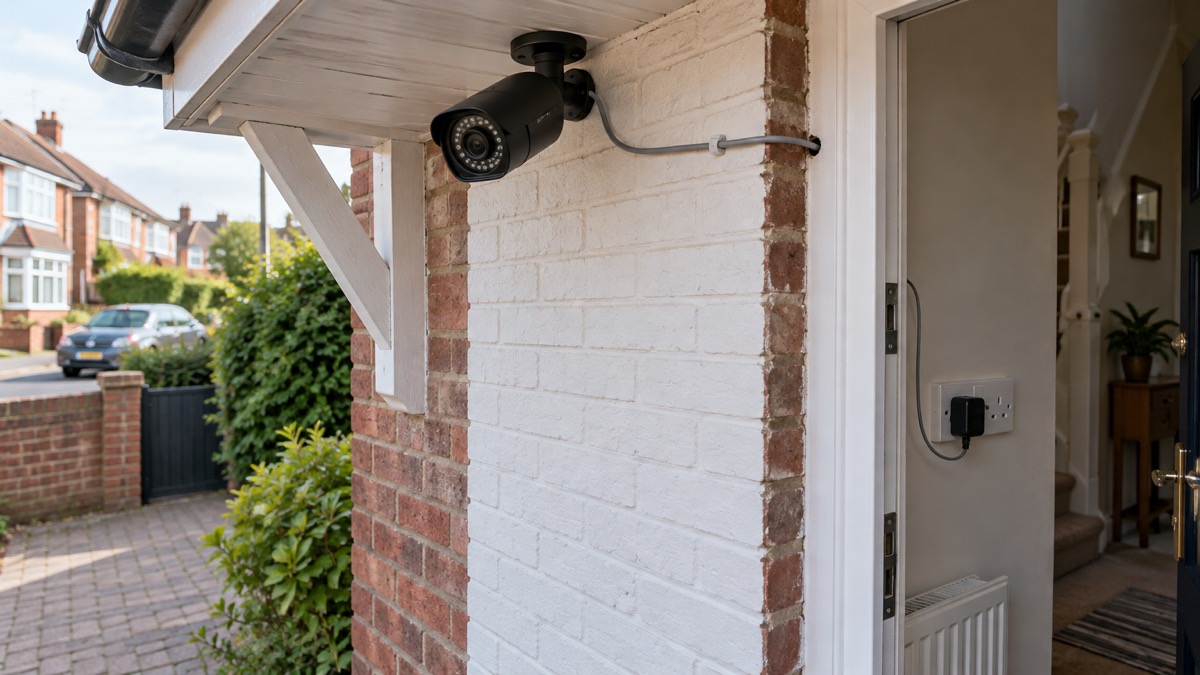
The Philips Hue Secure wired camera records at 1080p HD in a 16:9 image ratio, with a CMOS F35 sensor1. It has night vision using an infrared LED, motion detection and two-way talk1. It carries a 78 dB audio alarm, which the maker lists as a sound alarm1. For a household, that combination means the camera can see in the dark, alert you to movement and let you speak to someone at the door or in the garden.
The camera is rated IP65, meaning the camera body is protected against dust and water jets, but the power supply unit is rated IP20, which is not weatherproof1. That distinction matters: mount the camera outside by all means, but keep the power supply unit indoors or in a sheltered enclosure. The maker describes the camera as fully weatherproof, and the IP65 rating supports that for the camera itself1.
Connectivity is WiFi on 2.4GHz and 5GHz, plus Zigbee and Bluetooth1. The camera works with a Hue Bridge for Matter functionality and for voice assistants: Amazon Alexa, Google Assistant and Samsung SmartThings all require the Hue Bridge1. Third-party compatibility is listed as Alexa, Google Home, Apple HomeKit, IFTTT, Klikaanklikuit, Matter, Samsung SmartThings and Sonos1. The app requires Android 12.0 and above, or iOS 17 or later1.
| Specification | Detail |
|---|---|
| Resolution | 1080p HD, 16:91 |
| Sensor | CMOS F351 |
| Night vision | Yes, infrared LED1 |
| Weather rating | IP65 camera, IP20 power supply unit1 |
| Audio alarm | 78 dB1 |
| Connectivity | WiFi 2.4GHz and 5GHz, Zigbee, Bluetooth1 |
| Power | Mains, 12VDC/24DC adaptor1 |
| Protection class | Class III, Safe Extra Low Voltage1 |
| Encryption | End-to-end encryption, AES networking1 |
| Warranty | 2 years1 |
The maker's own product page shows an overall customer score of 2.8 from 4 reviews as of 3 November 20261. That is a small sample and should be read as such, but it is worth knowing before you buy.
What a Hue camera does for home security in an emergency
A security camera earns its place in an emergency plan when it lets you see what is happening without going outside. During a storm, a flood or a long power cut, being able to check the front garden or back garden from your phone is genuinely useful. The Hue Secure wired camera is designed for exactly those positions, plus hallways, garages and home offices1.
What it cannot do is keep working when the power fails. It is a wired camera with a mains adaptor and no battery1. In a power cut, the camera is off. That is not a fault; it is the nature of a wired device. If you want coverage during an outage, you need a camera with its own battery or a backup power arrangement for the camera's supply. The Backup Power at Home guide explains the options and the safety rules for anything that stores energy.
The camera also depends on your home network for remote viewing. The maker states that it works without Wi-Fi1, which means local functions can continue, but remote access through the app needs a connection. If your broadband goes down in a storm, you may not be able to view the camera from outside the home. Keep a charged power bank and a battery radio so you can still get information; the Staying Informed and in Touch guide covers this.
For the wider question of protecting a home during disruption, including doors, locks and lighting, see the Home Security guide. For storm-specific preparation, the Storms, Snow and Ice guide sets out what to do before, during and after.
Software updates for at least five years from an authorised reseller
The maker gives the Philips Hue Secure wired camera a defined support period of at least 60 months from the date of purchase from an authorised reseller1. That is five years of software support, and it is the figure that should shape your buying decision. A camera that stops receiving updates is a camera you should stop relying on for security.
Independent testing by Which? reported a software update period of five years from purchase for the Philips Hue Wired Video Doorbell7. The same review notes that other brands commit to shorter periods: Imou two years from launch, and Swann two years from the date of purchase7. Eufy and Nest are reported at five years from launch and five years from release date respectively7. The point is not to rank brands but to show that support periods vary widely, and that the Hue commitment sits at the longer end.
| Product | Software support commitment | Source |
|---|---|---|
| Philips Hue Secure wired camera | At least 60 months from purchase from an authorised reseller1 | Maker |
| Philips Hue Wired Video Doorbell | Five years from purchase7 | Which? |
| Imou | Two years from launch7 | Which? |
| Swann | Two years from purchase7 | Which? |
| Eufy | At least five years from launch7 | Which? |
| Nest Doorbell (Battery) | Five years from release date7 | Which? |
The support period is tied to purchase from an authorised reseller. That is not a marketing nicety; it is the condition the maker attaches to the commitment1. Buy from an unauthorised seller and you may find the support period does not apply, or that you cannot prove when it started. Keep your receipt.
Buying from an authorised reseller and why it matters for updates
Fire and rescue services across the UK give the same advice about buying anything electrical: buy from a recognised manufacturer or retailer. The London Fire Brigade says to buy e-bikes and batteries from reputable retailers or manufacturers, including recognised bicycle retailers, established online stores and manufacturers' official websites8. Mid and West Wales Fire and Rescue Service says always to buy phone chargers from a shop you know and trust, an approved retailer, or direct from the manufacturer of the same name as the device9. North Yorkshire Fire and Rescue Service says to buy new heaters from recognised manufacturers and retailers to reduce the risk of buying a counterfeit and unsafe heater10.
That advice applies to smart home kit as much as to heaters. A counterfeit or grey-market camera may not carry the maker's support period, may not be eligible for warranty repair, and may not receive the software updates that keep it secure. The maker's support period for the Hue Secure wired camera is explicitly tied to purchase from an authorised reseller1.
How to tell an authorised reseller:
- Buy from the maker's own UK website, a recognised electrical retailer, or an established online store with a clear trading identity8.
- Avoid marketplace listings where the seller is not identified or the price is far below the norm.
- Keep the receipt and the order confirmation; you may need them to prove the purchase date for the support period1.
- Check the product page on the maker's site for the model you are buying, and match the specification1.
For the broader question of what to keep in the house and how to check it, see the Emergency Kit guide.
Support, warranty and safety notices
The Philips Hue Secure wired camera carries a 2-year warranty1. The maker lists it as Class III, Safe Extra Low Voltage, which means it runs on a low-voltage supply and is designed to reduce shock risk1. That is a safety feature worth knowing about, but it does not remove the need to follow the installation instructions and to keep the power supply unit dry.
The camera is compatible with Amazon Alexa, Google Assistant and Samsung SmartThings, all requiring the Hue Bridge1. The app needs Android 12.0 and above, or iOS 17 or later1. If your phone is older than that, check before you buy.
On recalls, the advice from fire and rescue services is consistent: check your appliances against official recall lists. The London Fire Brigade says the most important thing you can do is regularly check if your appliances have been recalled, using the Government's product recall site, the manufacturer's website or Electrical Safety First's recall register11. Manchester Fire and Rescue Service recommends Electrical Safety First's online product checker12, and also points to the Office for Product Safety and Standards alerts and recalls page13. Cheshire Fire and Rescue Service says to check for recalls or safety notices on the Electrical Safety First website14.
There is no recall of Philips Hue kit listed in the official notices reviewed for this page. That is not a guarantee; recalls can be issued at any time. Check the official sources when you buy and then periodically, as the fire services advise11.
For help with power cuts, call 1055. For wider household planning, the Getting Started guide and the Power Cuts guide set out the steps in order. If you need extra help, for example because of age, disability or medical dependence, the Extra Help in an Emergency guide explains the Priority Services Register and other support.
Sources (14)
- Philips Hue Secure wired camera, Philips Hue, 2026
- Stay safe in a thunderstorm, Met Office, 2026
- 12 tips to prepare for a power cut, Horsted Keynes Parish Council, 2026
- Power cuts, Scottish Fire and Rescue Service, 2026
- Power cut reporting, Isle of Anglesey County Council, 2026
- Strong winds and heavy rain warning information and advice, nidirect, 2026
- How to buy the best smart video doorbell, Which?, 2026
- Buying safe e-bikes, batteries and chargers, London Fire Brigade, 2026
- Electrical safety, Mid and West Wales Fire and Rescue Service, 2026
- Heating your home, North Yorkshire Fire and Rescue Service, 2026
- Total recalls: making white goods safer, London Fire Brigade, 2026
- Stay fire safe, Manchester Fire and Rescue Service, 2026
- Maintain appliances and recalls, Manchester Fire and Rescue Service, 2026
- White goods, Cheshire Fire and Rescue Service, 2026
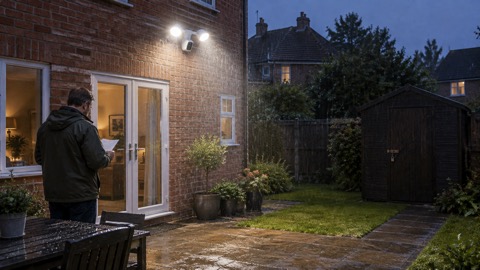 Philips Hue Secure Floodlight Camera
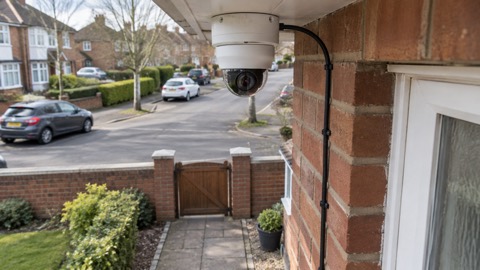 Philips Hue Secure Wired Camera