
Hive is a British smart home brand, and for most households it means one thing first: a heating control you can set from a phone. That part of the range is still on sale. What has changed is the security side. Hive states that the only products being discontinued are its smart security and leak detection devices, plus some older models of the Hive Hub, and that the rest of the portfolio is unaffected1.
The dates matter if you already own the kit. Hive's Leak Sensor worked as normal until its three-year support period ended on 01/09/20231. The HomeShield alarm system and the Hive View cameras worked as normal until their support period ended on 01/08/2025, and Hive says they no longer function after that date1. The Nano 1 Hub was deactivated on 01/08/2023 and no longer connects to Hive's servers1.
For a household thinking about emergencies, the practical question is what still works when the power, broadband or mobile signal fails, and what you should replace before it lets you down. This page sets out what Hive makes, what each part does in an emergency, and how to dispose of anything that has reached the end of its life.
Hive has discontinued its smart security and leak detection products
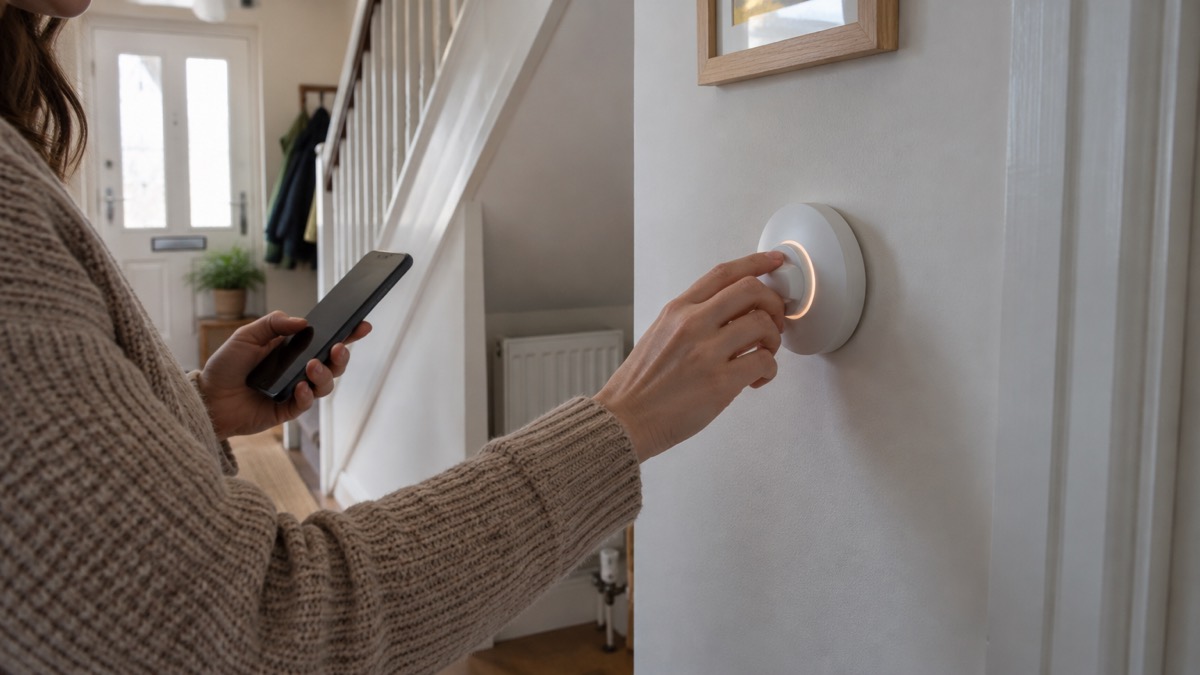
If you bought Hive cameras, the HomeShield alarm or leak sensors to help you through a flood, a burst pipe or a break-in, the support has now ended. Hive says the HomeShield system no longer functions following the three-year support period ending on 01/08/20251. Which? reports that Hive said it would end support for the HomeShield smart burglar alarm, including sirens, keypads and sensors, along with the Hive View indoor camera and Hive View Outdoor camera, on 1 August 20253.
Subscriptions went with them. Hive says all subscriptions related to discontinued products were automatically cancelled on 01/08/2025, that renewals due on or after 01/07/2025 were stopped in advance, and that no payments were taken beyond 30/06/20251.
One partial exception is the Hub 360. Hive says that after sound detection ends, the Hub 360 retains its connectivity to all Hive devices as normal and you can continue to enjoy its key features1. So the hub itself is not scrap, even though the alarm and camera functions it supported are gone.
What this means for a household plan: do not count a discontinued Hive camera or alarm as part of your security or flood warning. If you relied on a leak sensor near the boiler or washing machine, it stopped working in 20231. Replace that protection with something you have tested, and read our guide to home security for the wider picture on doors, lights and alarms. For water leaks specifically, a working sensor is only one layer; knowing where your stopcock is matters more.
What Hive makes for UK homes
Hive's current range, as described on its own product pages, centres on heating control and a small number of smart home sensors. The Window and Door Sensor is a smart contact sensor for windows and doors that alerts you if one is opened or closed while you are out2. It is for indoor use only, runs on one CR123A lithium battery supplied in the box, and comes with adhesive pads and a user guide2.
The sensor needs a Hive Hub. Hive says existing Hive users need no more kit, but if this is your first Hive product you will need to buy a Hive Hub2. It also needs an iOS or Android device running an up-to-date operating system and the Hive app2.
| What it does | How it helps in an emergency | What it cannot do |
|---|---|---|
| Alerts you when a window or door opens or closes2 | Tells you if a door or window has blown open in a storm while you are out | Does not work without a Hive Hub and broadband2 |
| Shows activity from the last 7 days2 | Lets you check what happened while you were away | No voice control with Alexa, Google Assistant, Apple HomeKit or Siri Shortcuts2 |
| Links to other Hive devices through Hive Actions2 | Can turn the heating off automatically when a window is opened2 | Indoor use only2 |
Hive's own pages describe the sensor's everyday functions rather than emergency performance, so treat it as a convenience and a prompt, not a substitute for a locksmith, an alarm or a neighbour who can check the house.
Smart heating and smart home kit
The heating control is the part of Hive that most households will keep using through a power cut, a cold snap or a heating failure, because it is the part still supported. Hive Actions let you link devices: the Window and Door Sensor can turn the heating off automatically when a window is opened, and you can add multiple devices to be activated by the sensor, including smart light bulbs and smart plugs2. The sensor also works with Philips Hue bulbs2.
That automation is useful in a cold snap, when a window left open wastes heat, and in a heatwave, when you want to know whether a window is open before you leave. It is not a substitute for a working boiler, and it will not heat a home without power or gas. For that, read our guide to heating and cooking without mains power or gas.
If you are comparing heating controls, note that Hive is not the only system with a hub requirement. The Centre for Sustainable Energy says new models of the Dimplex Quantum night storage heater need compatible heaters, a smartphone, home Wi-Fi and a Dimplex Hub to be controlled remotely4. The principle is the same across makers: the control is only as good as the hub, the broadband and the power behind it.
For households with care needs, smart controls sit alongside other technology. A smart thermostat such as Hive Active Heating lets you control your heating from the palm of your hand5, and the Hive Thermostat Mini has a built-in Frost Protection feature that automatically turns your heating on if the temperature drops6. If someone in your household depends on that kind of help, our guide to extra help in an emergency covers the wider arrangements.
Solar panels and EV chargers
The facts available here do not describe Hive solar panels or Hive EV chargers, so this page cannot say what they do, how they perform in a power cut or how they are maintained. If you are considering either, ask the installer directly about how the system behaves when the grid goes down, and read our guide to backup power at home for the general principles of keeping some power on during an outage.
Air source heat pumps
The facts available here do not describe a Hive air source heat pump, so this page cannot set out its specification or controls. What the record does show is that heat pumps are a normal part of the UK housing stock: a Denbighshire housing report from May 2025 lists 219 properties with air source heat pumps6.
If you have a heat pump, whether Hive-branded or not, the safety notices that apply to heat pumps generally are worth knowing. Electrical Safety First lists a voluntary corrective action by the distributor for a Ground Source Heat Pump V10.5, serial number 07047003990010027. The Office for Product Safety and Standards lists a recall of Tucson circulating pumps for heating systems8. Check your model and serial number against any notice that reaches you, and register the appliance so you are told.
Older Hive Hub models that are no longer supported
The hub is the box that connects Hive devices to your home broadband and to Hive's servers. If it stops being supported, everything behind it stops working remotely.
Hive says the Nano 1 Hub was deactivated on 01/08/2023, after which it no longer connects to Hive's servers and stops talking to your devices1. The Nano 2 Hub replaced it and supports products and features that are not compatible with the Nano 1, including the Hive Mini Thermostat, Hive Hard Wired Thermostat, Hive Multizone, Hive Radiator Valves and Hive Heating Plus1.
This pattern is not unique to Hive. South Lanarkshire Council says many older specialist alert systems no longer meet current legislative requirements and will not be replaced, repaired or maintained9. The lesson for a household plan is to write down the model numbers of the kit you depend on and check them against the maker's support page once a year.
Recycling a discontinued Hive device
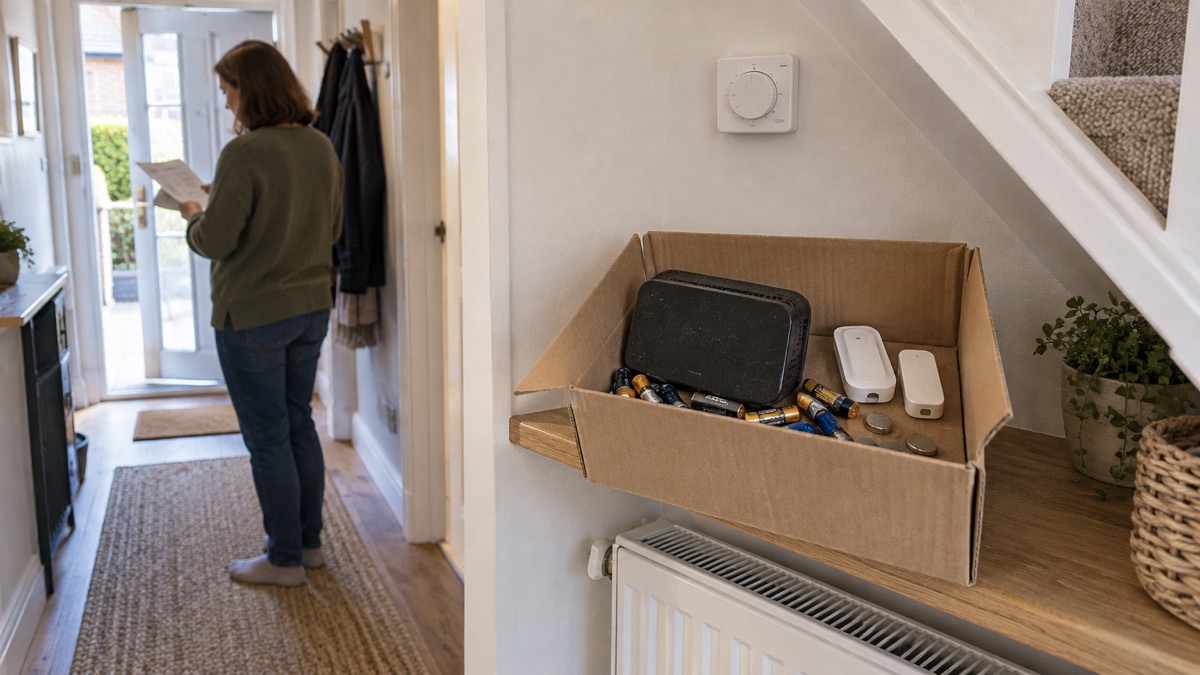
Do not put old Hive cameras, hubs or sensors in the general waste. Electrical items contain batteries and components that need proper handling, and fire services treat discarded lithium batteries as a fire risk. Greater Manchester Fire and Rescue Service runs a Be Battery Aware campaign on exactly this point10, and Tandridge District Council warns about lithium battery fires in the home11.
There are two routes. The first is the retailer. Electrical Safety First says that under the WEEE directive all retailers must provide a way for customers to dispose of old household electrical and electronic equipment when they sell them a new version of the same item, either through a collection service or a store take-back scheme, and some may charge for collection12. The second is your local household waste recycling centre. Supermarkets and large retailers selling over 32kg of batteries a year must provide battery recycling bins11, and you can find a local point through the Recycle Your Electricals site10.
Hive has its own arrangement for returned discontinued products. Hive says it partners with Recycling Lives, a charity that supports the homeless, reduces reoffending and delivers food to support small charities and community groups1.
How Recycling Lives handles returned products
Hive describes what happens to a returned device in plain terms. The packaging is shredded for RDF, refuse derived fuel, and any recovered materials such as copper granulates and shredded circuit boards are traded on to be refined further1.
That is a materials recovery process, not a repair and resale one, so do not expect a returned device to be refurbished. Before you send anything back, wipe any personal data and remove the battery if the maker's instructions say to. If you are unsure whether a device is covered, ask Hive first.
For a household, the wider point is that recycling is part of keeping kit ready. A drawer full of dead cameras and old hubs is a hazard, not a spare. Clear it out, keep the devices you still rely on, and check that their batteries are fresh. Our guide to emergency kit sets out what a household should keep ready, and our guide to power cuts explains what to expect when the mains goes off.
Sources (12)
- Hive product news, Hive, 2026
- Hive Window or Door Sensor, Hive, 2026
- Best burglar alarms and smart security systems, Which?, 2026
- Dimplex Quantum night storage heaters, Centre for Sustainable Energy, 2026
- Assistive technology, Warwickshire County Council, 2026
- Scrutiny report on housing heating, Denbighshire County Council, 2025
- Ground Source Heat Pump V10.5 product recall, Electrical Safety First, 2026
- Tucson 5m, 6m and 8m pumps product recall, Office for Product Safety and Standards, 2025
- Sensory support, South Lanarkshire Council, 2026
- Be Battery Aware, Greater Manchester Fire and Rescue Service, 2026
- Lithium battery fire safety, Tandridge District Council, 2026
- Recycling electricals and batteries, Electrical Safety First, 2026
 Hive HomeShield
 Hive View
 Hive View Outdoor