

EZVIZ makes home security cameras, video doorbells and a peephole camera for UK households. For someone preparing for emergencies, the useful question is not what a camera looks like but what it does when the power goes off, when a storm brings the fence down, or when you are away and want to know the house is still standing. EZVIZ's own product pages set out the specifications that decide those answers: how footage is stored, how long a battery lasts, what the camera can see in the dark, and how the data is protected.
The short answer for a household is this. EZVIZ cameras can record to a microSD card, to an EZVIZ network video recorder, or to EZVIZ Cloud Storage, and some models can save to all three at once for backup1. Cloud storage is a subscription service and EZVIZ warns it is only available in certain markets, so check before you buy2. Which? reports that EZVIZ will support its products for at least four years from launch, which is the period to plan around for security fixes3. And like any electrical product, an EZVIZ device should be checked against recall notices and registered with the maker so you hear about safety issues directly.
What EZVIZ makes for UK households
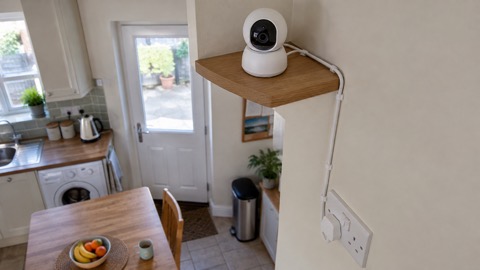
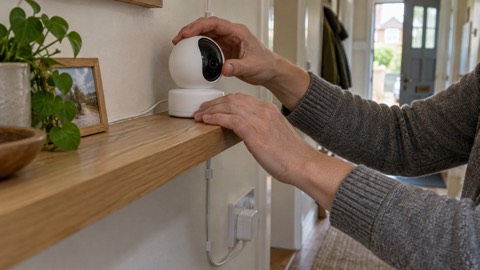
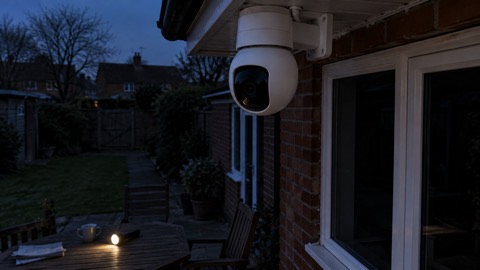
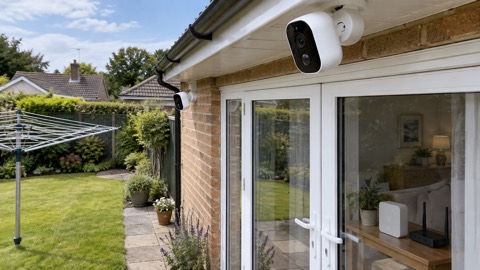
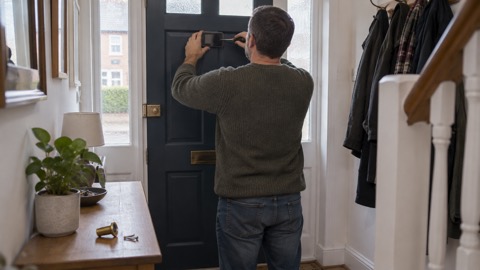
EZVIZ's range for the home falls into four groups: outdoor and indoor security cameras, video doorbells, a peephole camera for a front door, and the base station and accessories that tie a multi-camera kit together. The cameras are the core of it. Models such as the EZVIZ C6N, the EZVIZ C6 2K+ and the EZVIZ C8W Pro 2K are fixed or pan-and-tilt cameras for watching a room, a garden or a drive. The EZVIZ BC1-B2 Kit pairs two battery cameras with a base station. The EZVIZ HP3 Pro Peephole Camera replaces the peephole in a front door. The EZVIZ EP8 Ultra is a wire-free video doorbell with two lenses.
For emergency planning, the point of a camera is situational awareness. In a long power cut you may want to know whether the street is dark, whether a neighbour's house is occupied, or whether something has moved in the garden overnight. During a flood or storm, a camera on the outside of the house lets you see water levels or damage without opening a door into danger. When you are away from home during an evacuation or a hospital stay, a camera lets you check the property remotely. The Home Security: A Household Guide covers the wider picture, including how cameras sit alongside alarms and lighting. Some EZVIZ kit is built for exactly this kind of check-in: the 4-Piece Home Sensor Kit pairs a home gateway with a PIR sensor, an open/close sensor and a smart button, and the maker notes that seniors and kids at home alone can also send a request for help just by using the smart button2.
What a camera cannot do matters just as much. It does not keep working through a power cut unless it has battery power or a backup supply, it does not stop an intruder, and it does not replace an alarm. Treat it as one layer: a way to see what is happening, not a barrier. If you are building a household plan around power cuts, the Backup Power at Home guide explains how to keep small devices running, and the Power Cuts guide covers what to do when the mains fails.
EZVIZ security cameras for keeping watch on your home
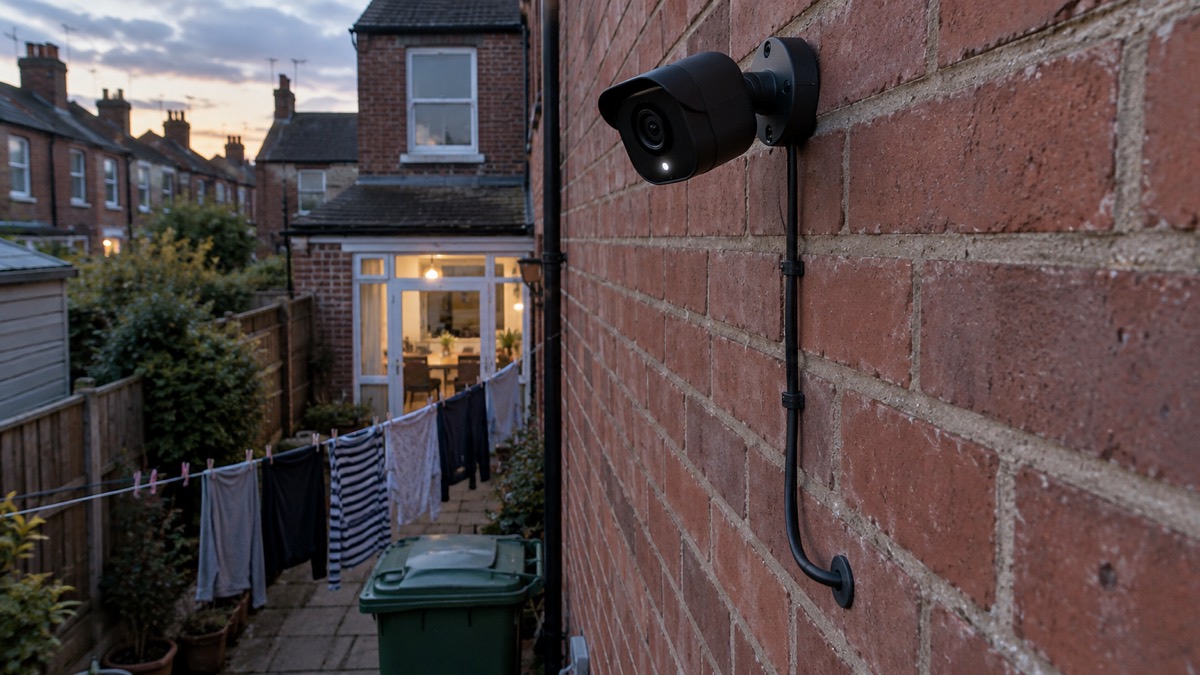
The camera range is where most households start. The EZVIZ C2C is a compact indoor model that comes with a magnetic base and mounting kit for walls or ceilings, records to a microSD card of up to 128GB, and runs on 2.4GHz Wi-Fi1. It supports 64/128-bit WEP, WPA/WPA2 and WPA-PSK/WPA2-PSK Wi-Fi security, and its motion detection can trigger a smart alarm through the EZVIZ app1. For a household, that means a camera you can place in a hallway or on a landing and check from a phone, with footage kept on a card you control.
The EZVIZ BC1-B2 Kit is the model built for outdoor use and for stretches without mains power. It is a two-camera kit with one base station, and the base station takes a microSD card of up to 256GB for local storage4. The cameras carry an IP66 dust and water protection rating, which is the specification that decides whether a camera can stay outside through a storm4. Each camera has a 105 dB built-in siren, and the base station pairs with up to four BC1 cameras4. The kit records in H.265, which keeps file sizes down so a card holds more footage, and it can store three 10-second audio messages for playback4.
The EZVIZ EP8 Ultra is a wire-free video doorbell with two lenses: a 6MP main camera at 2464 by 2464, an upper lens at 2.0mm with a 162 degree diagonal field of view, and a bottom lens at 1.8mm with an 88 degree field of view6. It supports up to four privacy zones, drawn as rectangles in the app, and a voice changer for privacy protection when speaking to a caller6. EZVIZ states it carries no subscription fee and can store up to six months of video history if it records 10 minutes of activity every day6.
| Model | Type | Power and mounting | Storage | Outdoor rating |
|---|---|---|---|---|
| EZVIZ C2C | Indoor camera | Mains, magnetic base and mounting kit1 | microSD up to 128GB, cloud, NVR1 | Not stated |
| EZVIZ BC1-B2 Kit | Two cameras with base station | Battery cameras, base station4 | microSD up to 256GB in base station4 | IP664 |
| EZVIZ EP8 Ultra | Wire-free video doorbell | Wire-free, two lenses6 | CloudPlay subscription, local6 | Not stated |
EZVIZ doorbells and indoor cameras
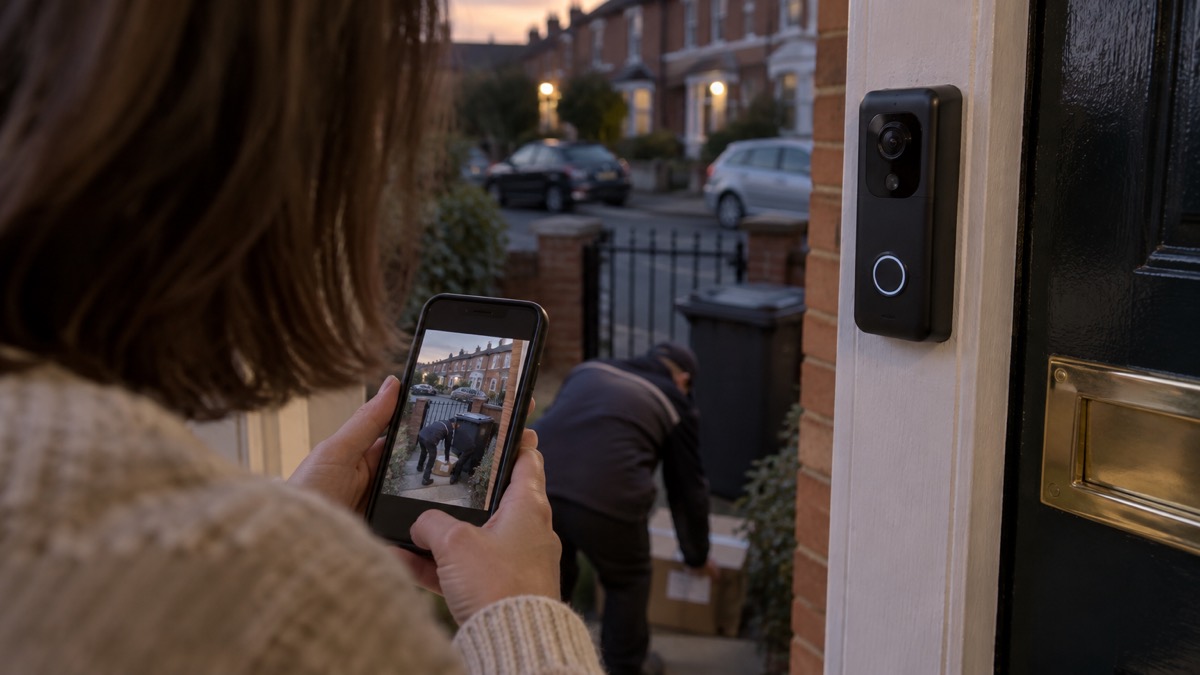
Doorbells and indoor cameras serve a different purpose from outdoor cameras: they watch the threshold and the rooms you use, and they are the models most likely to be running when the power fails. The EZVIZ DB2 Pro Kit is a battery-powered video doorbell kit with a 1/2.7 inch progressive scan CMOS sensor that supports low light sensitivity, a maximum resolution of 2544 by 1888, and infrared night vision up to 5 metres2. Its PIR and human shape smart motion detection has a maximum sensing distance of 5 metres, and it supports long-distance two-way talk through a built-in speaker and microphone2. It is IP65 rated, comes in Space Grey and Classic White, and EZVIZ states it is compatible with all 16/24V mechanical or electric chimes already in the home2.
Two details matter for preparedness. First, the DB2 Pro is battery powered, so it keeps watching the door when the mains is off, provided the battery is charged. Second, it has a sound and light anti-dismantling alarm that can send alerts to a smartphone, which is a tamper warning rather than a security system2. The doorbell records to EZVIZ CloudPlay, a subscription service, and EZVIZ notes that cloud storage is only available in certain markets, so verify availability before purchase2. For a household that wants footage kept locally, check the storage options for the exact model before buying.
The EZVIZ HP3 Pro Peephole Camera fits over an existing door peephole and gives a view of the landing or doorstep without a doorbell installation. It suits a flat or a rented home where drilling is not an option. Which? notes that EZVIZ cameras generally offer local storage, cloud storage for a subscription, motion detection and customisable privacy zones, and that the software update period for the model it tested was unknown3. That last point is the one to pin down before you rely on any camera for the long term.
Information security: ISO/IEC 27001 certified by DNV
EZVIZ states that its information security management has been certified to ISO/IEC 27001 by DNV, an independent certification body. For a household, the practical meaning is narrow but useful: an outside organisation has assessed how EZVIZ identifies and manages information security risk, rather than EZVIZ simply asserting that it takes security seriously. ISO 27001 is a recognised international standard, and official UK guidance names it, alongside Cyber Essentials, as one of the standards organisations can adopt to reduce cyber risk7. The same principle appears in the NHS's review of the WannaCry ransomware attack, which recommended that services be commissioned only from organisations compliant with ISO 27001 for information security management8.
What the certification does not tell you is how a particular camera performs, how long it will be supported, or whether a future flaw will be handled well. It is a statement about a management system, not a guarantee. Read it alongside the technical protections EZVIZ publishes for its devices. The BC1-B2, for example, uses AES 128-bit encryption, the TLS encryption protocol and multiple authentication steps, and EZVIZ states that data transmission between the camera and the EZVIZ Cloud is encrypted end to end4. The DB2 Pro lists the same trio of protections2, and the EP8 Ultra lists AES data encryption, TLS and end-to-end data encryption6.
The other half of the picture is where footage lives. A camera that records only to the cloud depends on a working internet connection and a subscription; a camera that records to a microSD card keeps recording locally even when the broadband is down, which is exactly the situation in many power cuts and storms. The C2C can save to encrypted cloud storage, an EZVIZ NVR or a microSD card, and EZVIZ states the cameras can save to all three locations at the same time for added backup in case a camera is damaged or the network goes down1. For emergency planning, that redundancy is the feature worth having.
How EZVIZ handles your personal data
A camera in the home records the people who live there, their visitors and sometimes their neighbours' gardens, so how that footage is handled is a preparedness question as much as a privacy one. EZVIZ's devices use a proprietary cloud protocol to talk to the EZVIZ Cloud, and the app provides live view, audio reception, instant alerts, video history and up to 8x zoom1. The EP8 Ultra uses the same EZVIZ Cloud proprietary protocol6. CloudPlay, EZVIZ's subscription tier, offers unlimited storage space and what EZVIZ describes as an additional layer of data protection2.
The controls a household can actually use are privacy zones and local storage. The EP8 Ultra lets users draw rectangles in the app to set up to four privacy zones, so that part of the view is masked6. The DB2 Pro offers the same four-zone limit2. The EP8 Ultra also includes a voice changer for privacy protection when you speak to a visitor through the doorbell6. Setting privacy zones so that a neighbour's window or a public footpath is excluded is a sensible first step when you install any camera, and it is the kind of thing worth doing before an emergency rather than during one.
Data protection law applies to footage of identifiable people. The same rule is set out for community groups gathering personal details, which must comply with GDPR regulations9. For a household, the practical version is simple: keep footage for no longer than you need it, restrict who can see the app, use a strong and unique password on the EZVIZ account, and turn on the multiple authentication steps EZVIZ provides. If you share clips with a neighbour or a community group after an incident, share only what is needed.
Software updates for at least four years from launch
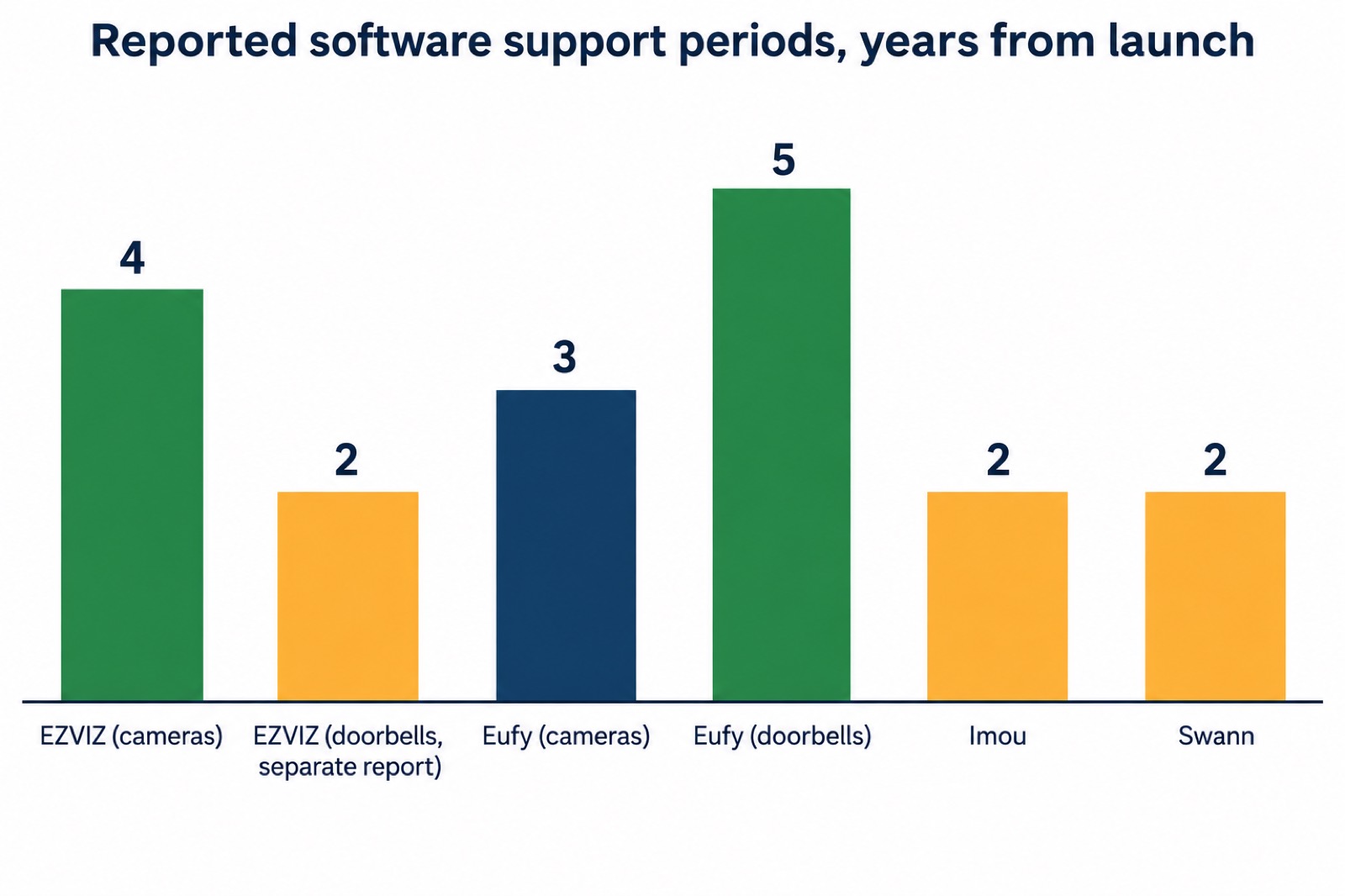
Software support is the specification most households never check and most often regret. A security camera is a small computer on your network, and it needs security fixes for as long as it is in use. Which? reports that EZVIZ will support its products for at least four years from launch3. That is the figure to plan around: if you buy a camera in its first year on sale, you can expect fixes into its fifth year, and a model bought late in its life may have much less cover left.
The reports do not agree on the doorbell figure. A separate Which? guide on video doorbells states that EZVIZ will support its products for two years from launch10. Both figures come from the same independent publisher but from different articles, and they disagree. If update cover is central to your choice, ask EZVIZ or the retailer to confirm the support period for the exact model, and keep the answer with your household records.
For context, the same Which? reporting shows how much the industry varies. Eufy is reported as updating its cameras for at least three years from launch3, while the doorbell guide gives Eufy five years for doorbells10. Reolink is reported as supporting cameras for at least three years after the product's end-of-life date3, and Ring alarm systems for at least four years after the device is last available to buy11. None of this makes one maker the right choice for every household; it shows why the question is worth asking.
An older EZVIZ camera that has passed its support window still works, but it may carry unpatched flaws. If you keep one, check the EZVIZ app for firmware notices, keep the camera on your home network rather than exposing it to the internet where you can avoid it, and replace it when updates stop. The Cyber Attacks and Major IT Failures guide explains why unpatched devices on a home network matter, and the Staying Informed and in Touch guide covers keeping communications working when systems fail.
Support, warranty and safety notices
EZVIZ publishes support information for its products, and its devices carry the usual conformity marks: the BC1-B2 lists CE, FCC, WEEE, ROHS, REACH and UL, and runs on Linux4. The DB2 Pro lists UL, CE, FCC, REACH, WEEE and RoHS2, and the EP8 Ultra lists CE, REACH, WEEE and RoHS6. These marks confirm a product meets the relevant declarations; they are not a substitute for checking whether a specific unit has been recalled.
Recall checking is the safety step every household should take with any electrical product, and the official advice is consistent. Check whether products have been recalled by visiting the government's Product Recalls and Alerts website5, and check recall notices issued by the Office of Product Safety and Standards12. If you have concerns about a product you own, contact the retailer or manufacturer to alert them to a potential problem. Registering a product with the maker also means you can be told directly about safety recalls13.
For a household plan, the practical routine is to check your cameras and doorbells against the recall lists when you install them and again once a year, to register each device with EZVIZ so that safety notices reach you, and to keep the receipt and model number somewhere you can find them. The Home Emergencies guide covers what to do with a faulty electrical product, and the Getting Started guide sets out how to build these checks into a household routine.
Sources (13)
- EZVIZ C2C product page, EZVIZ, 2026
- EZVIZ DB2 Pro Kit product page, EZVIZ, 2026
- Best indoor security cameras, Which?, 2026
- EZVIZ BC1-B2 product page, EZVIZ, 2026
- Charge safe campaign, North Yorkshire Fire and Rescue Service, 2026
- EZVIZ EP8 Ultra product page, EZVIZ, 2026
- Cyber attacks and threats, Essex Prepared, 2026
- Lessons learned review of the WannaCry ransomware cyber attack, NHS England, 2018
- Community flood plan template, GOV.UK, 2023
- How to buy the best smart video doorbell, Which?, 2026
- Best burglar alarms and smart security systems, Which?, 2026
- Registering your e-bike or e-scooter for safety alerts and product recalls, London Fire Brigade, 2026
- E-bikes, e-scooters and mobility scooters, Greater Manchester Fire and Rescue Service, 2026
 EZVIZ C6N
 EZVIZ C6 2K+
 EZVIZ C8W Pro 2K
 EZVIZ BC1-B2 Kit
 EZVIZ HP3 Pro Peephole Camera
 EZVIZ EP8 Ultra