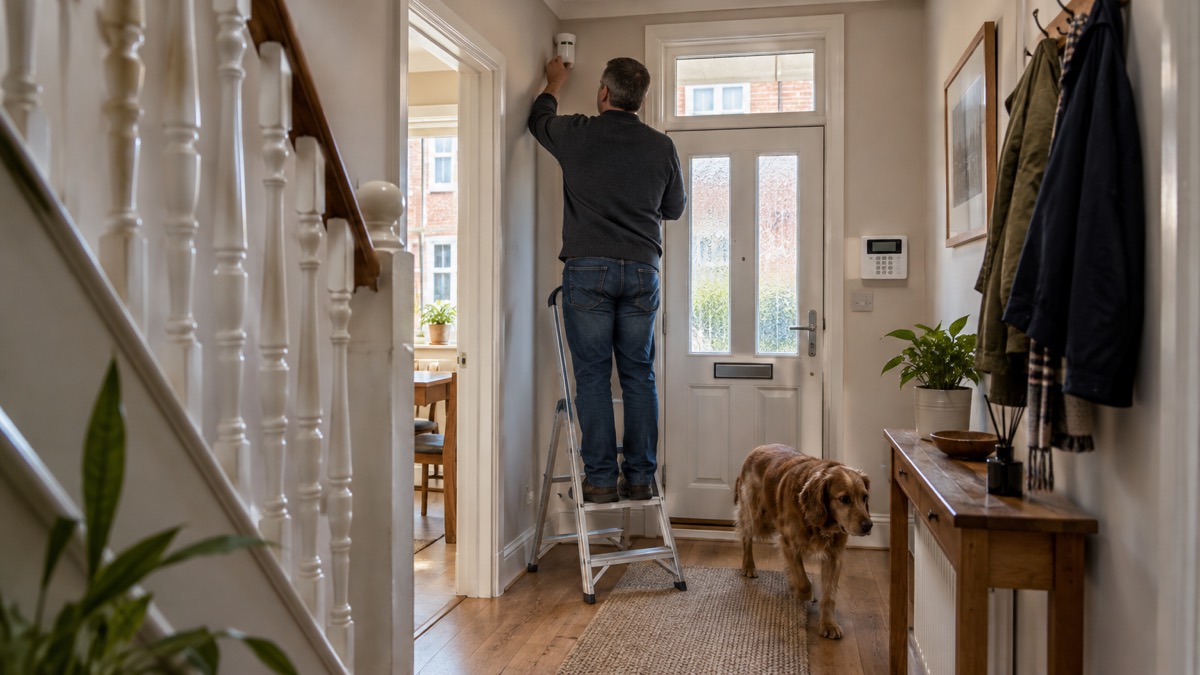
If your cat or dog keeps setting off the burglar alarm, the answer is usually not a new system but the right sensor in the right place. Pet-immune motion sensors are designed to ignore movement at floor level, and the makers' ratings run from animals up to 27 kg on a SimpliSafe Motion Sensor Gen 21 to up to 30 kg on a Yale Indoor Motion Sensor set to pet mode and mounted at 2.4 metres2. Door and window contacts do not react to pets at all, because they detect a door or window opening rather than movement in the room3.
Start by working out which sensor is triggering. If it is a motion sensor in a room your pet uses, check whether it has a pet mode and whether that mode is switched on. If it does not, or your animal is above the weight limit, move the sensor or leave that zone out when you arm the system. Then test the system with your pets in their usual places before you rely on it.
The rest of this page sets out why pets trigger sensors, what the weight ratings actually mean, where to fit sensors in a home with animals, the settings that cut false alarms, where pet-immune sensors will still trigger, and what to do when the alarm goes off by mistake.
Why pets set off alarm sensors
A burglar alarm motion sensor, often called a PIR or passive infra-red sensor, watches for changes in infra-red heat in its field of view. A warm body moving across that field looks much like a person, which is why a cat crossing a hallway at night can set off an alarm that was meant for intruders. Pet-friendly sensors are built to tell the difference: ADT describes its motion sensors as designed to be tolerant of pets, ignoring changes in passive infrared at floor level6.
Noise is a separate matter. ADT states that its house alarm monitors motion rather than noise, so a dog barking will not trigger it6. That is worth knowing if you have been woken by an alarm and assumed the dog caused it.
False alarms matter beyond the nuisance. Surrey County Council warns that excessive false alarms may make people complacent and not respond correctly to a warning of a real fire, and that in such circumstances you may be failing to comply with fire safety law7. The same principle applies to a burglar alarm: a system that cries wolf is a system people stop trusting.
Fire alarms have their own false alarm triggers. Automatic fire alarms can react to steam, cigarette smoke, aerosol sprays or fumes from cooking, sometimes because detector heads are incorrectly sited or the system has not been serviced properly8. Smoke alarms should not be fitted in kitchens or bathrooms where smoke or steam could set them off accidentally; a heat alarm is the right choice for a kitchen9.
Pet-immune motion sensors: what the weight rating means
The weight rating on a pet-immune sensor is the maker's statement of the size of animal the sensor is designed to ignore. It is a limit, not a guarantee, and it usually comes with conditions about how the sensor is set up.
| Sensor | Pet immunity stated by the maker | Conditions |
|---|---|---|
| SimpliSafe Motion Sensor Gen 2 | Up to 27 kg1 | Set to Pet Mode in the SimpliSafe app1 |
| Yale Indoor Motion Sensor | Up to 30 kg2 | Set to pet mode and positioned at a height of 2.4 metres2 |
| Hikvision wireless motion, PIRCAM and dual-tech detectors | Up to 30 kg10 | As stated in the maker's brochure10 |
| Texecom Capture P15-W | Pet immune11 | As stated by the maker11 |
Read the conditions as carefully as the number. The Yale figure only applies when the sensor is set to pet mode and mounted at 2.4 metres2; a sensor at a different height, or in standard mode, is not covered by that rating. The SimpliSafe sensor is adjusted between Standard Mode and Pet Mode in the app1, so the rating depends on which mode is active.
The rating is per animal, not per household. A sensor rated for animals up to a given weight is designed to ignore any animal below that weight, so two cats should both be filtered out. A dog above the limit will not be.
Where to put sensors in a home with pets
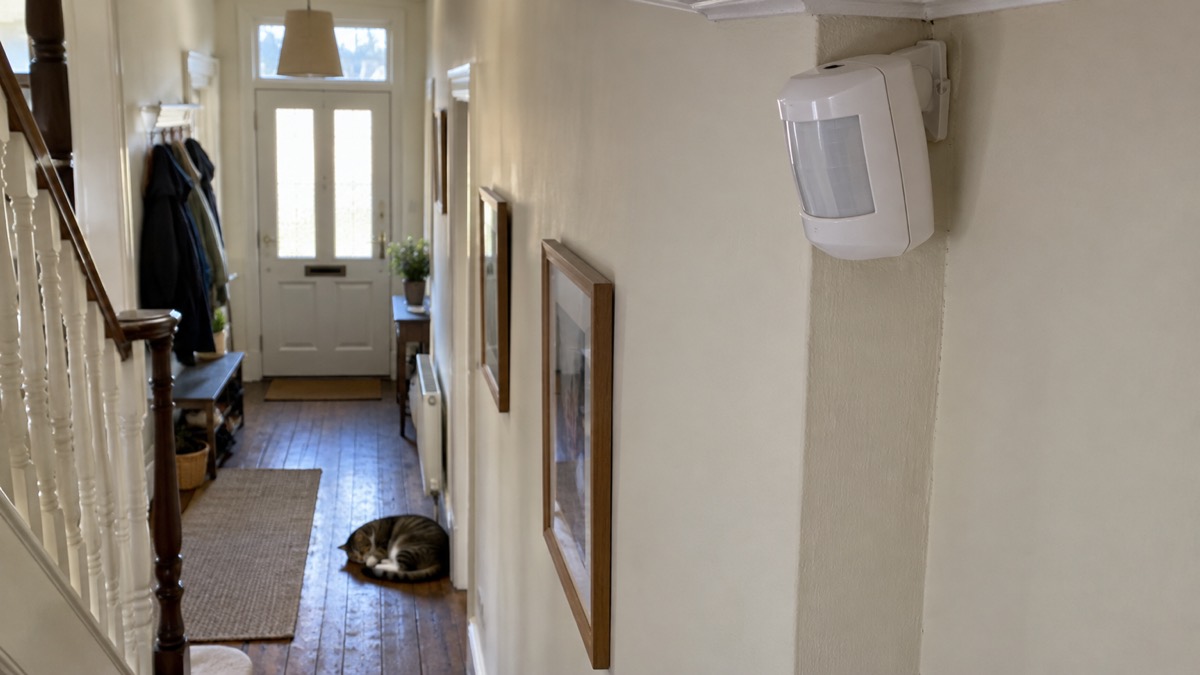
Placement does most of the work. A motion sensor that looks across the floor of a room your pet uses will see the animal constantly; one that covers a doorway or a corridor at a height above the animal's usual path is less likely to be troubled. The Yale rating assumes a mounting height of 2.4 metres2, which is a useful starting point for any pet-immune sensor.
Keep the fire side of the system separate in your mind. Smoke alarms should be placed near the sleeping areas and on every level of your home, and tested and maintained regularly12. They should not go in kitchens or bathrooms, where smoke or steam could set them off; fit a heat alarm in the kitchen instead9. Carbon monoxide alarms should be fitted in all rooms containing solid fuel appliances, any gas appliances or paraffin heaters13.
For the burglar alarm itself, door and window contacts are the backbone of a pet-friendly system. They send an alert when a door or window is opened, and they can also be attached to cupboards, a fridge door or interior doors to monitor daily use14.
Tell responders about the animals. Lancashire Prepared advises putting a pet sticker in your front window so responders know a pet might be inside15. If you have advance warning of a visit, Westminster City Council suggests considering placing your pet somewhere safe such as a cattery or boarding kennels16, and SSEN advises putting pets in a separate room or safe area where they would feel more comfortable before an engineer or customer advisor arrives17.
Settings that cut false alarms
The first setting to check is the sensor's mode. On a SimpliSafe system, sensitivity is adjusted between Standard Mode and Pet Mode in the app1. On a Yale system, pet mode is what unlocks the 30 kg immunity, and it depends on the sensor being at 2.4 metres2. If your system has a pet mode and it is switched off, that alone may explain the false alarms.
The second is maintenance. The Security Systems and Alarms Inspection Board advises that having your system maintained will reduce the potential for false alarms3. A sensor that has drifted, filled with dust or lost its setting is more likely to trigger.
The third is zoning. If your system lets you arm only part of the house, leave the rooms your pets use out of the armed zone and keep door and window contacts armed throughout. That gives you intrusion detection at the perimeter without motion sensors watching the sofa.
Fire alarms have their own settings and their own false alarm controls. FireAngel's FA8620BW-R uses UltraSense technology, which the maker says helps reduce nuisance alarms from everyday cooking or steam18. If a smoke alarm beeps or behaves unusually with no sign of fire, Lincolnshire Fire and Rescue advises pressing the test button, considering temperature changes such as heating turning off at night, and checking for dust and insects19.
Where pet-immune sensors still trigger
Pet immunity is not a force field. It is a filter with limits, and there are circumstances where a pet-immune sensor will still trigger.
The clearest is weight. An animal above the sensor's stated limit will be detected, because the sensor has no way to know it is a pet. If your dog is over the rating, motion sensors in the rooms it uses are not a reliable option.
The second is mounting. The Yale rating only holds at 2.4 metres in pet mode2. A sensor knocked out of position, moved during decorating or fitted at a different height may no longer filter as intended.
The third is behaviour. Verisure states that its system's intelligent algorithms prevent unnecessary alerts even if a cat jumps onto furniture or moves quickly20, which acknowledges the problem: a cat on a sofa or a shelf is no longer at floor level, and a sensor relying on floor-level filtering may see it. If your cat is triggering the alarm, Verisure's advice is that upgrading to a pet-friendly system is the best solution20.
The fourth is other movement in the house. Curtains moving in a draught, balloons, pets on stairs and people moving about at night can all look like intruders to a motion sensor. The same logic applies to fire alarms: steam, cooking fumes and aerosols can set off an automatic fire alarm even when there is no fire8.
What to do when the alarm goes off by mistake
Stay calm and identify which alarm is sounding. If it is the burglar alarm and you have triggered it yourself, disarm it with your code or app. If it is a smoke alarm beeping with no sign of fire, press the test button: the alarm will sound briefly and this may help to reset and clear the fault19. Check for temperature changes such as the heating turning off at night, and check for dust and insects19.
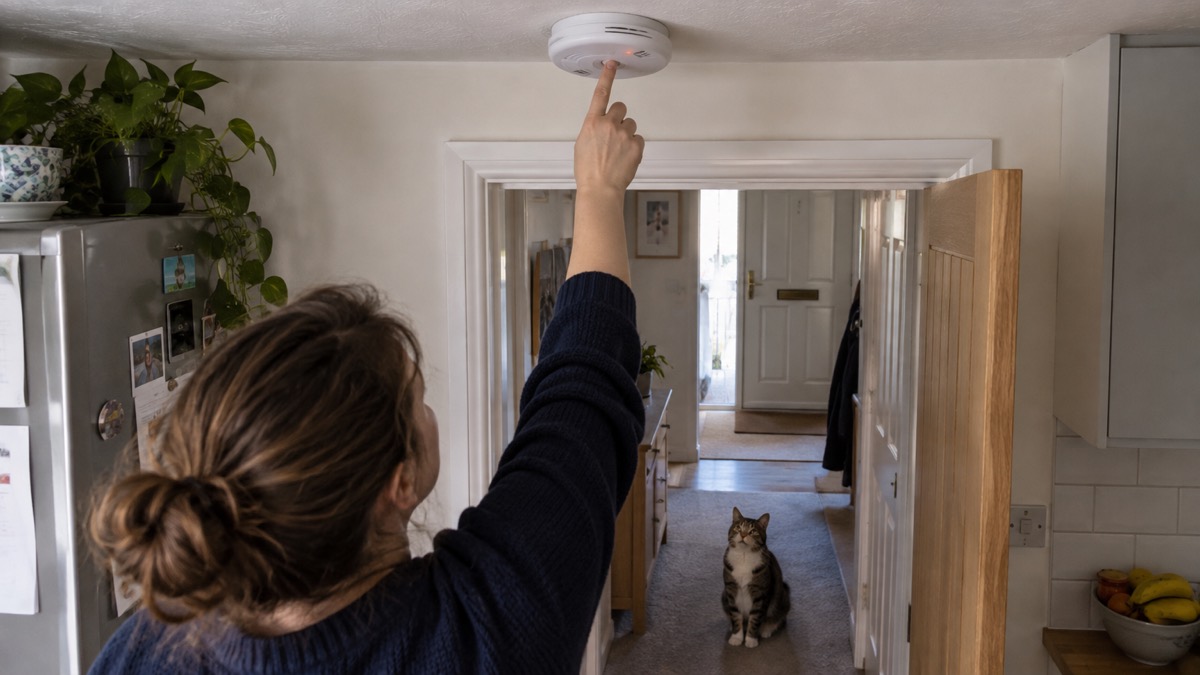
Never ignore a beeping alarm. Electrical Safety First advises that if your alarm starts to beep, never ignore it: it could indicate the battery is low or a fault with the sensor that requires attention21.
If you have a monitored alarm, know what happens next. Some systems contact all listed keyholders first, then check a live camera link, and only call the emergency services if visual confirmation of an intruder or fire is made22. Others dispatch a guard on a verified break-in, with no police response unless the system is separately registered23. Self-monitoring keeps costs down, and professional monitoring can be added when you need extra response coverage24.
If you have a telecare or personal alarm, do not worry about an accidental trigger. Some devices have a cancel button, and support centres are used to accidental alarms and do not mind25.
If someone in the household is unwell or injured and an ambulance is coming, put pets somewhere safe before the crew arrives26. If there is a chemical incident nearby, bring pets indoors27.
Testing after changes, and when you are away
Test the system after any change to sensor position, mode or battery. Manchester Fire and Rescue Service advises testing your alarms at least monthly by pressing the test button until the alarm sounds4. After a fire, test smoke alarms and replace where needed28.
Walk test the burglar alarm with your pets in their usual places. Arm the system in its normal mode, move through the rooms your pets use, and check the panel or app shows no triggers. If a sensor triggers, adjust its position or mode and test again.
When you leave pets home alone, set the system as you would normally, but make sure motion sensors covering the rooms your pets use are in pet mode or left out of the armed zone. Keep door and window contacts armed. Leave a pet sticker in your front window so responders know a pet might be inside15.
If a pet does go missing, the PDSA advises checking the local area and asking neighbours, taking treats and making the same noises as when giving a treat at home, and asking neighbours to check their garden, garage, sheds and greenhouses29.
For more on choosing and running an alarm system, see Burglar Alarms: Types and How to Choose One and Monitored Alarms: Receiving Centres and Who Responds. If you are going away, Should You Set Your Burglar Alarm Before Going Away? covers the setting question, and Pets and Animals in an Emergency covers planning for animals more broadly.
Sources (29)
- Motion Sensor, SimpliSafe, 2026
- Support for Smart Alarm, Yale Home, 2026-11-03
- Alarm systems, Security Systems and Alarms Inspection Board, 2026-11-02
- Celebrating safely: Hanukkah, Manchester Fire and Rescue Service, 2026-10-29
- Fire safety advice in your flat, Manchester Fire and Rescue Service, 2026-10-29
- Pet friendly alarm, ADT, 2026-11-03
- Fire alarm systems, Warwickshire County Council, 2026-10-29
- Automatic fire alarms, Surrey County Council, 2026-09-07
- Advice for parents and guardians, Devon and Somerset Fire and Rescue Service, 2026-10-29
- AX PRO Brochure 868 Europe, Hikvision, 2024-02
- 64 Zone Self-Contained Wireless Kit, Texecom, 2023-02-09
- Safe home heating, Warwickshire County Council, 2026-10-29
- Fire safety for carers, Devon and Somerset Fire and Rescue Service, 2026
- Smart tech and handy devices for the home, Carers UK, 2026-10-25
- Plan for your pets in an emergency, Lancashire Prepared, 2026-10-29
- Pet welfare emergency, Westminster City Council, 2025-09-24
- Animal safety, SSEN, 2026-10-25
- FireAngel FA8620BW-R - Wireless Bluetooth Smoke Alarm, FireAngel
- Fire alarms and carbon monoxide detectors, Lincolnshire County Council, 2026-10-29
- How do I stop my cat setting off my burglar alarm, Verisure, 2026-08-11
- The Beep, Electrical Safety First, 2026
- Plans, Abode, 2026-11-03
- UK alarm monitoring cost, Look Into, 2026-09-04
- Burglar alarm systems UK, Abode, 2026-11-03
- Technology to keep you safe at home, Independent Age, 2026
- What to do when the ambulance is coming, South Western Ambulance Service NHS Foundation Trust, 2026-10-29
- Chemical accidents, Fareham Borough Council, 2026-10-29
- Dealing with the aftermath of a fire: Health and general safety tips - Warwickshire County Council, Warwickshire County Council
- Missing pets, PDSA, 2026-10-29
 Moving Home Locks Checklist
 After a Break-In Checklist
 Holiday Security Checklist
 Alarm Before Going Away
 False Alarms and Police Response
 Checking an Alarm Installer
 Should a Burglar Alarm Bell Box Be Visible?
 Alarms After Digital Switchover
 Outdoor Siren Fitting Height