

Texecom is a UK maker of intruder alarm control panels and the detectors that connect to them. For a household, the practical question is not which panel is cleverest but what the system does when something goes wrong: a power cut, a storm, a break-in, or a detector that starts beeping. A professionally fitted alarm is part of a wider home security plan, and it needs to keep working when the mains supply does not.
The maker's own product information describes the Premier Elite 640 as a control panel approved by the UK Government's Centre for the Protection of National Infrastructure (CPNI), suitable for high-risk environments such as national infrastructure sites1. That tells you the panel is built for demanding settings, but it does not mean every home needs that level of kit. What matters for preparedness is simpler: a working alarm, detectors that are tested, a standby battery that carries the system through a power cut, and a clear route to support when something fails.
This page covers what Texecom makes for UK homes, how the kit behaves in an emergency, what an installer fits and what you can safely do yourself, and where to get help. It does not rank products or give prices.
What Texecom makes for UK homes
Texecom's range for households centres on intruder alarm control panels and the devices that report to them. The panel is the box that arms and disarms the system, receives signals from detectors and, depending on how it is set up, can send alerts to a monitoring service or an app. The Premier Elite 640 is the model the maker's own product page describes in most detail, and it is the one to use as an example of what the range can do1.
For a household preparing for emergencies, the useful way to think about the kit is by job rather than by model. An intruder alarm does one job: it detects and warns. It is not a fire alarm, a carbon monoxide alarm or a flood alarm, and it should not be relied on as a substitute for any of them. Official fire safety guidance is clear that homes should have working smoke detectors and carbon monoxide detectors alongside whatever security system is fitted4. The police also set out that intruder alarm systems generally fall into four types: monitored, speech dialler, audible only, and smart home security5. Texecom panels sit within that landscape as the control equipment that an installer builds a system around.
The preparedness point is that an alarm is infrastructure, not a gadget. It needs power, a standby battery, a phone or network connection if it reports remotely, and periodic testing. When a storm cuts the power or a flood forces you out of the house, the alarm's behaviour depends on how it was specified and installed, not on the brand name on the lid. That is why the sections below focus on power, detection, installation and support rather than on feature lists.
If you are building a wider plan, the Home Security: A Household Guide covers the household side of deterrence, lighting and routines, and Getting Started: Preparing Your Household for an Emergency sets out the order to do things in.
Intruder alarm control panels
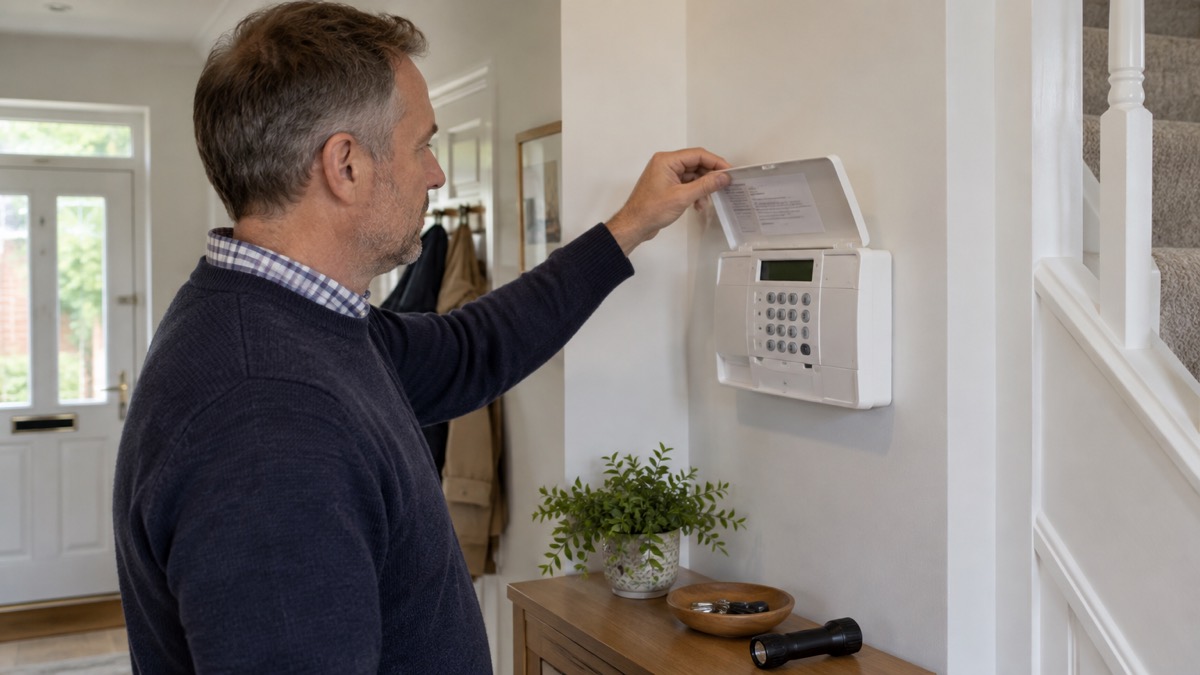
The control panel is the heart of a Texecom system. It holds the electronics, the keypad connection, the standby battery and the terminals for detectors and communicators. The Premier Elite 640 is described by the maker as CPNI-approved by the UK Government's Centre for the Protection of National Infrastructure, suitable for high-risk environments such as national infrastructure sites1. For an ordinary home, that approval is a signal of build quality and assurance rather than a requirement.
What a panel does for a household in an emergency is mostly about continuity. When the mains fails, a professionally installed panel should run on its standby battery, which is why the battery is the part of the system most worth understanding. When the power returns, the panel should recharge and return to normal. When a detector is triggered, the panel decides whether to sound the internal or external sounder, whether to dial out, and whether to notify a monitoring centre.
The police guidance on alarm types is worth reading before you choose a panel, because the type of system decides what happens when it activates5. An audible-only system makes a noise locally. A speech dialler calls nominated numbers. A monitored system signals a monitoring centre. A smart home security system connects to an app. Texecom panels can be configured across these models depending on the communicator fitted, which is why the installer conversation matters more than the panel name.
| System type | What happens on activation | Suits |
|---|---|---|
| Audible only | Local sounder sounds | Households wanting a visible and audible deterrent |
| Speech dialler | Calls nominated numbers with a message | Households who want a call rather than a monitoring contract |
| Monitored | Signal goes to a monitoring centre | Households wanting a response when nobody is home |
| Smart home security | Alerts and control through an app | Households wanting remote visibility and control |
The table reflects the four types set out in police guidance5. Which one suits you depends on your circumstances, your insurer's requirements and whether anyone is usually at home. The panel itself is only one part of that decision.
Wireless detectors and devices
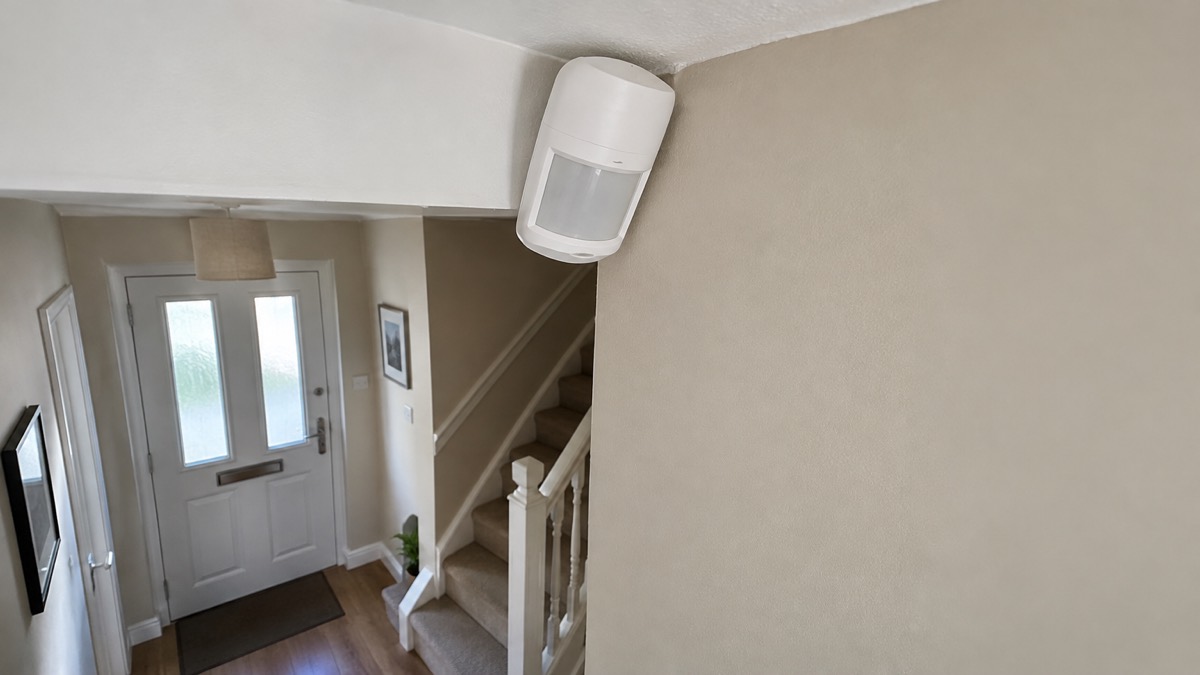
Detectors are the parts of the system that watch for movement, door opening or glass breaking, and report back to the panel. Texecom's panels are designed to work with a range of devices, and the Premier Elite 640 is described by the maker as compatible with a wide range of Texecom Digital Services, such as Texecom Cloud, Texecom Monitor and Texecom Connect, when using a SmartCom or SmartCom 4G communicator1. That compatibility matters for preparedness because it decides how the system talks to the outside world when the phone line or broadband fails.
Wireless devices have two practical vulnerabilities in an emergency. The first is battery life: every wireless detector runs on batteries, and a detector with a flat battery cannot report. The second is radio interference or loss of signal, which is why detectors should be sited and tested by an installer rather than moved around afterwards. The maker's own instructions for its devices are the authority on battery type and replacement intervals, and those instructions should be kept with the system paperwork.
For a household, the sensible routine is to test the system regularly and to act on any fault indication rather than silencing it. A detector that reports a low battery is telling you it will soon stop working. Replacing the battery promptly keeps the system whole. If you are unsure which device is at fault, the panel's event log or the app will usually identify the zone, and your installer can confirm.
Wireless kit also depends on the communications path. If your system uses a SmartCom or SmartCom 4G communicator to reach Texecom Cloud or a monitoring service, then a broadband outage affects the app path but not necessarily the alarm itself. The alarm should still sound locally. The Staying Informed and in Touch in an Emergency: A Household Guide explains how to keep communications working when the usual routes fail.
Smoke, heat and carbon monoxide detection
Texecom makes intruder alarm equipment, not household smoke alarms, and the distinction matters for safety. Official guidance is that homes should have working smoke detectors and carbon monoxide detectors6. Fire and rescue services advise installing a battery-operated carbon monoxide detector and smoke alarms and testing them every week, especially if you use portable heaters, open fires or stoves7. A security alarm is not a substitute for either.
If you want detection that covers fire as well as intrusion, the right approach is to keep the two systems separate and both working. Mains powered smoke alarms need to be installed by a qualified electrician and must have battery back-up in case of a power cut2. Scottish guidance goes further and says replaceable batteries cannot be used in smoke alarms because the sensors in the alarm degrade over time and so will not be able to detect heat or smoke8. That is a strong argument for sealed, long-life units rather than cheap replaceable ones.
Carbon monoxide is the other detection gap. Fire services advise a carbon monoxide detector to protect against the risk from fuel-burning appliances and chimneys9. The relevant standard for carbon monoxide alarms in domestic premises is BS 50292:2002, which covers selection, installation, use and maintenance3. If you have a solid fuel stove, open fire or gas appliance, a detector is not optional.
If you are unsure whether your home has adequate detection, many fire and rescue services offer a Home Fire Safety Visit, and where they identify that you need detection during the visit they can install standard smoke, heat or carbon monoxide detectors10. The Home Emergencies: Fire, Carbon Monoxide, Gas Leaks and Burst Pipes guide covers what to do if an alarm sounds.
Keeping an alarm working in a power cut: standby batteries
A power cut is the most likely emergency to affect an alarm system, and the standby battery is what carries it through. Mains powered alarms need to be installed by a qualified electrician and do have battery back-up in case of a power cut2. If you experience a power cut and you have mains powered smoke alarms, check that the battery back-up is working3. The same principle applies to an intruder alarm panel: the standby battery is the part that decides whether the system survives an outage.
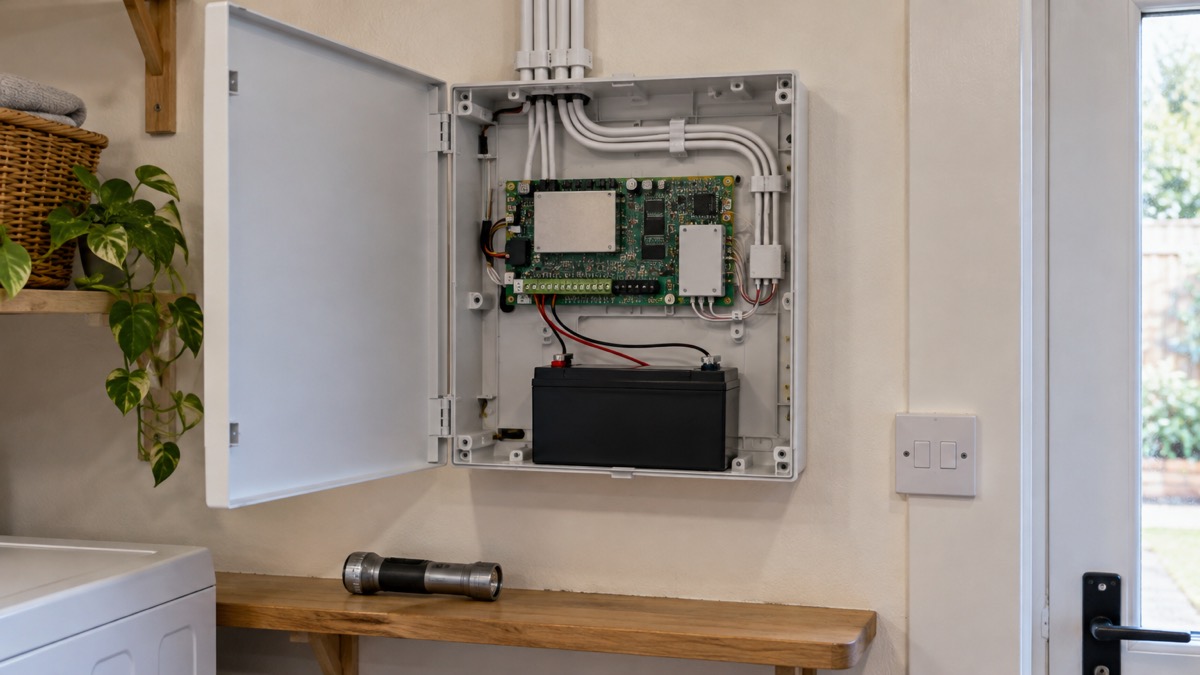
For a household, the practical steps are straightforward. Keep spare batteries for torches and radios so that you can check updates during an outage11. Keep a charged power bank, a torch and spare batteries at home, and keep important telephone numbers written down somewhere accessible13. If you have mains powered smoke alarms, check the battery back-up after the power returns3. If you rely on a telecare system or a phone-line device, the provider will assess your needs and may provide a free battery backup and have engineers test it, so care alarms and other important devices continue to work during a power cut14.
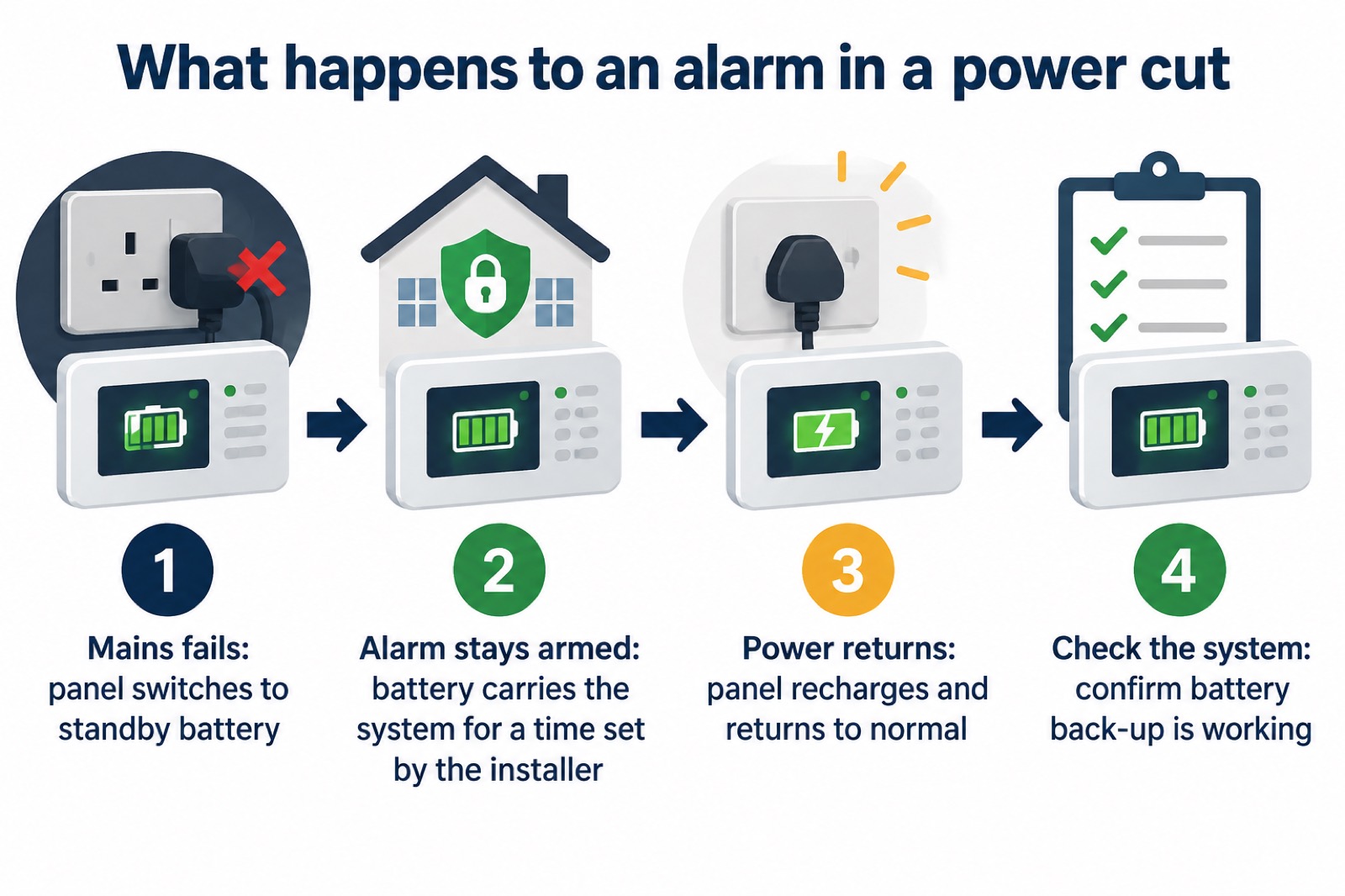
The duration a standby battery will carry a panel depends on the battery fitted and the load on the system, and that is a specification your installer sets. What you can do is make sure the battery is replaced on schedule and that the system is tested. A battery that has never been changed is the most common reason a panel fails during an outage.
The Power Cuts: A Household Guide and Backup Power at Home: A Household Guide cover the wider household plan for outages, including lighting and communications.
Installation: installer-fitted kit and what owners can do themselves
Texecom panels and detectors are installer-fitted equipment. The official guidance that bears on this is consistent across home safety work: choose someone registered with a competent person scheme who can self-certify that their work complies with building regulations17. For related home installations, official advice is to have the work done by a vetted professional and to get an installation certificate, because your insurer might need it if you make a claim18. The same logic applies to an alarm: the certificate is part of the value of the installation.
What owners can do themselves is limited but useful. You can test the system, keep the paperwork, note the panel model code, replace batteries where the maker's instructions allow it, and keep the area around detectors clear. You should not rewire a panel, move detectors, or change the communications setup without the installer, because those changes affect how the system behaves in an emergency and may affect any certification.
| Task | Who should do it |
|---|---|
| Testing the system and noting faults | Owner, following the maker's instructions |
| Replacing detector batteries | Owner where the maker's instructions allow, otherwise installer |
| Moving or adding detectors | Installer |
| Changing the communicator or monitoring setup | Installer |
| Replacing the panel standby battery | Installer |
The general principle from official guidance on home installations is that the person who installs equipment can be liable for its safety, so using a competent, insured installer protects you as well as the equipment19. If you are having other work done at the same time, such as oil tank installation, the same rule applies: you are responsible for making sure the installer's work meets the regulations, and your local authority could make you pay for faulty work to be fixed17.
App control and remote monitoring
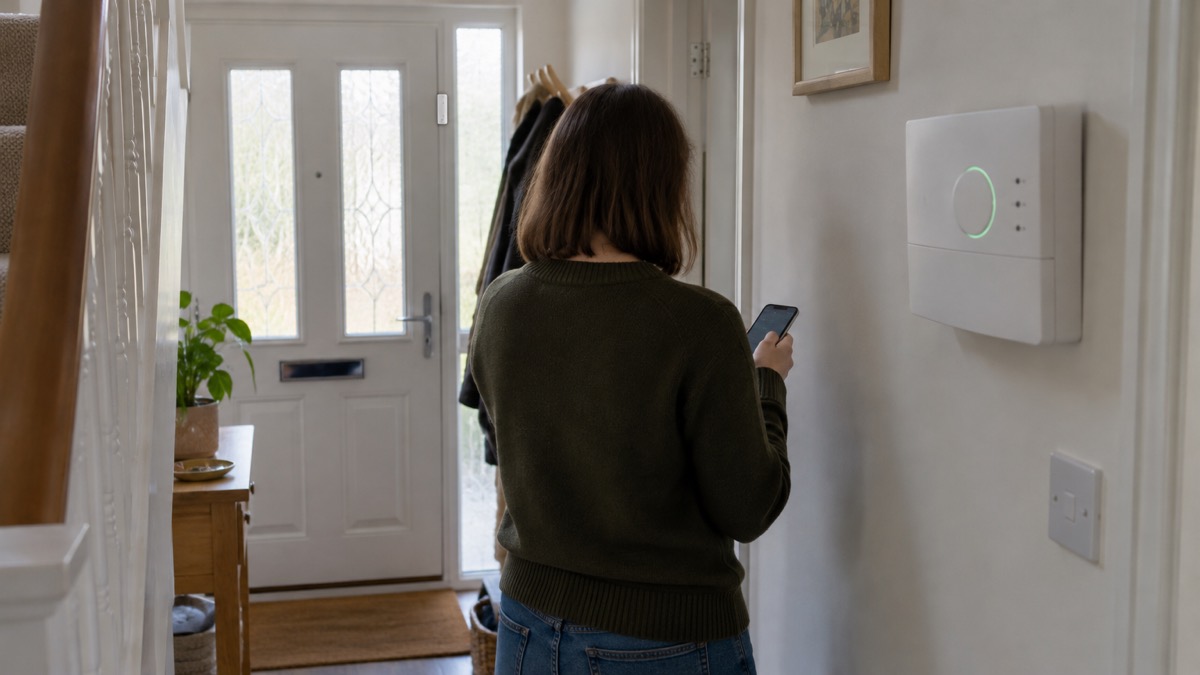
Texecom's digital services let a panel report to an app or a monitoring service. The maker states that the Premier Elite 640 supports remote diagnostics and health checks via Texecom Cloud, and is compatible with Texecom Cloud, Texecom Monitor and Texecom Connect when using a SmartCom or SmartCom 4G communicator1. In plain terms, that means the system can be checked and managed remotely, and can send alerts when something changes.
For preparedness, remote monitoring is most valuable when you are away from home or when the usual phone and broadband routes are disrupted. A monitored system can signal a monitoring centre even when nobody is in the house. An app-based system gives you visibility, but it depends on the network path between the panel and the cloud, so a broadband outage can interrupt the app without affecting the local alarm.
The police describe smart home security as one of the four types of intruder alarm system5, which is a useful reminder that app control is a system choice, not an add-on. If you want remote monitoring, decide before installation so that the right communicator is fitted. If you already have a system, ask your installer whether a communicator can be added and what it would change about the monitoring arrangements.
The Cyber Attacks and Major IT Failures: A Household Guide covers what to do when online services are disrupted, and Staying Informed and in Touch in an Emergency: A Household Guide covers keeping communications working.
Support, servicing and warranty
Support for a Texecom system comes from three places: the maker, the installer, and the official recall and safety notice system. Start with the maker's own product pages and paperwork for technical questions and warranty terms, and have your panel model code and installation details ready. Your installer is the first call for anything involving the wiring, the battery or the configuration, because they know how the system was specified.
Servicing matters more than most households realise. A system that is never tested is a system you cannot trust in an emergency. Test it regularly, act on fault indications, and have the standby battery replaced on the schedule your installer recommends. If you rely on a telecare service alongside your alarm, note that telecare provides 24/7 access to help and support, enabling people to stay safe, independent and connected at home through alarms, sensors and emergency response services20. The Extra Help in an Emergency: Older, Disabled and Medically Dependent Households guide covers how to arrange that kind of support.
Warranty terms are set by the maker and the installer, so keep the paperwork together with the installation certificate. If you move house, leave the alarm documentation for the new owner.
Safety notices and product recalls
Product recalls and safety notices are published by the Office for Product Safety and Standards, which issues recalls and alert notices on its website21. For electrical goods, Electrical Safety First also lists recalls and safety notices, and fire services advise checking that site for white goods22. Manufacturers issue product recall notices if an electrical appliance could develop a fault, including a risk of electric shock or fire, and if an appliance is not listed as recalled it should be safe to use; if you have concerns about its safety, contact the retailer or manufacturer23.
For alarm equipment, the recall route is the same. Check the model code against the official notices, and if your model appears, follow the instructions in the notice. Do not continue to use equipment that has been recalled. If you are unsure whether a notice applies to your panel, contact the maker or your installer with the model code.
Battery safety is part of the same picture. Fire services advise ensuring smoke alarms are fitted nearby and working wherever lithium-ion batteries are charged24, and the government's battery safety guidance for e-cycle users sets out the risks of charging lithium batteries25. If your alarm system includes a lithium battery, follow the maker's charging and replacement instructions exactly.
Sources (25)
- Premier Elite 640, Texecom, 2024-07-30
- Smoke alarms, Devon and Somerset Fire and Rescue Service, 2026-02-17
- Alarm advice sheet, North Wales Fire and Rescue Service, 2024
- Safety in other languages, Devon and Somerset Fire and Rescue Service, 2024-06-07
- Protect Yourself Booklet, Police Service of Northern Ireland, 2024
- Multifuel & Wood Stoves; Open Fires; Approved Coal & Wood Merchants, Solid Fuel Association (solidfuel.co.uk)
- Keep warm in winter, Derbyshire County Council, 2026-10-29
- Fire and smoke alarms in Scottish homes: where and what to buy, Scottish Government, 2024-08-14
- Chimney fires, Cornwall Fire and Rescue Service, 2026-10-29
- What is Safe and Well, Devon and Somerset Fire and Rescue Service, 2026-05-27
- Power cuts, UK Government, 2026-10-21
- Strong winds and weather warning information and advice, nidirect, 2026-10-24
- Be prepared for winter emergencies, NHS Norfolk and Suffolk, 2026-10-01
- Disabled people and carers, Ready Scotland, 2026-10-25
- 1, Texecom
- Winter safety advice - Winter safety - Seasonal Safety - Keeping You Safe - North Wales Fire And Rescue Service, North Wales Fire And Rescue Service
- Oil storage regulations and safety, GOV.UK, 2026-10-29
- Break-in and housebreaking, Police Scotland, 2026-11-02
- Battery safety for e-cycle users, GOV.UK, 2024-02-01
- Telecare | Staffordshire County Council, Staffordshire County Council
- Electrical items, London Fire Brigade, 2026-10-25
- White goods, Cheshire Fire and Rescue Service, 2026-05-20
- Electrical safety, Scottish Fire and Rescue Service, 2025-02-27
- Rechargeable lithium-ion battery safety advice, Cheshire Fire and Rescue Service, 2026-09-30
- Product recall: Bull and Cygnus fire alarm detection system, Office for Product Safety and Standards, 2026-08-12