

SimpliSafe is a make of wireless home security system with cameras and sensors, sold in the UK1. For a household getting ready for emergencies, its interest is not the everyday convenience of arming a house at night. It is what the system does when the power fails, when the broadband drops, when a pipe bursts while you are out, or when a storm takes the roof off and you want to know the house is still standing.
The maker's own account is the place to start. The Base Station has a backup battery for power cuts, the system can be set up yourself through the SimpliSafe App or professionally installed, and 24/7 Pro Premium Monitoring comes with the first month free, no contract, and can be cancelled by phone or chat1. The whole system arrives in 1 to 3 business days, and there is a 60-day money-back guarantee with return shipping paid by the maker1.
What follows sets out what each part of the kit does in an emergency, how long it keeps working, how to install and keep it ready, and where to go for support. It does not rank SimpliSafe against other makes, and it gives no prices.
What SimpliSafe makes for UK homes
SimpliSafe sells a modular alarm system rather than a single box. The maker says you can start with one of its packages or build your own system, and that it is simple to add on later with more sensors and cameras1. The Base Station, Keypad and Indoor Camera are the three parts the maker says are required to make the system work; everything else is added around them1.
The Keypad is the part a household touches most. It arms the home with one touch and has a hidden panic button for emergencies1. That panic button matters in a preparedness plan: it gives a person who is at home during a break-in, or who becomes unwell and cannot reach a phone, a way to raise the alarm from the keypad rather than hunting for a mobile.
Two of the maker's product pages are covered on this site: the Video Doorbell Pro and the Starter kit. For the wider subject of protecting a home, including the law on householders' rights and reasonable force, see the home security guide.
It helps to know where an alarm sits among the choices. The Police Service of Northern Ireland sets out four general types of intruder alarm system: monitored, speech dialler, audible only, and smart home security3. A SimpliSafe system with monitoring sits in the monitored and smart home categories at once: it can be watched by a monitoring centre and controlled from a phone app. That distinction decides what happens when nobody is in the house to hear a siren.
| Part | What it does | Why it matters in an emergency |
|---|---|---|
| Base Station | Hub with a backup battery for power cuts1 | Keeps the system alive when the mains fails |
| Keypad | One-touch arming, hidden panic button1 | Raises an alarm without a phone |
| Entry Sensor | Protects doors and windows; works with most doors or windows1 | Detects a break-in at the point of entry |
| Motion Sensor | Alternative for rooms with three or more windows1 | Covers a room without fitting a sensor to every window |
| Indoor Camera | 3-in-1 HD camera with motion sensor and siren1 | Lets you look in while away |
| Smoke, heat, water and temperature sensors | Part of the maker's range1 | Covers fire, leaks and cold |
Alarms for break-ins, fire, water and temperature
The maker describes the system as protecting your whole home 24/7 from break-ins, fires, floods and more1. Each of those bears on a different kind of emergency, and each has its own limits.
For break-ins, the maker's advice is to protect ground floor doors and windows first, because that is where burglars break in most, and to consider a Motion Sensor instead of an Entry Sensor in a room with three or more windows1. That is sensible sequencing for a household fitting a system over time: start with the routes a person would actually use to get in.
For fire, the maker's range includes smoke and heat sensors, but the official guidance on where they go comes from the fire and rescue services, not the maker. Heat alarms are more suitable for kitchens and other rooms where steam, fumes or moisture could set off a smoke alarm by mistake4. The London Fire Brigade advises that any alarm you buy should carry a current British Standards or European (CE) safety mark5. Electrical Safety First advises at least one smoke or heat alarm per floor, with enough alarms to cover every area where a fire could start6.
For water, the maker lists water and temperature sensors as part of the range1. Water companies are clear about why that matters. Signs of a leak include a drop in water pressure, rust, water stains on walls, floors or carpets, and mould on ceilings and walls7. Dŵr Cymru lists lush vegetation, a big drop in water pressure, a hissing sound near the internal stop valve, damp patches on the ground, or an unexplained change in your bill8. NI Water, for households without a meter, lists the sound of running water, leaking water or wet areas, lush vegetation near pipework especially in dry periods, and reduced water pressure9. If you suspect a leak, act fast10, and contact your water company as soon as you are aware of a leak on your property; they will visit, identify whether there is a leak and advise how best to proceed11.
Temperature sensing matters in a cold snap: a sensor that reports a falling temperature gives you warning before pipes freeze, which is the point at which a burst pipe becomes a flood. For what to do when a pipe does burst, see the home emergencies guide.
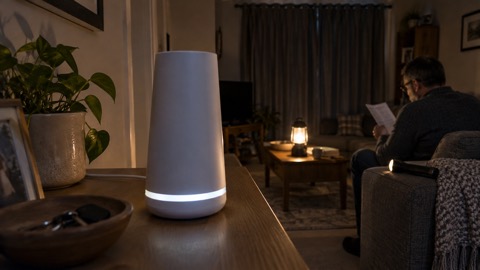
Up to 24-hour battery backup if the power or Wi-Fi goes down
The single most useful thing about the system for emergency planning is that the Base Station is built with a backup battery in case of a power outage1. A power cut is exactly when a household most wants to know the house is still protected, and exactly when a mains-powered alarm would otherwise go quiet.
The maker's page does not state a running time for that battery in the material available here, so treat any figure you see elsewhere with care and ask the maker directly. What the maker does state is that the system supports software updates for at least three years from when the device was first available for sale2. That is a support horizon, not a battery life, and the two should not be confused.
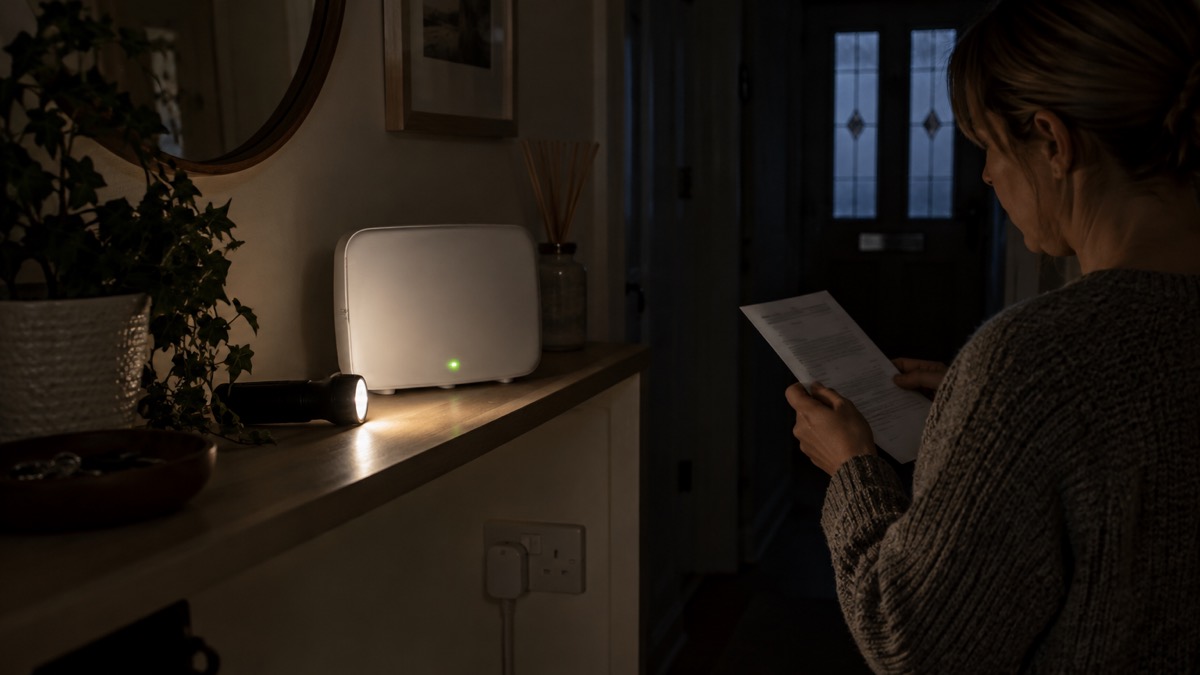
For the wider question of keeping communications running through an outage, an uninterruptible power supply provides a few minutes of emergency battery backup if power fails and can help keep communications platforms, Wi-Fi connections, and computer and tablet devices running13. That is a short bridge, not a long one, and it is a separate piece of kit from the alarm. The backup power guide and the power cuts guide set out how to plan for an outage that lasts longer.
24/7 alarm monitoring and guard dispatch
Monitoring is what turns an alarm into a response. The maker offers 24/7 Pro Premium Monitoring with the first month free, no contract, and cancellation by phone or chat; after the trial, monitoring is charged separately1. The maker's page does not set out in the material available here exactly what the monitoring centre does on receiving an alert, so if guard dispatch is the reason you are buying, confirm the detail with the maker before you rely on it.
The value of monitoring is easiest to see when nobody is at home. A siren alerts the neighbours; a monitored alarm can alert someone who can act. That is the difference the Police Service of Northern Ireland draws between an audible-only system and a monitored one3.
Monitoring also has a dependency that a household should plan around. It runs over your phone or broadband connection, and the government's preparedness campaign notes that phone and broadband outages happen12. If the connection is down, the alarm may still sound locally but the monitoring centre may not hear it. That is why the backup battery and the communications plan belong together: the battery keeps the panel alive, and a working connection is what carries the message out.
Installing it yourself: no drilling or tools needed
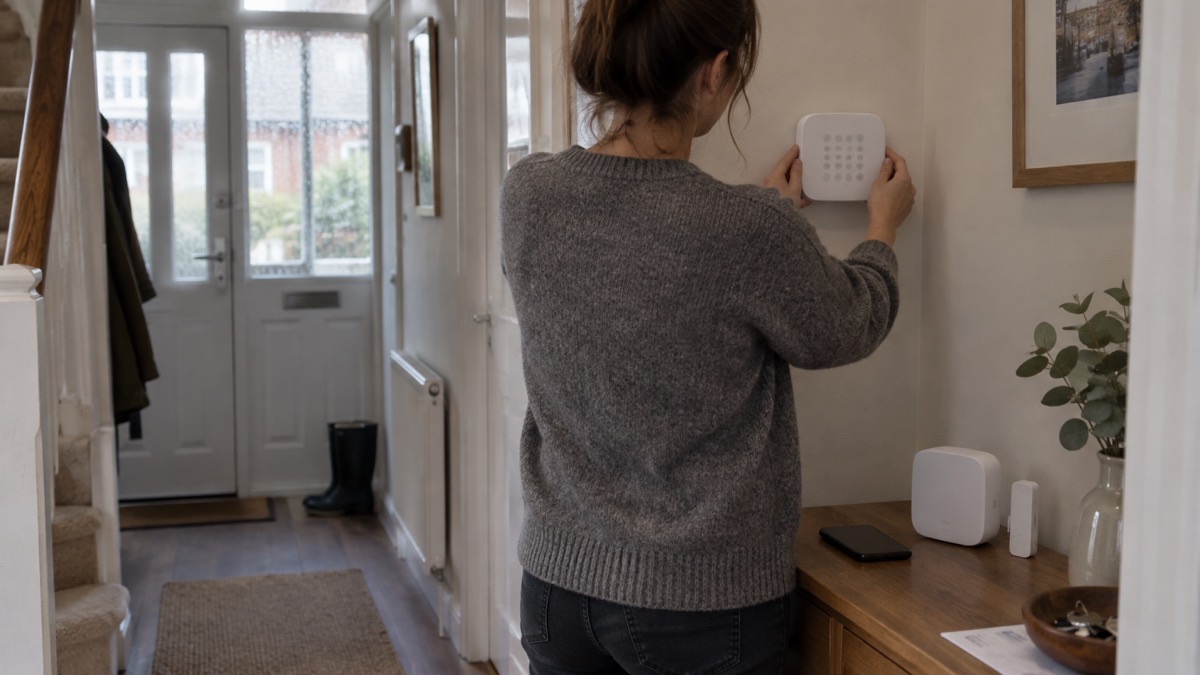
The maker says setup is done by walking through the SimpliSafe App, or you can select professional installation1. Self-installation is the default, and the system is designed to be placed rather than wired in.
The comparison that helps here is with a smart lock. Which? notes of one model that no drilling or wiring is needed for installation, so you should be able to do it yourself14. The same principle applies to a wireless alarm: components sit on a shelf or fix to a frame, and the panel talks to them without cabling. That matters in a rented home, where drilling may not be allowed, and in an emergency, where you may need to move or extend the system quickly.
A sensible order for a household fitting it themselves:
- Plug in the Base Station, download the SimpliSafe app and follow the interactive guidance; the maker says no professional installation is needed1.
- Set up the Keypad, which arms the system with one touch and holds the hidden panic button2.
- Add the Indoor Camera, one of the three parts the maker says are required3.
- Fit Entry Sensors to ground floor doors and windows first, and use a Motion Sensor in rooms with three or more windows2.
- Add the sensors you need for the risks in your home, such as the Temperature Sensor, which triggers if your home drops below 5°C so you can stop pipes from freezing and bursting4.
- Run a test with the monitoring centre before you rely on it, and check the backup battery is charged.
Indoor cameras with a built-in privacy shutter
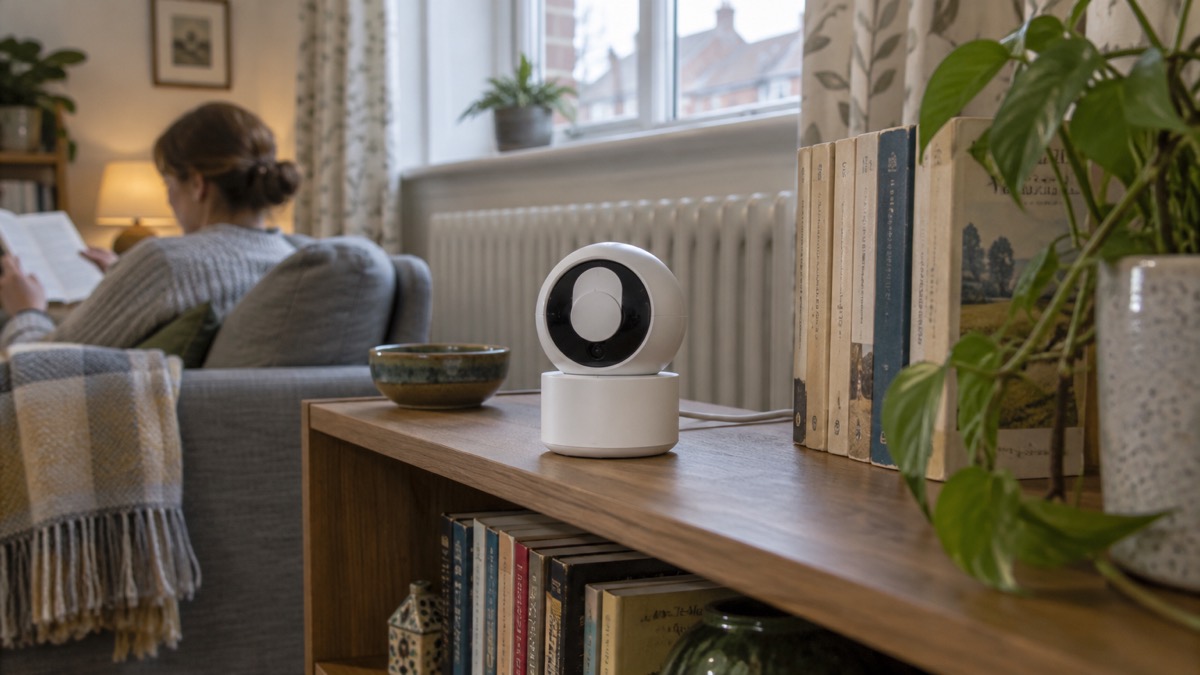
The Wireless Indoor Camera is a 3-in-1 HD camera with a built-in motion sensor and siren, and the maker says it is one of the three parts required to make the system work1. In an emergency it does two jobs: it lets you look in on the house while you are away, and its siren adds to the alarm if an intruder gets in.
The privacy shutter is the feature that decides whether a camera is acceptable in a bedroom, a hallway or a home office. A physical shutter that closes over the lens is a straightforward answer to the question of what the camera sees when you are at home. The maker's page does not describe the shutter's operation in the material available here, so check it on the product page before you buy.
For a household preparing for emergencies, the camera's value is in the ordinary absences that emergencies create: a hospital stay, a night with relatives during a flood, a wait for the power to come back. Being able to look in, and to hear the siren, is a form of reassurance that a siren alone cannot give.
No contract: cancel anytime
The maker's terms are unusually simple for a monitored alarm: the first month of 24/7 Pro Premium Monitoring is free, there is no contract, and you cancel by phone or chat; after the trial, monitoring is charged separately1. For a household, that means the monitoring is a running cost you can stop, not a tie-in.
That structure suits emergency planning in a particular way. You can run the monitoring through the winter, when storms and power cuts are most likely, and stop it in the summer if you prefer. You can also keep the equipment working as a local alarm without monitoring, though the maker's page does not set out in the material available here exactly which functions continue without a subscription, so confirm that with the maker if it matters to you.
The wider point is that an alarm is one layer of a plan, not the plan. The getting started guide sets out how to build the rest: what to keep ready, who to check on, and how to stay in touch. The community resilience guide covers the neighbours who will knock on your door when the power is out, which no subscription can replace.
60-day money-back guarantee and returns
The maker states that if you are not delighted, you can call within 60 days for a full refund and SimpliSafe will pay for return shipping1. That covers the whole system, and it is long enough to live with the kit through a real event, such as a storm or a short power cut, before you commit.
Delivery is quoted at 1 to 3 business days for the whole system1. The maker's build page also shows an expected ship date for orders placed at the time of writing, which changes as stock moves, so check the date shown when you order rather than relying on any date quoted elsewhere1.
Support and contacting SimpliSafe
The maker's support line for questions is 0800-456-17891. Use it before you buy to confirm the details that decide whether the system suits your household: the backup battery's running time, what the monitoring centre does on an alert, which functions continue without a subscription, and how the privacy shutter works.
If something you have bought turns out to be unsafe, the advice from Electrical Safety First is to contact the supplier immediately, state your case and demand an explanation15. That applies to any electrical product in the home, not only an alarm.
For households that need more than a product, the fire and rescue services run free home safety visits. Warwickshire Fire and Rescue Service takes applications through its customer service centre on 01926 46628216. Belfast City Council's home safety check and repair scheme for seniors can be booked by email or on freephone 08001 422 86517. Mid and West Wales Fire and Rescue Service takes Safe and Well enquiries by email at saw@mawwfire.gov.uk18. Suffolk Fire and Rescue Service can be reached on 01473 26058819. Dorset and Wiltshire Fire and Rescue Service takes Safe and Well applications on 0800 038 232320. If anyone in the home uses oxygen equipment, the fire service advises contacting your supplier for further information or advice about the equipment21.
For water leaks, WaterSafe can help you find a local, qualified plumber through its scheme, by visiting watersafe.org.uk or calling 0333 207 903022. For the wider question of who to call and when, the extra help guide covers older, disabled and medically dependent households, and the staying informed guide covers keeping in touch when the phone lines are strained.
Sources (22)
- Build my system, SimpliSafe, 2026
- Best burglar alarms and smart security systems, Which?, 2026
- Protect yourself booklet, Police Service of Northern Ireland, 2024
- Smoke and heat alarms, Greater Manchester Fire and Rescue Service, 2026
- Smoke alarms and heat alarms, London Fire Brigade, 2026
- Ratings of electrical appliances, Electrical Safety First, 2026
- Look out for leaky taps, toilets and radiators, WaterSafe, 2026
- Network leakage, Dŵr Cymru, 2026
- I have got a burst pipe, NI Water, 2026
- Home leaks, Affinity Water, 2026
- Leaks FAQs, South Staffs Water, 2026
- Phone and broadband outages, UK Government preparedness campaign, 2026
- Be winter ready, Electricity North West, 2026
- Do I need a smart door lock?, Which?, 2026
- Traitor or faithful: experts reveal how to spot a treacherous gadget lurking in your home, Electrical Safety First, 2026
- Apply for a Safe and Well visit, Warwickshire County Council, 2026
- Home safety, Belfast City Council, 2026
- Chimney fires safety, Mid and West Wales Fire and Rescue Service, 2023
- Before, during and after a flood, Suffolk County Council, 2021
- Warning not to leave candles unattended following Bournemouth house fire, Dorset and Wiltshire Fire and Rescue Service, 2018
- Oxygen, Greater Manchester Fire and Rescue Service, 2026
- Southern Water household code of practice, Ofwat, 2022
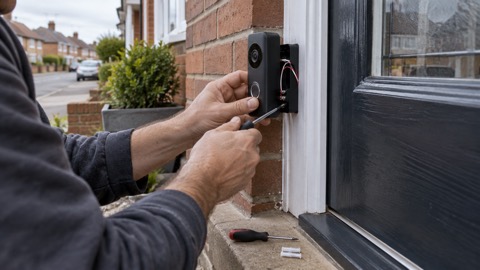 Video Doorbell Pro
 Starter