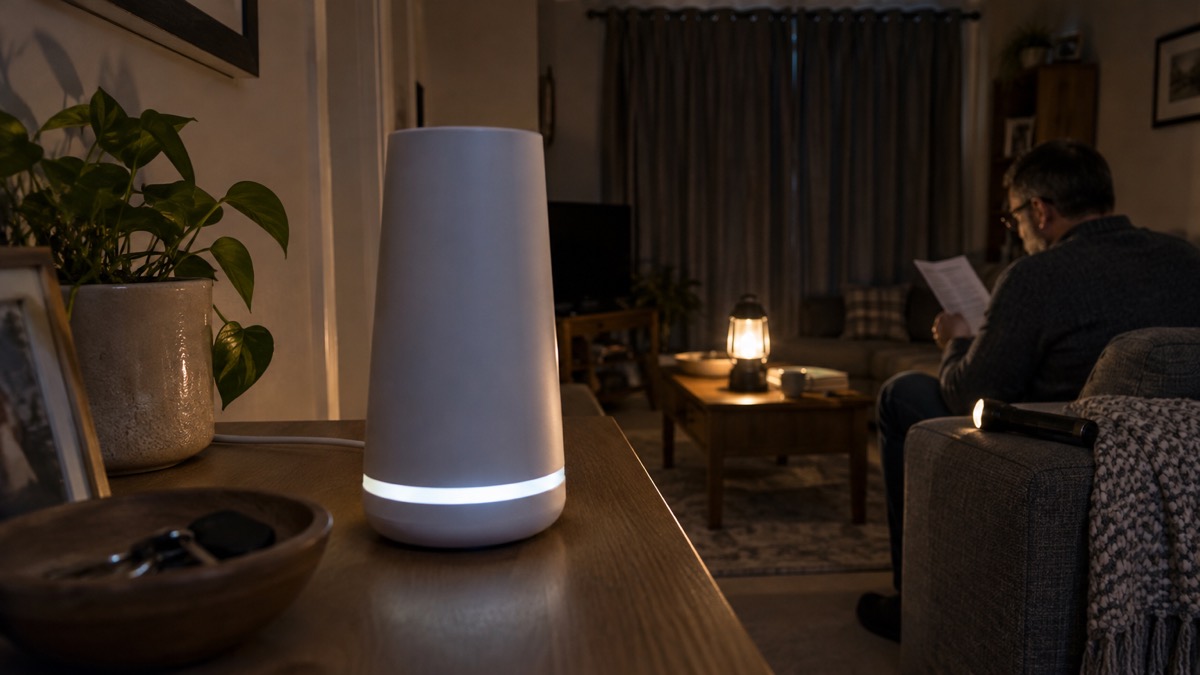
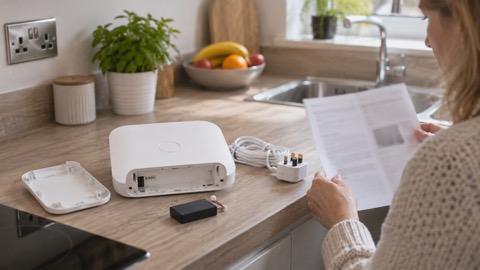
A SimpliSafe Starter Kit is a self-installed home alarm bundle: a base station, sensors for doors and windows, a motion sensor and a keypad, with an optional outdoor bell box. It is designed to be set up by the householder without an electrician. For a household preparing for emergencies, its value is straightforward: it gives early warning of an intruder when your routine is disrupted, for example during a power cut, after a storm, or while you are away from home.
The kit is not a substitute for smoke alarms or a carbon monoxide alarm. Those are separate life-safety devices, and fire and rescue services advise testing them regularly and never removing their batteries1. What the Starter Kit adds is perimeter and interior intrusion detection, plus an outdoor siren if you choose the version with a bell box.
This page explains what the kit protects, how the two versions differ, what comes in the box, how to set it up, how to keep it working through a power cut, where not to put the sensors, and where to get support. It is written for an ordinary UK household with no security background.
What the Starter kit is and what it protects
The SimpliSafe Starter Kit is a wireless intruder alarm system that you install yourself. It watches the entry points and the main routes through your home: doors, windows and the hallway or landing where a motion sensor will pick up movement. When a sensor is triggered, the base station sounds the internal siren and, if you have chosen the version with a bell box, the outdoor siren sounds too.
For emergency preparedness, the kit matters most when your normal routines break down. A power cut, a storm that damages a fence or a gate, or a flood that forces you out of your home all create the conditions in which an intruder is more likely to try a door or a window. The alarm gives you warning while you are in the house, and it gives neighbours and passers-by a visible and audible signal when you are not. If you want to understand how alarms fit into a wider plan, see Burglar Alarms: Types and How to Choose One.
The kit does not protect everything. It does not detect smoke, heat or carbon monoxide, and it does not call the emergency services by itself unless you have a monitoring plan. It is a deterrent and an early warning system, not a guarantee. The police response to intruder alarms depends on the type of system and on local policy; How Police Respond to Burglaries and Intruder Alarms explains how that works.
The Starter Kit is also a starting point rather than a complete system. You can add further sensors and devices as your household's needs change, and the maker's own support pages list what is compatible. If you are weighing up whether an alarm or a camera is the better first purchase for your home, Burglar Alarm or CCTV Camera: Which Suits Your Home? sets out the trade-offs.
Starter or The Starter Kit with Bell Box: how the two versions differ
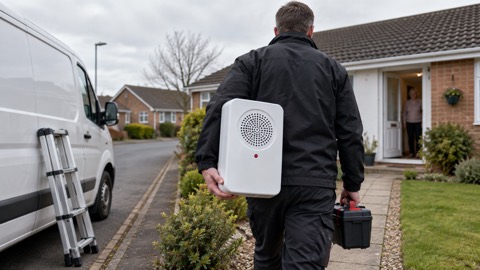
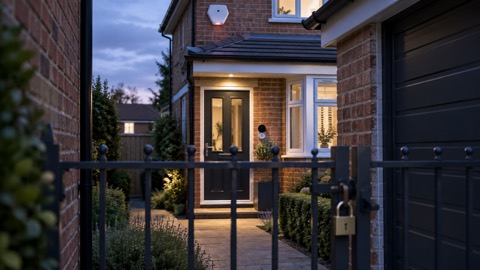
The two versions of the kit differ in one main respect: whether an outdoor bell box is included. The bell box is the siren that sits on the outside of the house and sounds when the alarm is triggered. It gives a visible warning to anyone approaching the property and an audible warning to neighbours.
The version with the bell box is the one to choose if you want the alarm to be heard outside as well as inside. The alarm volume on that version is listed at 109dB4. That is a loud siren, and it is intended to be noticed. The version without the bell box relies on the internal siren and on any app notifications you have set up.
| Feature | Starter Kit | Starter Kit with Bell Box |
|---|---|---|
| Base station | Included | Included |
| Door and window sensors | Included | Included |
| Motion sensor | Included | Included |
| Keypad | Included | Included |
| Outdoor bell box | Not included | Included |
| Alarm volume | Internal siren | 109dB listed for the bell box version4 |
| Suits | Flats, rented homes, households that want internal warning only | Houses where an external siren is wanted and permitted |
If you live in a flat or a shared building, check with your landlord or managing agent before fitting an external bell box. Flats and Shared Entrances: Door Entry and Communal Doors covers the issues that come up in shared buildings. If you are unsure whether a visible bell box is a good idea for your home, Should a Burglar Alarm Bell Box Be Visible? discusses the arguments.
What comes in the box
The Starter Kit is a bundle of the core components you need to protect a typical home. The exact contents can vary between retailers and over time, so check the box or the maker's product page before you buy. In general, a starter kit of this kind includes:
- A base station, which is the hub that connects the sensors and sounds the internal siren
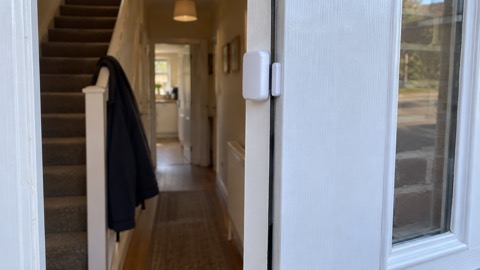
- Door and window sensors, which detect when a door or window is opened
- A motion sensor, which detects movement in a room or hallway
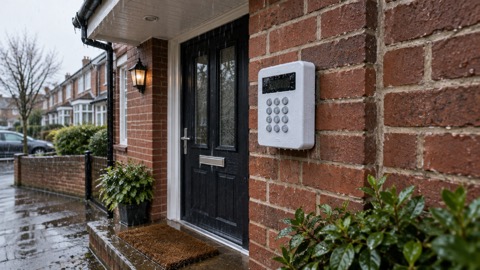
- A keypad, which lets you arm and disarm the system with a code
- Fixing screws and adhesive pads for mounting the sensors
- A quick start guide and, on the version with a bell box, the outdoor siren and its fittings
The kit does not include a first aid kit, a torch, spare batteries or an emergency plan. Those belong in your household emergency kit, and official guidance is consistent that every home should have one. Nottinghamshire Council's emergency planning advice lists a first aid kit as a core item6. The Health and Safety Executive's guidance on first aid kits sets out what a basic kit should contain, including plasters, bandages, safety pins, sterile dressings and disposable gloves7. The NHS lists a similar set, including plasters, gauze dressings, triangular bandages, safety pins, disposable gloves, tweezers, scissors, a thermometer and painkillers8.
If you are building or topping up a household emergency kit, the Emergency Kit: What a UK Household Should Keep Ready section covers the full list, and First Aid at Home: A Household Guide explains what to keep and how to use it.
Setting up the kit at home
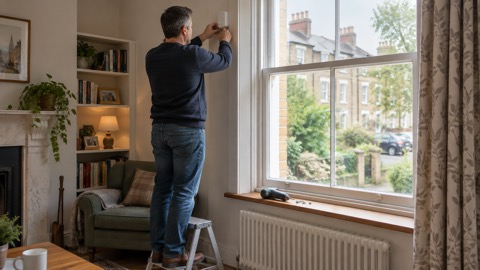
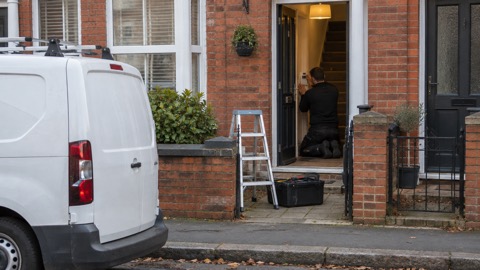
Setting up the Starter Kit is a job you can do yourself in an afternoon. The aim is to place the sensors where they will catch someone coming in, without creating false alarms from pets, draughts or direct sunlight.
- Decide on the entry points. Walk around your home and list every door and ground-floor window that someone could open. Prioritise the ones that are easiest to reach from outside.
- Fit the door and window sensors. Mount the sensor on the frame and the magnet on the moving part, so that the two line up when the door or window is closed. Follow the maker's instructions for the gap between them.
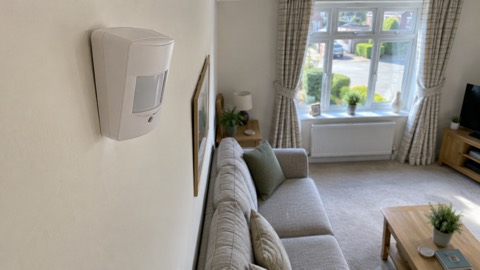
- Place the motion sensor. Put it in a hallway or landing where someone would have to walk, at a height where it will not be triggered by pets. Keep it away from radiators, windows and direct sunlight.
- Mount the keypad. Put it inside the front door, at a height that suits everyone in the household, and away from a window where someone could see you enter the code.
- Fit the bell box, if you have one. Mount it high on an external wall, out of easy reach, and check that it is visible from the street. Where to Fit an Outdoor Alarm Siren explains the height and placement considerations.
- Test every sensor. Arm the system and walk through the house, opening each protected door and window in turn, to confirm that each one triggers the alarm.
- Set up the app and notifications. Add the people who need to be alerted, and check that the notifications reach their phones.
If you rent your home, check your tenancy agreement before drilling or screwing anything to a wall or door frame. If you are unsure, ask your landlord first. If your home is flooded, Somerset Council advises tenants to contact their landlord to report the flood, as they may arrange repairs or alternative accommodation11.
Batteries, power cuts and keeping the alarm working
An alarm is only useful if it is working when you need it. The most common reason a home alarm fails is a flat battery, and the most common time to discover it is during or after a power cut.
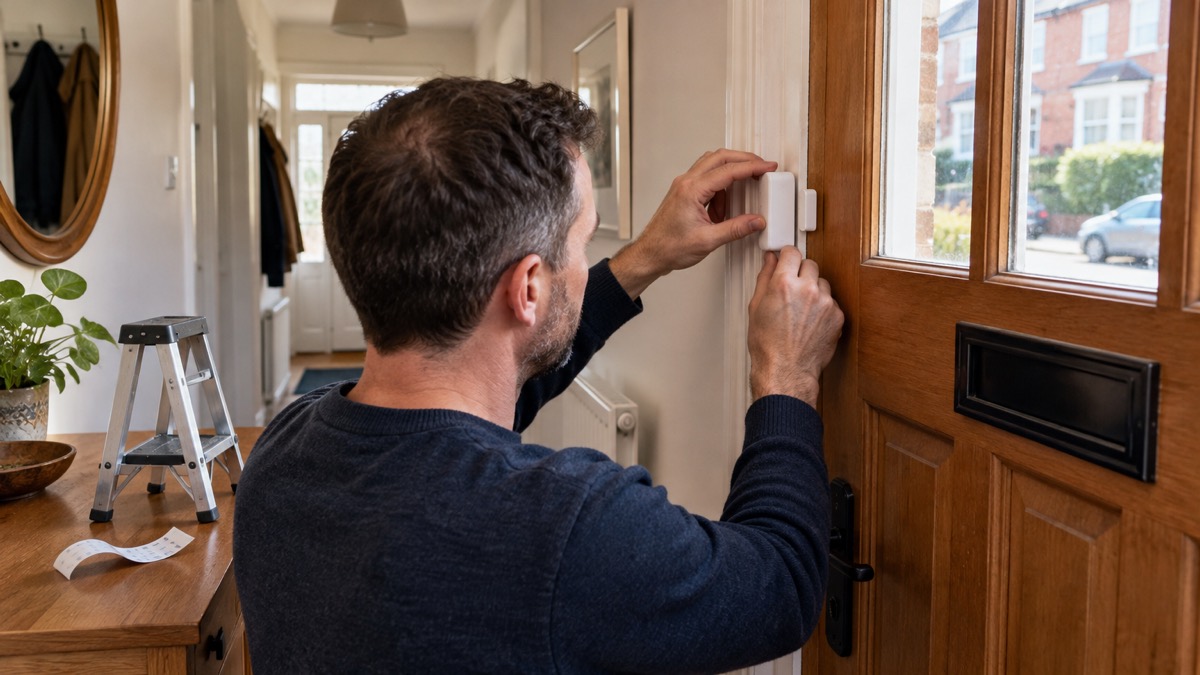
Fire and rescue services are clear about the routine. Cheshire Fire and Rescue Service advises changing the battery in a smoke alarm every year, even if it is still working1. South Wales Fire and Rescue Service gives the same advice for mains-operated alarms: change the back-up battery every year, because a running-out battery can make the alarm beep12. North Wales Fire and Rescue Service advises that if you have a power cut and you have mains-powered smoke alarms, you should check that the battery back-up is working5. The same principle applies to any alarm in your home, including a burglar alarm: after an outage, check that the system has come back up and that its back-up battery is holding charge.
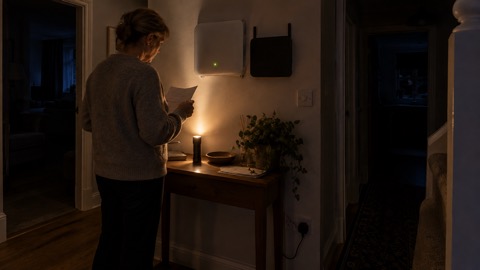
For a burglar alarm, the same discipline applies. Keep spare batteries at home so that the devices that matter can keep working13. Test the system regularly, and test it after any power cut. If your alarm has a battery back-up, replace it on the maker's schedule, not only when it fails.
| Device | Battery advice | Source |
|---|---|---|
| Battery-operated smoke alarm | Replace the battery every year; set a reminder | 1 |
| Mains-powered smoke alarm | Check the back-up battery after a power cut; replace it every year | 5 |
| Burglar alarm and sensors | Usually equipped with a battery backup, so should work while the electricity is off | 13 |
If you want to go further on keeping your home protected when the power fails, Keeping Your Home Protected in a Power Cut covers the wider preparations, and Power Cuts: A Household Guide explains what to do while the power is off.
Where the sensors should not go
Placement decides whether an alarm is useful or a nuisance. A sensor in the wrong place will either miss an intruder or trigger when nothing is wrong.
- Not directly facing a window. Sunlight and moving shadows can trigger a motion sensor.
- Not above a radiator or heater. Rising heat sets off passive infrared sensors.
- Not in a room where pets sleep or roam. A motion sensor cannot tell a cat from an intruder unless it is designed for pets. Which Alarm Sensors Are Safe to Use with Pets? explains the options.
- Not behind a door that opens inwards. The sensor needs a clear view of the room.
- Not on a door or window that is never opened. A sensor there adds nothing and is one more thing to maintain.
- Not where a curtain or blind will move across it. Draughts and moving fabric cause false alarms.
If you have a pet and are unsure where to put the motion sensor, the safest approach is to keep it out of the rooms the pet uses and rely on door and window sensors for those areas.
Support, warranty and safety notices
SimpliSafe sells the Starter Kit with a maker's warranty and a support line. Check the warranty terms that come with your kit, and keep your proof of purchase. If a sensor fails or the base station stops working, contact the maker's support before you try to repair it yourself.
For households that need extra help, there are support schemes worth knowing about. Ofgem explains that from April 2016, participating water companies have been letting their consumers know about support services such as doorstep password schemes and advance notice of supply interruptions, and that this is a voluntary industry initiative welcomed by Ofgem and Ofwat15. If you or someone in your household would struggle in a power cut or a flood, ask your supplier about these services.
Telecare systems can also be extended with extra devices, including falls detectors, smoke alarms, sensor pads, sensor lights and door sensors16. If you are setting up an alarm for an older or disabled household member, Extra Help in an Emergency: Older, Disabled and Medically Dependent Households explains what is available.
If your broadband or phone line goes down, the alarm's app notifications may not reach you. The government's Prepare campaign advises downloading or printing maps so you can navigate without internet access, and notes that your smartphone's GPS may still work with no signal, but map apps need pre-downloaded maps to show routes17. Keep a battery-powered radio and torch in your emergency kit as a back-up way to stay informed. Staying Informed and in Touch in an Emergency: A Household Guide covers the options.
For the maker's own product information, see the SimpliSafe brand page.
Sources (16)
- Stay safe at home: smoke alarms, Cheshire Fire and Rescue Service, 2026
- Fire alarms and carbon monoxide detectors, Lincolnshire County Council, 2026
- The best home security systems, Federation of Master Builders, 2026
- Best burglar alarms and smart security systems, Which?, 2026
- Winter safety, North Wales Fire and Rescue Service, 2026
- Preparing for an emergency, Nottinghamshire County Council, 2026
- What to put in your first aid kit, Health and Safety Executive, 2026
- Emergency kit, Ready Scotland, 2026
- Planning for an emergency: kit, Wiltshire Council, 2026
- Housing help if your home is flooded, Somerset Council, 2026
- Smoke alarms, South Wales Fire and Rescue Service, 2026
- Staying safe this season, Devon and Somerset Fire and Rescue Service, 2025
- Carbon monoxide, Public Health Wales, 2025
- UKRN promotes and supports initiatives to raise awareness of vulnerability support services, Ofgem, 2016
- Telecare, Staffordshire County Council, 2025
- Phone and broadband outages, Prepare campaign, 2026

 Abode Security Kit
 Ajax CombiProtect
 Ajax DoorProtect Plus
 Ajax GlassProtect
 Ajax HomeSiren
 Ajax Hub 2 Plus
 Ajax Hub 2G Jeweller
 Ajax Hub 4G Jeweller
 Ajax KeyPad Outdoor
 Ajax KeyPad Plus
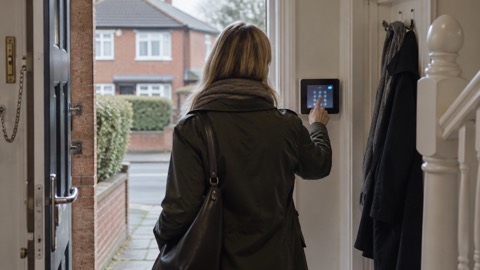 Ajax KeyPad TouchScreen
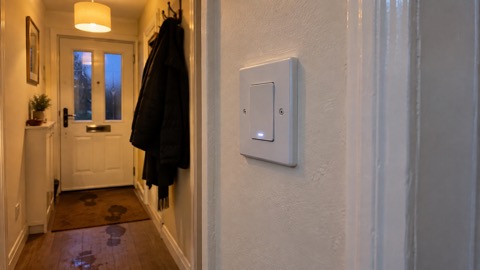 Ajax LightSwitch