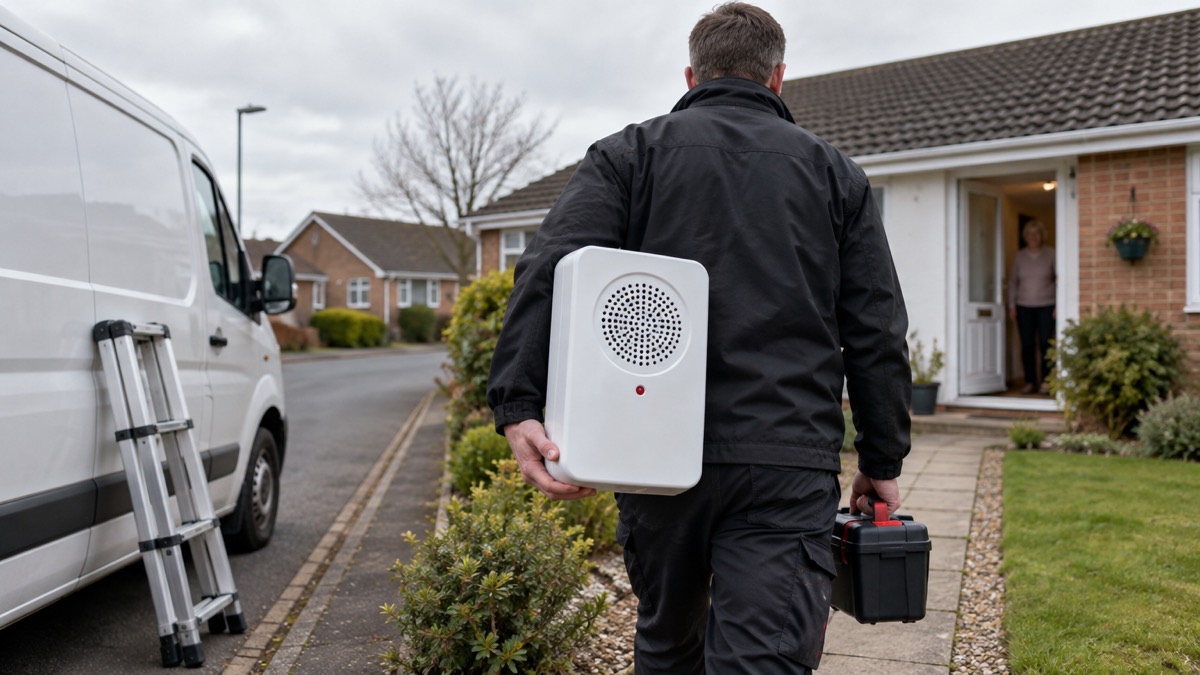
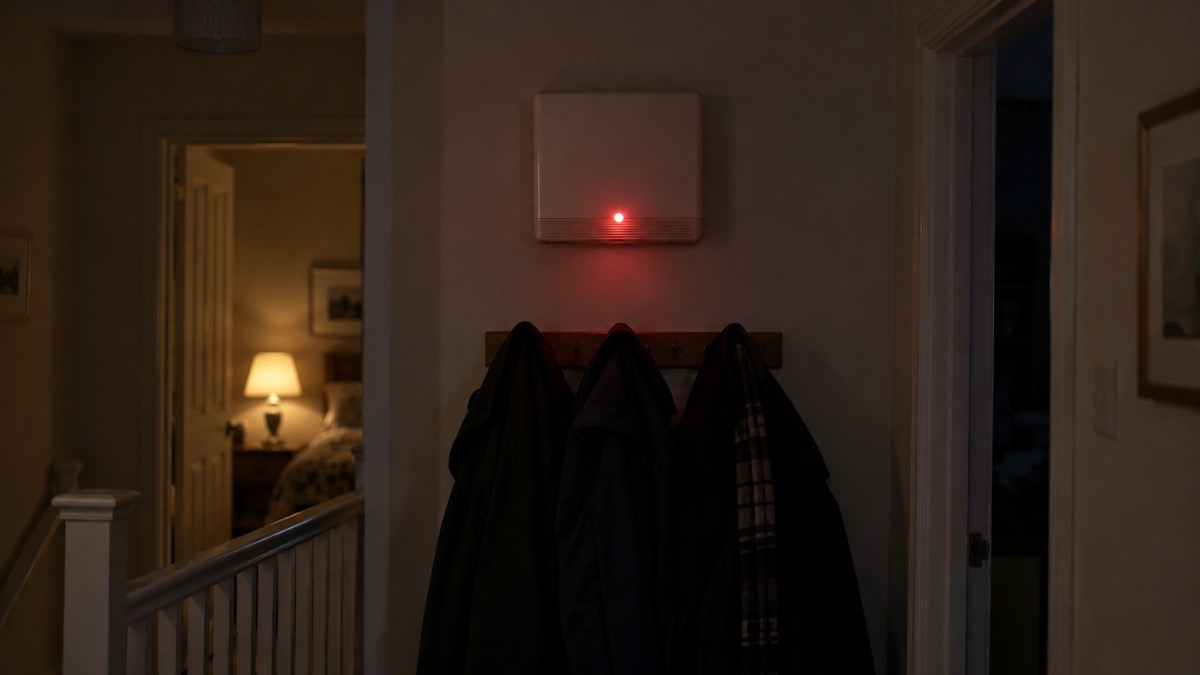
The Ajax HomeSiren is an indoor wireless siren that works with an Ajax alarm hub: when a sensor triggers, the siren sounds and the hub sends you a notification. The HomeSiren Plus Jeweller sounds at 80 to 100 dB at a distance of 3.3 ft, is for indoor use only, and Ajax calculates its battery life at up to 2 years on two CR123A cells1. It is a warning device for the inside of a home, not a weatherproof outdoor bell box.
If you already have an Ajax system, the practical questions are how loud it will be where you fit it, how long the batteries really last, and how to change them without damaging the tamper switch. If you are choosing an alarm from scratch, the siren is one part of a system that also needs a hub, sensors and a way of telling you what has happened; our guide to burglar alarms and how to choose one sets out the wider picture.
This page covers what the siren does, its specifications, the batteries and how to change them safely, the optional 12 V supply, where to mount it, how it reports tampering and jamming, and the warranty. It does not cover prices, and it does not rank the siren against other products.
What the Ajax HomeSiren does in a home alarm system
The siren is the part of an Ajax system that makes a noise in the room. It communicates with an Ajax hub over the Jeweller secure radio protocol to transmit alarms and events, and by default its response is enabled for alarms from all devices in the system3. Up to 10 sirens or keypads with a built-in siren can be connected to one Ajax hub, so a larger house can have more than one sounder2.
It works alongside the hub rather than instead of it. An Ajax hub running an up-to-date OS Malevich version is required for the device to operate, and the siren works only with Ajax hubs: connection to ocBridge Plus and uartBridge integration modules is not provided2. When an alarm goes off, the system notifies users not only with a siren signal but also with push notifications, SMS or calls, depending on the settings4. The hub calls every user who has enabled call notifications in turn, and calls every 2 minutes at most5.
One point that matters in a power cut or broadband failure: if the hub loses its internet connection, the security system continues autonomous operation, responding to all events, running the enabled scripts and activating the siren when applicable5. The siren is therefore still part of a working local alarm even when the app cannot reach it. Ajax also builds interconnected fire detection into its residential range, where all the fire detectors at the property sound their built-in sirens together if one detects an alarm5; the HomeSiren is a separate sounder for the intrusion system, not a smoke or heat alarm.
HomeSiren Plus specifications
The HomeSiren Plus Jeweller is described by Ajax as a wireless siren with extended audio capabilities and flexible alerts, supplied in black or white1. Its alarm is acoustic, with a speaker and LED, and it is classed as a type X, internal, self-powered warning device1. The table below sets out the figures that decide where it goes and what it can do.
| Specification | HomeSiren Plus Jeweller |
|---|---|
| Alarm volume | 80 to 100 dB at a distance of 3.3 ft1 |
| Alarm duration | 3 s to 3 min1 |
| Siren sound frequency | 3.4 ± 1 kHz; 1.6 to 4.5 kHz1 |
| Radio range | up to 6,550 ft in open space1 |
| Radio frequency bands | 865.0 to 868.0 MHz; 868.0 to 868.6 MHz; 868.7 to 869.2 MHz; 869.4 to 869.65 MHz; 905.0 to 926.5 MHz; 915.85 to 926.5 MHz; 921.0 to 922.0 MHz1 |
| Radio modulation | GFSK1 |
| Maximum ERP | up to 25 mW1 |
| Battery | 2 × CR123A, 3 V lithium, pre-installed1 |
| Nominal operating voltage | 6 V1 |
| Operating voltage range | 3.8 to 6.3 V1 |
| Quiescent current | 70 µA1 |
| Average current when sounding at default volume | 80 mA1 |
| Peak current at Very loud volume | 1 A1 |
| Low battery voltage | 4.75 V1 |
| End-of-life battery voltage | 3.8 V1 |
| End-of-life battery capacity | 75 mAh1 |
| Full battery capacity | 3,200 mAh1 |
| Operating temperature | 14 °F to 104 °F1 |
| Operating humidity | up to 75%1 |
| Protection class | IP501 |
| Security Grade | 21 |
| Environmental class | II according to EN 501311 |
| Dimensions | 3.62″ × 3.62″ × 1.50″1 |
| Weight | 6.21 oz1 |
| Warranty | 24 months1 |
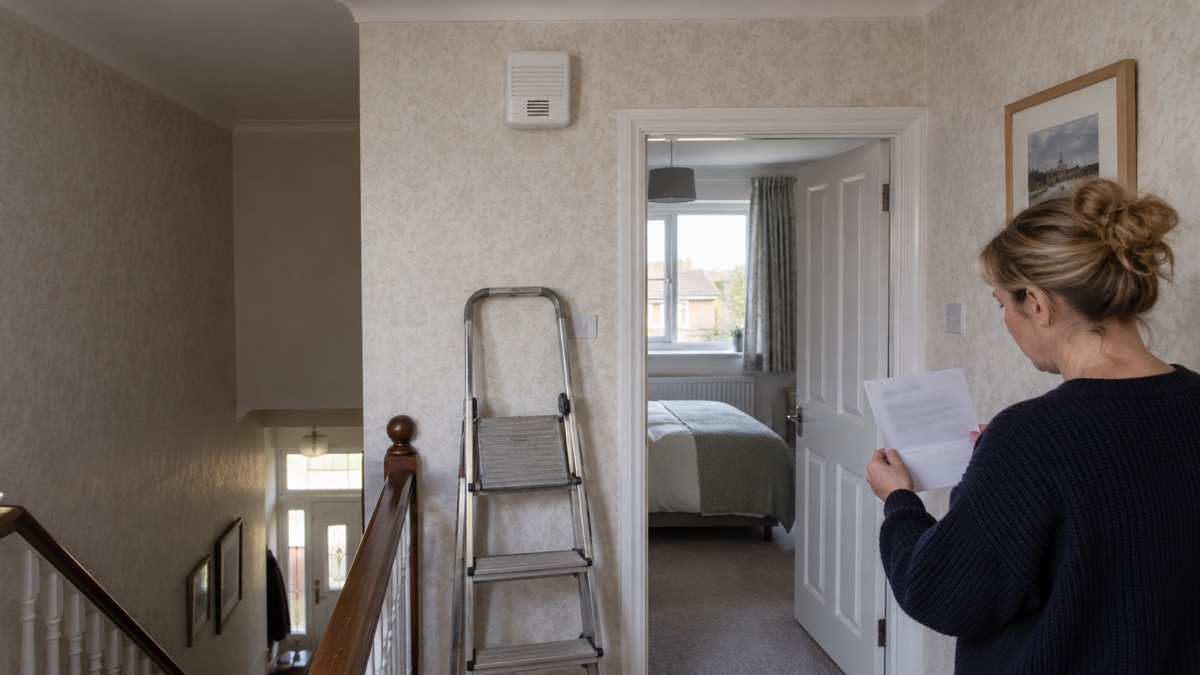
The volume range is the figure most people want to understand. Ajax gives the HomeSiren Plus an alarm volume from 80 to 100 dB at a distance of 3.3 ft1. The HomeSiren Jeweller is a different model in the range, with volume levels of Quiet at 80 dB, Loud at 93 dB and Very loud at 100 dB, measured 1 m from the siren2. The HomeSiren U Jeweller is a third model, with a sound volume of up to 105 dB and a Quiet level of 81 dB3; it is not the same device as the Plus, so do not assume the figures carry across.
The IP50 rating and the indoor-only instruction go together: the case keeps dust out to a degree but is not protected against water, so it does not belong in a bathroom, a porch or anywhere rain or steam reaches. The operating range of 14 °F to 104 °F and humidity up to 75% is the maker's limit for the room it sits in1.
Batteries: up to 2 years on two CR123A cells
Ajax calculates the battery life of the HomeSiren Plus at up to 2 years1. That is a calculated figure, not a promise: the maker states that if other batteries are installed, the operating time may differ from the calculated time6. The HomeSiren Jeweller manual puts the same cells at up to 5 years of autonomous operation with a hub inquiry frequency of 1 minute, or at least 6 hours of buzzer sound2. The two documents describe different models and different conditions, so treat the 2 year figure as the planning number for the Plus and check the battery status in the app rather than counting months.
The maker recommends two cells to reach the calculated time: a Panasonic CR123A Industrial Lithium Battery, 3 V, and a Huiderui CR123A, 3 V, 1,600 mAh, LiMn026. Ajax lists Huiderui as the battery manufacturer for the HomeSiren Plus1. The siren reports its battery level during the next polling of the devices, which is every 36 seconds by default, so a fresh cell shows up in the app within a minute rather than instantly6.
The replacement interval for this siren is governed by the maker's calculated life and by the low battery voltage of 4.75 V, at which the device reports a low battery1. The end-of-life battery voltage is 3.8 V, with an end-of-life battery capacity of 75 mAh1. Check the battery status in the app rather than working to a fixed calendar.
Changing the batteries safely
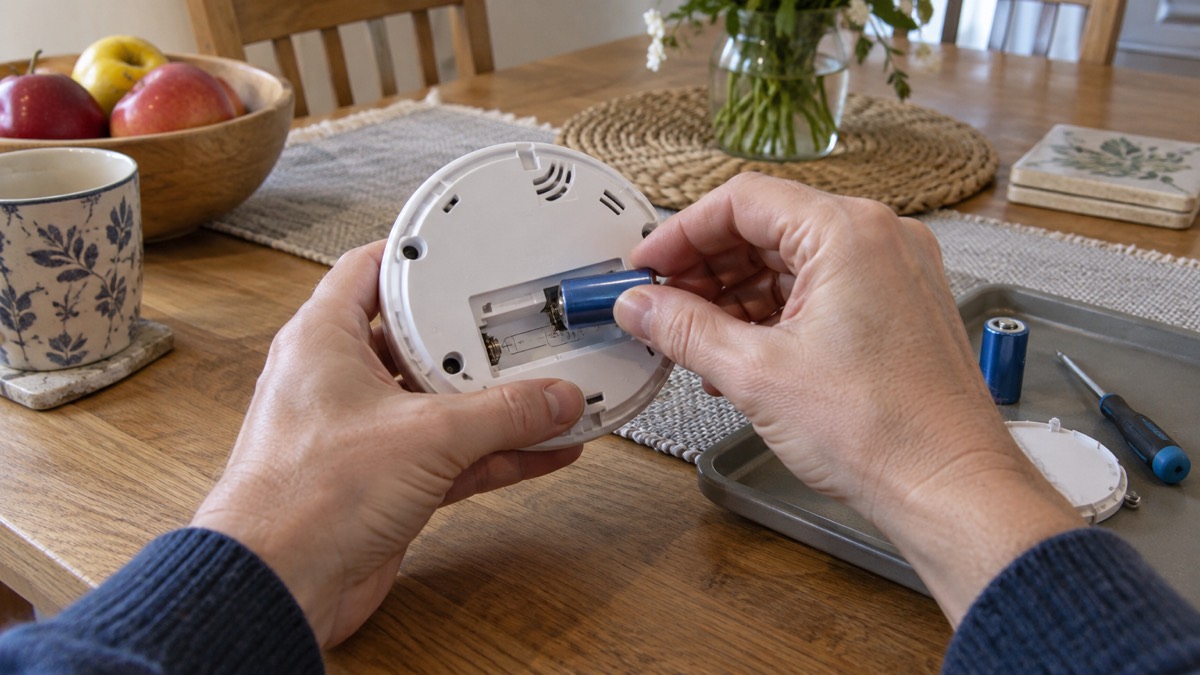
Ajax's own procedure for changing the battery is a sequence, and following it in order is how the maker sets out the job7:
- Dismount the siren from the SmartBracket attachment panel.
- Turn the device off.
- Loosen the self-tapping screws and remove the back panel.
- Change the battery for new items of type CR123A, observing the polarity.
- Reattach the back panel and tighten the screws.
- Turn the device on and check the battery status in the app.
The maker's instruction is explicit: never install used or damaged batteries6. Keep the battery contact surfaces and the compartment contacts clean, rubbing them with a clean pencil eraser or a clean cloth each time you replace batteries8. Button and coin cells, which are the type small sensors and some accessories use, should be stored safely and out of children's reach, with spare cells securely stored and compartments secured before an item goes within a young child's reach9.
If you rent, the fire and rescue service's advice for flats and high-rise homes is to change batteries when needed or report any faults or concerns to your landlord14. For an alarm system with a backup battery, the National Security Inspectorate notes that an installer typically tests batteries as part of every routine maintenance visit and will change them earlier if necessary14.
Optional 12 V external power
The HomeSiren Plus can be run from an optional external power supply of 12 V, 1 A, with a Type C connection1. The external supply's nominal voltage is 12 V and its operating voltage range is 10.5 to 12 V1. This is a mains-fed option for a siren that would otherwise run on cells, and it does not change the indoor-only rule or the mounting height.
The HomeSiren range also supports a wired external LED. The HomeSiren U Jeweller supports connection of an additional wired LED3, and the HomeSiren Jeweller provides an outlet power supply of 3 V, 10 mA for an outside-mounted LED2. The U Jeweller's external LED output is rated 3 V, 10 mA3. If you want an indicator visible outside a room, that is the connection to use; the siren body itself stays indoors.
Any work that involves connecting a device to the mains should be done by someone competent to do it. The maker's figures describe the supply the siren expects; they are not instructions for improvising a connection.
Where to mount the siren
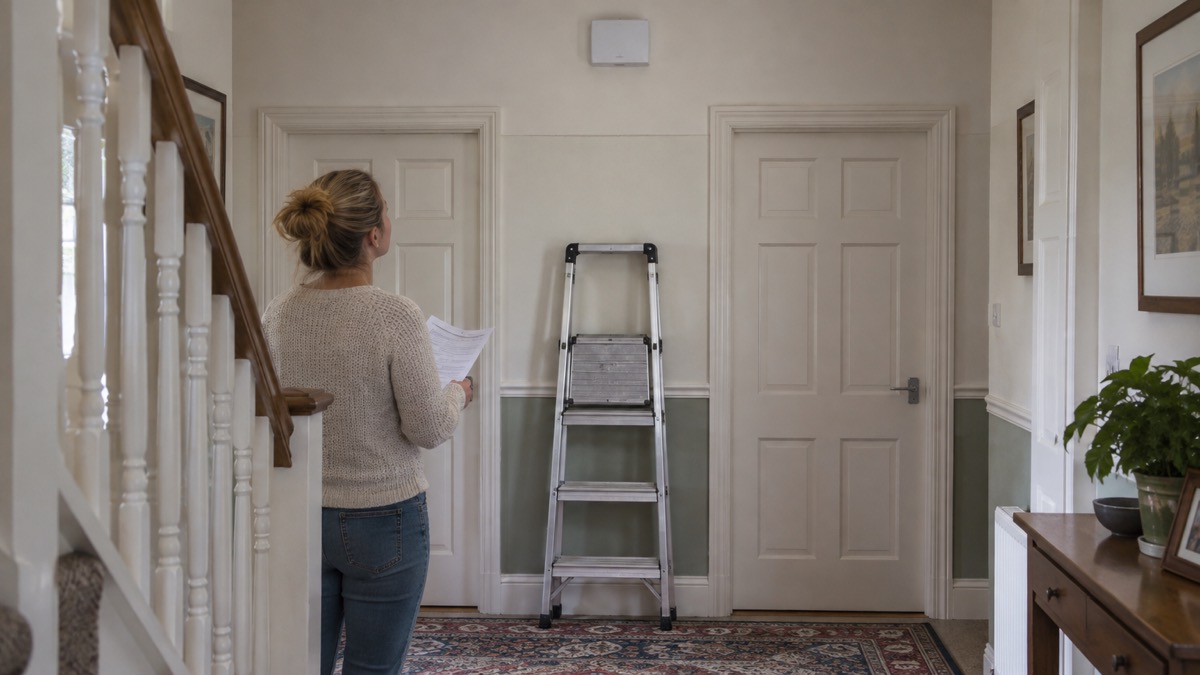
Ajax's recommendation is 8.2 ft or higher, and the device is designed for indoor use only1. The HomeSiren Jeweller and HomeSiren U Jeweller manuals both give a recommended installation height of 2.5 metres and more2. Height helps the sound travel over furniture and through doorways, and it puts the siren out of easy reach.
The maker lists places not to install it: outdoors; anywhere the acoustic signal will be attenuated; near metal objects or mirrors; rooms where temperature and humidity go beyond the permitted limits; and closer than 1 m from the hub2. The U Jeweller manual repeats the 1 m rule, warning that fitting closer than 1 m from the hub or a radio signal range extender can lead to a loss of communication with the siren3. Aim for a signal strength of 2 to 3 bars, and if the reading is poor, try moving the device: Ajax notes that repositioning even by 20 cm can significantly improve the signal strength2.
The SmartBracket panel is part of the tamper protection. The maker warns not to break off its perforated part, because that part is needed to trigger the tamper if anyone tries to detach the siren from the surface3. When you fit the panel, keep it whole.
For comparison with another kind of warning device, carbon monoxide alarms have their own mounting rules: official guidance suggests a height of 1 to 3 metres above the ground, away from obstacles and ventilation sources, and easily audible from all areas of the house15. A CO alarm is a different device with a different job; if you are fitting one, follow its own instructions rather than the siren's height rule.
How the siren warns you of tampering, jamming and lost connection
The siren is not only a sounder; it reports interference and interference with itself. The HomeSiren Plus detects jamming and then sounds an alarm, and the system sends users notifications about attempts to detach the device from the surface or remove it from the mounting panel1. Ajax's Jeweller radio changes frequency within a band to resist interference and notifies the security company and users about jamming16, and the HomeSiren Plus lists frequency hopping as a defence against radio interference and jamming1.
Connection loss is handled in two places. The HomeSiren Plus detects communication loss if there is no signal for 36 seconds or more1. On the HomeSiren Jeweller, if the connection to the hub fails, the siren switches off after 6 seconds2; on the U Jeweller, if the connection fails, turn the siren off and try again in 5 seconds3. The hub itself can notify users when it loses connection to the server, using a standard push notification sound or a siren sound, the latter enabled by default4.
The tamper option on the HomeSiren Jeweller is disabled by default, and the tamper reacts to the opening and closing of the body even if the system is not armed2. If you want the siren to report interference when the system is disarmed, that setting needs turning on. After an alarm, the siren LED and any connected external LED blink twice approximately every 3 seconds until the system is disarmed2; the U Jeweller flashes twice, once every 3 seconds, until disarmed3. The LED can be set to off, to blink once every 2 seconds only when armed, or to blink constantly regardless of mode2.
Warranty and support
Ajax Systems Manufacturing warrants its products for 2 years after purchase, and the HomeSiren Plus is listed with a 24 month warranty1. The HomeSiren Jeweller manual adds a condition: the warranty does not apply to the pre-installed battery2. Since the cells arrive fitted, a battery that fails early is not covered by the product warranty in the same way as the siren itself.
The maker's manuals are the first place to look for settings, firmware requirements and installation detail, and Ajax's technical support can confirm the operating radio frequencies for your unit2. Firmware matters for several features on this range: an alarm duration of more than 3 minutes on the HomeSiren Jeweller needs firmware version NA 5.60.4.14 or higher, the chime needs 5.55.1.0 or later, and after-alarm indication needs 5.55.2 and later2. If a setting is missing in the app, check the firmware before assuming a fault.
On certification, the HomeSiren Plus is Security Grade 2 and Environmental Class II according to EN 501311. Ajax states that its Superior Jeweller radio protocol ensures compliance with EN 50131 Grade 317, and that certain hub settings ensure the system complies with EN 50131 Grade 3 requirements6. The grade of the siren and the grade of the system are not the same thing, so ask your installer what the installation as a whole is certified to.
If you are weighing up a siren against a monitored alarm with a receiving centre, our guide to monitored alarms and who responds explains the difference. For the wider Ajax range, see the Ajax Hub (2 Plus, 2, Plus) and the Ajax StreetSiren for an outdoor sounder.
Sources (17)
- HomeSiren Plus Jeweller specifications, Ajax Systems, 2026-11-02
- HomeSiren Jeweller user manual, Ajax Systems, 2026-07-28
- HomeSiren U Jeweller user manual, Ajax Systems, 2026-06-04
- How Ajax sends alarms, Ajax Systems, 2026-07-09
- Hub without internet, Ajax Systems, 2024-10-11
- How to replace batteries in HomeSiren, Ajax Systems, 2024-04-30
- Battery storage advice, Energy Saving Trust, 2026-10-06
- Can I mix different battery types?, Duracell, 2026-10-26
- Product safety campaigns, Peterborough City Council, 2026-10-29
- Battery safety, Greater Manchester Fire and Rescue Service, 2026-10-29
- Battery safety for e-cycle users, GOV.UK, 2024-02-01
- Hoverboards and self-balancing boards, Electrical Safety First, 2026-10-25
- High-rise homes, flats and apartments, Cheshire Fire and Rescue Service, 2026-05-20
- Back-up power battery life in alarm systems, National Security Inspectorate, 2019-02-05
- Safe home heating, Warwickshire County Council, 2026-10-29
- Superior MotionCam G3 (PhOD) Jeweller manual, Ajax Systems, 2026-09-04
- Hub 2 user manual, Ajax Systems, 2026-10-27

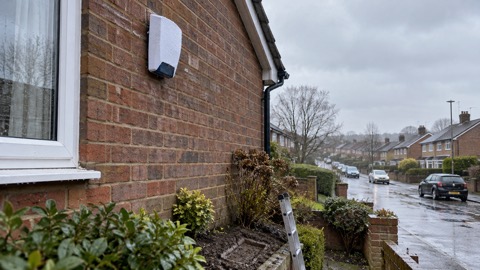 Ajax StreetSiren
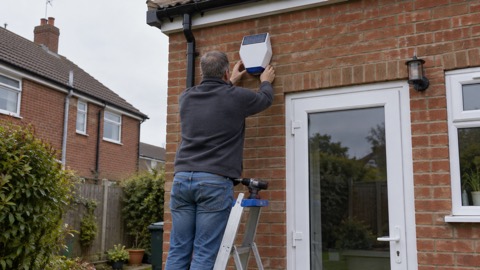 Bosch Smart Home Outdoor Siren