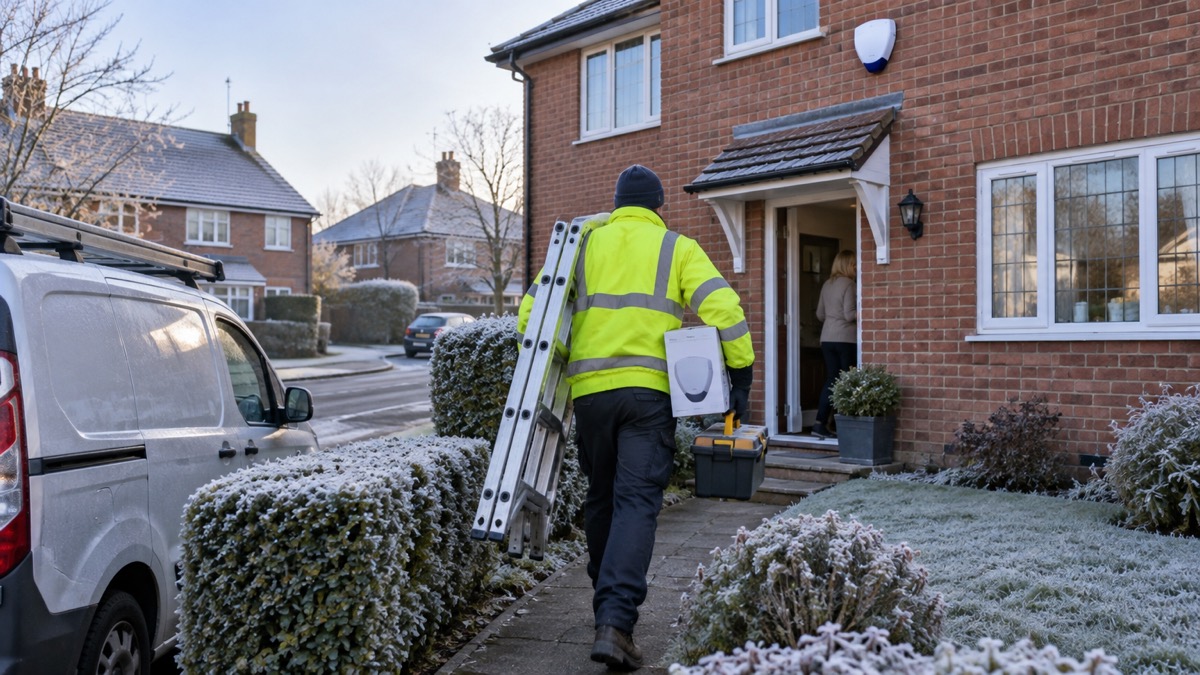
If you are booking someone to fit a burglar alarm, the first thing to establish is whether they hold certification from a recognised inspectorate. Police guidance in Scotland is explicit: check that the person or company setting it up has National Security Inspectorate (NSI) or Security Systems and Alarms Inspection Board (SSAIB) certification1. Age UK gives the same advice for burglar alarms, naming both bodies2.
That check matters for three reasons. It is what insurers look at: insurers will frequently offer a discount on contents insurance if you have a burglar alarm fitted by a company certificated by a body such as the SSAIB3. It is what a monitored alarm depends on: to get a police response number, the installer and the monitoring centre must be registered with a certification body such as the SSAIB4. And it is the simplest evidence that the firm has been checked for technical competence and professional conduct5.
Approval is not the whole job. The SSAIB's own advice is that the best protection is to ensure physical security is as robust as it can reasonably be3. Locks, doors and windows come first; the alarm sits on top of them. This page sets out what the marks cover, how to verify one before you pay, and what to do if an alarm is already on the wall.
Approved installers are certified by the NSI or the SSAIB
The two names you will see on an alarm company's paperwork are the National Security Inspectorate and the Security Systems and Alarms Inspection Board. They are independent certification bodies, not installers and not the police. Police guidance treats them as interchangeable for the purpose of checking an installer: what matters is that the firm holds certification from one of them1.
The SSAIB describes what its mark means in plain terms: by using an SSAIB-certificated company, you are assured that the installer has been subject to a range of relevant checks, with respect to both technical competence and professional conduct5. That is the substance behind the logo. It is not a guarantee about price or about how quickly the firm will answer the phone, but it is a check on competence and conduct that an uncertificated firm has not had.
Certification also reaches the equipment, not just the firm. A bells-only audible alarm should always be fitted by a certificated installer to the relevant British Standards4. Alarms and CCTV should meet British Standards PD66621. Smoke and heat alarms should carry a current British Standards or European (CE) safety mark, which shows they have been approved, tested and safe6. Carbon monoxide alarms should comply with British Standard EN 50291 and carry a British or European approval mark such as a CE or Kitemark8.
| What is being checked | What to look for | Who says so |
|---|---|---|
| The installing company | NSI or SSAIB certification | Police Scotland1, Age UK2 |
| A monitored alarm | Installer and monitoring centre both registered with a certification body | SSAIB4 |
| The alarm equipment | British Standards or CE mark; PD6662 for alarms and CCTV | London Fire Brigade6, Police Scotland1 |
| A carbon monoxide alarm | BS EN 50291 plus CE or Kitemark | HSENI8 |
What the SSAIB certifies: security systems, fire alarms and telecare
The SSAIB is responsible for certifying organisations who provide security systems, fire alarms and telecare services2. Those are three different jobs done by three different kinds of firm, and a household may deal with all of them over time: a burglar alarm company, a fire alarm or detection firm, and a telecare or community alarm provider.
For fire, the SSAIB operates a modular certification scheme for providers of fire alarm and detection systems, under licence from BAFE and in accordance with its SP 203 standard5. The scheme is designed for providers involved in system design, installation, commissioning and handover, and maintenance of systems5. In other words, the certification can cover the whole life of a fire detection system, not only the day it is fitted.
For telecare, the same certification body covers providers of telecare services2. That matters because telecare alarms are often the piece of equipment a household relies on most: a pull cord, a pendant or a sensor that raises an alert when something goes wrong. One local authority describes how a telecare sensor, when activated, sets off a pager that vibrates, beeps and lights up its screen to alert the carer, showing which sensor activated, which room or resident it is allocated to, and the time and date of the alarm9.
Fire alarms linked to telecare should be tested once a month and maintained according to the manufacturer's instructions10. If you have specialist alarms for deaf or hard of hearing people, choose products that meet British Standard BS5446-3:201511.
How to check an installer's approval before you book
Do the check before money changes hands, and do it against the certification body rather than the installer's own website. Ask the firm which body certifies them, then confirm it with that body. The same principle applies to any trade: if an electrician claimed to be registered but has not given you a certificate, contact the operator of the scheme they claimed to be part of to find out whether they are registered12.
A short sequence covers most bookings:
- Ask which inspectorate certifies the company, the NSI or the SSAIB, and confirm the registration with that body1.
- If the alarm will be monitored, confirm that the monitoring centre is registered with a certification body as well as the installer4.
- Ask for the standard the system will be fitted to, and check the equipment carries a British Standards or CE mark6.
- For mains-powered alarms, confirm the work will be done by a qualified electrician6.
- For any work involving gas, a Gas Safe registered engineer must fit and check the appliance; a non-registered engineer may not fit it14.
- For oil storage work, choose someone registered with a competent person scheme who can self-certify their work complies with building regulations15.
Approval or not, physical security comes first
A certificated installer is worth having, but the SSAIB is clear that the best protection is to ensure physical security is as robust as it can reasonably be3. An alarm tells you something is happening. A good door and lock make it harder for anything to happen in the first place. Our guide to how burglars choose a home explains what puts them off, and doors and locks covers the standards that matter.
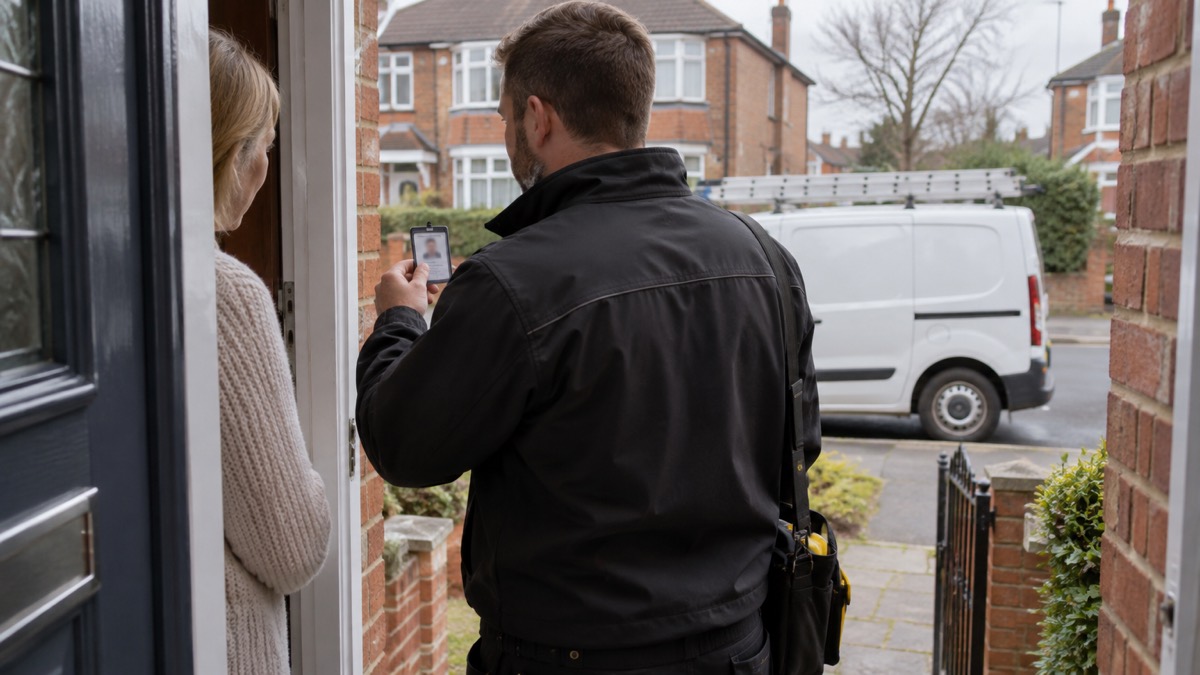
The same logic runs through the other trades you may need. A safe should be installed by a vetted professional, with an installation certificate, because your insurance might need this if you make a claim1. Electrical work should be inspected and tested by a person who has the competence to do so, and Electrical Safety First provides advice on selecting an electrician18. A registered electrician carrying out an inspection and test will issue an Electrical Installation Condition Report, which either confirms the installation is safe or highlights hazards that need fixing19.
If you have had work done by someone who turned out not to be registered, get an Electrical Installation Condition Report carried out by a registered electrician; it will assess any work undertaken and act as sufficient documentation to certify that work, at an added cost12.
Fire alarms, telecare and alarms already on the wall
Fire detection is where certification is most often tested. For fire doors, best practice is a manufacturer-certified doorset, door, frame and fittings, fire rated to the correct specification and certified by the manufacturer, completed by a third party accredited competent installer who provides certification for the completed works20. For the alarm itself, the SSAIB's fire scheme covers design, installation, commissioning and handover, and maintenance5.
If you have a fire alarm panel, check it to find out the cause of an activation, and use the alarm zone or detector plan next to it to confirm the location21. For a household system, test the alarm every week22. If the fire service fitted your smoke alarm and it is not working correctly, they will come and take a look and replace it if necessary23. A Home Fire Safety Assessment will check there are enough smoke and heat alarms in the home and test them, and if the home is not adequately protected, staff will fit smoke alarms, and may fit a heat alarm in the kitchen depending on risk, for free24.
Telecare needs its own check because of the digital phone switchover. If you or a relative uses a telecare alarm, also known as a community alarm, contact your provider to check that it is compatible25. Notify your communications provider and check with your monitor or alarm provider whether your device is digitally enabled26. If you tell your landline provider in advance, they can help check whether your device will work and make any necessary arrangements, including pausing the change until a safe solution is in place if needed27.
If you already have an alarm and are wondering whether to replace it, the answer usually starts with a test. If you want linked alarms, ask a qualified electrician to fit them28. If you are weighing up what kind of system suits the house, our guides to burglar alarms and monitored alarms set out the choices, and how police respond to intruder alarms explains what the monitoring registration is for.
Sources (28)
- Break-in and housebreaking, Police Scotland, 2026
- Staying Safe, Age UK, 2025
- Protecting your home, SSAIB, 2026
- Alarm systems, SSAIB, 2026
- Fire safety, SSAIB, 2026
- Smoke alarms and heat alarms, London Fire Brigade, 2026
- Detectors, Surrey County Council, 2026
- Carbon monoxide alarms, Health and Safety Executive for Northern Ireland, 2026
- What's available from the Telecare service, Isle of Anglesey County Council, 2026
- Alarms for carers and support workers, London Fire Brigade, 2026
- Smoke Alarms, Cheshire Fire and Rescue Service
- First aid for electrical work, Electrical Safety First, 2026
- Where and what to buy, Scottish Government, 2024
- Who can carry out gas safety checks, Health and Safety Executive, 2026
- Oil storage regulations and safety, GOV.UK, 2026
- Student and rented accommodation, North Yorkshire Fire and Rescue Service, 2026
- Fire safety prevention, Fire Kills, 2026
- Electricity FAQs, Health and Safety Executive, 2026
- Electrical safety questions answered, Electrical Safety First, 2026
- Fire safety in high rise buildings, Devon and Somerset Fire and Rescue Service, 2026
- Automatic fire alarms, Surrey County Council, 2026
- Home Fire Safety Visits | Staffordshire Fire & Rescue Service, Staffordshire Fire and Rescue Service
- Problems with smoke alarms, Devon and Somerset Fire and Rescue Service, 2026
- Home Fire Safety Assessment, Greater Manchester Fire and Rescue Service, 2026
- Digital phone switchover, Argyll and Bute Council, 2026
- The digital phone switchover, Cheshire Fire and Rescue Service, 2026
- Future of landline calls, Ofcom, 2026
- Fire safety for people with hearing difficulties, Devon and Somerset Fire and Rescue Service, 2026
 Moving Home Locks Checklist
 After a Break-In Checklist
 Holiday Security Checklist
 Alarm Before Going Away
 False Alarms and Police Response
 Should a Burglar Alarm Bell Box Be Visible?
 Alarms After Digital Switchover
 Outdoor Siren Fitting Height
 Alarm Sensors and Pets