

An ADT system is a professionally installed burglar alarm that is monitored around the clock by a commercial alarm receiving centre, so that when it triggers, someone outside your home is alerted and can act. For a household preparing for emergencies, that matters most in the hours when you are asleep, away, or already stretched by a power cut, a storm or a flood: the alarm keeps watch when you cannot.
The case for a monitored alarm is made by the police themselves. The Metropolitan Police say a quality Thatcham approved, professionally fitted alarm system will not only put off thieves, but could also reduce your insurance premiums1. Secured by Design, the police-backed accreditation scheme, says an approved installer gives reassurance that an alarm installation company meets the exacting standards of the Police Service, and that monitored systems are monitored 24/7 by an approved commercial Alarm Receiving Centre2.
This page sets out what ADT provides for UK homes, how the design and installation process works, what the monitoring does when the alarm goes off, what the subscription covers, and how to reach the helpdesk. It also says plainly where a question cannot be answered from published information, so you know what to ask before you sign.
What ADT provides for UK homes
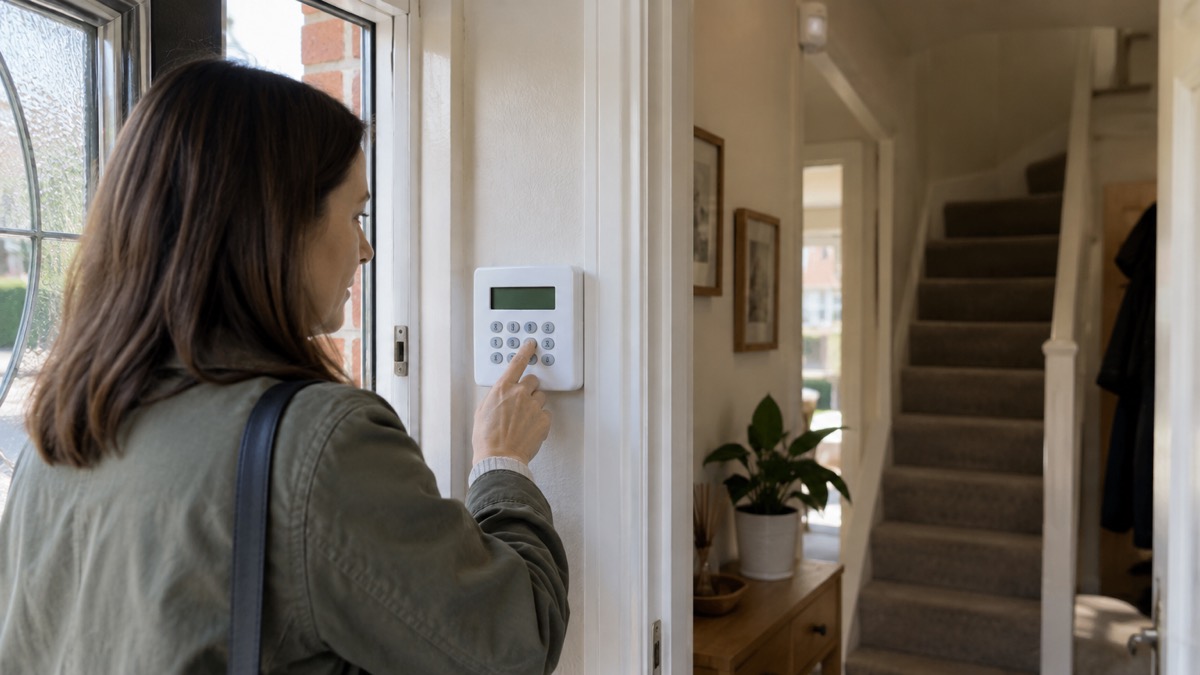
ADT's core offer to a UK household is a burglar alarm that is installed by the company, connected to a monitoring centre, and backed by a subscription that covers servicing and repairs. The alarm is the visible part; the monitoring is what turns it from a noise that annoys the neighbours into a call for help.
That distinction is one the fire and police services make repeatedly. Devon and Somerset Fire and Rescue Service suggest that carers consider fitting a monitored alarm system that notifies a call centre when an alarm is activated3. The Police Service of Northern Ireland describes a monitored alarm as one that provides a police response via the alarm company4. Police Scotland sets out the alternative in its break-in advice: an auto-dialler, where you'll get a text or phone call if your alarm is triggered5. A monitored system puts a trained third party in the loop; an auto-dialler puts the phone in your hand.
For emergency planning, the value is in the gaps in your own attention. A household that is asleep, at work, or dealing with a burst pipe or a flooded road cannot watch a house. A monitored alarm does not stop a break-in, a fire or a flood, but it shortens the time before someone responds, and it leaves a record of what happened and when.
ADT also sits in a wider market of monitored alarms for people who need help at home. Councils describe monitored assistive technology as a lifeline pendant or sensors set up in the home through a base unit, connected to a phone line and to a monitoring centre open 24 hours a day, seven days a week6. The principle is the same: a device raises the alarm, a centre answers it, and a trained person decides what to do next. If your household includes someone older, disabled or living alone, that model is worth understanding alongside a burglar alarm, and our guide to extra help in an emergency sets out how to plan for it.
How getting an ADT system works
ADT designs a system around your home rather than selling a fixed box. The process described is a phone chat first, then a home consultation, then a tailored design, with a quote specific to your needs before anything is installed. That sequence is worth taking seriously: the consultation is your chance to say what the household actually needs, and the quote is your chance to check that what is proposed matches it.
A home visit is also the point at which you can raise the things that decide whether an alarm works in an emergency. Ask where the sensors go, what happens if the phone line or broadband fails, how the system is powered, and what the monitoring centre does when it receives an alert. The answers should be in the design and the paperwork.
ADT's contract lengths, cancellation terms and what happens at the end of a contract are not set out in the published material. Ask for these in writing before you sign, and read them alongside the quote. The same applies to any claim made during the sales visit: get it in the quote or the contract, not just in conversation.
For a household building an emergency plan, the alarm is one layer among several. Our guide to home security covers the wider picture, from door and window hardware to lighting and routine, and it is worth reading before the consultation so you know what you are asking for.
24/7 monitoring as standard on every plan
Every ADT plan includes monitoring around the clock. The alarm is connected to an approved commercial Alarm Receiving Centre, which is staffed continuously and receives the signal when your system triggers2. You do not have to be awake, at home or able to reach a phone for the alert to be raised.
This is the part of the system that earns its place in an emergency plan. A power cut, a storm or a flood can knock out your phone, your broadband and your attention at the same moment. A monitored alarm does not depend on you noticing anything. It also means the system is doing something useful when you are away, which is when many break-ins happen.
ADT's monitoring centre is not described in detail in the published material, so the general model is the best guide. Councils describe the equivalent service for telecare: when a personal alarm is pressed or a sensor detects a problem, the lifeline calls the control centre, where a trained member of staff assesses the situation, checks if you are okay and takes appropriate action, which could include calling a family member, a friend or the emergency services6. A burglar alarm monitoring centre works on the same principle, with the alarm company deciding what response is appropriate.
One thing to check at the consultation is what happens if the connection between your home and the centre fails. How ADT handles this is not stated, so ask. A monitored system is only as good as its link to the centre, and that link is worth understanding before you rely on it.
Who gets alerted when the alarm goes off
When an ADT alarm triggers, the signal goes to the monitoring centre, and the centre then decides who to alert. ADT's exact escalation sequence is not set out in the published material, so the honest answer is that you should ask for it in writing. What is clear is the range of options a monitored system can use.
| What triggers | Who is alerted | Where the model comes from |
|---|---|---|
| Burglar alarm activation | The alarm company, which provides a police response | PSNI guidance on monitored alarms4 |
| Auto-dialler activation | You, by text or phone call | Police Scotland break-in advice5 |
| Telecare sensor activation | A carer's pager, showing the sensor, room, time and date | Isle of Anglesey telecare guidance7 |
| Smoke alarm for a deaf or hard of hearing person | A vibrating pad under the pillow and a flashing strobe | Staffordshire Fire and Rescue Service8 |
The pattern is that a monitored system routes the alert to someone who can act, and tells them enough to act on. The Anglesey pager, for example, vibrates, beeps and lights up its bright screen to alert the carer, showing which sensor activated, which room or resident it is allocated to, and the time and date of the alarm7. A burglar alarm monitoring centre receives a similar package of information: which zone triggered, when, and what the system is.
Ask ADT at the consultation who will be contacted, in what order, and what the centre does if it cannot reach you. Ask too whether the police will attend automatically or whether the centre decides. The PSNI's description, that a monitored alarm provides a police response via the alarm company4, makes clear that the company is the gatekeeper, so its policy is the one that matters.
Response time: what to ask before you rely on it
No response time for ADT's monitoring centre is published, so this page cannot state one. What is available is a figure for a different kind of alert: the government's Emergency Alerts system delivers a message to a mobile phone within about 4 to 10 seconds of the alert being sent9. That is a useful benchmark for how fast a modern alert can travel, but it is not an ADT figure and should not be read as one.
What matters more than a headline number is the chain behind it. A monitoring centre has to receive the signal, verify it, decide on a response and make the calls. How long ADT takes at each stage is not described. Ask the company directly, and ask what happens out of hours and at weekends, when a break-in is more likely and a response more valuable.
For the household, the practical point is that speed is only useful if the response is right. A false alarm that sends the police to your door wastes their time and can cost you; a genuine alarm that is verified quickly gets help sooner. Ask ADT how it filters false alarms and what it does when a sensor triggers repeatedly.
Accreditation: what to check before you sign
ADT's own accreditation details are not set out in the published material, so this page cannot confirm which scheme ADT holds or what it covers. What is clear is why accreditation matters, and what to look for.
Secured by Design, the police-backed scheme, says its alarm installer accreditation gives reassurance that an alarm installation company meets the exacting standards of the Police Service2. It also says that inspectorate approval of an alarm installation company brings a reliable and well maintained system that meets relevant British and European standards, and which could result in lower insurance premiums2. The Metropolitan Police make the same point about professionally fitted, approved alarms and insurance1.
So when you are comparing installers, ask which accreditation schemes they hold, for which parts of the business, and for how long. Installation, monitoring and servicing are separate activities, and an approval that covers one does not automatically cover the others. Ask for the certificate or registration number and check it with the scheme.
For a household, the practical benefit is a system that is designed, fitted and maintained to a recognised standard, which is what makes it worth relying on in an emergency. Our guide to home security explains how alarms fit alongside locks, lighting and routine, and why the police treat accredited installation as a signal of quality.
What the subscription covers
ADT's subscription is what keeps the system monitored and maintained after installation. ADT's plan inclusions are not itemised in the published material, so this page cannot list them. What is clear is the kind of cover a monitored alarm plan is built around, and the questions to ask about each part.
Two different descriptions of what an ADT monitoring plan includes appear in the published material: access to a 24/7 technical support service, and a 24-hour Service Engineer Callout. Whether these are the same thing described two ways or two separate inclusions is not stated, so ask for the plan in writing and check both.
Ask about accidental damage, expired parts and labour, and what happens when a component reaches the end of its life. Ask how often the system is serviced, what a service includes, and whether the subscription covers parts and labour or only the monitoring. Ask what happens if you cancel, and what the system does if you stop paying.
No prices are given here, and none should be taken from this page. What it can say is that the value of a monitored alarm is in the years of cover, not the box on the wall, so the subscription terms matter as much as the installation. Read them before you sign, and keep a copy with your household paperwork.
Daily system checks and the 24-hour engineer callout
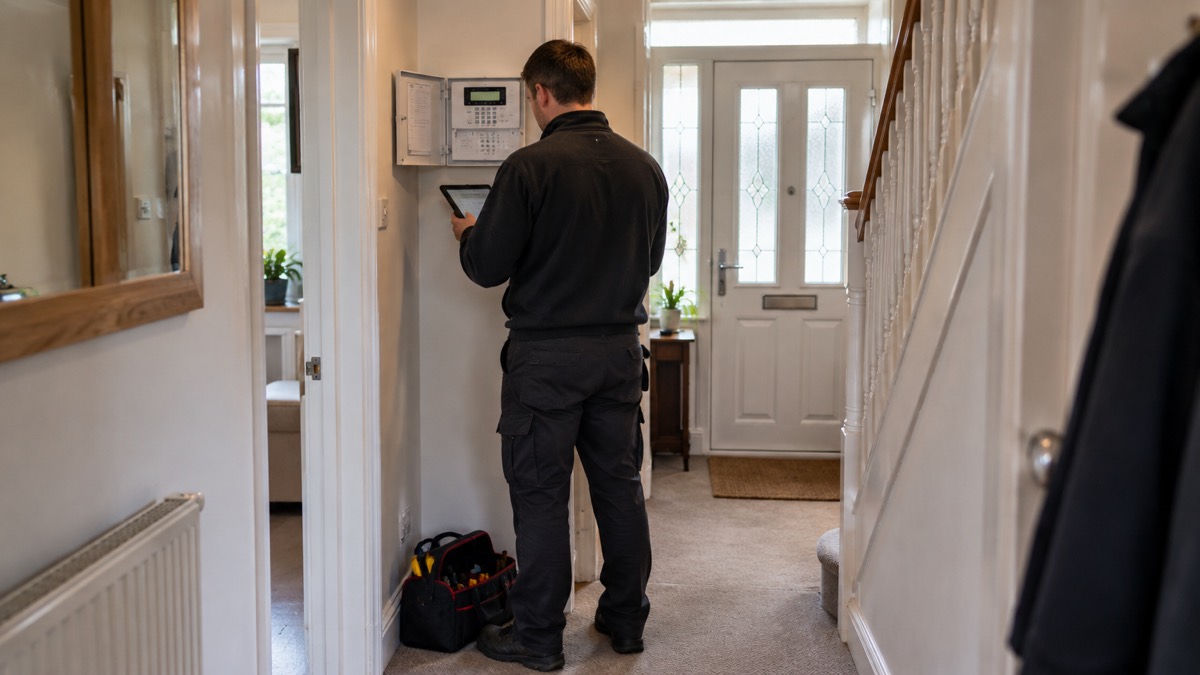
A monitored alarm is only useful if it is working. ADT's own checking routine is not described in the published material, so the general guidance is the best guide: test your system regularly, keep the sensors clear, and act on any fault warning rather than leaving it.
The fire service makes the same point about smoke alarms, and the principle carries across to any alarm in the home. Devon and Somerset Fire and Rescue Service say that if you have a smoke alarm fitted by them and it is not working correctly, they will come and take a look and replace the alarm if necessary10. For a monitored alarm, the equivalent is the engineer callout in your plan: use it when something is wrong, rather than waiting for the annual service.
A 24-hour Service Engineer Callout is recorded as part of an ADT monitoring plan, and separately access to a 24/7 technical support service. Whether these are the same inclusion is not stated, so check which you have and how to use it. Keep the number somewhere you can find it in the dark, and add it to the household emergency contacts.
Contacting ADT: helpdesk and office hours
Several ways to reach ADT are published, and they are not all described the same way. The customer service centre number is 0344 800 1999, described as available 24/7/365 for urgent requests and general queries, and also for reporting a fault, ordering replacement parts such as fobs, or booking a remote inspection. Two further numbers appear: 0800 804 6226, and 0808 2734 201 for a free security assessment and a quote specific to your needs.
| Purpose | Number given | Availability |
|---|---|---|
| Urgent requests and general queries | 0344 800 1999 | 24/7/365 |
| Reporting a fault, ordering parts, booking a remote inspection | 0344 800 1999 | 24/7/365 |
| Free security assessment and quote | 0808 2734 201 | Not stated |
| General enquiries | 0800 804 6226 | Not stated |
Which of the two enquiry numbers is current is not resolved, so try either and confirm the details of any visit before you agree to it. For a household, the number that matters most is the one you would use in an emergency, so save it in your phone and write it on the household contacts sheet.
If your household includes someone who relies on a monitored alarm for health reasons, tell the monitoring centre about any change in circumstances, such as a new phone line, a move to a digital landline, or a change of carer. The government's telecare action plan records that an estimated 2 million people in the UK currently use telecare services11, and the switch to digital landlines is a known risk for these systems. Ofcom explains that you can take a complaint to an alternative dispute resolution scheme if the issue is not resolved within six weeks, or if you receive a deadlock letter12, which is worth knowing if a change to your line affects your alarm.
Where an alarm fits a household emergency plan
An alarm is one layer of a plan, not the whole of it. The police and fire services are consistent that alarms work best alongside other measures: good locks, sensible routines, working smoke alarms and a clear idea of what to do when something goes wrong.
For a household preparing for emergencies, the alarm's job is to raise the alert when you cannot. The rest of the plan covers what you do when you are the one who has to act. Our guide to getting started sets out how to build that plan, and our guide to home emergencies covers fire, carbon monoxide, gas leaks and burst pipes, which are the events most likely to need a fast response from inside the home.
If you are weighing up a monitored alarm against doing it yourself, official guidance leans towards professional installation and accreditation1. If you are weighing up a burglar alarm against a telecare alarm, the answer depends on who in the household needs help and when. Our guide to extra help in an emergency covers the telecare route, and our guide to staying informed covers how to keep in touch when the phones and power are unreliable.
Sources (12)
- Metropolitan Police: scooter security, Metropolitan Police, 2026
- Alarms advice for domestic properties, Secured by Design, 2022
- Fire safety for carers, Devon and Somerset Fire and Rescue Service, 2026
- Protect Yourself booklet, Police Service of Northern Ireland, 2024
- Break-in and housebreaking advice, Police Scotland, 2026
- Assistive technology, Warwickshire County Council, 2026
- Telecare service, Isle of Anglesey County Council, 2026
- Smoke alarms, Staffordshire Fire and Rescue Service, 2026
- In an emergency, Medway NHS Foundation Trust, 2026
- Problems with smoke alarms, Devon and Somerset Fire and Rescue Service, 2026
- Telecare national action plan, GOV.UK, 2025
- Future of landline calls, Ofcom, 2026