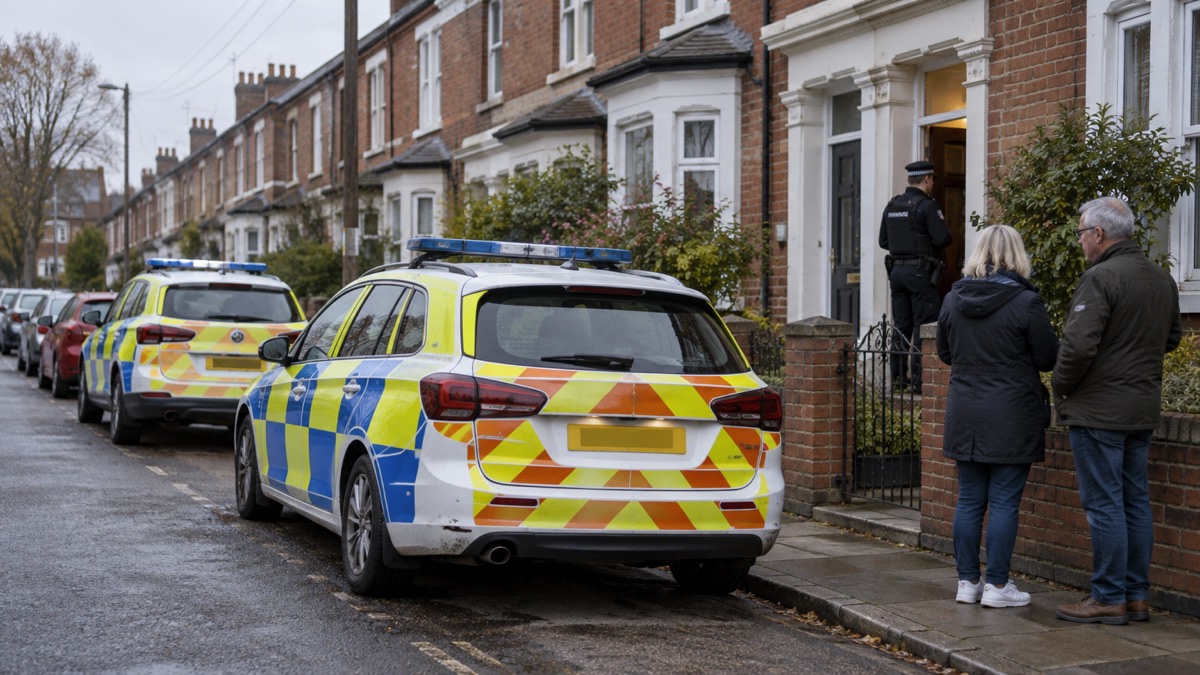
If life is in danger or a crime is happening now, call 999. That is the single rule behind almost every piece of official advice on the subject. Government guidance is blunt about it: call 999 if you or someone else is in immediate danger1. Police guidance adds the second half of the test: call 999 if you are reporting a crime that is in progress or if someone is in immediate danger2.
For everything else, the police non-emergency number is 101. Use it to report a burglary you have discovered after the event, to pass on information about suspicious activity, or to ask for advice. The distinction matters because a 999 call that is not an emergency can delay help reaching someone who genuinely needs it3.
This page sets out how to choose between the two, what happens when you dial 999, which service to ask for when a break-in has left someone hurt or a fire has started, and what to do if you call by mistake. It covers England, Scotland, Wales and Northern Ireland, noting where the arrangements differ.
Call 999 when there is a danger to life or a crime happening now
The test for 999 has two limbs, and either one is enough. The first is danger to life. Government guidance says to call 999 if you or someone else is in immediate danger1, and local authority emergency planning advice repeats the point: in the event of an emergency, call 999, especially if there is a threat to life7. Belfast City Council's emergency advice puts it as calling 999 or 112 if people are injured or there is a threat to life8.
The second limb is a crime in progress. Police guidance is explicit that 999 is for reporting a crime that is in progress, as well as for immediate danger2. In a domestic setting that most often means a break-in you believe is still happening. Police Scotland's housebreaking advice tells people to call 999 if they think the intruder is still there9. The Police Service of Northern Ireland's house security guidance is equally direct: if you have been burgled, call the police immediately on 99910.
Notice what is not on the list. A burglary you discover when you come home, with no one around, is a crime to report, but it is not a crime in progress. That is a 101 matter. So is a car broken into overnight, a stolen bicycle, or damage to a fence. The question to ask yourself is not "how serious is this?" but "is it happening now, or is someone at risk right now?"
If you are in any doubt about the first limb, err towards calling. The emergency services would rather take a call that turns out to be less urgent than miss one that was not.
What counts as a real emergency
Emergencies come in two broad kinds at home: crimes in progress and medical crises. The medical list is longer than most people expect, and knowing it helps you decide quickly.
Ambulance service guidance describes a genuine emergency as one where someone is seriously ill or injured and you think they could die11. Examples given across ambulance trusts include cardiac arrest, loss of consciousness, a confused state, fits that are not stopping, chest pain, breathing difficulties, severe bleeding, severe allergic reactions, burns and scalds, suspected stroke, suspected heart attack, a fall from height, serious head injury, stabbing, shooting and serious road traffic incidents11. London Ambulance Service lists chest pains, strokes, severe difficulty in breathing, unconsciousness, severe loss of blood, severe burns or scalds, choking, fitting or head injuries, drowning and severe allergic reactions12. NHS England's own wording is that you call 999 in a medical emergency, which is when someone is seriously ill or injured and their life is at risk13.
| Situation at home | Number to call | Why |
|---|---|---|
| Intruder believed still inside | 999 | Crime in progress2 |
| Burglary discovered after the event | 101 | Not an emergency2 |
| Someone seriously injured during a break-in | 999, ask for ambulance | Life at risk11 |
| Fire after a break-in | 999, ask for fire and rescue | Fire in progress5 |
| Urgent health advice, not life-threatening | NHS 111 | Free, 24 hours a day4 |
Two further categories are worth knowing. South Western Ambulance Service advises calling 999 if you think someone has had a major trauma, such as after a serious road traffic accident, a stabbing, a shooting, a fall from height or a serious head injury14. The NHS advises calling 999 when someone is seriously ill or injured and you think their life is at risk8. In a house where a break-in has turned violent, both apply at once.
What happens when you call 999
The call is simpler than people fear. When you call 999 an operator will ask which emergency service you need, and if it is a medical emergency you ask for the ambulance service and are put through to a call taker14. The North East Ambulance Service describes the same sequence: the operator asks which service you need, and in a life-threatening medical emergency you ask for the ambulance service3. You are then connected to the emergency operations centre and asked questions about the patient and your location6.
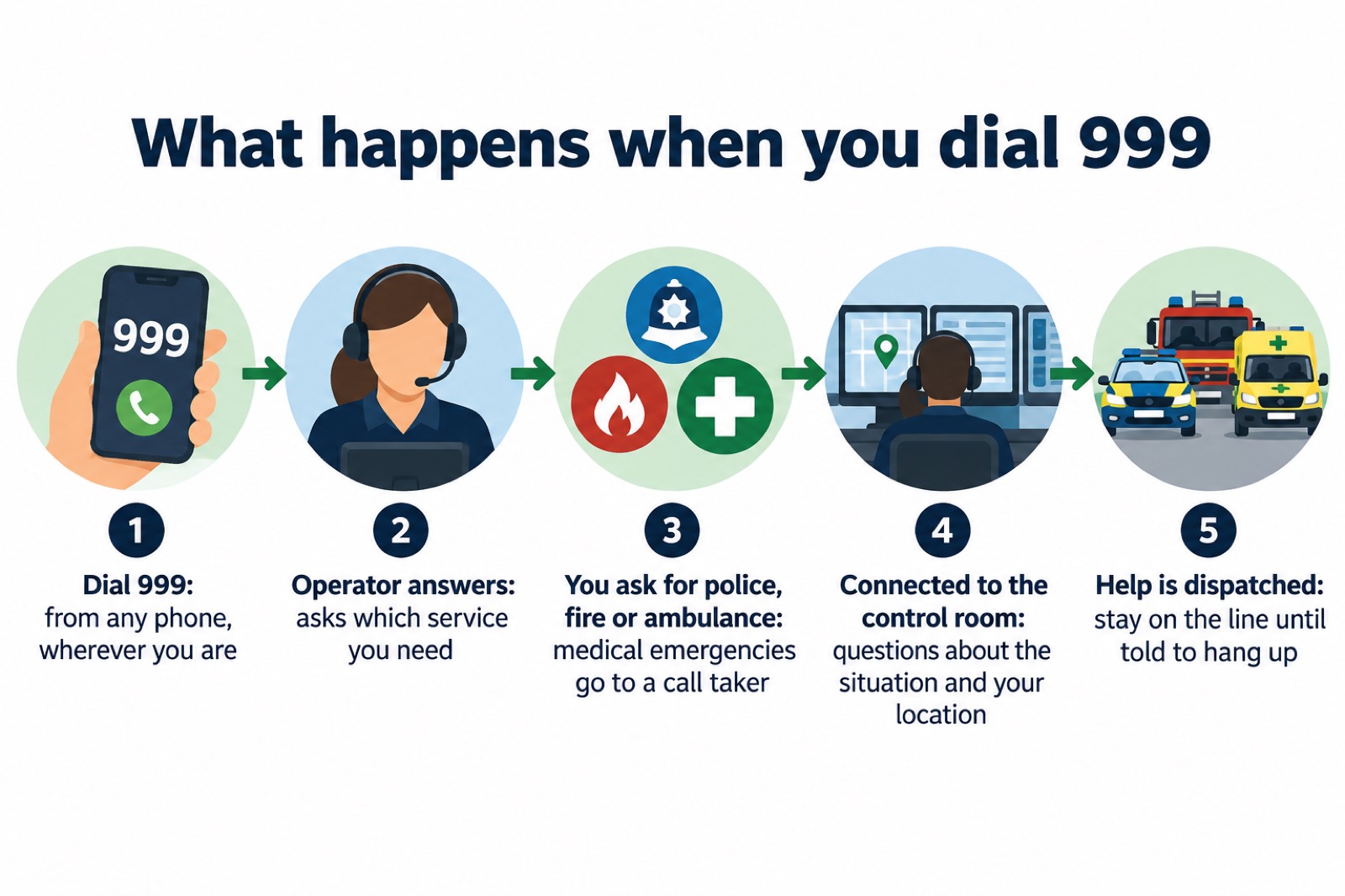
A few practical points make the call work better. Give your address first, including the postcode if you know it, because the call taker needs to send help to the right place. Say what has happened in plain words. If someone is hurt, say so early. If the intruder is still there, say that too. Do not hang up until you are told to.
999 is open all day and all night
There is no wrong time to call. The 999 and 111 lines are operated 24 hours a day, 7 days a week, 365 days a year6. London Ambulance Service's patient leaflet says both can be contacted wherever you are if you need emergency assistance or non-emergency help, and that they are open all day and all night15. NHS 111 is free to use from mobile and landline phones4.
That matters for a household because emergencies do not keep office hours. A break-in at three in the morning is handled exactly as one at three in the afternoon. You do not need to wait for a police station to open, and in most of the UK you would struggle to find one open anyway.
It also means the 101 line is available at any hour for non-emergencies. If you come home late and find a window forced, you can call 101 there and then rather than waiting until morning.
When it is not an emergency: choosing another number
Most calls about crime at home are not emergencies, and the right number for them is 101. Police guidance lists 101 as the number for non-emergencies2, and a standard household emergency plan template lists "Police non-emergency 101" alongside the other key numbers17. Use it to report a burglary after the fact, to report suspicious activity, to pass on information, or to ask for advice about a security problem.
The health equivalent is NHS 111. Ambulance service guidance is that you should only call 999 if it is a life-threatening emergency4, and that you should only call 999 in the event of a life-threatening or serious emergency18. If you need advice quickly but it is not an emergency, contact 11119. NHS 111 is available 24/7, 365 days a year and free from mobile and landline phones4.
| Number | Use it for | Cost and hours |
|---|---|---|
| 999 | Life at risk, crime in progress, fire | Free, 24 hours15 |
| 112 | Same as 999; official advice for Northern Ireland gives both8 | Free, 24 hours |
| 101 | Reporting crime after the event, police advice | Non-emergency police line2 |
| NHS 111 | Urgent health advice that is not life-threatening | Free, 24 hours4 |
The reason to keep the lines clear is stated plainly by the ambulance service: do not call 999 if it is not an emergency, as this could delay help reaching someone who needs urgent assistance3. That is not a scolding; it is the practical consequence of a finite number of call takers.
If someone is hurt, or a fire has started, during a break-in
A break-in that leaves someone injured or a house on fire needs more than one service, and the order you ask for them matters.
For injury, dial 999 and ask for the ambulance service if the person is seriously ill or injured and their life is at risk11. If the intruder is still present, tell the operator, because police will be needed too. Ambulance trusts also advise calling 999 for major trauma such as a stabbing or a serious head injury14, and for anyone seriously ill, injured or in immediate danger20.
For fire, the advice is consistent across fire and rescue services. Get out, stay out and call 999, asking for the fire and rescue service5. Lancashire Fire and Rescue Service says simply: call 999 immediately21. The London Fire Brigade's easy-read guidance sets out the sequence: as soon as you are safely outside, use your mobile phone to dial 999, ask for the fire brigade, give the address, and do not go back inside22.
"As soon as you are safely outside, use your mobile phone to dial 999."
Where to get help and what to do next
Once the immediate danger has passed, the practical questions begin: who records the crime, what happens about repairs, and where support comes from. The police will give you a crime reference number when you report a burglary, and that number is what insurers and others will ask for. Our guide to coming home to a break-in sets out what to do in the first hour, and after a burglary covers crime numbers, insurers, repairs and support.
If you are in Scotland or Northern Ireland, the reporting arrangements and support organisations differ. Police Scotland's 101 number replaces other existing non-emergency numbers and is for when it is less urgent than 99923. Our guide to Scotland and Northern Ireland covers reporting crime and getting support in both.
Prevention is the other half of the answer. Most household crime is opportunist, and the measures that put burglars off are well understood. Start with how burglars choose a home, then look at doors and locks and windows. If you are considering an alarm, burglar alarms explains the types, and monitored alarms explains who responds. For the wider picture, our home security guide is the place to begin.
Keep a written list of the key numbers somewhere the whole household can find it, including 999, 101 and NHS 111, and make sure everyone old enough to use a phone knows where it is.
Sources (23)
- Preparing for Emergencies, GOV.UK, 2026
- Contact the Police, GOV.UK, 2026
- 999, North East Ambulance Service, 2026
- When to Use 111, London Ambulance Service, 2026
- Get Out, Stay Out, Call 999, North Wales Fire and Rescue Service, 2026
- 999 or 111: Which Should You Use?, North West Ambulance Service, 2025
- Homes Prepared, Surrey County Council, 2026
- Emergency Advice, Belfast City Council, 2026
- Break-In and Housebreaking, Police Scotland, 2026
- House Security, Police Service of Northern Ireland, 2026
- When to Call 999, North West Ambulance Service, 2023
- Paramedics Urge Londoners to Keep Safe This Bank Holiday Weekend, London Ambulance Service, 2024
- NHS Urges Public to Take Care Over the Weekend, NHS England, 2020
- Get the Right Help and Support, South Western Ambulance Service, 2026
- Your Local 999 and 111 Services, London Ambulance Service, 2026
- Phoning 999, Scottish Ambulance Service, 2026
- Protecting Your Family, Essex Prepared, 2026
- Winter Top Tips and Advice, South Western Ambulance Service, 2026
- Summer Safety Advice, North East Ambulance Service, 2026
- Major Incidents, West Midlands Ambulance Service, 2026
- Fire Prevention Advice to Rural Communities, Lancashire Prepared, 2026
- Easy-Read Fire Safety Booklet, London Fire Brigade, 2026
- Emergency Contact Numbers, Argyll and Bute Council, 2026
 After a Break-In Checklist
 Holiday Security Checklist
 Moving Home Locks Checklist
 Reporting a Burglary Anonymously
 Doorstep Caller Will Not Leave
 Car Running While De-Icing
 Checking a Doorstep Caller
 Burglary at Christmas
 Cash in a Fire Safe
 Heating Oil Tank Theft
 Making a House Look Occupied
 Police Approved Products
 Reporting a Bogus Caller