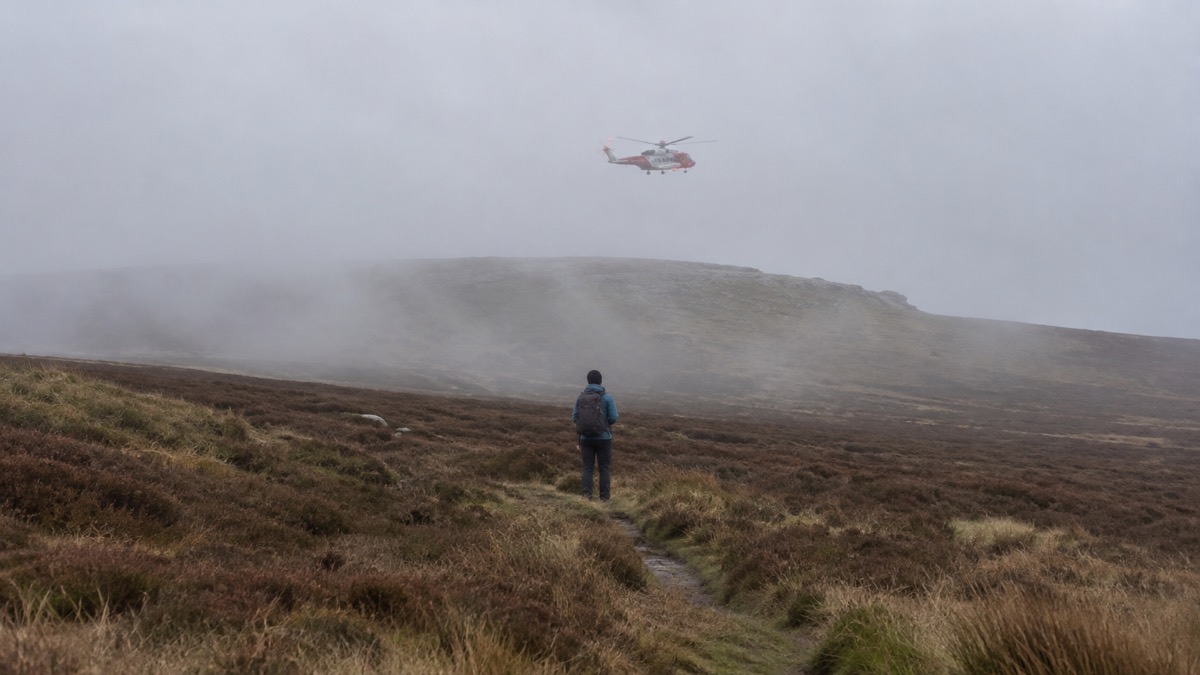
When you ring 999, the call handler's first job is to find out where you are. London Ambulance Service says the handler will ask for the location of the emergency, for example the postcode or any landmarks1. Northern Ireland Ambulance Service puts it plainly: you will be asked to confirm the address of the emergency, and this information is important for getting the initial help sent out2. So the single most useful thing you can do is know, and be able to say, exactly where you are.
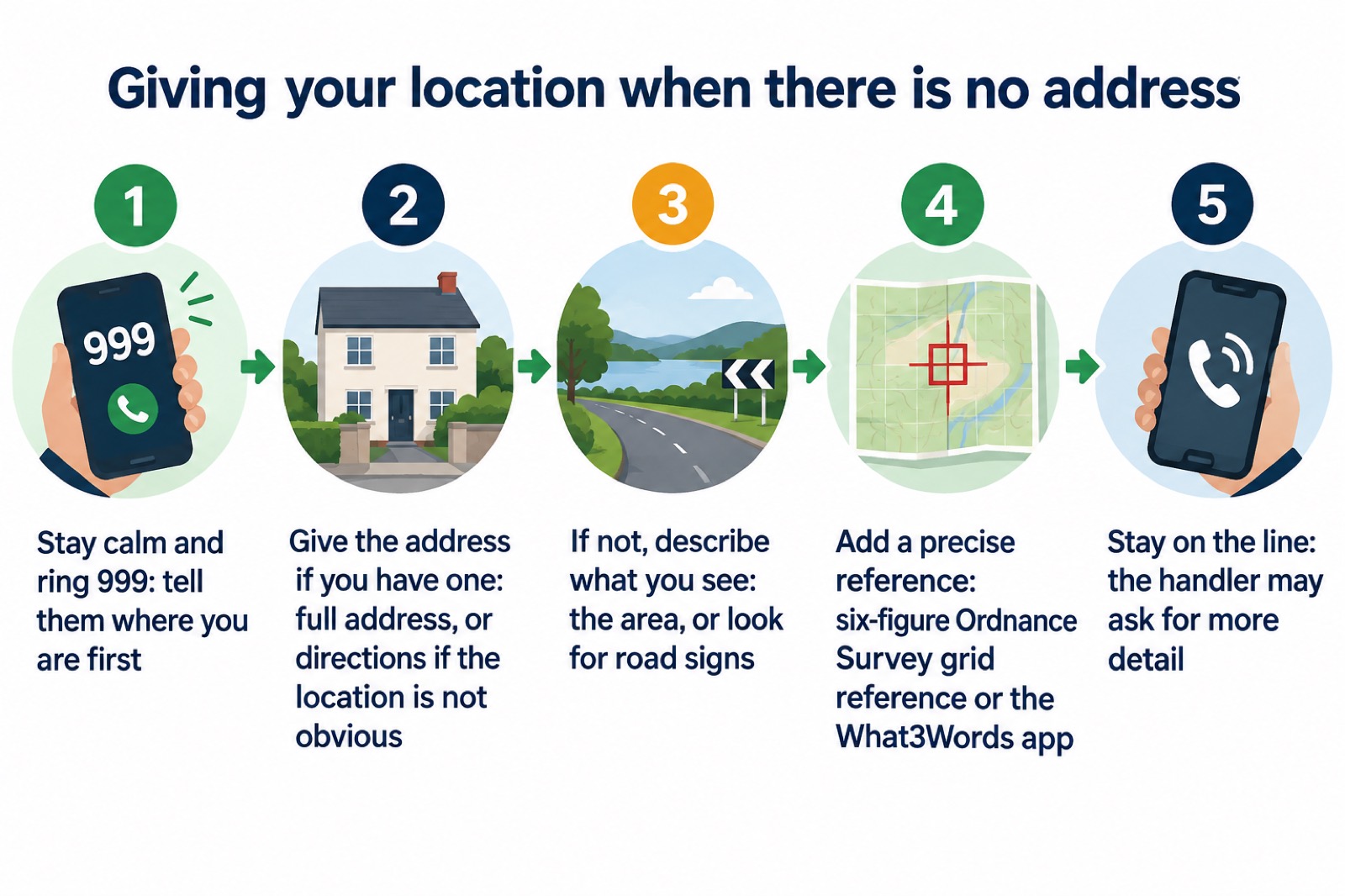
If you do not know the address, you can still give a good location. A six-figure Ordnance Survey grid reference is helpful, and the what3words app gives a precise three-word location3. Emergency services across the UK now use three-word addresses to find and share locations in emergencies4. Landmarks, road names and features such as a public house or a church all help when there is no street address5.
The best time to sort this out is before anything happens. Download a location app, learn how to read the marker posts on a motorway, and register your phone for the text service if you need it. The rest of this page sets out what to do, in the order you would need it.
Tell the call handler where you are first
The order of a 999 call matters. Before the questions about what has happened, the handler needs the address. Northern Ireland Ambulance Service says you will be asked to tell them exactly what happened and to confirm the address of the emergency, which is important for getting the initial help sent out2. Give your whole address, including the town9. If you are calling about a fire, Suffolk Fire and Rescue Service asks for your full address, and suggests using the what3words app to describe your location with only three words9.
Staying calm helps you give that location clearly. Simon Dowling of Manchester Fire and Rescue Service puts it this way:
"The first thing is trying to stay calm - you need to ring the emergency services and tell them exactly where you are."
If you are calling from a campsite, give the exact location of your campsite, with a map reference or a landmark if possible11. If you are calling about someone in the water, give a location or describe any visible landmarks or signs12. The principle is the same wherever you are: location first, then detail.
What your phone sends automatically when you call 999
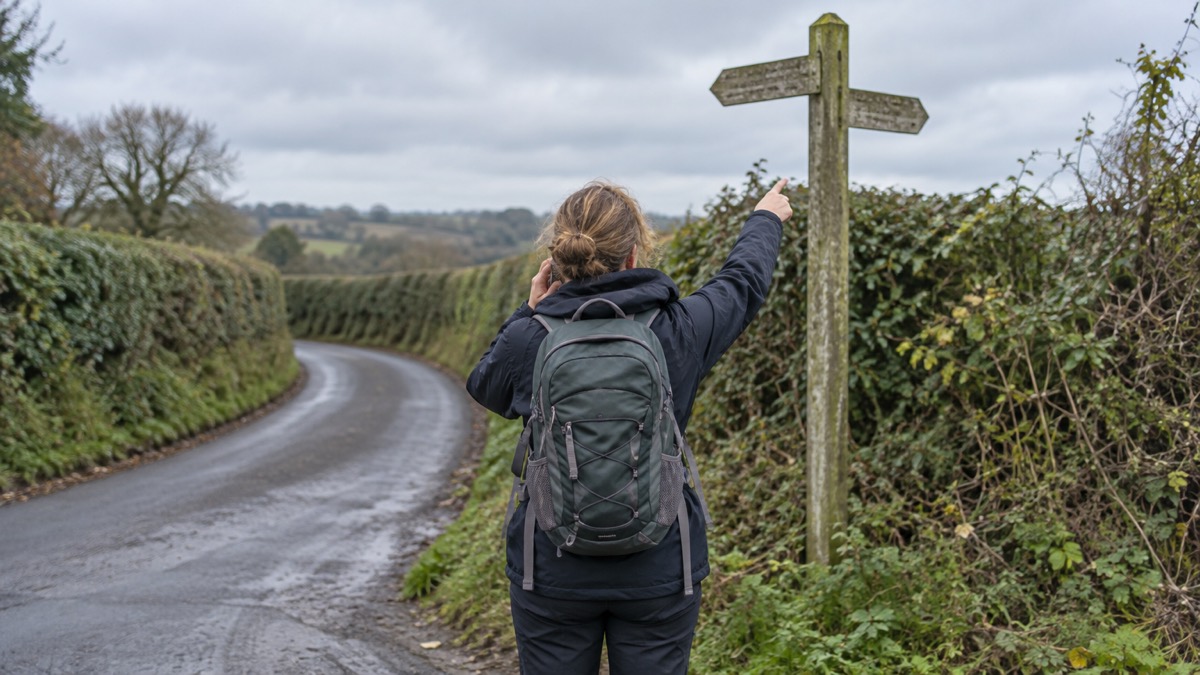
It is a common assumption that the emergency services can see exactly where your phone is the moment you call. Do not rely on that. The guidance is consistent: you need to be ready to tell them. Dorset and Wiltshire Fire and Rescue Service says to make sure you know your location, so that if you need to dial 999 you know exactly where you are13. The call handler will ask for the location, for example the postcode or any landmarks1.
There is one clear exception in a vehicle. If your car has an eCall system, when activated it contacts a 999 operator and provides your vehicle's exact location directly to emergency services14. That is a built-in feature of some cars, not something every phone does.
For everyone else, the phone is a tool for describing your location, not a transmitter of it. The what3words app is described by Cornwall Fire and Rescue Service as the simplest way to communicate that precise location in an emergency15. National Grid suggests using it to help them locate you quickly, particularly in a remote or unfamiliar location or where you do not know the street name16.
| Situation | What helps |
|---|---|
| You know the address | Give your whole address, including the town9 |
| You have no address | A six-figure Ordnance Survey grid reference or what3words3 |
| You are in a car with eCall | The system sends your vehicle's exact location to the operator14 |
| You are in a remote or unfamiliar place | what3words, or the Ordnance Survey app16 |
Describing where you are when you do not know the address
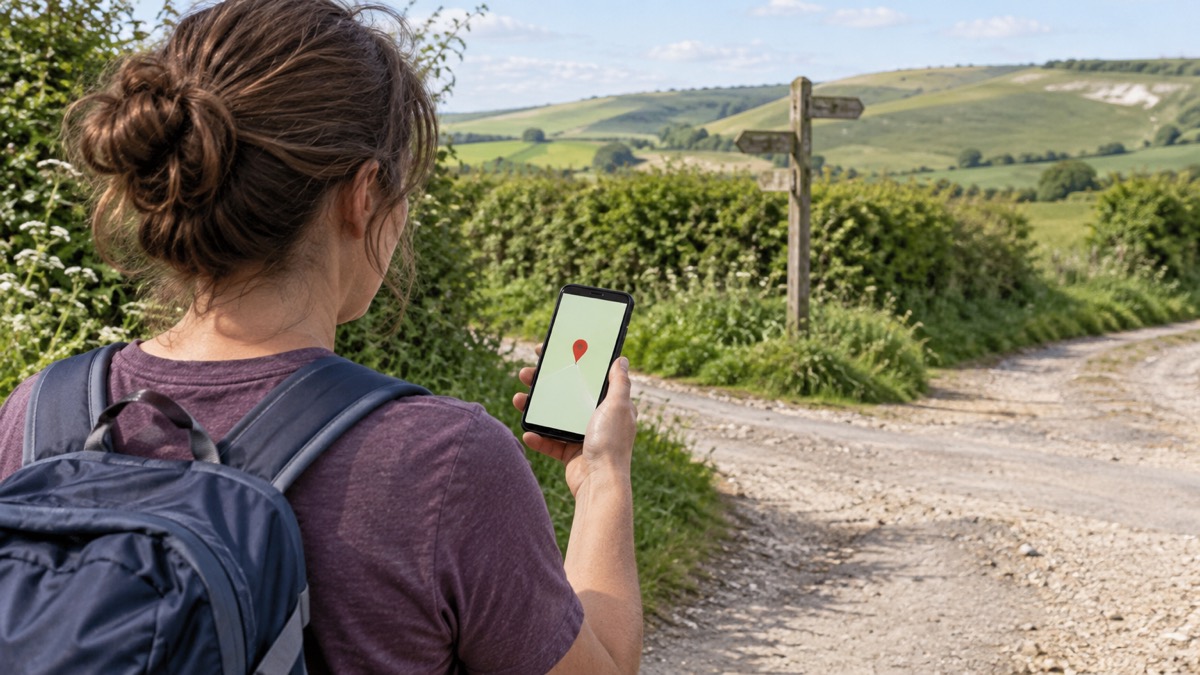
Most of us know our home address, but emergencies rarely happen only at home. If you are in a field, on a beach, on a boat or at a caravan site, you need another way to say where you are.
Start with what you can see. Cheshire Fire and Rescue Service says it can be hard to give the location for an open area, so mention any landmarks, such as a public house or a church in the vicinity5. Suffolk Fire and Rescue Service makes the same point for open spaces: landmarks, road names or topographical features help, and the what3words app is an excellent tool for locating an open space incident18.
Then use a precise tool if you have one. A six-figure Ordnance Survey grid reference is helpful, or you can use the what3words app3. For ice and water rescues, Cheshire Fire and Rescue Service says what3words is ideal for providing an exact location, especially in more remote areas19. For a boat, use what3words to give emergency services a precise location of the boat20.
Where location is hardest to give: roads, countryside, coast and water
Some places make location genuinely difficult, and it is worth knowing how each is handled before you are in one.
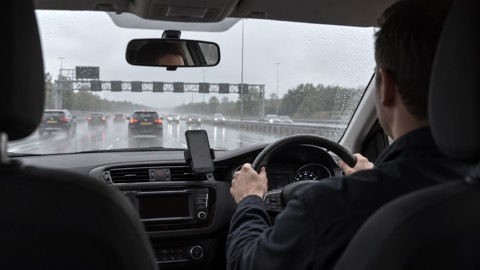
On the road. The Highway Code says that to identify your location to the emergency services you can press the SOS button if your vehicle has one, use a mobile telephone mapping application, or quote the numbers and letters on marker posts or driver location signs along the edge of the road7. If you are on the motorway with no phone signal, locate the nearest emergency phone; blue and white marker posts decorated with arrows will show you where the nearest SOS phone is21.
In the countryside. Wildfire guidance from Wiltshire and Swindon Prepared suggests using the Ordnance Survey app or what3words to give an accurate location17. Dorset and Wiltshire Fire and Rescue Service says that if possible you should provide an accurate location using landmarks, what3words or a mapping app22. If you live in a rural area, Fire Scotland suggests downloading apps like what3words or Ordnance Survey Locate, which give emergency crews your exact coordinates23.
On the coast and in water. Give as accurate a location as possible24. London Fire Brigade says to give a location, or describe any visible landmarks or signs12. For boats, mooring locations are often difficult to access, which can make it challenging for fire and rescue services to quickly locate and reach the scene, so a precise location matters even more20.
At a caravan or campsite. Caravan sites can be spread over a large area, so apps like what3words or the GPS coordinates on your phone can help emergency crews get to you as soon as possible. Send someone to meet the fire crews when they arrive on site25.
Get your location ready before you need it
A few minutes now can save precious time later. The steps below are the ones the guidance keeps returning to.
- Download a location app. what3words and the Ordnance Survey app are both recommended by fire and rescue services17. Open the app and check it works before you need it.
- Learn your home's three words. If you have a what3words address for your home, write it down and keep it somewhere you would find it in a hurry.
- Register for emergencySMS if you need it. You must register your phone beforehand8. The Next Generation Text Service lets deaf, hard of hearing or speech-impaired people in the UK alert police, ambulance, fire or coastguard services by calling via a relay assistant or texting 999 using emergencySMS, an add-on to the existing 18000 service27.
- Know your motorway markers. Next time you are on a motorway, notice the marker posts and driver location signs; quoting the numbers and letters on them identifies your location to the emergency services7.
- Check your car's SOS button. If your vehicle has eCall, it contacts a 999 operator and provides your vehicle's exact location directly to emergency services when activated14.
- Plan for abroad. If you are camping abroad, find out how to call the local emergency services in travel guides, or by calling the Foreign and Commonwealth Office on 0845 850 282911.
Sources (27)
- What happens when you call 999, London Ambulance Service
- What happens when you call 999, Northern Ireland Ambulance Service
- Caravans and mobile homes, Dorset and Wiltshire Fire and Rescue Service
- what3words, Cornwall Council
- Countryside safety, Cheshire Fire and Rescue Service
- Stay connected in severe weather, Ofcom
- Breakdowns and incidents (rules 274 to 287), GOV.UK
- Smoke alarms, Cheshire Fire and Rescue Service
- In the event of fire in your house, Suffolk County Council
- Water safety, Manchester Fire and Rescue Service
- Camping safety, Manchester Fire and Rescue Service
- Water safety: survival and rescue, London Fire Brigade
- Top causes of rescues and how to avoid them, Dorset and Wiltshire Fire and Rescue Service
- eCall, Traffic England
- Keeping safe, Cornwall Council
- Summer safety, National Grid
- Stay safe this summer: reduce the risk of wildfires, Wiltshire and Swindon Prepared
- Putting a stop to arson, Suffolk County Council
- Ice safety, Cheshire Fire and Rescue Service
- Boat safety, Cheshire Fire and Rescue Service
- Vehicle breakdown advice, Milton Keynes Council
- How to stay safe during a heatwave, Dorset and Wiltshire Fire and Rescue Service
- Protecting your home from wildfire, Fire Scotland
- Water safety, Surrey County Council
- Caravan safety, Lincolnshire County Council
- Community flood planning, Thurrock Council
- Home safety advice for people with disabilities, Mid and West Wales Fire and Rescue Service
 Free Alert Services
 Emergency Apps
 Digital Switchover Checklist
 Silent 999 Calls
 When to Call 999
 Calling 999 With No Signal
 999 by Wi-Fi Calling
 When You Get an Alert
 Alerts While Driving
 Spotting a Genuine Alert
 Phones That Get Alerts
 Emergency Alerts On or Off
 Emergency Alert Privacy
 Emergency Alert Tests
 Alerts Without a Mobile Phone