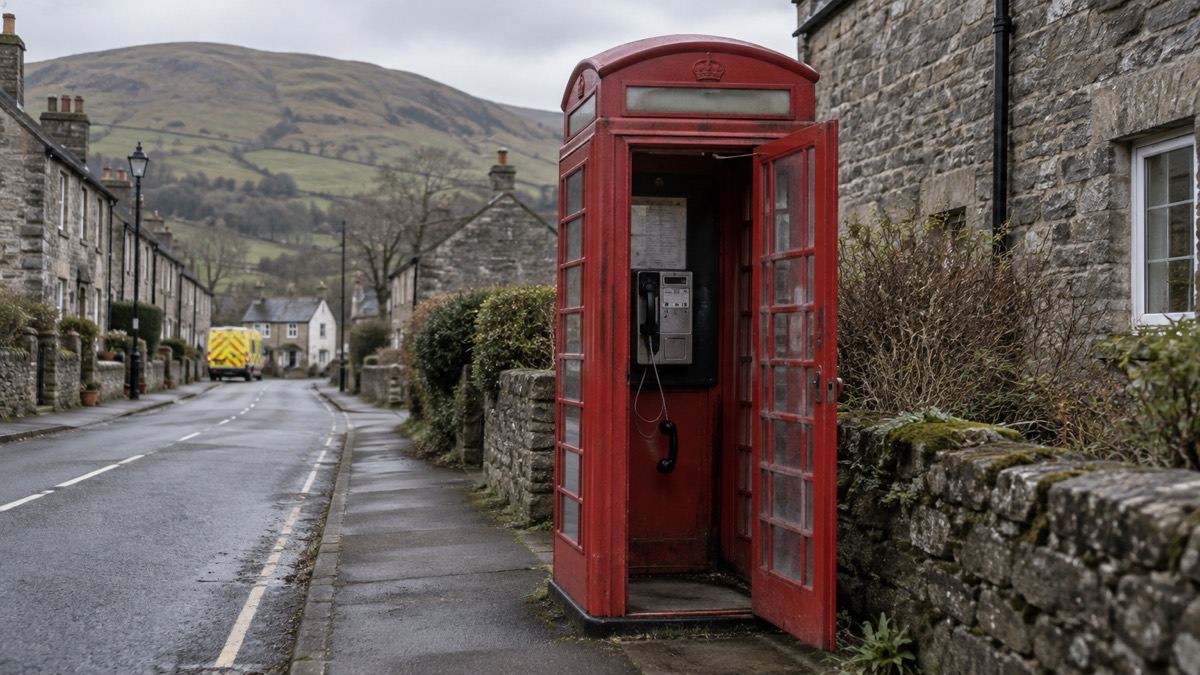
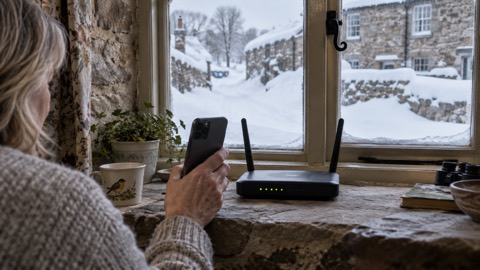
If your mobile shows no signal and you need an ambulance, the police or the fire service, dial 999 anyway. Even if you have no signal on your usual mobile network, calling 999 will automatically connect through another network if one is available1. You do not need credit, a contract or even a working SIM: calling 999 or 112 is always free and will work even if you don't have any credit1.
The same applies when a power cut takes out your home phone. If you have no back-up power to your landline and have a life-threatening emergency, attempt to call 999 or 112 using a mobile; you might receive overlapping signal from a nearby area that is unaffected, because emergency calls automatically roam onto all available networks2. If one route fails, try the other: official guidance says to try calling from both a mobile and a landline, as if one is disrupted then the other may be available3.
What follows is what to do in the moment, how the roaming works, what to do about a landline that dies in a power cut, and how to reach the emergency services if you cannot speak or hear.
Why a 999 call gets through when your own network does not
A mobile phone does not belong to one network when it makes an emergency call. If your provider is experiencing an outage, you will be able to automatically use another provider's network to call 999 or 112 free of charge1. Your phone will show this as "emergency calls only" on Android or "SOS only" on iOS1. That label is not a fault. It is your handset telling you that help is one dial away even though ordinary calls, texts and data have stopped.
This matters most in the situations that cause outages in the first place. A storm, a power cut or a fault at your provider can take your network down while a rival's mast nearby is still working. The roaming arrangement means the call is carried by whoever has coverage, not by whoever sends your bill.
There are limits worth knowing. Roaming only helps if some network reaches you at all. In a deep valley, a basement or a building with thick walls, no network may be available, and then a landline, a neighbour's phone or moving to higher ground is the answer. The guidance is clear that the automatic connection happens "if one is available"1.
If you have a medical or personal alarm device that uses a phone or internet connection, check with the provider or manufacturer how it would work if mobile or broadband service is lost3. A pendant alarm that relies on the same line as your phone will fail with it unless it has its own backup.
Calls go through another provider's network, and they are free
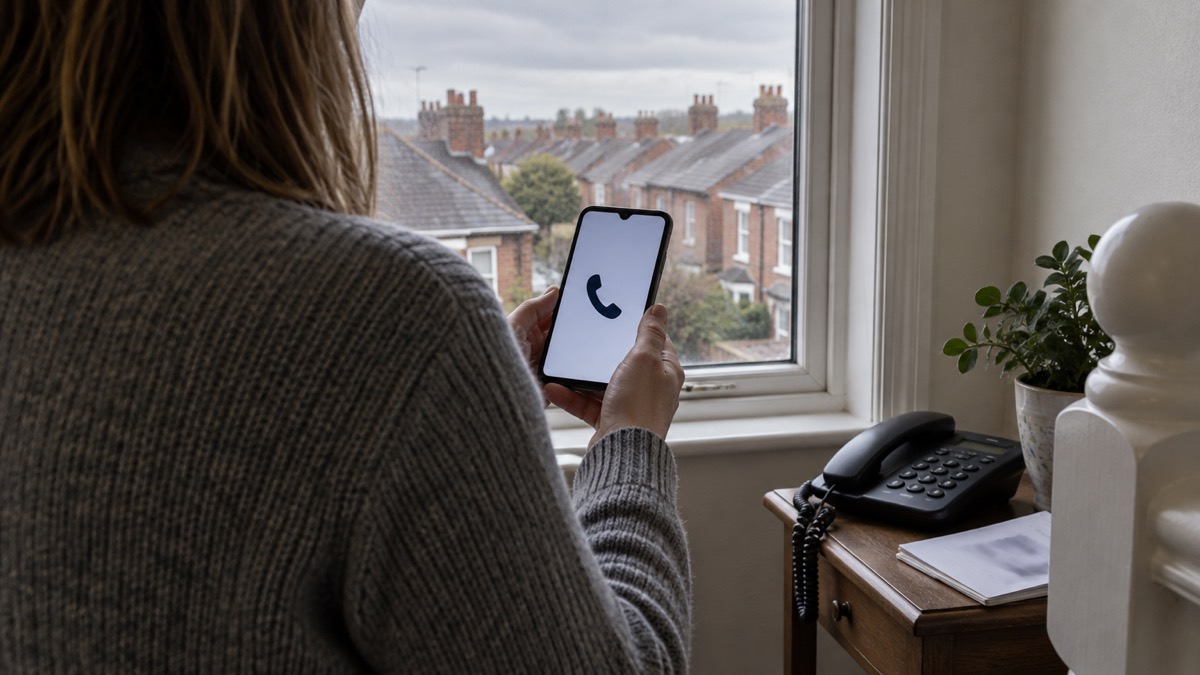
There is no charge for an emergency call and no need for credit. 999 is free and you can dial from a private, public or mobile telephone7. Fire services repeat the point in their escape advice: once you have escaped, use a mobile or a neighbour's phone, because 999 calls are free8. Calls to 999, 101 or 0800 numbers are free9, and the same is true of 111 for NHS advice10.
That has a practical consequence for households. You can borrow a phone. If your own handset is dead, a neighbour's mobile, a phone box or a work phone will all carry a 999 call at no cost to anyone. You do not need to top up, and you do not need to explain yourself before dialling.
| Number | What it is for | Cost |
|---|---|---|
| 999 | Emergency services: police, fire, ambulance, coastguard | Free from any phone7 |
| 112 | The same emergency services; the pan-European equivalent to 999, usable in the UK4 | Free1 |
| 101 | Police non-emergency | Free9 |
| 111 | NHS non-emergency advice | Free from a landline or mobile10 |
| 105 | Power cuts and damage to the electricity network | Free from a landline or mobile11 |
Keep these numbers on paper as well as in your phone. A written list works when the screen will not.
Try both a mobile and a landline
The single most useful habit in an outage is to try more than one route. Official guidance is direct: if you cannot reach 999 or 112, try calling from both a mobile and a landline, as if one is disrupted then the other may be available3. The two systems fail for different reasons, so one often survives when the other does not.
There is a third route. If your mobile network is down but you have a working internet connection, you may still be able to make calls over Wi-Fi by enabling Wi-Fi Calling on your device3. That depends on your provider supporting it and on your broadband still working, which a power cut may have taken out. Our guide to Wi-Fi Calling explains when it helps and when it does not.
A short checklist for the moment you need help:
- Dial 999 on your mobile, even with no bars showing1.
- If that fails, try a landline, a neighbour's phone or a phone box3.
- If you have Wi-Fi and your provider supports it, try a call over Wi-Fi3.
- If you cannot speak or hear, use the text service you registered for in advance6.
- Move to somewhere with a better view of the sky or higher ground if no network reaches you.
When a power cut takes out your landline
A power cut can remove your home phone at the same moment it removes your lights. What happens next depends on the kind of line you have.
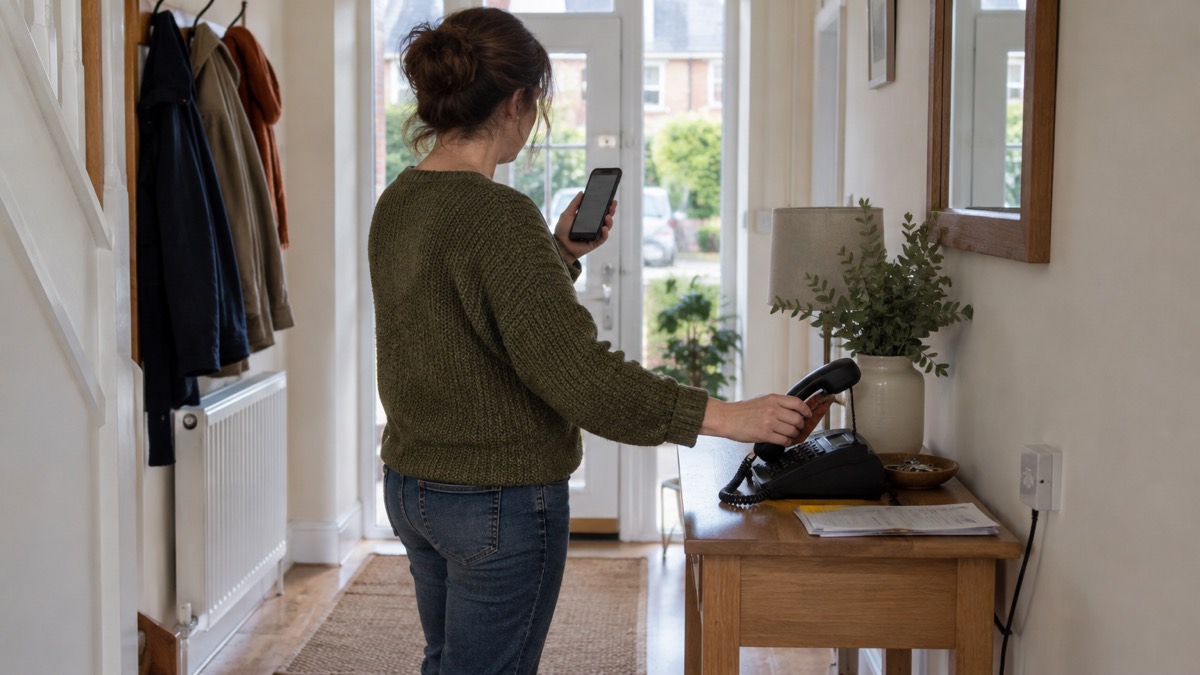
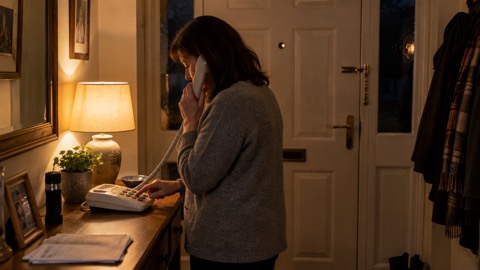
A corded landline phone might still be working in a power cut2. The old-style line carries its own power, so a simple handset plugged straight into the socket can keep working. A cordless handset needs mains electricity for its base station and will not. If you are unsure which you have, our comparison of corded or cordless phones sets the two side by side.
Digital landlines are different. They need mains electricity and will not work in a power cut unless you have a battery back-up1. If your landline will not work during a power cut, your landline provider might offer you a free solution, such as a back-up battery unit, for a minimum of one hour, that would enable you to call the emergency services12. Ask your provider whether you qualify.
During the cut itself, the advice is to fall back on the mobile. If you have no back-up power to your landline and a life-threatening emergency, attempt to call 999 or 112 using a mobile, because emergency calls automatically roam onto all available networks14. For the power cut itself, call 105 free of charge from a landline or mobile phone to report it or damage to the electricity network11. Our guides to power cuts and to landline battery backup go further.
Calling 999 or 112: both numbers work
Both numbers reach the emergency services in the UK. 112 is the pan-European equivalent to 999 and can be used in the UK4. Calling 999 or 112 is always free and will work even if you don't have any credit1. There is no penalty for choosing one over the other, and the call is handled the same way.
The 112 number earns its place when you travel. It works across Europe, so it is the number to remember on holiday even if you have never dialled it at home. In the UK, either will do.
The emergency services are reachable at any hour. 999 and 111 can be contacted wherever you are if you need emergency assistance or non-emergency help, and they are open all day and all night15. If you are unsure whether something is an emergency, NHS 111 can advise on urgent medical matters that are not life-threatening10.
If you cannot speak or hear
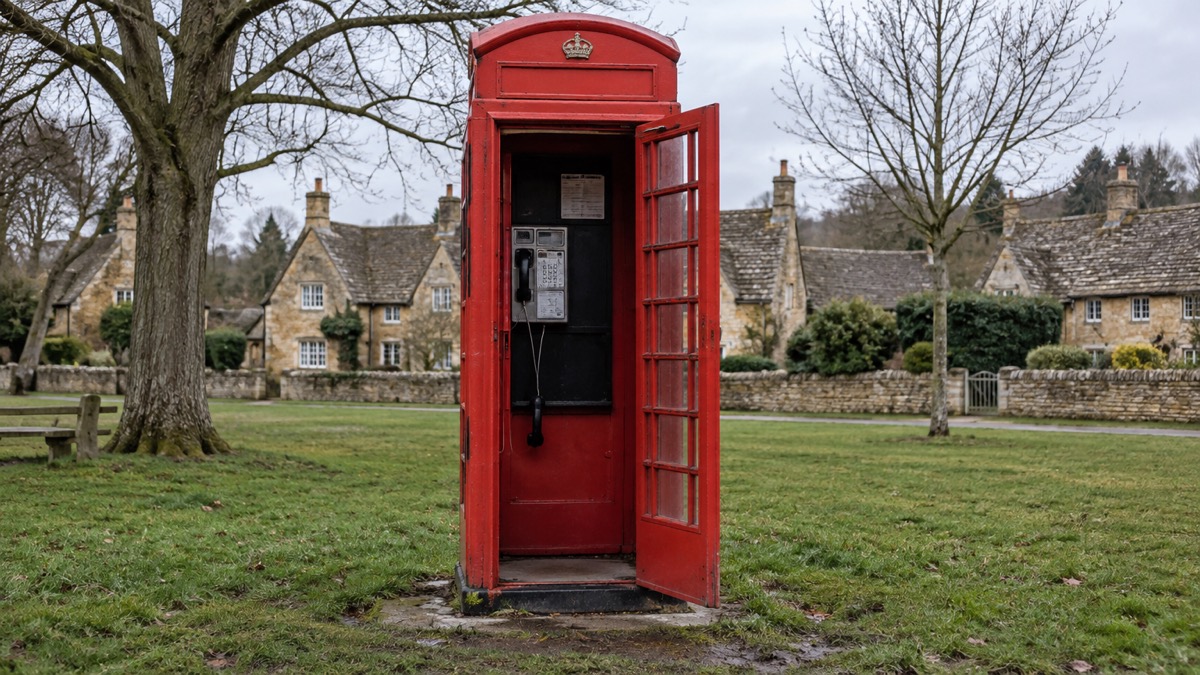
The emergency services have routes for people who cannot use a voice call. 999 BSL, EmergencySMS and Relay UK are alternative ways to contact the emergency services for people who are deaf or have hearing loss16. If you cannot hear or speak on the phone, you can send an SMS text message to 999 in an emergency6. People who cannot make voice calls can contact the 999 emergency services by SMS text from their mobile phone17.
The text service has one condition that catches people out: you must register your phone before an emergency. Registration is free and takes a few minutes. Our guide to emergencySMS walks through how to register and what to send. For British Sign Language users, 999 BSL explains the video relay route.
If you dial 999 and cannot speak, do not hang up in the belief that nothing will happen. Stay on the line if you can, and make whatever sound you are able to.
Making sure you can always call for help
A little preparation means an outage never leaves you with no way to call. The steps below are the ones official guidance supports.
- Check your landline now. Contact your landline provider to understand whether your phone will work during a power cut, especially if it is your only way of making emergency calls or you have a telecare kit connected12.
- Ask about battery backup. If your line will not work in a power cut, your provider might offer a free back-up battery unit for a minimum of one hour12.
- Keep a corded handset. A corded landline phone might still be working in a power cut2.
- Register for emergencySMS if you cannot hear or speak on the phone6.
- Keep your phone charged and carry a power bank. Our checklist of what to keep charged covers the essentials.
- Write the numbers down. A paper list of 999, 101, 111 and 105 works when a screen does not. Our phone numbers list is ready to print.
- Make dialling easy if your sight is impaired: ensure you are able to dial 999 on your landline or mobile, and markers can be useful18.
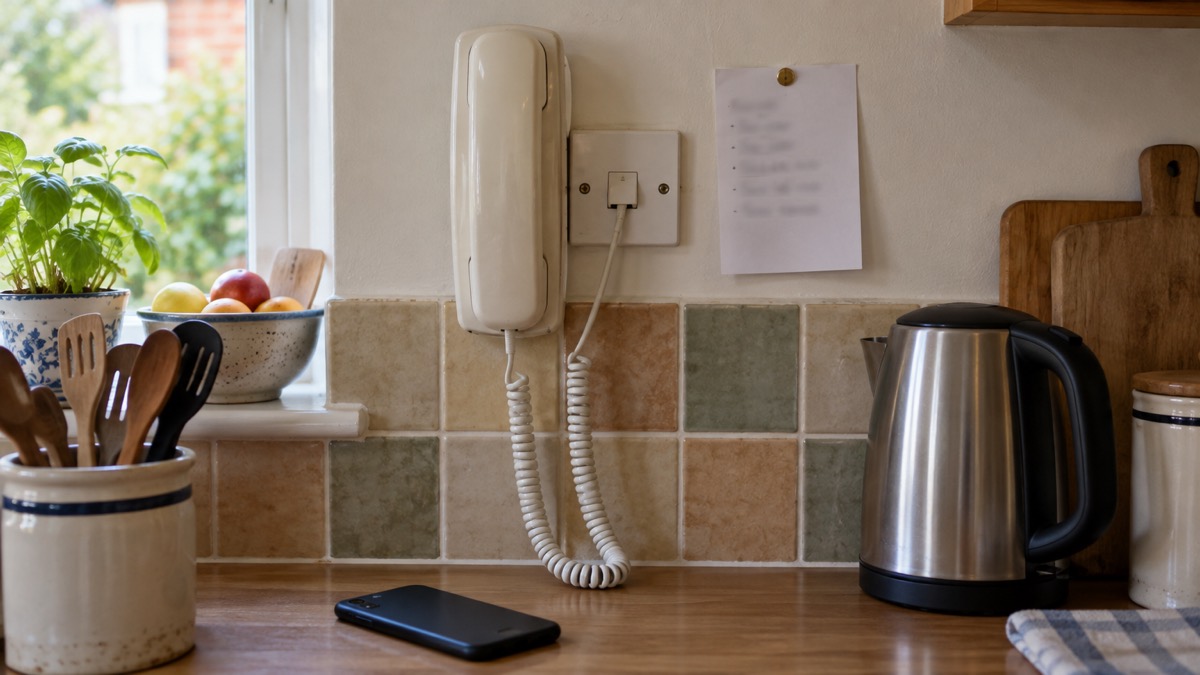
If you have a telecare alarm or personal alarm, our guide to telecare and personal alarms explains what changes when lines go digital. Households that need extra help can also ask their provider about priority arrangements; our page on extra help in an emergency sets out the routes.
Sources (18)
- Stay connected in severe weather, Ofcom, 2026-10-13
- Power cuts, Prepare campaign (UK Government), 2026-10-21
- Phone and broadband outages, Prepare campaign (UK Government), 2026-10-12
- Emergency situations and keeping safe, nidirect (Northern Ireland Executive), 2025-01-08
- Future of landline calls, Ofcom, 2026-08-26
- Contacting 999 with speech or hearing impairment, East of England Ambulance Service, 2026-10-29
- Calling 999, London Fire Brigade, 2026-10-25
- Making a home escape plan, Warwickshire County Council, 2026-10-29
- Contact the police, GOV.UK, 2026-10-29
- NHS 111, NHS England, 2026-10-29
- Emergency, Basingstoke and Deane Borough Council, 2026-10-29
- Power cuts, Be Ready campaign (UK Government), 2026-10-21
- Future of landline calls, Ofcom, 2026
- Loss of essential services, Greater Manchester Combined Authority, 2026-10-29
- Your local 999 and 111 services, London Ambulance Service, 2026-08-10
- Additional advice for people who are deaf or have hearing loss, Greater Manchester Fire and Rescue Service, 2026-10-29
- Fire safety for people with hearing difficulties, Devon and Somerset Fire and Rescue Service, 2026
- Hearing and sight impairments, North Wales Fire and Rescue Service, 2026-10-29
 Free Alert Services
 Emergency Apps
 Digital Switchover Checklist
 Silent 999 Calls
 Giving Your Exact Location
 When to Call 999
 999 by Wi-Fi Calling
 When You Get an Alert
 Alerts While Driving
 Spotting a Genuine Alert
 Phones That Get Alerts
 Emergency Alerts On or Off
 Emergency Alert Privacy
 Emergency Alert Tests
 Alerts Without a Mobile Phone