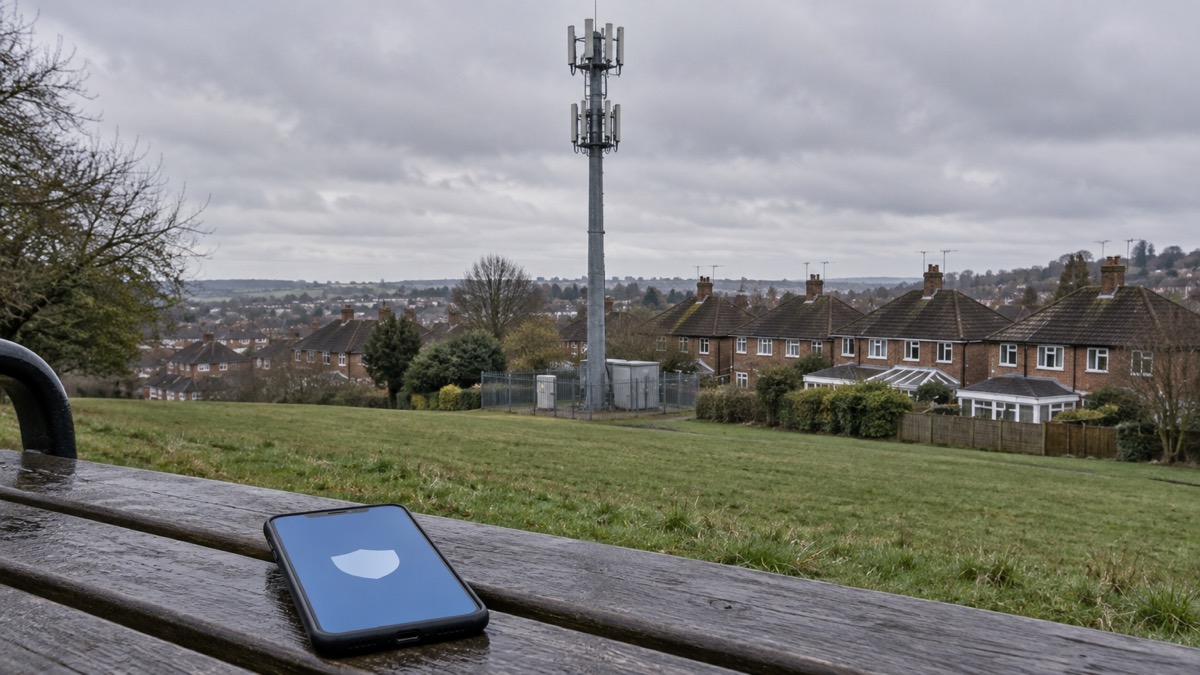
If your phone has just sounded a loud, siren-like alarm and shown a message saying it is a test, nothing has gone wrong. You have received an Emergency Alert test, and the message itself will tell you that no action is required1. The Emergency Alerts system is a free government service that warns you when there is a danger to life nearby, and it is tested from time to time so that it can be relied on when it matters2.
The national test most people remember took place at 3pm on Sunday 7 September 2025, when every compatible phone and tablet on a 4G or 5G network was sent the message1. The alert lasted for about 10 seconds, made the siren sound and vibrated, and then cleared1. It was the second national test of its kind, following the first in April 20235.
This page explains what the test is for, when tests happen, what to do when one arrives, and how to tell a test apart from a real warning. It also covers the one situation where an alert needs handling with care: when it sounds while you are driving.
What the test is for and what your phone does
The Emergency Alerts system exists for one purpose: to warn you about a serious, immediate threat to life in your area, such as severe flooding, a major fire or extreme weather8. It is not a general news service and it is not used for routine announcements. Official guidance is clear that alerts will only be used to warn you about an immediate threat to life9.
The technology works by broadcasting a message to a defined area. Any compatible device in or entering that area receives it immediately, with a loud siren-like sound and vibration, and the message sets out the emergency and the actions to take10. Alerts may include a web link or a helpline, and they are always replicated on gov.uk/alerts10. Because it is a broadcast rather than a message sent to your number, you do not need to sign up, download anything or pay, and the sender does not need to know who you are2.
Testing exists to prove that chain works. Regular testing ensures the system is functioning correctly, should it need to be used in a life-threatening emergency3. There are two layers to this. The visible layer is the national public test, which the government announces in advance and which reaches every compatible phone nationwide5. The invisible layer is routine testing done monthly through non-public operator tests, which checks the plumbing without disturbing anybody5.
When tests happen and who receives them
The government may occasionally carry out a test of the service to make sure it works effectively, and it tells the public beforehand when it is planning one8. Two national public tests have taken place so far. The first was in April 2023, and the second was on 7 September 20255. The 2025 test was announced on 7 July, alongside a new Resilience Action Plan to improve how the country prepares for emergencies3.
| Test | Date and time | Who received it |
|---|---|---|
| First national test | April 20235 | Compatible phones nationwide5 |
| Second national test | 3pm, Sunday 7 September 20254 | Every compatible phone and tablet on 4G and 5G1 |
| Operator tests | Monthly, not public5 | Network testing only; nothing appears on your phone5 |
The 2025 test went out across all four UK nations, and local councils from Wiltshire to Denbighshire publicised it in the same terms: a message making clear it was a test, with no further action required3. The same service and the same test apply in England, Scotland, Wales and Northern Ireland; the Welsh Government describes the Emergency Alerts System as a way to warn the public by mobile phone if there is a life-threatening emergency nearby, and Belfast City Council's emergency advice points residents to the same national arrangements13.
Compatibility is the one thing that decides whether your device receives anything. All mobile phones and tablets that use 4G and 5G get the test alert1. Older handsets that only use earlier networks are outside the system, which is one reason to know what your phone can do before an emergency rather than during one. If you are unsure, our page on whether your phone will receive emergency alerts sets out what to check.
What to do when a test alert arrives
The instruction for a test is deliberately simple: you do not need to do anything, because it is a test to make sure the alerts work1. The message on your screen will say that this is a test, and the wording used for the national test made clear that no further action was required1. Once you have read it, carry on with your day. There is nothing to reply to, nothing to confirm and nothing to switch off afterwards.
It helps to know what a real alert looks like, because the same sound and the same style of message will be used. In an actual emergency, the alert will give you clear instructions of what to do to stay safe, and official guidance is to stop what you are doing and follow those instructions1. The message may include a link to gov.uk/alerts, where you can check that an alert is genuine, and you can also contact neighbours, friends or family in the nearby area to see whether they received it too7. Our guide to how to tell if an emergency alert is genuine goes through that check step by step.
A sensible habit, built during a test rather than during an emergency, is to keep alerts switched on. Official guidance strongly recommends that they are kept switched on, as the system is intended to warn you when lives are in danger16. If someone in your household has turned alerts off, perhaps after being startled by a test, our page on how to turn emergency alerts off or on explains the settings.
If the alert sounds while you are driving
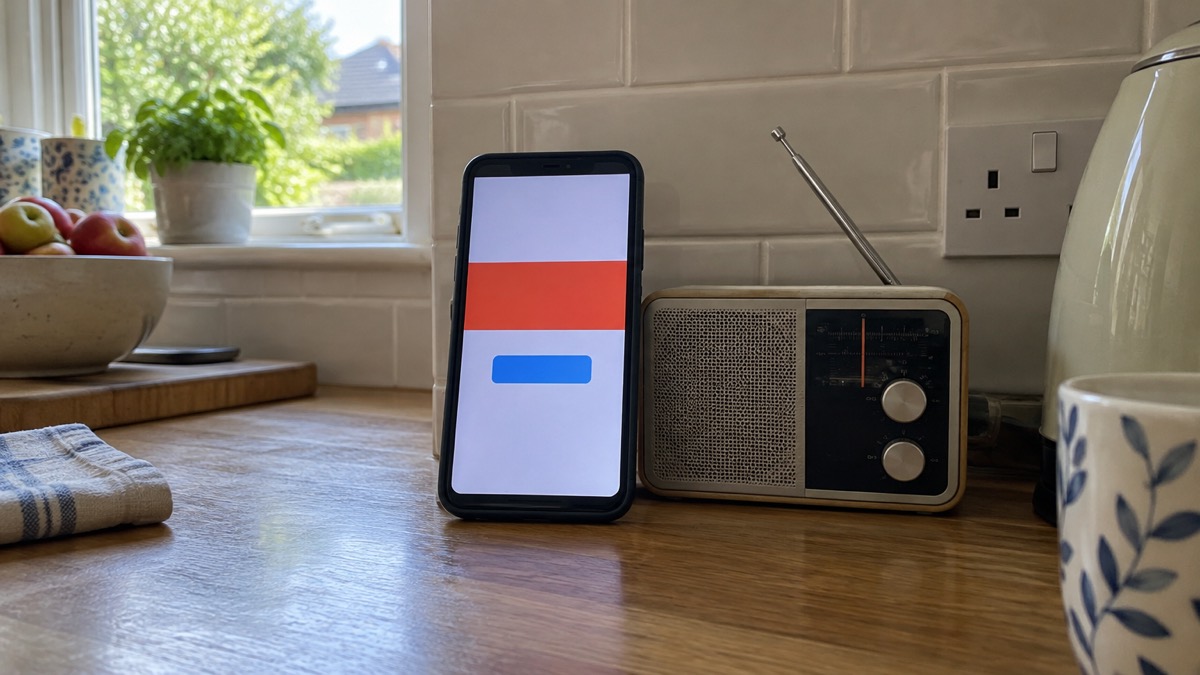
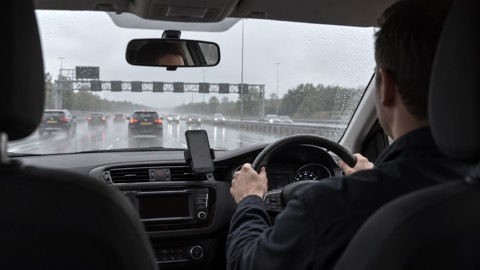
This is the situation that worries people most, and the advice is straightforward. Do not pick up your phone to read the message while the vehicle is moving. Official guidance says that if there is nowhere safe or legal to stop close by and nobody else in the vehicle to read the alert, you should tune into live radio and wait for bulletins until you can find somewhere safe and legal to stop7.
"tune into live radio and wait for bulletins until you can find somewhere safe and legal to stop."
If you do have a passenger, they can read the alert aloud while you keep your eyes on the road. If you are on a motorway or in a place where stopping would be dangerous or illegal, the radio is the practical way to stay informed until the next exit or lay-by. The same advice applies whether the alert turns out to be a test or the real thing, so it is worth deciding now, calmly, what you would do. Our page on what to do if an emergency alert sounds while driving covers the detail.
Staying safe: what a test tells you about being ready
A test alert is a free rehearsal. It shows you that the warning system reaches your phone, and it gives you a moment to check the things that would matter if the next alert were real. The government strongly recommends that phones are kept switched on, as the system is intended to warn you when lives are in danger16. Our checklist of what to keep charged before a power cut is a useful companion.
The second is the home safety basics that every household should have in place regardless of alerts. Fire and rescue services across the UK use the same short message: fit smoke alarms, test them regularly, and plan how you would get out.
"S, Smoke alarms > T, Test alarms weekly > O, Obvious dangers > P, Plan your escape"
Testing alarms weekly is the standard advice, and it takes a moment: press the test button until the alarm sounds18. A home safety checklist from NHS Norfolk and Suffolk also reminds households to check that smoke and carbon monoxide alarms are working, particularly around entrances, hallways and landings19. That checklist notes it is general information rather than a professional home hazard assessment, so treat it as a prompt rather than a survey19.
Beyond the home, the test is a reminder that warnings reach you in more than one way. Alerts are always replicated on gov.uk/alerts, and radio bulletins remain a reliable fallback when a phone is out of action10. Our guide to where to get official warnings and news in an emergency sets out the other channels worth knowing, and the main Emergency Alerts guide explains how the system works day to day. If you want to understand what happens when the networks themselves struggle, our page on mobile networks in a power cut is the place to start.
Sources (20)
- Emergency Alerts test: easy read, UK Government, 2025
- Get prepared for emergencies: alerts, UK Government, 2026
- Emergency Alert test Sunday 7 September at 1500, Wiltshire and Swindon Prepared, 2026
- Emergency Alerts test 7 September: accessible materials, UK Government, 2025
- UK Government Resilience Action Plan, UK Government, 2025
- National emergency alerts, Age UK, 2026
- National Emergency Alert System: what is it?, Essex Prepared, 2026
- Emergency alerts service, Croydon Council, 2026
- Frequently asked questions about Emergency Alerts, UK Government, 2023
- National Risk Register, City of York Council, 2023
- Emergency alerts, Three, 2026
- Emergency alerts, Denbighshire County Council, 2026
- Resilience risks in Wales, Welsh Government, 2026
- Emergency advice, Belfast City Council, 2026
- Emergency Alerts factsheet, Saltford Parish Council, 2023
- Emergency Alerts System factsheet, UK Government, 2025
- NIFRS issues safety plea following two house fire fatalities in one day, Northern Ireland Fire and Rescue Service, 2025
- Stay home and stay safe, North Yorkshire Fire and Rescue Service, 2020
- Stay Steady and Safe home safety checklist, NHS Norfolk and Suffolk ICB, 2026
- Be ready for emergencies: alerts and warnings, UK Government, 2026
 Free Alert Services
 Emergency Apps
 Digital Switchover Checklist
 Silent 999 Calls
 Giving Your Exact Location
 When to Call 999
 Calling 999 With No Signal
 999 by Wi-Fi Calling
 When You Get an Alert
 Alerts While Driving
 Spotting a Genuine Alert
 Phones That Get Alerts
 Emergency Alerts On or Off
 Emergency Alert Privacy
 Alerts Without a Mobile Phone