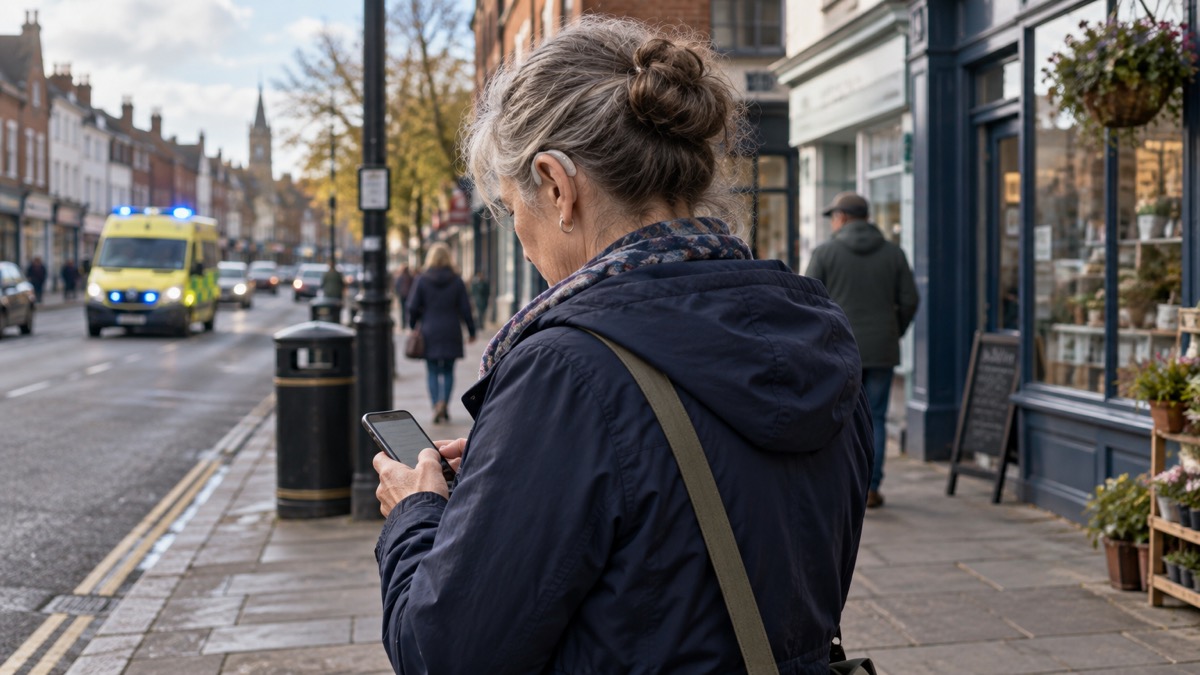
If you cannot make voice calls, you can contact the UK's 999 emergency services by SMS text from your mobile phone1. The service, called emergencySMS, is designed for people with hearing loss or difficulty with speech, and it is part of the standard 999 service rather than a separate scheme2. A text to 999 is passed to the police, ambulance, fire and rescue or coastguard as appropriate, and the emergency services can reply to you by text3.
The one thing you must do in advance is register your phone. You will only be able to use the service if you have registered with emergencySMS first, and the registration takes a few minutes: text the word register to 999, read the reply carefully, and text YES to confirm1. Do not wait for an emergency to happen before you do this3.
This page explains who the service is for, how to register step by step, what to write in an emergency text, how the replies work, and what to do while you wait for help.
Who can text 999
emergencySMS exists for one group of people: those who cannot make voice calls. The service lets deaf, hard of hearing and speech-impaired people in the UK send an SMS text message to 9994. If you find it hard to hear or speak, you can send a text message to 999 to get help from the police, fire service, ambulance or coastguard3. The Welsh Ambulance Service puts the same point plainly: if you cannot hear or speak on the phone, you can send an SMS text message to 999 in an emergency2.
The service should only be used when you cannot make a voice call2. If you can speak and hear on the phone, a voice call to 999 is the normal route, because a call-taker can question you directly and act on the answers at once. Text 999 is the equivalent route for people for whom a voice call is not possible, not an extra option for people who simply find calls inconvenient.
Two conditions apply before you can use it:
- You must register your phone beforehand6. An unregistered text to 999 will not reach the emergency services in the way a registered one does, which is why every emergency service that publishes guidance on the scheme stresses registering in advance.
- You must be in the UK. The service is described as being for deaf, hard of hearing and speech-impaired people in the UK4.
The scheme works by converting your text into a call for the emergency services7. From your point of view, that conversion is invisible: you send a text, and the emergency services reply to you by text4. What it means in practice is that your message reaches the same 999 system that voice calls reach, and the reply you receive comes from an emergency service, not from a relay operator.
If you are a carer, family member or support worker for someone who cannot make voice calls, it is worth registering their phone for them and showing them how the exchange works, so the process is familiar before it is ever needed urgently. The service's own advice is to register now rather than waiting for an emergency3, and remember that the phone must be registered with emergencySMS before it can be used at all3.
Register now: text 'register' to 999
Registration is simple and takes only a few minutes. Every emergency service that publishes instructions gives the same steps, and they are worth doing today rather than in a crisis.
- Open a new text message on the mobile phone you will use in an emergency, and type the word register. Send it to 999. Do not type anything else in the message3.
- Read the reply carefully. You will get a reply, and you should follow the instructions you are sent1. The reply explains how the service works and what to do next.
- Text YES to confirm. After reading the message, send the word YES to 999 to complete your registration, typing nothing else3. The Scottish Ambulance Service's guidance on the scheme is explicit about this step: "After reading all this message send the word 'Yes' to 999 to complete your registration. Otherwise your phone is not registered."3
- Wait for the confirmation. You will then receive a message confirming your registration2. Keep it on your phone as proof that registration worked.
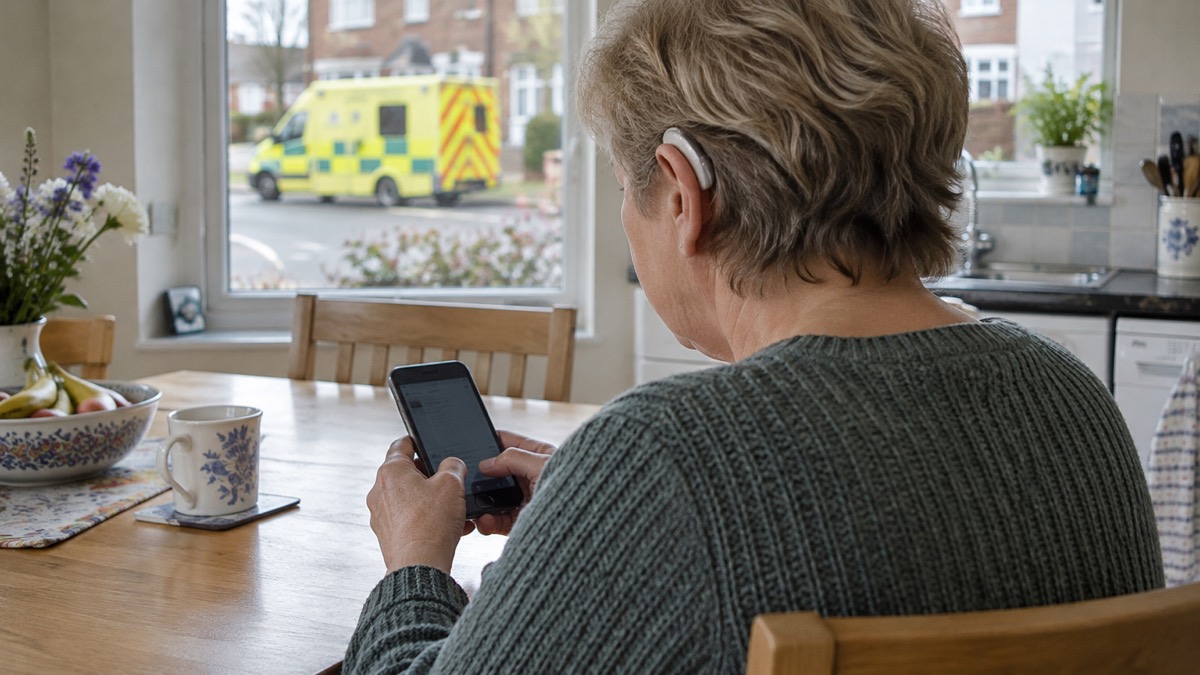
The wording of that confirmation matters for two reasons. First, it makes clear that registration is not complete until you send YES: a phone that has only sent the word register is not registered. Second, it sets out the rule that governs the whole service in an emergency, which is that you know your message has been received only when you get a reply from an emergency service. That rule is explained further below, under delivery reports.
Register the phone you actually carry. The registration is tied to your mobile number, so a phone registered today and replaced next month needs registering again from the new handset and number. If your household has more than one person who cannot make voice calls, each person's phone needs its own registration.
The advice from every service is the same on timing: register now, do not wait for an emergency1. You need to set your phone up before you can send a text to 999, and the middle of an incident, with smoke in the house or someone collapsed on the floor, is the worst possible moment to be reading instructions for the first time3.
What to put in an emergency text
A text to 999 is short, so every word has to earn its place. The guidance from Yorkshire Ambulance Service sets out the three things your message must contain: who you need, what the problem is, and where it is happening1.
- Who? Police, Ambulance, Fire and Rescue, or Coastguard1.
- What? Briefly, what the problem is1.
- Where? Exactly where it is happening, giving the road name, house number, postcode or a nearby landmark if possible1.
The Welsh Ambulance Service gives the same structure for ambulance requests: include which service you need, what is wrong, and where you are, as an address or location2. The Scottish Ambulance Service's guidance, which introduced the scheme's wording, lists the same three: who you want help from, what the problem is, and where you are3.
The location is the part most worth a moment's thought in advance. A voice call-taker will ask for the location of the emergency, for example the postcode or any landmarks8, and a text gives you no such prompt, so the location has to be right first time. Suffolk Fire and Rescue Service advises 999 callers to give their full address, to use the What3Words app to describe a location with only three words, and to include details such as a two-storey house if a building is on fire, and the room anyone trapped is in9. The same details serve a text message just as well as a call.
An example message
A text that follows the who, what, where structure looks like this:
Nothing else is needed. The service you need comes first so the message can be routed immediately, the problem is stated in plain words, and the location is as exact as you can make it. If you know the postcode, include it; if you do not, a road name plus a house number or a landmark serves the same purpose1.
When the ambulance service receives your message, it will send you a text to confirm it has been received, and it may text you for further information, which does not delay the ambulance response10. So a short first message is not a risk: sending it quickly gets the process started, and anything else the service needs can be exchanged in the texts that follow.
How to text 999 in an emergency
Once your phone is registered, using the service in an emergency is a single message followed by a short exchange of texts.
- Send your text to 999. Include which service you need, what is wrong, and where you are2. Text 999 in an emergency and it will be passed to the police, ambulance, fire rescue or coastguard as appropriate6.
- Watch for the confirmation text. When the service receives your message it will send you a text to confirm receipt10. If you do not receive a confirmation text, text again10.
- Answer any further questions by text. The service may text for further information, and this does not delay the response10. Answer as plainly and exactly as you can.
- Follow any instructions you are sent. The emergency services are able to reply to you4, and their replies may include advice on what to do while help is on the way.
- Stay where you are, if it is safe. If you are reporting a fire, the fire service advice is to get out, stay out and call 999, and to find somewhere safe to wait11.
The same rules that govern voice calls to 999 govern texts. Do not use the service for a problem that is not a genuine emergency, because that can delay crews from reaching someone who is in a life-threatening situation12. A call to 999 does not always mean an ambulance will be dispatched: if the information you give shows you can get more appropriate help elsewhere, you will be directed to it13. And the questions you are asked, whether by voice or by text, will not delay the help you need; they allow the service to make sure you receive the most appropriate care and to continue advising you while help is on its way13.
Wait for a reply: it can take a couple of minutes
A text to 999 is not instantaneous, and knowing the normal timing stops you panicking or giving up too early. It will usually take about two minutes before you get a reply1. The Scottish Ambulance Service's guidance on the scheme says you might have to wait for about 3 minutes before they text you back3, so treat roughly two to three minutes as the normal window, and do not assume the worst inside it.
If you do not get a reply within three minutes, try again or find other ways of getting help1. That is the firm rule from the ambulance services that run the scheme, and it is worth thinking about in advance what those other ways would be for your household, whether that is another registered phone or a different route to the emergency services altogether.
While you wait, do what the situation demands. If you are reporting a fire, get out, stay out, and find somewhere safe to wait11. If you are with someone who is ill or injured, the ambulance service's general advice applies: stay with the patient until help arrives, call or text back if the patient's condition or location changes, ask someone to open the doors and signal to the crew, write down the patient's GP details and collect their medication, and tell the service about any allergies14.
Why a delivery report does not mean help is coming
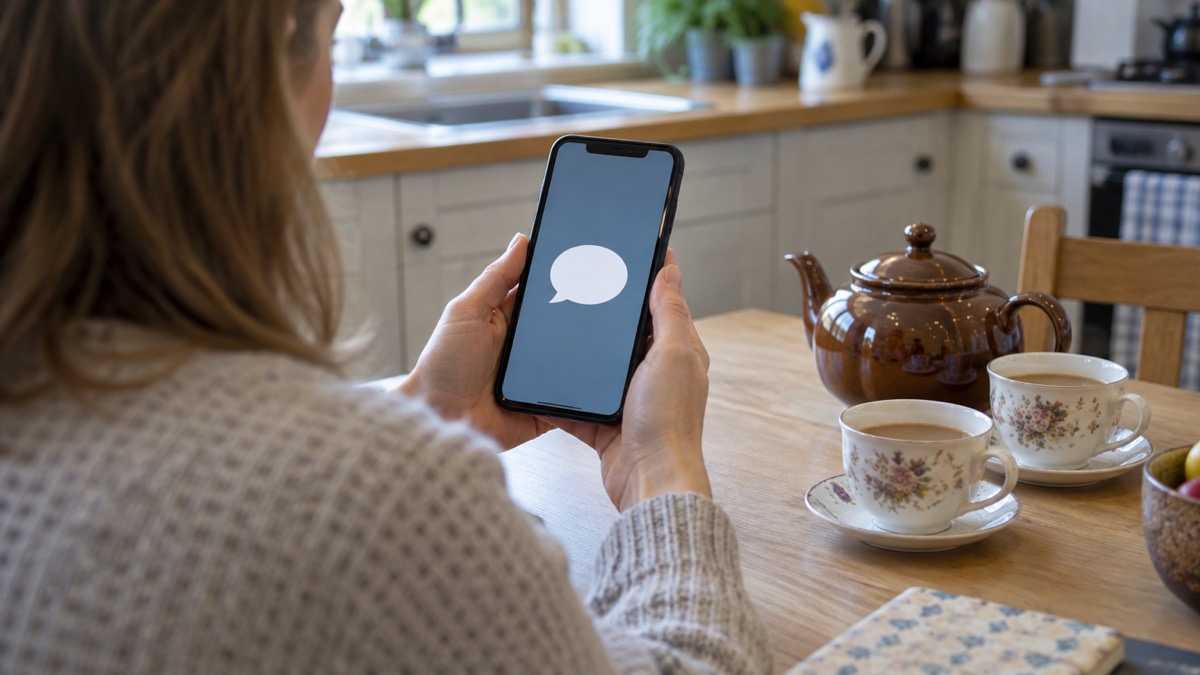
Your phone may show that the text has been delivered, and that can be reassuring at exactly the wrong moment. A delivery report only tells you the message has reached the SMS system. It does not tell you that an emergency service has read it or acted on it. The rule set out in the registration message is unambiguous: in an emergency you will know your message has been received only when you get a reply from an emergency service3.
So treat the reply, not the delivery report, as the moment the emergency services have your message. Until that reply arrives, keep working through your plan: wait the usual two minutes, and if three minutes pass with no reply, text again or find other ways of getting help1. If you do not receive a confirmation text from the ambulance service, text again10.
The same principle explains why the service asks you not to rely on the exchange alone in a fast-moving emergency. A voice call, where one is possible, connects you to a call-taker immediately. A text starts a process that takes a couple of minutes to come back to you. For people who cannot make voice calls, emergencySMS is the route to the same emergency services, used with the same seriousness about timing.
Other ways to reach 999 without a voice call
emergencySMS is the main text route, but it is not the only way to contact the emergency services if you cannot speak or hear on the phone, and knowing the alternatives matters for exactly the situations where a text goes unanswered.
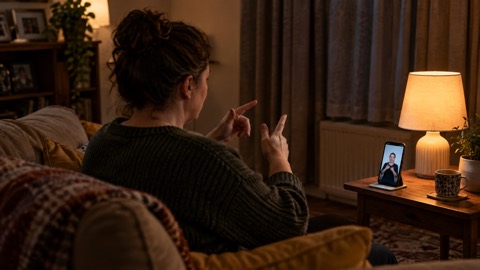
999 BSL. If you are a deaf British Sign Language user, you can use the 999 BSL service to request an ambulance, police, fire and rescue, or the coastguard2. Ofcom reports that the median call waiting time in 2024 was 3 seconds, down from 4 seconds in 202315, so for BSL users it is a fast route. Our page on 999 BSL and Relay UK explains how it works.
Silent 999 calls. If you can dial but not speak, there are arrangements for calls where you cannot say anything, which our page on what to do if you dial 999 but cannot speak sets out. One related point from official guidance: if you replace the handset on a landline, the line may remain connected for 45 seconds, in case you pick it up again16.
Video links on voice calls. When you call 999, you may be asked to provide a live video stream. If you agree, the Control Officer sends a text message with a secure link that opens a live video stream from your phone to the Control Room17. This is London Fire Brigade's arrangement, and it shows how a text message can form part of a voice-call exchange too.
Support for people with learning disabilities or autism. The Welsh Ambulance Service commits to using clear and simple language, repeating information if needed, giving you extra time to answer questions, speaking calmly and clearly, and helping carers, family members or support staff provide information if needed. Easy Read information about calling 999 and what happens next is available for people who find information easier to understand in pictures and simple words18.
A trusted neighbour. Fire services advising carers of people with hearing difficulties suggest asking a trusted neighbour to assist in an emergency if calling 999 is difficult7. For a household where the main route to 999 is a text that can take minutes, a neighbour who can make a voice call is a genuine backup, and it costs nothing to arrange in advance.
For households that want a fuller plan for staying reachable when networks fail, our guides on what to do when phones and the internet go down, how to call 999 when your mobile network is down and getting your mobile phone ready for an emergency cover the wider ground.
Getting help in a non-emergency
emergencySMS is for emergencies, and the emergency services are clear that using 999 for a problem that is not a genuine emergency can delay crews from reaching someone in a life-threatening situation12. For urgent but non-life-threatening health problems, NHS 111 is the route, and our page on non-emergency numbers: 101, 105 and NHS 111 explains what each is for.
When you do contact the ambulance service, whether by call or text, you will need to tell them what is wrong and what has happened, the address where help is needed including the postal area if you know it, and the phone number you are contacting them from12. Having those three things ready before you need them, perhaps written down beside the phone or stored in a notes app, makes any contact with the emergency services faster and calmer.
Sources (18)
- Using 999 with speech or hearing impairment, Yorkshire Ambulance Service NHS Trust
- Additional support when accessing 999, Welsh Ambulance Service NHS Trust
- About sending a text to 999, Scottish Ambulance Service, October 2013
- The emergencySMS service, East Midlands Ambulance Service NHS Trust
- Emergency SMS, South Tees Hospitals NHS Foundation Trust, 10 November 2022
- Smoke alarms and staying safe at home, Cheshire Fire and Rescue Service, 27 July 2026
- Fire safety for people with hearing difficulties, Devon and Somerset Fire and Rescue Service
- What happens when you call 999, London Ambulance Service NHS Trust, 30 September 2026
- In the event of fire in your house, Suffolk Fire and Rescue Service
- Contacting 999 with speech or hearing impairment, East of England Ambulance Service NHS Trust
- Get out, stay out and call 999, North Wales Fire and Rescue Service, 26 October 2026
- Calling 999, Welsh Ambulance Service NHS Trust
- Using our 999 service: an A to Z guide, North West Ambulance Service NHS Trust, 8 October 2024
- 999 urgent and emergency service, North East Ambulance Service NHS Trust
- Emergency video relay service for deaf BSL users, Ofcom, 2024
- If you can't speak when you call 999, Bath and North East Somerset Council
- Calling 999, London Fire Brigade, 25 October 2026
- Learning disabilities zone, Welsh Ambulance Service NHS Trust
 Emergency Alerts
 Digital Landline Switchover
 3G Switch-Off
 999 BSL and Relay UK
 Provider Extra Help