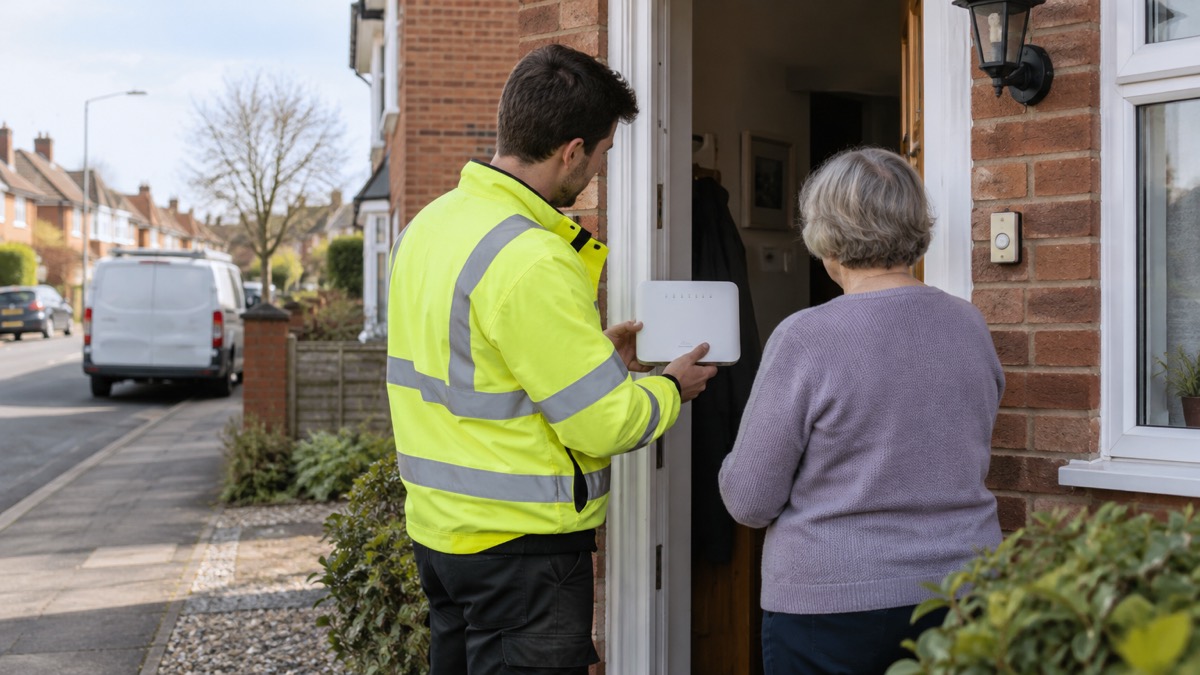
If you are older, disabled, have a health condition, or rely on a device such as a telecare alarm that uses your phone line, your phone and broadband provider should give you extra support, but only if they know about your circumstances1. Telling them is a short phone call, and it unlocks things providers are required to provide: a free back-up battery unit for vulnerable customers who still have an analogue landline, keeping the line working for at least an hour in a power cut, with some providers offering back-ups that last up to seven hours1. If you do not have a working mobile phone or a reliable mobile signal, your landline provider must offer you a free back-up solution such as a battery unit for your home2.
Alongside that practical support, providers offer social tariffs: special cheaper deals available to some low-income customers, which lots of people who could have them have not signed up for3. And if your broadband stops working, some providers promise backup connectivity while the fault is fixed, so you are not left offline for days.
This page sets out what to tell your provider, what you get in return, how backup works during outages, and where to find the parallel priority registers for energy and water. It sits alongside our guides to the digital landline switchover and telecare and personal alarms, which cover those subjects in more depth.
Tell your phone and broadband provider if you need extra help
The single most useful step is to tell your provider about your circumstances before anything goes wrong. Ofcom's guidance is direct: if you are a vulnerable customer, for example elderly or with additional needs, and your phone and broadband provider is aware of this, they should provide extra support1. Readying Scotland's guidance for disabled people and carers says the same thing for anyone with a telecare system or any device that relies on the phone line: tell your phone and broadband provider4.
What counts as needing extra help is broad. Tell your provider before your landline is changed to digital if you, or someone in your household, needs extra help because you are elderly, disabled, have a health condition, have limited mobility, or need information in a different format2. The same applies to devices: tell your landline provider and your device supplier before the change if anyone in the household has a telecare alarm, health pendant, personal alarm or any other device that uses the phone line2. Ofcom's consumer advice adds security alarms and other connected devices to that list6, and Argyll and Bute Council's switchover guidance tells residents to speak to their telecoms provider now if they have no other way of making emergency calls7.
Be specific about your situation, because the support you get depends on what you tell them:
- Telecare and alarms: name the device and say it depends on the phone line4
- Poor mobile signal or frequent power cuts: let your provider know, since this affects what backup they should offer8
- No other way to call 999: tell your phone provider now9
- Format needs: say if you need bills and information in a different format2
Behind the scenes, providers are expected to find people at risk themselves. Ofcom says providers need to take steps to identify people at risk and ensure they are protected throughout the upgrade process8, and under the Telecare National Action Plan, local authorities and telecare providers are being asked to disclose which phone lines have telecare devices on them through data sharing agreements with communications providers10. Do not rely on that happening: tell your provider yourself, and if you have no other way of calling 999, tell your phone provider now. Phone providers must make sure telecare users and vulnerable people have alternative support9.
If you use a telecare system or any device that relies on your phone line, tell your phone and broadband provider about it, and make them aware of your circumstances and additional needs11. Let them know as well if you live in an area with poor mobile signal or frequent power cuts, since that affects what backup they should offer you11.
Social tariffs: cheaper deals many eligible households have not claimed
Social tariffs are special cheaper deals available to some low-income customers3. Surrey County Council's priority services guidance, which covers them alongside utility support registers, is blunt about take-up: lots of people who could have this have not signed up3. Providers do not always come to you, so the practical advice is to contact yours and ask.
Who qualifies is set by each provider, but the deals are aimed at households on low incomes. Government guidance on supporting vulnerable people identifies people in lower income households as a group vulnerable to cold weather12, which is the same population the tariffs are designed to reach. If you receive means-tested benefits, ask your provider directly what they offer and how to apply, because eligibility rules differ between companies and the only way to know is to ask.
How a social tariff protects you from price rises and exit charges
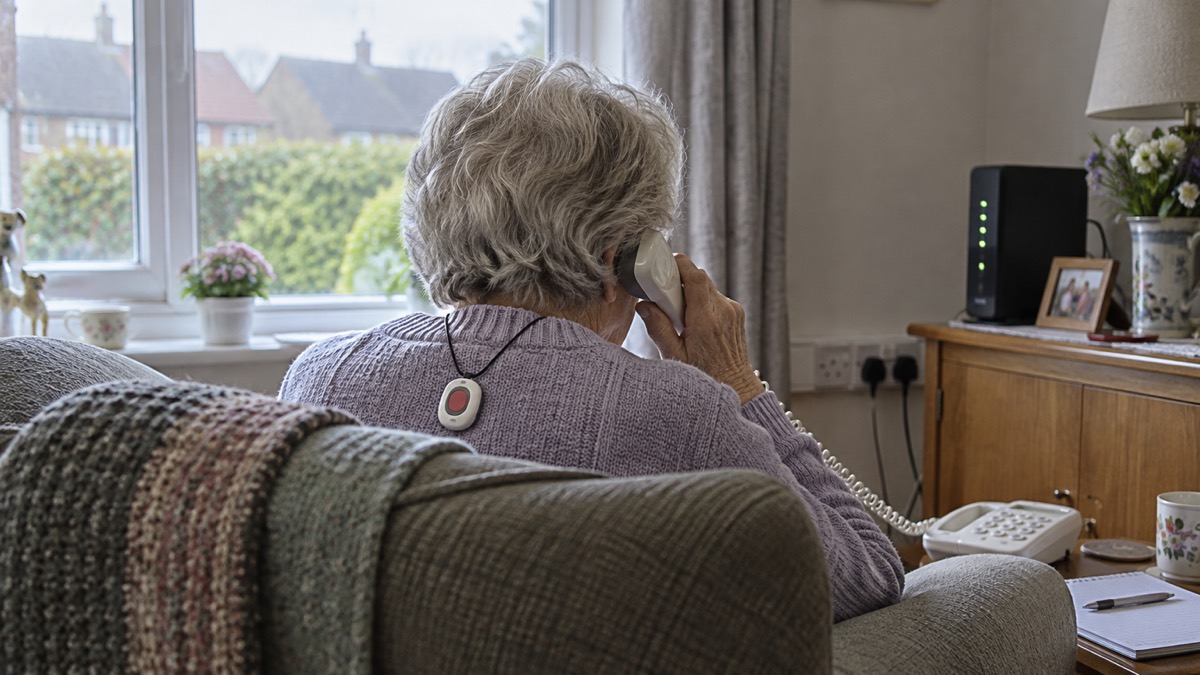
The protection is not only the lower monthly price. Social tariffs do not usually have the same price rises or charges when you leave3. That matters in two ways. First, ordinary broadband and phone deals often rise mid-contract, and a social tariff shields you from most of that. Second, if you find you need to move provider, perhaps because you are moving home or a different company offers better coverage where you live, the usual early termination charges generally do not apply.
That makes a social tariff a stable base for your household's emergency preparations: a connection you can afford to keep, that you will not be priced out of mid-year, and that you can leave without a penalty if your circumstances change. If you are building a household plan around staying informed in an emergency, a connection you can rely on keeping is the foundation, and it costs less than a standard deal.
Free battery backup and other kit providers must offer
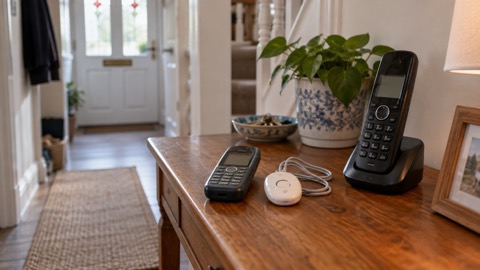
The most important free help for landline customers is backup power. If you are a vulnerable customer, for example a telecare user, and you still have an analogue landline connection and have not yet migrated to a modern digital network, your communication provider must provide a free back-up battery unit, meaning the landline would work for at least an hour during a power cut, and many batteries now last much longer5. Ofcom's severe weather guidance gives the same figures: the back-up must last for at least one hour in a power cut, but some providers have back-ups that last up to seven hours1.
If you do not have a working mobile phone or a reliable mobile signal, your landline provider must offer you, for free, a back-up solution such as a battery back-up unit for your home2. This is not a discretionary goodwill gesture: government guidance on the transition from analogue to digital landlines makes clear it is the responsibility of the communications provider to ensure those who depend on a landline are provided a resilient solution allowing calls to the emergency services in the event of a power outage10.
| Backup option | Who it is for | How long it lasts | Cost |
|---|---|---|---|
| Battery back-up unit | Vulnerable customers with an analogue landline, for example telecare users | At least one hour in a power cut; many now last much longer5 | Free, must be provided5 |
| Longer battery back-up | Customers of some providers | Up to seven hours1 | Ask your provider |
| Back-up solution for the home | Customers with no working mobile phone or reliable mobile signal | Set by the provider | Free, must be offered2 |
| Hybrid phones that switch to mobile networks | Vulnerable users | While the mobile network works | Free for vulnerable users9 |
For people using a digital landline who do not have a mobile phone, or who live in an area with poor or no mobile signal, the Met Office's power cut advice is to speak to your communications provider about additional support they can offer you in advance13. Do this before the power cut, not during it: backup units have to be posted or installed, and a fault reported during a storm joins a queue.
Our guide to getting a free battery backup for a digital landline walks through the request step by step, and BT customers can read about that provider's own unit in BT Battery Back Up: keeping a digital landline working in a power cut.
Keep Connected Promise: backup broadband while your line is fixed
Some broadband providers go further than the landline battery and promise to keep you online while a fault is being repaired. BT's Keep Connected Promise applies to its Halo broadband customers: report a fault and the company sends out a Mini Hub, a mobile broadband device that keeps your household online by mobile network while engineers fix the line.
The timing depends on when you report the fault. Report a fault Monday to Friday before 7.30pm and the Mini Hub arrives the very next day. At the weekend, report a fault before 12.30pm on Sunday and it arrives on Monday; report it after 12.30pm on Sunday and it arrives on Tuesday. The promise is a maker's own commitment for its own product, so check the current terms with BT before relying on it, and note that it applies to that provider's Halo broadband customers rather than to phone lines generally.
What every provider should do, whatever the promise, is keep you informed. Communications providers should keep you informed during outages with clear, timely updates on what's happening, and where possible may offer temporary or alternative ways to stay connected; they often have a status page with updates on planned maintenance and significant incidents5. That status page is the first place to check when your service drops, because it tells you whether you are looking at a fault that needs reporting or a known incident already being fixed. Our guide to broadband outages covers how to check and report.
Where backup can take longer
Backup of any kind has limits. A landline battery lasts at least one hour, and up to seven hours with some providers1, but a long outage can outlast it. Mobile backup, whether a Mini Hub or a hybrid phone, depends on the mobile network still working, and mobile masts have their own backup batteries, as our guide to mobile networks in a power cut explains. In a widespread power cut, both your landline backup and the mobile network can be affected at once.
Backup arrangements do not always run to the same timetable everywhere. Under the Keep Connected Promise, in some places like the Highlands and Islands and parts of Cornwall it may take a little longer to restore your service14. If you live in one of these areas, that is all the more reason to have your own preparations in place, covered in what to keep charged before a power cut.
Reporting a fault and tracking it safely
When your mobile, broadband or landline is unavailable after a severe weather event, report this to your provider if you can; this helps make sure that any faults are fixed as soon as possible1. Reporting promptly also starts any backup promise, such as the Keep Connected delivery times above, from the earliest possible point.
Have the numbers you need ready before the outage. Wiltshire and Swindon Prepared's guidance on utility failures advises having the telephone number of your power provider easy to hand, and notes that all utilities have a 24-hour operation call line15. Keep your phone and broadband provider's fault line on paper alongside it, in the same place as your emergency and non-emergency numbers list.
While you wait for a fix, use the provider's status page for updates5, and keep a mobile phone charged and topped up with funds if it is a pay-as-you-go phone, keep it on you at all times, and share your number with a relative or neighbour as an emergency contact16. NHS inform's falls planning guidance, aimed at older people, makes the same point: a charged mobile you carry is your link to help if you cannot reach a landline16.
Watch for scams when reporting faults
Faults and outages are also an opening for fraudsters. A phone call telling you your device is infected and offering help to clear it up is a common scam, with the caller often claiming to be from a trusted company such as Microsoft or your internet service provider17. Treat any unexpected call about your phone or broadband during an outage with suspicion, and check anything it claims by contacting your provider yourself using a number you already have.
The rule during any outage is simple: you contact your provider, using the number on your paper list or their website, and never the other way round. Our page on digital switchover scams covers the frauds that specifically target people waiting for the landline change.
Energy and water priority services registers
The same principle of telling your suppliers applies well beyond phone lines. The Priority Services Register is a free support service to help people in vulnerable situations; energy suppliers and network operators offer it, and each keeps its own register14. Gas and electricity suppliers have a licence obligation to establish and maintain a Priority Services Register of domestic customers who may require priority services due to their personal characteristics or being in a vulnerable situation18.
Who the registers cover is broad. Energy companies are expected to consider customers who are visually impaired or blind and hearing impaired or deaf as potentially requiring additional assistance in communicating with their energy company19. In practice, register with each supplier you use: your electricity supplier, your gas supplier if you have one, and the network operator for your area, since each keeps its own list. A parliamentary committee reviewing the system noted that energy suppliers and network operators are expected to maintain registers of vulnerable electricity users, but it is unclear whether they are always complete and up to date20, which is a further reason to register yourself rather than assume you are already on a list.
You control your data. Vulnerable customer data is shared between energy companies only with informed consent from the customer prior to sharing19. Wiltshire and Swindon Prepared's guidance describes where this is heading: all companies are moving towards having a one stop shop, so if you tell one utility, they will share this data in your interest to help you when it is required21. Until that is universal, the safe habit is to tell each supplier.
| Register | Who runs it | Who it is for | How to join |
|---|---|---|---|
| Priority Services Register (energy) | Your gas and electricity suppliers, and the network operator, each keeping their own register14 | Domestic customers who may need priority support due to personal characteristics or a vulnerable situation18 | Contact each supplier and ask to be added |
| Phone and broadband provider support | Your phone and broadband provider | Vulnerable customers, for example elderly or with additional needs1 | Tell your provider your circumstances |
| Telecare awareness | Your provider, informed by you and by data sharing with local authorities10 | Telecare users and anyone with a device that relies on the phone line4 | Tell your provider and device supplier |
Our section page on extra help in an emergency brings together the support available to older, disabled and medically dependent households across all utilities, including water. Fire and rescue services add another layer: North Wales Fire and Rescue Service relies on maintaining communication with carers to refer vulnerable members of communities for a Safe and Well Check22, so if you care for someone, your local service may be worth contacting too.
What to do now: a short checklist
- Call your phone and broadband provider and tell them your circumstances: age, disability, health condition, limited mobility, or format needs2
- Declare every device that uses your phone line: telecare alarm, health pendant, personal alarm, security alarm2
- Say if you have poor mobile signal, frequent power cuts, or no other way to call 9999
- Ask for your free back-up battery unit if you are a vulnerable customer with an analogue landline5
- Ask about a social tariff if your household is on a low income3
- Register with your energy suppliers' Priority Services Register, giving consent for sharing if you want it14
- Write down your providers' fault numbers on paper, alongside your power provider's 24-hour line21
- Check your provider's status page the next time service drops, before assuming a fault5
These steps cost nothing but phone calls, and each one converts a general entitlement into something concrete your provider has on file. The rest of our staying informed section covers what to do when networks do fail, from what to do when phones and the internet go down to how networks respond to storms.
Sources (22)
- Stay connected in severe weather, Ofcom, 2026-10-13
- Future of landline calls, Ofcom, 2026-08-26
- Priority Services Register, Surrey County Council, 2026-10-28
- Disabled people and carers, Readying Scotland, 2026-10-25
- Phone and broadband outages, Prepare Campaign, 2026-10-12
- Advice for consumers: future of landline calls, Ofcom, 2024-02-07
- Digital phone switchover, Argyll and Bute Council, 2026
- The digital switchover, Suffolk County Council, 2026-10-29
- Switchover to digital landlines, South Gloucestershire Council, 2026
- UK transition from analogue to digital landlines, GOV.UK, 2023-01-06
- Telecare self-check online tool, NHS inform, 2023-08-23
- Supporting vulnerable people: guidance for care professionals, GOV.UK, 2025-09-24
- What to do in a power cut, Met Office, 2026-10-25
- Customer Experiences of Storm Arwen, Ofgem, 2022-06-09
- Failure of National Electricity - Risk Advice & Articles - Wiltshire & Swindon Prepared, Wiltshire and Swindon Prepared (Wiltshire and Swindon Local Resilience Forum)
- Creating a falls plan, NHS inform, 2024-06-18
- Hacked device: action to take, National Cyber Security Centre, 2021-08-09
- Identifying and supporting persons who are vulnerable in an emergency, GOV.UK, 2025-04-28
- PSR update, open letter, Ofgem, 2015-03-26
- Written evidence to parliamentary committee, UK Parliament, 2022-01-13
- Independent utility companies: what are they, Wiltshire and Swindon Prepared, 2026-10-25
- Information for carers, North Wales Fire and Rescue Service, 2026-10-29
 Emergency Alerts
 Digital Landline Switchover
 3G Switch-Off
 emergencySMS Registration
 999 BSL and Relay UK