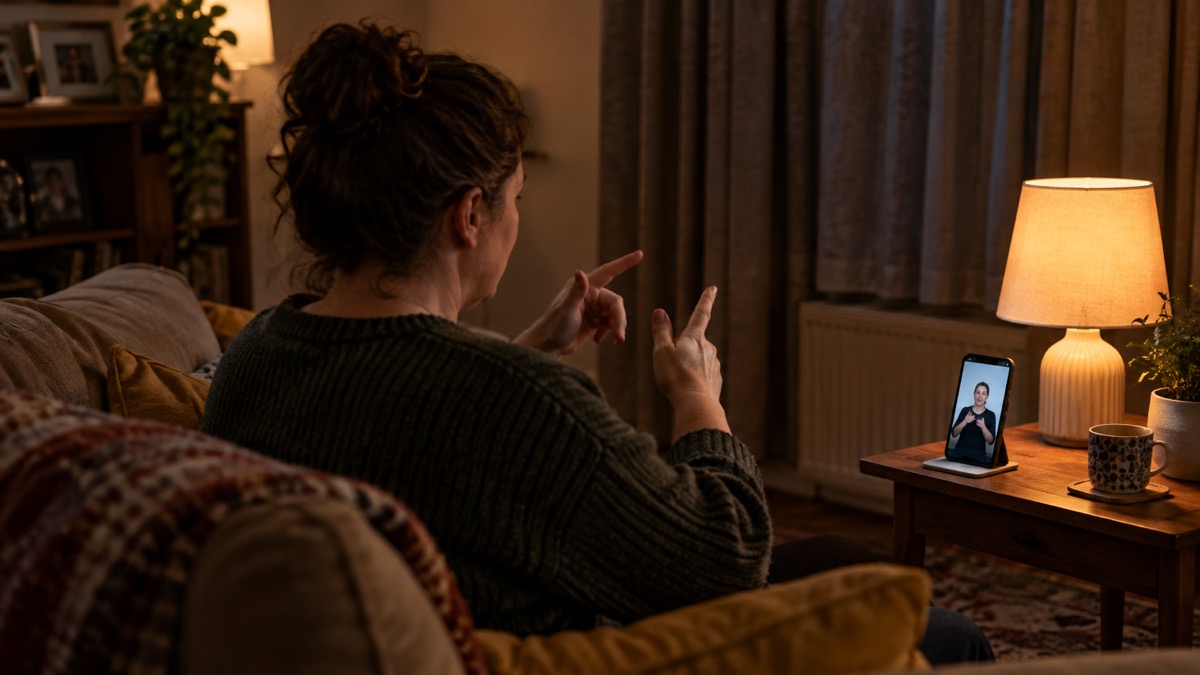
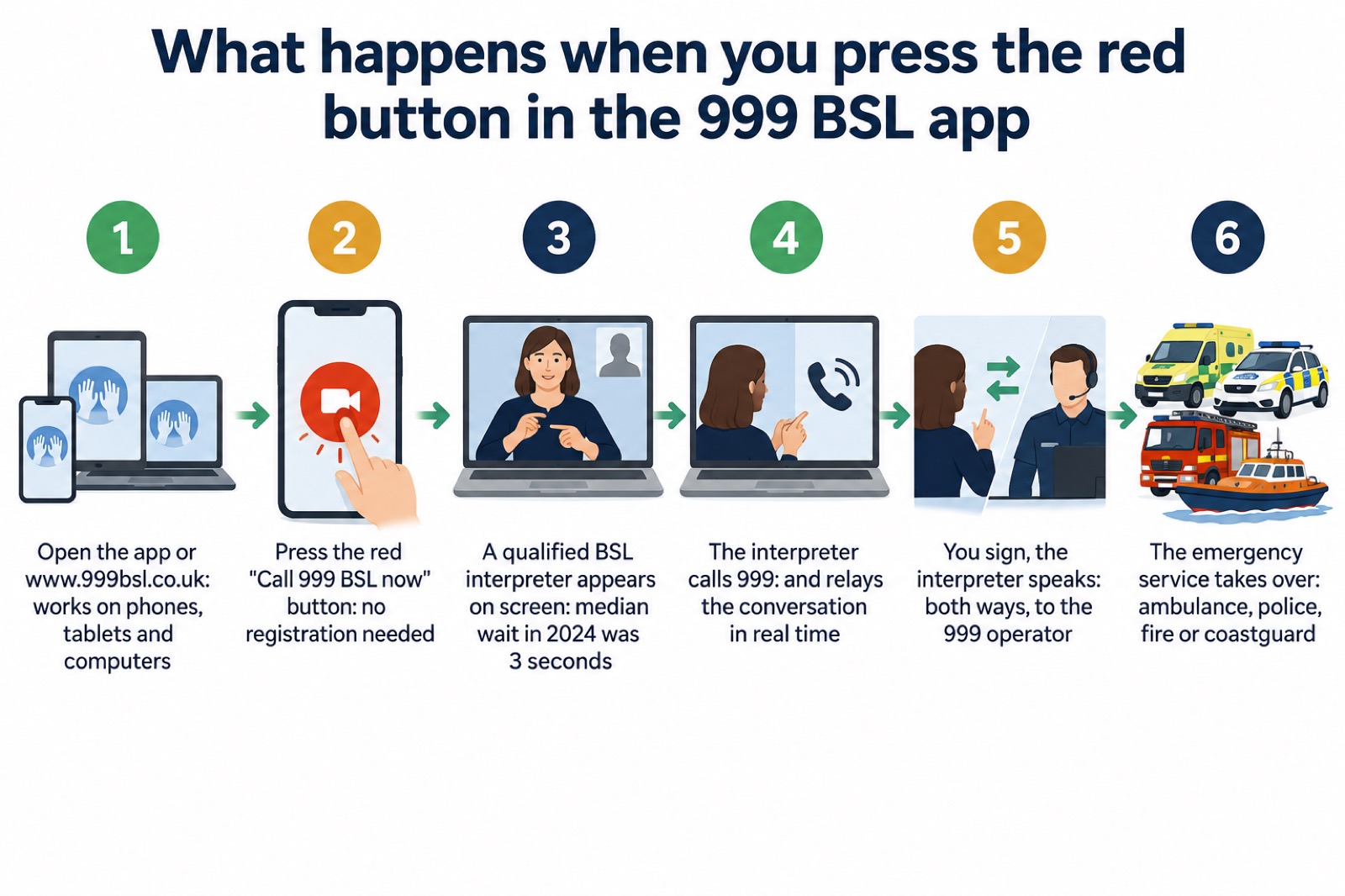
If you use British Sign Language (BSL), you can call 999 in your first language. Open the 999 BSL app or the website at www.999bsl.co.uk, press the red "Call 999 BSL now" button, and a qualified BSL interpreter appears on screen. The interpreter then calls 999 and relays the conversation between you and the emergency operator in real time, both ways1. No voice speaking is required from you at any point, and the service works on smartphones, tablets, laptops and desktop computers1.
You do not need to register in advance to use 999 BSL, though you can download and install the app onto your phone at any time so it is ready1. The service is free, available 24 hours a day, seven days a week, 365 days a year2, and it reached around 20,000 calls in 2024, with a median waiting time of 3 seconds3. It exists alongside two older routes, Relay UK and emergencySMS, which remain important as backups and for people who are hard of hearing or speech-impaired rather than BSL users4.
How a 999 BSL call works: press the red button
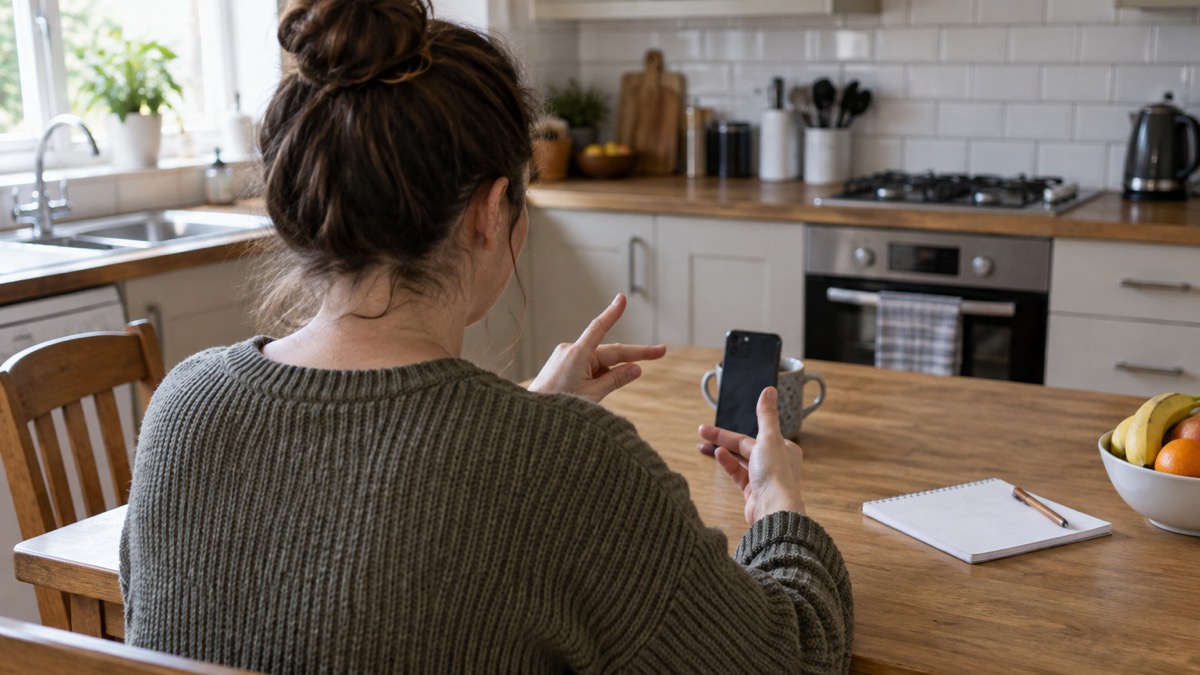
The mechanics of the call are simple, and knowing them before an emergency takes the fear out of the moment. On the app or the website, press the red "Call 999 Emergency now" button. You will be connected to a BSL interpreter, and the interpreter will pass information between you and a 999 operator5. The interpreter converts what you sign into spoken English for the emergency services, and signs back what the emergency services say6.
The interpreter connects you with the emergency service's control room call handlers, so you are speaking to the same 999 operation a hearing caller would reach7. You can use the service to request an ambulance, the police, Fire and Rescue, or the coastguard1.
The service was designed for exactly this situation. Before it launched, people with hearing or speech impairments could contact the emergency services through text relay or by sending a text message to 999, but both rely on written English, which can lead to misunderstandings for BSL users in emergencies8. 999 BSL is the UK's first Emergency Video Relay Service in British Sign Language, and it lets BSL users contact the emergency services in their first language9.
Get the app ready now, while nothing is wrong
Although no registration is needed, the sensible move is to set the service up on your devices today, not during a crisis. Download the app from your app store. When installing it, allow the app access to take pictures, record video and discover your device location; these permissions are what let the video call and location sharing work. Then, in an emergency, you press the red button to call 999 and connect to a BSL interpreter and the emergency services7.
The service is available to download as a smartphone app for iOS and Android, and it can also be reached as a web-based platform, so a device that cannot take the app can still use the service through its browser9. If you are deaf or hard of hearing, fire safety guidance is direct: download the BSL 999 app10.
What to do now, in order:
- Download the 999 BSL app from your app store onto your phone11.
- Allow the app permission to take pictures, record video and discover your device location when it asks7.
- Remember the service is not limited to your phone: it works on smartphones, tablets, laptops and desktop computers1.
- Bookmark www.999bsl.co.uk on any laptop or desktop computer in the house1.
- Register your mobile for emergencySMS as a backup, following the steps further down this page12.
Ofcom reported that the 999 BSL app had been downloaded 26,632 times as of February 20253. The more of your household's devices have it installed and permissioned, the less there is to go wrong at the moment you need it.
What you need: a device, a camera and a good connection
999 BSL works on smartphones, tablets, laptops and desktop computers, and no voice speaking is required1. Any device you use needs a working camera and screen for the video call, and a good internet connection to carry it.
On a mobile connection, Ofcom's guidance is that a minimum of third generation, 3G, is needed to use 999 BSL or make any video call, and 4G or 5G give much better quality video calls13. This matters as the older mobile networks are switched off: if your phone or area only supports an older standard, the video call may not connect. Our page on the 3G switch-off explains which devices stop working and when.
On a home connection, the same principle applies. The NHS's guidance for its 111 BSL interpreter service, which works in a similar way, is that you need a webcam, a modern computer and a good broadband connection14. A weak or congested connection produces frozen or jerky video, and in an emergency that costs time. If your home broadband is unreliable, our pages on broadband outages and keeping your router running in a power cut cover what to check.
| Where you are calling from | What works | What to check |
|---|---|---|
| Smartphone on mobile data | App or website; 3G minimum, 4G or 5G better13 | Signal strength, battery |
| Tablet on Wi-Fi | App or website1 | Wi-Fi is working, camera permitted |
| Laptop or desktop | Website at www.999bsl.co.uk1 | Webcam, modern computer, good broadband14 |
One point worth knowing: smart devices generally need an internet connection, a smartphone or tablet, and an app installed to manage them, as the National Cyber Security Centre sets out in its guidance on smart devices in the home15. The 999 BSL app is no different in that respect, which is why installing it in advance matters.
Data charges: emergency video relay calls should cost you nothing
Ofcom's rules for the service require a zero incremental charge on any data traffic associated with using the Emergency Video Relay Service, where that is technically practical16. In plain terms, a 999 BSL call should not eat into your data allowance.
The reason is fairness: a hearing person's voice call to 999 is free, and a BSL user's route to the same service should not cost money either. The rule sits alongside requirements that the service be reachable from readily available terminal equipment with video capability, including smartphones, computers and tablets, and that it allow communication at a speed equivalent to voice communication, as far as is reasonably practicable16.
If you ever see data charges on your bill that appear to come from a 999 BSL call, the contact routes listed later in this page are the place to raise it. Note the wording, though: the zero charge applies where it is technically practical, so a small number of setups may fall outside it16.
Your location: let the app share it, or sign it to the interpreter
The emergency services need to know where you are, and on a 999 BSL call there are two ways to tell them. The first is the app and website themselves: they will try to track your location, so the emergency services know where you are and can reach you quickly, and you can choose whether to allow the app to share your location in the app settings15. The second comes into play if tracking fails: the interpreter will ask you for your location (town/county) and address details during the call15.
Knowing your exact location before an emergency is the preparation that helps most here. Devon and Somerset Fire and Rescue Service advises making sure you know your location, so if you need to dial 999 you know exactly where you are17. North Wales Fire and Rescue Service adds that if you have the what3words app, this will help them pinpoint your exact location18. Our page on giving emergency services your exact location goes into this in more detail.
For a household, the practical steps are:
- The 999 BSL app and website will try to track your location so the emergency services can reach you quickly; you can choose whether to allow the app to share your location in the app settings15.
- Install what3words on your phone and learn how to read out its three words for where you are standing17.
- Write your full address, including postcode, on paper kept where you would make an emergency call.
- If you are calling about someone in the street, note the street name and any landmark before you start the call.
After the call: stay by your device and be ready to call back
A 999 BSL call does not end your part in the emergency. The North East Ambulance Service advises: stay with the patient until help arrives, call back if the patient's condition changes, ask someone to open the doors and signal to the crew, write down the patient's GP details and collect their medication, and tell the service about any allergies19. South Central Ambulance Service gives the same advice for callers in the street: stay with the patient until help arrives, and call back if the patient's condition or your location changes20.
For a BSL user this has a specific meaning: stay by the device you called on, with the app still open, so you can see an interpreter if you need to call back or if the service needs to reach you. Keep the device charged and in reach, and do not close the app in case a follow-up call comes.
If the patient's condition or your location changes, call back: the ambulance service advises callers to stay with the patient until help arrives and to call back if the patient's condition changes or your location changes20. If you are calling about someone in the street and you move with them, for example to shelter or to meet the crew, call back to give your new location20.
If the app or the website will not work
Technology fails at the worst moments, so plan for the fallback before you need it. The first fallback is built in: the service exists both as an app and as a website at www.999bsl.co.uk, so if the app will not open or will not connect, try the website in a browser on the same device or another one1.
The second fallback is a different route entirely. 999 BSL, emergencySMS and Relay UK are all alternative ways to contact the emergency services, all free to use and all available 24 hours a day, all year round4. If video relay will not connect, dial 18000 for Relay UK, or use emergencySMS if you have registered1.
There is also a network-level failure to plan for. During a phone or broadband outage, you may not be able to contact emergency services on 999 at all, as Wiltshire and Swindon Prepared sets out in its guidance on planning for outages21. A video relay service depends on the internet working, so a whole-area outage takes out 999 BSL along with everything else. Our page on what to do when phones and the internet go down covers the alternatives for that situation, and how to call 999 when your mobile network is down covers the mobile case.
| Problem | What to try |
|---|---|
| App will not open | Use the website at www.999bsl.co.uk in a browser1 |
| Video will not connect on mobile data | Move to Wi-Fi if available; 4G or 5G gives better video than 3G13 |
| No internet at all | Dial 18000 for Relay UK, or text 999 if registered for emergencySMS1 |
| Whole network or broadband outage | You may not be able to reach 999 by any route until it is restored21 |
Relay UK: dial 18000 or use the app
Relay UK is a service for people who are deaf, hard of hearing or speech impaired22. Where 999 BSL puts a sign language interpreter on video, Relay UK relays typed text: a relay assistant speaks your typed words to the person you are calling and types their replies back to you. It works through the Relay UK app, textphones and text messages from a mobile phone20.
For emergencies, dial 18000 instead of 999, or use the Relay UK app1. Twickenham Fire Station's guidance confirms the same number: users can contact the emergency services by dialling 1800023. You can also use Relay UK to contact the fire service in an emergency, as North Yorkshire Fire and Rescue Service confirms for its own callers24.
Be aware that Relay UK is slower than a voice call: the service itself states that it will take longer than other methods such as calling 99922. For a BSL user, 999 BSL is the faster and more natural route; Relay UK is the backup that works when video does not, and the main route for people who are hard of hearing or speech-impaired and do not sign.
Relay UK is not only for 999. You can contact NHS 111 by dialling 18001 111 using the Relay UK app or a textphone11, and NHS 111 Wales gives the same 18001 111 route from a textphone or the app25. More on non-emergency routes appears below.
emergencySMS: register your mobile before you need it
The emergencySMS service lets you contact the emergency services by texting 999. It relies on written English, which is why it is not the first choice for many BSL users, but it works when nothing else does, and it is the one route that demands preparation.
You must register your mobile phone in advance; you cannot register during an emergency1. The registration steps, from the official guidance:
- Text the word "register" to 999, typing nothing else26.
- You will get a reply; read it carefully20.
- Text "yes" to 999 to confirm, and you will receive a message confirming your registration1.
- Do this now; do not wait for an emergency27.
The Scottish Ambulance Service's guidance on the service spells out why the confirmation step matters: after reading the message, you send the word "yes" to 999 to complete your registration, otherwise your phone is not registered. In an emergency you will know your message has been received only when you get a reply from an emergency service26. That last point is worth fixing in your mind: a text to 999 is not confirmed until the emergency service replies, so keep watching your phone after sending.
Our page on emergencySMS: how to register and text 999 covers the service in full, including what to write in an emergency text.
Only for emergencies
Use 999 BSL only in an emergency5. The Welsh Ambulance Service's guidance is the same for all three routes: only use 999, 999 BSL or Text 999 for serious or life-threatening emergencies1. North East Ambulance Service asks people not to call 999 if it is not an emergency, because it could delay helping someone who needs urgent assistance19, and the South Western Ambulance Service reminds callers to use 999 only for life-threatening or serious emergencies that need urgent care28.
This is not a formality. The service has not yet met the requirement that 95% of calls be answered in 5 seconds3. Every non-emergency call into 999 BSL is a video line a genuine caller is not on.
If you are unsure whether your situation is an emergency, the non-emergency routes below are the right place to start. Our page on when you should call 999 works through the judgement in detail.
Non-emergency calls: NHS 111 in BSL and by relay
For health questions that are not emergencies, NHS 111 has its own BSL route. If you are deaf and want to use the phone service, you can use the NHS 111 BSL interpreter service29. Using your computer and webcam, or the SignVideo app on your smartphone or tablet, you make a video call to a BSL interpreter, who telephones an NHS 111 adviser and relays your conversation with them11. The NHS's winter guidance also notes that NHS 111 is available via the BSL interpreter service at 111.nhs.uk, or by text relay on 18001 111, and that if you need 111 in other languages you can call 111 and ask for an interpreter30.
To use the NHS 111 BSL service, you make a video call to a BSL interpreter using your computer and webcam, or the SignVideo app on your smartphone or tablet; the interpreter then telephones an NHS 111 adviser and relays your conversation with them14.
| Need | Route | Notes |
|---|---|---|
| Emergency, BSL | 999 BSL app or www.999bsl.co.uk | No registration; press the red button1 |
| Emergency, text relay | Dial 18000 or Relay UK app | For deaf, hard of hearing or speech-impaired1 |
| Emergency, by text | Text 999 via emergencySMS | Must register first1 |
| NHS 111, BSL | 111.nhs.uk or SignVideo app | Webcam and good broadband needed14 |
| NHS 111, text relay | Dial 18001 111 | Works with Relay UK app or textphone11 |
Our page on non-emergency numbers sets out 101, 105 and NHS 111 side by side.
Northern Ireland, Wales and calling from abroad
999 BSL serves the whole of the UK, including Northern Ireland16. In Wales, the Welsh Ambulance Service promotes the service directly to patients who are deaf, BSL users or hard of hearing and need an ambulance1, and the service's Welsh-language launch material confirms the same national coverage16.
On language, there is one distinction that matters in Northern Ireland. Only the provision of British Sign Language is required under the regulatory obligation; interpreters are welcome to use Irish Sign Language if it benefits a deaf caller, but Ofcom has not required calls to be answered in Irish Sign Language13. Ofcom's policy material puts it plainly: if 999 BSL interpreters are familiar with Irish Sign Language they are free to use it if this benefits a deaf caller in an emergency16. If you are an ISL user in Northern Ireland, it is worth knowing that BSL is the guaranteed language of the service.
On calling from outside the UK, Ofcom's rules note that it is possible people will make emergency video relay calls from outside the UK, but the calls can only be connected to UK 999 control rooms16. The service will not reach the emergency services of the country you are visiting, so abroad you should use that country's own emergency number.
Who runs the service, and how it is performing
999 BSL is provided by Sign Language Interactions, a company approved by Ofcom to run the emergency video relay service31. The obligation on phone providers to offer it came into force on 17 June 2022, when Ofcom's rules took effect and the service launched31. The existing text relay and emergency SMS services continue alongside it, because deaf people told Ofcom those existing routes were important and must be kept8.
The performance picture is largely good. Around 20,000 calls were made through the service in 2024, and the median call waiting time in 2024 was 3 seconds, down from 4 seconds in 20233. Ofcom estimates that at least two lives are likely to be saved per year because of the service3. The outstanding gap is the answering standard: the service has not yet met the requirement that 95% of calls be answered in 5 seconds, the only requirement it has not met, with nuisance callers the main drag on waiting times3.
On accountability, emergency service control rooms record their calls: North Yorkshire Fire and Rescue Service states that all calls made in and out of its Control Room are recorded, including 999 calls24. Treat a 999 BSL call as recorded in the same way a voice 999 call would be.
If you need to contact the organisations behind the service, Ofcom lists three routes: the Ofcom policy team at emergencyBSL@ofcom.org.uk, the BT team at 999liaison@bt.com, and Sign Language Interactions at info@999bsl.co.uk16. Ofcom reported in May 2025 that 999 BSL had received only three complaints since it launched3.
Getting your household ready: a checklist
Everything on this page comes down to a short list of things to do before an emergency. Manchester Fire and Rescue Service's advice for people with a hearing impairment is to set up the option that is right for you now, so it is ready for use in an emergency4.
- Download the 999 BSL app on your phone11; the service also works on tablets, laptops and desktop computers1.
- Know that you can also call 999 BSL from the website at www.999bsl.co.uk on any computer15.
- Register your mobile for emergencySMS by texting "register" to 999 and replying "yes"1.
- Keep Relay UK in mind as a second backup, and learn more at www.relayuk.bt.com1.
- Install what3words so you can give an exact location18.
- Keep a paper list of addresses, postcodes and emergency numbers where you would make a call.
- Learn the NHS 111 BSL route at 111.nhs.uk for non-emergencies30.
For the wider picture of staying reachable when networks fail, see our guides on getting your mobile phone ready for an emergency and staying informed and in touch in an emergency.
Sources (31)
- Additional support when accessing 999, Welsh Ambulance Service NHS Trust, 2026
- 999 BSL UK Emergency Video Relay Service, North West Ambulance Service NHS Trust, 2024
- Emergency video relay service for deaf British Sign Language users: saving lives, Ofcom, 2025
- Additional advice for people with a hearing impairment, Manchester Fire and Rescue Service, 2026
- Calling 999, London Fire Brigade, 2026
- New emergency video relay service for sign language users, Ofcom, 2021
- Fire safety for people with hearing difficulties, Devon and Somerset Fire and Rescue Service, 2026
- New 999 video call service, Ofcom, 2022
- Information for sign language users, North Yorkshire Fire and Rescue Service, 2026
- Digital easy read fire safety booklet, London Fire Brigade, 2026
- Help in crisis: support for deaf people, Derbyshire Healthcare NHS Foundation Trust, 2026
- Contact 999 using Relay UK - How to use Relay UK | Relay UK, Relay UK (BT)
- Emergency video relay, Ofcom, 2023
- NHS 111, South Western Ambulance NHS Foundation Trust, 2026
- Smart devices in the home, National Cyber Security Centre, 2019
- How will emergency video relay work, Ofcom, 2024
- Top causes of rescues and how to avoid them, Devon and Somerset Fire and Rescue Service, 2026
- Get out, stay out and call 999, North Wales Fire and Rescue Service, 2026
- Your service: 999, North East Ambulance Service NHS Foundation Trust, 2026
- 999 emergency, South Central Ambulance Service NHS Foundation Trust, 2026
- Planning for phone and broadband outages, Wiltshire and Swindon Prepared, 2026
- Contacting 999 with a speech or hearing impairment, East of England Ambulance Service NHS Trust, 2026
- For people with disabilities, Twickenham Fire Station, 2026
- Making a 999 call, North Yorkshire Fire and Rescue Service, 2024
- Welsh Ambulance Service FAQ: NHS 111, NHS 111 Wales, 2021
- About sending a text to 999, Scottish Ambulance Service, 2013
- Using 999 with a speech or hearing impairment, Yorkshire Ambulance Service NHS Trust, 2026
- Get the right help and support, South Western Ambulance NHS Foundation Trust, 2026
- Alternative access to NHS 111, North West Ambulance Service NHS Trust, 2024
- Stay well this winter 2025, NHS England, 2025
- New 999 video call service, Ofcom, 2022
 Emergency Alerts
 Digital Landline Switchover
 3G Switch-Off
 emergencySMS Registration
 Provider Extra Help