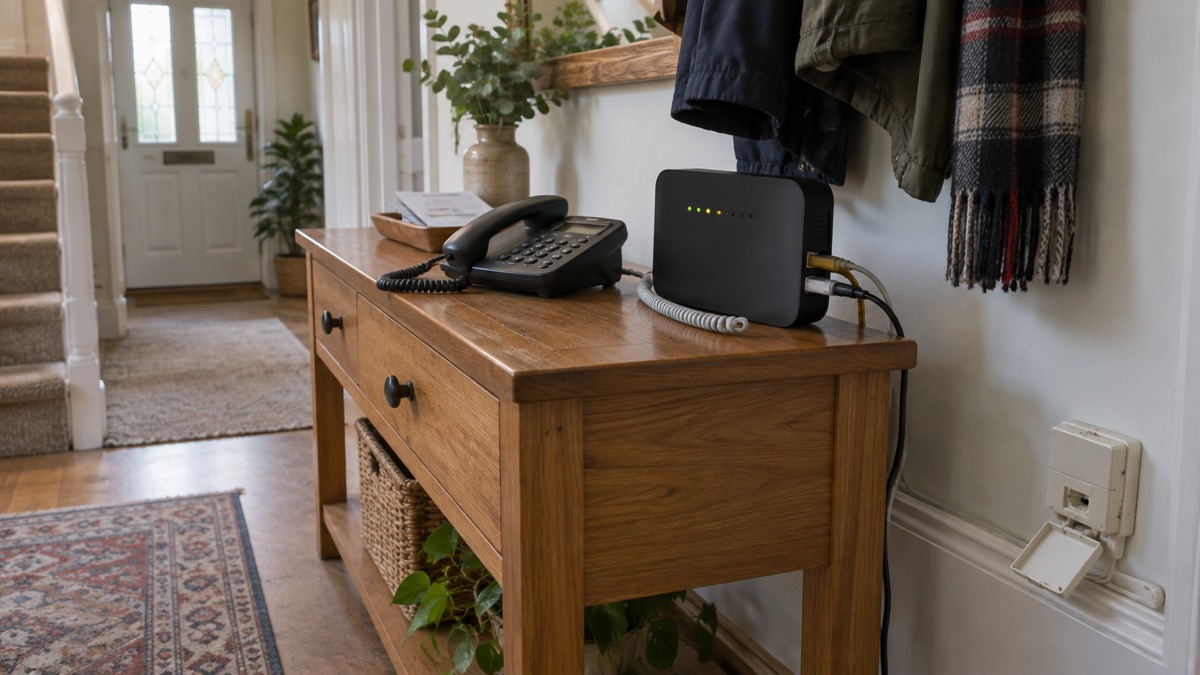
The UK's traditional copper phone network is being retired, and every home phone in the country moves to a digital service by 31 January 20271. In practice this means your landline stops plugging into the wall phone socket and instead works through your broadband router, using the internet to carry your calls2. Most households keep their existing phone number and their existing handset, and for many the change is as simple as moving one plug3.
The one change that matters most in an emergency is power. Digital landlines need mains electricity, so in a power cut your home phone will not work unless you have a battery back-up4. If you rely on your landline to call 999, or you have a personal alarm, fall detector or burglar alarm connected to the phone line, there are steps to take before your switch happens, and this page sets them out in order.
What the digital switchover means for your home phone
The digital switchover is the process of upgrading home phone services across the UK, changing from older, less reliable copper wires to fibre ones3. Most providers are moving their customers from old analogue landlines, which use the copper Public Switched Telephone Network (PSTN), to new digital phone services that use the internet to make calls8. The industry calls these Voice over Internet Protocol (VoIP), Digital Voice or All-IP telephony7. BT Group announced its intention to retire the analogue network back in 2017, and the switchover is now in its final stretch.
The reason for the change is simple: the old landline network is ageing, harder to maintain and no longer meets modern needs1. Government guidance says the new digital phone lines will allow clearer and higher quality calls, more secure and energy efficient networks, and can block tens of thousands of calls from scammers every day7.
At home, the practical difference is where your phone plugs in. Instead of plugging into the phone socket on your wall, your landline will plug into your broadband router2. If you already have an internet connection, the change may be as simple as plugging your phone into your broadband router rather than the socket on the wall, though in some cases an engineer visit may be required7. What you need is a broadband connection, a router or adapter supplied by your service provider if needed, and your current handset9.
The switchover applies across the whole of the UK, and the arrangements are the same in England, Scotland, Wales and Northern Ireland10. One point worth clearing up early: this change is being made by telecom companies, not by National Grid or your electricity supplier, so there is nothing to arrange with your energy provider2.
Your number stays the same and most handsets still work
Nobody will have to lose their landline service because of this change. Your phone number will not change, and most handsets will work fine with the new system3. Openreach, which runs much of the UK's phone network, says over 99% of handsets work with the new system11. You can usually keep your existing number when you switch9.
A few older phones may not be compatible, and your service provider will explain what option is right for you9. If you are unsure about how a device in your home might be affected, it is recommended you contact the equipment supplier or device manufacturer to find out whether it will remain functional on a digital phone line8. Our page on old handsets and digital lines goes into this in more detail.
One thing to be aware of: phones plugged into extension sockets around your house. Because the phone service now comes from the router rather than the wall socket, the internal extension wiring in your home usually stops carrying calls after the switchover. Households that relied on a handset in every room often move to cordless phones with one base by the router, or ask their provider about adapters. Raise it with your provider before switch-over day so you know what your home needs.
It is also worth knowing that not all analogue phone services will be switched off by 2027, so if you are unsure whether you will be impacted, contact your provider12.
How the switch happens: from your provider's letter to switch-over day
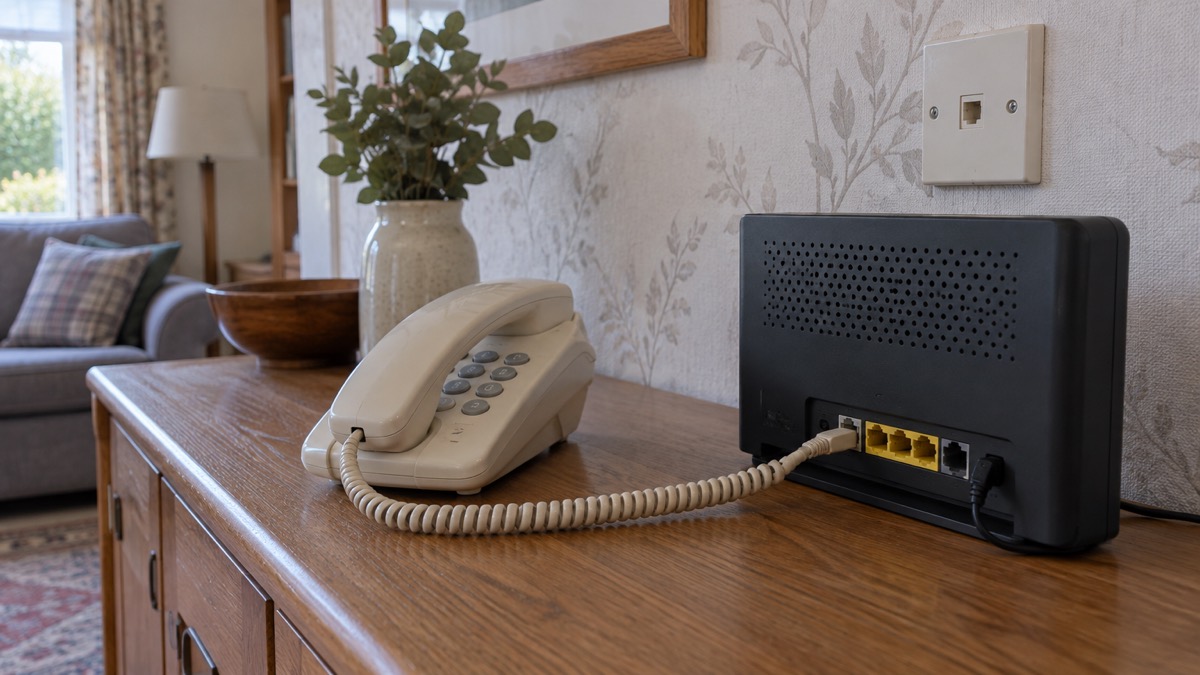
You do not need to chase the switchover. Your phone provider, for example BT, Virgin Media O2 or Sky, will contact you before the change to explain what you need to do5. Communications providers will contact customers ahead of a migration taking place, and government guidance advises you to look out for these communications and be careful not to confuse them with marketing material7.
The typical sequence looks like this:
- Your provider writes to you ahead of your migration, explaining what will happen and when7.
- You tell them anything they need to know, such as a telecare device, a burglar alarm on the line, or that you have no working mobile phone13.
- Equipment arrives or an engineer visits. If you already have broadband, it may be as simple as plugging your phone into your router; in some cases an engineer visit is required7.
- On switch-over day your phone service moves to the digital line, usually with your same number and handset3.
- You check everything that uses the line, including any alarms, before you rely on them9.
If you have heard nothing from your provider and want to know your date, call the communication provider listed on your bill, for example BT, Sky, Virgin Media O2, Vodafone or KCOM7. Our page on when the analogue network switches off covers the timing in more detail.
Your landline will stop working in a power cut
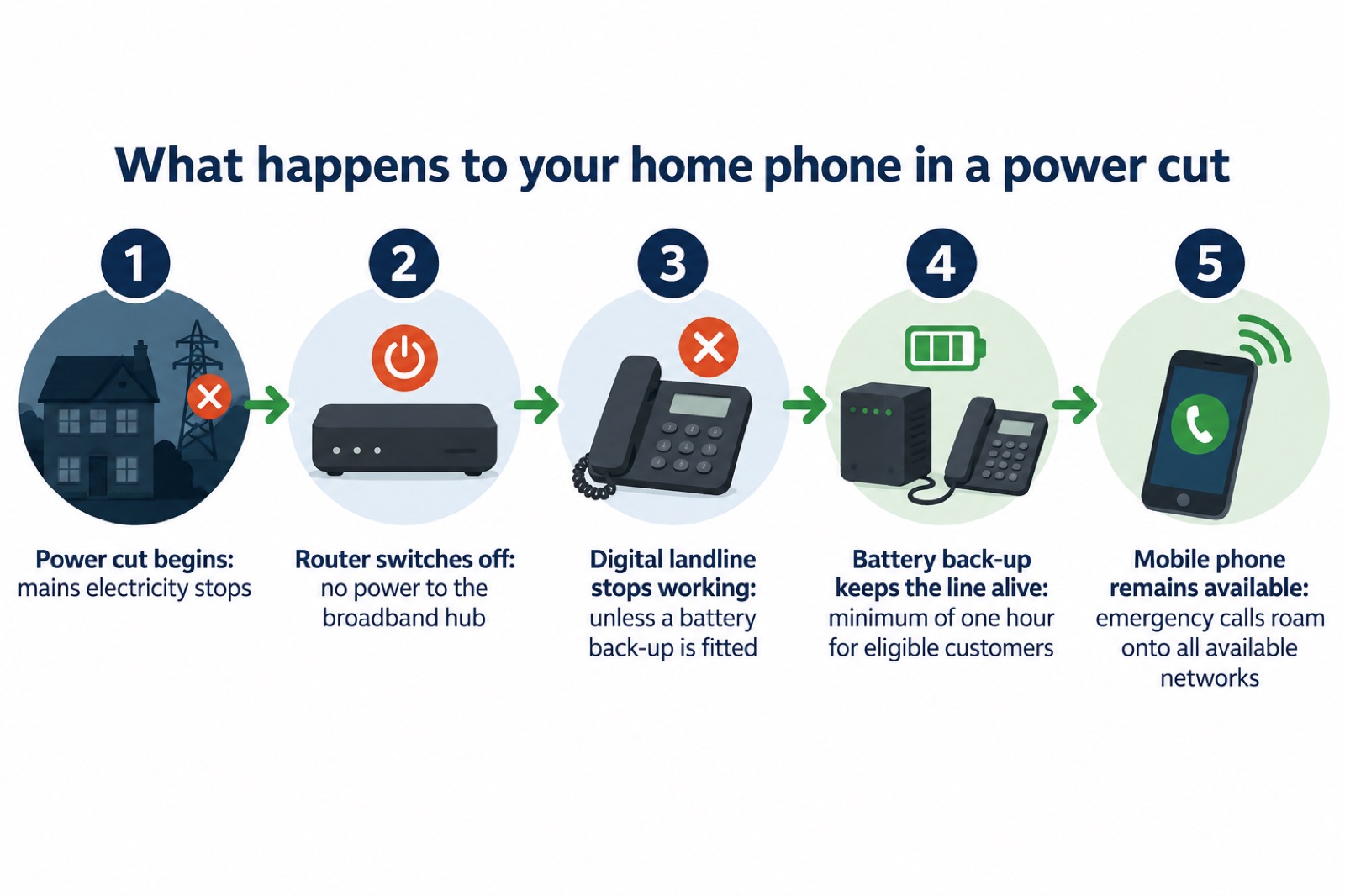
This is the single most important change for emergency planning. Digital landlines need mains electricity and will not work in a power cut unless you have a battery back-up4. The reason is physical: digital landlines cannot carry an electrical power connection, so unlike the old copper network, the line itself cannot power your phone8. If your power goes off, so does your router, and so does your phone line2.
This catches many households out because the old copper network kept simple corded phones working through most power cuts. Most modern landlines stop working when the power's off, and once your line is digital, a corded phone alone is not enough: the router needs power too15. Digital landlines need mains electricity and will not work in a power cut unless you have a battery back-up15.
What to do about it:
- Contact your landline provider to understand whether your phone will work during a power cut, especially if it is your only way of making emergency calls or you have a telecare kit connected16.
- If your landline will not work during a power cut, your landline provider might offer you a free solution, such as a back-up battery unit, for a minimum of one hour17.
- If you depend on your landline and do not have a working mobile phone or a reliable mobile signal, your provider must offer you, for free, a back-up solution such as a battery back-up unit for your home6.
- Keep a mobile phone charged as your fallback, and know that in a power cut you can call 105 from your mobile or landline to report it and get information18.
Ofcom, the telecoms regulator, notes that vulnerable customers with an analogue landline used to be given a free back-up battery unit meaning the landline would work for at least an hour during a power cut, and many batteries now last much longer19. Our pages on landlines in a power cut, free battery back-up and keeping your router running explain the options in detail.
Keeping a way to call 999 when the power or broadband goes
Yes, you can still call 999 from a digital landline when everything is working normally. If you rely on your landline for emergency calls, speak to your service provider about what support or backup options may be available9.
The difficulty comes during a power cut or broadband outage. Official guidance from the UK government's emergency preparedness campaigns is clear: if you do not have back-up power to your landline phone and have a life-threatening emergency, you should attempt to call 999 or 112 using a mobile. You might receive overlapping signal from a nearby area that is unaffected, because emergency calls automatically roam onto all available networks20. That roaming behaviour matters: even if your own mobile network is down or you have no signal from your provider, a 999 or 112 call will try to connect through any network in range.
If you cannot reach 999 or 112, try calling from both a mobile and a landline, as if one is disrupted then the other may be available19. Two useful details if the call is difficult:
- If you replace the handset during a 999 call from a landline, the line may remain connected for 45 seconds, in case you pick it up again21.
- If you cannot speak when you call 999, there are systems to get help anyway: see our guides on silent 999 calls and emergencySMS.
For households with no mobile signal at all, the position is different and your provider has obligations, covered in the section on homes without broadband or mobile signal below. Our wider pages on calling 999 and 112, 999 with no signal and what to do when networks fail go further.
Personal alarms, telecare and fall detectors: check before you switch
If you, or someone in your household, uses a telecare alarm, health pendant, personal alarm or any other device that uses your phone line, tell your landline provider and your device supplier before your landline is changed to digital13. This is the single most important action on this page for alarm users, because an analogue telecare alarm system may not work properly if you have a digital landline instead of an analogue landline at home.
Do not assume a personal alarm, fall detector or medical pendant will keep working after the switch to digital phone lines, or during a power cut2. Devices such as fall monitors and personal alarms may require checks or upgrades before the switchover5. Contact the company that supplies your alarm and ask them to confirm that it is compatible with the new digital phone network, and what happens if the power goes off2.
The checks to make, in order:
- Tell your landline provider you use a telecare device. They will give you additional support for the switchover and check if your existing equipment is digital-ready5.
- Contact your device supplier to confirm compatibility with a digital phone line and what happens in a power cut2.
- If you are buying a new alarm or device, check with the provider of that equipment that it is compatible with digital phone lines7. Wherever possible, you should not accept or buy an analogue device; consider only a digital alarm if you are unsure22.
- Ask about battery back-up. Government guidance says telecare users may be offered free engineering visits and battery back-ups for telecare devices and landlines where needed7.
Telecare services that need a landline include pendant alarms for falls, fire alarms that link to emergency services, and burglar alarms, and new digital versions are available3. Our dedicated page on telecare and personal alarms covers this in full, and the government's find a telecare provider guidance explains where to look.
Burglar alarms, door entry and other devices on your phone line
It is not only care alarms. Systems connected to your landline, like a burglar or fire alarm, might not work after the switchover, so talk to your system provider about your options even if you do not know when your phone line will be switched23. Government guidance lists the devices reliant on the old network that will require upgrading: alarm systems, telecare devices, door entry systems and more7. Openreach adds that affected devices can include alarms, CCTV, payment terminals, telecare devices, health monitoring equipment, door entry systems and lift phones24.
The practical advice is to make an inventory of equipment that uses the landline and identify which lines they are connected to, then check with each device provider whether the equipment is digital-ready3. For most households the list is short, but it is worth walking through the house and checking:
- Burglar alarms that dial out over the phone line
- Fire alarms linked to a monitoring service
- Telecare pendants and fall detectors
- Door entry or intercom systems
- Payment terminals, if you run a business from home
If you use telecare, a health alarm, CCTV, a house alarm, a payment terminal or any other device connected to your phone line, check with the equipment provider that it is compatible with a digital phone line before you switch1. Our page on burglar alarms and digital lines looks at that case in detail.
Homes without broadband or mobile signal
Two situations need special arrangements: homes with no broadband, and homes where mobile signal is poor or absent.
If you do not have an internet connection, your phone company will ensure there is still a landline-only service offered5. Government guidance describes an interim, dedicated landline service allowing customers who do not use broadband to use their current landline in the same way as today, until a digital solution becomes available or 2030, if that comes sooner7. RNID likewise notes that broadband providers will offer a dedicated landline service allowing customers to use their home phone in the same way they do today11. So a broadband connection is not a precondition for keeping a home phone. See our page on keeping a landline without broadband.
If you depend on your landline and do not have a working mobile phone or a reliable mobile signal, your landline provider must offer you, for free, a back-up solution such as a battery back-up unit for your home6. This is a firm obligation on providers, not a goodwill gesture, and it applies from the moment your line goes digital. Argyll and Bute Council adds that if you have no other means of calling the emergency services, your telecoms provider will offer a solution to allow calls to be made to emergency services8.
The action in both cases is the same: speak to your communications provider about the additional support they can offer you in advance25. Do not wait until after the switch.
Getting help if you have additional needs
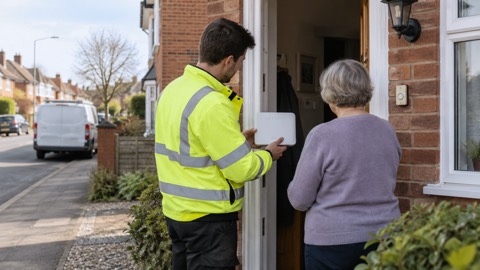
Tell your provider before your landline is changed to digital if you rely on your landline and you do not have a working mobile phone or reliable mobile signal13. Ofcom's rules go further than that: your provider must assess your needs and make arrangements to support you properly when moving you to a digital landline if you are elderly, disabled, have a health condition, have limited mobility, or need information in a different format6.
What providers can offer includes:
- Free engineering visits and battery back-ups for telecare devices and landlines where needed7
- A free back-up battery unit so your landline works for at least an hour in a power cut, with many batteries now lasting much longer19
- Additional support for the switchover if you use telecare devices, including checks on whether your equipment is digital-ready5
- A nominated person: tell your phone provider if you want to nominate a friend or family member to deal with the switch for you23
If you rely on your landline, have poor mobile signal or use telecare or health devices, tell your service provider so they can make sure you get the right support during the switch and can provide you with battery back-up support24. RNID also advises contacting your landline provider, sharing your communication needs, and reaching out to ContactRNID for advice if you are deaf or have hearing loss11. Our page on extra help from phone and broadband providers sets out what to ask for, and the government's emergency preparedness advice for disabled people and carers covers the wider picture17.
For households that want a fuller plan, our switchover checklist and the section on staying informed in an emergency pull these steps together.
Sources (25)
- Analogue phone lines and the move to digital, Openreach, 2027-01-31
- The landline switchover, National Grid, 2026-10-25
- The digital switchover, Suffolk County Council, 2026-10-29
- Stay connected in severe weather, Ofcom, 2026-10-13
- Switchover to digital landlines, South Gloucestershire Council, 2026
- Future of landline calls: advice for consumers, Ofcom, 2024-02-07
- Moving landlines to digital technologies, UK Government, 2025-05-28
- Digital phone switchover, Argyll and Bute Council, 2026
- Digital phoneline for homes, Openreach, 2026-10-29
- Landlines, National Grid, 2026-10-26
- Your landline is going digital: here's how to stay connected, RNID, 2025-11-03
- UK transition from analogue to digital landlines, UK Government, 2023-01-06
- Future of landline calls, Ofcom, 2026-08-26
- Digital switchover telecare guide, Suffolk County Council, 2025
- Strong winds and heavy rain warning: information and advice, nidirect, 2026-01-27
- Power cuts: be prepared, UK Government Be Ready campaign, 2026-10-21
- Advice for disabled persons and carers, UK Government Be Ready campaign, 2026-10-20
- Protect yourself and your family, Dorset Prepared, 2026-04-21
- Phone and broadband outages, UK Government Prepare campaign, 2026-10-12
- Power cuts: be informed about hazards, UK Government Prepare campaign, 2026-10-21
- If you can't speak when you call 999, Bath and North East Somerset Council, 2026
- Telecare: adapting your home, Age UK, 2026-08-11
- Check your personal alarm will work after the landline switch off, Citizens Advice, 2025-02-20
- The big switch off, Openreach, 2026-10-29
- What to do in a power cut, Met Office, 2026-10-25
 Emergency Alerts
 3G Switch-Off
 emergencySMS Registration
 999 BSL and Relay UK
 Provider Extra Help