
If your home phone plugs into the mains and goes dead when the power fails, you may be able to get a free battery backup unit from your landline provider. Digital landlines need mains electricity and will not work in a power cut unless there is a battery back-up1. If you depend on your landline and do not have a working mobile phone or a reliable mobile signal, your provider must offer you, for free, a backup solution such as a battery backup unit for your home1.
The minimum is modest but real: the backup must last for at least one hour in a power cut, and some providers have backups that last up to seven hours2. That hour is enough to call the emergency services if you need to. The first step is to ring your provider and ask whether your phone will work in a power cut, and whether a free backup applies to you.
Why a digital landline needs a battery backup
The old analogue phone line carried a low voltage power connection directly from the telephone exchange, enough to power some basic corded handsets without plugging them into the wall, so they kept working in a local power cut as long as the exchange still had power6. Digital landlines cannot carry an electrical power connection, so in the event of a power cut they will not work7. That is the change that makes a backup unit necessary.
The regulator has set a floor. In 2018, Ofcom issued guidance stating that providers must provide customers with access to at least one solution, for a minimum of one hour, enabling access to emergency organisations in the event of a power cut, free of charge to customers reliant on their landline for emergency calls3. More recently, Ofcom has said plainly that if you depend on your landline, your provider must make sure you can contact the emergency services during a power cut1.
What that means in practice is that the backup is not a favour. It is a requirement on the provider where you rely on the line. The unit itself is usually a box with a battery that sits between your phone and the wall socket, keeping the line alive for a period after the mains drops. The exact run time depends on the provider and the unit, which is why the one hour minimum matters and why you should ask what yours will do.
Who can ask for a free solution
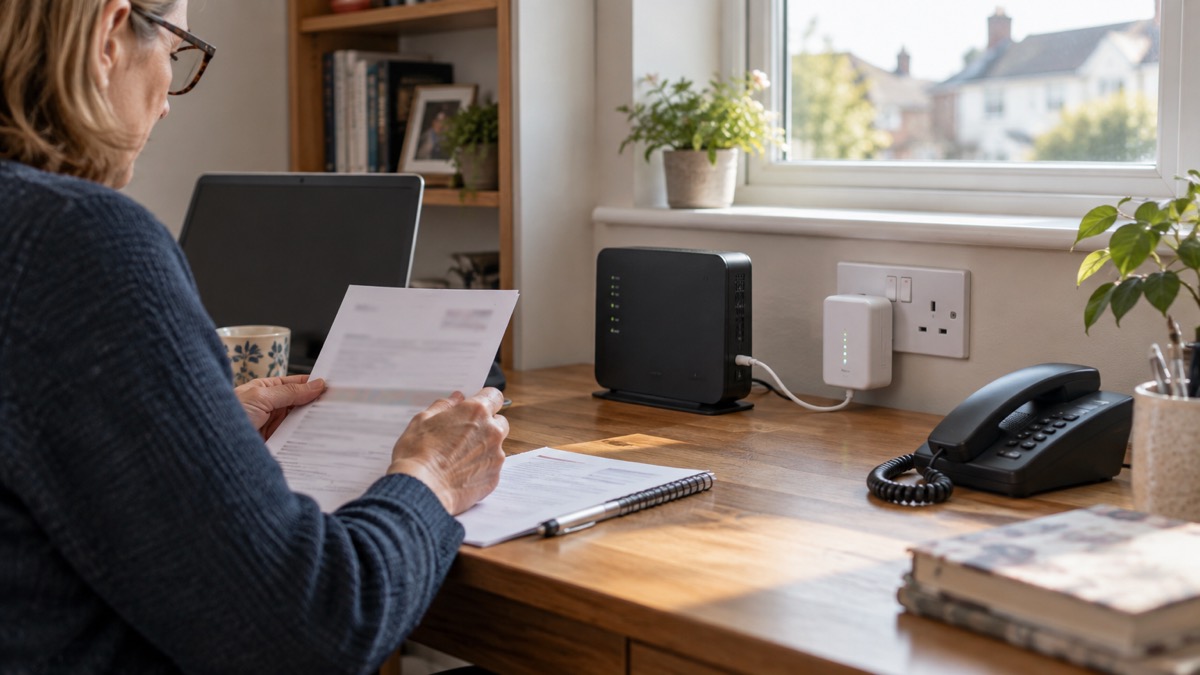
The strongest entitlement applies to people who depend on their landline and have no working mobile phone or reliable mobile signal. In that case your landline provider must offer you, for free, a backup solution such as a battery backup unit for your home1. The same rule is repeated in official guidance for disabled people and carers: if your landline will not work during a power cut, your provider might offer you a free solution such as a backup battery unit, for a minimum of one hour, that would let you call the emergency services5.
Beyond that core group, the guidance casts the net wider. If your only way of making emergency calls is through a landline phone, or if you have a telecare kit connected to your landline, contact your provider to understand whether your phone will work during a power cut8. Providers are also expected to offer a solution where you have additional needs or cannot use a mobile9.
| Your situation | What to do |
|---|---|
| No working mobile and no reliable signal | Your provider must offer a free backup such as a battery unit1 |
| Landline is your only way to call 999 | Contact your provider to check whether your phone will work in a power cut8 |
| Telecare kit connected to the landline | Contact your provider and your device manufacturer8 |
| You have additional needs or cannot use a mobile | Your provider can offer a free solution such as a battery backup unit9 |
| You have a working mobile and good signal | A mobile phone is recommended as an emergency backup7 |
If you are unsure which group you fall into, the safe course is to ask. The cost of asking is a phone call; the cost of assuming wrongly is a dead line in an emergency.
How to ask your provider
Ring your landline provider and ask directly whether your phone will work during a power cut, and whether you qualify for a free backup unit. Official guidance is to contact your landline provider to understand whether your phone will work during a power cut, especially if it is your only way of making emergency calls or you have a telecare kit connected5.
Have these details ready before you call:
- Your account number and the address the line serves.
- Whether you have a working mobile phone and whether you get a reliable signal at home.
- Whether a telecare alarm or other connected health equipment uses the line.
- Whether anyone in the household relies on the line for medical reasons.
If you have a personal alarm, a diabetes sensor or other connected equipment monitoring your health, speak to your device provider or manufacturer to understand how it will function during a power cut8. The network operator cannot make that plan for you; if you are struggling, speak to your GP, and speak to your healthcare provider or equipment manufacturer before a power cut, not during one10.
What a battery backup does in a power cut
A backup unit keeps your landline alive for a period after the mains power fails, so you can still make calls, including to 999. The minimum is one hour, and some providers have backups that last up to seven hours2. Many batteries now last much longer than the minimum2.
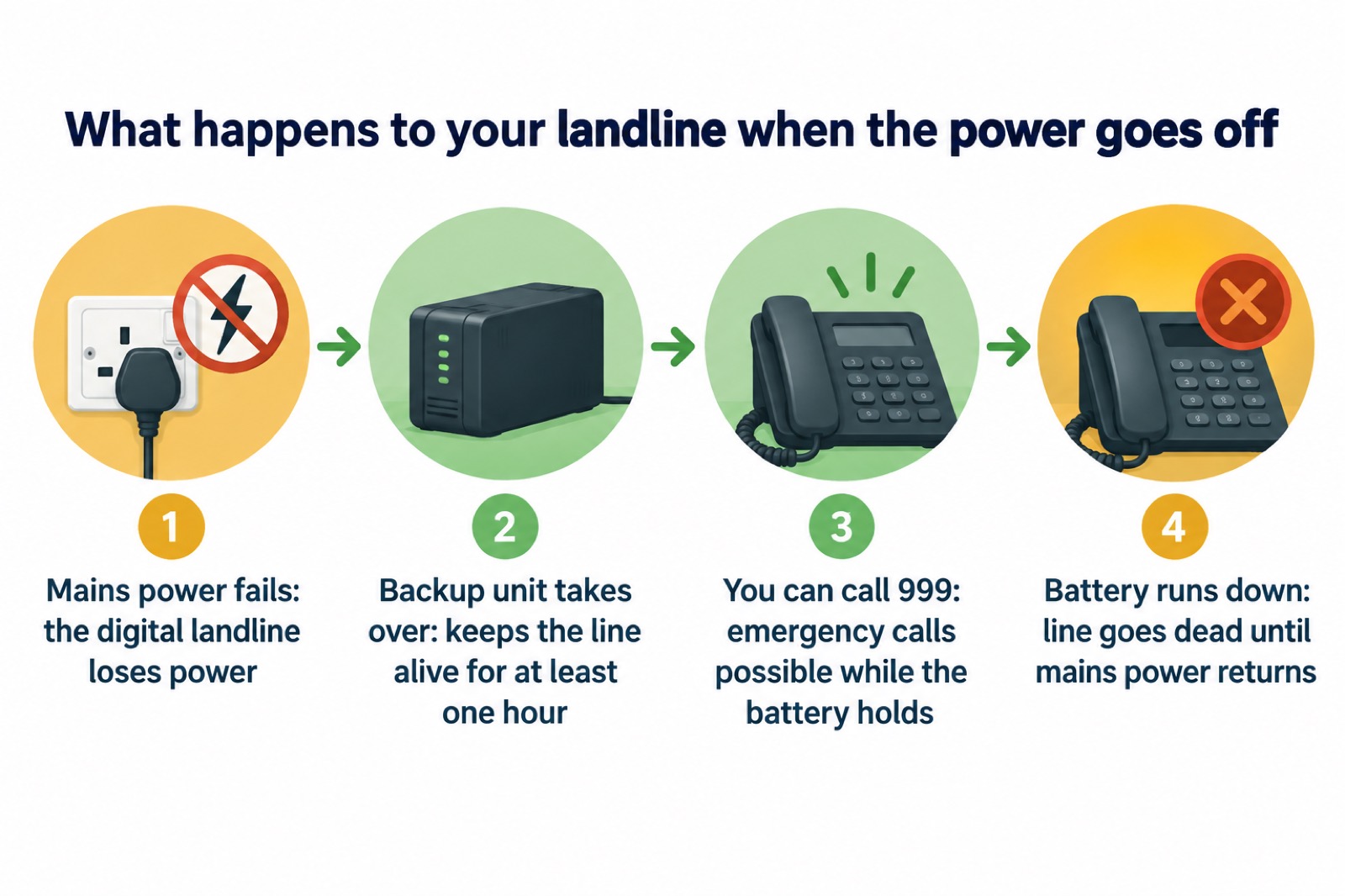
What the unit does not do is keep the line alive indefinitely. Once the battery is spent, the phone is dead until the power returns. That is why the backup is one layer, not the whole plan. Keep a charged mobile and a power bank as well: ensure your mobile phone is fully charged and keep a power bank as a backup12.
The unit also does not fix a fault on the network itself. If the line is down for another reason, the battery will not restore it. The backup is there for the specific case of a mains power cut.
Other ways to call 999 when the power is off
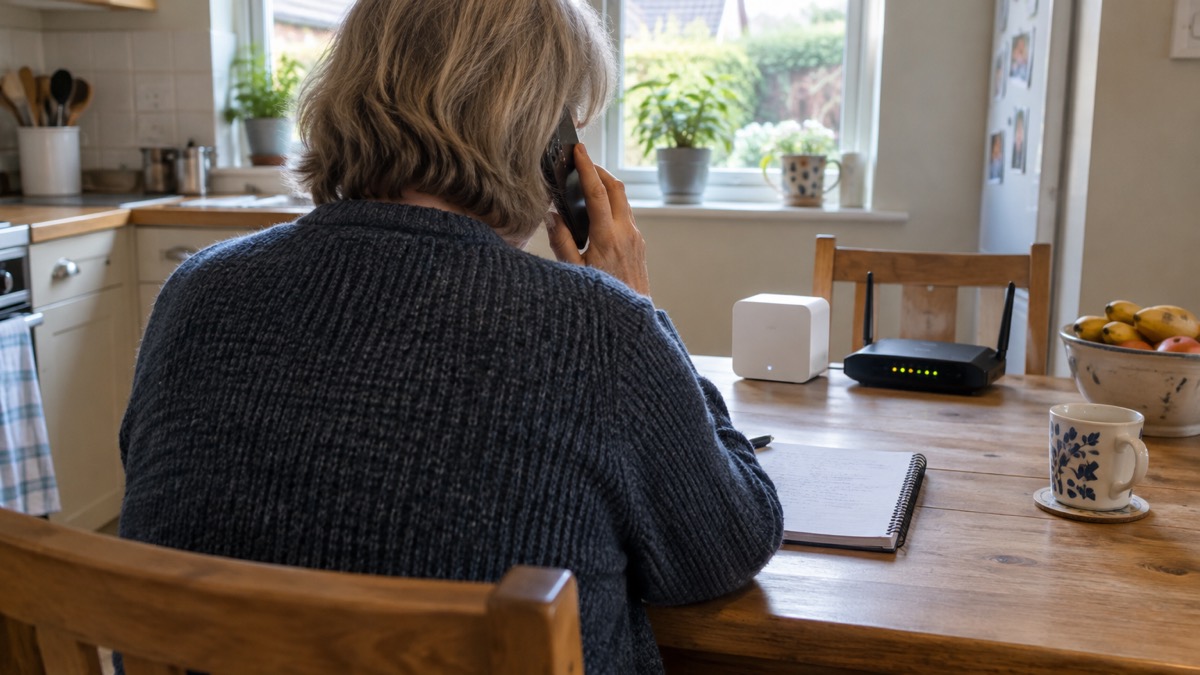
If you have a power cut and you do not have backup power to your landline phone, or you have a corded landline, and you have a life-threatening emergency, you should attempt to call 999 or 112 using a mobile5. You might receive overlapping signal from a nearby area that is unaffected, because emergency calls automatically roam onto all available networks8.
That roaming matters. If your mobile provider is experiencing an outage, you will be able to automatically use another provider's network to call 999 or 112 free of charge, displayed as "emergency calls only" on Android or "SOS only" on iOS2. So even with no signal from your own network, it is worth trying.
"you should attempt to call 999 or 112 using a mobile. You might receive overlapping signal from a nearby area that is un"
Keep the numbers you might need to hand. As well as mobile phones, a non-mains powered landline telephone will help you stay in touch during any disruptions to your power supply13. For power cuts themselves, call 105 free of charge from a landline or mobile phone to report a power cut or damage to the electricity network14. The same number lets you report the problem and get updates on when your power will be restored15.
- 999 or 112: life-threatening emergencies, tried on any mobile even without your own signal5.
- 105: power cuts, free from landline or mobile14.
- A charged power bank: keeps the mobile alive when the mains is off12.
If you have a telecare alarm, do not rely on it working unless you have checked with the manufacturer8. For more on keeping in touch when networks fail, see What to Do When Phones and the Internet Go Down and Will Your Landline Work in a Power Cut?.
Keeping the unit working and getting it replaced
Follow the instructions supplied with your unit. Keep a separate battery charger for your phone and store key information such as the power cut helpline number, 105, on your phone16. Check the unit from time to time and report any fault to your provider, who supplied it and is responsible for it.
If the unit fails, contact your provider and explain that you depend on your landline and that the backup is faulty. Keep your mobile charged as a temporary backup in the meantime. If you change provider, tell your new provider that you depend on your landline and ask whether a free backup applies, so you are not left without cover during the switch.
For households with medical equipment, the advice is to plan ahead: speak to your medical provider to make a personal backup plan, because network operators cannot do this for you10. For more on extra help, see Extra Help in an Emergency and Telecare and Personal Alarms When Phone Lines Go Digital.
Sources (16)
- Future of landline calls, Ofcom, 2026
- Stay connected in severe weather, Ofcom, 2026
- Identifying and supporting persons who are vulnerable in an emergency, UK Government, 2018
- What is 105, UK Power Networks, 2026
- Power cuts, UK Government, 2026
- UK transition from analogue to digital landlines, UK Government, 2023
- Digital phone switchover, Argyll and Bute Council, 2026
- Power cuts, UK Government, 2026
- Digital switchover telecare guide, Suffolk County Council, 2025
- Emergency power cuts, Electricity North West, 2026
- Disabled people and carers, Ready Scotland, 2026
- Be prepared, Northern Powergrid, 2026
- Strong winds and heavy rain warning information and advice, nidirect, 2026
- Who to call for storm damage, Devon and Somerset Fire and Rescue Service, 2022
- Loss of utilities, Ready Scotland, 2026
- 10 things you should do now to prepare for winter, Met Office, 2026
 Free Alert Services
 Emergency Apps
 Digital Switchover Checklist
 Silent 999 Calls
 Giving Your Exact Location
 When to Call 999
 Calling 999 With No Signal
 999 by Wi-Fi Calling
 When You Get an Alert
 Alerts While Driving
 Spotting a Genuine Alert
 Phones That Get Alerts
 Emergency Alerts On or Off
 Emergency Alert Privacy
 Emergency Alert Tests