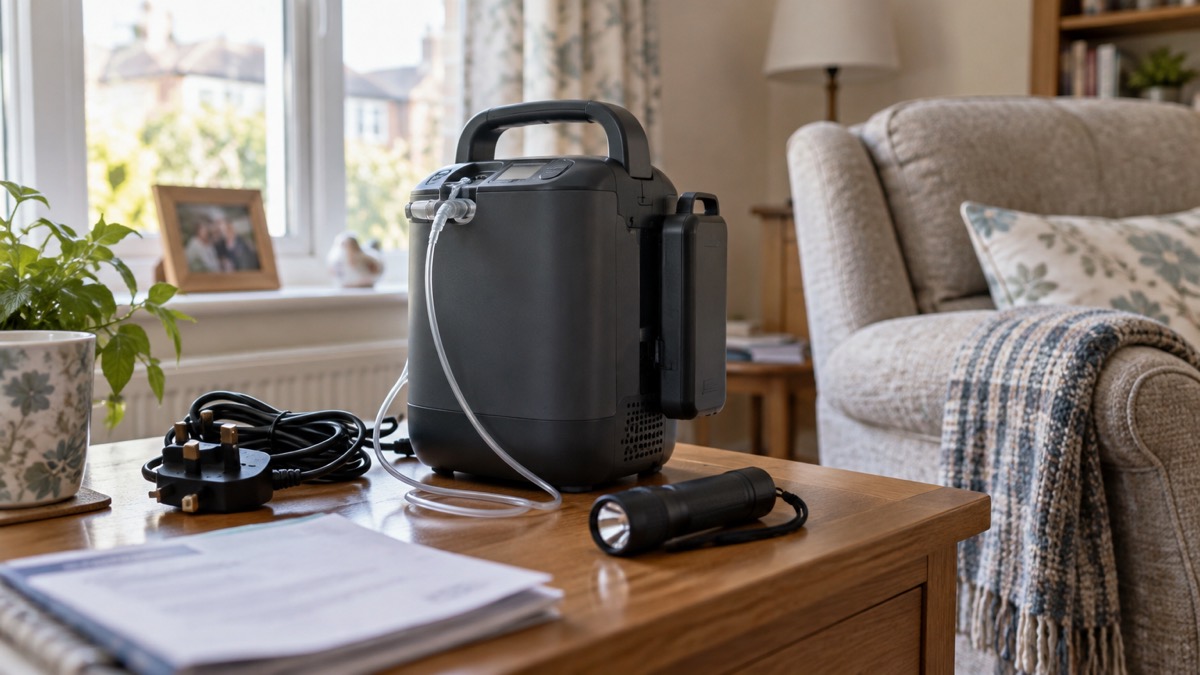
If someone in your household depends on electricity for their health, a power cut is a different kind of event. Ventilators, oxygen concentrators, electric wheelchairs, hoists, communication devices and feeding pumps can all stop working when the supply fails1. The single most useful thing you can do is make a plan now with your care provider or clinical care team, setting out what you or the person you care for needs to do and who to contact if the power goes off2.
Alongside that plan, join your network operator's Priority Services Register, which gives advance notice of planned power cuts wherever possible and additional support during an unplanned one3. Keep a backup power supply if you can, tell carers what the plan is, and have essential supplies ready5. And because equipment can fail for reasons other than the power, check regularly whether anything you rely on has been recalled6.
The checklist: medical equipment and power cuts
Work through this list once, then review it whenever equipment changes or a new carer comes on board. Each item has a few words on why it matters.
What to sort out with your care team before anything happens
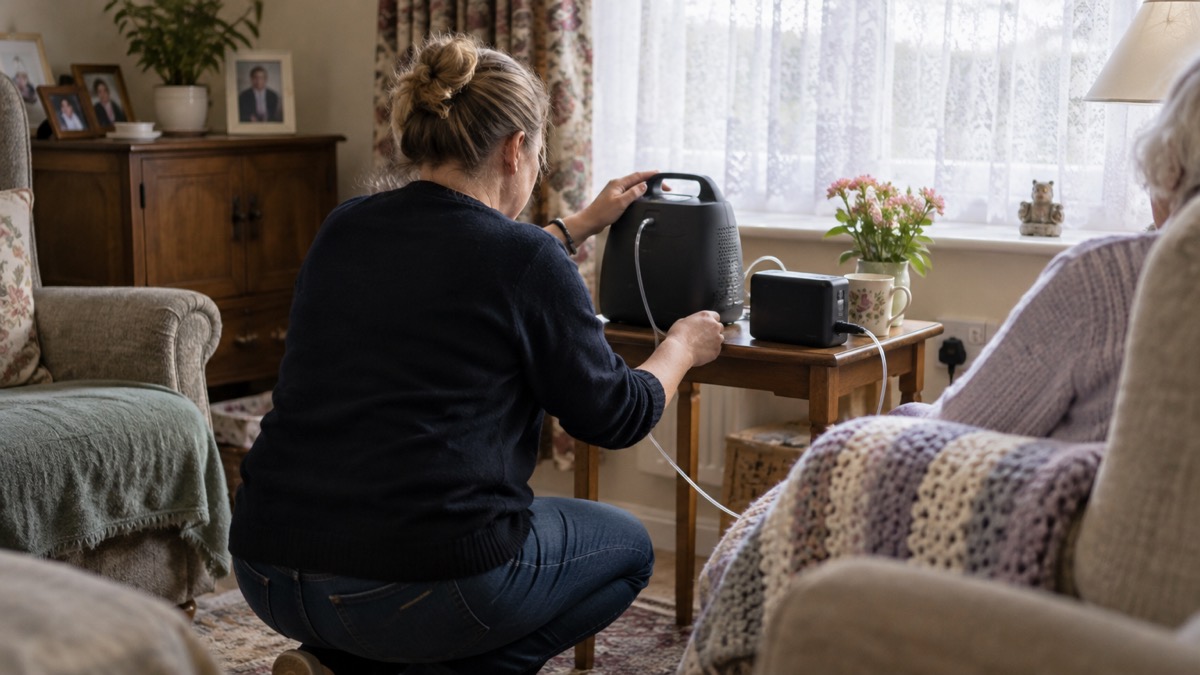
The plan is the foundation, and it is not something you can improvise during an outage. Government guidance is direct: if you use medical equipment that requires a power supply, make a plan with your care provider or clinical care team now, and the plan should set out what action you or someone you care for needs to take and who to contact if there is a power outage2. Ask the same people, or your equipment supplier, to give you enough information to understand how the equipment works and what to do if there is a power disruption10.
Some households need more than a plan. Northern Powergrid's guidance says customers who require a continuous supply of electricity for medical reasons and would need medical support during a power cut should seek advice from their local health service provider7. That is the right first call if you are unsure whether your equipment can safely be without power at all.
It also helps to know what a power cut looks like in practice. Cuts can occur from time to time during a typical year, including during severe weather, for regular maintenance, or because of damage and other routine faults13. They are not only a winter storm event, so the plan needs to work at any time of year.
Joining the registers that get you noticed
There are two separate things to do, and households often do only one. The first is the Priority Services Register run by your energy supplier and network operator. It is for customers who might be more vulnerable in a power cut, such as those who use medical or mobility equipment, have a disability, are over 65, or have children under five11. In England, Wales and Scotland it gives additional support during a power cut, advance notice of scheduled power cuts wherever possible, and priority support in an emergency3. Ofgem explains how to join your supplier's register14.
The second is your network operator's own medical or care register, which is how the people who actually fix the wires know who you are. Northern Powergrid advises people using electrically powered medical equipment to get a backup power supply if possible, join its free Priority Services Membership, inform carers and prepare essential supplies3. UK Power Networks asks households with any medical equipment that relies on electricity to join its Priority Register15.
Arrangements differ across the UK. In Northern Ireland, NIE Networks runs a Customer Care Register for customers who rely on electricity for healthcare needs, including those with medical equipment such as specialised mattresses, feeding systems or lifting equipment at home16. Registered customers are contacted regularly during a power cut with up-to-date information to help them make alternative arrangements, contact their health professional or call 99916. NIE Networks will also give notice in advance of planned interruptions17.
| What you need | Where to get it | What it gives you |
|---|---|---|
| Extra support in a cut | Your supplier's Priority Services Register (England, Wales, Scotland)3 | Advance notice of planned cuts, additional support, priority support in an emergency3 |
| Network operator's medical list | Your network operator's medical or priority register5 | A flag on your address so the operator knows5 |
| Northern Ireland equivalent | NIE Networks Customer Care Register18 | Regular contact during a cut, notice of planned interruptions18 |
Check your equipment for product recall notices
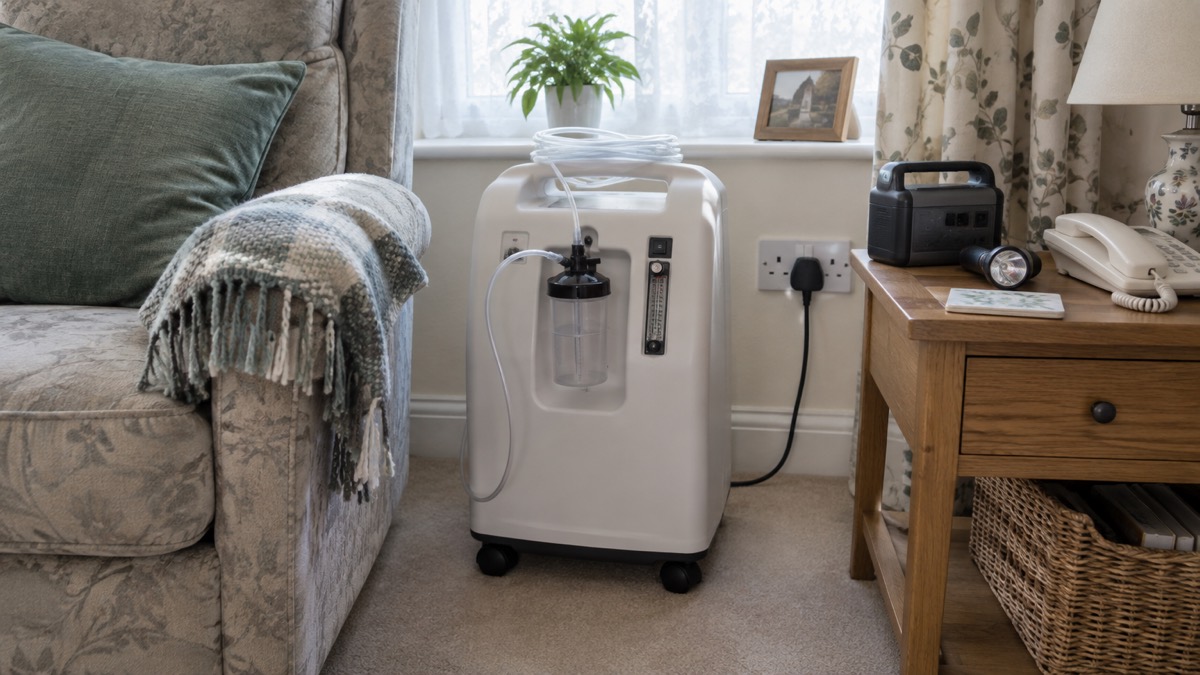
Equipment that keeps someone alive or mobile has to be safe as well as working. Manufacturers issue product recall notices if an electrical appliance could develop a fault, including a risk of electric shock or fire6. The fire and rescue service is blunt about the priority: the most important thing you can do is to regularly check if your appliances have been recalled18.
There are three places to check, and it is worth using more than one. The Government's product recall site, the manufacturer's own website, and Electrical Safety First's recall register all carry recall information18. The Office for Product Safety and Standards (OPSS) also issues product recall notices, and you can contact the retailer where you purchased the product19. If an appliance is not listed as recalled it should be safe to use, but if you have concerns about its safety, contact the retailer or manufacturer6.
Recall notices are not only about electrical faults. Food recalls work the same way, with point of sale notices displayed where the products were sold explaining the recall and what to do, and allergy support organisations telling their members20. The principle is the same for equipment: the notice tells you what is wrong, which items are affected, and what to do next.
Keeping your equipment's details ready for a recall check
A recall check is only as fast as the information you can put your hands on. Before you need it, write down the make, model and serial number of every powered item you rely on, and keep the paperwork with your care plan. That way a check against the manufacturer's website or Electrical Safety First's register is a quick job rather than an evening of peering at labels18.
Registering appliances is the other half of the job. The Register My Appliance service lets you register appliances and get a notification if a product gets recalled22. Registration means the maker contacts you rather than you having to remember to look. The same approach applies to other powered items in the home: the fire and rescue service advises checking any products you have bought are not subject to a product recall, using Electrical Safety First's website or the government website18.
Backup power needs the same discipline as the equipment it supports. Backup power supplies and associated equipment should be regularly checked and maintained by a competent person, and if you are concerned, speak to your medical equipment or healthcare provider as soon as possible23. A battery that has sat unused for two years is not a plan.
Electrical faults: what to look for and what to do
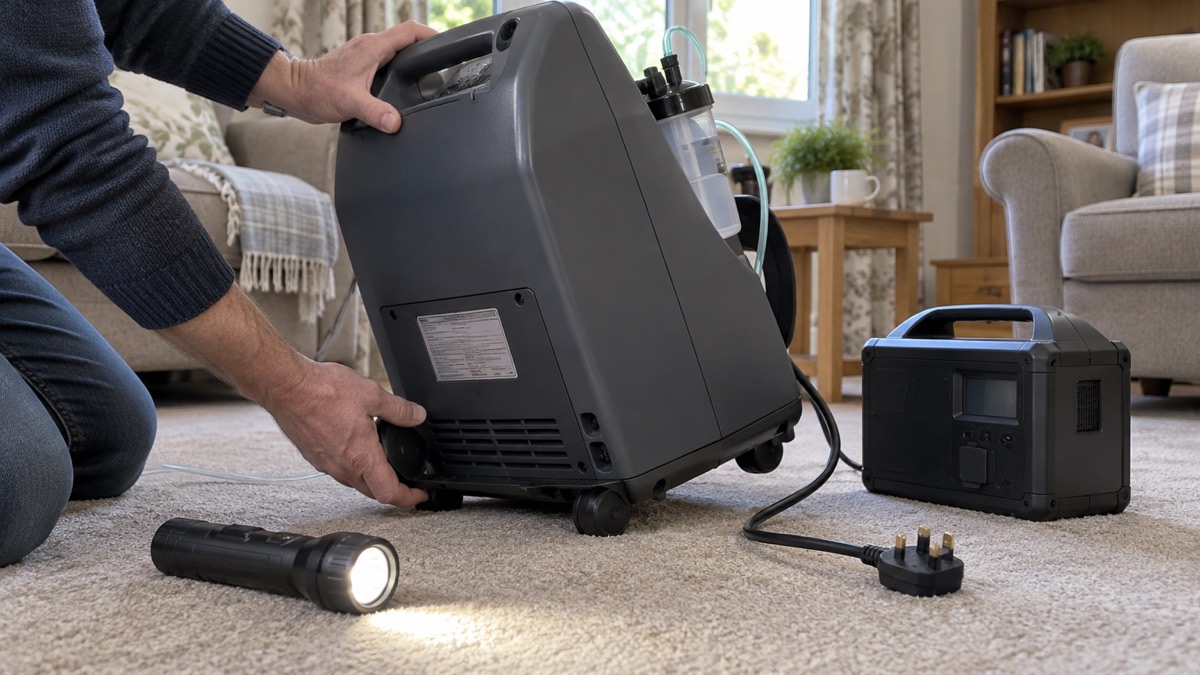
Faults do not always announce themselves with a bang. The fire and rescue service advises checking all appliances, plugs, sockets and leads for damage such as scorch marks or exposed wiring, and replacing anything damaged21. It also says to always use the correct fuse, always buy approved chargers, and switch appliances off at night or when leaving home unless they are designed to be left on, such as fridges and freezers21. Charging devices on flammable surfaces such as bedding is a known fire risk21.
The Health and Safety Executive sets out what electricity can do. The main hazards of working with electricity are electric shock and burns from contact with live parts, injury from exposure to arcing when electricity jumps from one circuit to another, fire from faulty electrical equipment or installations, explosion caused by unsuitable electrical apparatus, and static electricity igniting flammable vapours or dusts23. It adds that cables, plugs, sockets and fittings must be robust enough and adequately protected for the working environment, and that machinery should have an accessible switch or isolator to cut the power quickly in an emergency23.
If you spot damaged or dangerous electrical equipment, including during or after a power cut, report the problem, but call 999 in an emergency24. For a power cut itself, ring 105 or use the Powercut 105 website to find your supplier and report it8.
When the power goes: what to do on the night
If you have done the preparation, the night itself is about following the plan rather than inventing one. Turn off any appliances that may be a fire risk if they switch on when the power comes back, such as hair dryers or electric hobs26. Keep torches and batteries, a mobile phone power pack and other essentials where you can find them in the dark27. The Met Office lists candles and matches or lighters, torches and batteries, and a mobile phone power pack among the essentials that could help you cope with a power cut28.
Keep in touch. If you do not have a mobile or live somewhere with no signal, your landline provider should offer you a solution such as a battery back-up unit so you can still make emergency calls during a power cut28. Report the cut on 1059.
Ask for help if you need it. Checking up on relatives or neighbours who might need help during a power cut is part of community emergency planning guidance29, and network operators ask households to check on elderly or sick neighbours and relatives25. If you are the one who needs checking, make sure a neighbour knows your plan and can knock.
Where to get help
Start with the people who know your equipment: your care provider, clinical care team or equipment supplier10. If you need medical support during a power cut, seek advice from your local health service provider7. For the supply itself, ring 105 to report a power cut, and call 999 in an emergency8.
For ongoing support, join the Priority Services Register through your supplier14, and your network operator's medical register5. In Northern Ireland, join the NIE Networks Customer Care Register18. If you are registering on someone else's behalf, the operator will tell you what it needs.
Finally, keep the plan alive. Review it when equipment changes, when a new carer starts, and at the start of each winter. A plan that was right two years ago may not match the equipment in the house today.
Sources (30)
- Disabled people and carers, Ready Scotland, 2026
- Power cuts, Prepare, 2026
- What to do in a power cut, Northern Powergrid, 2026
- Power cuts, Be Ready, 2026
- What about people that rely on electrical medical equipment, NIE Networks, 2026
- Product recalls, Scottish Fire and Rescue Service, 2025
- Emergency power cuts FAQ, Northern Powergrid, 2025
- Join your supplier's Priority Services Register, Ofgem, 2026
- Community Resilience Plan, Wiltshire and Swindon Prepared, 2025
- What to do in a power cut, Met Office, 2026
- Parental letter re power shortages, North West Children's Oxygen Hub, 2022
- Keep Safe Keep Well Winter Safety Campaign 2024-2025, Women and Infants Health Board, 2024
- Types of power cut | UK Power Cut? Call 105 For Free | Find Your Electricity Provider, powercut105.com
- NI home energy checklist, Northern Ireland Energy Agency, 2026
- Weekly update: London Prepared, London Assembly, 2026
- Customer Care Register, NIE Networks, 2026
- Get answers to the most popular questions our customers are asking us about power cuts | Northern Ireland Electricity Networks, NIE Networks (Northern Ireland Electricity Networks)
- Total recalls: making white goods safer, London Fire Brigade, 2026
- Registering your e-bike or e-scooter for safety alerts and product recalls, London Fire Brigade, 2026
- Mustard products recall, Food Standards Scotland, 2024
- Home fire safety, Northern Ireland Fire and Rescue Service, 2026
- Fire safety checklist, Devon and Somerset Fire and Rescue Service, 2026
- Electricity and electrical equipment hazards, Health and Safety Executive, 2026
- We're prepared to support customers during Storm Bert, Northern Powergrid, 2024
- Safety storm Eunice: how you can stay safe, Devon and Somerset Fire and Rescue Service, 2022
- Strong winds weather warning information and advice, nidirect, 2026
- Amber warning for further snow in Scotland, Met Office, 2026
- UK transition from analogue to digital landlines, GOV.UK, 2023
- Staying safe in the snow, North Yorkshire Fire and Rescue Service, 2023
- Be prepared for winter emergencies, Norfolk and Suffolk ICB, 2026
 Power Cut Kit Checklist
 What to Keep Charged
 Household Emergency Plan