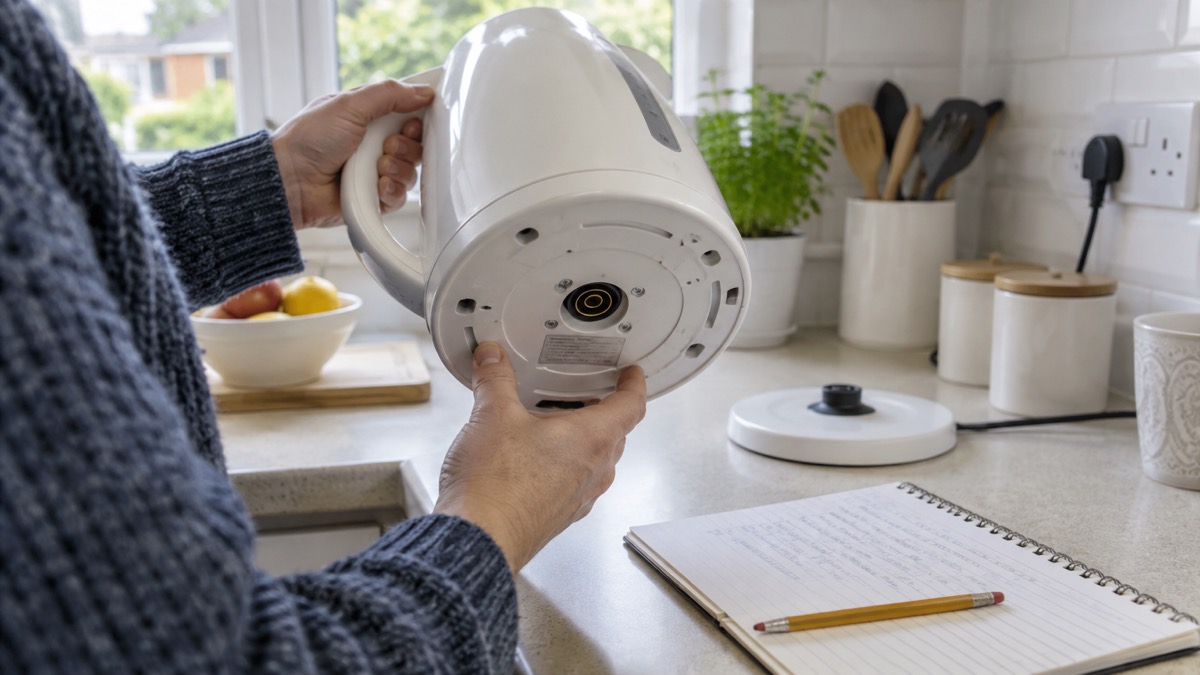
If you have heard about a recall and are wondering whether something in your own home is affected, the answer is quick to find. Check your appliances against the two official lists: the government's product safety alerts and recalls on GOV.UK, and the Electrical Safety First online product checker, which covers electrical products recalled since 20071. Both are free and neither needs an account.
The most important thing you can do is to check regularly, not once. Fire and rescue services across the UK say the same thing: check whether your appliances have been recalled, using the government's product recall site, the manufacturer's website or Electrical Safety First's recall register3. If you find that something you own has been recalled, stop using it until it has been checked by the manufacturer4.
The third step is the one most households skip: register your appliances so the manufacturer can contact you if a recall is issued later5. That turns a recall from something you have to go looking for into a message that comes to you.
Check your appliances against the recall lists
A product recall is when an item or items must be returned to the manufacturer because there is a safety problem7. For an electrical appliance in a home, that safety problem is usually a fire risk, which is why fire and rescue services treat recalls as part of ordinary home fire safety rather than a niche consumer issue.
The advice is consistent across the UK. Check your appliances are not subject to a product recall by checking the Office for Product Safety and Standards alerts and recalls page8. Search the government's list of product safety alerts, reports and recalls, and register your appliances so that you can be notified if your product is recalled5. Check for recalls or safety notices on the Electrical Safety First website10. Fire services in Wales and Scotland give the same direction: check the list of recalled items on the Electrical Safety First website, which explains what to do with your recalled appliance11.
It is worth doing this appliance by appliance rather than in one sweep, because the things most likely to be recalled are the things that run hot or run unattended:
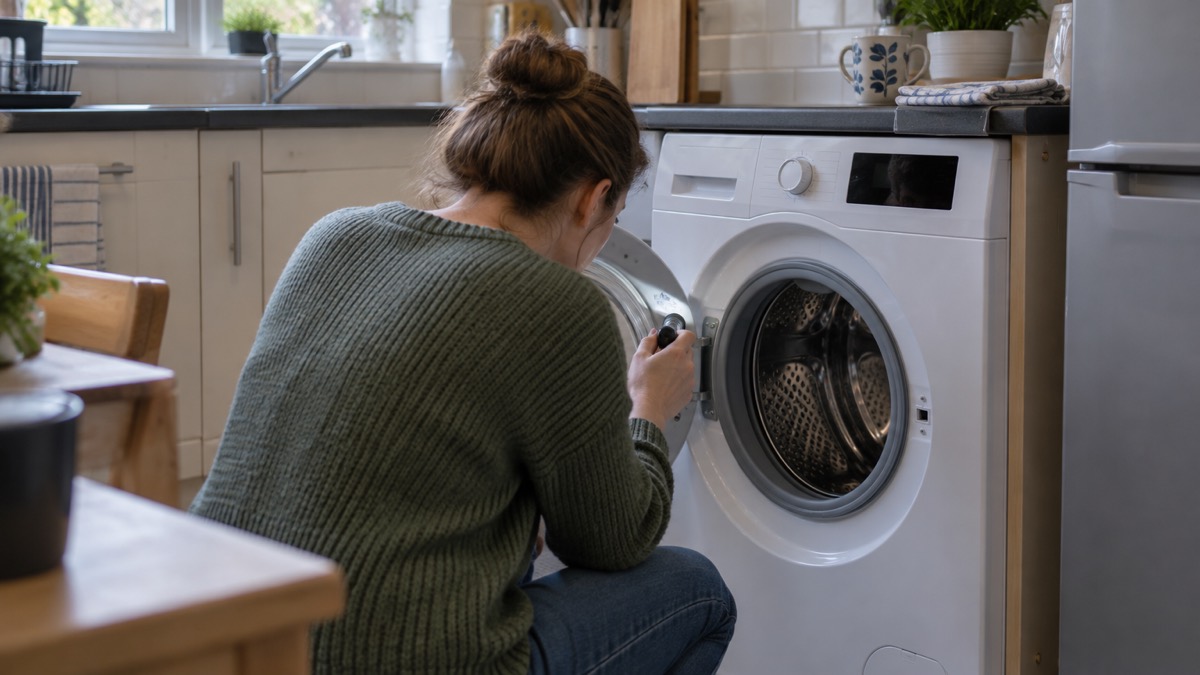
- White goods: washing machines, tumble dryers, dishwashers, fridges and freezers. Periodically check for any product recalls or safety notices related to your specific tumble dryer model12.
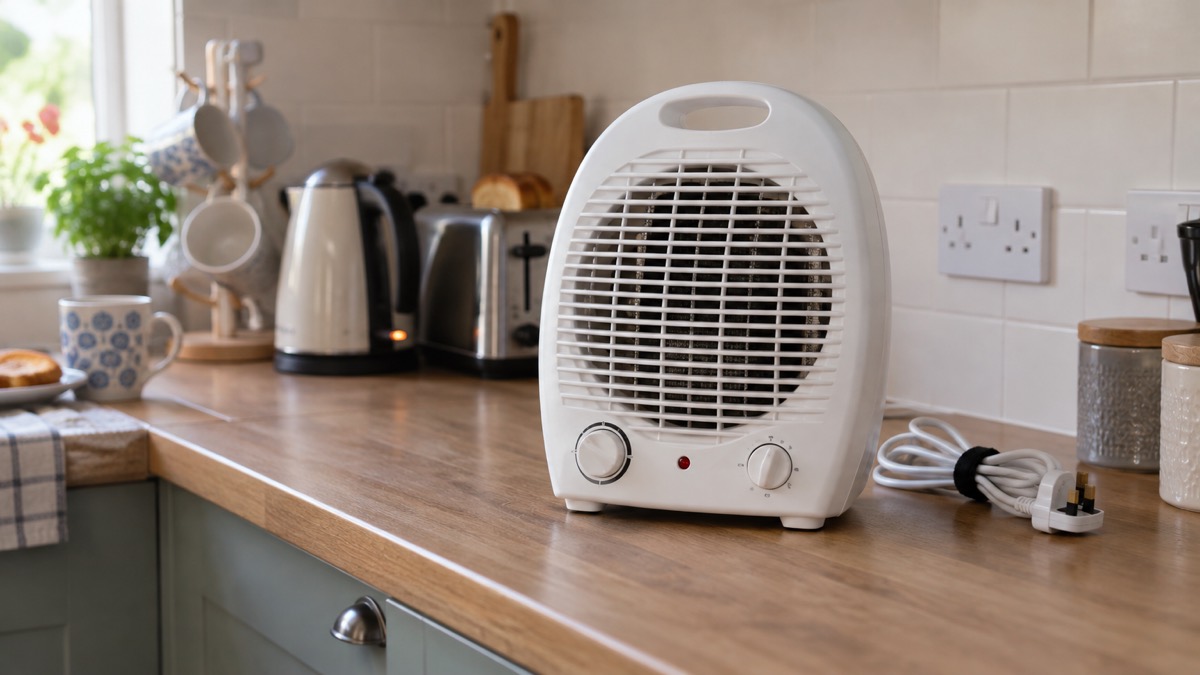
- Heaters: check that your heater isn't on a recall list13.
- Chargers and batteries: e-bikes, e-scooters and the lithium-ion batteries in them. Check any products you have bought are not subject to a product recall2.
- Seasonal electricals: before using costumes or decorations, check the government's product safety alerts and recalls on GOV.UK16.
Electrical Safety First's online product checker
Electrical Safety First is the independent charity that runs the product checker most fire services point people to. Its checker contains the details of electrical products that have been recalled since 20071. That start date matters: an older appliance may predate the database, so absence from the list is not proof that a very old item was never subject to a safety notice.
The checker is designed to give you a clear answer. If you have searched for a product that you own and it is not listed, this means that it has not been recalled and should be safe to use; if you have concerns, contact the retailer or manufacturer to alert them to a potential problem1. That is a useful reassurance, and it also tells you what to do with a nagging doubt about something that is not on any list.
To use it, you need to identify the product precisely. Have the make, the model and, where you have it, the serial number to hand. The same details are what you will be asked for when you register an appliance: typically, you will need the model name or number, the serial number and the purchase date11. Note them down once and keep them somewhere you can find them, because you will need them again.
Some recalls are narrower than a whole model. A recall notice may cover only certain batch codes or serial numbers, and the notice will tell you how to check yours and what form to complete17. Read the notice properly rather than assuming that a matching model name means your item is affected, or that it is not.
The government's product safety alerts and recalls
The government publishes product safety alerts, reports and recalls on GOV.UK, and its recall notifications include information about what the risk is and advice about what you should do if you have bought the product that is being recalled7. It covers far more than electrical goods, from food to toys to automotive accessories, so it is the place to look when the item you are worried about is not an appliance.
Recall notifications include information about what the risk is and advice about what you should do if you have bought the product that is being recalled18. That structure is worth knowing: a notice is not just a warning, it is an instruction. It will tell you whether to stop using the item, return it, or arrange for a modification or repair.
You can also have recalls sent to you. When signed up, you will be notified anytime a product recall is published18. If you would rather not sign up, product recalls can still be checked via Electrical Safety First or the UK government website19.
What a recall notice looks like in practice varies with the product. A recall of an electric heated blanket, for example, recorded that a recall notice had been sent to all direct customers and retailers20. A recall of a cordless tyre inflator directed owners to the maker's own recall page for affected batch codes and serial numbers and to complete a recall form17. In both cases the notice names the product, the risk and the action, which is exactly what you need to decide what to do with the item in your cupboard.
If your product has been recalled or seems faulty
If you discover that something you own has been recalled, the instruction is simple and it is not optional. Electrical Safety First recommends that anyone who discovers they have an electrical item that has been recalled should stop using it until it has been checked by the manufacturer4. Unplug it, put it somewhere it will not be used by anyone else in the household, and follow the steps in the recall notice.
Manufacturers have duties too. They are expected to contact anyone who has purchased the faulty product, where possible; publish details of the recall and the risk the faulty product poses; and detail what steps they are taking alongside the recall to resolve the issue7. If you have registered your appliance, that first duty is how you hear about it.
If your product has not been recalled but you are worried about it, say so. Contact the retailer or manufacturer to alert them to a potential problem1. A pattern of faults reported by owners is one of the ways a safety issue comes to light in the first place.
Register your appliances so a recall finds you
Registration is the single most useful thing you can do after checking the lists. It means that if a safety issue comes to light, the company can contact you21. Without it, a recall relies on you noticing a notice in a shop or on the news.
The free service is Register My Appliance. You can use the Register My Appliance service to register appliances and get a notification if a product gets recalled22. Kitchen appliances can be registered at registermyappliance.org.uk to receive free recall alerts if there is a problem with your appliance24. By registering your appliances, you will be informed about any product recalls, ensure prompt maintenance and repairs, and actively contribute to proactive safety measures25.
It is not only large white goods. Register electrical items with the manufacturer to be informed of any safety recalls26. Registering your appliances helps manufacturers contact you with important safety updates or recalls27. For e-bikes and e-scooters there is a parallel route: registering your e-bike or e-scooter for safety alerts and product recalls28.
| What to register | Why it matters | Where to do it |
|---|---|---|
| Large appliances (washing machines, dryers, dishwashers, fridges) | Manufacturers can contact you about faults or recalls10 | Register My Appliance22 |
| Small electrical items and kitchen appliances | Free recall alerts if there is a problem24 | registermyappliance.org.uk24 |
| E-bikes and e-scooters | Safety alerts and product recalls for battery-powered transport28 | Maker or retailer registration scheme28 |
Second-hand appliances and items you did not buy new
Second-hand goods need more care, not less. Take extra care with second-hand appliances, ensure they have been safety checked and are not listed on the product recall register6. A second-hand appliance may have changed hands precisely because of a fault, and the manufacturer will have no record of you as the owner, so a recall notice will never reach you.
Before you use a second-hand electrical item, do three things: find the model and serial number, search both recall lists, and satisfy yourself that it has been safety checked. If it is a white good, check for recalls or safety notices on the Electrical Safety First website before you plug it in10. If it is a battery-powered item such as an e-bike or e-scooter, check any products you have bought are not subject to a product recall, using Electrical Safety First's website or the government website14.
Once you own it, register it if you can. Registration means you can be told about a recall later22.
Where to get help and advice
If you are unsure whether an item is safe, the fire and rescue service for your nation publishes guidance you can rely on8. For broader electrical safety at home, see our guide to electrical fires and faulty appliances, and for battery-powered transport see e-bikes and e-scooters.
If you care for someone who may not manage this themselves, perhaps an older relative or someone with dementia, the recall check is a good thing to do on their behalf. Fire services publish specific guidance for carers, including checking appliances and registering them22. Our guide to fire risk checks for a vulnerable person's home sets out what else to look at while you are there.
Finally, if a recalled or faulty appliance has already caused a fire, get everyone out and call 999. What to do next is covered in what to do after a fire in your house.
Sources (28)
- Checking your electrical products, Gloucestershire Fire and Rescue Service, 2025-11-05
- E-bikes, Cheshire Fire and Rescue Service, 2026-09-30
- Total Recalls: making white goods safer, London Fire Brigade
- Miniature circuit breakers, Electrical Safety First, 2026-10-25
- Fire safety prevention, Fire Kills (GOV.UK), 2026-03-25
- White goods, London Fire Brigade, 2026-10-25
- Product recalls, Bath and North East Somerset Council
- Maintain appliances and recalls, Greater Manchester Fire and Rescue Service, 2026-10-29
- Maintain appliances and recalls, Greater Manchester Fire and Rescue Service, 2026-10-29
- White goods, Cheshire Fire and Rescue Service, 2026-05-20
- Electrical safety, Scottish Fire and Rescue Service, 2025-02-27
- Electrical fire safety, Warwickshire County Council, 2026-10-29
- Stay warm safely this winter, Greater Manchester Fire and Rescue Service, 2026-10-29
- E-bikes and e-scooters, South Wales Fire and Rescue Service, 2026-07-29
- E-bikes and e-scooters, Scottish Fire and Rescue Service, 2026-10-25
- Halloween safety tips, North Yorkshire Fire and Rescue Service, 2025-10-24
- Product recall: Ring Automotive Cordless Tyre Inflator, GOV.UK, 2025-07-23
- Recalls and alerts, GOV.UK, 2026-07-07
- Lithium-ion batteries, Scottish Fire and Rescue Service, 2025-11-27
- Product recall: Online Home Shop Electric Heated Blankets, GOV.UK, 2023-04-04
- Product safety campaigns, Peterborough City Council, 2026-10-29
- Fire safety for carers, Devon and Somerset Fire and Rescue Service
- Top ways to reduce your risk of having a fire at home, Devon and Somerset Fire and Rescue Service
- Safe and well booklet, Cheshire Fire and Rescue Service, 2026-04
- Electrical fire safety, Warwickshire County Council, 2026-10-29
- Fire safety leaflet, London Borough of Bromley
- Electrical fire safety, Cheshire Fire and Rescue Service, 2026-07-17
- Registering your e-bike or e-scooter for safety alerts and product recalls, London Fire Brigade, 2026-10-25
 Home Fire Safety Checklist
 Bedtime Fire Safety Checks
 Fire Risk Checks for Carers
 Why a CO Alarm Is Beeping
 Smoke Alarm Keeps Chirping
 Testing Smoke and CO Alarms
 Replacing Smoke and CO Alarms
 Where to Fit Smoke Alarms
 How Many Smoke Alarms
 Where to Put a CO Alarm
 Do I Need a CO Alarm
 Can a CO Alarm Detect a Gas Leak
 Trapped by Fire What to Do
 Putting Out a Chip Pan Fire
 Electrical Fire Safety