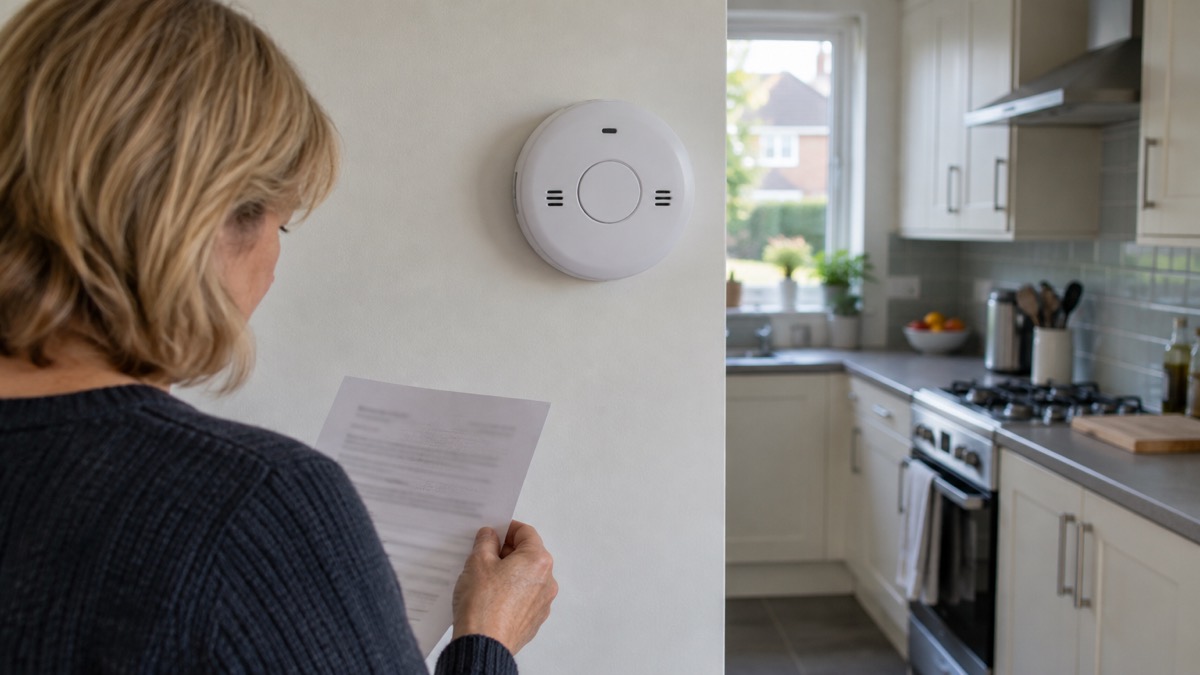
Carbon monoxide is a gas you cannot see, taste or smell, so the only warning most households get is an alarm. Where you put that alarm decides whether it goes off in time. Fire and rescue services across the UK give the same core instruction: fit a carbon monoxide alarm in every room that contains a fuel-burning appliance, and make sure it can be heard throughout your home1.
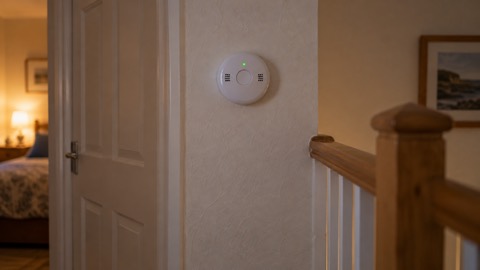
The detail matters as much as the rule. Alarms should sit 1 to 3 metres from the appliance, mounted at a height of 1 to 3 metres above the ground, away from obstacles and ventilation sources3. You also want one near the bedrooms, so a leak at night wakes you rather than being heard faintly through a closed door5.
This page sets out where alarms go room by room, the distances that decide it, the spots that spoil performance, and what your landlord must provide. If you are still deciding what to buy, start with Carbon Monoxide Alarms: What They Do and How to Choose.
Fit an alarm in every room with a fuel-burning appliance
The starting rule is room by room, not one alarm for the house. Fire and rescue guidance says carbon monoxide alarms should be fitted in all rooms containing solid fuel appliances, any gas appliances or paraffin heaters9. Another service puts it as every room containing boilers, cookers, ovens, open fires or wood burners2. Surrey Fire and Rescue says detectors should be installed in every room with a gas or solid fuel burning appliance, and tested weekly with your smoke alarms8.
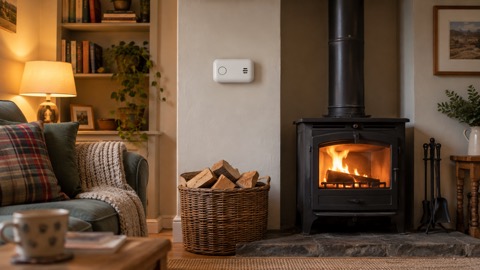
That covers more rooms than many people expect. A gas boiler in a kitchen, a gas hob, a gas fire in the living room, a wood burner in a snug and a paraffin heater in a shed each create a room that needs an alarm. The point is proximity: carbon monoxide builds up near the appliance that produces it, and an alarm in the hallway may not sense it until the gas has spread.
Two practical points follow. First, the alarm must be loud enough to be heard throughout your home, so think about where you will actually be when it sounds10. Second, alarms should go on every level of the home, particularly near sleeping areas, so a leak in a cellar or loft conversion is not missed3.
| Room | Why it needs an alarm | Source |
|---|---|---|
| Kitchen with a gas boiler or hob | Gas appliances are a carbon monoxide source | 1 |
| Living room with a gas fire or open fire | Open fires carry a higher risk of poisoning | 11 |
| Room with a wood burner or stove | Solid fuel appliances are covered by the rule | 1 |
| Bedroom or landing outside it | Alarms should be near sleeping areas and on every level of the home | 3 |
| Any room with a paraffin heater | Paraffin heaters are named in the guidance | 9 |
If you are unsure whether a particular appliance counts, treat it as if it does. The cost of an extra alarm is small next to the risk of missing a leak in a room you use every day.
Height and distance: 1 to 3 metres
The two numbers that decide placement are height and distance. Warwickshire Fire and Rescue says to mount alarms at a height of 1 to 3 metres above the ground, away from any obstacles or ventilation sources, and make sure they are easily audible from all areas of the house3. For rented homes, guidance adds that alarms should be positioned at head height, either on a wall or shelf, approximately 1 to 3 metres away from a potential source of carbon monoxide12.
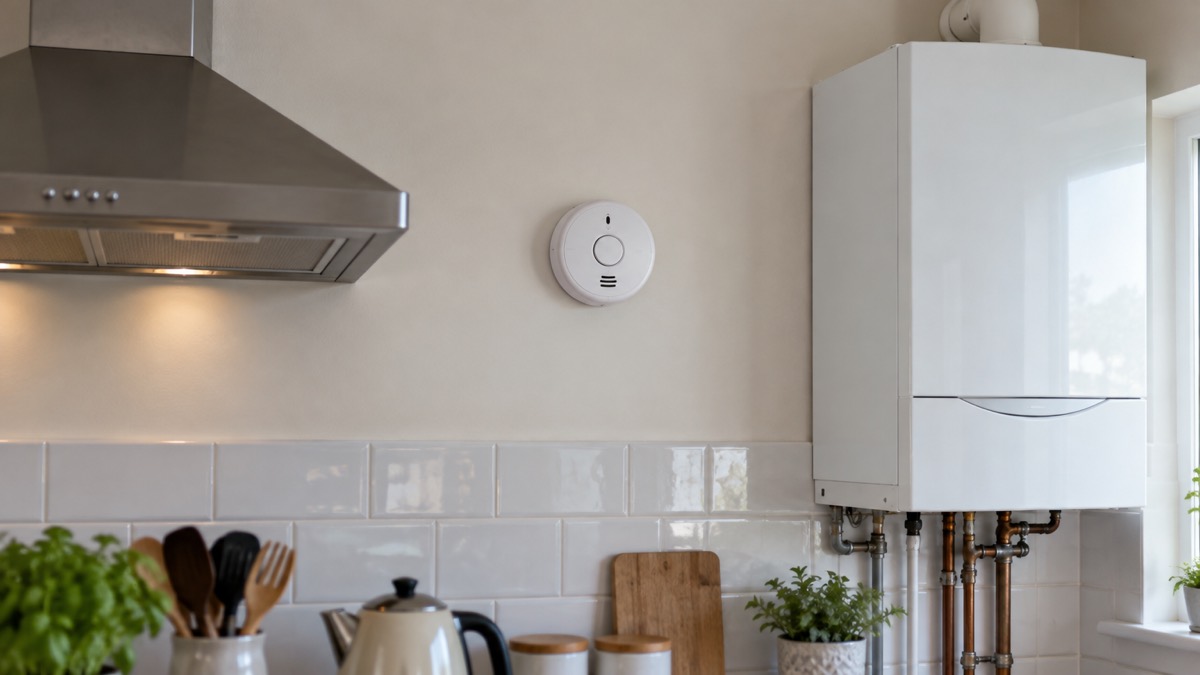
Independent testing goes further on the vertical position. Which? advises fitting the detector high up in the same room as the potential source, around 15cm from the ceiling, and at least 1 metre away from boilers, cookers and fires13. That is not a contradiction of the 1 to 3 metre rule: it describes where in the room's air the alarm should sit, while the fire service figure describes how far across the room it should be from the appliance.
North Wales Fire and Rescue Service sets out the clearances for each mounting type15:
- Distance from the appliance: the alarm must be 1 to 3 metres away, with a maximum of 3000mm15
- Ceiling-mounted: a minimum of 300mm away from the wall15
- Wall-mounted: a minimum of 150mm down from the ceiling15
- Partitions: if there is a partition in the room, put the alarm on the same side of it as the appliance15
The reason for the distance is airflow. Too close to the appliance and the alarm sits in a concentrated plume that may not represent the room; too far and the gas may disperse before it reaches the sensor. The clearances from walls and ceilings stop the alarm being tucked into a corner where air stagnates.
Bedrooms and living areas
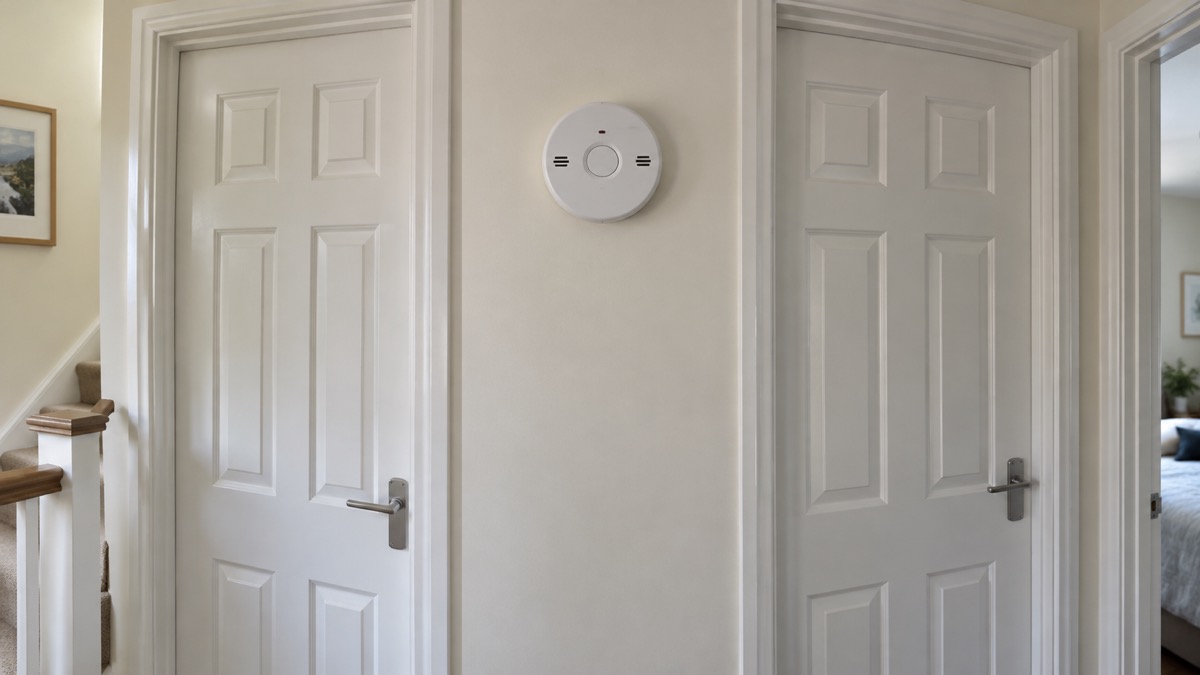
The alarm that saves lives at night is the one near where you sleep. Warwickshire Fire and Rescue says carbon monoxide alarms should be installed ideally near bedrooms and living areas16. Guidance on chimneys and open fires says to place working smoke alarms and carbon monoxide detectors on each level of your home, particularly near sleeping areas17. Another service says to place them near the sleeping areas and on every level of your home, and regularly test and maintain them7.
In practice, that means a landing alarm outside the bedroom doors, or one inside each bedroom if the layout is spread out. If your only fuel-burning appliance is in a room far from the bedrooms, the alarm in that room protects the people using it, and the alarm near the bedrooms protects everyone asleep. You need both.
Living areas matter for the same reason: they are where people sit for long periods, often with a gas fire or stove running. A carbon monoxide alarm in the living room gives early warning while everyone is awake and able to act. For the steps to take if it sounds, see What to Do If Your CO Alarm Sounds or You Suspect Carbon Monoxide.
Where an alarm must not go
Some positions make an alarm less reliable, and a few make it useless. Fire and rescue guidance says to avoid placing alarms in areas with high humidity or in direct sunlight, as this can affect their performance3. A steamy bathroom, a shower room or a window sill in full sun are therefore poor choices, even if the room has an appliance.
The other avoidable mistakes are about obstruction and airflow. Alarms should be away from obstacles and ventilation sources3. That rules out the inside of a cupboard, directly above a door or window that draughts through, and the immediate vicinity of an extractor fan. The partition rule applies too: if a room is divided, the alarm belongs on the same side as the appliance15.
A carbon monoxide alarm is not a substitute for servicing. Boilers, fires and chimneys should be checked by a qualified engineer, and chimneys swept18. If you rent, the next section explains what you can ask for.
What landlords must provide
In England, the law requires landlords to ensure a carbon monoxide alarm is fitted in any room used as living accommodation that contains a fixed combustion appliance, excluding gas cookers, and to check it works at the start of the tenancy19. The duty comes from the Smoke and Carbon Monoxide Alarm (England) Regulations 2015, amended in 202220. Cornwall Council's fire service summarises the earlier solid fuel duty: landlords must supply a carbon monoxide detector and alarm in any room used wholly or partly as living accommodation which contains a solid fuel burning combustion appliance21.
Private landlords in England are required by law to install a carbon monoxide alarm in any room that contains a solid fuel burning appliance, such as coal or wood burning fires and stoves22. Fire and rescue guidance for tenants repeats the wider fixed combustion appliance duty, excluding gas cookers23. Landlords must also have smoke detectors on each floor21.
| Nation | What the guidance says | Source |
|---|---|---|
| England | Alarm in any living room with a fixed combustion appliance, excluding gas cookers; checked at the start of the tenancy | 19 |
| England (solid fuel) | Alarm in any room with a solid fuel burning appliance | 22 |
If your landlord has not provided an alarm where one is required, ask in writing and keep a copy. For the wider picture on alarm rules across the UK, see Wales and Northern Ireland: Alarm Rules and Fire Services and Alarm Standards: BS 5839-6, BS EN 50291 and System Grades.
Boats, holidays and following the maker's instructions
A boat is a small, sealed space with fuel-burning equipment, so the placement rules tighten. Boat fire safety guidance says to install a carbon monoxide alarm, describing carbon monoxide as a silent killer, and to make sure it is working25. Northern Ireland Fire and Rescue Service says to fit a carbon monoxide detector in living spaces26. Independent advice says detectors are essential where the fuel is burned and where you will be sleeping on a houseboat27.
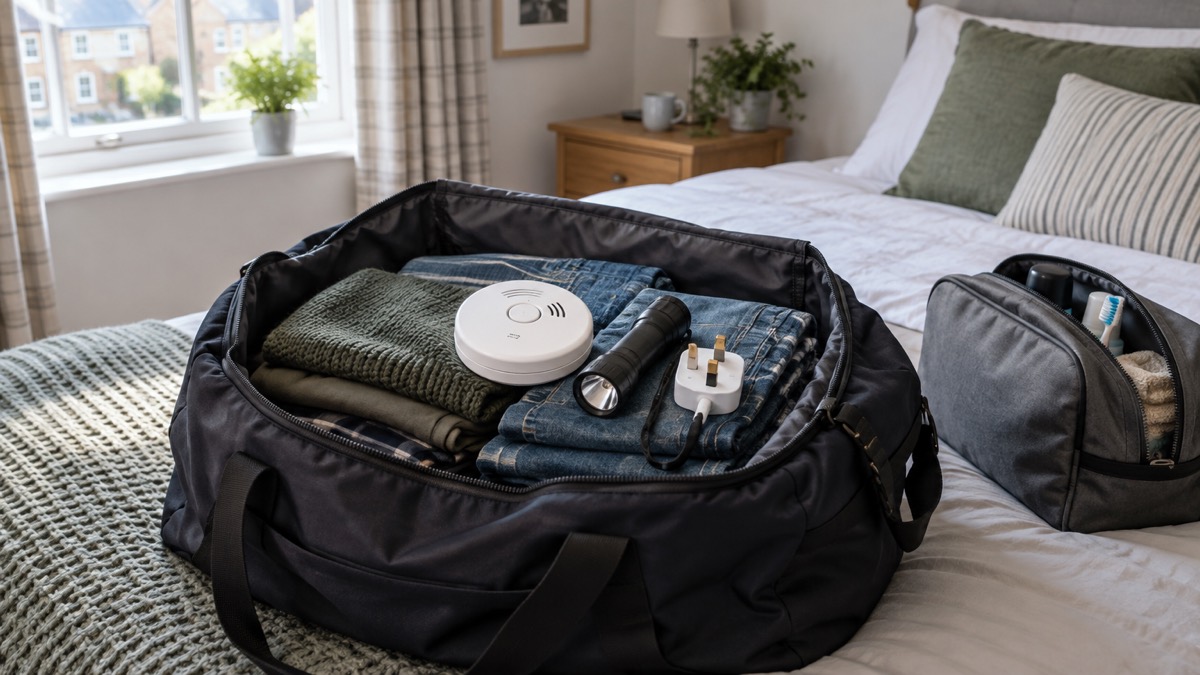
On holiday, the same logic travels with you. Which? says a UK holiday cottage or hotel will need to be fitted with carbon monoxide detectors, but what you find when you travel abroad is less clear, and alarms are small, light and easy to pack27. Its separate guidance notes that alarms are small, light, easy to pack and affordable13. Check the accommodation has one, and pack your own if you are unsure.
Whatever the general advice says, the maker's instructions for your model come first. Fire and rescue services say to install the alarm on the wall or ceiling according to the manufacturer's instructions, at a height of 1 to 3 metres above the ground, away from obstacles or ventilation sources4. Read them before you drill, because the mounting height, the minimum distance from appliances and any rooms to avoid can differ between models.
Sources (27)
- Carbon monoxide, Devon and Somerset Fire and Rescue Service, 2026
- Stay warm safely this winter, Devon and Somerset Fire and Rescue Service, 2026
- Smoke alarms and CO detectors, Warwickshire County Council, 2026
- Safe home heating, Warwickshire County Council, 2026
- Installing Your Smoke and Heat Alarms | Aico, Aico
- Chimney fire safety week, North Yorkshire Fire and Rescue Service, 2026
- Safe home heating, Warwickshire County Council, 2026
- Fire safety at home, Surrey County Council, 2026
- Fire safety for carers and professionals | Devon and Somerset Fire and Rescue Service, Devon and Somerset Fire and Rescue Service
- Carbon monoxide, Wiltshire and Swindon Prepared, 2026
- Home fire safety partnerships, Devon and Somerset Fire and Rescue Service, 2026
- Housing standards, Cherwell District Council, 2026
- Carbon monoxide alarm, Which?, 2026
- Carbon monoxide symptoms, Which?, 2026
- CO Awareness, North Wales Fire and Rescue Service
- Safe home heating: Gas safety advice - Warwickshire County Council, Warwickshire County Council
- Safe home heating: Chimneys and open fires - Warwickshire County Council, Warwickshire County Council
- Chimneys, Scottish Fire and Rescue Service, 2026
- Prevention - Fire Kills, Fire Kills (firekills.campaign.gov.uk)
- Household fire safety, Somerset Council, 2025
- Fire safety in rented accommodation, Cornwall Council, 2026
- Fire alarms and carbon monoxide detectors, Lincolnshire County Council, 2026
- Stay fire safe, Greater Manchester Fire and Rescue Service, 2026
- Fire safety, Greater Manchester Fire and Rescue Service, 2026
- Boat fire safety, North Yorkshire Fire and Rescue Service, 2026
- Stay safe this summer, Northern Ireland Fire and Rescue Service, 2026
- Five ways to avoid a carbon monoxide build-up, Which?, 2026
 Home Fire Safety Checklist
 Bedtime Fire Safety Checks
 Fire Risk Checks for Carers
 Why a CO Alarm Is Beeping
 Smoke Alarm Keeps Chirping
 Testing Smoke and CO Alarms
 Replacing Smoke and CO Alarms
 Where to Fit Smoke Alarms
 How Many Smoke Alarms
 Do I Need a CO Alarm
 Can a CO Alarm Detect a Gas Leak
 Trapped by Fire What to Do
 Putting Out a Chip Pan Fire
 Electrical Fire Safety
 Appliances Left On Overnight