A fire that starts while you are asleep is the one you are least able to respond to. Fire and rescue services across the UK make the same point: you are more at risk from a fire when asleep, because you get less warning to escape1. That is why they ask every household to run a short set of checks before going to bed, every night. It takes a few minutes.
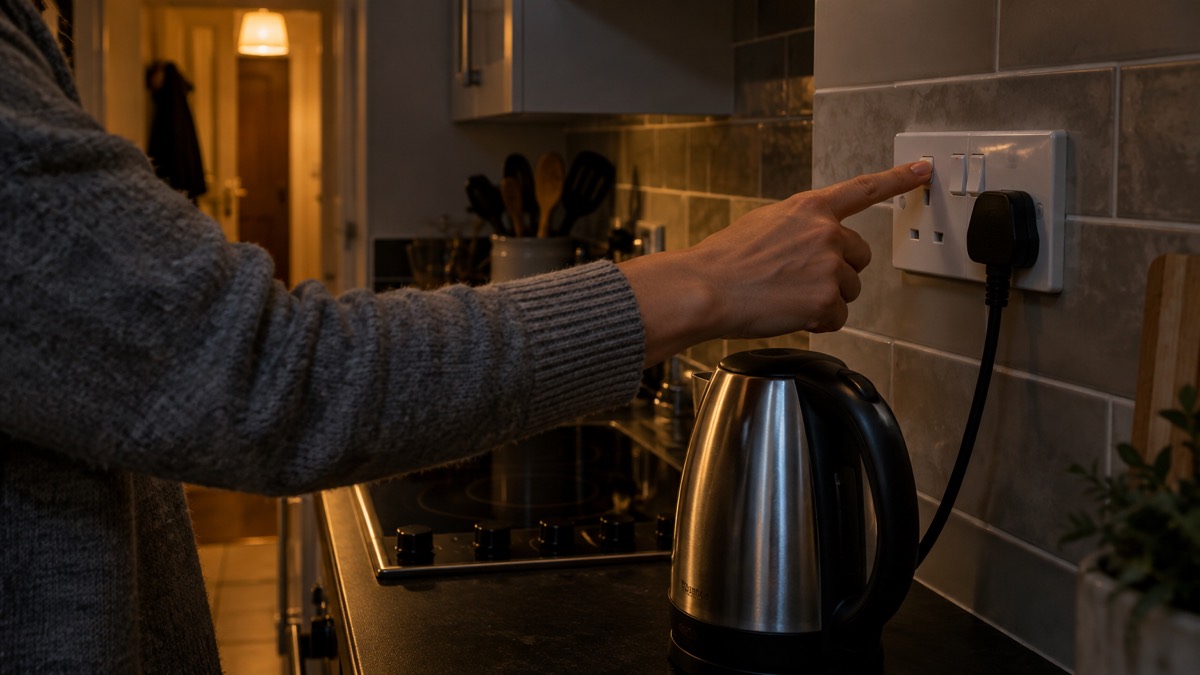
The core routine is the same wherever you live. Close internal doors at night to stop a fire from spreading2. Switch off and unplug electrical appliances unless they are designed to be left on, like a freezer, and do not leave the washing machine, tumble dryer or dishwasher running overnight and unattended2. Put candles and cigarettes out properly, check the cooker is off, turn heaters off and put up fireguards, and keep exits and stairs clear3.
None of this replaces a working smoke alarm. When you are asleep it takes longer to become aware of the signs of fire, and without working smoke alarms you may not know there is a fire until it is too late4. Test your alarms every week5, and if you have not thought through how you would get out, build that into the same routine: see our guide to making a fire escape plan.
Your bedtime fire safety checklist
Run through this list in the same order each night, so it becomes habit rather than a decision. Each item is drawn from fire and rescue service guidance, and the sections below explain why each one matters.
Why a fire at night is more dangerous
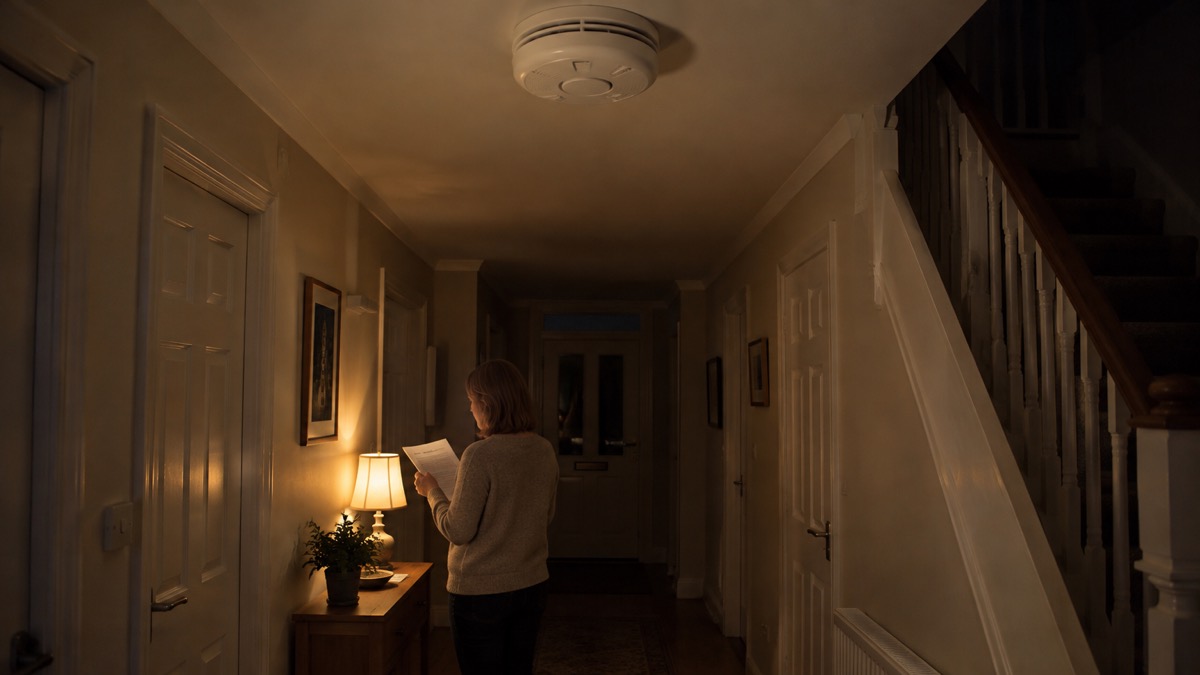
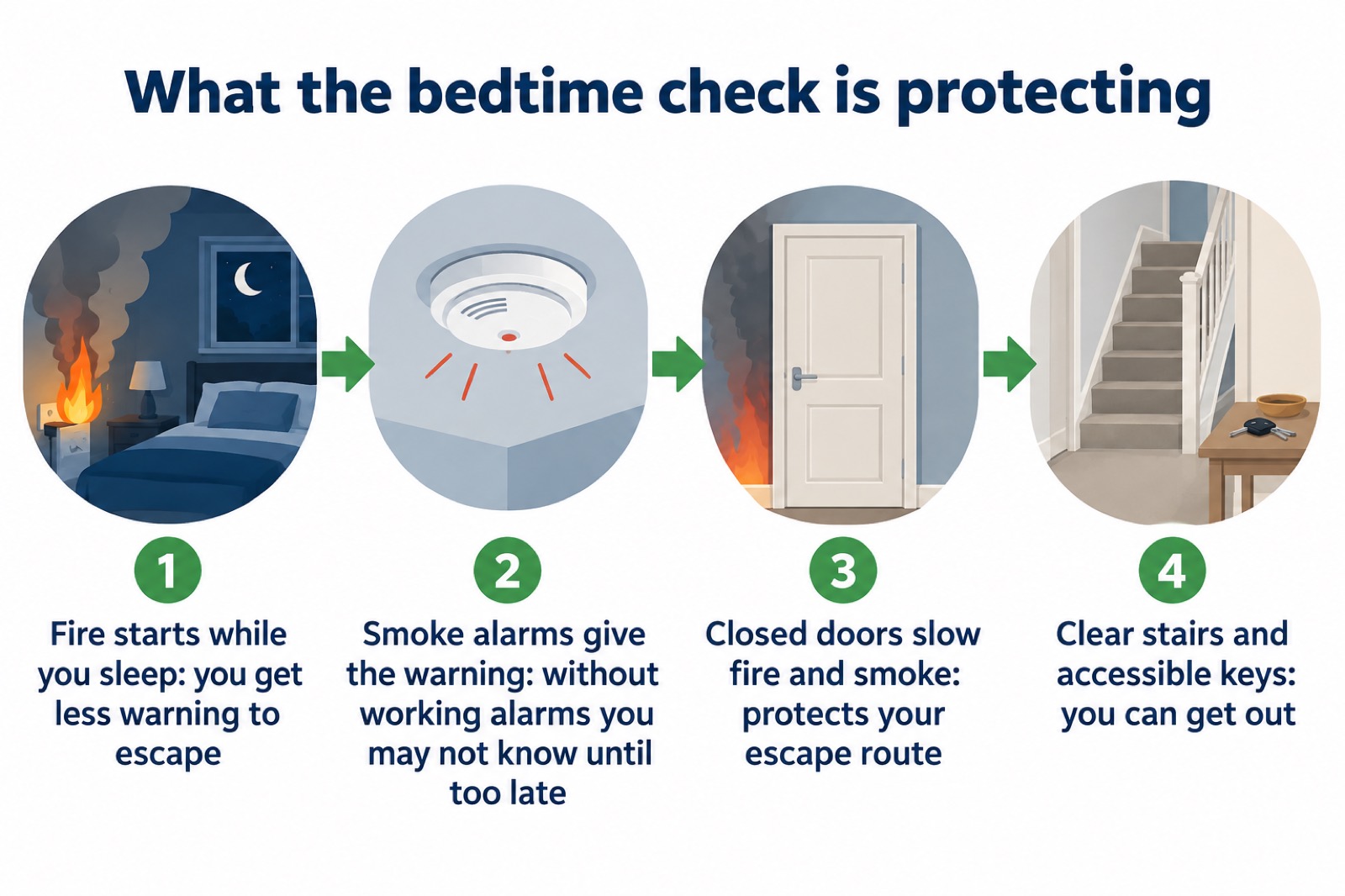
The danger is not that fires behave differently at night. It is that you do. Fire services are blunt about it: you are more at risk if a fire starts when you are asleep1, and when you are asleep it takes longer to become aware of the signs of fire4. Without working smoke alarms, you may not know there is a fire until it is too late4.
A lot of fires start at night, which is why the checks before bed matter11. Many fires happen at night when occupants are asleep12, and the risk is compounded because you get less warning to escape12. If a fire breaks out at night, you will not smell the smoke and wake up: the poisonous fumes send you deeper into sleep13. People who live alone, have a disability or impaired mobility may be at greater risk14.
That shapes what the bedtime check is for. It is not mainly about preventing a fire starting, though it helps with that. It is about removing the things that turn a small fire into a fast one while you are unconscious: an open door, a tumble dryer running in a back room, a candle left burning on a windowsill. Closing doors and switching appliances off at night reduces the risk of fire and smoke spread and protects your escape routes15.
Close internal doors to stop fire and smoke spreading
Closing internal doors is the single most repeated piece of bedtime advice from UK fire services, and it appears in guidance from every nation. Close internal doors at night to stop a fire from spreading16. Close them to help slow the spread of fire and smoke17. Close all internal doors at night to stop any fire from spreading18. South Wales Fire and Rescue Service gives the same advice19, as does guidance for students in Lincolnshire20.
There are two reasons. The first is escape. Closing doors reduces fire and smoke spread and protects escape routes15, and it helps keep the stairs free from smoke3. In a house fire, smoke in the stairs is what stops people getting out; a closed door at the bottom of the stairs holds it back for a time. The second reason is comfort and cost: closing internal doors at night will help keep your rooms warm and reduce fire and smoke spread if a fire starts21.
A few practical points:
- Close the doors of rooms you are not using, not just the front room. A closed door on a utility room or study is doing the same job.
- Do not lock internal doors or leave keys in a way that stops someone getting out. The point is to slow fire, not to trap people.
- Keep door and window keys where everyone can find them7, and tell overnight guests where the keys are kept9.
- If you live in a flat, the front door and the doors onto the communal corridor are part of the building's fire strategy. Our guide to fire safety in blocks of flats covers what not to change.
Switch off and unplug: what must not run overnight
The rule is simple: switch off appliances at night unless they are designed to be left on, like fridges or freezers8. Only leave appliances switched on overnight if they are designed to do so6. Everything else, from the television to the phone charger, comes off or comes out of the socket.
The appliances fire services single out are the wet ones. Do not leave the washing machine, tumble dryer or dishwasher on overnight and unattended2. Do not run appliances such as washing machines, tumble dryers and dishwashers overnight7. These are the machines that combine heat, lint, motors and a long unattended run, often in a utility room or kitchen at the far end of the house. If you rely on an overnight wash to get everything done, move it to the evening while you are still up, or to the morning.
| Appliance | Overnight? | What the guidance says |
|---|---|---|
| Fridge and freezer | Yes | Designed to be left on8 |
| Washing machine | No | Do not leave on overnight and unattended2 |
| Tumble dryer | No | Do not run overnight7 |
| Dishwasher | No | Do not run overnight7 |
| Heaters | No | Turn heaters off and use fireguards3 |
| Phone and device chargers | Not recommended | Charge while awake and nearby22 |
Charging is worth its own note. Fire services advise charging devices while you are awake and nearby, and avoiding charging overnight or when you are out of the house22. Covering a device while it is charging traps heat and increases fire risk22. If you do charge a phone by the bed, keep it on a hard surface, uncovered, and unplug it when it is done. For the wider picture on batteries, see our guides to e-bikes and e-scooters and to electrical fires.
Candles, cigarettes, cookers and open fires
Most of the remaining bedtime items are about naked flames and heat sources. Put candles and cigarettes out properly9. Extinguish cigarettes and candles before going to bed at night20. Always carry out a night-time check by extinguishing cigarettes and candles, switching off electrics and closing all doors23.
Smoking deserves particular care at bedtime. Take extra care if you smoke when you are tired, as it is easy to fall asleep with a cigarette burning and set your bed, sofa or clothes on fire24. Take extra care when you are tired, taking any sort of drugs or have been drinking alcohol, because it is very easy to fall asleep while your cigarette is still burning25. Never smoke in bed23. Our guide to smoking, matches and lighters goes further.
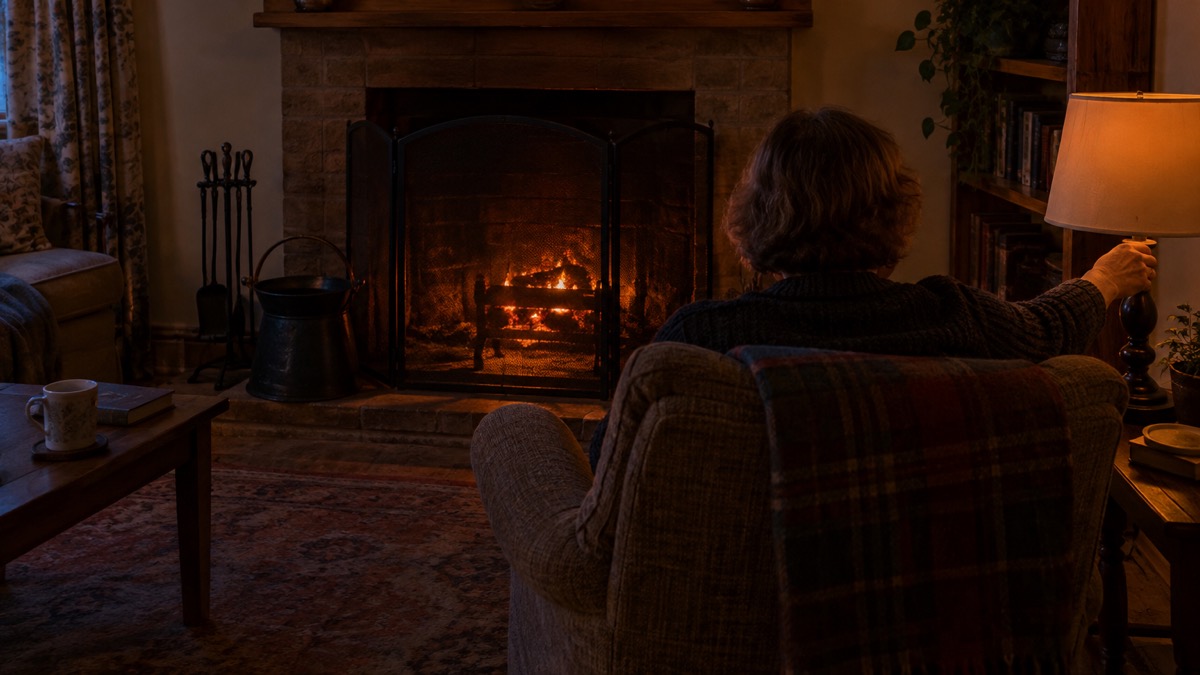
For open fires and stoves, always use a fire guard with an open fire to protect against flying sparks from hot embers21, and put up fireguards at night3. Ensure you have child-proof fireguards in front of an open fire or heaters3. Extinguish open fires and stoves properly before bed3.
If someone in the home has mobility issues
If you or anyone else in the home has mobility issues, ensure mobility aids and methods of calling for help, like emergency pendants, are close to hand2. Keep them close in case help is needed to assist with an escape18. That means the walking frame beside the bed rather than across the room, the pendant worn rather than on the charger, and a phone within reach.
Everyone should do bedtime fire safety checks, but they are particularly important for anyone who might not quickly detect or escape from a fire2. If that describes you or someone you care for, your local fire and rescue service can help beyond the checklist. Safe and Well visits, offered by services including Surrey, cover cooking and smoking, heaters and heating, candles and fireplaces, detection systems, bedtime checks, what to do if there is a fire, and extra help and support26. Eligibility includes people who smoke at home, are over 60, live alone, have limited mobility, a hearing impairment or are blind or partially sighted, would have difficulty escaping a fire, have had a fire before, have learning disabilities, a mental health condition such as dementia or depression, drug or alcohol dependencies, lack alarms in all areas where a fire might start, or collect or hoard26.
In Northern Ireland, an online Home Fire Safety Check asks about the home, who lives there, working smoke alarms, everyday activities such as cooking and heating, mobility, physical and mental health, sensory impairment, clutter and learning disability27. If your home is identified as being at greater risk, you will be referred for an in-person Home Fire Safety Check where NIFRS personnel will visit to provide further practical fire safety advice14. In England, an online home fire safety check developed through a partnership between the National Fire Chiefs Council, Fire Kills and Safelincs is available27, and an in-person visit includes discussion of fire risks, tailored advice, assessment of the need for smoke alarms and fitting as many as required, showing how to test them safely, and discussion of a fire escape plan specific to your home5. Our guide to fire risk checks for a vulnerable person's home sets out how to prepare.
Getting around safely at night
One more item belongs in the routine if anyone gets up in the dark. Fit a night light, have a torch or fit an easy to use switch on your bedside light, and avoid moving around in the dark28. A fall on the stairs at night is its own emergency, and a torch by the bed is also what you need if the power fails. Our guide to emergency lighting at home covers torches and lanterns, and explains why candles are a poor substitute.
Sources (28)
- Bedtime routine, Greater Manchester Fire and Rescue Service, 2026
- Bedtime checks, London Fire Brigade, 2026
- Advice for parents and guardians, Devon and Somerset Fire and Rescue Service, 2026
- Plan your escape, Dorset and Wiltshire Fire and Rescue Service, 2020
- Home fire safety visits, Staffordshire Fire and Rescue Service, 2026
- Electrical safety, Greater Manchester Fire and Rescue Service, 2026
- Fire safety in the home, Essex County Fire and Rescue Service, 2025
- Reduce fire risks for older people, Northern Ireland Fire and Rescue Service, 2026
- Plan your escape, Staffordshire Fire and Rescue Service, 2026
- Bedtime routines and fire escape plans, Devon and Somerset Fire and Rescue Service, 2026
- Cut the risk of fire in your home, Wiltshire and Swindon Prepared, 2026
- Demand Flexibility Service: Running Appliances at Cheaper Times, Electrical Safety First
- 2024_Fire-safe-fact-sheet.pdf, Child Accident Prevention Trust (capt.org.uk)
- Almost 70% of people who lost their lives in house fires over the last 10 years lived alone, Northern Ireland Fire and Rescue Service, 2026
- Charge safely for your own safety, Northern Ireland Fire and Rescue Service, 2026
- Escape plan, Devon and Somerset Fire and Rescue Service, 2026
- Stay safe at home: escape routes, Cheshire Fire and Rescue Service, 2026
- Bedtime routine, Dorset and Wiltshire Fire and Rescue Service, 2021
- Checklists and escape plans, South Wales Fire and Rescue Service, 2026
- Student safety, Northern Ireland Fire and Rescue Service, 2026
- Cost of living leaflet, Greater Manchester Fire and Rescue Service, 2022
- Lithium battery fire safety, Mid and West Wales Fire and Rescue Service, 2026
- NIFRS urges students to think fire safe, Northern Ireland Fire and Rescue Service, 2023
- Smoking, Greater Manchester Fire and Rescue Service, 2026
- Smoking safety, North Wales Fire and Rescue Service, 2026
- Safe and well checks, Surrey County Council, 2026
- Home fire safety check, Northern Ireland Fire and Rescue Service, 2026
- Fire safety at home for people with sight, hearing or mobility difficulties, Shropshire Community Health NHS Trust, 2016
 Home Fire Safety Checklist
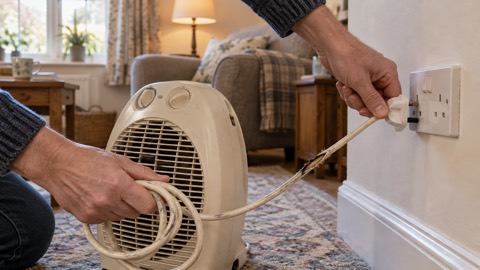 Fire Risk Checks for Carers
 Fire Safety in Flats