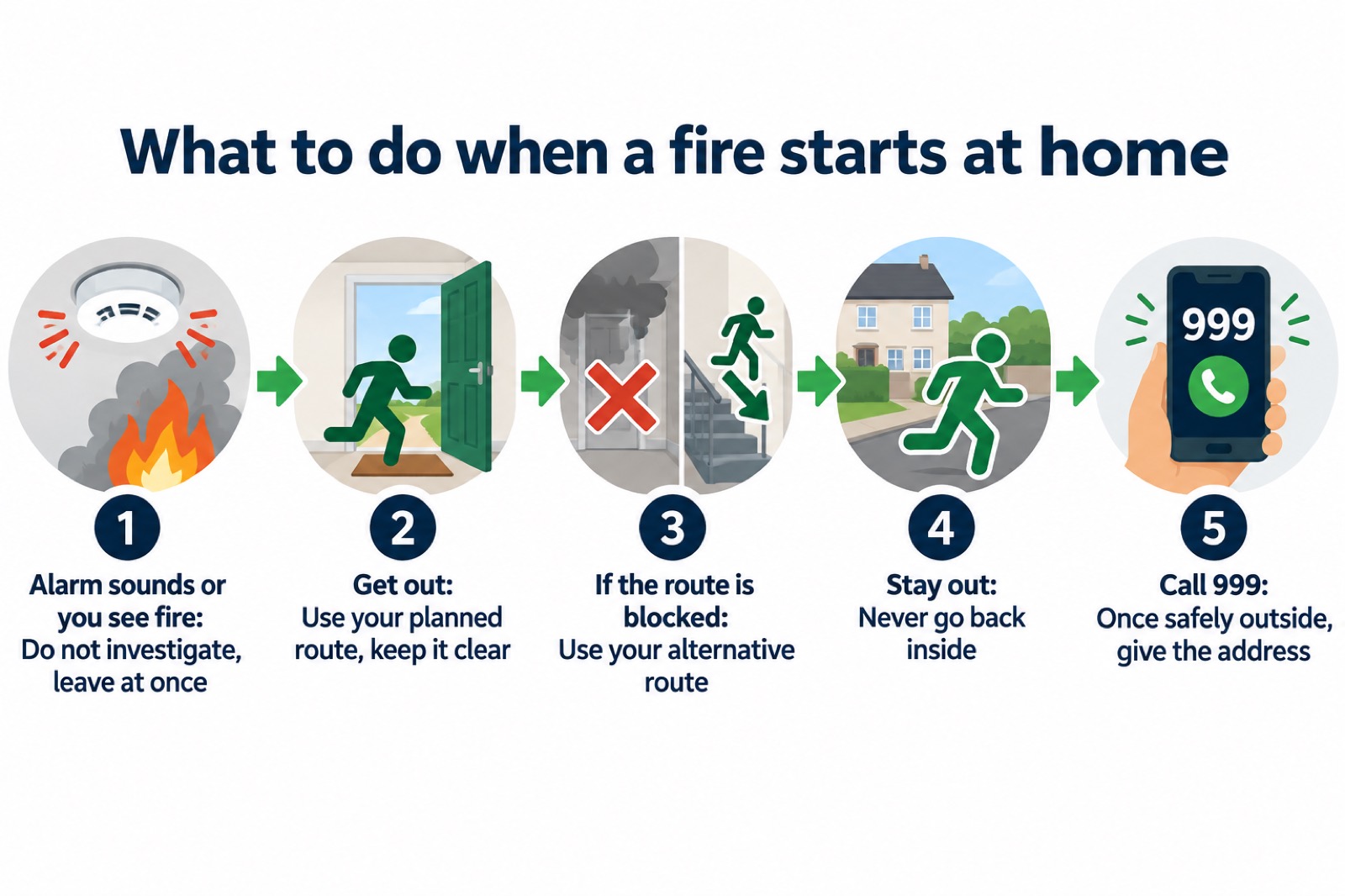
If a fire starts, the advice from every fire and rescue service in the UK is the same: get out, stay out and call 9991. Do not go back inside for possessions, pets or anything else. Smoke and toxic gases can overcome you in minutes, and fire can spread faster than you think2.
For older and disabled people, that advice matters more than for anyone else, because the risk of dying in a house fire rises sharply with age and disability. The elderly are more than three times as likely to die from a fire compared with children, and 36% of fire deaths are to people over 653. People who live alone are nearly 4 times more likely to die or be seriously injured in a fire4. And a third of the people who die in fires every year are looked after by a carer, whether that is a family member, friend or professional carer5, which means carers and relatives are often the people best placed to spot and reduce the risks.
The good news is that the main causes are well known and largely reducible: smoking, cooking, heating, clutter and missing or unsuitable alarms. This page sets out what to do in a fire, who is most at risk, how to reduce each risk in turn, and how to book a free visit from your local fire and rescue service. If you are preparing more broadly for an older, disabled or medically dependent household, the same steps form part of that work.
If there is a fire: get out, stay out and call 999
The instruction is deliberately short so it can be remembered and followed under stress: get out, stay out and call 9991. Fire and rescue services across the country give households the same instruction: get out, stay out and call 99910. Once you are safely outside, call 999 and give the address clearly.
The temptation to go back, or to deal with the fire first, is where people die. The Fire Kills campaign is blunt about the timescale:
"Smoke and toxic gases can overcome you in minutes, and fire can spread faster than you think."
Only tackle a fire yourself if it is very small and you have a clear escape route behind you2. Cheshire Fire and Rescue Service goes further for cluttered homes: never try to tackle the fire yourself12. For someone with limited mobility, slow reactions or memory loss, the calculation should almost always be to leave immediately, because the time available before smoke fills a room is shorter than the time needed to reach and operate an extinguisher.
For a person who cannot self-evacuate at all, the plan has to be made in advance, which is what the rest of this page is about: alarms that give the earliest possible warning, an escape route that is actually usable, and a fire service that already knows the person and the property. If the person uses a personal alarm pendant, pressing it can summon help, but in a fire the first call should still be 999; see what happens when you press a personal alarm for how those services respond.
Who is most at risk from fire at home
Fire and rescue services group the people most at risk from fire at home in consistent ways. Government preparedness guidance lists: older adults, those who live alone, and people who smoke and drink at home, alongside people with disabilities, physical mobility issues or mental health conditions10. Surrey County Council adds that risk increases with age, especially at age 75 and over, and significantly increases over age 8513. Somerset County Council notes that the elderly and the very young, aged four and under, are most at risk overall3.
London Fire Brigade frames vulnerability in three ways: increased fire risk, being less able to react, and reduced ability to escape14. A person can fall into one, two or all three, and the combination is what makes a fire deadly rather than merely frightening. Devon and Somerset Fire and Rescue Service illustrate the point with cooking: across Devon and Somerset, the group most at risk of fire is aged 65 and over, with around three-quarters of that group's domestic fires started by cooking, and more injuries and hospitalisations from cooking fires among the over-65s15.
| Risk factor | Why it matters | Source |
|---|---|---|
| Age over 65, especially 75 and over | Risk of dying in a fire rises with age; 36% of fire deaths are over-65s | 3 |
| Living alone | Nearly 4 times more likely to die or be seriously injured | 4 |
| Smoking | Top cause of accidental fire deaths nationally | 6 |
| Limited mobility | Slower or impossible escape without planning | 14 |
| Memory loss or dementia | Cooking left unattended; alarms misunderstood | 16 |
| Hearing or sight loss | May not hear a standard alarm or see the route out | 18 |
| Hoarding or heavy clutter | Fire spreads faster; exits blocked | 12 |
| No alarm in every room where fire could start | Delayed warning cuts escape time | 20 |
Households with children can also be at higher risk of fire21, and busy households with children, animals or both are at higher risk of cooking fires specifically15, so a home can carry several overlapping risks at once, for example a grandparent with dementia caring for a toddler. If you support someone as a carer, London Fire Brigade offers a simple tool that guides you around the home to spot fire risks, or the Brigade can carry out a visit itself if you are worried about someone you care for5. Our page on carers planning for when they cannot be there covers the wider picture.
Smoking: the top cause of accidental fire deaths
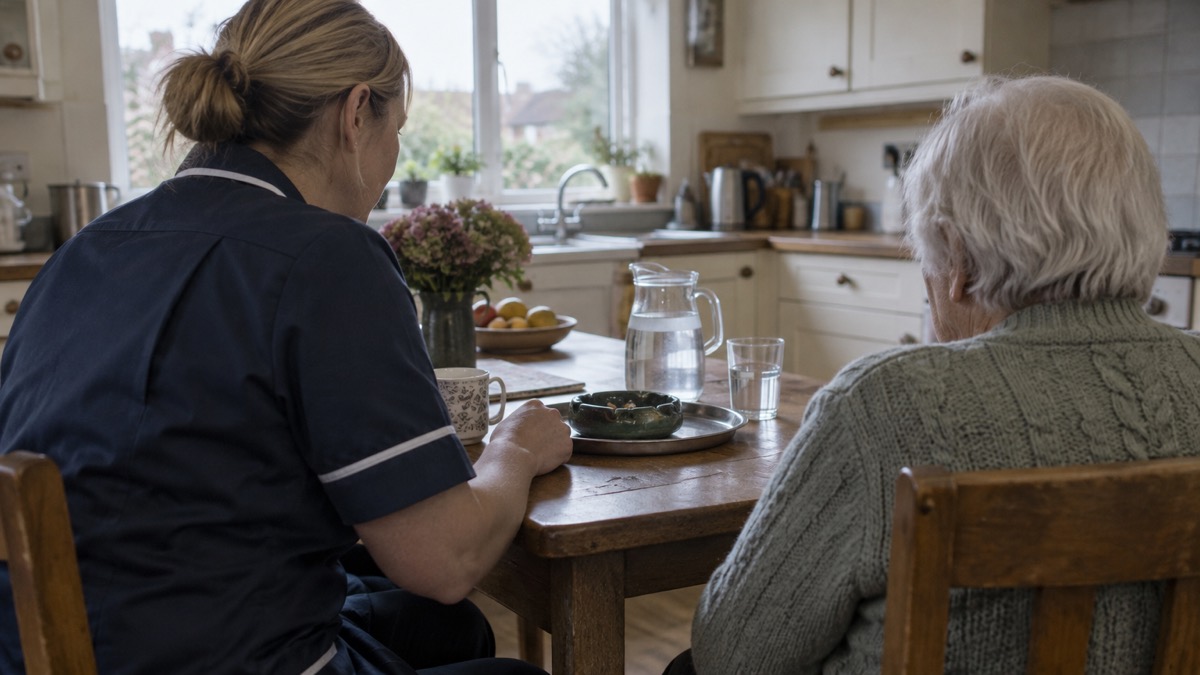
Smoking is the top cause of accidental fire deaths nationally and in Greater Manchester6, and Devon and Somerset Fire and Rescue Service state that smoking is the most common cause of fatal fires16. Smoking-related house fires are more likely to cause death and injury than any other cause of house fire7, and every six days, someone in the UK will die from a fire started by a cigarette7.
The risk is not spread evenly. People who smoke and have health or social care needs, such as impaired mobility, memory or cognitive problems, or substance misuse problems, are more at risk of having a smoking-related fire and less likely to escape safely if a fire starts6. That is the person-centred core of this page: the same cigarette that is a modest risk in an able-bodied household is a severe risk in a household where the smoker cannot move quickly, falls asleep easily, or forgets whether a cigarette is still lit.
Practical steps come from the fire services themselves. Greater Manchester Fire and Rescue Service advises fitting a smoke alarm in the rooms where you smoke, alongside the minimum of one smoke alarm on every floor and a heat alarm in the kitchen8. Never smoke in bed, and use proper ashtrays on stable surfaces rather than improvised containers.
Dementia and memory loss: cooking and other fire risks
Dorset and Wiltshire Fire and Rescue Service state that dementia is a substantial factor in increasing the risk of injury or death from fire in the home, and that fire and rescue services across the UK are aware of the link between serious home fires and the elderly, especially those with mobility and memory loss health needs17. The condition creates specific risks that a general fire safety checklist does not always capture.
Devon and Somerset Fire and Rescue Service list the specific risks dementia creates: leaving cooking unattended or putting things on cookers or in microwaves that should not be there; misunderstanding the sound of the smoke detector in the event of a fire and not taking appropriate action; and not recognising the property they live in, which reduces the ability to exit in a safe and timely manner16. Each of these has a practical answer:
- Cooking left unattended: consider a locking cooker valve, which can be fitted free for people with dementia in many areas, or supervise cooking times.
- Wrong items in cookers and microwaves: keep the kitchen area clear and remove flammable items from worktops near the hob.
- Misunderstanding the alarm: interlinked alarms give the earliest warning, and a home fire safety visit can cover how the person responds to the sound.
- Not recognising the home: an escape plan practised repeatedly, in the way the person can manage, matters more than a written plan they cannot follow.
Poor mental health and memory loss more broadly do not necessarily increase the risk of fire, but Devon and Somerset note that some conditions require medication that can lead to drowsiness, and may lead to higher impulses for alcohol, non-prescription drugs and smoking; in some more serious conditions, symptoms can include firesetting behaviours16. Surrey County Council's risk list similarly includes mental health conditions such as dementia or depression, and drug or alcohol dependencies20. If any of these apply, that is a strong reason to request a home fire safety visit rather than rely on generic advice. Our page on dementia and emergencies covers the wider safety picture, including going missing.
Staying warm in winter without raising the fire risk
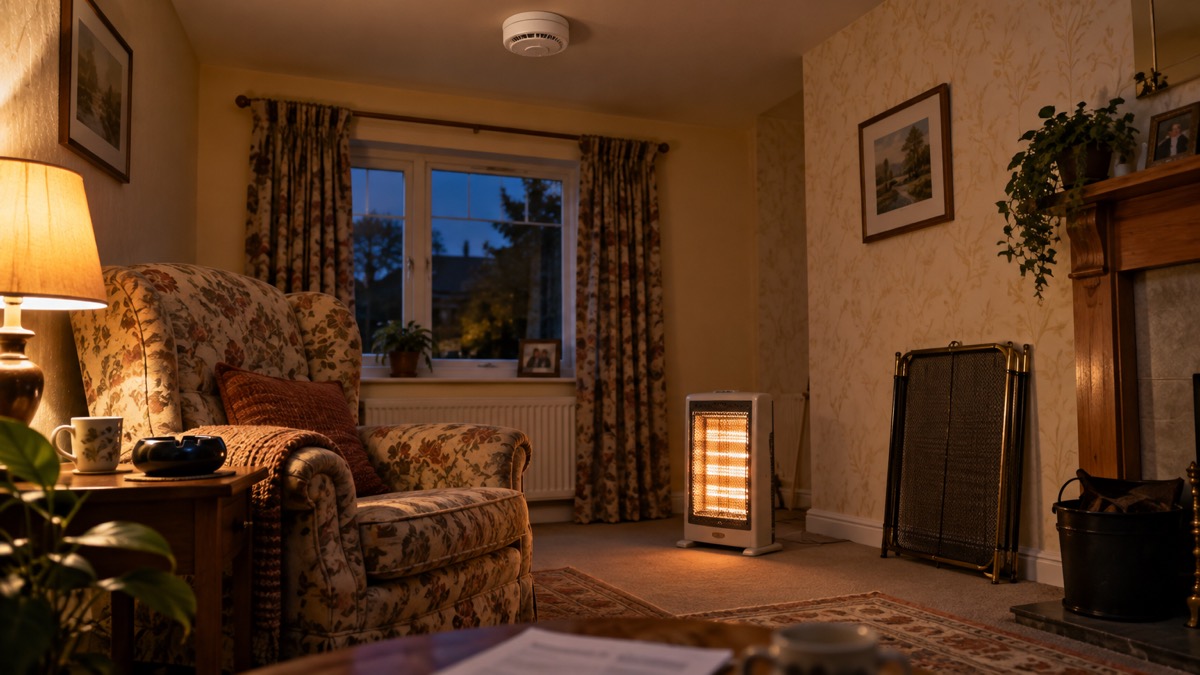
During the winter, vulnerable people can be at a higher risk of a fire-related incident when trying to stay warm23. Cheshire Fire and Rescue Service explain why: colder weather can increase the risk of fire as people use heating appliances more frequently24. Older people on fixed incomes may bring out old heaters, blankets and throws that have not been used or checked for a year, and may use them for longer stretches, sometimes overnight.
The safe approach is to use heating safely during colder months to keep warm and reduce the risk of fire in your home24, which in practice means:
- Check electric blankets and heated throws for wear or damage before each winter. If you notice signs of damage, do not use the blanket, as it could put you at risk of a fire, and follow the manufacturer's instructions23.
- Some fire and rescue services run free electric blanket, heated throw and heat pad testing events in autumn; check your local service's website.
- Keep portable heaters clear of bedding, curtains and clothing, and never use them to dry laundry.
For someone with dementia, an electric blanket raises a separate question about whether they can remember to switch it off and use its controls safely; our page on electric blankets and someone with dementia addresses it directly. If the underlying problem is a cold home because of a heating failure or a power cut, see our guides on gas and heating failures and power cuts rather than improvising with heat sources that raise the fire risk.
Hoarding and clutter: why they make fires worse and where to get support
High levels of clutter can make it easier for a fire to start and spread quickly, and can block escape routes12. Devon and Somerset Fire and Rescue Service describe the mechanism: hoarding disorders increase fire loading and risk; possessions can block exit routes, making evacuation difficult; and fire spreads faster if doors cannot be closed and if there are flammable items such as newspapers or cardboard lying around16. London Fire Brigade add that fires can spread much faster in hoarded homes, especially where flammable items such as newspapers or cardboard are present19.
The danger is not only to the householder. Devon and Somerset note that in a fire at a hoarded property there is a possibility of entrapment and rapid escalation of fire from combustible materials, increasing risk to firefighters25. This is why fire services treat hoarding as a referral category of its own rather than a tidiness issue.
What to do depends on your relationship to the person. North Yorkshire Fire and Rescue Service advise seeking professional help to manage and reduce clutter safely, addressing fire hazards gradually26. Devon and Somerset advise that when you see clutter in a home that includes hazardous or highly flammable materials, or where items are stored close to ignition sources such as gas fires or cookers, you should request a Home Fire Safety Visit16. London Fire Brigade suggest carers consider training to help spot signs that the person they care for is at risk of injury from fire, and learn what steps to take to reduce those risks19. Because exit routes change as new items are brought in, help the person plan and practise a fire escape plan often, stressing clear routes and exits25. Our home emergencies guide covers the other household emergencies that clutter also worsens.
Smoke and heat alarms and where to fit them
Alarms are the single most effective fire safety measure, but only if the right type is in the right place. The core rule from Greater Manchester Fire and Rescue Service: fit a minimum of one smoke alarm on every floor of your home and a heat alarm in your kitchen, and if you smoke indoors, fit a smoke alarm in the rooms where you smoke8.
Smoke alarms should not go in kitchens or bathrooms, where smoke or steam could set them off accidentally; install a heat alarm in the kitchen instead21. Heat alarms are more suitable for kitchens and other rooms where steam, fumes or moisture could cause nuisance alarms in smoke alarms27. Fit additional smoke alarms in other rooms that are regularly inhabited and where there could be a risk of a fire starting27.
| Room | Alarm type | Reason |
|---|---|---|
| Hallway and landing, each floor | Smoke alarm | Covers escape routes8 |
| Kitchen | Heat alarm | Steam and fumes would set off a smoke alarm21 |
| Bathroom | No smoke alarm | Steam causes false alarms21 |
| Bedroom and lounge | Smoke alarm | Fires can start where people spend time28 |
| Rooms where the person smokes | Smoke alarm | Smoking is the top cause of fire deaths8 |
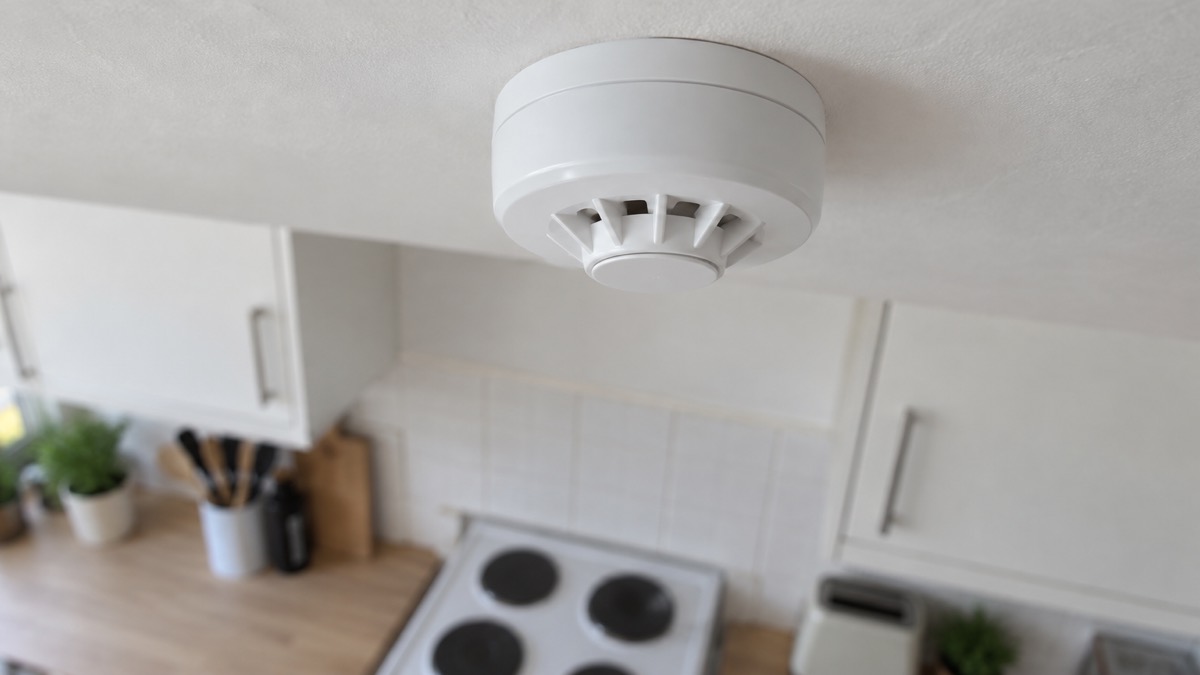
For vulnerable people the standard is higher than the minimum. London Fire Brigade advise that in homes with Telecare, smoke alarms should be fitted in all areas where a fire can start, including bedrooms and lounges, with a heat alarm in the kitchen28. They also stress interlinking: make sure alarms are interlinked so that when one alarm detects a fire they all go off together, giving the person early warning28. Interlinked alarms are particularly important where a person has any issues that may prevent or delay their escape, to ensure they are alerted wherever the fire starts14.
If it is difficult for you to fit an alarm, ask a family member or friend to help you, advises Devon and Somerset Fire and Rescue Service18. If you or a family member are vulnerable or have a condition that may prevent or delay escape if there is a fire, you may need a specialist alarm system18, which is exactly what a home fire safety visit can assess. For people who cannot hear a standard alarm, specialist alarms for people with visual or hearing impairments can be fitted free during a visit9; our page on deaf and hard of hearing households covers the wider arrangements. If reduced mobility makes testing hard, see how to test smoke alarms if you have reduced mobility.
Booking a free Safe and Well visit
Your local fire and rescue service may offer a free home fire safety visit if you or someone you know may be particularly vulnerable to fire due to age, mobility or mental health10. In London, if you or anyone you live with is a vulnerable person, you are asked to get in touch and organise a free home fire safety visit14. These visits go by slightly different names in different services, Safe and Well visits, home fire safety visits or home safety visits, but the substance is the same.
During a visit, officers provide fire safety advice suited to your individual needs and home, and fit free smoke alarms, including specialist alarms for people with visual or hearing impairments9. Warwickshire's service describes its visit as providing fire safety advice, checking that smoke alarms are working and replacing or installing new ones if needed, alongside preventing slips, trips and falls29. Surrey describes its Safe and Well visit as totally free, available 24/7, with free smoke alarms fitted during the visit if needed, and bookable by text or SMS on 07971 69189830.
Who is eligible varies slightly by service, so check your local one. Staffordshire, for example, lists those aged 65 and over living alone, those with mobility issues, those with a history of house fires, those who smoke inside their property, and households with children under five4. Surrey's risk factors include being over 60, living alone, limited mobility, hearing impairment, blindness or partial sight, difficulty escaping, previous fire or scorch marks, learning disabilities, mental health conditions, drug or alcohol dependencies, no alarm in all areas where fire might start, and hoarding20.
You can refer someone else. Surrey's Person at Risk Referral form is open to organisations, agencies, charities or similar groups helping someone who might be vulnerable and needs a safe and well visit20. Devon and Somerset ask that when you identify risk and vulnerability to fire, you request a Home Safety Visit using their form, and that you tell the person being referred you are making the referral16. Our step-by-step page on how to refer a vulnerable person for a fire safety check walks through the process. In Northern Ireland, the Safer Together project provides leaflets on the main risks of fire for older people and on neighbours not responding to smoke alarms sounding, and a Fire Risk Awareness Form that highlights fire risks for social workers and social care staff in the community31.
Planning an escape route you can use
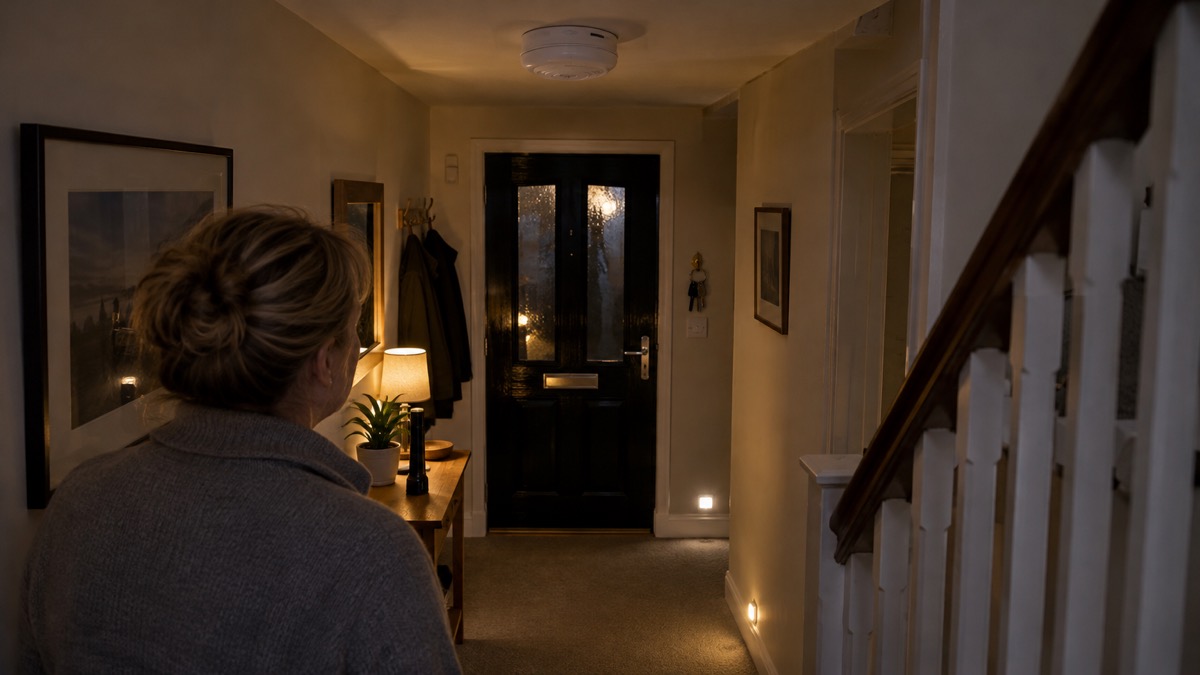
Plan your escape route, make sure everyone knows the quickest way out in the event of a fire, and consider an alternative route11. For an older or disabled person, the plan has to be built around what they can actually do, not what a fit adult could do. London Fire Brigade, writing about people who use specialist health equipment, ask carers to consider the person's needs and make sure appropriate measures are taken so they can safely escape if there is a fire22.
A usable plan for someone with limited mobility or memory loss usually means:
- Keep the main route out completely clear at all times, including at night, with nothing to step over or move.
- Keep door and window keys where they can be found immediately, in a fixed place, ideally by the door itself.
- Practise the route, because a plan that has never been walked is not a plan; for someone with dementia, practise often.
- Agree where to meet outside, and who checks on whom.
- Tell neighbours or family members the plan, so someone outside knows to look for the person.
In a hoarded home, practising matters even more because exit routes may change when new items are brought in, so the plan needs repeating25. When planning for a whole street or neighbourhood emergency, consider any vulnerable neighbours who may need assistance and reassurance32, and make sure everyone in the household knows the escape route and meeting place32.
If the person lives in a block of flats, the planning is slightly different. Fire safety advice for residents in high-rise buildings is to identify your escape routes, plan how you would assist elderly or disabled family members or neighbours, and agree where everyone will meet outside the building33. Talk this through with the person you care for so they know the quickest way out and where to go, and see our page on personal evacuation plans for disabled residents in flats.
Where to get help
The fire and rescue service is the main source of help, and its core offer to vulnerable households is free. Book a safe and well visit with your local fire and rescue service9. If you are supporting someone who lives alone, our page on living alone safely covers the other risks that come with it, including personal alarms and key safes so responders can get in. For sight loss, see sight loss and emergencies at home.
Beyond the fire service, the Priority Services Registers run by energy and water companies give registered customers extra help in emergencies, including during the power cuts and heating failures that can push a household towards unsafe ways of keeping warm. Registering is free, and it is one more way of making sure that when something goes wrong, the person is not dealing with it alone.
Sources (33)
- Cut the risk of fire in your home, Wiltshire and Swindon Prepared
- Make an escape plan, Fire Kills campaign, HM Government, 2026-03-25
- Accident hazards at home, Somerset County Council, 2026-10-28
- Living alone: fire safety, Staffordshire Fire and Rescue Service, 2026-10-26
- Carers and support workers, London Fire Brigade, 2026-10-25
- Caring for smokers, Greater Manchester Fire and Rescue Service, 2026-10-29
- Smoking fire safety, Devon and Somerset Fire and Rescue Service, 2026
- Smoking safety at home, Greater Manchester Fire and Rescue Service, 2026-10-29
- Booking a home fire safety visit, London Fire Brigade, 2026-10-25
- Domestic fire, Prepare campaign, HM Government, 2026-10-12
- Know your escape plans, Greater Manchester Fire and Rescue Service, 2026-10-29
- Hoarding fire risk, Cheshire Fire and Rescue Service, 2026-05-20
- Fire safety at home: tips, Surrey County Council, 2026-08-24
- Smoke alarms and heat alarms, London Fire Brigade, 2026-10-25
- Cooking fire safety, Devon and Somerset Fire and Rescue Service, 2026
- Home safety partnerships, Devon and Somerset Fire and Rescue Service, 2026
- Advice for carers: dementia, Dorset and Wiltshire Fire and Rescue Service, 2025-11-19
- Smoke alarms for vulnerable people, Devon and Somerset Fire and Rescue Service, 2026
- Hoarding disorder: advice for carers, London Fire Brigade, 2026-10-25
- Smoke alarms and risk factors, Surrey County Council, 2026-10-28
- Advice for parents and guardians, Devon and Somerset Fire and Rescue Service, 2026
- Specialist health equipment, London Fire Brigade, 2026-10-25
- Staying safe this season, Devon and Somerset Fire and Rescue Service, 2025-12-01
- Staying warm safely, Cheshire Fire and Rescue Service, 2026-08-06
- Hoarding, Devon and Somerset Fire and Rescue Service, 2026
- Hoarding: fire safety advice, North Yorkshire Fire and Rescue Service, 2026-10-25
- Smoke and heat alarms, Greater Manchester Fire and Rescue Service, 2026-10-29
- Alarms for vulnerable people: advice for carers, London Fire Brigade, 2026-10-25
- Apply for a Safe and Well visit, Warwickshire County Council, 2026-10-29
- Safe and Well checks, Surrey County Council, 2026-10-28
- The Safer Together project, Northern Ireland Fire and Rescue Service, 2026-07-16
- Wildfire prevention, Scottish Fire and Rescue Service, 2026-10-25
- What is your building's evacuation strategy?, Greater Manchester Fire and Rescue Service, 2026-10-29
 Carer's Emergency Plan
 Herbert Protocol Form
 In Case of Emergency Card
 Energy and Water Company Duties
 Personal Alarms
 What Happens When Alarm Pressed
 How Fall Detectors Work
 Home Oxygen Therapy Safety
 Airflow Mattress Fire Risk
 Dementia and Emergencies
 Falls at Home
 Living Alone Safely
 Sight Loss and Emergencies
 Deaf and Hard of Hearing Safety